Composition and Methods for Inhibiting Corrosion of Metal During Acidizing a Wellbore in a Subterranean Formation for Fracking
Abstract
Compositions and methods for inhibiting corrosion of metal in a wellbore during acidizing a wellbore in a subterranean formation. The composition comprising polycyclic diquaternary quinoxaline and their oxidative coupling products.
Claims (30)
1 . A corrosion inhibitor for use in a corrosion inhibitor composition for acidizing a wellbore, the corrosion inhibitor comprising: a polycyclic diquaternary quinoxaline having the general structure:
9 . An acid composition for acidizing a wellbore, the composition comprising: at least one acid, and an effective amount of polycyclic diquaternary quinoxaline; the acid comprises at least hydrochloric acid in an amount ranging from about 10 to 20 wt % HCl; the polycyclic diquaternary quinoxaline having the general structure:
24 . A method of forming a hydrocarbon-bearing formation for a stimulation operation, the method comprising the steps: assessing at least a first location and a second location for perforation of a casing in a wellbore; inserting a bottom hole assembly into the wellbore; the bottom hole assembly comprising a plug and a perforation tool and the bottom hole assembly being connected to a wireline; injecting an acidic composition into the wellbore; wherein the acidic composition is in direct contact with the perforation tool, the wireline and the casing; positioning and setting the plug in the wellbore at a position downhole but proximate to the first location; positioning the perforation tool at the first location; perforating the casing at the first location with the perforation tool thereby creating a first perforated area and a first cementitious debris; allowing the acidic composition to come into contact with the first perforated area and the first cementitious debris for a predetermined period of time to prepare the formation for the stimulation operation; moving the perforation tool up-hole to the second location; perforating the casing at the second location with the perforation tool thereby creating a second perforated area and a second cementitious debris; allowing the acidic composition to come into contact with the second perforated area and the second cementitious debris for a predetermined period of time to prepare the formation for the stimulation operation; removing the perforation tool from the wellbore; wherein the acidic composition comprises an acid and a corrosion inhibitor composition, the corrosion inhibitor composition comprising: an effective amount of polycyclic diquaternary quinoxaline; the polycyclic diquaternary quinoxaline having the general structure:
Show 27 dependent claims
2 . The corrosion inhibitor according to claim 1 , wherein the alkyl aryl group is selected from at least one of benzyl, benzoyl, vinylbenzyl and methyl naphthalene.
3 . The corrosion inhibitor according to claim 1 , wherein R 1 , R 2 , R 3 , R 4 and R 5 comprise substitution groups selected from: halo, alkyl, aryl and alkyl aryl.
4 . The corrosion inhibitor according to claim 1 , wherein the counter anion comprises at least one of a chloride, bromide and iodide.
5 . The corrosion inhibitor according to claim 1 , wherein the polycyclic diquaternary quinoxaline comprises dibenzyl diquaternary quinoxaline having the general structure:
6 . The corrosion inhibitor according to claim 5 , wherein the counter anion comprises at least one of a chloride, bromide and iodide.
7 . The corrosion inhibitor according to claim 5 , wherein the counter anion comprises iodide.
8 . The corrosion inhibitor according to claim 1 , wherein the polycyclic diquaternary quinoxaline is the result of: combining and mixing in a vessel a solvent, a diamine compound and a dicarbonyl compound; reacting the diamine compound and dicarbonyl compound to produce a solution of quinoxaline; adding to the solution of quinoxaline a supra-stoichiometric amount of cyclic halide; and wherein the reaction between the quinoxaline and cyclic halide results in the formation of the polycyclic diquaternary quinoxaline.
10 . The polycyclic diquaternary quinoxaline according to claim 9 , wherein the alkyl aryl group is selected from at least one of benzyl, benzoyl, vinylbenzyl and methyl naphthalene.
11 . The polycyclic diquaternary quinoxaline according to claim 9 , wherein R 1 , R 2 , R 3 , R 4 and R 5 comprise substitution groups selected from: halo, alkyl, aryl and alkyl aryl.
12 . The polycyclic diquaternary quinoxaline according to claim 9 , wherein the counter anion comprises at least one of a chloride, bromide and iodide.
13 . The composition according to claim 9 , further comprising an intensifier selected from at least one of an iodide donor, an aldehyde and formic acid.
14 . The composition according to claim 9 , wherein the polycyclic diquaternary quinoxaline comprises dibenzyl diquaternary quinoxaline having the general structure:
15 . The polycyclic diquaternary quinoxaline according to claim 14 , wherein the counter anion comprises at least one of a chloride, bromide and iodide.
16 . The polycyclic diquaternary quinoxaline according to claim 14 , wherein the counter anion comprises iodide.
17 . The composition according to claim 9 , further comprising a surfactant.
18 . The composition according to claim 17 , wherein the surfactant is selected from at least one of a nonionic surfactant, amphoteric surfactant and anionic surfactant.
19 . The composition according to claim 9 , wherein the acid comprises about 15 wt % HCl.
20 . The composition according to claim 9 , wherein the polycyclic diquaternary quinoxaline ranges from about 250 ppm to 10000 ppm as active polycyclic diquaternary quinoxaline.
21 . The composition according to claim 9 , wherein the composition is diluted with water at the point-of-use to achieve a ratio of composition and water of 1:1 respectively.
22 . The composition according to claim 9 , wherein the composition is diluted with water at the point-of-use to achieve a ratio of composition and water of 1:2 respectively.
23 . The composition according to claim 9 , wherein the polycyclic diquaternary quinoxaline is the result of: combining and mixing in a vessel a solvent, a diamine compound and a dicarbonyl compound; reacting the diamine compound and dicarbonyl compound to produce a solution of quinoxaline; adding to the solution of quinoxaline a supra-stoichiometric amount of cyclic halide; and wherein the reaction between the quinoxaline and cyclic halide results in the formation of the polycyclic diquaternary quinoxaline.
25 . The polycyclic diquaternary quinoxaline according to claim 24 , wherein the alkyl aryl group is selected from at least one of benzyl, benzoyl, vinylbenzyl and methyl naphthalene.
26 . The polycyclic diquaternary quinoxaline according to claim 24 , wherein R 1 , R 2 , R 3 , R 4 and R 5 comprise substitution groups selected from: halo, alkyl, aryl and alkyl aryl.
27 . The polycyclic diquaternary quinoxaline according to claim 24 , wherein the counter anion comprises at least one of a chloride, bromide and iodide.
28 . The polycyclic diquaternary quinoxaline according to claim 24 , wherein the counter anion comprises iodide.
29 . The corrosion inhibitor composition according to claim 24 , wherein the polycyclic diquaternary quinoxaline comprises dibenzyl diquaternary quinoxaline having the general structure:
30 . The corrosion inhibitor composition according to claim 24 , further comprising a surfactant.
Full Description
Show full text →
FIELD OF THE INVENTION
The invention relates to compositions and methods for inhibiting corrosion of at least metal in a wellbore during acidizing a wellbore in a subterranean formation for fracking and extraction of oil. The metal can be for example a casing of the wellbore, a wireline, or a perforation tool.
BACKGROUND OF THE INVENTION
Corrosion of metal surfaces of the casing of the wellbore, the wireline, or the perforation tool used for fracking caused by acids during acidizing of the wellbore are common problems. Furthermore, it is common practice to remove the perforation tool from the wellbore prior to acidizing of the wellbore to prevent corrosion of the metal surface of the perforation tool.
U.S. Patent Publication No. 20240279533 (McLoughlin) discloses compositions used to reduce corrosion of a casing of the wellbore, a wireline, or a perforation tool in the wellbore caused by acids during acidizing of the wellbore. The perforation tool can remain in the wellbore during the acidizing of the wellbore. The complete disclosure of this publication is incorporated herein by reference.
U.S. Application 20140116708A1 discloses a water-in-oil emulsion comprising from 50:50 to 80:20 v/v water phase to oil phase. The disclosure further recites addition of corrosion inhibitors including quaternary compounds, cinnamaldehyde, acetylenic alcohols, intensifiers, cuprous ions, and carboxylic acids (i.e. formic acid).
U.S. Pat. No. 10,822,535 discloses a synthetic acid comprising hydrochloric acid and monoethanol amine at a molar ratio of 15:1 to 3:1 respectively with the preferred molar ratio of 4.1:1 respectively. of the said patent illustrates the dissolution rate of Indiana limestone comparing the preferred embodiment to 15% hydrochloric acid.
SUMMARY OF THE INVENTION
A new class of corrosion inhibitor has been developed for inhibiting corrosion of at least metal in a wellbore during acidizing a wellbore in a subterranean formation for fracking and extraction of hydrocarbons. The metal can be for example a casing of the wellbore, a wireline, or a perforation tool.
The general structure of the polycyclic diquaternary quinoxaline compounds of the invention is represented in . illustrates the structure of one preferred composition that has been assigned a new CAS Registry Number® (CAS RN): 3085265-95-5, and given the CA Index Name: Quinoxalinium, 1,4-bis(phenylmethyl)-, chloride (1:2). The chemical structure represented by the chemical formula C 22 H 20 N 2 Cl 2 had not been previously identified prior to the present disclosure.
The polycyclic diquaternary quinoxaline compounds of the invention provide unexpectedly and surprisingly increased adhesion and protective film uniformity compared to commercially available quaternary pyridinium and quaternary quinolinium compounds. Without being bound by theory, it is believed the high charge density resulting from the Gemini (twin) quaternary groups coupled with the geometric structure of the molecule improve the adhesion and uniform distribution across the metal surfaces, thereby enhancing corrosion inhibition. Furthermore, new intensifiers are presented that work synergistically with the polycyclic diquaternary quinoxaline compounds of the invention.
Quaternary surfactants exemplified by quaternary pyridinium and quaternary quinolinium are desirable corrosion inhibitors for acidizing compositions. Because the metal (i.e. carbon steel) surface in acid solutions are etched of oxide films, the surfaces take on a cationic charge due to the presence of iron. While chloride anions in hydrochloric acid impart a bridging anionic charge between the corrosion inhibitor and the steel surface, intensifiers are typically applied to transition the surface to an anionic charge thereby making it suitable for adsorption of the quaternary surfactant. Examples of suitable intensifiers include: iodide, iodate, bromide, formaldehyde, acetaldehyde, formic acid, antimony, stannous, bismuth and germanium. One preferred intensifier is glyoxal at about 200 to 2000 ppm glyoxal. Furthermore, combining glyoxal with iodide provides a synergistic effect.
Halide “Intensifiers” like bromide and iodide further increase the attraction of the quaternary corrosion inhibitor Cl<Br<I with iodide ions possessing higher atomic mass and lower electronegativity than bromide or chloride.
The addition of halides enhances the adsorption of the quaternary corrosion inhibitor. However, the halides function as a mediary between the metal (steel) surfaces and quaternary corrosion inhibitor. This relationship can be represented as Quat-Halide-Fe interactions with the halide being the mediary (bridging ion) that ties them together.
Furthermore, imperfections (interruptions) in coverage of the steel substrate resulting from the geometry of the quaternary hydrophobic structure expose the surface to the corrosive acid solution resulting in: corrosion, dissolution of iron ions and evolution of hydrogen gas. To combat the persistent deterioration and subsequent loss of integrity of the protective film, a residual (reservoir) of corrosion inhibitor can be utilized to reestablish the film.
In order to mitigate the inherent weaknesses and subsequent metal losses resulting from these limitations, a new novel corrosion inhibitor chemistry is required.
This novel invention improves corrosion inhibition of metal (steel) during acidizing of the wellbore increasing the life of the wireline and perforating gun, thereby allowing increased perforating cycles of said equipment.
The novel corrosion inhibitor comprises polycyclic diquaternary quinoxaline (PDQ). Polycyclic describes the presence of two or more cyclic groups in the PDQ structure. The term polycyclic is not limited to the cyclic groups being bonded together as exemplified in the non-limiting examples naphthalene and anthracene. However, if desired the polycyclic structure can be bonded together as in the case where chloromethyl naphthalene is used in the synthesis of the PDQ.
Disclosed are novel compositions and methods for inhibiting corrosion of metal in a wellbore during acidizing a wellbore in a subterranean formation for fracking and extraction of oil and gas. The disclosed compositions exhibit unexpected and surprisingly superior corrosion inhibition of metal surfaces compared to the prior art corrosion inhibitor compositions and methods. Application of the disclosed invention provides surprising and unexpectedly significant economic and performance advantages over the prior art.
OBJECTIVES
In the first objective, the methods and compositions of the present invention mitigate the imperfections in the coverage of the metal substrate by bridging the gaps created by the adsorption rate and geometry of the quaternary hydrophobic structure of the adsorbed corrosion inhibitor thereby forming a more uniform hydrophobic barrier film that impedes the aqueous phase from reaching the metal surface and inducing corrosion. Furthermore, the high charge density of the PDQ enhances the rapid adsorption and forms a strong adherence. This objective can be accomplished by establishing a uniform anionic charge across the surface of the metal substrate, and forming a uniform hydrophobic barrier film that mitigates the gaps resulting from the geometry of the hydrophobic tail of the quaternary corrosion inhibitor.
Establishing a uniform anionic charge across the surface of the metal substrate can be accomplished by applying intensifiers that adsorb onto the cationic charge iron (Fe) on the metal surface. Some intensifiers react with the iron in the steel resulting in the formation of an iron-oxide surface, while other intensifiers exemplified by iodide (iodate) and bromide form anionic charged bridges between the cationic iron on the metal surface and the quaternary corrosion inhibitor further mitigating gaps and increasing the surface area of the hydrophobic barrier film. It has now been discovered that combining intensifiers that form iron-oxide complexes and anionic bridges provides a synergistic effect, thereby enhancing the hydrophobic coverage of the steel resulting from the adsorption of the quaternary corrosion inhibitors.
Without being bound by any theory the polycyclic diquaternary quinoxaline (PDQ) and its corresponding oligomers and co-oligomers (OCPs) achieve the objectives by increasing the charge density of the larger surface area of hydrophobic backbone compared to the quaternary quinolinium and quaternary pyridinium corrosion inhibitors disclosed in the prior art. The increased charge density increases the adsorption and adherence of the polycyclic diquaternary quinoxaline to the metal substrate being protected from the corrosive acid.
Oligomers of polycyclic diquaternary quinoxaline have been assigned a new CAS Registry Number® (CAS RN): 3085536-05-3, and given the CA Index Name: Quinoxalinium, 1,4-bis(phenylmethyl)-, chloride (1:2) homopolymer.
The OCPs comprise oligomers and/or co-oligomers of the polycyclic diquaternary quinoxaline corrosion inhibitors. The number of carbon-carbon bonds (C—C) that link the polycyclic diquaternary quinoxaline (precursor used to make the OCP) can be controlled by regulating the molar ratio of nitrite to precursor as well as controlling the rate of nitrous acid production. For example, higher molar ratios of nitrite will support more coupling resulting in higher molecular weight OCPs. Furthermore, applying acid such as hydrochloric acid quickly induces localized high concentrations of nitrous acid, which in turn induces rapid coupling of the quaternary aromatic corrosion inhibitors as illustrated by the rapid, almost instantaneous color transition disclosed in some of the examples. It is presumed that these variables can expectedly influence the performance of the OCPs produced. Therefore, optimization of synthesis methods can be conducted to produce the desired performance of the OCPs with respect to corrosion inhibition.
Another oligomer of polycyclic diquaternary quinoxaline comprises an oligomer in-situ generated during the acidizing process. The polycyclic diquaternary quinoxaline resulting from reacting 1 mol of quinoxaline with 2 mols of 4-vinylbenzyl chloride results a reactive PDQ as a result of the reactive ethenyl groups. Under acidizing conditions, the ethenyl groups react forming a PDQ oligomer in-situ.
Embodiments
In the first embodiment is disclosed a corrosion inhibitor for use in a corrosion inhibitor composition for acidizing a wellbore, the corrosion inhibitor comprising:
•
• a polycyclic diquaternary quinoxaline having the general structure:
•
•
• where X − comprises a counter anion, • R′ comprises an alkyl aryl group, • R 1 , R 2 , R 3 , R 4 and R 5 comprise hydrogen or a substitution group.
The composition in accordance with the first embodiment, wherein the alkyl aryl group is selected from at least one of benzyl, benzoyl, vinylbenzyl and methyl naphthalene.
The composition in accordance with the first embodiment, wherein R 1 , R 2 , R 3 , R 4 and R 5 comprise substitution groups selected from: halo, alkyl, aryl and alkyl aryl.
The composition according to the first embodiment, wherein the counter anion is selected from at least one of chloride, bromide, iodide or hydroxide.
The composition in accordance with the first embodiment, wherein the counter anion is iodide.
The corrosion inhibitor composition in accordance with the first embodiment, wherein the polycyclic diquaternary quinoxaline comprises dibenzyl diquaternary quinoxaline having the general structure:
Where X − comprises a counter anion.
The polycyclic diquaternary quinoxaline in accordance with the first embodiment, wherein the polycyclic diquaternary quinoxaline is the result of:
•
• combining and mixing in a vessel a solvent, a diamine compound and a dicarbonyl compound; • reacting the diamine compound and dicarbonyl compound to produce a solution of quinoxaline; • adding to the solution of quinoxaline a supra-stoichiometric amount of cyclic halide, and • wherein the reaction between the quinoxaline and cyclic halide results in the formation of the polycyclic diquaternary quinoxaline.
In the second embodiment is disclosed an acid composition for acidizing a wellbore, the composition comprising:
•
• at least one acid, and an effective amount of polycyclic diquaternary quinoxaline; the acid comprises at least hydrochloric acid in an amount ranging from about 10 to 20 wt % HCl; • the polycyclic diquaternary quinoxaline having the general structure:
•
• where X − comprises a counter anion, • R′ comprises an alkyl aryl group, and • R 1 , R 2 , R 3 , R 4 and R 5 comprise hydrogen or a substitution group.
The composition in accordance with the second embodiment, wherein the alkyl aryl group is selected from at least one of benzyl, benzoyl, vinylbenzyl and methyl naphthalene.
The composition in accordance with the second embodiment, wherein R 1 , R 2 , R 3 , R 4 and R 5 comprise substitution groups selected from: halo, alkyl, aryl and alkyl aryl.
The composition according to the second embodiment, further comprising and intensifier selected from at least one of an iodide donor, an aldehyde and formic acid.
The composition according to the second embodiment, wherein the counter anion is selected from at least one of chloride, bromide, iodide or hydroxide.
The composition in accordance with the second embodiment, wherein the counter anion comprises iodide.
The composition according to the second embodiment, further comprising an intensifier selected from at least one of a bromide donor, formaldehyde, antimony donor, bismuth donor, germanium donor, stannous donor and glyoxal.
The corrosion inhibitor composition in accordance with the second embodiment, wherein the polycyclic diquaternary quinoxaline comprises dibenzyl diquaternary quinoxaline having the general structure:
Where X − comprises a counter anion.
The corrosion inhibitor composition in accordance with the second embodiment, further comprising a surfactant.
The corrosion inhibitor composition in accordance with the second embodiment, wherein the surfactant is selected from at least one of a nonionic surfactant, amphoteric surfactant and anionic surfactant.
The composition in accordance with the second embodiment, wherein the acid comprises about 15 wt % HCl.
The composition in accordance with the second embodiment, wherein the intensifier comprises an iodide donor.
The composition in accordance with the second embodiment, wherein the polycyclic diquaternary quinoxaline ranges from about 250 ppm to 10000 ppm as active polycyclic diquaternary quinoxaline.
The composition in accordance with the second embodiment, wherein the composition is diluted with water at the point-of-use to achieve a ratio of composition and water of 1:1 respectively.
The composition in accordance with the second embodiment, wherein the composition is diluted with water at the point-of-use to achieve a ratio of composition and water of 1:2 respectively.
The composition in accordance with the second embodiment, wherein the surfactant comprises a nonionic surfactant.
The composition in accordance with the second embodiment, wherein the surfactant comprises an anionic surfactant.
The composition in accordance with the second embodiment, wherein the anionic surfactant is selected from at least one of an alkyl ether sulfates, alkyl sulfates, alkyl sulfonates, alkyl benzene sulfonates, alkyldiphenyloxide disulfonate and phosphate ester.
The composition in accordance with the second embodiment, wherein the acid comprises a synthetic acid.
The composition in accordance with the second embodiment, wherein the polycyclic diquaternary quinoxaline is the result of:
•
• combining and mixing in a vessel a solvent, a diamine compound and a dicarbonyl compound; • reacting the diamine compound and dicarbonyl compound to produce a solution of quinoxaline; • adding to the solution of quinoxaline a supra-stoichiometric amount of cyclic halide, and • wherein the reaction between the quinoxaline and cyclic halide results in the formation of the polycyclic diquaternary quinoxaline.
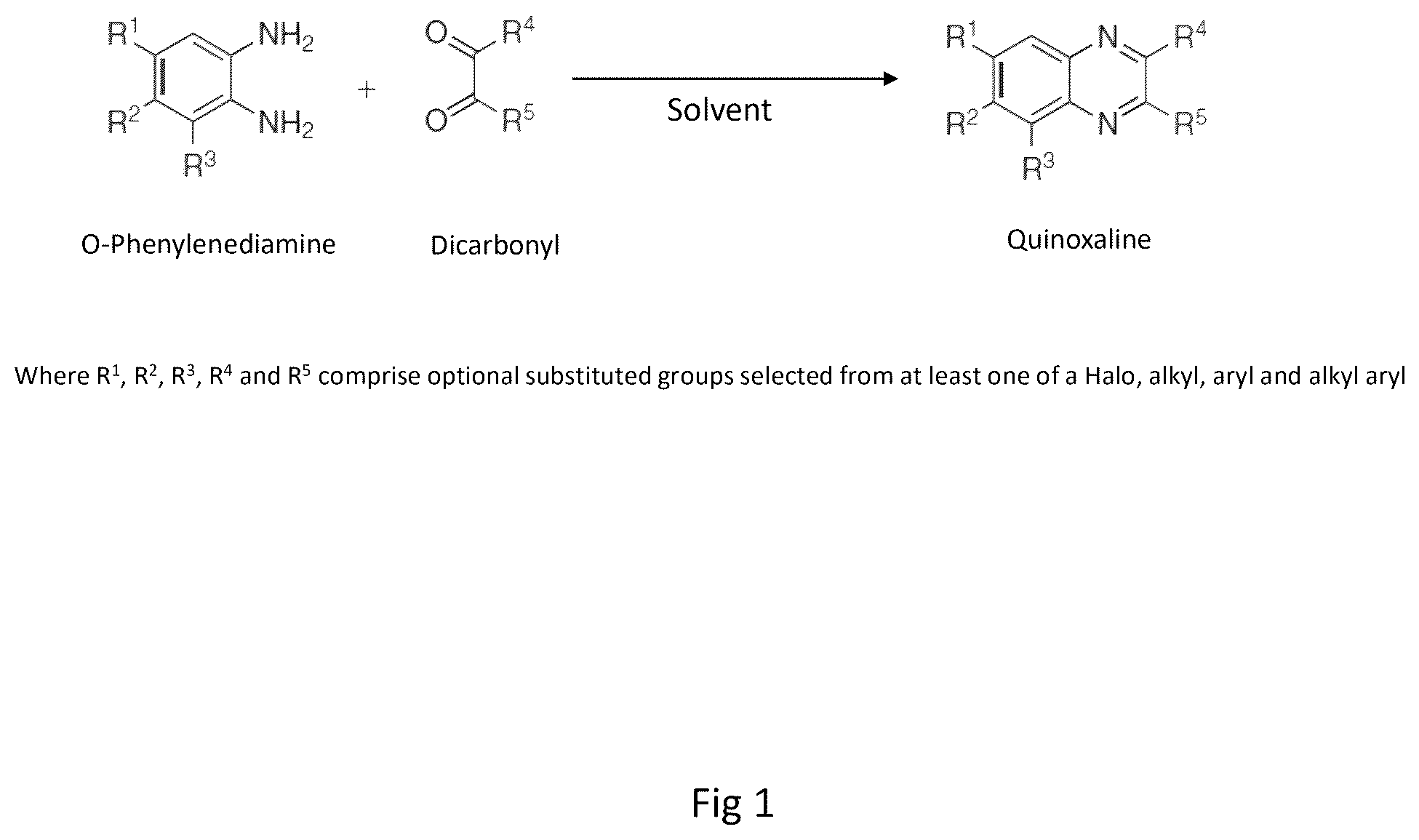
The composition in accordance with the second embodiment, wherein the polycyclic diquaternary quinoxaline is the result of reacting an O-phenylenediamine with a glyoxal compound to produce the quinoxaline.
The composition in accordance with the second embodiment, further comprising a quaternary aromatic phosphonium selected from at least one of benzyltriphenylphosphonium salts and tetraphenylphosphonium salts.
The composition in accordance with the second embodiment, further comprising at least one of a quaternary quinolinium and quaternary pyridinium.
In the third embodiment is disclosed:
•
• a method of forming a hydrocarbon-bearing formation for a stimulation operation, the method comprising the steps: • assessing at least a first location and a second location for perforation of a casing in a wellbore; • inserting a bottom hole assembly into the well-bore; • the bottom hole assembly comprising a plug and a perforation tool and the bottom hole assembly being connected to a wireline; • injecting an acidic composition into the wellbore; • wherein the acidic composition is in direct contact with the perforation tool, the wireline and the casing; • positioning and setting the plug in the wellbore at a position downhole but proximate to the first location; • positioning the perforation tool at the first location; • perforating the casing at the first location with the perforation tool thereby creating a first perforated area and a first cementitious debris; • allowing the acidic composition to come into contact with the first perforated area and the first cementitious debris for a predetermined period of time to prepare the formation for the stimulation operation; • moving the perforation tool up-hole to the second location; • perforating the casing at the second location with the perforation tool thereby creating a second perforated area and a second cementitious debris; • allowing the acidic composition to come into contact with the second perforated area and the second cementitious debris for a predetermined period of time to prepare the formation for the stimulation operation; • removing the perforation tool from the wellbore; • wherein the acid composition comprises an acid and a corrosion inhibitor composition, the corrosion inhibitor composition comprising: • an effective amount of polycyclic diquaternary quinoxaline; • the polycyclic diquaternary quinoxaline having the general structure:
•
• where X − comprises a counter anion, • R′ comprises an alkyl aryl group, and • R 1 , R 2 , R 3 , R 4 and R 5 comprise hydrogen or a substitution group.
The composition in accordance with the third embodiment, wherein the alkyl aryl group is selected from at least one of benzyl, benzoyl, vinylbenzyl and methyl naphthalene.
The composition in accordance with the third embodiment, wherein R 1 , R 2 , R 3 , R 4 and R 5 comprise substitution groups selected from: halo, alkyl, aryl and alkyl aryl.
The composition according to the third embodiment, wherein the counter anion is selected from at least one of chloride, bromide, iodide or hydroxide.
The composition in accordance with the third embodiment, wherein the counter anion comprises iodide.
The composition according to the third embodiment, further comprising an intensifier selected from at least one of an iodide donor, bromide donor, formaldehyde, formic acid, antimony donor, bismuth donor, germanium donor, stannous donor and glyoxal.
The corrosion inhibitor composition in accordance with the third embodiment, wherein the polycyclic diquaternary quinoxaline comprises dibenzyl diquaternary quinoxaline having the general structure:
Where X − comprises a counter anion.
The corrosion inhibitor composition in accordance with the third embodiment, further comprising a surfactant.
The corrosion inhibitor composition in accordance with the third embodiment, wherein the surfactant is selected from at least one of a nonionic surfactant, amphoteric surfactant and anionic surfactant.
The corrosion inhibitor composition in accordance with the third embodiment, wherein the acid comprises about 15 wt % HCl.
The corrosion inhibitor composition in accordance with the third embodiment, wherein the polycyclic diquaternary quinoxaline ranges from about 250 ppm to 10000 ppm as active polycyclic diquaternary quinoxaline.
The corrosion inhibitor composition in accordance with the third embodiment, wherein the composition is diluted with water at the point-of-use to achieve a ratio of composition and water of 1:1 respectively.
The corrosion inhibitor composition in accordance with the third embodiment, wherein the composition is diluted with water at the point-of-use to achieve a ratio of composition and water of 1:2 respectively.
The corrosion inhibitor composition in accordance with the third embodiment, wherein the surfactant comprises a nonionic surfactant.
The corrosion inhibitor composition in accordance with the third embodiment, wherein the surfactant comprises an anionic surfactant.
The corrosion inhibitor composition in accordance with the third embodiment, wherein the anionic surfactant is selected from at least one of an alkyl ether sulfates, alkyl sulfates, alkyl sulfonates, alkyl benzene sulfonates, alkyldiphenyloxide disulfonate and phosphate ester.
The corrosion inhibitor composition in accordance with the third embodiment, wherein the acid comprises a synthetic acid.
The corrosion inhibitor composition in accordance with the third embodiment, wherein the polycyclic diquaternary quinoxaline is the result of:
•
• combining and mixing in a vessel a solvent, a diamine compound and a dicarbonyl compound; • reacting the diamine compound and dicarbonyl compound to produce a solution of quinoxaline; • adding to the solution of quinoxaline a supra-stoichiometric amount of cyclic halide, and • wherein the reaction between the quinoxaline and cyclic halide results in the formation of the polycyclic diquaternary quinoxaline.
The corrosion inhibitor composition in accordance with the third embodiment, wherein the quinoxaline is the result of reacting an O-phenylenediamine with a glyoxal compound.
The corrosion inhibitor composition in accordance with the third embodiment, further comprising a quaternary aromatic phosphonium selected from at least one of benzyltriphenylphosphonium salts and tetraphenylphosphonium salts.
The corrosion inhibitor composition in accordance with the third embodiment, further comprising at least one of a quaternary quinolinium and quaternary pyridinium.
In the fourth embodiment is disclosed a composition for acidizing a wellbore, the composition comprising:
•
• at least one acid, an effective amount of oxidative coupling product, and at least one intensifier, and • wherein the oxidative coupling product comprises an oligomer resulting from the oxidative coupling reaction of polycyclic diquaternary quinoxaline.
The composition in accordance with the fourth embodiment, wherein the oxidative coupling product is the result of:
•
• combining and mixing in a vessel a solvent, a polycyclic diquaternary quinoxaline, a nitrite donor and an acid; • the solvent comprises at least one of a glycol ether, alcohol and water; • the nitrite donor in an amount to provide greater than or equal to 0.2 mole of nitrite per mole of quaternary aromatic corrosion inhibitor; • the acid in an amount sufficient to in-situ generate an effective amount of nitrous acid; • the nitrous acid initiates an oxidative coupling reaction producing the oxidative coupling product, and • wherein the oxidative coupling product comprises two or more carbon-carbon bonded polycyclic diquaternary quinoxaline.
In the fifth embodiment is disclosed a composition for acidizing a wellbore, the composition comprising:
•
• at least one acid, an effective amount of oxidative coupling product, and at least one intensifier, and • wherein the oxidative coupling product comprises a co-oligomer resulting from the oxidative coupling reaction of polycyclic diquaternary quinoxaline with at least one of a quaternary quinolinium, quaternary pyridinium and quaternary phosphonium.
The composition in accordance with the fifth embodiment, wherein the oxidative coupling product is the result of:
•
• combining and mixing in a vessel a solvent, a polycyclic diquaternary quinoxaline, at least one a quaternary quinolinium, quaternary pyridinium and quaternary phosphonium, a nitrite donor and an acid; • the solvent comprises at least one of a glycol ether, alcohol and water; • the nitrite donor in an amount to provide greater than or equal to 0.2 mole of nitrite per mole of quaternary aromatic corrosion inhibitor; • the acid in an amount sufficient to in-situ generate an effective amount of nitrous acid; • the nitrous acid initiates an oxidative coupling reaction producing the oxidative coupling product, and • wherein the oxidative coupling product comprises two or more carbon-carbon bonded polycyclic diquaternary quinoxaline.
BRIEF DESCRIPTION OF FIGURES
illustrates a non-limiting examples of the reaction between a O-Phenylenediamine with a dicarbonyl compound for producing quinoxaline.
illustrates the conversion of quinoxaline into a polycyclic diquaternary quinoxaline.
illustrates the theoretical reaction mechanism for the oxidative coupling reaction. The aromatic groups like those inherent to the quaternary aromatic corrosion inhibitors disclosed couple through a single carbon-carbon (C—C) bond.
. illustrates the general structure of oligomer resulting from reacting polycyclic diquaternary quinoxaline using the oxidative coupling reaction initiated using nitrous acid.
illustrates aromatic quaternary corrosion inhibitors that can be included into the corrosion inhibiting compositions or used to produce co-oligomers with the polycyclic diquaternary quinoxaline using the oxidative coupling reaction.
illustrates quaternary phosphonium compounds that can be included with the corrosion inhibitors compositions of the invention and/or used to produce co-oligomers with the polycyclic diquaternary quinoxaline using the oxidative coupling reaction.
illustrates a preferred polycyclic diquaternary quinoxaline corrosion inhibitor.
illustrates limestone dissolution rates using various 15 wt % HCl acidizing solutions. By altering the surfactant and iodide concentration, different rates of limestone digestion can be achieved to tailor the desired results.
DETAILED DESCRIPTION OF THE INVENTION
The following terms will be used throughout the specification and will have the following meanings unless otherwise indicated.
“A” or “an” means “at least one” or “one or more” unless otherwise indicated.
“Comprise”, “have”, “include” and “contain” (and their variants) are open-ended linking verbs and allow the addition of other elements when used in a claim. “Consisting of” is closed, and excludes all additional elements.
“Consisting essentially of” excludes additional material elements, but allows the inclusions of non-material elements that do not substantially change the nature of the invention.
When referring to a group, “at least one . . . and . . . ” in the specification and claims is synonymous with “and/or”. For example, “at least one of A, B and C” means A alone, B alone, C alone, or any combination of A, B or C.
“wt. %” is based on the total weight of the composition unless otherwise stated.
Definitions
Various compositions and methods of the invention are described below. Although particular compositions and methods are exemplified herein, it is understood that any of a number of alternative compositions and methods are applicable and suitable for use in practicing the invention.
As used herein, “ambient temperature” is used to describe the ability to carry out the oxidative coupling reaction without applying heat energy to elevate the temperature. Ambient temperature comprising typical room temperature (68-76° F.) allows the reaction to proceed. Reference to ambient temperature is not used to limit the range of temperature, it is only used to highlight the ability to carry out the oxidative coupling reaction without applying heat.
As used herein, “wellbore” describes the drilled channel (hole) within a subterranean formation that is lined with a metal casing (pipe).
As used herein, “oxidative coupling product” also referred to as “OCP” and/or “OCPs” describes the product produced from an oxidative coupling reaction that results in a condensation product between two or more molecules of quaternary corrosion inhibitors selected from at least one of quaternary pyridinium and quaternary quinolinium and their various combinations (molar or wt % ratios). The said pyridinium and quinolinium may further comprise alkyl and/or aryl derivatives as illustrated in . The oxidative coupling product comprises at least one quaternary function group but preferably comprise two or more quaternary functional groups. Furthermore, when higher molar ratios of nitrite donor are applied during the production of OCPs, additional linking between the reactants occur resulting in an OCP comprising more than two bonded (linked) oxidative coupling reactants. For example, an OCP comprising a quaternary pyridinium-quinolinium complex may undergo additional oxidative coupling to produce a quaternary pyridinium-quinolinium-pyridinium complex. These higher molecular weight OCPs can form a tar like precipitate that is readily dissolved in an appropriate solvent system such as glycol ethers.
As used herein, “quaternary pyridinium-pyridinium” describes the general family of the OCP resulting from the oxidative coupling reaction. Use of the description quaternary pyridinium-pyridinium does not limit the molecular structure to two linked pyridinium molecules, neither does it limit the quaternary functionality to one quaternary group. In fact, the resulting OCP product may comprise multiple molecules having two or more carbon-carbon bonded (oligomer) quaternary aromatic corrosion inhibitors thereby containing three or more pyridinium molecules and multiple quaternary functional groups.
As used herein, “quaternary pyridinium-quinolinium” describes the general family of the OCP resulting from the oxidative coupling reaction. Use of the description quaternary pyridinium-quinolinium does not limit the molecular structure to one quinolinium molecule linked to a pyridinium molecule. In fact, the resulting OCP product may comprise multiple molecules having two or more carbon-carbon bonded (co-oligomer) quaternary aromatic corrosion inhibitors thereby containing three or more pyridinium and/or quinolinium molecules and multiple quaternary functional groups.
As used herein, “quaternary quinolinium-quinolinium” describes the general family of the OCP resulting from the oxidative coupling reaction. Use of the description quaternary quinolinium-quinolinium does not limit the molecular structure to two linked quinolinium molecules. In fact, the resulting OCP product may comprise multiple molecules having two or more carbon-carbon bonded (oligomer) quaternary aromatic corrosion inhibitors thereby containing three or more pyridinium molecules and multiple quaternary functional groups.
As used herein, “oxidative coupling reaction” describes the mechanism that chemically bonds (couples) two or more molecules of quaternary aromatic corrosion inhibitors selected from at least one of quaternary quinolinium and quaternary pyridinium resulting in the production of a corrosion inhibiting oxidative coupling product comprising at least one of an oligomer and co-oligomer or said quaternary aromatic corrosion inhibitors. Without being bound by theory, the oxidative coupling product is believed to be the condensation product of the quaternary corrosion inhibitors resulting from oxidative coupling initiated by the decomposition products of nitrous acid exemplified by free radical nitric oxide (NO·), nitrosonium (NO + ) and the like.
As used herein, “nitrous acid initiates an oxidative coupling reaction” describes the use of in-situ generated nitrous acid to initiate the oxidative coupling reaction. Without being bound by theory, it is believed at least one of nitrous acid and/or the decomposition products of nitrous acid exemplified by nitric oxide (NO·), nitrosonium (NO + ) initiate the coupling reaction resulting in a condensation product comprising a higher molecular weight quaternary oxidative coupling product.
As used herein “based on active OCP” refers to the amount of oxidative coupling product in the formulation used as a corrosion inhibitor. For example, if the formulated product comprises 20 wt % OCPs, to achieve 1000 ppm based on active OCP, the amount of the formulated product added to the acidizing solution would be 5000 ppm formulated product.
As used herein “acid composition” and “acidizing composition” can be used interchangeably.
As used herein, “metal” is used to describe carbon steel, carbon steel alloys and stainless steel that comes in contact with the aqueous acidizing composition during the acidizing of the wellbore in fracking operation. Examples of such metallic surfaces include the steel casing lining the wellbore, the wireline and the perforating gun.
As used herein, “gpt” means gallons per thousand, and specifically pertains to the dosage of corrosion inhibiting composition (gallons) added per 1000 gallons of aqueous acidizing composition.
As used herein, “iodide donor” describes a compound that comprises an iodide atom. Non-limiting examples of iodide donors include: sodium iodide, potassium iodide, ammonium iodide, cupper iodide, iodine and iodate salts.
As used herein, “bromide donor” describes at source of bromide exemplified by the non-limiting examples: sodium bromide, potassium bromide, lithium bromide, ammonium bromide and the like.
As used herein, “effective amount” describes the concentration of a chemical to achieve the target effect. Non-limiting examples include: an effective amount of polycyclic diquaternary quinoxaline is the amount needed to achieve an acceptable (targeted) corrosion rate; an effective amount of nitrous acid is the concentration required to produce the target amount of oxidative coupling product; an effective amount of oxidative coupling product is the concentration required to achieve an acceptable (targeted) corrosion rate, and the like.
As used herein, “oligomer” described two or more polycyclic diquaternary quinoxaline molecules coupled together by a carbon-carbon (C—C) bond.
As used herein, “co-oligomer” described at least one polycyclic diquaternary quinoxaline coupled by a carbon-carbon (C—C) bond to at least one of a quaternary quinolinium, quaternary pyridinium and quaternary aromatic phosphonium compound.
As used herein “derivatives” as it pertains to “oligomer” and “co-oligomer” describes variations in the structure of the oxidation coupling product as a result of the presence of residuals or additives having cyclic structures that couple with the oligomers and co-oligomers. For example, residual quinolinium resulting from the production of quaternary quinolinium can couple with quaternary quinolinium during the oxidative coupling reactions thereby resulting in a derivative of the oligomer quaternary quinolinium-quinolinium complex.
As used herein, “quaternary aromatic phosphonium” comprises a quaternary phosphonium having at least one aromatic group exemplified by the non-limiting examples benzyl and phenyl. Preferably there are two or more aromatic groups comprising the quaternary aromatic phosphonium compound. Non-limiting examples of preferred quaternary aromatic phosphonium compounds include tetraphenyl phosphonium salts and benzyl triphenyl phosphonium salts.
As used herein, “point-of-use” describes the location at which the acidizing composition is applied to the wellbore. The point-of-use is the location where the concentrated composition for acidizing a wellbore is diluted with water at a ratio from about 1:1 to 1:2 acidizing composition to water respectively thereby reducing the freight, storage and chemical cost of acidizing the wellbore.
As used herein, “water” having the chemical formula H 2 O may comprise various concentrations of mineral salts (e.g. brine, produced water) and other additives and contaminants that are dissolved or dispersed in the water resulting in an aqueous solution.
As used herein, “cyclic halide” is a halogenated (Cl, Br, I) alkyl aryl compound that adds a cyclic group during the quaternization of the amine group. Nonlimiting examples of cyclic halides include: benzyl chloride, benzyl bromide, benzyl iodide, benzoyl chloride and chloromethyl naphthalene.
Acids
Examples of the acid concentration in the aqueous acidizing composition range between about 5 to 28 wt %, more preferably about 7.5 to 20 wt % and most preferably about 10 to 15 wt %. Suitable acid can be selected from mineral acids, organic acids and/or any combination thereof. Non-limiting examples of mineral acids include hydrochloric acid, sulfuric acid, hydrofluoric acid and the like. Non-limiting examples of organic acids include formic acid, acetic acid, citric acid and the like.
Acids may further comprise synthetic acids which are mineral acid (i.e. hydrochloric acid) stabilized using retarding agents.
Retarding agents are organic nitrogen bearing compounds that form adducts with the acid to slow the release of the hydrogen and retard the aggressive corrosive nature of the acid. For example, urea combined with hydrochloric acid forms urea hydrochloride which dramatically retards the reactivity of the acid solution and suppresses the toxic vapors. Numerous retarding agents have been disclosed in the prior art including amino acids (e.g. glycine, lysine etc.), amino alcohols (e.g. monoethanolamine, diethanolamine etc.) and amines such as morpholine and dieethylhydroxlamine. These are non-limiting examples and the limited examples is not intended to limit the viable retarding agents available. Prior art can be referenced for a more comprehensive list of available retarding agents.
Preferred retarding agents are thermally stable nitrogen bearing compounds that can handle greater than 150° C. in and aqueous solution without undergoing thermal decomposition. Non-limiting examples of thermally stable nitrogen bearing compounds include glycine, aspartate, asparagine, cysteine, glutamate, glutamine, arginine, histidine and hydrazine. The thermally stable nitrogen bearing compounds can be combined with hydrochloric acid to produce adducts that reduce the aggressive corrosion of the hydrochloric acid thereby extending the life of the synthetic acid when applied to the wellbore and reducing the potential damage to the formation near the wellbore. Limestone testing demonstrates the dramatic reduction in the dissolution of limestone especially when the synthetic acid is combined with the OCPs disclosed.
The molar ratio of thermally stable nitrogen bearing compounds to hydrochloric acid range from 1:8 to 1:1, more preferred 1:6 to 1:1.5 and most preferred 1:4 to 1:2 respectively.
Surfactants comprise molecules that can form micelles and are preferably nonionic, anionic and amphoteric. Cationic surfactants could be used sparingly but it has been found higher concentrations interfere with the cationic charged corrosion inhibitor reducing corrosion inhibitor performance.
Nonionic surfactants are preferably ethoxylated alcohols.
Anionic surfactants are selected from at least one of an alkyl ether sulfates, alkyl sulfates, alkyl sulfonates, alkyl benzene sulfonates, alkyldiphenyloxide disulfonate and phosphate esters. Phosphate esters preferably have greater than or equal to 3 moles of ethylene oxide (EO), more preferred greater than or equal to 6 moles of EO and most preferred greater than or equal to 9 moles of EO.
Synthesis of Polycyclic Diquaternary Quinoxaline
Polycyclic Diquaternary Quinoxaline can be produced using commercially available reagents. O-phenylenediamine and its various derivatives can be reacted with dicarbonyl compounds such as glyoxal to produce the quinoxaline. Non-limiting examples of dicarbonyl compounds include glyoxal, phthalaldehyde and benzil.
Various solvents exemplified by the non-limiting examples include methanol, ethanol, water-alcohol, ethyl acetate, chloroform and acetonitrile to name a few. A 1:1 molar ratio of reactants is combined and mixed to produce a solution of quinoxaline. To the solution of quinoxaline, a supra-stoichiometric amount of cyclic halide (e.g. benzyl chloride, benzoyl chloride, chloromethyl naphthalene) is added and mixed. An optional catalyst such as iodide and/or heating (˜60° C.) accelerates the reaction resulting in the production of the polycyclic diquaternary quinoxaline.
A supra-stoichiometric amount of cyclic halide is added to provide greater than a 1:1 molar ratio of cyclic halide to quinoxaline respectively. Preferably, the supra-stoichiometric amount of cyclic halide ranges from about 1.2:1 to 2:1 molar ratio of cyclic halide to quinoxaline respectively.
Synthesis of Oxidative Coupling Product
The methods of synthesis being disclosed are not meant to limit the invention in any way. They are non-limiting examples to illustrate a pathway toward the viable production and commercialization of the OCPs.
OCPs originate from the reaction of either pyridinium and/or quinolinium with benzyl chloride. The resulting quaternary pyridinium and quaternary quinolinium are then reacted using oxidative coupling reaction to produce the oxidative coupling product. Other heterocyclic precursors exemplified by imidazoline may be suitable as well.
A novel method is disclosed that utilizes acid (H + donor) activated nitrite to form nitrous acid. Nitrous acid is a weak acid having a reported pKa value of about 3.3. As a weak acid there is an equilibrium established between the protonated nitrous acid and the unprotonated nitrite where a 1:1 ratio of protonated to unprotonated occurs at about a pH of 3.3. The acid used to activate the nitrite to nitrous acid can be a mineral acid or organic acids. Non-limiting examples of acids include: hydrochloric acid, sulfuric acid, phosphoric acid, methanesulfonic acid and formic acid.
When the pH of the solution is lowered to <6, the oxidative coupling reaction is observed over time but at a relatively slow rate. As more acid is added and the pH is further lowered, nitrous acid concentrations increase and the rate of the oxidative coupling reaction increases. When the pH is reduced to below the pKa of HNO 2 (˜3.3) value, the rate of oxidative coupling is accelerated dramatically. As illustrated in the synthesis examples, when the pH was lowered to below the pKa value the rate of change in color and depth of color (darkness) of the reacting solution was almost instantaneous. The transition from a brown solution to a red-black solution occurred over a period of seconds. Therefore, the speed of the synthesis can be controlled by adjusting the addition of acid to increase the conversion of nitrite to nitrous acid and its various decomposition products that drive the oxidative coupling reaction. Furthermore, implementing process control to automatically feed the acid to target a pH would be a viable means of minimizing production time and may allow for a continuous production process as opposed to a batch process.
The amount of nitrite donor is preferably greater than or equal to 0.2 mole, more preferred greater than or equal to 0.5 mole and most preferred greater than or equal to 1 mole nitrite donor per mole of quaternary corrosion inhibitor (QCI). The oxidative coupling reaction only requires one of the two QCI molecules to be oxidized to initiate the linkage between the two QCI molecules as illustrated in . Theoretically, oxidizing 50% of the QCI molecules is sufficient to produce 100% of the targeted oxidative coupling product. However, the ability to control which molecules are oxidized and which one are not is not obtainable. Excess oxidation can induce coupling of multiple QCI molecules leading to the formation of a tar like precipitate. Additional solvent and/or selection of more suitable solvent such as glycol ether readily dissolves the higher molecular weight OCP as illustrated in the examples. A nitrite donor molar ratio of about 0.2 to 4 per mole of QCI is a suitable range for synthesis of the OCP using the method disclosed, but this proposed range is not meant to be a limiting factor.
Solvents for producing and formulating compositions comprising CAPs may include non-limiting examples: alcohols, water, acetone, ethylene glycol monobutyl ether, glycols, glycol ethers, DMSO and the like. Preferred solvents comprise mixtures exemplified by glycol ether, alcohol and water.
The nitrite donor can comprise any source of nitrite exemplified by the non-limiting examples sodium nitrite, potassium nitrite, lithium nitrite and the like. The amount of nitrite to produce the oxidative coupling product is greater than or equal to 0.2 mole per mole of quaternary pyridinium and/or quaternary quinolinium reactants use to produce the OCPs. Preferably the amount of nitrite donor is greater than or equal to 0.5 mole and more preferred greater than or equal to 1 mole per mole of quaternary corrosion inhibitor.
Acid addition is used to in-situ generate nitrous acid from the nitrite donor. Preferably only enough acid is added to acidify the OCP producing solution to provide and sustain an effective amount of nitrous acid to drive the oxidative coupling reaction in a controlled manner. Therefore, controlling the amount of nitrite donor and acidity (i.e. pH) are useful in optimizing the production of the targeted OCP. Without being bound by theory, higher molar ratios of nitrite donor may result in higher molecular weight OCPs by linking two or more quaternary aromatic corrosion inhibitors together. It is believed the resulting OCPs maintain their charge density by retaining the quaternary functionality on the original quaternary aromatic corrosion inhibitor. As disclosed, additional acid that causes the pH to approach or go below the pKa of nitrous acid accelerates the rate of the oxidative coupling reaction.
Methods
The description that follows, and the embodiments described therein, is provided by way of illustration of an example, or examples, of particular embodiments of the principles of the present invention. These examples are provided for the purposes of explanation, and not limitation, of those principles and of the invention.
In a conventional plug and perforate operations, the isolation plug is set in the well, the casing is perforated by a tool (guns), then the tool is pulled out of the hole and then acid is pumped and circulated to the perforations (this process can take hours in some extreme cases) and once a feed rate is reached, they begin the stimulation for that stage of the well. The process is then repeated (over 40 to 100 or more stages in many cases).
According to a preferred embodiment of the present invention, the method allows for an operator to pump the tools down with the spearhead acid to perforate the zone and let the acid sit over the perforations or perforate in the acid. This is followed by the removal of the tool from the wellbore and initiating of the stimulation immediately following the perforating tools removal, thereby greatly increasing the efficiency of the operation by removing an entire step from the common process.
According to a preferred embodiment of the present invention, this method can save up to one (1) hour per stage at an average cost of $20,000/hr (for the stimulation crew and equipment) and 30-50 m 3 (8000-13,250 gallons) of water per stage depending on depth, casing size and final method. In an average 50-stage well, this can translate into savings of up to or over $1,000,000 in time plus the saved water of up to or over 800,000 gallons. The potential savings from the implementation of this method in operations in the North America alone could reach upwards of several hundreds of millions of dollars per year for the industry and billions of gallons of water saved.
Hydrochloric acid (HCl) is the most commonly used acid in stimulation or for spearhead acid. With this in mind, one must understand that perforation tools and the deployment wireline systems are mostly comprised of stainless metal to ensure longevity and offer the highest level or performance. Conventional plug and perforation processes require the removal of the perforation guns immediately after the perforation stage otherwise the spearhead acid could compromise the perforating guns and deployment wireline systems because of their propensity to attack stainless-metal and stainless-metal alloys. A critical factor in allowing a process to have stainless metal predominate components exposed to strong acids such as HCl is the ability to control or minimize corrosion to a level below which would normally render a stainless-metal tool and wireline deployment system unusable after only a few cycles (or even less in some cases). With the development of a novel corrosion inhibitor which affords substantial long-term acidic exposure protection of stainless metal or such acid sensitive alloys from damage from exposure to hydrochloric acid (HCl), there is a never-seen-before industrial or industry-wide scale possibility of removing a time and water consuming step of the pre-stimulation process, thereby saving substantial time, money and water resources. The advantages are compounded when using optimal acidic compositions (i.e. effectiveness and corrosion inhibition) as more wells and more perforation operations can be carried out. The savings are compounded by the number of operations which are carried out without replacing the bottom hole assembly and/or the wireline/slickline or coiled tubing or applicable conveyance method. For this reason, a new generation of corrosion inhibitor for use during acidizing a wellbore is needed.
The compositions and methods disclosed provide superior corrosion inhibition and well as significantly improved economics when compared to the corrosion inhibitors disclosed in the prior art.
Synthesis of Polycyclic Diquaternary Quinoxaline
The polycyclic diquaternary quinoxaline represented by is one preferred composition that has been designated a new CAS Registry Number® (CAS RN): 3085265-95-5, and given the CA Index Name: Quinoxalinium, 1,4-bis(phenylmethyl)-, chloride (1:2). The chemical structure represented by the chemical formula C 22 H 20 N 2 Cl 2 has not been previously identified prior to the present disclosure.
The following examples are methods used to produce Quinoxalinium, 1,4-bis(phenylmethyl)-, chloride (1:2).
Example 1
A ceramic dish containing water and a layer of silicone oil was placed on a stirring hot plate. A 420 ml glass pressure vessel was placed into the water bath and secured. A stirring rod was inserted and 100 ml of ethanol was added followed by 20.0 g of O-phenylenediamine. While mixing 21.15 ml of 40% glyoxal was added. The solution turned amber in color as the diamine dissolved producing the quinoxaline solution. The solution was allowed to stir and react for 30 minutes, then 42.5 ml (46.83 g) of benzyl chloride was added. The pressure vessel was sealed and the hot plate was set to 100° C. which brought the temperature of the water bath to 70° C. The solution was allowed to react at temperature for about 5 hrs, then the heat was turned off allowing the blue-black solution to mix and cool overnight. 170.69 g of polycyclic diquaternary quinoxaline was recovered. The density was determined to be 1.01 g/ml. The sample was labeled Gemini 2:1 reflecting the molar ratio of benzyl chloride to quinoxaline.
Coupon Testing
C1010 carbon steel coupons were used for the initial testing. Acidizing samples were prepared using 15 wt % HCl and treated with the appropriate corrosion inhibitors and intensifiers as disclosed resulting in beakers containing approximately 190 ml of acidizing solution. The samples were placed in a water bath, the water coated with a layer of silicone oil to retain heat. A thermometer in a sealed water filled jar was used to monitor the liquid temperature in the samples. A digital heater was set at 300° C. to begin heating the samples. Once the sample temperatures reached 90° C., the coupons were inserted to the beakers and covered. The heater was reduced to 210° C. which sustained 98-100° C. consistently throughout the duration of the test. The test duration of 4 hours began when the sample temperature exceeded 90° C.
TABLE 1
1 V 2 V
Stock 15% HCl 185 ml 185 ml
Gemini-2:1 4.0 ml 4.0 ml
KI 0.65 ml 1.3 ml
Start Wt 12.22 12.11
End Wt 12.01 11.91
Delta Wt 0.21 0.2
wt % 1.72% 1.65%
Metal loss (lbm/ft 2 ) 0.02 0.02
The coupons were retrieved exposing a bright bluish-green solution in the beakers which is extremely uncharacteristic. The metal loss was well below the NACE SP21469-2021 standard of 0.05 lbm/ft 2 .
Another series of coupon test were conducted using different intensifiers for comparison following the same testing protocol and duration.
TABLE 2
1 W 2 W 3 W 4 W 5 W
Stock 15% HCl 185 ml 185 ml 185 ml 185 ml 185 ml
Gemini 2:1 4.0 ml 4.0 ml 4.0 ml 4.0 ml 4.0 ml
KI 0.65 ml 0.65 ml NA NA NA
Formaldehyde 0.6 ml NA NA NA NA
Formic Acid NA 0.5 ml NA 0.5 ml NA
H2O2 NA NA NA NA 3.5 ml
Start Wt 12.22 12.28 12.21 12.34 12.25
End Wt 11.94 12.08 11.89 12.04 11.90
Delta Wt 0.28 0.20 0.32 0.30 0.35
wt % 2.29% 1.63% 2.62% 2.43% 2.86%
The coupons were retrieved exposing a bright bluish-green solution in the beakers. After washing the coupons in EB Solvent followed by methanol, coupon 1 W retained a black uniform film across the entire surface. All of the coupons were very smooth indicating no obvious pitting. It appeared the coupons had undergone an initial period of corrosion, followed by the establishment of a uniform protective film. Furthermore, while sample 3W did not comprise an additional initiator, its performance was comparable to the remaining samples that included initiators. Without being bound by theory, the high charge density resulting from the diquaternary functionality compensated for the lack of supporting initiator.
C1010 carbon steel coupon testing was repeated using the same testing protocol, however the duration of the test was extended to 8 hours.
TABLE 3
1X 2X 3X 4X
Stock 15% HCl 185 ml 185 ml 185 ml 185 ml
Gemini 2:1 4.0 ml 4.0 ml 4.0 ml 4.0 ml
KI 0.65 ml 0.65 ml 0.65 ml 0.65 ml
Formaldehyde 0.6 ml NA NA NA
Formic Acid NA 0.5 ml 2.0 ml NA
Start Wt 12.22 12.23 12.26 12.15
End Wt 12.03 12.04 12.07 11.91
Delta Wt 0.19 0.19 0.19 0.24
wt % 1.56% 1.59% 1.56% 1.98%
The results of the 8 hour testing illustrate that once the protective film is established, further corrosion is inhibited.
Example 2
A new batch of polycyclic diquaternary quinoxaline was produced using a 1.95:1 molar ratio of benzyl chloride to tertiary amine content in the quinoxaline. This approach allowed a slight residual of tertiary amine to remain unreacted, thereby driving the reactions toward the depletion of benzyl chloride. Furthermore, the temperature was increased and the duration of the reaction was extended to 24 hours.
A ceramic dish containing water and a layer of silicone oil was placed on a stirring hot plate. A 420 ml glass pressure vessel was placed into the water bath and secured. A stirring rod was inserted and 150 ml of methanol was added followed by 30.0 g of O-phenylenediamine. While mixing 31.73 ml of 40% glyoxal was added. The solution turned amber in color as the diamine dissolved producing the quinoxaline solution. The solution was allowed to stir and react for 20 minutes, then 62.27 ml (68.5 g) of benzyl chloride was added. The pressure vessel was sealed and the hot plate was set to 125° C. which brought the temperature of the water bath to 74° C. The solution was allowed to react at temperature for about 24 hrs, then the heat was turned off allowing the black solution to mix and cool overnight. 257.29 g of polycyclic diquaternary quinoxaline was recovered. The sample was labeled Gemini 1.95:1 reflecting the molar ratio of benzyl chloride to quinoxaline.
Coupon Test
C1010 carbon steel coupon testing was repeated using the same testing protocol using a water bath having a silicone oil layer to suppress evaporation and sustain temperature at 100° C. The test duration was 8 hours.
TABLE 4
Stock 15% HCl 185 ml 185 ml
Gemini 1.95:1 4.0 ml 4.0 ml
KI 0.65 ml 6.65 ml
(~390 ppm I − ) (1:1 I − :N + )
Start Wt 12.20 g 12.28 g
End Wt 12.00 g 12.22 g
Delta Wt 0.20 g 0.06 g
wt % 1.64% 0.49%
Metal Loss 0.019 lbm/ft 2 0.006 lbm/ft 2
Two different iodide concentrations were tested to determine the effect on corrosion rate. Surprisingly the high iodide concentrations that achieved a 1:1 molar ratio of Iodide to quaternary group dramatically reduced the corrosion rate.
Another series of 8 hr test were conducted using 1:1 molar iodide:quaternary group with different concentrations of Gemini 1.95:1.
TABLE 5
Stock 15% HCl 185 ml 185 ml 185 ml
Gemini 1.95:1 2.0 ml 3.0 ml 4.0 ml
KI (15% KI) 3.35 ml 5.00 ml 6.70 ml
Start Wt 12.23 g 12.28 g 12.23 g
End Wt 12.07 g 12.22 g 12.18 g
Delta Wt 0.16 g 0.06 g 0.05 g
wt % 1.31% 0.49% 0.41%
Metal Loss 0.015 lbm/ft2 0.006 lbm/ft2 0.005 lbm/ft2
The data clearly demonstrates the higher iodide concentration increases the corrosion inhibition of the Gemini 1.95:1 thereby allowing for reduced concentrations while providing corrosion inhibition well below the accepted 0.05 lbm/ft 2 .
Synthesis of Oligomers of Polycyclic Diquaternary Quinoxaline
To a 250 ml round bottom flask mounted on a magnetic stirrer with stirring rod, 20 ml of EB Solvent was added followed by 1 ml of 90% Formic acid and 20 ml of Gemini 1.95:1 (approximately 44.5% active). While stirring, and solution comprising 30 ml R.O. water and 6 g KNO 2 was slowly dripped into the stirring solutions over a period of 20 minutes. The combined mixture was allowed to react overnight resulting in the black solution comprising oligomers of polycyclic diquaternary quinoxaline.
Synthesis of Polycyclic Diquaternary Quinoxaline with Benzyl Iodide
To a round bottom flask mounted on a magnetic stirrer, 65 ml acetone, 65 ml benzyl chloride and 84.67 g sodium iodide crystals were added and mixed for approximately 30 minutes. A thick slurry developed along with a noticeable exotherm. The slurry was diluted with 150 ml of RO water and mixed to dissolve the salt (NaCl). After mixing, the solution was added to a separating funnel and allowed to rest for approximately 5 minutes. After the dark benzyl iodide separated from the aqueous phase to the bottom of the funnel, the benzyl iodide was collected. Approximately 75 ml was recovered.
A ceramic dish containing water and a layer of silicone oil was placed on a stirring hot plate. A 420 ml glass pressure vessel was placed into the water bath and secured. A stirring rod was inserted and 150 ml of methanol was added followed by 30.0 g of O-phenylenediamine. While mixing 21.75 ml of 40% glyoxal was added. The solution turned amber in color as the diamine dissolved producing the quinoxaline solution. The solution was allowed to stir and react for 15 minutes, then 75 ml of the recovered benzyl iodide was added. The pressure vessel was sealed and the hot plate was set to 300° C. which brought the temperature of the water bath to 60° C. The hot plate temperature was then set to 120° C. allowing the temperature reach equilibrium at 74° C. The solution was allowed to react at temperature for about 20 hrs, then the heat was turned off allowing the blue-black solution to mix and cool.
Limestone Digestion
Samples of various acidizing compositions were heated in a water bath to 66° C. (150° F.). Sample volumes comprised 185 ml of 15 wt % HCl into which the other additives were added. Indiana limestone samples were obtained and cut from a slab to obtain samples of approximately the same geometry and weight. A Nalgene sample bottle containing the heated sample to be tested was weighed then zeroed. The pre-weighed limestone sample was dropped into the heated sample and time was monitored while recording the remaining weight of the limestone sample in 1-minute increments. The accumulated weight loss was plotted to compare the trajectory of the slopes over time.
The results illustrate the slope of the inhibited acidizing solutions can be altered to either increase or decrease the rate of limestone digestion while the Control showed a rapid initial dissolution rate followed by a declining slope. The inhibited acids demonstrated a more methodical dissolution rate with the OCP demonstrating a near linear slope.
It is to be understood that the foregoing illustrative embodiments have been provided merely for the purpose of explanation and are in no way to be construed as limiting of the invention. Words used herein are words of description and illustration, rather than words of limitation. In addition, the advantages and objectives described herein may not be realized by each and every embodiment practicing the present invention. Further, although the invention has been described herein with reference to particular structure, materials and/or embodiments, the invention is not intended to be limited to the particulars disclosed herein. Rather, the invention extends to all functionally equivalent structures, methods and uses, such as are within the scope of the appended claims. Those skilled in the art, having the benefit of the teachings of this specification, may affect numerous modifications thereto and changes may be made without departing from the scope and spirit of the invention.
Figures (8)
Citations
This patent cites (24)
- US4740320
- US7179485
- US10035944
- US10190039
- US10329476
- US10822535
- US10982133
- US11028314
- US11098241
- US11130905
- US11155480
- US11155481
- US11168246
- US11248166
- US11485902
- US11767375
- US12018210
- US2014/0116708
- US2014/0128295
- US2021/0108132
- US2023/0120003
- US2024/0279533
- US2629744
- US110724510