Vector with an Endothelial-specific Promoter for Treating Factor V, VII, VIII, or IX Deficiency
Abstract
Sequences derived from Stabilin-2 promoter are used as a promoter to drive the expression of a gene specifically into endothelial cells, preferably said gene is a therapeutic gene, such as FVIII or any gene involved in the coagulation cascade. Moreover, the use of these sequences is for medical purposes, in particular, to treat a genetic disease, such as hemophilia, preferably by gene and/or cellular therapy.
Claims (13)
1 . A vector comprising a nucleic acid sequence encoding a protein operably linked to a promoter sequence comprising the nucleic acid sequence of SEQ ID NO: 3, wherein the protein is a) factor VIII (FVIII) comprising the amino acid sequence of SEQ ID NO: 4, 5, 6, 7, or 8; b) factor IX (FIX) comprising the amino acid sequence of SEQ ID NO: 9 or 10; c) factor VII (FVII) comprising the amino acid sequence of SEQ ID NO: 11; or d) factor V (FV) comprising the amino acid sequence of SEQ ID NO: 12.
Show 12 dependent claims
2 . The vector according to claim 1 , wherein the vector is a parvoviral vector, adenoviral vector, adeno-associated viral (AAV) vector, herpes simplex viral (HSV) vector, lentiviral vector, retroviral vector or non-viral vector.
3 . The vector according to claim 2 , wherein the retroviral vector is HIV-1 or a gamma retrovirus.
4 . The vector according to claim 1 , wherein the vector is a self-inactivating (SIN) lentiviral vector.
5 . The vector according to claim 4 , wherein the self-inactivating (SIN) lentiviral vector is prepared with a lentiviral packaging system.
6 . The vector according to claim 1 , wherein the vector comprises a polyadenylation sequence, a Woodchuck hepatitis post-transcriptional regulatory element (WPRE), a central polypurine tract (cPPT), a mirT sequence, or any combination thereof.
7 . The vector according to claim 6 , wherein the vector comprises a cPPT or an mirT selected from the group consisting of mirT-142, -3p, mirT-223, mirT-122 and any combination thereof.
8 . The vector according to claim 7 , wherein the mirT-142-3p has the nucleic acid sequence of SEQ ID NO: 15; the mirT-223 has the nucleic acid sequence of SEQ ID NO: 14, and the mirT-122 has the nucleic acid sequence of SEQ ID NO: 13.
9 . The vector according to claim 1 , wherein the vector comprises an enhancer.
10 . An isolated bacterial, yeast, insect, or mammalian cell comprising the vector according to claim 1 , wherein said vector is capable of expressing the protein in the cell.
11 . A pharmaceutical composition comprising the vector according to claim 1 and at least one pharmaceutically acceptable excipient.
12 . The vector according to claim 1 , wherein the protein is the FVIII comprising the amino acid sequence of SEQ ID NO: 4, 5, 6, 7, or 8.
13 . A method of treating a Factor V, VII, VIII or IX deficiency, said method comprising: a) administering the vector of claim 1 intravenously to a mammal with a factor V, VII, VIII, or IX deficiency, such that symptoms of the factor V, VII, VIII, or IX deficiency are treated.
Full Description
Show full text →
The present invention refers to sequences derived from Stabilin-2 (Stab-2) promoter to be used as promoter to drive the expression of a gene specifically into endothelial cells, preferably, said gene is a therapeutic gene, such as FVIII or any gene involved in the coagulation cascade or having a particular function into endothelial cells homeostasis or having the need to be produced in endothelial cells.
Moreover, the invention refers to the use of these sequences for medical purposes, in particular, to treat a genetic disease, such as hemophilia, preferably by gene and/or cellular therapy.
BACKGROUND
Hemophilia A (HA) is a recessive X-linked bleeding disorder that occurs in 1:5000 male new births and is due to the lack or reduced activity of coagulation Factor VIII (FVIII).
Based on the residual FVIII activity, there are three forms of hemophilia A: 1) the severe form characterized by levels of FVIII below 1%; 2) the moderate form characterized by levels of FVIII between 1 and 5%; and 3) the mild form showing from 5 to 40% of FVIII activity.
The clinical manifestations of the disease range from spontaneous bleeding, with frequent haemarthroses in the most severe form, to secondary bleeding with rare haemarthroses in milder form.
Although the development of blood products and the availability of recombinant FVIII have drastically improved the patient's quality of life, the replacement therapy does not represent yet a definitive cure and several issues are still to be solved. Among these, there are the high costs, the frequent number of administrations due to the short FVIII half-life in the bloodstream, and the high probability to develop neutralizing antibodies.
Thus, further therapeutic approaches are still required.
Since orthotopic liver transplantation corrected hemophilia A, liver has been considered the primary site of FVIII production. However, the identity of liver cells expressing FVIII is controversial and therefore it still represents a question to be definitively clarified.
Hemophilia A represent an ideal target for gene therapy since restoring FVIII levels higher than 1% is sufficient to ameliorate the bleeding phenotypes of patients with an overall increase of quality of life. Hemophilia B gene therapy has provided good results in clinical trials by using adeno associated-viral vector (AAV) to deliver FIX into the patients.
Despite the relevant results obtained for hemophilia B, gene therapy for hemophilia A has seen significantly less progress into the clinic due to several aspects that make FVIII expression complicated compared to FIX expression. Recently, Biomarine has started a clinical trial on Hemophilia A patients using AAV5 to express FVIII at therapeutic levels. The results of the trial are encouraging and further data are expected at the completion of the study (by 2022).
FVIII is naturally 5-6 fold more immunogenic than FIX. Therefore, the transgene-mediated immune response represents the main big concern.
Restricting FVIII expression to specific cell type allows to overcoming inhibitor's development.
Up to day, liver, and in particular, hepatocytes, are the preferred target for hemophilia A gene therapy. Indeed, they show a limited transgene mediated immune response.
Nevertheless, the anti-FVIII antibodies development is still a current drawback for the feasibility of hemophilia A gene therapy.
In view of these considerations, there is still a huge need to develop a new gene therapy strategy to cure hemophilia, preferably type A hemophilia. In particular, there is still a need to develop a system to express FVIII or its variants by gene therapy in a way free of side effects and, above all, free of the transgene immune response drawbacks like anti-FVIII antibodies generation.
At this regard, encouraging results in mice were obtained by restricting FVIII expression to platelets by using megakaryocyte-specific promoters.
The present invention proposes as a solution to the needs of the prior art disclosed above nucleotide sequences derived from Stabilin-2 promoter. These sequences are able to induce the endothelial-specific expression, mainly in sinusoidal endothelial cells of liver, of a therapeutic gene, such as FVIII and/or its variants/fragments or further players of the coagulation cascade, when the expression of said gene is under control of (regulated by) said sequences. Advantageously the sequences of the invention can be used also to drive the endothelial-specific expression of any gene, in particular any endothelial-specific gene, such as endothelin1, 2 and 3 or VEGF-A.
In other words, the authors of the present study have found and experimentally demonstrated for the first time that sequences derived from Stabilin-2 promoter are useful to address the endothelial-specific expression of a gene of interest. In particular, when the claimed sequences are used to drive the endothelial specific expression of FVIII and/or its variants/fragments or further proteins of the coagulation cascade, they are able to rescue a pathological condition such as hemophilia, preferably hemophilia A.
Indeed, when, for example FVIII, is introduced into a vector to be expressed under the control of the claimed sequences as promoter, its expression is high, long lasting, limited to the endothelial cells and, above all, is free from any immune response against the expressed protein, preferably FVIII. In other words, the inventors have found that the endothelial expression of FVIII and/or its variants induced by these sequences does not cause anti-FVIII antibodies generation, meaning that there is no immune response against FVIII when it is expressed in these cells under the expression control of the nucleotide sequences here disclosed. Therefore, the sequences of the invention are useful for treating hemophilia, preferably type A hemophilia, preferably by gene and/or cellular therapy. In particular, the claimed sequences can be used as promoter sequences and introduced into an expression vector to drive the endothelial-specific expression of a therapeutic gene, such as FVIII and/or variants thereof.
In particular, the authors of the present invention have discovered that under the control of the sequences of the invention, the transgene expression (the expression of the therapeutic gene of interest) is specifically driven into the endothelial cells, in particular into sinusoidal endothelial cells of the liver and above all, this expression is free from any immune response elicited by transgene expression, especially when the transgene is really immunogenic like FVIII. Indeed, compared to further sequences such as FVIII promoter derived sequences, the sequences herewith disclosed allow a more striking and effective loss of the immune response against the transgene expression, preferably against FVIII.
SUMMARY OF THE INVENTION
A first aspect of the present invention refers to a vector for expressing a therapeutic molecule, preferably a gene, more preferably a therapeutic gene, specifically into endothelial cells said vector comprising at least one promoter sequence and at least a nucleotide sequence encoding for the therapeutic molecule wherein said promoter sequence is selected from or comprises a SEQ ID NO: 1-3 or variants thereof.
According to a preferred embodiment, the therapeutic molecule is selected from: FVIII, preferably human B domain-deleted (BDD) FVIII, FIX, FVII, FV or any factor of the coagulation cascade, or a functional protein involved in the coagulation cascade or having a particular function into endothelial cells homeostasis or having the need to be produced in endothelial cells.
According to a further preferred embodiment, the therapeutic molecule is selected from or comprises SEQ ID NO: 4-8 for FVIII and variants thereof, SEQ ID NO: 9 and/or 10 for FIX, SEQ ID NO: 11 for FVII and SEQ ID NO: 12 for FV or sequences having 80-99% identity.
Preferably the vector is a viral vector or a non-viral vector, wherein the viral vector is selected from: a parvovirus, an adenovirus, preferably adeno-associated vector (AAV), a herpes simplex virus, a lentiviral vector (LV), a retroviral vector, preferably HIV-1 and/or gamma retroviruses. More preferably, the vector is the improved self-inactivating (SIN) HIV-1 based LV (pCCL-prom-transgene-cPPT-Wpre), preferably prepared with the third generation lentiviral packaging system.
According to a preferred embodiment, the vector further comprises at least one sequence for modulating gene expression, preferably selected from the group and consisting of: a polyadenylation sequence; a Woodchuck hepatitis post-transcriptional regulatory element (WPRE—to increase the transcript stability); the central polypurine tract (cPPT), preferably for lentiviral vectors; at least one mirT (mir Target sequences—that are sequences recognized by tissue-specific miRNAs inducing cell specific gene knockdown in selected cell types) and any combination thereof, wherein said mirT is preferably selected from: mirT-142-3p, preferably SEQ ID NO: 15, preferably to detarget transgene expression from all hematopoietic cells; mirT-223, preferably SEQ ID NO: 14, preferably to detarget transgene expression from all myeloid cells; mirT-122, preferably SEQ ID NO: 13, preferably to detarget transgene expression from hepatocytes, and any combination thereof.
According to a further preferred embodiment, the vector comprises also an enhancer polynucleotide sequence, preferably positioned upstream or downstream and/or close or far from the nucleotide sequence, which expression has to be enhanced.
A further aspect of the present invention refers to a host cell comprising a polynucleotide sequence selected from or comprising SEQ ID NO: 1-3 or variants thereof and/or a vector as disclosed above wherein said vector is capable of expressing the nucleotide sequence encoding for the therapeutic molecule in the host, wherein the host is preferably selected from: a bacterial, a yeast, an insect or a mammalian cell.
A further aspect of the present invention refers to a transgenic animal comprising a polynucleotide sequence selected from or comprising SEQ ID NO: 1-3 or variants thereof, and/or the vector as disclosed above, or the host cell as disclosed above, wherein said animal is preferably a non-human mammal, preferably a rodent, preferably a mouse.
A further aspect of the present invention refers to a pharmaceutical composition comprising a polynucleotide sequence selected from or comprising SEQ ID NO: 1-3 or variants thereof, and/or the vector as disclosed above, or the host cell as disclosed above and at least one pharmaceutically acceptable excipients, preferably said excipients being selected from: carriers, diluents and/or other medical agents, pharmaceutical agents and adjuvants.
A further aspect of the present invention refers to a polynucleotide sequence selected from or comprising SEQ ID NO: 1-3 or variants thereof, and/or the vector as disclosed above, and/or the host cell as disclosed above, and/or the composition as disclosed above for use in therapy, preferably in gene and/or cellular therapy.
A further aspect of the present invention refers to a polynucleotide sequence selected from or comprising SEQ ID NO: 1-3 or variants thereof, and/or the vector as disclosed above, and/or the host cell as disclosed above, and/or the composition as disclosed above for use in the treatment of a pathological condition associated to or caused by a mis-expression a nucleotide sequence encoding for the therapeutic molecule, preferably said pathological condition being hemophilia, preferably type A hemophilia.
A further aspect of the present invention refers to a polynucleotide sequence selected from or comprising SEQ ID NO: 1-3 or variants thereof, and/or the vector as disclosed above, and/or the host cell as disclosed above, and/or the composition as disclosed above for use as disclosed above in combination with further medicaments useful to treat said pathological condition.
A further aspect of the present invention refers to the use of a polynucleotide sequence selected from or comprising SEQ ID NO: 1-3 or variants thereof, and/or the vector as disclosed above to drive the endothelial specific expression of a therapeutic molecule. Preferably, the therapeutic molecule is selected from: FVIII, preferably human B domain-deleted (BDD) FVIII, FIX, FVII, FV or any factor of the coagulation cascade, or a functional protein involved in the coagulation cascade or having a particular function into endothelial cells homeostasis or having the need to be expressed in endothelial cells. More preferably, the nucleotide sequence encoding for the therapeutic molecule is selected from or comprises SEQ ID NO: 4-8 for FVIII and variants thereof, SEQ ID NO: 9 and/or 10 for FIX, SEQ ID NO: 11 for FVII and SEQ ID NO: 12 for FV or sequences having 80-99% identity.
SHORT DESCRIPTION OF FIGURES
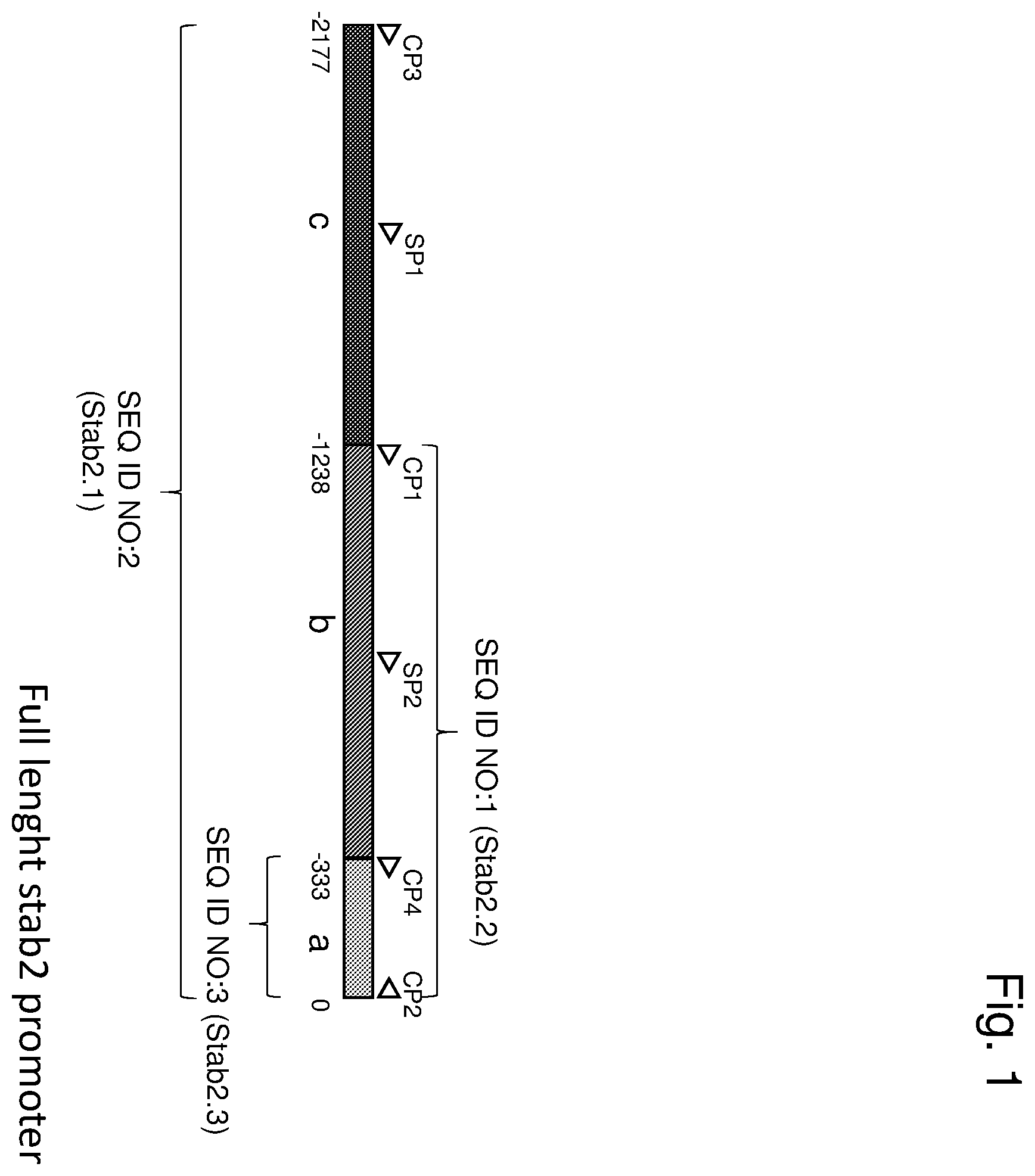
shows a schematic representation of the sequences of the invention along the full-length (2177 base pairs long) Stabilin-2 promoter, wherein SEQ ID NO: 3 (a) extends from 0 to −333 base pairs (bp) upstream the start site; SEQ ID NO: 1 (a+b) extends from 0 to −1238 bp and comprises SEQ ID NO: 3 (a) and sequence from −334 to −1238 bp; SEQ ID NO: 2 (a+b+c) extends from 0 to −2177 bp and comprises SEQ ID NO: 1 (a+b) and sequence from −1239 to −2177 bp. CP=cloning primer; SP=sequencing primer.
shows a schematic representation of the sequences of the present invention introduced into the LV vectors upstream GFP gene as reporter. LV.Stab2.1 is the construct comprising regions a, b and c of Stabilin-2 promoter (SEQ ID NO: 2) and the GFP as reporter gene. LV.Stab2.2 is the construct comprising regions a and b of Stabilin-2 promoter (SEQ ID NO: 1). LV.Stab2.3 is the construct comprising region a of Stabilin-2 promoter (SEQ ID NO: 3).
shows the in vitro characterization of Stab2.1 (SEQ ID NO: 2) and Stab2.2 (SEQ ID NO: 1) sequences. Comparison of transgene expression (the GFP reporter in this case) in endothelial and non-endothelial cells after transduction with the lentiviral constructs LV.Stab2.2-GFP or LV.Stab2.1-GFP. Endothelial-specific activity was compared with the ubiquitous PGK promoter and the endothelial-specific VEC promoter. The results show that Stab2.1 and Stab2.2 sequences promote transgene expression in the human endothelial cell line (hECV) and in the primary endothelial cells (HUVEC), while their activity is strongly reduced in non-endothelial cell types.
shows the in vivo characterization of the sequences of the invention. Immunofluorescence on liver and spleen sections from mice injected with the lentiviral constructs LV.PGK-GFP, LV.VEC-GFP or LV.Stab2.2-GFP. The results show that after direct injection of LV.Stab2.2-GFP, transgene expression is observed mainly in liver sinusoidal endothelial cells (Lyve-1+) and in few endothelial cells in spleen, while no GFP expression was detected in other cell types, such as hepatocytes or hematopoietic cells.
shows the in vivo long-term transgene expression. Immunofluorescence on liver sections from mice injected with LV.Stab2.2-GFP. The results show that the transgene expression is observed only in liver sinusoidal endothelial cells (Lyve-1+) for up to 12 weeks after injection.
shows the transgene (GFP) expression in BALB/c mice. Immunofluorescence on liver sections from BALB/c mice injected with LV.Stab2.2-GFP. The results show that the transgene expression is observed only in liver sinusoidal endothelial cells (Lyve-1+) for up to 8 weeks after LV delivery.
shows the in vivo FVIII expression after LV.Stab2.2-hBDD-FVIII delivery. C57Bl/6 HA mice were tail vein injected with 10 9 TU of LV.Stab2.2-hBDD-FVIII. As a comparison, a group of HA mice were injected with LV.VEC-hBDD-FVIII. A) Line chart showing hFVIII activity doubled in plasma of mice treated with LV.Stab2.2-hBDD-FVIII (˜10%) for up to 24 weeks after injection. B) No anti-FVIII antibodies were detected by ELISA in plasma of treated mice up to 24 weeks after LV delivery.
shows FVIII expression in liver and spleen after LV.Stab2.2-hBDD-FVIII delivery. Immunohistochemistry showing FVIII expressed mainly by liver sinusoidal endothelial cells and, in a lesser extent, by sinusoidal endothelial cells in the spleen. HA=C57Bl/6 HA mouse; WT=C57Bl/6 mouse; LV.Stab2-FVIII=C57Bl/6 HA mouse injected with LV.Stab2.2-hBDD-FVIII.
shows the in vivo FVIII expression after delivery of LV containing the sequences of the invention and a more active form of FVIII. C57Bl/6 HA mice were tail vein injected with 10 9 TU of LV.Stab2.2-hBDD-FVIII (n=4) or LV.Stab2.2-hBDD-FVIII-RH (n=4). As a comparison, two HA mice groups were injected with LV.VEC-hBDD-FVIII (n=3) or LV.VEC-FVIII-RH (n=3). A) Line chart shows hFVIII activity increased ˜45-50% in plasma of mice treated with LV containing the FVIII.RH form for up to 24 weeks after injection. Despite the increase of FVIII after injection of LV.VEC-FVIII-RH, the plasma levels of FVIII activity in mice injected with LV.Stab2.2-hBDD-FVIII was higher (10% Stab2.2-hBDD-FVIII vs 8% VEC-hBDD-FVIII-RH) and almost doubled in mice injected with LV.Stab2-FVIII-RH (15% Stab2.2-hBDD-FVIII-RH vs 8% VEC-hBDD-FVIII-RH). B) No anti-FVIII antibodies were detected in plasma of all treated mice up to 24 weeks after LV delivery.
shows the promoters activity and transgenes expression comparison. Chart showing a comparison of FVIII activity observed in plasma of C57Bl/6 HA mice after delivery of LV containing the VEC, F8 or the Stab2 promoter and hBDD-FVIII (A) or FVIII-RH (B) transgene. Red and blue dashed lines indicate 5% and 10% FVIII activity, respectively.
shows the in vivo FVIII expression after delivery of LV containing Stab2.2 promoter and a more active form of FVIII in B6/129 HA mice. Mice were tail vein injected with 10 9 TU of LV.Stab2.2-hBDD-FVIII (n=4) or LV.Stab2.2-FVIII-RH (n=4). A) Line chart showing hFVIII activity increase of −55-60% in plasma of mice treated with LV.Stab2.2-FVIII-RH compared to levels in mice treated with LV.Stab2.2-hBDD-FVIII. The activity detected in treated mice is comparable to the activity observed in C57Bl/6 HA mice injected with same LVs (Stab2.2-hBDD-FVIII=10% and Stab2.2-FVIII-RH=14%). B) No anti-FVIII antibodies were detected in plasma of treated mice up to 1 year after LV delivery.
shows the FACS analysis of hematological liver cells in B10D2×C57BL/6J mice injected with 3×10 8 TU of LV.PGK-GFP or 5×10 8 TU of LV.Stab2.2-GFP followed by adoptive transfer of 2×10 6 Control or Jedi CD8 T cells. A) Representative dot plots of physical parameters of hepatic immuno-hematologic cells. B-C) Stacked bars showing percentages of myeloid, CD8 + and CD4 + T cells in the liver.
shows the GFP expression and F4/80 marker by immunofluorescent staining in the liver of mice 11 days after LV.PGK-GFP or LV.Stab2.2-GFP injection and 4 days after Control or Jedi CD8 T cells transfer.
shows the in vivo characterization of the shortest sequences of the invention. Immunofluorescence on liver and spleen sections (A) from mice injected with the lentiviral construct LV.Stab2.2-GFP (top) and LV.Stab2.3-GFP (bottom). Bars represent the quantification of GFP in organ slices (n=20 fields/sample) expressed as ratio between GFP + cells and nuclei in a fixed area (B). The results show that transgene expression is exclusively observed in liver sinusoidal endothelial cells with an increase of endothelial GFP+ cells in the spleen of mice injected with the shortest LV.Stab2.3-GFP.
shows luciferase activity of 293T cells transiently transfected with plasmids expressing a luciferase reporter gene under the control of Stab2.2 (A) or Stab2.3 (B) promoters alone (black bars) or in combination with the Ets-1 endothelial transcription factor (grey bars). As showed, the expression of Ets-1 induced an up-regulation of luciferase activity of both promoters up to 30 times.
DEFINITIONS
In the context of the present invention, “promoter” means a DNA sequence adjacent and typically upstream (5′) of the sense strand of the regulated gene, where transcription of a gene by RNA polymerase begins.
In particular, the present invention refers to sequences derived from the Stabilin-2 promoter. Stabilin-2 (Stab-2), also known as hyaluronic acid receptor for endocytosis (HARE), is a type I transmembrane receptor expressed in the sinusoidal endothelial cells of liver, lymph nodes, bone marrow, spleen and in some macrophage subsets. Stab-2 belongs to the class H of scavenger receptors involved in several processes, including endocytosis, cell-cell interactions and apoptotic and necrotic cell clearance and in removal of negatively charged and/or sulfated carbohydrate polymer components of the extracellular matrix from circulation. Park et al. described and characterized the human Stab-2 promoter as a 1500 base pair sequence located on chromosome 12. In particular, by RACE PCR they identified the transcription initiation site located 205 nucleotides upstream the Stab-2 start codon and selected the Stab-2 promoter sequence as the genomic region containing nucleotides −1342 to +205 from the transcription initiation site. Moreover, they showed that NFATc1 regulates the Stab-2 transcription by interacting directly with nucleotides −188 to −183 of Stab-2 promoter sequence. Finally, they studied Stab-2 expression and function during myogenic differentiation and muscle regeneration.
The Stab-2 promoter derived sequences of the present invention are sequences able to drive the expression of transgenes in endothelial cells. Moreover, by using an in silico analysis several endothelial specific transcription factor (TF) binding site such as Ets-1, Ets-2 and PEA3 are identified in the first 333 bp upstream the ATG. Moreover, in the initial 333 bp also several transcription initiation start sites for FOXP3 are present.
The Stab-2 promoter derived sequence of the present invention is preferably selected from: SEQ ID NO: 1, 2 and 3 or any sequences comprising a sequence selected from SEQ ID NO: 1-3 and/or derived from SEQ ID NO: 1-3 and any combination thereof. In particular, SEQ ID NO: 2 corresponds to a sequence derived from the Stab-2 promoter located on Chromosome 12 and spanned between the following genomic coordinates 103,585,300-103,587,476 (of chromosome 12). SEQ ID NO: 1 corresponds to a sequence derived from the Stab-2 promoter located on Chromosome 12 and spanned between the following genomic coordinates 103,586,239-103,587,476 (of chromosome 12). SEQ ID NO: 3 corresponds to a sequence derived from the Stab-2 promoter located on Chromosome 12 and spanned between the following genomic coordinates 103,587,144-103,587,476 (of chromosome 12).
In the context of the present invention, “hemophilia A” means a X-linked genetic disorder caused by missing or defective clotting FVIII.
In the context of the present invention, “further diseases or conditions associated with or related to FVIII gene misexpression” means any disease, such as hemophilia B, that is a X-linked genetic disorder caused by missing or defective clotting FIX.
In the context of the present invention, “gene therapy” means a set of strategies that modify the expression of individual's genes or that correct abnormal genes. Each strategy involves the administration of a specific DNA.
In the context of the present invention, “coagulation cascade” means the sequence of biochemical reactions, involving clotting factors that stop bleeding by forming the fibrin clot.
In the context of the present invention, “liver sinusoidal endothelial cells” are the cells that form a continuous lining of the liver sinusoids, separating parenchymal cells and fat-storing cells from sinusoidal blood.
DETAILED DESCRIPTION OF THE INVENTION
A first aspect of the present invention refers to new polynucleotide sequences derived from Stabilin-2 (Stab-2) promoter and/or combination of sequences including those to be used as promoter (regulative) sequences for inducing/driving/targeting the endothelial specific expression of a therapeutic gene, preferably FVIII and/or its variants (or fragments). Therefore, the polynucleotide sequences of the present invention can be also defined as “endothelial-specific transcriptional promoter sequences”, in other words sequences that are able to induce the expression of a gene specifically into endothelial cells.
The Stab-2 promoter derived sequence of the present invention is preferably selected from: SEQ ID NO: 1, 2 and 3, or any sequences comprising SEQ ID NO: 1, 2 or 3, or any derivative/fragments/variants of SEQ ID NO: 1, 2 and 3.
As already specified above, SEQ ID NO: 2 corresponds to a sequence derived from the Stab-2 promoter sequence located on Chromosome 12 and spanned between the following genomic coordinates (Human Genome HG19): 103,585,300-103,587,476 (of chromosome 12). This sequence (SEQ ID NO: 2) is called from now on also long Stab-2 promoter derived sequence or Long sequence and comprises 2177 base pairs upstream stabilin-2 gene CDS (the CDS of Stabilin-2 is well defined sequence such as for example the one having the following Gene ID 55576) of Stab-2 gene as shown in .
SEQ ID NO: 1 corresponds to a sequence derived from the Stab-2 promoter sequence located on Chromosome 12 and spanned between the following genomic coordinates 103,586,239-103,587,476 (of chromosome 12). This sequence (SEQ ID NO: 1) is called from now on also short Stab-2 promoter derived sequence or Short sequence. This sequence (SEQ ID NO: 1) is called from now on also short Stab-2 promoter derived sequence or Short sequence and comprises 1238 base pairs upstream stabilin-2 gene CDS of Stab-2 gene as shown in .
SEQ ID NO: 3 corresponds to a sequence derived from the Stab-2 promoter sequence located on Chromosome 12 and spanned between the following genomic coordinates 103,587,144-103,587,476 (of chromosome 12). This sequence (SEQ ID NO: 3) is called from now on also shortest Stab-2 promoter derived sequence or Shortest sequence. This sequence (SEQ ID NO: 3) is called from now on also shortest Stab-2 promoter derived sequence or Shortest sequence and comprises 333 base pairs upstream stabilin-2 gene CDS of Stab-2 gene as shown in .
FVIII is preferably human B-Domain Deleted (BDD) FVIII, more preferably the human BDD FVIII polynucleotide sequence is selected from: SEQ ID NO: 4 and/or 5 or any sequences comprising SEQ ID NO: 4 and/or 5.
The variants of FVIII are preferably any form of FVIII with increased stability and/or enhanced pro-coagulant activity. Preferably, the FVIII variant is selected from: FVIII-RH and/or FVIII-N6 that are mutated forms of FVIII. In particular, FVIII-RH molecule is characterized by a substitution present in the canine form of FVIII that is more active of the human one. FVIII-N6 is characterized by a longer B domain included in comparison to the classical B domain deleted form used in gene therapy. Preferably, the polynucleotide sequence of FVIII-RH is selected from: SEQ ID NO: 6 and/or 7 or any sequences comprising SEQ ID NO: 6 and/or 7 wherein SEQ ID NO: 7 is a codon-optimized sequence. Preferably, the polynucleotide sequence of FVIII-N6 is SEQ ID NO: 8 or any sequences comprising SEQ ID NO: 8.
All the sequences disclosed in the present invention are listed in Table I and the Stab-2 promoter derived sequences of the invention are outlined in . However, any sequence having 80-95% of identity compared to the sequences of the present invention and/or sequences containing a combination of part or all the sequences of the present invention should be considered part of the disclosure. Moreover, the sequences of the disclosure are provided herewith as Sequence Listing.
TABLE I
Stab2 CGTTTCCATCATGGTTTCCAATAGAATTGAGAATACCATCT SEQ
promoter ATTATTTATTTATTCATTAAATATTGATTGTTTCAGCAGCAG ID NO:
derived AGGGCAGTGGTTGACAGTACTGGCTCTGGAGCCACATAG 1
short TTTGAATACTAGATTTACCACCTATTAGCTGTGTGGCCTTG
sequence GATAAATTCCTTAACCTCTCTGCCTCAGTTTCCTCCTCTGT
(Stab2.2) AAAATGAGAAGAATCATCCTGTTTTACCAAGTACTGTGAGA
ATTAAACAACTAAATCCATGGAGAGGCCTAGAATAGTGAC
TAGCATGTAGTAAGTTTTCAAAAAGTGATGGCTACTATCCT
TAACTGTTTTCATTATTTTGAAGTGCAGGTCTCTGCTCTAG
GAATCAAGGGGTACAGAGAAGATGAGGCTATATTCTTCTG
TCCTCAAGGCATTCATAGCTGGGCATGGGAGACAGACAG
ATAGATGTGACCTCGGCTTTCATGGCTTTATGTGCAAAATT
GTGGGAGCATCTTCAGGGTCCTGTGGAGGGGCAGCACAG
GAAGGCTTCCTGGAAGGGGTGGCTTTAGATCTGGAACTTA
AAGGGTAAGATTGAACCTACAGGCTCAGTCACTTGTTACT
GAAGTGGCATGGAAAAGAAGAAAGAATGAGTCAAAAACCC
ACCTGTCAGCATCTGCAAGGAGACTTTTTTTGCAGTAGAG
GTTATCCAGGGTGAAGCCACCACCTCCTGCAAGGTTTCTG
CAACATTCATTCCATACCTGGGACCGTGCTCACTTATGGG
CACTCCCCCAACCCCGCTCGACAGCAAGCTTGGACCTTT
GCATTGGCACCAAAAGGCCTGCAGTGTTCCATGGCGTGG
TTGTGGAAACATTGACAGGGCCGCAGGGCAGCAGTAGGC
AGGACTAGAGGAGGGGGCAGAGTAGAGGAGAGGCAGGA
CCGTTCTGAGAGCTTCGCAGGCACAAAAATCCCGGGCCA
AGCCTCTGCCTCAGCCCCTGCAGGATATCCTGTCATTCAG
CAGGATATATAGACCATTTACAGTGGCCAATTTCACCAAG
ACTCCTGGATTTGCCATTTTTCCTTTCTGAAGGCAGGTCTC
ACCTATCTCCTGGTTCGATCTAGGAAAAAGGAAAGGAAGG
GATTTAAAAGTAAACAGTGAAATGAGAAAGAATTCACTGG
GAGTTTATCAAACTAAGTTAAAATAGCTAAGTCAGCCTGAC
AGGTGCTTGGCACAGAGAAGGAGCAAATATTTCCTC
Stab2 GTCTAACATGGCATTTCCCTTAGAGACACTGATAGAACAC SEQ
promoter AGAATCTGGAGGTTGCCAATATAAATTTGCAAAAACAGAA ID NO:
derived AGCAACCCTTAGTCTAAAAAGCTTGGGAAATGCTGCCTTA 2
long AGCAAAGTTGAACTGTTTTTTGTTTCATTTGGTTGCGTTGT
sequence TTTAAAGGACTTCTCAGAACTTTCAATGGACTAACAAACAT
(Stab2.1) GGCCAATCCATGAGAAAGGGACATGAGAGACAGGCGTCC
CAAATTATCTGGCGAGAGAATTCTTCCCCACTACCCCTAC
AGCATTTTCCATAACTAAATTGTATTTAATAAAACATTATTT
AGGAAATGCTAGTATGGGCTCATTTTATTATTTCACCTGGA
ATTGAGCCTGTTCCAAGCCCCAGATTTTTATCTACATCCTT
TAGAAAGAAAAGAATCAGAAAGAAGCATCCAATTTATGTC
CCTGTTATATTTTTTAAGGTAACACAGCTGCTGTAACAGAT
AAATATCAAAGTCTCACTGGCTTCACACAATCATAATCCAT
TTCTCCTCAAGCAACAGTCCAGCGCAAGTGAAATCACCCA
GGAAGCTTTGGAAAATTCTCCTGTGCGCCACTCCCAGGCA
TTCTGATTTGGTTATTCTGGAGTGGAGCTAAGCATTAGGC
CTTTTTTTTTTTTTTTTGAGCTCCCCACCCAGGTTTCTGGG
CTGGCCTCTGAGGGGCCTATGTTGGAAAAGTTTCCTAGAT
TATCGGTCATTATAAATGTTGTTTCAAAAGTTGAAAGGAGT
CGGGGGGAGAGAGAGAGAGAGAGAGAGAAACTTTGTAGA
GAAATAAAGGATCATTTAACCAAAATTAGTATCTGTAAGTG
CATGAATCTCCCATTTAATTTAGTGTCATGAGACATGCCCT
GGTTTGTTAATAAGTCCAAACCTTATCCTTCCTGGTGCTG
GGTCTGACACGTTTCCATCATGGTTTCCAATAGAATTGAG
AATACCATCTATTATTTATTTATTCATTAAATATTGATTGTTT
CAGCAGCAGAGGGCAGTGGTTGACAGTACTGGCTCTGGA
GCCACATAGTTTGAATACTAGATTTACCACCTATTAGCTGT
GTGGCCTTGGATAAATTCCTTAACCTCTCTGCCTCAGTTTC
CTCCTCTGTAAAATGAGAAGAATCATCCTGTTTTACCAAGT
ACTGTGAGAATTAAACAACTAAATCCATGGAGAGGCCTAG
AATAGTGACTAGCATGTAGTAAGTTTTCAAAAAGTGATGG
CTACTATCCTTAACTGTTTTCATTATTTTGAAGTGCAGGTC
TCTGCTCTAGGAATCAAGGGGTACAGAGAAGATGAGGCT
ATATTCTTCTGTCCTCAAGGCATTCATAGCTGGGCATGGG
AGACAGACAGATAGATGTGACCTCGGCTTTCATGGCTTTA
TGTGCAAAATTGTGGGAGCATCTTCAGGGTCCTGTGGAG
GGGCAGCACAGGAAGGCTTCCTGGAAGGGGTGGCTTTAG
ATCTGGAACTTAAAGGGTAAGATTGAACCTACAGGCTCAG
TCACTTGTTACTGAAGTGGCATGGAAAAGAAGAAAGAATG
AGTCAAAAACCCACCTGTCAGCATCTGCAAGGAGACTTTT
TTTGCAGTAGAGGTTATCCAGGGTGAAGCCACCACCTCCT
GCAAGGTTTCTGCAACATTCATTCCATACCTGGGACCGTG
CTCACTTATGGGCACTCCCCCAACCCCGCTCGACAGCAA
GCTTGGACCTTTGCATTGGCACCAAAAGGCCTGCAGTGTT
CCATGGCGTGGTTGTGGAAACATTGACAGGGCCGCAGGG
CAGCAGTAGGCAGGACTAGAGGAGGGGGCAGAGTAGAG
GAGAGGCAGGACCGTTCTGAGAGCTTCGCAGGCACAAAA
ATCCCGGGCCAAGCCTCTGCCTCAGCCCCTGCAGGATAT
CCTGTCATTCAGCAGGATATATAGACCATTTACAGTGGCC
AATTTCACCAAGACTCCTGGATTTGCCATTTTTCCTTTCTG
AAGGCAGGTCTCACCTATCTCCTGGTTCGATCTAGGAAAA
AGGAAAGGAAGGGATTTAAAAGTAAACAGTGAAATGAGAA
AGAATTCACTGGGAGTTTATCAAACTAAGTTAAAATAGCTA
AGTCAGCCTGACAGGTGCTTGGCACAGAGAAGGAGCAAA
TATTTCCTC
Stab2 TAGAGGAGAGGCAGGACCGTTCTGAGAGCTTCGCAGGCA SEQ
promoter CAAAAATCCCGGGCCAAGCCTCTGCCTCAGCCCCTGCAG ID NO:
derived GATATCCTGTCATTCAGCAGGATATATAGACCATTTACAGT 3
shortest GGCCAATTTCACCAAGACTCCTGGATTTGCCATTTTTCCTT
Sequence TCTGAAGGCAGGTCTCACCTATCTCCTGGTTCGATCTAGG
(Stab2.3) AAAAAGGAAAGGAAGGGATTTAAAAGTAAACAGTGAAATG
AGAAAGAATTCACTGGGAGTTTATCAAACTAAGTTAAAATA
GCTAAGTCAGCCTGACAGGTGCTTGGCACAGAGAAGGAG
CAAATATTTCCTC
hBDD-FVIII atgcaaatagagctctccacctgcttctttctgtgccttttgcgattctgctttagtgccacc SEQ
agaagatactacctgggtgcagtggaactgtcatgggactatatgcaaagtgatctcg ID NO:
gtgagctgcctgtggacgcaagatttcctcctagagtgccaaaatcttttccattcaaca 4
cctcagtcgtgtacaaaaagactctgtttgtagaattcacggatcaccttttcaacatcg
ctaagccaaggccaccctggatgggtctgctaggtcctaccatccaggctgaggtttat
gatacagtggtcattacacttaagaacatggcttcccatcctgtcagtcttcatgctgttg
gtgtatcctactggaaagcttctgagggagctgaatatgatgatcagaccagtcaaag
ggagaaagaagatgataaagtcttccctggtggaagccatacatatgtctggcaggt
cctgaaagagaatggtccaatggcctctgacccactgtgccttacctactcatatctttct
catgtggacctggtaaaagacttgaattcaggcctcattggagccctactagtatgtag
agaagggagtctggccaaggaaaagacacagaccttgcacaaatttatactacttttt
gctgtatttgatgaagggaaaagttggcactcagaaacaaagaactccttgatgcag
gatagggatgctgcatctgctcgggcctggcctaaaatgcacacagtcaatggttatgt
aaacaggtctctgccaggtctgattggatgccacaggaaatcagtctattggcatgtga
ttggaatgggcaccactcctgaagtgcactcaatattcctcgaaggtcacacatttcttg
tgaggaaccatcgccaggcgtccttggaaatctcgccaataactttccttactgctcaa
acactcttgatggaccttggacagtttctactgttttgtcatatctcttcccaccaacatgat
ggcatggaagcttatgtcaaagtagacagctgtccagaggaaccccaactacgaat
gaaaaataatgaagaagcggaagactatgatgatgatcttactgattctgaaatggat
gtggtcaggtttgatgatgacaactctccttcctttatccaaattcgctcagttgccaaga
agcatcctaaaacttgggtacattacattgctgctgaagaggaggactgggactatgc
tcccttagtcctcgcccccgatgacagaagttataaaagtcaatatttgaacaatggcc
ctcagcggattggtaggaagtacaaaaaagtccgatttatggcatacacagatgaaa
cctttaagactcgtgaagctattcagcatgaatcaggaatcttgggacctttactttatgg
ggaagttggagacacactgttgattatatttaagaatcaagcaagcagaccatataac
atctaccctcacggaatcactgatgtccgtcctttgtattcaaggagattaccaaaaggt
gtaaaacatttgaaggattttccaattctgccaggagaaatattcaaatataaatggac
agtgactgtagaagatgggccaactaaatcagatcctcggtgcctgacccgctattac
tctagtttcgttaatatggagagagatctagcttcaggactcattggccctctcctcatctg
ctacaaagaatctgtagatcaaagaggaaaccagataatgtcagacaagaggaat
gtcatcctgttttctgtatttgatgagaaccgaagctggtacctcacagagaatatacaa
cgctttctccccaatccagctggagtgcagcttgaggatccagagttccaagcctcca
acatcatgcacagcatcaatggctatgtttttgatagtttgcagttgtcagtttgtttgcatg
aggtggcatactggtacattctaagcattggagcacagactgacttcctttctgtcttcttc
tctggatataccttcaaacacaaaatggtctatgaagacacactcaccctattcccattc
tcaggagaaactgtcttcatgtcgatggaaaacccaggtctatggattctggggtgcca
caactcagactttcggaacagaggcatgaccgccttactgaaggtttctagttgtgaca
agaacactggtgattattacgaggacagttatgaagatatttcagcatacttgctgagta
aaaacaatgccattgaaccaagaagcttctcccaaaacccaccagtcttgaaacgc
catcaacgggaaataactcgtactactcttcagtcagatcaagaggaaattgactatg
atgataccatatcagttgaaatgaagaaggaagattttgacatttatgatgaggatgaa
aatcagagcccccgcagctttcaaaagaaaacacgacactattttattgctgcagtgg
agaggctctgggattatgggatgagtagctccccacatgttctaagaaacagggctca
gagtggcagtgtccctcagttcaagaaagttgttttccaggaatttactgatggctccttta
ctcagcccttataccgtggagaactaaatgaacatttgggactcctggggccatatata
agagcagaagttgaagataatatcatggtaactttcagaaatcaggcctctcgtcccta
ttccttctattctagccttatttcttatgaggaagatcagaggcaaggagcagaacctag
aaaaaactttgtcaagcctaatgaaaccaaaacttacttttggaaagtgcaacatcat
atggcacccactaaagatgagtttgactgcaaagcctgggcttatttctctgatgttgac
ctggaaaaagatgtgcactcaggcctgattggaccccttctggtctgccacactaaca
cactgaaccctgctcatgggagacaagtgacagtacaggaatttgctctgtttttcacc
atctttgatgagaccaaaagctggtacttcactgaaaatatggaaagaaactgcagg
gctccctgcaatatccagatggaagatcccacttttaaagagaattatcgcttccatgc
aatcaatggctacataatggatacactacctggcttagtaatggctcaggatcaaagg
attcgatggtatctgctcagcatgggcagcaatgaaaacatccattctattcatttcagtg
gacatgtgttcaccgtacgaaaaaaagaggagtataaaatggcactgtacaatctct
atccaggtgtttttgagacagtggaaatgttaccatccaaagctggaatttggcgggtg
gaatgccttattggcgagcatctacatgctgggatgagcacactttttctggtgtacagc
aataagtgtcagactcccctgggaatggcttctggacacattagagattttcagattaca
gcttcaggacaatatggacagtgggccccaaagctggccagacttcattattccggat
caatcaatgcctggagcaccaaggagcccttttcttggatcaaggtggatctgttggca
ccaatgattattcacggcatcaagacccagggtgcccgtcagaagttctccagcctct
acatctctcagtttatcatcatgtatagtcttgatgggaagaagtggcagacttatcgag
gaaattccactggaaccttaatggtcttctttggcaatgtggattcatctgggataaaac
acaatatttttaaccctccaattattgctcgatacatccgtttgcacccaactcattatagc
attcgcagcactcttcgcatggagttgatgggctgtgatttaaatagttgcagcatgccat
tgggaatggagagtaaagcaatatcagatgcacagattactgcttcatcctactttacc
aatatgtttgccacctggtctccttcaaaagctcgacttcacctccaagggaggagtaa
tgcctggagacctcaggtgaataatccaaaagagtggctgcaagtggacttccagaa
gacaatgaaagtcacaggagtaactactcagggagtaaaatctctgcttaccagcat
gtatgtgaaggagttcctcatctccagcagtcaagatggccatcagtggactctctttttt
cagaatggcaaagtaaaggtttttcagggaaatcaagactccttcacacctgtggtga
actctctagacccaccgttactgactcgctaccttcgaattcacccccagagttgggtgc
accagattgccctgaggatggaggttctgggctgcgaggcacaggacctctactga
hBDD-FVIII ATGCAGATCGAGCTGTCCACCTGCTTTTTTCTGTGCCTGC SEQ
CO TGCGGTTCTGCTTCAGCGCCACCCGGCGGTACTACCTGG ID NO:
GCGCCGTGGAGCTGTCCTGGGACTACATGCAGAGCGACC 5
TGGGCGAGCTGCCCGTGGACGCCCGGTTCCCCCCCAGA
GTGCCCAAGAGCTTCCCCTTCAACACCAGCGTGGTGTAC
AAGAAAACCCTGTTCGTGGAGTTCACCGACCACCTGTTCA
ATATCGCCAAGCCCAGGCCCCCCTGGATGGGCCTGCTGG
GCCCCACCATCCAGGCCGAGGTGTACGACACCGTGGTGA
TCACCCTGAAGAACATGGCCAGCCACCCCGTGAGCCTGC
ACGCCGTGGGCGTGAGCTACTGGAAGGCCAGCGAGGGC
GCCGAGTACGACGACCAGACCAGCCAGCGGGAGAAAGA
AGATGACAAGGTGTTCCCTGGCGGCAGCCACACCTACGT
GTGGCAGGTGCTGAAAGAAAACGGCCCCATGGCCTCCGA
CCCCCTGTGCCTGACCTACAGCTACCTGAGCCACGTGGA
CCTGGTGAAGGACCTGAACAGCGGCCTGATCGGCGCTCT
GCTCGTCTGCCGGGAGGGCAGCCTGGCCAAAGAGAAAAC
CCAGACCCTGCACAAGTTCATCCTGCTGTTCGCCGTGTTC
GACGAGGGCAAGAGCTGGCACAGCGAGACAAAGAACAG
CCTGATGCAGGACCGGGACGCCGCCTCTGCCAGAGCCT
GGCCCAAGATGCACACCGTGAACGGCTACGTGAACAGAA
GCCTGCCCGGCCTGATTGGCTGCCACCGGAAGAGCGTGT
ACTGGCACGTGATCGGCATGGGCACCACACCCGAGGTGC
ACAGCATCTTTCTGGAAGGGCACACCTTTCTGGTCCGGAA
CCACCGGCAGGCCAGCCTGGAAATCAGCCCTATCACCTT
CCTGACCGCCCAGACACTGCTGATGGACCTGGGCCAGTT
CCTGCTGTTTTGCCACATCAGCTCTCACCAGCACGACGGC
ATGGAAGCCTACGTGAAGGTGGACTCTTGCCCCGAGGAA
CCCCAGCTGCGGATGAAGAACAACGAGGAAGCCGAGGAC
TACGACGACGACCTGACCGACAGCGAGATGGACGTGGTG
CGGTTCGACGACGACAACAGCCCCAGCTTCATCCAGATC
AGAAGCGTGGCCAAGAAGCACCCCAAGACCTGGGTGCAC
TATATCGCCGCCGAGGAAGAGGACTGGGACTACGCCCCC
CTGGTGCTGGCCCCCGACGACAGAAGCTACAAGAGCCAG
TACCTGAACAATGGCCCCCAGCGGATCGGCCGGAAGTAC
AAGAAAGTGCGGTTCATGGCCTACACCGACGAGACATTCA
AGACCCGGGAGGCCATCCAGCACGAGAGCGGCATCCTG
GGCCCCCTGCTGTACGGCGAAGTGGGCGACACACTGCTG
ATCATCTTCAAGAACCAGGCTAGCCGGCCCTACAACATCT
ACCCCCACGGCATCACCGACGTGCGGCCCCTGTACAGCA
GGCGGCTGCCCAAGGGCGTGAAGCACCTGAAGGACTTCC
CCATCCTGCCCGGCGAGATCTTCAAGTACAAGTGGACCG
TGACCGTGGAGGACGGCCCCACCAAGAGCGACCCCAGAT
GCCTGACCCGGTACTACAGCAGCTTCGTGAACATGGAAC
GGGACCTGGCCTCCGGGCTGATCGGACCTCTGCTGATCT
GCTACAAAGAAAGCGTGGACCAGCGGGGCAACCAGATCA
TGAGCGACAAGCGGAACGTGATCCTGTTCAGCGTGTTCG
ATGAGAACCGGTCCTGGTATCTGACCGAGAACATCCAGC
GGTTTCTGCCCAACCCTGCCGGCGTGCAGCTGGAAGATC
CCGAGTTCCAGGCCAGCAACATCATGCACTCCATCAATGG
CTACGTGTTCGACTCTCTGCAGCTCTCCGTGTGTCTGCAC
GAGGTGGCCTACTGGTACATCCTGAGCATCGGCGCCCAG
ACCGACTTCCTGAGCGTGTTCTTCAGCGGCTACACCTTCA
AGCACAAGATGGTGTACGAGGACACCCTGACCCTGTTCC
CTTTCAGCGGCGAGACAGTGTTCATGAGCATGGAAAACC
CCGGCCTGTGGATTCTGGGCTGCCACAACAGCGACTTCC
GGAACCGGGGCATGACCGCCCTGCTGAAGGTGTCCAGCT
GCGACAAGAACACCGGCGACTACTACGAGGACAGCTACG
AGGATATCAGCGCCTACCTGCTGTCCAAGAACAACGCCAT
CGAACCCCGGAGCTTCAGCCAGAACCCCCCCGTGCTGAC
GCGTCACCAGCGGGAGATCACCCGGACAACCCTGCAGTC
CGACCAGGAAGAGATCGATTACGACGACACCATCAGCGT
GGAGATGAAGAAAGAGGATTTCGATATCTACGACGAGGA
CGAGAACCAGAGCCCCAGAAGCTTCCAGAAGAAAACCCG
GCACTACTTCATTGCCGCCGTGGAGAGGCTGTGGGACTA
CGGCATGAGTTCTAGCCCCCACGTGCTGCGGAACCGGGC
CCAGAGCGGCAGCGTGCCCCAGTTCAAGAAAGTGGTGTT
CCAGGAATTCACAGACGGCAGCTTCACCCAGCCTCTGTAT
AGAGGCGAGCTGAACGAGCACCTGGGGCTGCTGGGGCC
CTACATCAGGGCCGAAGTGGAGGACAACATCATGGTGAC
CTTCCGGAATCAGGCCAGCAGACCCTACTCCTTCTACAGC
AGCCTGATCAGCTACGAAGAGGACCAGCGGCAGGGCGC
CGAACCCCGGAAGAACTTCGTGAAGCCCAACGAAACCAA
GACCTACTTCTGGAAAGTGCAGCACCACATGGCCCCCAC
CAAGGACGAGTTCGACTGCAAGGCCTGGGCCTACTTCAG
CGACGTGGATCTGGAAAAGGACGTGCACTCTGGACTGAT
TGGCCCACTCCTGGTCTGCCACACTAACACCCTCAACCCC
GCCCACGGCCGCCAGGTGACCGTGCAGGAATTCGCCCT
GTTCTTCACCATCTTCGACGAGACAAAGTCCTGGTACTTC
ACCGAGAATATGGAACGGAACTGCAGAGCCCCCTGCAAC
ATCCAGATGGAAGATCCTACCTTCAAAGAGAACTACCGGT
TCCACGCCATCAACGGCTACATCATGGACACCCTGCCTG
GCCTGGTGATGGCCCAGGACCAGAGAATCCGGTGGTATC
TGCTGTCCATGGGCAGCAACGAGAATATCCACAGCATCCA
CTTCAGCGGCCACGTGTTCACCGTGCGGAAGAAAGAAGA
GTACAAGATGGCCCTGTACAACCTGTACCCCGGCGTGTT
CGAGACAGTGGAGATGCTGCCCAGCAAGGCCGGCATCTG
GCGGGTGGAGTGTCTGATCGGCGAGCACCTGCACGCTG
GCATGAGCACCCTGTTTCTGGTGTACAGCAACAAGTGCCA
GACCCCACTGGGCATGGCCTCTGGCCACATCCGGGACTT
CCAGATCACCGCCTCCGGCCAGTACGGCCAGTGGGCCC
CCAAGCTGGCCAGACTGCACTACAGCGGCAGCATCAACG
CCTGGTCCACCAAAGAGCCCTTCAGCTGGATCAAGGTGG
ACCTGCTGGCCCCTATGATCATCCACGGCATTAAGACCCA
GGGCGCCAGGCAGAAGTTCAGCAGCCTGTACATCAGCCA
GTTCATCATCATGTACAGCCTGGACGGCAAGAAGTGGCA
GACCTACCGGGGCAACAGCACCGGCACCCTGATGGTGTT
CTTCGGCAATGTGGACAGCAGCGGCATCAAGCACAACAT
CTTCAACCCCCCCATCATTGCCCGGTACATCCGGCTGCAC
CCCACCCACTACAGCATTAGATCCACACTGAGAATGGAAC
TGATGGGCTGCGACCTGAACTCCTGCAGCATGCCTCTGG
GCATGGAAAGCAAGGCCATCAGCGACGCCCAGATCACAG
CCAGCAGCTACTTCACCAACATGTTCGCCACCTGGTCCCC
CTCCAAGGCCAGGCTGCACCTGCAGGGCCGGTCCAACG
CCTGGCGGCCTCAGGTCAACAACCCCAAAGAATGGCTGC
AGGTGGACTTTCAGAAAACCATGAAGGTGACCGGCGTGA
CCACCCAGGGCGTGAAAAGCCTGCTGACCAGCATGTACG
TGAAAGAGTTTCTGATCAGCAGCTCTCAGGATGGCCACCA
GTGGACCCTGTTCTTTCAGAACGGCAAGGTGAAAGTGTTC
CAGGGCAACCAGGACTCCTTCACCCCCGTGGTGAACTCC
CTGGACCCCCCCCTGCTGACCCGCTACCTGAGAATCCAC
CCCCAGTCTTGGGTGCACCAGATCGCCCTCAGGATGGAA
GTCCTGGGATGTGAGGCCCAGGATCTGTACTGATGA
FVIII-RH ATGCAAATAGAGCTCTCCACCTGCTTCTTTCTGTGCCTTTT SEQ
GCGATTCTGCTTTAGTGCCACCAGAAGATACTACCTGGGT ID NO:
GCAGTGGAACTGTCATGGGACTATATGCAAAGTGATCTCG 6
GTGAGCTGCCTGTGGACGCAAGATTTCCTCCTAGAGTGC
CAAAATCTTTTCCATTCAACACCTCAGTCGTGTACAAAAAG
ACTCTGTTTGTAGAATTCACGGATCACCTTTTCAACATCGC
TAAGCCAAGGCCACCCTGGATGGGTCTGCTAGGTCCTAC
CATCCAGGCTGAGGTTTATGATACAGTGGTCATTACACTT
AAGAACATGGCTTCCCATCCTGTCAGTCTTCATGCTGTTG
GTGTATCCTACTGGAAAGCTTCTGAGGGAGCTGAATATGA
TGATCAGACCAGTCAAAGGGAGAAAGAAGATGATAAAGTC
TTCCCTGGTGGAAGCCATACATATGTCTGGCAGGTCCTGA
AAGAGAATGGTCCAATGGCCTCTGACCCACTGTGCCTTAC
CTACTCATATCTTTCTCATGTGGACCTGGTAAAAGACTTGA
ATTCAGGCCTCATTGGAGCCCTACTAGTATGTAGAGAAGG
GAGTCTGGCCAAGGAAAAGACACAGACCTTGCACAAATTT
ATACTACTTTTTGCTGTATTTGATGAAGGGAAAAGTTGGCA
CTCAGAAACAAAGAACTCCTTGATGCAGGATAGGGATGCT
GCATCTGCTCGGGCCTGGCCTAAAATGCACACAGTCAAT
GGTTATGTAAACAGGTCTCTGCCAGGTCTGATTGGATGCC
ACAGGAAATCAGTCTATTGGCATGTGATTGGAATGGGCAC
CACTCCTGAAGTGCACTCAATATTCCTCGAAGGTCACACA
TTTCTTGTGAGGAACCATCGCCAGGCGTCCTTGGAAATCT
CGCCAATAACTTTCCTTACTGCTCAAACACTCTTGATGGAC
CTTGGACAGTTTCTACTGTTTTGTCATATCTCTTCCCACCA
ACATGATGGCATGGAAGCTTATGTCAAAGTAGACAGCTGT
CCAGAGGAACCCCAACTACGAATGAAAAATAATGAAGAAG
CGGAAGACTATGATGATGATCTTACTGATTCTGAAATGGA
TGTGGTCAGGTTTGATGATGACAACTCTCCTTCCTTTATCC
AAATTCGCTCAGTTGCCAAGAAGCATCCTAAAACTTGGGT
ACATTACATTGCTGCTGAAGAGGAGGACTGGGACTATGCT
CCCTTAGTCCTCGCCCCCGATGACAGAAGTTATAAAAGTC
AATATTTGAACAATGGCCCTCAGCGGATTGGTAGGAAGTA
CAAAAAAGTCCGATTTATGGCATACACAGATGAAACCTTTA
AGACTCGTGAAGCTATTCAGCATGAATCAGGAATCTTGGG
ACCTTTACTTTATGGGGAAGTTGGAGACACACTGTTGATT
ATATTTAAGAATCAAGCAAGCAGACCATATAACATCTACCC
TCACGGAATCACTGATGTCCGTCCTTTGTATTCAAGGAGA
TTACCAAAAGGTGTAAAACATTTGAAGGATTTTCCAATTCT
GCCAGGAGAAATATTCAAATATAAATGGACAGTGACTGTA
GAAGATGGGCCAACTAAATCAGATCCTCGGTGCCTGACC
CGCTATTACTCTAGTTTCGTTAATATGGAGAGAGATCTAGC
TTCAGGACTCATTGGCCCTCTCCTCATCTGCTACAAAGAA
TCTGTAGATCAAAGAGGAAACCAGATAATGTCAGACAAGA
GGAATGTCATCCTGTTTTCTGTATTTGATGAGAACCGAAG
CTGGTACCTCACAGAGAATATACAACGCTTTCTCCCCAAT
CCAGCTGGAGTGCAGCTTGAGGATCCAGAGTTCCAAGCC
TCCAACATCATGCACAGCATCAATGGCTATGTTTTTGATAG
TTTGCAGTTGTCAGTTTGTTTGCATGAGGTGGCATACTGG
TACATTCTAAGCATTGGAGCACAGACTGACTTCCTTTCTGT
CTTCTTCTCTGGATATACCTTCAAACACAAAATGGTCTATG
AAGACACACTCACCCTATTCCCATTCTCAGGAGAAACTGT
CTTCATGTCGATGGAAAACCCAGGTCTATGGATTCTGGGG
TGCCACAACTCAGACTTTCGGAACAGAGGCATGACCGCC
TTACTGAAGGTTTCTAGTTGTGACAAGAACACTGGTGATTA
TTACGAGGACAGTTATGAAGATATTTCAGCATACTTGCTGA
GTAAAAACAATGCCATTGAACCAAGAAGCTTCTCCCAAAA
CCCACCAGTCTTGAAACACCATCAACGGGAAATAACTCGT
ACTACTCTTCAGTCAGATCAAGAGGAAATTGACTATGATG
ATACCATATCAGTTGAAATGAAGAAGGAAGATTTTGACATT
TATGATGAGGATGAAAATCAGAGCCCCCGCAGCTTTCAAA
AGAAAACACGACACTATTTTATTGCTGCAGTGGAGAGGCT
CTGGGATTATGGGATGAGTAGCTCCCCACATGTTCTAAGA
AACAGGGCTCAGAGTGGCAGTGTCCCTCAGTTCAAGAAA
GTTGTTTTCCAGGAATTTACTGATGGCTCCTTTACTCAGCC
CTTATACCGTGGAGAACTAAATGAACATTTGGGACTCCTG
GGGCCATATATAAGAGCAGAAGTTGAAGATAATATCATGG
TAACTTTCAGAAATCAGGCCTCTCGTCCCTATTCCTTCTAT
TCTAGCCTTATTTCTTATGAGGAAGATCAGAGGCAAGGAG
CAGAACCTAGAAAAAACTTTGTCAAGCCTAATGAAACCAA
AACTTACTTTTGGAAAGTGCAACATCATATGGCACCCACTA
AAGATGAGTTTGACTGCAAAGCCTGGGCTTATTTCTCTGA
TGTTGACCTGGAAAAAGATGTGCACTCAGGCCTGATTGGA
CCCCTTCTGGTCTGCCACACTAACACACTGAACCCTGCTC
ATGGGAGACAAGTGACAGTACAGGAATTTGCTCTGTTTTT
CACCATCTTTGATGAGACCAAAAGCTGGTACTTCACTGAA
AATATGGAAAGAAACTGCAGGGCTCCCTGCAATATCCAGA
TGGAAGATCCCACTTTTAAAGAGAATTATCGCTTCCATGCA
ATCAATGGCTACATAATGGATACACTACCTGGCTTAGTAAT
GGCTCAGGATCAAAGGATTCGATGGTATCTGCTCAGCATG
GGCAGCAATGAAAACATCCATTCTATTCATTTCAGTGGAC
ATGTGTTCACCGTACGAAAAAAAGAGGAGTATAAAATGGC
ACTGTACAATCTCTATCCAGGTGTTTTTGAGACAGTGGAA
ATGTTACCATCCAAAGCTGGAATTTGGCGGGTGGAATGCC
TTATTGGCGAGCATCTACATGCTGGGATGAGCACACTTTT
TCTGGTGTACAGCAATAAGTGTCAGACTCCCCTGGGAATG
GCTTCTGGACACATTAGAGATTTTCAGATTACAGCTTCAG
GACAATATGGACAGTGGGCCCCAAAGCTGGCCAGACTTC
ATTATTCCGGATCAATCAATGCCTGGAGCACCAAGGAGCC
CTTTTCTTGGATCAAGGTGGATCTGTTGGCACCAATGATT
ATTCACGGCATCAAGACCCAGGGTGCCCGTCAGAAGTTC
TCCAGCCTCTACATCTCTCAGTTTATCATCATGTATAGTCT
TGATGGGAAGAAGTGGCAGACTTATCGAGGAAATTCCACT
GGAACCTTAATGGTCTTCTTTGGCAATGTGGATTCATCTG
GGATAAAACACAATATTTTTAACCCTCCAATTATTGCTCGA
TACATCCGTTTGCACCCAACTCATTATAGCATTCGCAGCA
CTCTTCGCATGGAGTTGATGGGCTGTGATTTAAATAGTTG
CAGCATGCCATTGGGAATGGAGAGTAAAGCAATATCAGAT
GCACAGATTACTGCTTCATCCTACTTTACCAATATGTTTGC
CACCTGGTCTCCTTCAAAAGCTCGACTTCACCTCCAAGGG
AGGAGTAATGCCTGGAGACCTCAGGTGAATAATCCAAAAG
AGTGGCTGCAAGTGGACTTCCAGAAGACAATGAAAGTCAC
AGGAGTAACTACTCAGGGAGTAAAATCTCTGCTTACCAGC
ATGTATGTGAAGGAGTTCCTCATCTCCAGCAGTCAAGATG
GCCATCAGTGGACTCTCTTTTTTCAGAATGGCAAAGTAAA
GGTTTTTCAGGGAAATCAAGACTCCTTCACACCTGTGGTG
AACTCTCTAGACCCACCGTTACTGACTCGCTACCTTCGAA
TTCACCCCCAGAGTTGGGTGCACCAGATTGCCCTGAGGA
TGGAGGTTCTGGGCTGCGAGGCACAGGACCTCTACTGA
FVIII-RH ATGCAGATCGAGCTGTCCACCTGCTTTTTTCTGTGCCTGC SEQ
CO TGCGGTTCTGCTTCAGCGCCACCCGGCGGTACTACCTGG ID NO:
GCGCCGTGGAGCTGTCCTGGGACTACATGCAGAGCGACC 7
TGGGCGAGCTGCCCGTGGACGCCCGGTTCCCCCCCAGA
GTGCCCAAGAGCTTCCCCTTCAACACCAGCGTGGTGTAC
AAGAAAACCCTGTTCGTGGAGTTCACCGACCACCTGTTCA
ATATCGCCAAGCCCAGGCCCCCCTGGATGGGCCTGCTGG
GCCCCACCATCCAGGCCGAGGTGTACGACACCGTGGTGA
TCACCCTGAAGAACATGGCCAGCCACCCCGTGAGCCTGC
ACGCCGTGGGCGTGAGCTACTGGAAGGCCAGCGAGGGC
GCCGAGTACGACGACCAGACCAGCCAGCGGGAGAAAGA
AGATGACAAGGTGTTCCCTGGCGGCAGCCACACCTACGT
GTGGCAGGTGCTGAAAGAAAACGGCCCCATGGCCTCCGA
CCCCCTGTGCCTGACCTACAGCTACCTGAGCCACGTGGA
CCTGGTGAAGGACCTGAACAGCGGCCTGATCGGCGCTCT
GCTCGTCTGCCGGGAGGGCAGCCTGGCCAAAGAGAAAAC
CCAGACCCTGCACAAGTTCATCCTGCTGTTCGCCGTGTTC
GACGAGGGCAAGAGCTGGCACAGCGAGACAAAGAACAG
CCTGATGCAGGACCGGGACGCCGCCTCTGCCAGAGCCT
GGCCCAAGATGCACACCGTGAACGGCTACGTGAACAGAA
GCCTGCCCGGCCTGATTGGCTGCCACCGGAAGAGCGTGT
ACTGGCACGTGATCGGCATGGGCACCACACCCGAGGTGC
ACAGCATCTTTCTGGAAGGGCACACCTTTCTGGTCCGGAA
CCACCGGCAGGCCAGCCTGGAAATCAGCCCTATCACCTT
CCTGACCGCCCAGACACTGCTGATGGACCTGGGCCAGTT
CCTGCTGTTTTGCCACATCAGCTCTCACCAGCACGACGGC
ATGGAAGCCTACGTGAAGGTGGACTCTTGCCCCGAGGAA
CCCCAGCTGCGGATGAAGAACAACGAGGAAGCCGAGGAC
TACGACGACGACCTGACCGACAGCGAGATGGACGTGGTG
CGGTTCGACGACGACAACAGCCCCAGCTTCATCCAGATC
AGAAGCGTGGCCAAGAAGCACCCCAAGACCTGGGTGCAC
TATATCGCCGCCGAGGAAGAGGACTGGGACTACGCCCCC
CTGGTGCTGGCCCCCGACGACAGAAGCTACAAGAGCCAG
TACCTGAACAATGGCCCCCAGCGGATCGGCCGGAAGTAC
AAGAAAGTGCGGTTCATGGCCTACACCGACGAGACATTCA
AGACCCGGGAGGCCATCCAGCACGAGAGCGGCATCCTG
GGCCCCCTGCTGTACGGCGAAGTGGGCGACACACTGCTG
ATCATCTTCAAGAACCAGGCTAGCCGGCCCTACAACATCT
ACCCCCACGGCATCACCGACGTGCGGCCCCTGTACAGCA
GGCGGCTGCCCAAGGGCGTGAAGCACCTGAAGGACTTCC
CCATCCTGCCCGGCGAGATCTTCAAGTACAAGTGGACCG
TGACCGTGGAGGACGGCCCCACCAAGAGCGACCCCAGAT
GCCTGACCCGGTACTACAGCAGCTTCGTGAACATGGAAC
GGGACCTGGCCTCCGGGCTGATCGGACCTCTGCTGATCT
GCTACAAAGAAAGCGTGGACCAGCGGGGCAACCAGATCA
TGAGCGACAAGCGGAACGTGATCCTGTTCAGCGTGTTCG
ATGAGAACCGGTCCTGGTATCTGACCGAGAACATCCAGC
GGTTTCTGCCCAACCCTGCCGGCGTGCAGCTGGAAGATC
CCGAGTTCCAGGCCAGCAACATCATGCACTCCATCAATGG
CTACGTGTTCGACTCTCTGCAGCTCTCCGTGTGTCTGCAC
GAGGTGGCCTACTGGTACATCCTGAGCATCGGCGCCCAG
ACCGACTTCCTGAGCGTGTTCTTCAGCGGCTACACCTTCA
AGCACAAGATGGTGTACGAGGACACCCTGACCCTGTTCC
CTTTCAGCGGCGAGACAGTGTTCATGAGCATGGAAAACC
CCGGCCTGTGGATTCTGGGCTGCCACAACAGCGACTTCC
GGAACCGGGGCATGACCGCCCTGCTGAAGGTGTCCAGCT
GCGACAAGAACACCGGCGACTACTACGAGGACAGCTACG
AGGATATCAGCGCCTACCTGCTGTCCAAGAACAACGCCAT
CGAACCCCGGAGCTTCAGCCAGAACCCCCCCGTGCTGAC
GCATCACCAGCGGGAGATCACCCGGACAACCCTGCAGTC
CGACCAGGAAGAGATCGATTACGACGACACCATCAGCGT
GGAGATGAAGAAAGAGGATTTCGATATCTACGACGAGGA
CGAGAACCAGAGCCCCAGAAGCTTCCAGAAGAAAACCCG
GCACTACTTCATTGCCGCCGTGGAGAGGCTGTGGGACTA
CGGCATGAGTTCTAGCCCCCACGTGCTGCGGAACCGGGC
CCAGAGCGGCAGCGTGCCCCAGTTCAAGAAAGTGGTGTT
CCAGGAATTCACAGACGGCAGCTTCACCCAGCCTCTGTAT
AGAGGCGAGCTGAACGAGCACCTGGGGCTGCTGGGGCC
CTACATCAGGGCCGAAGTGGAGGACAACATCATGGTGAC
CTTCCGGAATCAGGCCAGCAGACCCTACTCCTTCTACAGC
AGCCTGATCAGCTACGAAGAGGACCAGCGGCAGGGCGC
CGAACCCCGGAAGAACTTCGTGAAGCCCAACGAAACCAA
GACCTACTTCTGGAAAGTGCAGCACCACATGGCCCCCAC
CAAGGACGAGTTCGACTGCAAGGCCTGGGCCTACTTCAG
CGACGTGGATCTGGAAAAGGACGTGCACTCTGGACTGAT
TGGCCCACTCCTGGTCTGCCACACTAACACCCTCAACCCC
GCCCACGGCCGCCAGGTGACCGTGCAGGAATTCGCCCT
GTTCTTCACCATCTTCGACGAGACAAAGTCCTGGTACTTC
ACCGAGAATATGGAACGGAACTGCAGAGCCCCCTGCAAC
ATCCAGATGGAAGATCCTACCTTCAAAGAGAACTACCGGT
TCCACGCCATCAACGGCTACATCATGGACACCCTGCCTG
GCCTGGTGATGGCCCAGGACCAGAGAATCCGGTGGTATC
TGCTGTCCATGGGCAGCAACGAGAATATCCACAGCATCCA
CTTCAGCGGCCACGTGTTCACCGTGCGGAAGAAAGAAGA
GTACAAGATGGCCCTGTACAACCTGTACCCCGGCGTGTT
CGAGACAGTGGAGATGCTGCCCAGCAAGGCCGGCATCTG
GCGGGTGGAGTGTCTGATCGGCGAGCACCTGCACGCTG
GCATGAGCACCCTGTTTCTGGTGTACAGCAACAAGTGCCA
GACCCCACTGGGCATGGCCTCTGGCCACATCCGGGACTT
CCAGATCACCGCCTCCGGCCAGTACGGCCAGTGGGCCC
CCAAGCTGGCCAGACTGCACTACAGCGGCAGCATCAACG
CCTGGTCCACCAAAGAGCCCTTCAGCTGGATCAAGGTGG
ACCTGCTGGCCCCTATGATCATCCACGGCATTAAGACCCA
GGGCGCCAGGCAGAAGTTCAGCAGCCTGTACATCAGCCA
GTTCATCATCATGTACAGCCTGGACGGCAAGAAGTGGCA
GACCTACCGGGGCAACAGCACCGGCACCCTGATGGTGTT
CTTCGGCAATGTGGACAGCAGCGGCATCAAGCACAACAT
CTTCAACCCCCCCATCATTGCCCGGTACATCCGGCTGCAC
CCCACCCACTACAGCATTAGATCCACACTGAGAATGGAAC
TGATGGGCTGCGACCTGAACTCCTGCAGCATGCCTCTGG
GCATGGAAAGCAAGGCCATCAGCGACGCCCAGATCACAG
CCAGCAGCTACTTCACCAACATGTTCGCCACCTGGTCCCC
CTCCAAGGCCAGGCTGCACCTGCAGGGCCGGTCCAACG
CCTGGCGGCCTCAGGTCAACAACCCCAAAGAATGGCTGC
AGGTGGACTTTCAGAAAACCATGAAGGTGACCGGCGTGA
CCACCCAGGGCGTGAAAAGCCTGCTGACCAGCATGTACG
TGAAAGAGTTTCTGATCAGCAGCTCTCAGGATGGCCACCA
GTGGACCCTGTTCTTTCAGAACGGCAAGGTGAAAGTGTTC
CAGGGCAACCAGGACTCCTTCACCCCCGTGGTGAACTCC
CTGGACCCCCCCCTGCTGACCCGCTACCTGAGAATCCAC
CCCCAGTCTTGGGTGCACCAGATCGCCCTCAGGATGGAA
GTCCTGGGATGTGAGGCCCAGGATCTGTACTGATGA
FVIII-N6 ATGCAAAGTGATCTCGGTGAGCTGCCTGTGGACGCAAGA SEQ
TTTCCTCCTAGAGTGCCAAAATCTTTTCCATTCAACACCTC ID NO:
AGTCGTGTACAAAAAGACTCTGTTTGTAGAATTCACGGAT 8
CACCTTTTCAACATCGCTAAGCCAAGGCCACCCTGGATGG
GTCTGCTAGGTCCTACCATCCAGGCTGAGGTTTATGATAC
AGTGGTCATTACACTTAAGAACATGGCTTCCCATCCTGTC
AGTCTTCATGCTGTTGGTGTATCCTACTGGAAAGCTTCTG
AGGGAGCTGAATATGATGATCAGACCAGTCAAAGGGAGA
AAGAAGATGATAAAGTCTTCCCTGGTGGAAGCCATACATA
TGTCTGGCAGGTCCTGAAAGAGAATGGTCCAATGGCCTCT
GACCCACTGTGCCTTACCTACTCATATCTTTCTCATGTGGA
CCTGGTAAAAGACTTGAATTCAGGCCTCATTGGAGCCCTA
CTAGTATGTAGAGAAGGGAGTCTGGCCAAGGAAAAGACA
CAGACCTTGCACAAATTTATACTACTTTTTGCTGTATTTGA
TGAAGGGAAAAGTTGGCACTCAGAAACAAAGAACTCCTTG
ATGCAGGATAGGGATGCTGCATCTGCTCGGGCCTGGCCT
AAAATGCACACAGTCAATGGTTATGTAAACAGGTCTCTGC
CAGGTCTGATTGGATGCCACAGGAAATCAGTCTATTGGCA
TGTGATTGGAATGGGCACCACTCCTGAAGTGCACTCAATA
TTCCTCGAAGGTCACACATTTCTTGTGAGGAACCATCGCC
AGGCGTCCTTGGAAATCTCGCCAATAACTTTCCTTACTGC
TCAAACACTCTTGATGGACCTTGGACAGTTTCTACTGTCTT
GTCATATCTCTTCCCACCAACATGATGGCATGGAAGCTTA
TGTCAAAGTAGACAGCTGTCCAGAGGAACCCCAACTACGA
ATGAAAAATAATGAAGAAGCGGAAGACTATGATGATGATC
TTACTGATTCTGAAATGGATGTGGTCAGGTTTGATGATGA
CAACTCTCCTTCCTTTATCCAAATTCGCTCAGTTGCCAAGA
AGCATCCTAAAACTTGGGTACATTACATTGCTGCTGAAGA
GGAGGACTGGGACTATGCTCCCTTAGTCCTCGCCCCCGA
TGACAGAAGTTATAAAAGTCAATATTTGAACAATGGCCCTC
AGCGGATTGGTAGGAAGTACAAAAAAGTCCGATTTATGGC
ATACACAGATGAAACCTTTAAGACTCGTGAAGCTATTCAG
CATGAATCAGGAATCTTGGGACCTTTACTTTATGGGGAAG
TTGGAGACACACTGTTGATTATATTTAAGAATCAAGCAAGC
AGACCATATAACATCTACCCTCACGGAATCACTGATGTCC
GTCCTTTGTATTCAAGGAGATTACCAAAAGGTGTAAAACAT
TTGAAGGATTTTCCAATTCTGCCAGGAGAAATATTCAAATA
TAAATGGACAGTGACTGTAGAAGATGGGCCAACTAAATCA
GATCCTCGGTGCCTGACCCGCTATTACTCTAGTTTCGTTA
ATATGGAGAGAGATCTAGCTTCAGGACTCATTGGCCCTCT
CCTCATCTGCTACAAAGAATCTGTAGATCAAAGAGGAAAC
CAGATAATGTCAGACAAGAGGAATGTCATCCTGTTTTCTG
TATTTGATGAGAACCGAAGCTGGTACCTCACAGAGAATAT
ACAACGCTTTCTCCCCAATCCAGCTGGAGTGCAGCTTGAG
GATCCAGAGTTCCAAGCCTCCAACATCATGCACAGCATCA
ATGGCTATGTTTTTGATAGTTTGCAGTTGTCAGTTTGTTTG
CATGAGGTGGCATACTGGTACATTCTAAGCATTGGAGCAC
AGACTGACTTCCTTTCTGTCTTCTTCTCTGGATATACCTTC
AAACACAAAATGGTCTATGAAGACACACTCACCCTATTCC
CATTCTCAGGAGAAACTGTCTTCATGTCGATGGAAAACCC
AGGTCTATGGATTCTGGGGTGCCACAACTCAGACTTTCGG
AACAGAGGCATGACCGCCTTACTGAAGGTTTCTAGTTGTG
ACAAGAACACTGGTGATTATTACGAGGACAGTTATGAAGA
TATTTCAGCATACTTGCTGAGTAAAAACAATGCCATTGAAC
CAAGAAGCTTCTCCCAGAATTCAAGACACCCTAGCACTAG
GCAAAAGCAATTTAATGCCACCACAATTCCAGAAAATGAC
ATAGAGAAGACTGACCCTTGGTTTGCACACAGAACACCTA
TGCCTAAAATACAAAATGTCTCCTCTAGTGATTTGTTGATG
CTCTTGCGACAGAGTCCTACTCCACATGGGCTATCCTTAT
CTGATCTCCAAGAAGCCAAATATGAGACTTTTTCTGATGAT
CCATCACCTGGAGCAATAGACAGTAATAACAGCCTGTCTG
AAATGACACACTTCAGGCCACAGCTCCATCACAGTGGGG
ACATGGTATTTACCCCTGAGTCAGGCCTCCAATTAAGATT
AAATGAGAAACTGGGGACAACTGCAGCAACAGAGTTGAA
GAAACTTGATTTCAAAGTTTCTAGTACATCAAATAATCTGA
TTTCAACAATTCCATCAGACAATTTGGCAGCAGGTACTGAT
AATACAAGTTCCTTAGGACCCCCAAGTATGCCAGTTCATT
ATGATAGTCAATTAGATACCACTCTATTTGGCAAAAAGTCA
TCTCCCCTTACTGAGTCTGGTGGACCTCTGAGCTTGAGTG
AAGAAAATAATGATTCAAAGTTGTTAGAATCAGGTTTAATG
AATAGCCAAGAAAGTTCATGGGGAAAAAATGTATCGACGC
GTAGCTTTCAAAAGAAAACACGACACTATTTTATTGCTGCA
GTGGAGAGGCTCTGGGATTATGGGATGAGTAGCTCCCCA
CATGTTCTAAGAAACAGGGCTCAGAGTGGCAGTGTCCCTC
AGTTCAAGAAAGTTGTTTTCCAGGAATTTACTGATGGCTCC
TTTACTCAGCCCTTATACCGTGGAGAACTAAATGAACATTT
GGGACTCCTGGGGCCATATATAAGAGCAGAAGTTGAAGA
TAATATCATGGTAACTTTCAGAAATCAGGCCTCTCGTCCCT
ATTCCTTCTATTCTAGCCTTATTTCTTATGAGGAAGATCAG
AGGCAAGGAGCAGAACCTAGAAAAAACTTTGTCAAGCCTA
ATGAAACCAAAACTTACTTTTGGAAAGTGCAACATCATATG
GCACCCACTAAAGATGAGTTTGACTGCAAAGCCTGGGCTT
ATTTCTCTGATGTTGACCTGGAAAAAGATGTGCACTCAGG
CCTGATTGGACCCCTTCTGGTCTGCCACACTAACACACTG
AACCCTGCTCATGGGAGACAAGTGACAGTACAGGAATTTG
CTCTGTTTTTCACCATCTTTGATGAGACCAAAAGCTGGTAC
TTCACTGAAAATATGGAAAGAAACTGCAGGGCTCCCTGCA
ATATCCAGATGGAAGATCCCACTTTTAAAGAGAATTATCGC
TTCCATGCAATCAATGGCTACATAATGGATACACTACCTG
GCTTAGTAATGGCTCAGGATCAAAGGATTCGATGGTATCT
GCTCAGCATGGGCAGCAATGAAAACATCCATTCTATTCAT
TTCAGTGGACATGTGTTCACTGTACGAAAAAAAGAGGAGT
ATAAAATGGCACTGTACAATCTCTATCCAGGTGTTTTTGAG
ACAGTGGAAATGTTACCATCCAAAGCTGGAATTTGGCGGG
TGGAATGCCTTATTGGCGAGCATCTACATGCTGGGATGAG
CACACTTTTTCTGGTGTACAGCAATAAGTGTCAGACTCCC
CTGGGAATGGCTTCTGGACACATTAGAGATTTTCAGATTA
CAGCTTCAGGACAATATGGACAGTGGGCCCCAAAGCTGG
CCAGACTTCATTATTCCGGATCAATCAATGCCTGGAGCAC
CAAGGAGCCCTTTTCTTGGATCAAGGTGGATCTGTTGGCA
CCAATGATTATTCACGGCATCAAGACCCAGGGTGCCCGTC
AGAAGTTCTCCAGCCTCTACATCTCTCAGTTTATCATCATG
TATAGTCTTGATGGGAAGAAGTGGCAGACTTATCGAGGAA
ATTCCACTGGAACCTTAATGGTCTTCTTTGGCAATGTGGAT
TCATCTGGGATAAAACACAATATTTTTAACCCTCCAATTAT
TGCTCGATACATCCGTTTGCACCCAACTCATTATAGCATTC
GCAGCACTCTTCGCATGGAGTTGATGGGCTGTGATTTAAA
TAGTTGCAGCATGCCATTGGGAATGGAGAGTAAAGCAATA
TCAGATGCACAGATTACTGCTTCATCCTACTTTACCAATAT
GTTTGCCACCTGGTCTCCTTCAAAAGCTCGACTTCACCTC
CAAGGGAGGAGTAATGCCTGGAGACCTCAGGTGAATAAT
CCAAAAGAGTGGCTGCAAGTGGACTTCCAGAAGACAATG
AAAGTCACAGGAGTAACTACTCAGGGAGTAAAATCTCTGC
TTACCAGCATGTATGTGAAGGAGTTCCTCATCTCCAGCAG
TCAAGATGGCCATCAGTGGACTCTCTTTTTTCAGAATGGC
AAAGTAAAGGTTTTTCAGGGAAATCAAGACTCCTTCACAC
CTGTGGTGAACTCTCTAGACCCACCGTTACTGACTCGCTA
CCTTCGAATTCACCCCCAGAGTTGGGTGCACCAGATTGCC
CTGAGGATGGAGGTTCTGGGCTGCGAGGCACAGGACCTC
TACTGA
FIX ATGCAGCGCGTGAACATGATCATGGCAGAATCACCAGGC SEQ
CTCATCACCATCTGCCTTTTAGGATATCTACTCAGTGCTGA ID NO:
ATGTACAGTTTTTCTTGATCATGAAAACGCCAACAAAATTC 9
TGAATCGGCCAAAGAGGTATAATTCAGGTAAATTGGAAGA
GTTTGTTCAAGGGAACCTTGAGAGAGAATGTATGGAAGAA
AAGTGTAGTTTTGAAGAAGCACGAGAAGTTTTTGAAAACA
CTGAAAGAACAACTGAATTTTGGAAGCAGTATGTTGATGT
AACATGTAACATTAAGAATGGCAGATGCGAGCAGTTTTGT
AAAAATAGTGCTGATAACAAGGTGGTTTGCTCCTGTACTG
AGGGATATCGACTTGCAGAAAACCAGAAGTCCTGTGAACC
AGCAGTGCCATTTCCATGTGGAAGAGTTTCTGTTTCACAA
ACTTCTAAGCTCACCCGTGCTGAGACTGTTTTTCCTGATG
TGGACTATGTAAATTCTACTGAAGCTGAAACCATTTTGGAT
AACATCACTCAAAGCACCCAATCATTTAATGACTTCACTCG
GGTTGTTGGTGGAGAAGATGCCAAACCAGGTCAATTCCCT
TGGCAGGTTGTTTTGAATGGTAAAGTTGATGCATTCTGTG
GAGGCTCTATCGTTAATGAAAAATGGATTGTAACTGCTGC
CCACTGTGTTGAAACTGGTGTTAAAATTACAGTTGTCGCA
GGTGAACATAATATTGAGGAGACAGAACATACAGAGCAAA
AGCGAAATGTGATTCGAATTATTCCTCACCACAACTACAAT
GCAGCTATTAATAAGTACAACCATGACATTGCCCTTCTGG
AACTGGACGAACCCTTAGTGCTAAACAGCTACGTTACACC
TATTTGCATTGCTGACAAGGAATACACGAACATCTTCCTCA
AATTTGGATCTGGCTATGTAAGTGGCTGGGGAAGAGTCTT
CCACAAAGGGAGATCAGCTTTAGTTCTTCAGTACCTTAGA
GTTCCACTTGTTGACCGAGCCACATGTCTTCGATCTACAA
AGTTCACCATCTATAACAACATGTTCTGTGCTGGCTTCCAT
GAAGGAGGTAGAGATTCATGTCAAGGAGATAGTGGGGGA
CCCCATGTTACTGAAGTGGAAGGGACCAGTTTCTTAACTG
GAATTATTAGCTGGGGTGAAGAGTGTGCAATGAAAGGCAA
ATATGGAATATATACCAAGGTATCCCGGTATGTCAACTGG
ATTAAGGAAAAAACAAAGCTCACTTAA
FIX Padua ATGCAGCGCGTGAACATGATCATGGCAGAATCACCAGGC SEQ
CTCATCACCATCTGCCTTTTAGGATATCTACTCAGTGCTGA ID NO:
ATGTACAGTTTTTCTTGATCATGAAAACGCCAACAAAATTC 10
TGAATCGGCCAAAGAGGTATAATTCAGGTAAATTGGAAGA
GTTTGTTCAAGGGAACCTTGAGAGAGAATGTATGGAAGAA
AAGTGTAGTTTTGAAGAAGCACGAGAAGTTTTTGAAAACA
CTGAAAGAACAACTGAATTTTGGAAGCAGTATGTTGATGT
AACATGTAACATTAAGAATGGCAGATGCGAGCAGTTTTGT
AAAAATAGTGCTGATAACAAGGTGGTTTGCTCCTGTACTG
AGGGATATCGACTTGCAGAAAACCAGAAGTCCTGTGAACC
AGCAGTGCCATTTCCATGTGGAAGAGTTTCTGTTTCACAA
ACTTCTAAGCTCACCCGTGCTGAGACTGTTTTTCCTGATG
TGGACTATGTAAATTCTACTGAAGCTGAAACCATTTTGGAT
AACATCACTCAAAGCACCCAATCATTTAATGACTTCACTCG
GGTTGTTGGTGGAGAAGATGCCAAACCAGGTCAATTCCCT
TGGCAGGTTGTTTTGAATGGTAAAGTTGATGCATTCTGTG
GAGGCTCTATCGTTAATGAAAAATGGATTGTAACTGCTGC
CCACTGTGTTGAAACTGGTGTTAAAATTACAGTTGTCGCA
GGTGAACATAATATTGAGGAGACAGAACATACAGAGCAAA
AGCGAAATGTGATTCGAATTATTCCTCACCACAACTACAAT
GCAGCTATTAATAAGTACAACCATGACATTGCCCTTCTGG
AACTGGACGAACCCTTAGTGCTAAACAGCTACGTTACACC
TATTTGCATTGCTGACAAGGAATACACGAACATCTTCCTCA
AATTTGGATCTGGCTATGTAAGTGGCTGGGGAAGAGTCTT
CCACAAAGGGAGATCAGCTTTAGTTCTTCAGTACCTTAGA
GTTCCACGAGTTGACCGAGCCACATGTCTTCGATCTACAA
AGTTCACCATCTATAACAACATGTTCTGTGCTGGCTTCCAT
GAAGGAGGTAGAGATTCATGTCAAGGAGATAGTGGGGGA
CCCCATGTTACTGAAGTGGAAGGGACCAGTTTCTTAACTG
GAATTATTAGCTGGGGTGAAGAGTGTGCAATGAAAGGCAA
ATATGGAATATATACCAAGGTATCCCGGTATGTCAACTGG
ATTAAGGAAAAAACAAAGCTCACTTAAATGCAGCGCGTGA
ACATGATCATGGCAGAATCACCAGGCCTCATCACCATCTG
CCTTTTAGGATATCTACTCAGTGCTGAATGTACAGTTTTTC
TTGATCATGAAAACGCCAACAAAATTCTGAATCGGCCAAA
GAGGTATAATTCAGGTAAATTGGAAGAGTTTGTTCAAGGG
AACCTTGAGAGAGAATGTATGGAAGAAAAGTGTAGTTTTG
AAGAAGCACGAGAAGTTTTTGAAAACACTGAAAGAACAAC
TGAATTTTGGAAGCAGTATGTTGATGTAACATGTAACATTA
AGAATGGCAGATGCGAGCAGTTTTGTAAAAATAGTGCTGA
TAACAAGGTGGTTTGCTCCTGTACTGAGGGATATCGACTT
GCAGAAAACCAGAAGTCCTGTGAACCAGCAGTGCCATTTC
CATGTGGAAGAGTTTCTGTTTCACAAACTTCTAAGCTCACC
CGTGCTGAGACTGTTTTTCCTGATGTGGACTATGTAAATTC
TACTGAAGCTGAAACCATTTTGGATAACATCACTCAAAGCA
CCCAATCATTTAATGACTTCACTCGGGTTGTTGGTGGAGA
AGATGCCAAACCAGGTCAATTCCCTTGGCAGGTTGTTTTG
AATGGTAAAGTTGATGCATTCTGTGGAGGCTCTATCGTTA
ATGAAAAATGGATTGTAACTGCTGCCCACTGTGTTGAAAC
TGGTGTTAAAATTACAGTTGTCGCAGGTGAACATAATATTG
AGGAGACAGAACATACAGAGCAAAAGCGAAATGTGATTCG
AATTATTCCTCACCACAACTACAATGCAGCTATTAATAAGT
ACAACCATGACATTGCCCTTCTGGAACTGGACGAACCCTT
AGTGCTAAACAGCTACGTTACACCTATTTGCATTGCTGAC
AAGGAATACACGAACATCTTCCTCAAATTTGGATCTGGCT
ATGTAAGTGGCTGGGGAAGAGTCTTCCACAAAGGGAGAT
CAGCTTTAGTTCTTCAGTACCTTAGAGTTCCACGAGTTGA
CCGAGCCACATGTCTTCGATCTACAAAGTTCACCATCTAT
AACAACATGTTCTGTGCTGGCTTCCATGAAGGAGGTAGAG
ATTCATGTCAAGGAGATAGTGGGGGACCCCATGTTACTGA
AGTGGAAGGGACCAGTTTCTTAACTGGAATTATTAGCTGG
GGTGAAGAGTGTGCAATGAAAGGCAAATATGGAATATATA
CCAAGGTATCCCGGTATGTCAACTGGATTAAGGAAAAAAC
AAAGCTCACTTAA
FVII ATGGTCTCCCAGGCCCTCAGGCTCCTCTGCCTTCTGCTTG SEQ
GGCTTCAGGGCTGCCTGGCTGCAGGCGGGGTCGCTAAG ID NO:
GCCTCAGGAGGAGAAACACGGGACATGCCGTGGAAGCC 11
GGGGCCTCACAGAGTCTTCGTAACCCAGGAGGAAGCCCA
CGGCGTCCTGCACCGGCGCCGGCGCGCCAACGCGTTCC
TGGAGGAGCTGCGGCCGGGCTCCCTGGAGAGGGAGTGC
AAGGAGGAGCAGTGCTCCTTCGAGGAGGCCCGGGAGAT
CTTCAAGGACGCGGAGAGGACGAAGCTGTTCTGGATTTC
TTACAGTGATGGGGACCAGTGTGCCTCAAGTCCATGCCA
GAATGGGGGCTCCTGCAAGGACCAGCTCCAGTCCTATAT
CTGCTTCTGCCTCCCTGCCTTCGAGGGCCGGAACTGTGA
GACGCACAAGGATGACCAGCTGATCTGTGTGAACGAGAA
CGGCGGCTGTGAGCAGTACTGCAGTGACCACACGGGCAC
CAAGCGCTCCTGTCGGTGCCACGAGGGGTACTCTCTGCT
GGCAGACGGGGTGTCCTGCACACCCACAGTTGAATATCC
ATGTGGAAAAATACCTATTCTAGAAAAAAGAAATGCCAGC
AAACCCCAAGGCCGAATTGTGGGGGGCAAGGTGTGCCCC
AAAGGGGAGTGTCCATGGCAGGTCCTGTTGTTGGTGAAT
GGAGCTCAGTTGTGTGGGGGGACCCTGATCAACACCATC
TGGGTGGTCTCCGCGGCCCACTGTTTCGACAAAATCAAG
AACTGGAGGAACCTGATCGCGGTGCTGGGCGAGCACGAC
CTCAGCGAGCACGACGGGGATGAGCAGAGCCGGCGGGT
GGCGCAGGTCATCATCCCCAGCACGTACGTCCCGGGCAC
CACCAACCACGACATCGCGCTGCTCCGCCTGCACCAGCC
CGTGGTCCTCACTGACCATGTGGTGCCCCTCTGCCTGCC
CGAACGGACGTTCTCTGAGAGGACGCTGGCCTTCGTGCG
CTTCTCATTGGTCAGCGGCTGGGGCCAGCTGCTGGACCG
TGGCGCCACGGCCCTGGAGCTCATGGTCCTCAACGTGCC
CCGGCTGATGACCCAGGACTGCCTGCAGCAGTCACGGAA
GGTGGGAGACTCCCCAAATATCACGGAGTACATGTTCTGT
GCCGGCTACTCGGATGGCAGCAAGGACTCCTGCAAGGG
GGACAGTGGAGGCCCACATGCCACCCACTACCGGGGCA
CGTGGTACCTGACGGGCATCGTCAGCTGGGGCCAGGGC
TGCGCAACCGTGGGCCACTTTGGGGTGTACACCAGGGTC
TCCCAGTACATCGAGTGGCTGCAAAAGCTCATGCGCTCA
GAGCCACGCCCAGGAGTCCTCCTGCGAGCCCCATTTCCC
TAG
FV ATGTTCCCAGGCTGCCCACGCCTCTGGGTCCTGGTGGTC SEQ
TTGGGCACCAGCTGGGTAGGCTGGGGGAGCCAAGGGAC ID NO:
AGAAGCGGCACAGCTAAGGCAGTTCTACGTGGCTGCTCA 12
GGGCATCAGTTGGAGCTACCGACCTGAGCCCACAAACTC
AAGTTTGAATCTTTCTGTAACTTCCTTTAAGAAAATTGTCTA
CAGAGAGTATGAACCATATTTTAAGAAAGAAAAACCACAAT
CTACCATTTCAGGACTTCTTGGGCCTACTTTATATGCTGAA
GTCGGAGACATCATAAAAGTTCACTTTAAAAATAAGGCAG
ATAAGCCCTTGAGCATCCATCCTCAAGGAATTAGGTACAG
TAAATTATCAGAAGGTGCTTCTTACCTTGACCACACATTCC
CTGCGGAGAAGATGGACGACGCTGTGGCTCCAGGCCGA
GAATACACCTATGAATGGAGTATCAGTGAGGACAGTGGAC
CCACCCATGATGACCCTCCATGCCTCACACACATCTATTA
CTCCCATGAAAATCTGATCGAGGATTTCAACTCGGGGCTG
ATTGGGCCCCTGCTTATCTGTAAAAAAGGGACCCTAACTG
AGGGTGGGACACAGAAGACGTTTGACAAGCAAATCGTGC
TACTATTTGCTGTGTTTGATGAAAGCAAGAGCTGGAGCCA
GTCATCATCCCTAATGTACACAGTCAATGGATATGTGAAT
GGGACAATGCCAGATATAACAGTTTGTGCCCATGACCACA
TCAGCTGGCATCTGCTGGGAATGAGCTCGGGGCCAGAAT
TATTCTCCATTCATTTCAACGGCCAGGTCCTGGAGCAGAA
CCATCATAAGGTCTCAGCCATCACCCTTGTCAGTGCTACA
TCCACTACCGCAAATATGACTGTGGGCCCAGAGGGAAAG
TGGATCATATCTTCTCTCACCCCAAAACATTTGCAAGCTG
GGATGCAGGCTTACATTGACATTAAAAACTGCCCAAAGAA
AACCAGGAATCTTAAGAAAATAACTCGTGAGCAGAGGCGG
CACATGAAGAGGTGGGAATACTTCATTGCTGCAGAGGAA
GTCATTTGGGACTATGCACCTGTAATACCAGCGAATATGG
ACAAAAAATACAGGTCTCAGCATTTGGATAATTTCTCAAAC
CAAATTGGAAAACATTATAAGAAAGTTATGTACACACAGTA
CGAAGATGAGTCCTTCACCAAACATACAGTGAATCCCAAT
ATGAAAGAAGATGGGATTTTGGGTCCTATTATCAGAGCCC
AGGTCAGAGACACACTCAAAATCGTGTTCAAAAATATGGC
CAGCCGCCCCTATAGCATTTACCCTCATGGAGTGACCTTC
TCGCCTTATGAAGATGAAGTCAACTCTTCTTTCACCTCAG
GCAGGAACAACACCATGATCAGAGCAGTTCAACCAGGGG
AAACCTATACTTATAAGTGGAACATCTTAGAGTTTGATGAA
CCCACAGAAAATGATGCCCAGTGCTTAACAAGACCATACT
ACAGTGACGTGGACATCATGAGAGACATCGCCTCTGGGC
TAATAGGACTACTTCTAATCTGTAAGAGCAGATCCCTGGA
CAGGCGAGGAATACAGAGGGCAGCAGACATCGAACAGCA
GGCTGTGTTTGCTGTGTTTGATGAGAACAAAAGCTGGTAC
CTTGAGGACAACATCAACAAGTTTTGTGAAAATCCTGATG
AGGTGAAACGTGATGACCCCAAGTTTTATGAATCAAACAT
CATGAGCACTATCAATGGCTATGTGCCTGAGAGCATAACT
ACTCTTGGATTCTGCTTTGATGACACTGTCCAGTGGCACT
TCTGTAGTGTGGGGACCCAGAATGAAATTTTGACCATCCA
CTTCACTGGGCACTCATTCATCTATGGAAAGAGGCATGAG
GACACCTTGACCCTCTTCCCCATGCGTGGAGAATCTGTGA
CGGTCACAATGGATAATGTTGGAACTTGGATGTTAACTTC
CATGAATTCTAGTCCAAGAAGCAAAAAGCTGAGGCTGAAA
TTCAGGGATGTTAAATGTATCCCAGATGATGATGAAGACT
CATATGAGATTTTTGAACCTCCAGAATCTACAGTCATGGCT
ACACGGAAAATGCATGATCGTTTAGAACCTGAAGATGAAG
AGAGTGATGCTGACTATGATTACCAGAACAGACTGGCTGC
AGCATTAGGAATCAGGTCATTCCGAAACTCATCATTGAAT
CAGGAAGAAGAAGAGTTCAATCTTACTGCCCTAGCTCTGG
AGAATGGCACTGAATTCGTTTCTTCAAACACAGATATAATT
GTTGGTTCAAATTATTCTTCCCCAAGTAATATTAGTAAGTT
CACTGTCAATAACCTTGCAGAACCTCAGAAAGCCCCTTCT
CACCAACAAGCCACCACAGCTGGTTCCCCACTGAGACAC
CTCATTGGCAAGAACTCAGTTCTCAATTCTTCCACAGCAG
AGCATTCCAGCCCATATTCTGAAGACCCTATAGAGGATCC
TCTACAGCCAGATGTCACAGGGATACGTCTACTTTCACTT
GGTGCTGGAGAATTCAAAAGTCAAGAACATGCTAAGCATA
AGGGACCCAAGGTAGAAAGAGATCAAGCAGCAAAGCACA
GGTTCTCCTGGATGAAATTACTAGCACATAAAGTTGGGAG
ACACCTAAGCCAAGACACTGGTTCTCCTTCCGGAATGAGG
CCCTGGGAGGACCTTCCTAGCCAAGACACTGGTTCTCCTT
CCAGAATGAGGCCCTGGAAGGACCCTCCTAGTGATCTGT
TACTCTTAAAACAAAGTAACTCATCTAAGATTTTGGTTGGG
AGATGGCATTTGGCTTCTGAGAAAGGTAGCTATGAAATAA
TCCAAGATACTGATGAAGACACAGCTGTTAACAATTGGCT
GATCAGCCCCCAGAATGCCTCACGTGCTTGGGGAGAAAG
CACCCCTCTTGCCAACAAGCCTGGAAAGCAGAGTGGCCA
CCCAAAGTTTCCTAGAGTTAGACATAAATCTCTACAAGTAA
GACAGGATGGAGGAAAGAGTAGACTGAAGAAAAGCCAGT
TTCTCATTAAGACACGAAAAAAGAAAAAAGAGAAGCACAC
ACACCATGCTCCTTTATCTCCGAGGACCTTTCACCCTCTA
AGAAGTGAAGCCTACAACACATTTTCAGAAAGAAGACTTA
AGCATTCGTTGGTGCTTCATAAATCCAATGAAACATCTCTT
CCCACAGACCTCAATCAGACATTGCCCTCTATGGATTTTG
GCTGGATAGCCTCACTTCCTGACCATAATCAGAATTCCTC
AAATGACACTGGTCAGGCAAGCTGTCCTCCAGGTCTTTAT
CAGACAGTGCCCCCAGAGGAACACTATCAAACATTCCCCA
TTCAAGACCCTGATCAAATGCACTCTACTTCAGACCCCAG
TCACAGATCCTCTTCTCCAGAGCTCAGTGAAATGCTTGAG
TATGACCGAAGTCACAAGTCCTTCCCCACAGATATAAGTC
AAATGTCCCCTTCCTCAGAACATGAAGTCTGGCAGACAGT
CATCTCTCCAGACCTCAGCCAGGTGACCCTCTCTCCAGAA
CTCAGCCAGACAAACCTCTCTCCAGACCTCAGCCACACGA
CTCTCTCTCCAGAACTCATTCAGAGAAACCTTTCCCCAGC
CCTCGGTCAGATGCCCATTTCTCCAGACCTCAGCCATACA
ACCCTTTCTCCAGACCTCAGCCATACAACCCTTTCTTTAGA
CCTCAGCCAGACAAACCTCTCTCCAGAACTCAGTCAGACA
AACCTTTCTCCAGCCCTCGGTCAGATGCCCCTTTCTCCAG
ACCTCAGCCATACAACCCTTTCTCTAGACTTCAGCCAGAC
AAACCTCTCTCCAGAACTCAGCCATATGACTCTCTCTCCA
GAACTCAGTCAGACAAACCTTTCCCCAGCCCTCGGTCAGA
TGCCCATTTCTCCAGACCTCAGCCATACAACCCTTTCTCTA
GACTTCAGCCAGACAAACCTCTCTCCAGAACTCAGTCAAA
CAAACCTTTCCCCAGCCCTCGGTCAGATGCCCCTTTCTCC
AGACCCCAGCCATACAACCCTTTCTCTAGACCTCAGCCAG
ACAAACCTCTCTCCAGAACTCAGTCAGACAAACCTTTCCC
CAGACCTCAGTGAGATGCCCCTCTTTGCAGATCTCAGTCA
AATTCCCCTTACCCCAGACCTCGACCAGATGACACTTTCT
CCAGACCTTGGTGAGACAGATCTTTCCCCAAACTTTGGTC
AGATGTCCCTTTCCCCAGACCTCAGCCAGGTGACTCTCTC
TCCAGACATCAGTGACACCACCCTTCTCCCGGATCTCAGC
CAGATATCACCTCCTCCAGACCTTGATCAGATATTCTACC
CTTCTGAATCTAGTCAGTCATTGCTTCTTCAAGAATTTAAT
GAGTCTTTTCCTTATCCAGACCTTGGTCAGATGCCATCTC
CTTCATCTCCTACTCTCAATGATACTTTTCTATCAAAGGAA
TTTAATCCACTGGTTATAGTGGGCCTCAGTAAAGATGGTA
CAGATTACATTGAGATCATTCCAAAGGAAGAGGTCCAGAG
CAGTGAAGATGACTATGCTGAAATTGATTATGTGCCCTAT
GATGACCCCTACAAAACTGATGTTAGGACAAACATCAACT
CCTCCAGAGATCCTGACAACATTGCAGCATGGTACCTCCG
CAGCAACAATGGAAACAGAAGAAATTATTACATTGCTGCT
GAAGAAATATCCTGGGATTATTCAGAATTTGTACAAAGGG
AAACAGATATTGAAGACTCTGATGATATTCCAGAAGATACC
ACATATAAGAAAGTAGTTTTTCGAAAGTACCTCGACAGCA
CTTTTACCAAACGTGATCCTCGAGGGGAGTATGAAGAGCA
TCTCGGAATTCTTGGTCCTATTATCAGAGCTGAAGTGGAT
GATGTTATCCAAGTTCGTTTTAAAAATTTAGCATCCAGACC
GTATTCTCTACATGCCCATGGACTTTCCTATGAAAAATCAT
CAGAGGGAAAGACTTATGAAGATGACTCTCCTGAATGGTT
TAAGGAAGATAATGCTGTTCAGCCAAATAGCAGTTATACC
TACGTATGGCATGCCACTGAGCGATCAGGGCCAGAAAGT
CCTGGCTCTGCCTGTCGGGCTTGGGCCTACTACTCAGCT
GTGAACCCAGAAAAAGATATTCACTCAGGCTTGATAGGTC
CCCTCCTAATCTGCCAAAAAGGAATACTACATAAGGACAG
CAACATGCCTATGGACATGAGAGAATTTGTCTTACTATTTA
TGACCTTTGATGAAAAGAAGAGCTGGTACTATGAAAAGAA
GTCCCGAAGTTCTTGGAGACTCACATCCTCAGAAATGAAA
AAATCCCATGAGTTTCACGCCATTAATGGGATGATCTACA
GCTTGCCTGGCCTGAAAATGTATGAGCAAGAGTGGGTGA
GGTTACACCTGCTGAACATAGGCGGCTCCCAAGACATTCA
CGTGGTTCACTTTCACGGCCAGACCTTGCTGGAAAATGGC
AATAAACAGCACCAGTTAGGGGTCTGGCCCCTTCTGCCTG
GTTCATTTAAAACTCTTGAAATGAAGGCATCAAAACCTGGC
TGGTGGCTCCTAAACACAGAGGTTGGAGAAAACCAGAGA
GCAGGGATGCAAACGCCATTTCTTATCATGGACAGAGACT
GTAGGATGCCAATGGGACTAAGCACTGGTATCATATCTGA
TTCACAGATCAAGGCTTCAGAGTTTCTGGGTTACTGGGAG
CCCAGATTAGCAAGATTAAACAATGGTGGATCTTATAATG
CTTGGAGTGTAGAAAAACTTGCAGCAGAATTTGCCTCTAA
ACCTTGGATCCAGGTGGACATGCAAAAGGAAGTCATAATC
ACAGGGATCCAGACCCAAGGTGCCAAACACTACCTGAAG
TCCTGCTATACCACAGAGTTCTATGTAGCTTACAGTTCCAA
CCAGATCAACTGGCAGATCTTCAAAGGGAACAGCACAAG
GAATGTGATGTATTTTAATGGCAATTCAGATGCCTCTACAA
TAAAAGAGAATCAGTTTGACCCACCTATTGTGGCTAGATAT
ATTAGGATCTCTCCAACTCGAGCCTATAACAGACCTACCC
TTCGATTGGAACTGCAAGGTTGTGAGGTAAATGGATGTTC
CACACCCCTGGGTATGGAAAATGGAAAGATAGAAAACAAG
CAAATCACAGCTTCTTCGTTTAAGAAATCTTGGTGGGGAG
ATTACTGGGAACCCTTCCGTGCCCGTCTGAATGCCCAGG
GACGTGTGAATGCCTGGCAAGCCAAGGCAAACAACAATA
AGCAGTGGCTAGAAATTGATCTACTCAAGATCAAGAAGAT
AACGGCAATTATAACACAGGGCTGCAAGTCTCTGTCCTCT
GAAATGTATGTAAAGAGCTATACCATCCACTACAGTGAGC
AGGGAGTGGAATGGAAACCATACAGGCTGAAATCCTCCAT
GGTGGACAAGATTTTTGAAGGAAATACTAATACCAAAGGA
CATGTGAAGAACTTTTTCAACCCCCCAATCATTTCCAGGTT
TATCCGTGTCATTCCTAAAACATGGAATCAAAGTATTGCAC
TTCGCCTGGAACTCTTTGGCTGTGATATTTACTAG
mirT122- ACAAACACCATTGTCACACTCCATTCGAAACAAACACCATT SEQ
3p GTCACACTCCAACGCGTACAAACACCATTGTCACACTCCA ID NO:
110 bp ATGCATACAAACACCATTGTCACACTCCA 13
mirT223 GGGGTATTTGACAAACTGACACGATGGGGTATTTGACAAA SEQ
98 bp CTGACAACCGGTGGGGTATTTGACAAACTGACATCACGG ID NO:
GGTATTTGACAAACTGACA 14
mirT142- TCCATAAAGTAGGAAACACTACACGATTCCATAAAGTAGG SEQ
3p AAACACTACAACCGGTTCCATAAAGTAGGAAACACTACAT ID NO:
108 bp CACTCCATAAAGTAGGAAACACTACA 15
The cellular expression of the therapeutic gene, preferably FVIII and/or its variants, obtained by using the sequences of the disclosure—as promoter of the therapeutic gene of interest—allows rescuing/curing a disease such as hemophilia, preferably type A hemophilia, and/or any condition or disease related to or associate with a deficit or any misexpression of the therapeutic gene of interest, preferably FVIII and/or its variants.
Therefore, a second aspect of the present invention refers to the disclosed polynucleotide sequences, preferably a sequence selected from: SEQ ID NO: 1, 2 and 3, or any sequences comprising SEQ ID NO: 1, 2 and/or 3, or any derivative of SEQ ID NO: 1, 2 and/or 3, for use in gene therapy and/or cellular therapy, in particular for treating, preferably by a gene and/or cellular therapy approach, hemophilia, preferably type A hemophilia or any condition or disease related to or associate with a deficit in the expression of the therapeutic gene, preferably FVIII and/or its variants.
Besides hemophilia A the disclosed sequences may be used also to promote the endothelial specific expression of any further gene involved in the coagulation cascade, preferably a gene selected from: FIX, FVII, FV and any combination thereof.
According to a preferred embodiment of the invention, the polynucleotide sequence encoding for FIX is preferably selected from: SEQ ID NO: 9 and 10 or any sequence comprising SEQ ID NO: 9 and/or 10; the polynucleotide sequence encoding for FVII is preferably SEQ ID NO: 11 or any sequence comprising SEQ ID NO: 11; the polynucleotide sequence encoding for FV is preferably SEQ ID NO: 12 or any sequence comprising SEQ ID NO: 12.
Therefore, the herewith disclosed sequences can be also used for treating a condition/disease related to or associated with a deficit or a misexpression of any further gene involved in the coagulation cascade, preferably selected from FIX, FVII, FV and any combination thereof.
According to a further aspect of the invention, the disclosed sequences are useful to promote the endothelial specific expression of a gene or a growth factor, or a functional protein involved in the coagulation cascade or having a particular function into endothelial cells homeostasis or having the need to be expressed in endothelial cells.
As already mentioned above, the disclosed sequences are used as promoter polynucleotide sequences useful to target/address/induce the expression of a therapeutic gene, preferably FVIII gene and/or its variants, specifically into endothelial cells. In the context of the present invention, the endothelial cells are preferably, the endothelial cells of the liver, more preferably, the liver sinusoidal endothelial cells (LSECs) or further vascular and/or lymphatic endothelial cells.
According to a preferred embodiment of the invention, the disclosed sequences are contained in a vector (can be introduced into a vector), preferably any vector useful for gene expression.
The vector, preferably the expression vector, comprises the Stab-2 promoter derived sequences as disclosed above and/or any gene, preferably any therapeutic and/or reported gene as disclosed above.
The Stab-2 promoter derived sequence of the disclosure is preferably selected from SEQ ID NO: 1-3. The therapeutic gene is preferably, FVIII, more preferably human BDD, still more preferably a sequence selected from SEQ ID NO: 4-8; and/or FIX, preferably SEQ ID NO: 9 and/or 10; and/or FVII, preferably SEQ ID NO: 11; and/or FV, preferably SEQ ID NO: 12.
The vector is a viral vector or a non-viral vector. Viral vectors include a parvovirus, an adenovirus, a herpes simplex virus or a lentiviral (LV), a retroviral vector, preferably selected from the HIV-1 and/or gamma retroviruses, or adeno-associated vector (AAV). Preferably said vector is the improved self-inactivating (SIN) HIV-1 based lentiviral vector (LV, pCCL-prom-trans gene-cPPT-Wpre) prepared with the third generation lentiviral packaging system to produce LV.
Alternatively, the vector is selected from adeno-associated viral vector (AAV), preferably serotypes that can be used in endothelial cells.
According to a further preferred embodiment, the vector further comprises at least one sequence for modulating gene expression, preferably selected from the group consisting of: a polyadenylation sequence; a Woodchuck hepatitis post-transcriptional regulatory element (WPRE—to increase the transcript stability); the central polypurine tract (cPPT), preferably for lentiviral vectors; at least one mirT (mir Target sequences—that are sequences recognized by tissue-specific miRNAs inducing cell specific gene knockdown in selected cell types) and any combination thereof. Preferably, said mirT is selected from: mirT-142-3p, preferably SEQ ID NO: 15, preferably to detarget transgene expression from all hematopoietic cells; mirT-223, preferably SEQ ID NO: 14, preferably to detarget transgene expression from all myeloid cells; mirT-122, preferably SEQ ID NO: 13, preferably to detarget transgene expression from hepatocytes, and any combination thereof.
More preferably, the vector further comprises an enhancer polynucleotide sequence. More preferably, said enhancer polynucleotide sequence can be positioned upstream or downstream and/or close or far from the gene sequence the expression of which has to be enhanced.
The obtained vectors are useful for targeting specifically the expression of a therapeutic gene of interest in endothelial cells. The gene of interest is introduced into the vector preferably downstream the polynucleotide sequences of the disclosure, preferably downstream a sequence selected from: SEQ ID NO: 1-3, or any sequences comprising SEQ ID NO: 1, 2 or 3, or any derivative of SEQ ID NO: 1, 2 or 3. Preferably, the therapeutic gene of interest is FVIII or variants/fragments thereof. FVIII is preferably human BDD FVIII, more preferably the human BDD FVIII polynucleotide sequence is SEQ ID NO: 4 and/or 5 or any sequences comprising SEQ ID NO: 4 and/or 5. The variants of FVIII are preferably molecules with an increased pro-coagulant activity. Preferably, these molecules are FVIII-RH and/or FVIII-N6 that are mutated forms of FVIII. In particular, FVIII-RH molecule is characterized by a substitution present in the canine form of FVIII that is more active of the human one. FVIII-N6 is characterized by a longer B domain included in comparison to the classical B domain deleted form used in gene therapy. Preferably, the polynucleotide sequence of FVIII-RH is SEQ ID NO: 6 and/or 7 or any sequences comprising SEQ ID NO: 6 and/or 7 wherein SEQ ID NO: 7 is a codon-optimized sequence. Preferably, the polynucleotide sequence of FVIII-N6 is preferably SEQ ID NO: 8 or any sequences comprising SEQ ID NO: 8.
Alternatively the therapeutic gene of interest can be any further gene of the coagulation cascade, preferably selected from: FIX, FVII and FV, or growth factors, cytokines and small molecules, wherein the polynucleotide sequence of FIX is preferably SEQ ID NO: 9 and/or 10 or any sequence comprising SEQ ID NO: 9 and/or 10; the polynucleotide sequence of FVII is preferably SEQ ID NO: 11 or any sequence comprising SEQ ID NO: 11; the polynucleotide sequence of FV is preferably SEQ ID NO: 12 or any sequence comprising SEQ ID NO: 12.
A further aspect of the present invention refers to host cells comprising the nucleotide sequences and/or the vectors disclosed above. Preferably, said vectors are capable of expressing the gene of interest, preferably the therapeutic gene sequences as disclosed above in the host. The host may be any suitable host such as a bacterial, a yeast, an insect or a mammalian cell.
A further aspect of the present invention refers to transgenic animals comprising the host cells, and/or the vectors and/or the nucleotide sequences disclosed above. The animals are preferably non-human mammals, preferably rodents, such as mice.
The host cells, or the vectors or the polynucleotide sequences disclosed above can be used in the manufacture of a medicament that is preferably used in therapy, more preferably in gene and/or cell therapy, more preferably to cure/treat hemophilia, preferably type A hemophilia.
A further aspect of the present invention refers to a pharmaceutical composition comprising the host cells, or the vectors or the polynucleotide sequences disclosed above and at least one pharmaceutically acceptable excipients, such as carriers, diluents and/or other medical agents, pharmaceutical agents or adjuvants, etc.
A further aspect of the present invention refers to a method for treating a disease, preferably hemophilia, more preferably type A hemophilia, comprising at least one step of administering a therapeutically effective amount of the host cell, and/or the vector and/or the polynucleotide sequence disclosed above to an individual, preferably a human, suffering from such disease, preferably hemophilia. According to a preferred embodiment the individual has an immune-response to FVIII, in other words the individual shows systemic detection of anti-FVIII antibodies.
In this context, a “therapeutically effective amount” means an amount effective, at dosages and for periods of time necessary, to achieve the desired therapeutic result, such as raising the level of therapeutic gene, preferably FVIII or the other coagulation cascade factors in said individual so as to lead to functional therapeutic gene/protein production to a level sufficient to rescue or to ameliorate the symptoms of the pathological condition associate to or caused by misexpression/deficit of said therapeutic gene/protein.
A further aspect of the present invention refers to the use of the polynucleotide sequences of the present invention as disclosed above, preferably a sequence selected from: SEQ ID NO: 1-3, or any sequences comprising SEQ ID NO: 1, 2 or 3, or any derivative of SEQ ID NO: 1, 2 or 3 for modulating the expression, preferably the cellular expression, more preferably into endothelial cells, of a therapeutic gene, wherein said therapeutic gene is preferably FVIII or variants/fragments thereof. FVIII is preferably human BDD FVIII, more preferably the human BDD FVIII polynucleotide sequence is SEQ ID NO: 4 and/or 5 or any sequences comprising SEQ ID NO: 4 and/or 5. The variants of FVIII are preferably molecules with an increased pro-coagulant activity. Preferably, these molecules are FVIII-RH and/or FVIII-N6 that are mutated forms of FVIII. In particular, FVIII-RH molecule is characterized by a substitution present in the canine form of FVIII that is more active of the human one. FVIII-N6 is characterized by a longer B domain included in comparison to the classical B domain deleted form used in gene therapy. Preferably, the polynucleotide sequence of FVIII-RH is SEQ ID NO: 6 and/or 7 or any sequences comprising SEQ ID NO: 6 and/or 7 wherein SEQ ID NO: 7 is a codon-optimized sequence. Preferably, the polynucleotide sequence of FVIII-N6 is preferably SEQ ID NO: 8 or any sequences comprising SEQ ID NO: 8. Alternatively the therapeutic gene can be any further gene of the coagulation cascade, preferably selected from: FIX, FVII and FV, or growth factors, cytokines and small molecules, wherein the polynucleotide sequence of FIX is preferably SEQ ID NO: 9 and/or 10 or any sequence comprising SEQ ID NO: 9 and/or 10; the polynucleotide sequence of FVII is preferably SEQ ID NO: 11 or any sequence comprising SEQ ID NO: 11; the polynucleotide sequence of FV is preferably SEQ ID NO: 12 or any sequence comprising SEQ ID NO: 12.
Example I
Cloning
The biological activities of the Stabilin-2 derived sequences of the invention have been tested by using two Lentiviral Vectors (LVs) expressing Green Fluorescent Protein (GFP). In particular, the long and the short form of Stabilin-2 promoter (SEQ ID NO: 2 and SEQ ID NO: 1, respectively) have been tested for GFP expression.
Both regions (the long and the short form of Stabilin-2 promoter) are located on chromosome 12. In particular, the short promoter spans between the following genomic coordinates: 103586239-103587476, and the long promoter spans between the following genomic coordinates: 103585300-103587476.
SEQ ID NO: 1, that is the Stab-2 short promoter (Stab2.2=1238 base pairs long); and SEQ ID NO: 2, that is the Stab-2 long promoter (Stab2.1=2177 base pairs long)—were amplified by PCR from human genomic DNA extracted by peripheral blood mononuclear cells by inserting at 3′ and 5′ ends the restriction sites for the enzymes XhoI and AgeI. These sites were used to insert the cloned promoter in the LV.PGK-GFP in place of PGK promoter in order to obtain the LV.Stab2.2-GFP (containing SEQ ID NO: 1, the short Stab-2 promoter derived) and the LV.Stab2.1-GFP (containing SEQ ID NO: 2, the long Stab-2 promoter derived) constructs respectively. In order to generate LV.Stab2.2-hBDD-FVIII and LV.Stab2.2-hBDD-FVIII-RH we substituted the GFP sequence with the human BDD-FVIII (SEQ ID NO: 4) or the hBDD-FVIII-RH (SEQ ID NO: 6) sequences.
SEQ ID NO: 3, that is the shortest Stab-2 promoter derived sequence (333 base pairs long) has been retrieved by PCR using specific primers and inserting the restriction sites for the enzymes XhoI and AgeI. All the sequences have been verified by direct Sanger sequencing.
The set of primers used for cloning and sequencing are listed in Table 2.
TABLE 2
Cloning Primers
Primer Sequence (5′→3′) SEQ ID NO
CP1: Stab2.2 CTCGAG CGTTTCCATCATGGTTTC SEQ ID NO: 16
sense
(XhoI restriction
site)
CP2: Stab2.1-3 ACCGGT GAGGAAATATTTGCTCCTTCTC SEQ ID NO: 17
anti-sense
(AgeI restriction
site)
CP3: Stab2.1 CTCGAG GTCTAACATGGCATTTCCCT SEQ ID NO: 18
sense
(XhoI restriction
site)
CP4: Stab2.3 CTCGAG TAGAGGAGAGGCAGGACCGTT SEQ ID NO: 19
sense (XhoI
restriction site)
Sequencing Primers
Primer Sequence (5′→3′)
SP1 GAAGCATCCAATTTATGTCCCT SEQ ID NO: 20
SP2 GATAGATGTGACCTCGGCTTTC SEQ ID NO: 21
In Vitro and In Vivo Studies
The cell specific expression of the promoter sequences of the invention (derived from Stab-2 promoter as disclosed above) have been verified in vitro by transducing cell lines and primary cells of different origin by using the constructs disclosed in the previous paragraph.
In particular, the capacity of the promoter sequences of the invention to induce the expression of a gene, such as the marker GFP, have been checked in following cell lines: HEK293T (human epithelial cell line), hECV (human endothelial cell line), HUVEC (human primary endothelial cells) and HFF (human primary fibroblasts).
GFP expression has been evaluated by FACS analysis 72 hours after transduction.
Further, in vivo studies have been performed by injecting 1) 5×10 8 TU of GFP-containing LVs into the tail vein of C57Bl/6 and BALB/c mice, and 10 9 TU of FVIII-containing LVs into the tail vein of C57Bl/6 HA or B6/129 HA mice (B6;129S-F8tm1Kaz/J; The Jackson Laboratory).
GFP expression has been evaluated by FACS analysis and immunofluorescence starting from 2 weeks after injection.
FVIII plasma activity has been assessed in the injected mice by aPTT assay starting from 2 weeks and up to 6 months after injection.
FVIII expression in LSECs after injection of LV.Stab2.2-hBDD-FVIII was evaluated by immunohistochemistry 6 months after LV injection.
FVIII Activity Assays
FVIII activity has been assessed by aPTT assay using the Coagulation Analyzer Coatron® M4 (TECO Medical Instruments). Standard curves have been generated using serial dilutions of pooled human plasma or purified hBDD-hFVIII (Refacto®) in hemophilic mouse plasma. The results have been expressed as percentage of human FVIII activity.
ELISA for Anti-FVIII Antibodies
Plasma samples have been diluted—1:200 and 1:2000—and tested in a solid phase ELISA, in which ReFacto® (0.2 μg/well) or bovine serum albumin (BSA) used as a specificity control, were adsorbed on PVC microwells and saturated with 0.2% BSA.
Serum reactivity has been detected with horseradish peroxidase-conjugated goat anti-mouse total IgG (Thermo Scientific Inc) and the addition of the chromogen 3,3′,5,5′-tetramethylbenzidine (TMB; Sigma Aldrich). A commercial mouse anti-FVIII monoclonal antibody (Clone GMA-8015, Green Mountain Antibodies) has been used as positive control. The absorbance has been read at 450 nm on a Victor X (PerkinElmer) spectrophotometer.
Immunofluorescence
Liver and spleen from mice have been fixed in 4% paraformaldehyde (PFA) in PBS for 2 hours at 4° C., equilibrated in 30% sucrose, embedded in Killik cryostat embedding medium (Bio-Optica) and stored at −80° C. Cryostat sections (5-6 μm) have been incubated in blocking buffer (5% goat serum, 1% BSA, 0.1% Triton X-100 in PBS). GFP has been detected by staining samples with rabbit anti-GFP (1:1000; Molecular Probes, Thermo Scientific Inc) for 1 hour at Room Temperature (RT).
Co-staining with rat anti-mouse F4/80 (1:400; AbD serotec, Bio-Rad) or rat anti-mouse Lyve-1 (1:200; eBioscience, Affymetrix) has been performed in order to characterize the GFP-expressing cells. After washing in PBS containing 0.1% Triton X-100, Alexa Fluor® 488-conjugated goat anti-rabbit IgG and Alexa Fluor® 546-conjugated goat anti-rat IgG (1:500, Molecular Probes, Thermo Scientific Inc) have been added for 1 hour. Nuclei have been stained with DAPI (Sigma Aldrich).
Immunohistochemistry
Paraffin-embedded sections (5-6 μm thick) from mouse liver and spleen have been treated in boiling 50 mM EDTA pH 8 for antigen retrieval using a microwave oven and then blocked in a buffer containing 5% goat serum, 1% BSA, 0.1% Triton X-100 in PBS. For FVIII detection, samples were stained with rabbit anti-FVIII (1:1000) for 2 hours at RT. Immunohistochemical reactions have been performed by a standard procedure. Immunostaining has been performed with a Dako Cytomation Envision plus system (DAKO Cytomation), using diaminobenzidine as chromogen. Sections have been counterstained with hemalume (Merck).
Results
Cloning and In Vitro Activity/Characterization of the Stab-2 Promoter Derived Sequences
In order to assess the in vitro activity of the Stab-2 promoter derived sequences of the invention, we inserted SEQ ID NO: 1 or SEQ ID NO: 2 in two lentiviral (LV) transfer constructs containing GFP as gene reporter (LV.Stab2.2.GFP and LV.Stab2.1.GFP) ( ).
The LVs constructs have been used to transduce at MOI 1 hECV cells and HUVEC, that are a human cell line of endothelial origin and primary human endothelial cell, respectively. HEK293T cells, (a human hembrionic kidney cell line) and primary human foreskin fibroblasts (HFF) have been used as negative controls.
The results are shown in and have been compared with those obtained transducing same cells with LVs containing the GFP sequence under the control of the endothelial-specific VEC promoter or the ubiquitous PGK promoter.
Both SEQ ID NO 1 and 2—the short and the long form of Stab2 promoter-derived sequences—are active exclusively into endothelial cells (HUVEC and hECV cells), compared to the non-endothelial cells (HEK293T and HFF cells). Indeed, GFP is expressed at highest level into endothelial cells compared to the non-endothelial ones.
In Vivo Characterization of the Stab-2 Promoter Derived Sequences
Since no differences have been observed between SEQ ID NO: 1 and 2, only the shorter form (LV.Stab2.2 comprising SEQ ID NO: 1) have been used for in vivo experiments also in order to increase the loading capacity of the LVs.
5×10 8 TU of LV.Stab2.2-GFP construct has been injected in the tail vein of C57Bl/6 mice. LV.VEC-GFP (comprising VEC—endothelial specific-promoter) and LV.PGK-GFP (comprising PGK—ubiquitous—promoter) have been used as control for endothelial and ubiquitous expression, respectively.
GFP expression in liver and spleen has been evaluated by FACS and immunofluorescence (IF) analysis 2 weeks after injection.
We evaluated the co-expression by immunofluorescence of GFP and LSEC (Lyve-1+) or Kupffer cells (F4/80+)-specific markers on liver and spleen sections of injected mice.
The results show that VEC promoter and SEQ ID NO: 1 are almost equally strong and efficient in driving transgene expression in LSEC as shown by Lyve1 (that is a marker for endothelial cells) co-staining ( ).
However, in the liver of LV.VEC-GFP injected mice we detected some “off-target” expression in Kupffer cells and hepatocytes while in spleen VEC was active in red pulp F4/80 positive cells.
Conversely, in liver sections of LV.Stab2.2-GFP-injected (comprising SEQ ID NO: 1) mice, the GFP expression is restricted to endothelial cells and, particularly, LSEC. Therefore, the Stab2 promoter derived sequences of the present invention drive transgene (here the GFP) expression into endothelial cells more specifically than a well-known endothelial-specific promoter, such as VEC promoter. Indeed, endothelial cells of big vessels did not express GFP and only Lyve-1 positive cells (LSECs) expressed the transgene.
In the spleen, very few GFP positive cells were detected and they were sinusoidal ECs according to their morphology and position ( ).
These results demonstrate that the sequences of the present invention are ideal sequences to be used as promoter to restrict specifically transgene expression to endothelial cells, in particular to LSECs.
Referring to the long-term GFP expression under the control of the sequences of the invention, a sustained GFP expression in LSECs have been observed up to 12 weeks after injection ( ).
Moreover, no significant cell aggregates were noticed around GFP positive cells demonstrating the absence of any inflammatory/immune response.
All these data demonstrate that the Stab-2 promoter-derived sequences of the present invention drive long-term transgene expression specifically into endothelial cells, in particular in LSECs.
When we injected LV.PGK-GFP, LV.VEC-GFP and LV.Stab2.2-GFP in BALB/c mice, we observed a clear GFP expression only in LV.Stab2.2-GFP-injected mice 2 weeks after delivery, while GFP+ cells were rare events in LV.VEC-GFP-injected mice and no GFP+ cells were found in LV.PGK-GFP-injected mice ( ).
Moreover, GFP expression was observed in the liver of LV.Stab2.2-GFP-injected mice up to 2 months after LV delivery (the longest time point tested) and GFP+ cells were LSECs, as demonstrated by immunofluorescence showing GFP expression in Lyve-1+ cells but not in F4/80+ cells ( ).
Stab-2 Promoter-Derived Sequences of the Present Invention have Therapeutic Effects and Correct the Bleeding Phenotype in Hemophilic Mice
We then expressed hBDD-FVIII (SEQ ID NO: 4) under the control of the short form of Stab-2 promoter-derived sequence (SEQ ID NO: 1) and we tail vein injected C57Bl/6 HA mice with 10 9 TU of LV.Stab2.2-hBDD-FVIII per mouse. aPTT assay on plasma of treated mice showed therapeutic levels of FVIII (9-10%) up to 24 weeks after LV delivery ( A ). Moreover, no anti-FVIII antibody are detected in the plasma of all injected mice overtime by ELISA ( B ).
We compared these data with results obtained in mice after injection of LV.VEC-hBDD-FVIII and we observed a stronger efficiency in FVIII production after delivery of the same dose of lentiviruses in the same mouse strain (9-10% when hBDD-FVIII is under the sequences of the invention vs 5% with VEC promoter— A ). Efficient FVIII production has been confirmed by immunohistochemistry on spleen and liver sections of the injected mice ( ).
As said both hBDD-FVIII—SEQ ID NO: 4 and/or 5- and FVIII-RH—SEQ ID NO: 6 and/or/7—were tested. In particular, C57Bl/6 HA mice have been injected with 10 9 TU of LV.Stab2.2-FVIII.RH (n=4) or LV.Stab2.2-hBDD-FVIII (n=4). As a comparison, C57Bl/6 HA mice have been injected with 10 9 TU of LV.VEC-FVIII.RH (n=3) or LV.VEC-hBDD-FVIII (n=3). Despite FVIII activity increase in plasma of hemophilic mice injected with LV.VEC-FVIII.RH compared to LV.VEC-hBDD-FVIII (8-9% VEC-FVIII-RH vs 5% VEC-hBDD-FVIII), FVIII activity in plasma of LV.Stab2.2-hBDD-FVIII-injected (SEQ ID NO: 4 under SEQ ID NO: 1) hemophilic mice was higher than the activity observed in LV.VEC-FVIII-RH-injected mice (12-14% Stab2.2-hBDD-FVIII vs 8-9% VEC-FVIII-RH). FVIII activity even increased of 55-60% (14-15% FVIII activity) by substituting hBDD-FVIII (SEQ ID NO: 4) with FVIII.RH (SEQ ID NO: 6) under the control of the Stab-2 promoter-derived sequence of the invention ( A ). Moreover, mice injected with LV.Stab2.2-hBDD-FVIII and LV.Stab2.2-FVIII-RH did not develop anti-FVIII antibodies ( B, 9 B ).
When we compared Stab2.2 with VEC and F8 promoters we observed a higher efficiency of Stab2.2 sequence in drive the expression and secretion of hBDD-FVIII or FVIII-RH ( A and B).
To sum up the results of the present invention demonstrate that:
•
• i) Stab-2 promoter-derived sequences of the present invention are more active/efficient in inducing the expression of a transgene(s) (hBDD-FVIII in this case) specifically into endothelial cells, and in particular in LSECs, compared to VEC and F8 promoters as shown in A-B wherein human FVIII activity is measured in mice injected with FVIII expressing constructs (both—hBDD-FVIII—SEQ ID NO: 4 and/or 5—and FVIII-RH—SEQ ID NO: 6; and/or 7; ); • ii) FVIII expression/production is long lasting (long-term expression of the factor) and at higher levels (above 10%); and • iii) FVIII expression/production under the sequences of the present invention does not cause any immune response against the expressed transgene.
Finally, to study whether FVIII expression under the transcriptional control of the Stab-2 promoter-derived sequences of the present invention would support long term transgene expression in a different immunocompetent mouse strain, B6/129 hemophilic mice have been injected with LV.Stab2.2-hBDD-FVIII (SEQ ID NO: 4 and/or 5 under control of SEQ ID NO: 1; n=4) and LV.Stab2.2-FVIII.RH (SEQ ID NO: 6 and/or 7 under control of SEQ ID NO: 1; n=4). So far, we have data up to 1 year after lentiviral delivery and FVIII activity is detected in plasma of injected mice with comparable activity (10% for hBDD-FVIII and 14% for FVIII-RH) ( A ) to that observed with immunocompetent C57Bl/6 HA mice. Moreover, no anti-FVIII antibodies were detected in plasma of all lentiviral injected hemophilic mice ( B ), indicating that treatment with LV.Stab2.2-hBDD-FVIII and LV.Stab2.2-FVIII-RH resulted in efficient FVIII production and secretion and did not trigger a humoral immune response in these mice.
Therefore, the Stab-2 promoter-derived sequences of the present invention have the ability to drive FVIII expression specifically into endothelial cells in vitro. In particular, by using the shorter form of Stab-2 promoter (Stab2.2—SEQ ID NO: 1) we showed that this sequence is active in liver sinusoidal endothelial cells and, in a lesser extent, in sinusoidal endothelial cells in the spleen. Preliminary data demonstrate similar effects by using the long and the shortest form of Stab-2 promoter (Stab2.1 and Stab2.3—SEQ ID NO: 1 and 3, respectively).
The in vivo FVIII gene transfer data by using the Stab-2 promoter-derived sequences of the present invention resulted in higher FVIII expression and activity in plasma of treated hemophilic mice compared to the previously described endothelial-specific VEC promoter and compared to FVIII promoter.
Example II
Mice and Cells
B10D2 and C57BL/6J mice were purchased from Charles River Laboratories. B10D2×C57BL/6J F1 progeny was obtained by crossing B10D2 males with C57BL/6J females. BM cells from Just EGFP death-inducing (Jedi) mice were kindly provided by Dr Brown (Mount Sinai, New York). Animal studies were performed according to approved protocol by the Animal Care and Use Committees of University of Piemonte Orientale, Novara, Italy.
Jedi T Cell Generation, Isolation and T Cell Adoptive Transfer
5×10 6 Jedi bone marrow (BM) cells were transplanted into lethally busulfan-conditioned (25 mg/kg for 4 days) B10D2 mice. 12 weeks after transplantation the mice were killed and spleen was collected. CD8 T cells were purified from Jedi-BM transplanted or age-matched control B10D2 mice by immunomagnetic negative selection (Miltenyi Biotec). 2×10 6 Jedi or control CD8 T cells were transferred per mouse by tail vein injection.
B10D2×C57BL/6J F1 mice received 3×10 8 TU of LV.PGK-GFP or 5×10 8 TU of LV.Stab2.2-GFP seven days before CD8 T cell injection. Four days after T cell transfer, the mice were killed and liver was collected for immunofluorescence and flow cytometry analysis.
Flow Cytometer Analysis
Liver samples were minced and mononucleated cells were obtained by density gradient centrifugation (Histopaque-1077, Sigma). Single cell suspensions were incubated for 30 minutes at 4° C. with fluorochrome-labeled mAbs against mouse cell surface markers. The following anti-mouse Abs were used: CD11c (N418), CD11 b (M1/70), CD8 (53-6.7), CD4 (RM4-5) from ThermoFisher Scientific. Samples were acquired on the Attune NxT Acoustic Focusing Cytometer (ThermoFisher Scientific) and analysis was performed by Attune NxT Software (ThermoFisher Scientific).
Results
In order to study the effect of the Stab2 promoter derived sequences of the present invention in modulating the immune response in the liver we employed GFP-specific (Jedi) CD8 T cells in mice injected with either LV.PGK-GFP or LV.Stab2.2-GFP, Jedi CD8 T cells recognize the GFP200-208 peptide presented on H-2Kd MHC haplotype allele, and they can eliminate GFP-expressing cells with high specificity.
Livers injected with both LV.PGK-GFP and LV.Stab2.2.GFP showed recruitment of immune cells compare to mice non-injected with LVs ( A ). Both myeloid ( B ) and CD8 + T cells ( C ) increased in the immune hepatic compartment upon LV challenge, while CD4 + T cell percentage did not change. Interestingly, all mice receiving LV.Stab2.2-GFP showed GFP + cells 11 days after injection with the majority of positive cells displaying LSEC morphology ( G-I ). On the contrary, few or no GFP + cells were detected in mice receiving LV.PGK-GFP ( D-F ) and only the mouse receiving control CD8 + T cells maintained GFP + cells ( E ). Elimination of GFP-expressing cells in the control ( D ) and in Jedi T cell-injected mouse ( F ) could indicate that the immune response was mediated by both host and injected immune cells. Expression of GFP under the control of the Stab2 promoter-derived sequences of the present invention in LSECs instead prevented immune reaction against the foreign protein regardless of the origin of the immune cells. Interestingly, even Jedi GFP-specific CD8 + T cells were not active in eliminating GFP + cells in LV.Stab2.2-GFP ( ) while they killed most of the GFP + cells in the LV.PGK-GFP injected mouse ( F ). This result demonstrates a main role of LSEC in promoting immune tolerance.
Example III
In Vivo Studies
New in vivo studies have been performed by injecting 5×10⁸ TU of LV.Stab2.3-GFP into the tail vein of immunocompetent C57Bl/6 mice and GFP expression has been evaluated by immunofluorescence 2 weeks and 1 month later, as described above. Quantification of GFP+ cells were carried on by counting GFP expressing cells among total nuclei in 20 fields of liver and spleen slices (ImageJ). The results have been expressed as a ratio between GFP+ cells and nuclei in a fixed area.
Luciferase Assay
The Stab2.2 and Stab2.3 promoter sequences were cloned into the pNL1.1 [NanoLuc®] plasmid (Promega) using XhoI and HindIII restriction sites. Plasmid encoding the endothelial transcription factor Ets-1 (NM_001143820) under the control of CMV promoter was bought from Origene. Stab2.2 or Stab2.3 luciferase expressing vectors were transiently transfected using Lipofectamine™ 2000 Transfection Reagent (Thermo Fisher scientific) in 293T cell line either alone or in combination with Ets-1 transcription factor. The pGL4.54 [luc2/TK]) plasmid constitutively expressing the firefly luciferase was transfected for each condition and used as internal control to normalize data. Cell lysis was performed 24 hours after transfection using 1× Passive Lysis Buffer (PLB) (Promega). NanoLuc® and Firefly luciferase reporter activities were measured using the NanoDLR™ Assay (Promega) according to the manufacturer's instructions. Luminescence was read at 560 nm on a Victor X (PerkinElmer). The transcription activity of Stab2.2 or Stab2.3 was expressed as the ratio between the average of (Nluc/Firefly) of Stab2.2-NLuc and Stab2.3-NLuc co-transfected with the transcription factor and the average of (Nluc/Firefly) of Stab2.2-NLuc and Stab2.3-NLuc alone.
Results
In Vivo Characterization of the Shortest Stab-2 Promoter Derived Sequence
We further continued with in vivo characterization of the shortest sequence defined SEQ ID NO: 3 (Stab2.3). 5×10⁸ TU of LV.Stab2.3-GFP construct has been injected in the tail vein of C57Bl/6 mice as well as LV.Stab2.2-GFP for comparison.
GFP expression in liver and spleen has been evaluated by immunofluorescence (IF) analysis 2 weeks and 1 month after injection. We evaluated the co-expression of GFP and LSECs (Lyve-1+) or Kupffer cells (F4/80+)-specific markers on liver and spleen sections. The results showed that SEQ ID NO: 1 and SEQ ID NO: 3 were equally present in the liver and specifically drove transgene expression in LSECs as shown by IF ( A), with a greater signal in livers of mice injected with LV.Stab2.3-GFP.
In spleen sections of LV.Stab2.2-GFP-injected mice (comprising SEQ ID NO: 1), few GFP positive cells were detected and identified as endothelial cells according to their morphology ( A, upper right panel). Moreover, in spleen sections of LV.Stab2.3-GFP-injected mice (comprising SEQ ID NO: 3), a greater number of GFP+ cells were present and specifically recognized as endothelial ( B, right panel, quantifications bars).
Taken together all these data underline that the Stab-2 promoter-derived sequences of the present invention drive transgene expression precisely restricted into liver sinusoidal endothelial cells and in endothelial cells in the spleen.
Finally, no off-targets were detected with both lentiviral constructs containing the Stab-2 promoter derived sequences.
Molecular Characterization of Stab-2 Promoter Derived Sequence in Presence of Ets-1 Transcription Factor
In order to identify TFs involved in the control of Stab-2 promoter activation, we evaluated the capacity of the SEQ ID NO: 1, SEQ ID NO: 3 to drive the expression of the luciferase reporter gene in the presence of the endothelial TF Ets-1 previously identified by an in silico analysis. By luciferase assay we identified an up-regulation of luciferase activity of both promoters when we overexpressed Ets-1 TF in 293T cells ( A-B). In particular, neither Stab2.2 or Stab2.3 displayed luciferase activity when transfected alone. On the contrary, co-transfection of Ets-1 resulted in induction of luciferase expression up to 30 times for Stab2.2 ( A) and ˜25 times for Stab2.3 ( B). These data demonstrate that the expression of Ets-1 can turn on Stab-2 promoter and demonstrate a critical role of this TF in Stab-2 gene expression regulation.
Figures (15)
Citations
This patent cites (7)
- US2016/0244837
- US2005/052171
- US2007/000668
- USWO-2010125471
- US2017/109039
- USWO-2017109039
- USWO-2017212460