Method for Treatment of Hypertension
Abstract
The present invention concerns selective renal denervation treatment of drug resistant hypertensive patients by correlating the patients' genetic panel by categorization and hierarchy according to patients' genetic variants within the functional genes for heart activity, for the renin-angiotensin aldosterone system, and for renal activity.
Claims (32)
1. A method for renal denervation treatment of a human patient with cardiovascular hypertension where the patient has been classified as having Protocol 1i, 1ii, 2 or 3 comprising: a) obtaining a nucleic acid sample from the patient comprising gene sequences of the ADRA2A, ADRA2C, ADRB1, ADRB2, renin, AGT, ACE, AGT1R, WNK1, ADD1, SLC12A3 and SCNN1A genes; b) screening the nucleic acid sample to determine whether the sample contains one or more of the gene sequences of categories A, B, C, D and E to thereby obtain a genetic panel: Category A: 1. An ADRA2A nucleic acid with a cytosine at the variable position rs2484516; 2. An ADRA2A nucleic acid with a thymine at the variable position rs553668; 3. An ADRA2C nucleic acid with a DELETION at the variable position rs13118711; Category B: 1. An ADRB1 nucleic acid with a cytosine at the variable position of rs1801253; 2. An ADRB1 nucleic acid with an adenine at the variable position of rs1801252; 3. An ADRB2 nucleic acid with a guanine at the variable position of rs1042714; 4. An ADRB2 nucleic acid with a guanine at the variable position of rs1042713; Category C: 1. A renin nucleic acid with a thymine at the variable position of rs12750834; 2. An AGT nucleic acid with a cytosine at the variable position of rs699; 3. An AGT nucleic acid with a thymine at position rs5051; 4. An AGT nucleic acid with a guanine at rs7079; Category D: 1. An ACE nucleic acid with a deletion in rs1799752; 2. An AGT1R nucleic acid with a cytosine at the variable position of rs5186; Category E: 1. A WNK1 nucleic acid with a cytosine at the variable position of rs1159744; 2. A WNK1 nucleic acid with a cytosine at the variable position of rs2107614; 3. A WNK1 nucleic acid with a cytosine at the variable position of rs2277869 4. An ADD1 nucleic acid with a thymine at the variable position of rs4961; 5. A SLC12A3 nucleic acid with a thymine at the variable nucleic acid position of rs1529927; 6. A SCNN1A nucleic acid with a thymine at variable nucleic acid position rs2228576; c) classifying the patient according to the following protocols: Protocol 1i) the genetic panel shows that the patient has all gene sequences of categories A, B, C, D and E; Protocol 1ii) the genetic panel shows that the patient has all gene sequences of categories A, B, C and D but no gene sequence of category E; Protocol 2) the genetic panel shows that the patient has all gene sequences of categories A, B and D, the gene sequences C1 and C2 of category C, and all gene sequences of category D; Protocol 3) the genetic panel shows that the patient has all gene sequences of categories A, B and D; and d) conducting a treatment of at least a partial surgical denervation of the sympathetic nerves lining the nephritic arteries of one or both of the patient's kidneys to produce a treated patient when the patient is classified as having Protocol 1i, 1ii, 2 or 3.
10. A method for treatment of a human patient with cardiovascular hypertension comprising: Procedure 1, conducting a treatment of at least a partial surgical denervation of one to twelve treatments of the sympathetic nerves lining one or both nephritic arteries at the arterial distal region relative to the patient's kidney or kidneys when the patient has been determined to have all nucleic acid sequences of categories A, B, C, D and E; Procedure 2, conducting a treatment of surgical denervation of one to eight treatments of the sympathetic nerves lining one or both nephritic arteries at the arterial proximal region relative to the patient's kidney or kidneys when the patient has been determined to have all nucleic acid sequences of categories A, B, C, D but not any sequences of category E; Procedure 3, conducting a treatment of surgical denervation of six to twelve treatments of the sympathetic nerves lining one or both nephritic arteries at the arterial proximal region relative to the patient's kidney or kidneys when the patient has been determined to have all nucleic acid sequences of categories A, B, D and sequences C1 and C2 of category C but not any of category C3 or C4 of category C or category E;
Show 30 dependent claims
2. The method according to claim 1 wherein the surgical denervation is conducted as one to eight treatments along one or both nephritic arteries at the arterial distal region relative to the kidney.
3. The method according to claim 1 wherein the surgical denervation is conducted as one to twelve treatments along one or both nephritic arteries at the arterial distal region relative to the kidney.
4. The method according to claim 1 wherein the surgical denervation is conducted as one to eight treatments along one or both of the nephritic arteries at the arterial proximal region relative to the kidney.
5. The method according to claim 1 wherein the surgical denervation is conducted as four to twelve treatments along one or both of the nephritic arteries at the arterial proximal region relative to the kidney.
6. The method according to claim 1 , wherein the patient has been classified as having the genetic panel of Protocol 1i, 1ii or 2.
7. The method according to claim 1 , wherein the patient has been classified as having the genetic panel of Protocol 1i or 1ii.
8. The method according to claim 1 , wherein the patient has been classified as having the genetic panel of Protocol 1i.
9. The method according to claim 1 further comprising: administering to the treated patient a β blocker drug, an Angiotensin II receptor blocker drug, or an ACE II inhibitor drug according to the following regimen: i) if the treated patient's genetic panel falls into Category A, administer the β blocker drug; ii) if the treated patient's genetic panel falls into Category B, administer the Angiotensin II receptor blocker drug; iii) if the treated patient's genetic panel falls into Category C, administer the ACE inhibitor drug.
11. The method according to claim 10 comprising Procedure 1 and the surgical denervation is conducted as one to eight treatments along one or both nephritic arteries at the arterial distal region relative to the kidney.
12. The method according to claim 10 comprising Procedure 1 and the surgical denervation is conducted as four to twelve treatments of the sympathetic nerves lining one or both nephritic arteries at the arterial distal region relative to the kidney.
13. The method according to claim 10 comprising Procedure 2 and the surgical denervation is conducted as one to eight treatments of the sympathetic nerves lining one or both of the nephritic arteries at the arterial proximal region relative to the kidney.
14. The method according to claim 10 comprising Procedure 3 and the surgical denervation is conducted as four to twelve treatments of the sympathetic nerves lining one or both of the nephritic arteries at the arterial proximal region relative to the kidney.
15. The method according to claim 1 wherein the patient has hypertension and the patient's hypertension is not resistant to treatment with anti-hypertensive pharmaceuticals.
16. The method according to claim 1 wherein the patient has hypertension and the patient's hypertension is resistant to treatment with anti-hypertensive pharmaceuticals.
17. The method according to claim 2 , wherein the patient has been classified as having the genetic panel of Protocol 1i, 1ii or 2.
18. The method according to claim 2 , wherein the patient has been classified as having the genetic panel of Protocol 1i or 1ii.
19. The method according to claim 2 , wherein the patient has been classified as having the genetic panel of Protocol 1i.
20. The method according to claim 2 further comprising: administering to the treated patient a β blocker drug, an Angiotensin II receptor blocker drug, or an ACE II inhibitor drug according to the following regimen: i) if the treated patient's genetic panel falls into Category A, administer the β blocker drug; ii) if the treated patient's genetic panel falls into Category B, administer the Angiotensin II receptor blocker drug; iii) if the treated patient's genetic panel falls into Category C, administer the ACE inhibitor drug.
21. The method according to claim 3 , wherein the patient has been classified as having the genetic panel of Protocol 1i, 1ii or 2.
22. The method according to claim 3 , wherein the patient has been classified as having the genetic panel of Protocol 1i or 1ii.
23. The method according to claim 3 , wherein the patient has been classified as having the genetic panel of Protocol 1i.
24. The method according to claim 3 , further comprising:
25. The method according to claim 4 , wherein the patient has been classified as having the genetic panel of Protocol 1i, 1ii or 2.
26. The method according to claim 4 , wherein the patient has been classified as having the genetic panel of Protocol 1i or 1ii.
27. The method according to claim 4 , wherein the patient has been classified as having the genetic panel of Protocol 1i.
28. The method according to claim 4 further comprising:
29. The method according to claim 5 , wherein the patient has been classified as having the genetic panel of Protocol 1i, 1ii or 2.
30. The method according to claim 5 , wherein the patient has been classified as having the genetic panel of Protocol 1i or 1ii.
31. The method according to claim 5 , wherein the patient has been classified as having the genetic panel of Protocol 1i.
32. The method according to claim 5 further comprising:
Full Description
Show full text →
PRIORITY CLAIM TO RELATED APPLICATIONS
This application is a U.S. National Stage Application under 35 U.S.C. 371 from International Application Serial No. PCT/US2018/067300, filed on Dec. 21, 2018, and published as WO 2019/126757 A1 and published on Jun. 27, 2019, which claims the benefit of priority from U.S. Provisional Patent Application Ser. No. 62/608,769, filed on Dec. 21, 2017, which are herein incorporated by reference in their entirety.
BACKGROUND OF THE INVENTION
Hypertension (high blood pressure) is one of the most important preventable contributors to disease and death in the world and represents the most common condition seen in the primary care setting (1, 2). According to the American Heart Association, approximately 78 million adults (1 in 3) living in the United States have hypertension with more than 5 million new diagnoses made each year. Of these individuals, 82% are aware they have it, 75% are currently being treated for it, but only 52% have their blood pressure under control (thus, ˜48% do not have adequate blood pressure control). Hypertension is known to lead to myocardial infarction (heart attack), stroke, renal failure, and death if not detected early and treated appropriately. In fact, in 2009, high blood pressure was listed as a primary or contributing cause of death in ˜350,000 of the ˜2.4 million U.S. deaths (14% of all deaths). From 1999-2009 the number of deaths attributable to hypertension increased by 44%. In 2009, the direct and indirect economic burden on the United States health care system associated with hypertension was estimated at $51 billion. With the advent of improved diagnostic techniques, increased rates of health care utilization and screening, and the increasing age of the population, a continual upward trend in this expenditure is expected.
Globally, nearly 1 billion individuals have been diagnosed with hypertension with an estimate of an additional 400 million living with undiagnosed hypertension. Hypertension is the leading cause of premature death and the leading cause of cardiovascular disease worldwide. Similar to the continued upward trend in prevalence as seen in the United States, it is estimated that in 2025 1.56 billion adults will be living with hypertension.
Resistant hypertension is defined as blood pressure that remains above clinical guideline goals (typically >140/>90 mmHg) in spite of concurrent use of three antihypertensive agents of different classes, including the use of a diuretic (3). Drug resistant hypertension can be defined as hypertension that has ruled out: white coat syndrome (elevations in blood pressure in response to a visit to the clinic), incorrect blood pressure measurement (typically confirmed with a 24-hr holter monitor), incorrect treatment decisions, and lack of medication adherence. Resistant hypertension is noted in up to 20% of all hypertensive cases and contributes to high levels of morbidity and mortality (3). In addition, some patients favor hypertension intervention by means other than life long antihypertensive agent therapy. All antihypertensive drugs have inescapable side effects ranging from bronco-respiratory irritation to hepatic malconditions.
For patients with hypertension, and especially patients with resistant hypertension and those who want a hypertensive therapy not based on pharmacotherapy, renal denervation (by chemical, ultrasound, electric or heat technique) has been proposed as a critical means to control blood pressure. Renal denervation has been used in patients for more than 60 years with physiologically and clinically promising results. An initial large study in humans found dramatic differences in survival in patients who received renal denervation when compared to patients who did not (4). Resistant hypertensive patients who had renal denervation (via splanchicectomy) had 19% mortality compared to 54% mortality in the group that did not receive surgery. Interestingly, this improvement in mortality following splanchicectomy occurred regardless of the changes in blood pressure. More recent work in humans was initially promising on renal denervation and the blood pressure response in resistant hypertensives. Two small studies (Symplicity HTN-1 and Symplicity HTN-2) were performed that demonstrated dramatic reductions in blood pressure with renal denervation, when compared to no intervention (5-7). However, a large randomized and controlled study found that there were no differences in blood pressure between patients who had a sham surgery and those who actually received renal denervation (8). In many of the modern sham-controlled studies there is a significant (˜30%) portion of patients who have no change, or even an increase, in blood pressure following the procedure.
Therefore, there is a need to investigate and develop techniques and methods that will enable hypertensive patients to be successfully treated by renal denervation procedures. Additional need for development include investigation and development of successful renal denervation/denervation techniques.
SUMMARY OF THE INVENTION
According to the invention, it has been discovered that sympathetic nervous system (SNS), cardiac, vascular and renal genetic characteristics of hypertensive patients can be analyzed and patients with certain SNS, cardiac, vascular and renal genetic characteristics can be selected who will exhibit a positive physiological response to renal denervation/denervation procedures. According to the invention, this discovery enables methods, devices and kits for enabling successful anti-hypertensive treatment of certain patients who undergo renal denervation procedures. More specifically, the invention relates to methods, devices, and kits for identifying hypertensive patients who will affirmatively respond to renal denervation.
The methods, devices, and kits to provide a high rate of successful renal denervation treatments for hypertensive patients by coordinating the denervation treatment with common genetic variants in the SNS, cardiac, vascular, and renal systems. The coordination matches patients with techniques for renal denervation/denervation surgery so that the matched patients will respond favorably to the surgery. According to an aspect of the inventive method, there are certain genetic variants in the SNS, cardiac, vascular, and renal systems that are physiologically important in relation to renal denervation. Based on this discovery and development, clinicians can treat patients who will positively respond to renal denervation/denervation.
A step of this method is directed to the sequencing of a hypertensive patient's genetic make-up or genetic code to provide a full genetic panel. The genetic panel provides the genetic sequences at least for the following nucleic acids irrespective of polymorphs at variable positions: ADRA2A, ADRA2C, ADRB1, ADRB2, renin, AGT, ACE, AGT1R, WNK1, ADD1, SLC12A3 and SCNN1A. The genetic panel is described further in the Detailed Description. The panel is screened to determine whether the panel contains one or more of the gene sequences of categories A, B, C and D with the specified polymorphs at the variable positions.
•
• Category A:
• 1. an ADRA2A nucleic acid with a cytosine at the variable position rs2484516; • 2. an ADRA2A nucleic acid with a thymine at the variable position rs553668; • 3. an ADRA2C nucleic acid with a DELETION at the variable position rs13118711 • Category B:
• 1. an ADRB1 nucleic acid with a cytosine at the variable position of rs1801253; • 2. an ADRB1 nucleic acid with an adenine at the variable position of rs1801252; • 3. an ADRB2 nucleic acid with a guanine at the variable position of rs1042714; • 4. an ADRB2 nucleic acid with a guanine at the variable position of rs1042713; • Category C:
• 1. a renin nucleic acid with a thymine at the variable position of rs12750834; • 2. an AGT nucleic acid with a cytosine at the variable position of rs699; • 3. an AGT thymine at position rs5051; • 4. an AGT guanine at rs7079; • Category D:
• 1. an ACE nucleic acid with a deletion in rs1799752; • 2. an AGT1R nucleic acid with a cytosine at the variable position of rs5186; • Category E:
• 1. a WNK1 nucleic acid with a cytosine at the variable nucleic acid position of rs1159744; • 2. a WNK1 nucleic acid with a cytosine at the variable position of rs2107614; • 3. a WNK1 nucleic acid with a cytosine at the variable position of rs2277869 • 4. an ADD1 nucleic acid with a thymine at the variable position of rs4961; • 5. a SLC12A3 nucleic acid with a thymine at the variable amino acid position of rs1529927; • 6. a SCNN1A nucleic acid with a threonine at variable amino acid position rs2228576.
The treatment step of this method is directed to nephritic nerve denervation according to the following nine protocols. The protocols coordinate the patient's genetic panel results and the success or failure of the denervation procedure. The patient will exhibit denervation responsiveness and successful treatment for hypertension by undergoing nephritic nerve denervation or the patient will not exhibit successful treatment for hypertension by undergoing nephritic nerve denervation according to these nine protocols.
•
• Protocol 1i) the genetic panel shows that the patient has functionality of all gene sequences of categories A, B, C, D and E, and the patient treated by nephritic nerve denervation will exhibit very high denervation responsiveness. • Protocol 1ii) the genetic panel shows that the patient has functionality of all gene sequences of categories A, B, C, and D but not in category E, and the patient treated by nephritic nerve denervation will exhibit high denervation responsiveness. • Protocol 2) the genetic panel shows that the patient has functionality of all gene sequences of categories A, B and D functionality of gene sequences C1 and C2 of category C and the patient treated by nephritic nerve denervation will exhibit moderately high denervation responsiveness. • Protocol 3) the genetic panel shows that the patient has functionality of all gene sequences of categories A, B, and D, and the patient treated by nephritic nerve denervation will exhibit moderate denervation responsiveness. • Protocol 4) the genetic panel shows that the patient has functionality of all gene sequences of categories A and D and gene sequences of B1 and B2 of category B, and the patient treated by nephritic nerve denervation will exhibit minimal denervation responsiveness. • Protocol 5) the genetic panel shows that the patient has functionality of all gene sequences of categories A and D and gene sequences B2, C1 of categories B and C respectively, and the patient treated by nephritic nerve denervation will exhibit minimal denervation responsiveness. • Protocol 6) the genetic panel shows that the patient has functionality of gene sequence B2 category B, and of all gene sequences of category D, and the patient treated by nephritic nerve denervation will exhibit minimal denervation responsiveness. • Protocol 7) the genetic panel shows that the patient has functionality of all gene sequences of category D, and the patient treated by nephritic nerve denervation will exhibit almost negligible denervation responsiveness. • Protocol 8) the genetic panel shows that the patient has functionality of gene sequence D2 of category D, and the patient treated by nephritic nerve denervation will be denervation non-responsive. • Protocol 9) the genetic panel shows that the patient has no functionality of any of the gene sequences of categories A, B, C, D, and E and the patient treated by nephritic nerve denervation will be denervation non-responsive.
For each of these Protocols, if a category is not stated as part of the Protocol, the genetic panel of the Protocol does not include that category. If some sequences of a category are stated as part of the protocol but other sequences of the same category are not stated, the genetic panel of the Protocol does not include the unstated sequences.
Preferably, the successfully treated patient will have a genetic panel of Protocol 1i, 1ii or 2. More preferably, the successfully treated patient will have a genetic panel of Protocol 1i or 1ii. Most preferably, the successfully treated patient have a genetic panel of Protocol 1i. Preferably, a patient having the genetic panel of Protocol 1i will require denervation regimen a or b below. Preferably, a patient having a genetic panel of Protocol 1ii will require denervation regimen a, b or c below. Preferably, a patient having a genetic panel of Protocol 2 or 3 will require denervation regimen a, b, c or d below. A patient having a genetic panel of Protocols 4, 5 and 6 may undergo surgical denervation, however, the rate of success will be low, relative to the other protocols and the surgical denervations needed will fall into regimen c or d below. Often but not always, a patient having a genetic panel of Protocols 4, 5 and 6 will not successfully achieve control of hypertension by treatment with denervation therapy alone. Protocols 7-9 indicate that surgical denervation will not be successful for the hypertensive patient. Additionally, if the genetic panel of a patient presents sequences other than those of Protocols 1-3 and the genetic panel does not come within any of Protocols 4-9, surgical denervation will not be successful for this hypertensive patient.
The successfully treated patient will receive at least a partial surgical denervation of the sympathetic nerves lining the nephritic arteries of one or both of the qualified patient's kidneys. The patient may be a person having hypertension who does not want to be treated by pharmacotherapy which typically is long term and usually lifetime administration of anti-hypertensive pharmaceuticals. The patient may also be a person having resistant hypertension which means the patient's blood pressure cannot be controlled by administration of anti-hypertensive pharmaceuticals.
The denervation treatments can be accomplished by a variety of techniques including but not limited to chemical technique, ultrasound technique, electric technique and heat technique. Each of these techniques involves contacting the appropriate nerve site with an agent that will disrupt nerve impulse transmission through the selected nerve. The chemical technique involves application of an appropriate amount of a chemical agent that will short circuit the nerve such as by interrupting the mylan sheath of the nerve. The ultrasound technique involves application of an appropriate decibel level of ultrasound that will short circuit the nerve such as by interrupting the mylan sheath of the nerve. The electric and heat techniques also involve application of an appropriate frequency of electric current (eg, radiofrequency) or appropriate degree of heat to short circuit the nerve. The chemical, ultrasound, electric and heat treatments may be administered once or several times in succession to accomplish denervation. While a single application of the technique at a high concentration, power, voltage or temperature is possible, multiple successive applications at the lowest concentration, power, voltage or temperature possible will avoid untoward ancillary damage to nephritic tissue. Hence, these techniques may be applied once or multiple times to the nerve site. The choice and operation will depend upon the wisdom, skill, experience and practice of the surgeon conducting the operation.
The denervation can be accomplished in an ascending degree of treatments according to the following regimen. The ascending severity of treatment results in an escalating degree of denervation from almost minor to moderate to major to essentially complete or significant denervation.
•
• a) the surgical denervation is conducted as one to twelve, preferably one to eight, more preferably four to eight treatments along one or both nephritic arteries at the arterial distal or proximal, preferably the distal region relative to the kidney; • b) the surgical denervation is conducted as one to twelve, preferably four to twelve, more preferably eight to twelve treatments along one or both nephritic arteries at the arterial distal region relative to the kidney; • c) the surgical denervation is conducted as one to twelve, preferably two to twelve, more preferably six to twelve treatments along one of both of the nephritic arteries at the arterial proximal region relative to the kidney; • d) the surgical denervation is conducted as four to twelve, preferably eight to twelve treatments along one or both of the nephritic arteries at the arterial proximal region relative to the kidney.
Following denervation, the qualified patient optionally can be administered a lowered or minimized dose of a sympatholytic drug, β blocker drug, an Angiotensin II receptor blocker drug, or an ACE II inhibitor drug or according to the following program:
•
• i) if the treated qualified patient's genetic panel falls into Category A, administer the sympatholytic drug; • ii) if the treated qualified patient's genetic panel falls into Category B, administer the β blocker drug; • iii) if the treated qualified patient's genetic panel falls into Category C, administer the Angiotensin II receptor blocker drug; • iv) if the treated qualified patient's genetic panel falls into Category D. administer the ACE inhibitor drug.
It is found that the successfully treated patient will also be appropriately sensitive to at least one of the anti-hypertensive drugs. However, administration of the anti-hypertensive drug is an option and not a provision for successful treatment of the patient's hypertension. The nephritic denervation of the patient alone will provide successful treatment of the patient.
DESCRIPTION OF FIGURES
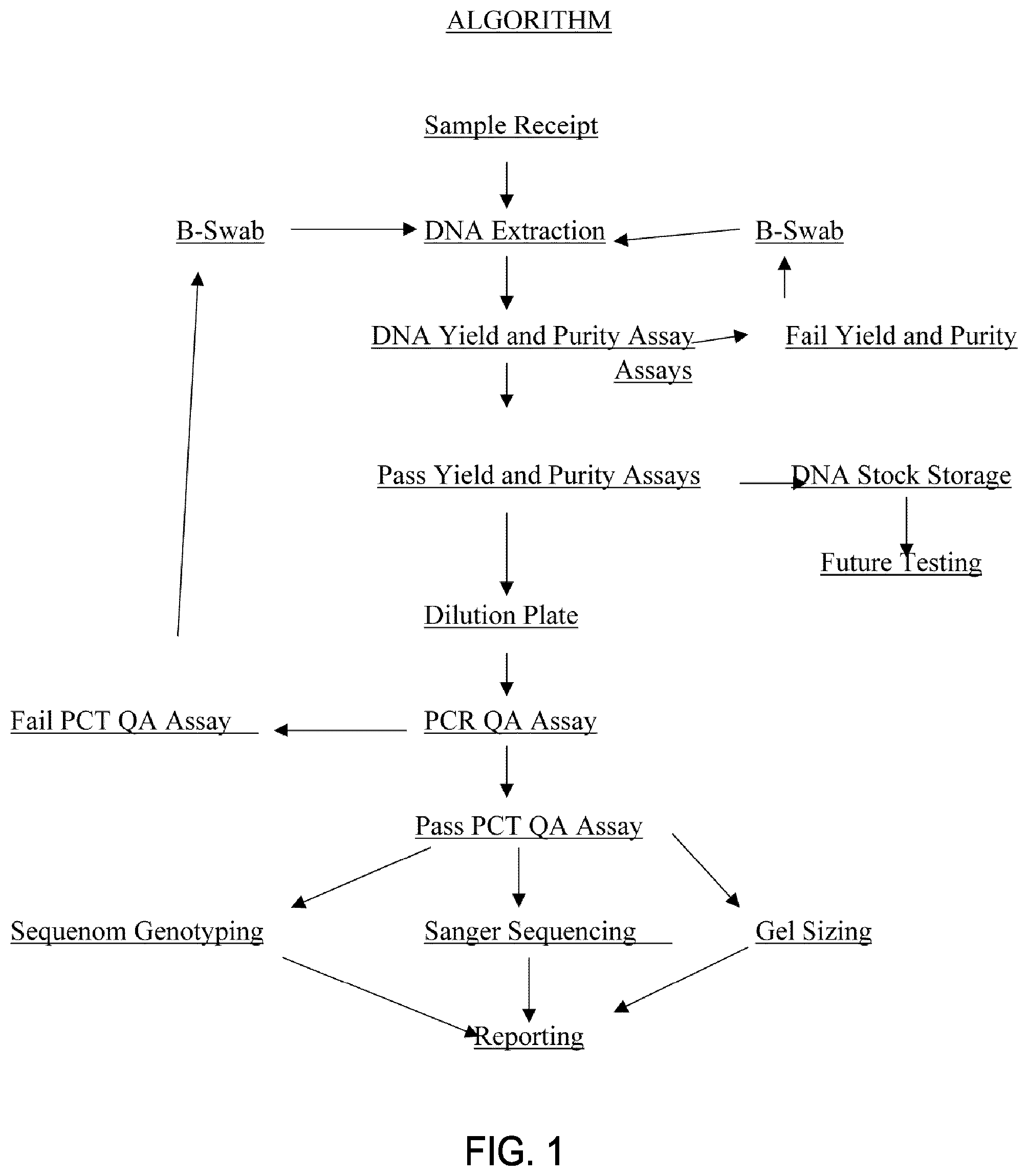
is an algorithm of the process for determining the genetic panel of a patient.
is a Gel Plate of the result of a chromatographic examination of a sample genetic panel of a patient.
DETAILED DESCRIPTION OF THE INVENTION
Methods, devices, and kits are described herein for determining who will most likely, and least likely, respond to renal denervation/denervation surgery. The methods, devices, and kits include assays for identifying genetic variants in individual subjects that make the individual more or less responsive to this surgical intervention. Genetic variants present in genes including those in the sympathetic nervous system (SNS), heart (ADRB1 and ADRB2), those important in the renin-angiotensin aldosterone system (renin, angiotensinogen, angiotensin converting enzyme (ACE), and angiotensin receptor), and those involved in renal Na + regulation including the epithelial Na + channels (such as SCNN1A), adducin, sodium (Na + ) chloride (Cl − ) co-transporters (such as SLC12A3), and/or WNK1 genes. Investigations in humans and animals have demonstrated variable blood pressures according to these genetic variants at rest, with stress, and in response to pharmacologic interventions.
The Discovery
The development of high blood pressure in humans is the result of one or more of three physiologic mechanisms: 1) elevated cardiac output (liters of blood ejected from the heart per minute) which increases the amount of blood pressing against the vessels, 2) relatively narrow blood vessels (for a given cardiac output or plasma volume) which results in increased pressure towards the lumen of the blood vessel, or 3) increased sodium (Na + ) absorption in the kidney which results in increased blood volume and subsequently increased outward pressure against the tubes (vessels). Blood pressure therapy following diagnosis is traditionally based on an algorithm as suggested by the joint national committee of the American Heart Association and the American College of Cardiology(2). Typically, a patient who has been diagnosed with high blood pressure starts on a diuretic (to reduce renal Na + reabsorption), if that does not work within a period of time, then the clinician next assesses the effectiveness of a vasodilator, and if this is not effective then a clinician will lastly assess the effectiveness of a beta-blocker. Despite a strong history of research in each of these drug classes, there is significant variability in the drug response to therapy, which can become frustrating for the patient.
Drug resistant hypertension is defined as hypertension (typically >140/>90 mmHg) despite treatment with three different anti-hypertensive classes, including a diuretic (3). For true resistant hypertension it must be determined that the hypertension is not the result of white coat syndrome (high blood pressure in response to a visit to the clinic), poor blood pressure measurement, incorrect treatment decisions, or poor medication adherence (5). Drug resistant hypertension occurs in up to 20% of hypertensive individuals. Resistant hypertension results in dramatic increases in death from all cause, cardiovascular disease, and stroke (3, 9).
Renal denervation (or denervation) has been used in animal models and in humans for more than 60 years to reduce blood pressure in patients with resistant hypertension. Renal denervation reduces the signaling (and/or activity) of the sympathetic nerves of the kidney. This is typically a catheter-based radiofrequency or ultrasound denervation procedure through the renal artery and results in both efferent and afferent sympathetic signaling (10). For this denervation procedure, a catheter with a denervation tool is introduced through the femoral artery. The renal arteries are then treated through the walls of the renal artery with energy applied to the arterial walls. Multiple denervations are performed with renal denervation typically using several different locations in order to ensure maximal denervation. More recent techniques include use of ultrasound or chemical treatment to denervate the sympathetic nerves. Regardless of the denervation technique, this procedure reduces norepinephrine (NE) content within the kidney as well as norepinephrine spillover (10, 11). Previous studies have demonstrated that the more sites that are treated, and the closer to the denervation sites are to the renal pelvis, the greater the drop in NE (10). Early work demonstrated dramatic differences in survival in patients receiving renal denervation-like surgery, vs. those who did not, in a population of resistant hypertensives (4). Resistant hypertensive patients who underwent thoracolumbar splanchnicectomy had a 54% reduction in mortality over five years, when compared to patients who did not receive the procedure. This difference in mortality was present regardless of changes in blood pressure.
More recently, modern surgical devices have been developed to partially ablate the renal nerve in an attempt to control resistant hypertension. The first modern trial on one of these devices, Symplicity HTN-1, was performed on 150 individuals and resulted in substantial reductions in blood pressure for up to three years following the procedure. The average drop in systolic and diastolic blood pressures following renal denervation in Symplicity HTN-1 were 32 mmHg and 12 mmHg, respectively (compared to no relative change in blood pressure in a control group). Following this initial study, a second trial (Symplicity HTN-2) was performed in which the patients who initially did not receive the renal denervation surgery were allowed to opt-in to the procedure at the 6-month time point for long-term comparison (n=˜90 total). In both groups (those who had the procedure performed initially and those who had the procedure performed after six months) blood pressure dropped dramatically (˜30 mmHg for systolic blood pressure and ˜10 mmHg for diastolic blood pressure) (7). These patients also had a reduction in use of renin inhibitors, ACE-inhibitors, and beta-blockers following renal denervation surgery (7). These changes (drops) in blood pressure persisted to three years post intervention where the average change from baseline was −32.7 mmHg and −13.6 mmHg for systolic and diastolic blood pressures, respectively.
However, in a controlled, well-regulated trial, Symplicity HTN-3, using a surgical control group that received sham surgery, the investigators demonstrated no difference in blood pressure between those patients who had the sham surgery and those who received renal denervation surgery (2). This finding has been attributed to number of users (more surgeons in the larger final trial) and to the sham control.
According to the invention, it has now been discovered that the differences among the various patients of Symplicity's HTN-1-3 clinical trials are attributable to genetic variation of genes encoding for the heart, renin-angiotensin aldosterone system, and for renal Na + handling of the patients treated.
TABLE 1
Renal Denervation Compared to Pharmacologic Intervention
B- Renin ACE-
RDx Blockade Supression Inhibition References
Improves Cardiac Fx: Decreases LVH and x x x Watanabe 2016 Hyperten Res.; Pinkham 2017;
improved LV fx {EF, end systolic vs end- Klaber Br. H. J. 1992; Lee, 1983, J Hypertens.
diastolic volumes, Ca+ signalling)
Increases (restores) B1AR and B2AR x Watanabe 2016 Hyperten Res.; Zhang 2015
expression levels Sci. Report.; Li 2015, phys res.; Karliner 1989;
Supress renin, ACE, and ANG-II mRNA in x (renin) x ↑renin, Watanabe 2016 Hyperten Res.; Zhang 2015
HF and fibrosis models unless Sci. Report.; Li, Ox. Med. Cell, 2016; Meier, J.
B-blocker Mol Med, 1981
used,
↓ANG-II
Decreases catecholamine levels, SNS, MSNA x Zhang 2015 Sci. Report
Renal denervation acts most like a sympatholytic, β-blocker, ACE-inhibitor, angiotensin-II receptor blocker and then a diuretic. Renal denervation decreases catecholamine levels within the kidney as well as catecholamine spillover and increases the expression of β 1 and β 2 -adrenergic receptors in the heart (which is a similar response to β-blockade and demonstrates the importance of these receptors in renal denervation/denervation procedures). In heart failure models, renal denervation improves cardiac function, decreases left-ventricular hypertrophy, and improves left-ventricular function (similar to β-blockade response). Renal denervation also decreases the expression (mRNA) of renin, ACE and Angiotensin-II receptors (demonstrating the importance of the renin-angiotensin aldosterone system on renal denervation/denervation). According to the invention, these factors indicate that genetics provides a means for determining and categorizing very high responders, moderately high responders, moderate responders, minimal responders and non-responders to renal denervation surgery.
Scientific literature has focused on genes that encode for proteins that alter the blood pressure response to therapy based on their known protein function in the heart, blood vessels, and kidneys. Until the present invention, however, there has not been any correlation between such genes, the proteins they encode and degrees of success or failure of kidney nerve denervations. According to the present invention, certain blood pressure genetic panels encompass genes that encode for proteins affecting hypertension and can be correlated with a differential response to renal denervation surgery. This correlation is coupled with the identification of genes that have a greater or lesser response to pharmacotherapy, within the cardiac, vascular, and renal systems in humans. According to the invention, the correlation and coupling translate to a graded response to renal denervation therapy.
Response According to Genetic Variants of the Renin-Angiotensin Aldosterone System, the Cardiac System, and the Renal System
Although it is not a limitation or guideline of the invention, the functional organ systems having some relation to the renal denervation/denervation procedures are: a) first, sympathetic nervous system, b) second, the cardiac system, c) third, the renin-angiotensin aldosterone system, and, d) finally, the renal system. The genes associated with the SNS, cardiac, renin-angiotensin aldosterone system, and renal system affect the results of renal denervation in a graded, categorized manner. According to the invention, a patient who likely will most respond to renal denervation surgery is one who has certain genetic functionalities in the SNS, the cardiac, renin-angiotensin aldosterone system, AND the renal system (table 3). According to the invention, the patient who will likely have a high to moderate response is one that has certain functionalities in the SNS, cardiac, and renin-angiotensin aldosterone system. According to the invention, the patient who likely will moderately respond is one who has certain functionalities of genes encoding for the cardiac AND renin-angiotensin aldosterone system, even in the absence of functionality in the renal system. According to the invention, a patient with certain genetic functionalities in the renin-angiotensin aldosterone system but not the SNS, cardiac or renal systems will have a small response to renal denervation/denervation surgery. According to the invention, a patient with no certain functionalities of the genes in any of these organ systems that are indicative of a positive response are not likely to respond to renal denervation surgery. In this context, the graded response is likely rather than guaranteed because of the idiosyncrasies of individual patients and the variation of surgical techniques practiced by nephritic surgeons.
These response levels and the certain genetic functionalities are summarized above in the Summary of the Invention section. Further details of these aspects of the invention and its embodiments are described in the following sections.
The SNS, cardiac system, renin-angiotensin aldosterone (vascular) system, and the renal system are associated with certain functional genes of the human genome. These genes are designated by acronyms known in the field. These acronyms stand for these functional genes comprising nucleic acids, i.e., nucleotide polymers of deoxyribose, phosphate and a base including adenine (A), thymine (T), guanine (G) and cytosine (C). The acronyms include:
•
• 1) ADRA2A nucleic acid associated with the amount of neurotransmitter released within the sympathetic nervous system • 2) ADRA2C nucleic acid associated with the amount of neurotransmitter released within the sympathetic nervous system • 3) ADRB1 nucleic acid associated with the adrenergic receptors influencing cardiac rate and contractility; • 4) ADRB2 nucleic acid associated with the adrenergic receptors influencing cardiac rate and contractility; • 5) AGT nucleic acid associated with angiotensinogen influencing vascular dilation and constriction; • 6) Renin nucleic acid associated with renin which influences vascular constriction; • 7) ACE nucleic acid associated with angiotensin converting enzyme and angiotensin-II receptors influencing vascular dilation and constriction; • 8) AGT1R (AII) nucleic acid associated with angiotensin II receptors influencing vascular dilation and constriction; • 9) WNK1 nucleic acid associated with blood pressure response to drugs; • 10) ADD1 nucleic acid associated with alpha adducin influencing salt sensitivity (renal); • 11) SLC12A3 nucleic acid associated with the sodium chloride co-transporter (renal) influencing salt retention and excretion; • 12) SCNN1A nucleic acid associated with the epithelial sodium channel influencing sodium transport by the kidney (renal).
A patient's DNA is isolated and sequenced as described below to provide genetic panel of at least the foregoing nucleic acid sequences of these functional genes. These nucleic acids (functional genes) have within their full sequences reference sequences (rs's) which contain the single nucleotide polymorphisms (SNP's). The genetic panel is determined irrespective of whether or not a particular polymorphic variation of the functional gene is present.
Nevertheless, the polymorphic variations are included in the genetic panel analysis. The polymorphic variations are typical, common, ordinary single nucleic acid variations that are found in the wild type genetic sequences of humans. In relation to the denervation/denervation treatment, the SNP's within the rs's constitute the sequence variations of these functional genes that increase or decrease the responsiveness to nephritic nerve denervation. The functional genes (as described above), associated rs's, SNP's and citations providing the actual sequences and polymorphisms are as follows. The functional genes described above by known, publicly recognized acronyms are all known, publicly available sequences accessible at the US National Center for Biotechnology Information (NCBI) which is part of the United Stated National Library of Medicine (NLM), a branch of the United State National Institutes of Health (NIH).
ADRA1A-rs2484516—ncbi.nlm.nih.gov/projects/SNP/snp_ref.cgi?rs=2484516
ADRA1A-rs553668—ncbi.nlm.nih.gov/projects/SNP/snp_ref.cgi?rs=553668
ADRA2C-rs13118711—ncbi.nlm.nih.gov/projects/SNP/snp_ref.cgi?rs=13118711
ADRB1-rs1801252—ncbi.nlm.nih.gov/projects/SNP/snp_ref.cgi?rs=1801252
ADRB1-rs1801253—ncbi.nlm.nih.gov/projects/SNP/snp_ref.cgi?rs=1801253
ADRB2-rs1042713—ncbi.nlm.nih.gov/projects/SNP/snp_ref.cgi?rs=1042713
ADRB2-rs1042714—ncbi.nlm.nih.gov/projects/SNP/snp_ref.cgi?rs=1042714
WNK1-rs1159744—ncbi.nlm.nih.gov/projects/SNP/snp_ref.cgi?rs=1159744
WNK1-rs2106714—ncbi.nlm.nih.gov/projects/SNP/snp_ref.cgi?rs=2107614
WNK1-2277869—ncbi.nlm.nih.gov/projects/SNP/snp_ref.cgi?rs=2277869
Alpha adducin-rs4961—ncbi.nlm.nih.gov/projects/SNP/snp_ref.cgi?rs=4961
AGT-rs699—ncbi.nlm.nih.gov/projects/SNP/snp_ref.cgi?rs=699
AGT-rs7079—ncbi.nlm.nih.gov/projects/SNP/snp_ref.cgi?rs=7079
ACE-rs1799752—ncbi.nlm.nih.gov/projects/SNP/snp_ref.cgi?rs=1799752
AII (AGT1R)-rs5186—ncbi.nlm.nih.gov/projects/SNP/snp_ref.cgi?rs=5186
AGT-rs5051—ncbi.nlm.nih.gov/projects/SNP/snp_ref.cgi?rs=5051
SLC12A3-rs1529927—ncbi.nlm.nih.gov/projects/SNP/snp_ref.cgi?rs=1529927
SCNN1A-rs2228576—www.ncbi.nlm.nih.gov/projects/SNP/snp_ref.cgi?rs=2228576
Renin-rs12750834—ncbi.nlm.nih.gov/projects/SNP/snp_ref.cgi?rs=12750834
Table 3 presents a summary of these function genes, the rs numbers, the SNP variants and the functions. These functional genes are described and sequences as SEQ ID NO's are given at the end of this specification.
TABLE 3
Functional Importance of Genes Used to Indicate Positive Response to Renal Denervation Surgery Function
Organ System Gene/Variant rs# Function
Sympathetic ADRA2A 2484516 NE release
Tone ADRA2A 553668 NE release SNS response to stress
ADRA2C Del 13118711 NE release SNS response to stress
Heart (Cardiac ADRB2_16 1042713 Receptor density on vasculature and heart, differences in agonist-mediated desensitization
Output) ADRB2_27 1042714 Receptor density on vasculature and heart, differences in agonist-mediated desensitization
ADRB1_49 1801252 Cardiac output and HR response to stimulation, response to B-blockade
ADRB1_389 1801253 Cardiac output and HR response to stimulation, response to B-blockade
Kidney (Na+ Alpha Adducin 4961 Alpha subunit of adducin: Adducin regulates Ca ++ /calmodulin protein enzymes and is associated with
regulation: hypertension, diuretic respons
plasma volume) SCNN1A 2228576 Alpha subunit of the Epithelial Na + Channel: regulates Na + reabsorption in the kidney, hypertension
SLC12A3 (2) 1529927 Na + /Cl − Cotransporter: important in Na + /Cl − reabsorption in the kidney
WNK1(a) 1159744 Serine/Threonine-protein kinase: regulates Na + co-transporters (i.e. SLC12A3) and, therefore, Na +
reabsorption, response to diuretic
WNK1(b) 2107614 Serine/Threonine-protein kinase: regulates Na + co-transporters (i.e. SLC12A3) and, therefore, Na +
reabsorption, response to diuretic
WNK1(c) 2277869 Serine/Threonine-protein kinase: regulates Na + co-transporters (i.e. SLC12A3) and, therefore, Na +
reabsorption, response to diuretic
Vessels (vascular Renin 12750834 Renin: converts angiotensinogen to angiotensin-I, differentially influences renin levels and hypertension
dilation/ Angiotensin 5051 Angiotensin-I: pre-curser to angiotensin-II, differential response to ACE-inhibition, ARB
constriction) Angiotensin 699 Angiotensin-I: pre-curser to angiotensin-II, differential response to ACE-inhibition, ARB
Angiotensin 7079 Angiotensin-I: pre-curser to angiotensin-II, predicts response to ACE inhibition
ACE 1799752 Angiotensin Convertin Enzyme: Important in the conversion of angiotensin-I to angiotensin-II and,
therefore, vascular function
All Receptor 5186 Angiotensin-Receptor: binds to angiotensin-II and causes vasoconstriction and Na + reabsorption
Cardiac Output Proteins Important in Cardiac Function
Cardiac output is the amount of blood that is pumped out of the heart per minute and is the product of heart rate (the number of times the heart beats per minute) and stroke volume (SV, the amount of blood ejected from the heart per beat). There are two primary receptors within the heart that influence both rate (chronotropic effect) and contractility (inotropic effect) in response to elevations in sympathetic nervous tone. The heart is primary comprised of beta-1 adrenergic receptors (β 1 AR) which are located on 80% of the ventricular wall surface, 70% of the atrial wall surface, and 95% of the sino-atrial (SA) node (which controls heart rate). Although heart rate and cardiac contractility are primarily regulated by the β 1 AR, the beta-2 adrenergic receptors (β 2 AR) also play a role, primarily in cardiac contractility. Stimulation of either the β 1 AR or the β 2 AR influences heart rate and cardiac contractility through increases in intracellular c-AMP and protein kinase A (PKA) which alter Ca + -channel sensitivity and decreases the threshold needed for an action potential. Therefore, cardiac output (and, in response, blood pressure) is increased through active β 1 AR or β 2 ARs (therefore, if a gene that encodes the β 1 AR or β 2 AR results in a more functional receptor, cardiac output is increased) responding to SNS stimulation.
The evidence for the importance of the β 1 AR and β 2 AR is demonstrated through the use of selective (i.e. atenolol and metoprolol) and non-selective (i.e. propranolol and carvedilol) beta-blockers (selective meaning they are selective for inhibiting the BAR and non-selective meaning they inhibit both β 1 AR and β 2 AR) which decrease blood pressure through a decrease in heart rate and cardiac contractility. Patients with hypertension often have an augmented sympathetic drive (which is why renal denervation will be of benefit to these patients, according to this invention) and β-blockade can help to attenuate this elevation in sympathetic nervous system activity. Work in animal models has demonstrated that renal denervation reduces the amount of catecholamines circulating in the blood and restores the functionality of the β 1 and β 2 -adrenergic receptors. This is the same effect that a patient with elevated adrenergic drive who is on a β-blocker would experience. Thus, both the β 1 AR and the β 2 AR are important in the regulation of cardiac output, and the response to sympathetic nervous system modulation (i.e. renal denervation) with the end result of stimulation of these receptors (or more functional receptors due to genetic variation) being elevations in cardiac output (which increases blood pressure). Despite the blood pressure reducing effects of both selective and non-selective beta-adrenergic blockade, not all individuals respond similarly to beta-blockade, despite similar clinical and environmental conditions. This difference in pharmacodynamic reaction to beta blockade indicates a genetic relation to effectiveness of this class of drugs. According to the invention, this relation can be mirrored with renal denervation responses.
Functional Effects of Genes that Encode Proteins that Influence Sympathetic Nervous System Activity and Cardiac Function
There are common and functional alleles of both the alpha-2A and alpha-2C adrenergic receptors that have demonstrated differences in catecholamine and sympathetic response to stimulation. Specifically, the DD variant of the ADRA2C (rs13118711) demonstrates a greater increase in HR, when compared to the II, and ID variants (47, 48). Further, the D variant demonstrates a greater reduction in norepinephrine levels with 3-months of treatment with Bucindolol, when compared to the I variant (49). A functional variant of the ADRA2A (rs553668) has demonstrated differential BP responses to dexmedetomidine (50) and a functional variant of this gene at a different site (rs2484516) is associated with differential levels of fasting insulin and the insulin response to dexmedetomidine (which can be reflective of SNS activity) (51).
The genes that encode both the BAR (the gene that encodes this receptor is the ADRB1) and β 2 AR (the gene that encodes this receptor is the ADRB2) have several functional polymorphisms. These common functional variants alter the protein function, as well as the response to therapy in cell models, animal models, and in human models. Specifically, genetic variation of the ADRB1 at positions 49 (arginine to glycine substitution, rs1801252) and 389 (serine to glycine substitution, rs1801253) influence protein function and response to beta-blockade in humans (see table 4 below). Individuals with the Arg389 polymorphism of ADRB1 have higher resting blood pressure values, greater left-ventricular mass (which is an adaptation to prolonged elevations in blood pressure) and have a greater response to beta-blockade. Individuals with the Ser49 polymorphism of the have higher resting heart rate and blood pressure values and are, therefore, more responsive to a beta-blocker.
Within the gene that encodes the ADRB2, amino acids 16 and 27 have common functional variants with the glycine polymorphism at position 16 being more prevalent in hypertensives and people with this variant demonstrating higher resting stroke volume and cardiac output. In addition, the arginine variant at position 16 of the ADRB2 has higher levels of mortality following beta-blockade after acute coronary syndrome. The glutamine variant at amino acid 27 of the ADRB2 (Glu27) is more prevalent in patients with hypertension.
To summarize: according to this invention, the functional consequences of genetic variation of ADRB1, and ADRB2 in part will determine the response effectiveness of renal denervation in patients with hypertension, especially when considered in conjunction with the functional variants of the renin-angiotensin aldosterone system.
TABLE 4
Genetic Variants of the SNS, ADRB1, and ADRB2
and Predictive Response to Renal Denervation
Importance in Renal
Organ System Gene/Variant rs# Denervation
Sympathetic ADRA2A 2484516 High
Tone ADRA2A 553668 Very High
ADRA2C Del 13118711 Extremely High
Heart (Cardiac ADRB2_16 1042713 High
Output) ADRB2_27 1042714 High
ADRB1_49 1801252 Extremely High
ADRB1_389 1801253 Extremely High
Renin-Angiotensin Aldosterone System
Dilation of blood vessels results in decreases in blood pressure, whereas constriction of blood vessels results in increases in blood pressure. The blood vessels are controlled through local neural signaling (parasympathetic control) as well as circulating hormones (sympathetic control) and other circulating proteins. According to the present invention, blood pressure increases with elevations in sympathetic drive, which can be attenuated with renal denervation/denervation. The angiotensin receptors are stimulated by angiotensin II which is converted from angiotensin I through the angiotensin converting enzyme (ACE). Angiotensin II is a potent vasoconstrictor and actively acts to inhibit bradykinin which is a potent vasodilator, having a dual role in vasoconstriction. Therefore, a common target of blood pressure therapy through promotion of vasodilation is through the inhibition of the activity of ACE (i.e. ACE inhibitors), which reduces the bioavailability of angiotensin-II. Similarly, angiotensin-II receptor antagonists work through the competitive inhibition of the angiotensin-II receptors which decreases the number of receptors that are available to bind to angiotensin-II.
Functional Effects of Genes that Encode Proteins that Influence Vascular Function
Several common and functional polymorphisms of the genes that encode for ACE and A-II receptors have been described. These genetic alter protein function, as well as the response to drug therapies in cell models, animal models, and human models (table 5). Within the gene that encodes ACE, there is one known common and functional polymorphism (rs1799752), an insertion or deletion polymorphism of a 287 base pair fragment. The deletion polymorphism of ACE results in higher plasma levels of ACE and a greater drop in ejection fraction in patients following MI. In addition, patients with the deletion polymorphism have left-ventricular hypertrophy at higher rates when compared to patients with the insertion polymorphism (left-ventricular hypertrophy results secondary to prolonged exposure to high blood pressure). Therefore, according to the invention, the deletion polymorphism would provide a response to renal denervation.
At least three functional variants of angiotensin have been found to be common in humans (rs5051, rs699, and rs7079). Functional polymorphisms of angiotensin results in higher angiotensin levels and higher resting blood pressure values. Therefore, according to the invention, patients with these genetic variants will benefit more from renal denervation due to a greater effect on the blunting of ACE and the angiotensin-II receptor.
A common functional polymorphism of an angiotensin receptor (type-I) has been described (rs5186) and influences resting blood pressure values and demonstrates which patients will benefit more from renal denervation due to attenuation of angiotensin-II expression. Specifically, patients with the C variant of the angiotensin receptor type I have higher resting blood pressure values, more detrimental cardiovascular events, and have a greater chance of developing high blood pressure during pregnancy, when compared to the A variant. Collectively, according to the invention, the C variant will be more responsive to renal denervation.
In addition to angiotensin, angiotensin II receptors and ACE, renin has been shown to be a potent vasoconstrictor that can result in high blood pressure. Renin converts angiotensinogen to angiotensin I which results in vasoconstriction due to the down-stream effects (angiotensin-I conversion to angiotensin II through ACE). There is one functional and common polymorphism of renin that demonstrates an altered blood pressure response to vasodilator therapy, a cytosine to threonine substitution at nucleotide 5312 (rs12750834). Within this polymorphism of renin, the thymine substitution and the heterozygous condition demonstrate higher renin levels as well as a greater reduction in blood pressure in response to valsartan (which is an angiotensin II receptor blocker). Given that renal denervation surgery results in attenuation of ACE and the angiotensin-II receptor, according to this invention, this same variant (thymine) of renin will be one that responds better to renal denervation therapy.
To summarize: according to the invention, the renin-angiotensin aldosterone system is the most important system to predict the response to renal denervation surgery. The three most important genes are likely renin+ACE+angiotensin-II receptor. Additional guidance will come from functional variants of angiotensin.
TABLE 5
Genetic Variation of the Renin-Angiotensin Aldosterone
System and Predictive Response to Renal Denervation
Organ Importance in Renal
System Gene/Variant rs# Denervation
Vessels Renin 12750834 Extremely High
(vascular Angiotensin 5051 High
dilation/ Angiotensin 699 High
constriction) Angiotensin 7079 High
ACE 1799752 Extremely High
All Receptor 5186 Extremely High
Sodium (Na + ) Reabsorption in the Kidney Proteins Important in Renal Na + Reabsorption
Many consider the kidneys to be the center of long-term blood pressure regulation. Alterations in Na + reabsorption in the kidneys result in alterations in fluid retention, which leads to increases or decreases in blood plasma volume and changes the pressure against the vessels. According to the present invention, there are several proteins that are important in renal Na + handling and the response to diuretic therapy including the epithelial Na + channels (SCNN1A, rs2228576), alpha-adducin (rs4961), the Na + Cl − co-transporter (rs159927), and lysine deficient protein kinase-1 (WNK, rs1159744, rs2106714, and rs2277869). The epithelial sodium (Na + ) channel is responsible for Na + reabsorption on the apical portion of epithelial cells in the kidneys. The Na + channel is made up of three different subunits; the alpha, beta, and gamma. The alpha subunit of the epithelial Na + channel is highly functional and removal of this subunit abolishes channel activity in cell and animal models. The gamma subunit is also extremely important in channel function and functional genetic variants of this channel result in pseudohypoaldosteronism type-I and Liddle's syndrome, two severe genetic diseases resulting in salt wasting and high salt conservation (salt sensitivity), respectively. Adducin is made up of an alpha, beta, and gamma subunit. The alpha subunit of adducin increases sodium (Na + ) reabsorption in the kidneys through activity of Na + K + ATPase (which moves Na + and potassium into out of cells). The sodium (Na + ) chloride (Cl − ) co-transporter is important in regulating Na + and Cl − movement between the kidney and the rest of the body. Active Na + —Cl − transport results in Na + reabsorption and, therefore, results in higher blood pressure. The WNK1 protein is a key regulator of long-term Na + and chloride Cl − reabsorption in the kidneys. WNK1 regulates the activity of Na + —Cl − co-transporters. If a patient has a more active WNK1 genotype, they have greater Na + and Cl − reabsorption in the kidneys which increases blood volume and, therefore, the pressure on the vessels.
Increases in the activity of the proteins important in renal Na + and Cl − regulation according to this invention result in increases in Na + retention and elevations in blood pressure. According to the invention, these genetic variations also enable a greater response renal denervation, when considered in the presence of functional variants of the renin-angiotensin aldosterone system and the cardiac system.
Functional Effects of Genes that Encode Proteins that Influence Renal Na + Reabsorption
A functional and common polymorphism of the gene that encodes the epithelial Na + channel (SCNN1A) has been identified (alanine to threonine substitution at position 663) (table 6). Patients with the threonine substitution of SCNN1A have more functional Na + channels (higher activity and higher voltage currents across the cells) and are more susceptible to hypertension. Common and functional genetic variation of alpha adducin has also been identified (glycine to tryptophan substitution at amino acid 460). Within alpha adducin, individuals with the tryptophan variant are more likely to be salt sensitive, have higher rates of hypertension and have demonstrated a greater response to a diuretic. Genetic variation of the sodium (Na + ) chloride (Cl − ) co-transporter (SLC12A3) also demonstrates functional consequences. Within the SLC12A3, patients with the alanine variant have a better response to loop diuretics and demonstrate more excretion of Cl − and K + in response to diuretic therapy. Patients with the cytosine variant of WNK at genes rs1159744 and rs2107614 have greater blood pressure reductions in response to diuretic therapy when compared to patients with the glycine or threonine variants at these two sites, respectively.
To Summarize: According to the invention, hypertensive patients with a functional polymorphism of the SCNN1A (threonine 663) variant), ADD1 (tryptophan 460 variant), SLC12A3 (alanine 264 variant), and WNK (cytosine for rs1159744, rs227869, and rs2107614) will be most responsive to renal denervation surgery, particularly when all are functional and when the renal system is considered along with the renin-angiotensin aldosterone and cardiac systems.
TABLE 6
Genetic Variants Proteins Important in Renal Na+ Handling
and Predictive Response to Renal Denervation
Importance in
Renal
Organ System Gene/Variant rs# Denervation
Kidney (Na+ Alpha Adducin 4961 Average
regulation: SCNN1A 2228576 Average
plasma SLC12A3 (2) 1529927 Average
volume) WNK1(a) 1159744 High
WNK1(b) 2107614 High
WNK1(c) 2277869 Average
Summary of Blood Pressure Panel Strategy
The embodiments of the invention include creation of the blood pressure panel to comprehensively assess common genetic variants in the SNS, cardiac, renin-angiotensin aldosterone, and renal systems. The categorization of the panel provides a hierarchy of genetic variations that determine patients who will very highly, highly, moderately highly, moderately, minimally or will not respond to renal denervation. According to the invention, the categorization and hierarchy are based on the consideration of groups of these various genotypes. The categorization and hierarchy are presented in Table 7.
TABLE 7
Rank Order for Gene Combinations to Determine Response to Renal Denervation Surgery
Predictive Response
Rank
RAAS Cardiac (higher #
SNS All All More
Genetic Combinations Fx? FX? Fx? Responsive)
Most Likely to Fx SNS reg Genes+ RAAS Genes+ all Cardiac Genes+ all Renal Genes Y Y Y 10
Respond Fx A2AC reg Genes+ RAAS Genes+ all Cardiac Genes+ all Renal Genes Y Y Y 9
Fx all RAAS Genes+ all Cardiac Genes+ all Renal Genes Y Y 8
Fx all RAAS Genes+ all Cardiac Genes+ (some) Renal Genes Y Y 7
Fx all RAAS Genes+ (most) Cardiac Genes+ (some) Renal Genes Y 6
Fx all RAAS Genes+ (most) Cardiac Genes+ (no) Renal Genes Y 5
Fx all RAAS Genes+ (some) Cardiac Genes+ (no) Renal Genes Y 4
Fx all RAAS Genes+ (no) Cardiac Genes+ (no) Renal Genes Y 3
Fx (some) RAAS Genes+ (no) Cardiac Genes+ (no) Renal Genes 2
Least Likely to Fx (no) RAAS Genes+ (no) Cardiac Genes+ (no) Renal Genes 1
Respond
Summary of Renal Denervation Panel Strategy
The blood pressure panel created according to the present invention has been created to comprehensively assess common genetic variants in the SNS, cardiac, vascular, and renal systems that predict who will respond to renal denervation treatment. Based on this information, a clinician can employ this method to determine the appropriate patient for this surgery.
Sample Processing
Each patient will be given a collection kit consisting of two buccal swabs and two uniquely barcoded tubes (termed A and B swabs) containing a proprietary lysis buffer consisting of 50 mM Tris pH 8.0, 50 mM EDTA, 25 mM Sucrose, 100 mM NaCl, and 1% SDS. The patient will use the swab to collect buccal cells by scraping the inside of their cheek and place the swab in the provided barcoded tube, one swab for each cheek. Once the swab has been placed into the lysis buffer the cells are no longer viable and therefore samples are now considered to be nucleic acids and safe to be shipped via standard mail. Upon receipt at the testing facility each sample will be run through the sample processing workflow algorithm depicted as .
Initially all samples will be checked-in; their barcodes scanned and their arrival in the laboratory confirmed. They will be grouped into sets of 91 and assigned positions in 96 sample grids (12×8 grid layout) for DNA extraction. The remaining five positions in each grid will be extraction controls (four negative controls [H2O] and one non-human positive). The five controls will be assigned random positions in each grid, giving each grid/plate a unique “plate fingerprint”. The randomly assigned controls prevent possible plate swaps or 180° rotations as every plate is now identifiable simply by control positions. All samples are then normalized to a volume of 650 ul with the further necessary amount of above mentioned lysis buffer. Additionally, 25 ul of ProK is added to each sample and incubated in a 55C oven for a minimum of 4 hours. Following incubation, samples are extracted using a BioSprint96 (KingFisher96) Robotic workstation with magnetic-particle DNA purification chemistry to isolate genomic DNA (GenomicDNA) from tissue samples. This protocol utilizes the chemistry from the eVoMagDNA Extraction KF96 Kit (Verde Labs, Marietta, GA) and is run to specifications provided by the manufacturer. Following DNA extraction and subsequent dessication, the DNA will be resuspended in HPLC water. 5 ul of each sample will then be transferred to assay plates for the first pair of QA assays, both a PicoGreen fluorometric quantification and spectrophotometric purity estimation. The fluorescence and absorbance data will be analyzed for all samples in the 96 well plate, including the five controls. The positions of the negative controls will be confirmed and accessed for possible plate contamination. The results of the positive control as well as the samples on the plate will be analyzed for quality metrics using a systems analysis approach, simply put we will be able to statistically assess outliers. After the quantification and purity QA assays, robotic systems will be used to transfer the samples into racks of 96 sample septa sealed plates (to ensure there is no evaporative loss) and a fractional volume of each sample will be used to create a daughter plate of the samples at a normalized concentration of 5 ng/μl for the PCR QA assays and subsequent genotyping. The creation of the normalized daughter plate serves two purposes; first it allows the immediate storage of the primary stock of each sample at −80° C. avoiding the need for unnecessary freeze-thaw of samples and the potential contamination risks associated with repeated accessing of the stock, and second it avoids unnecessary waste of the DNA associated with the use of full concentration stock for the PCR applications (this −80 stock DNA can be used at any time or saved for future testing). Any samples that fail any of the QA assays will re-enter the pipeline and be sorted and re-processed from the B-swab, this is the second tube/swab in the kit sent to the customer mentioned above. By always having a backup sample we ensure that we will never have to go back to the customer to ask for a re-swab. If the quantity and purity are still insufficient then whole genome amplification or organic re-extraction will be employed respectively. Following the passage of the QA thresholds normalized fractions of the samples will be transferred to PCR plates for genotyping. Each sample will be analyzed using 2 different methodologies, the Sequenom MassArray genotyping platform and classical PCR and gel sizing to determine insertion/deletion status. The Sequenom MassArray genotyping platform will be used to analyze the following sites-rs1042713, rs1042714, rs1801252, rs1801253, rs4961, rs2228576, rs1529927, rs1159744, rs2107614, rs2277869, rs12750834, rs5051, rs699, rs7079 and rs5186. While classical gel sizing will be used to determine the insertion/deletion status of rs1799752.
Sequenom MassArray Assay Design and Processing
The Sequenom platform is able to perform genotyping as a 12plex assay (testing 12 variable sites in one reaction) in a 96 well format using one aliquot of DNA. The AssayDesign software from Sequenom is used to generate both PCR and single base extension primers using the individual rs #of each variable site to create the final assay design below as Table 10A (Multiplex PCT Reaction and Table 10B (Extension Reaction):
TABLE 10A
Multiplex Reaction
Tm
SNP_ID 2nd-PCRP 1st-PCRP AMP_LEN UP_CONF MP_CONF (NN)
rs2484516 ACGTTGGATGTTCATGCGGCCCCCACACT ACGTTGGATGGAGACTTCCAAAGTTGTGCG 120 86.9 86 62.8
(SEQ ID NO: 54) (SEQ ID NO: 55)
rs553668 ACGTTGGATGCCCCATGTGTGCTATCAAAA ACGTTGGATGATTCCCCTTCCATTCCCAAC 138 90.7 86 45.8
(SEQ ID NO: 56) (SEQ ID NO: 57)
rs13118711 ACGTTGGATGTACTCAGTAGTATTGCTACC ACGTTGGATGCTTATATTGATAGGCAATGAG 141 73.9 86 45
(SEQ ID NO: 58) (SEQ ID NO: 59)
rs3892097 ACGTTGGATGGTGGGTGATGGGCAGAAG ACGTTGGATGCTGCAgAGACtccTCGGTCT 150 96.3 69 53.5
(SEQ ID NO: 60) (SEQ ID NO: 61)
rs4961 ACGTTGGATGCACCTTAGTCTTCGACTTGG ACGTTGGATGACAAGATGGCTGAACTCTGG 104 99.9 75 50.1
(SEQ ID NO: 62) (SEQ ID NO: 63)
rs1042713 ACGTTGGATGCGAACTTGGCAATGGCTGTG ACGTTGGATGAGCGCCTTCTTGCTGGCAC 134 86.5 75 57.1
(SEQ ID NO: 64) (SEQ ID NO: 65)
rs2277869 ACGTTGGATGTGAGTTGTTCAGCCTTAGCAG ACGTTGGATGCCTAGGTTACAATTTCAGGA
CA (SEQ ID NO: 66) AG (SEQ ID NO: 67)
rs1801252 ACGTTGGATGCCTCGTTGCTGCCTCCCG ACGTTGGATGATGAGCGCCATCAGCAGAC 105 70.1 75 63.5
(SEQ ID NO: 68) (SEQ ID NO: 69)
rs1529927 ACGTTGGATGTTGGACTCCCACTCCATGC ACGTTGGATGCCCATCGTGGACCCCATTAA 118 91 75 55.3
(SEQ ID NO: 70) (SEQ ID NO: 71)
rs7079 ACGTTGGATGAGGCTTATTGTGGCAAGAC ACGTTGGATGGTGAAAGATGCAAGCACCTG 118 98.7 75 46.6
(SEQ ID NO: 72) (SEQ ID NO: 73)
rs1801253 ACGTTGGATGTCAACCCCATCATCTACTGC ACGTTGGATGGGTCTCCGTGGGTCGCGTG 128 71.2 75 55.7
(SEQ ID NO: 74) (SEQ ID NO: 75)
rs699 ACGTTGGATGGATTGACAGGTTCATGCAGG ACGTTGGATGTGGACGTAGGTGTTGAAAGC 119 98.6 75 56.9
(SEQ ID NO: 76) (SEQ ID NO: 77)
rs2107614 ACGTTGGATGGCAACCATCACAGTACTAAG ACGTTGGATGCACAACTGGAAGAGTTGAGG 111 98.1 75 45.8
(SEQ ID NO: 78) (SEQ ID NO: 79)
rs2228576 ACGTTGGATGTCCCTCTCCAGCCTTGACAG ACGTTGGATGAACCTCTCCTTCCCTCTCAG 151 83.8 75 60.5
(SEQ ID NO: 80) (SEQ ID NO: 81)
rs12750834 ACGTTGGATGACAGGCTACCTGGCTTTAAC ACGTTGGATGGGAATCCAGGAGAATAGGTC
(SEQ ID NO: 82) (SEQ ID NO: 83)
rs5186 ACGTTGGATGAGAAGCCTGCACCATGTTTTG ACGTTGGATGCAGTCCACATAATGCATTTTC 170
(SEQ ID NO: 84) (SEQ ID NO: 85)
rs1042714 ACGTTGGATGATGAGAGACATGACGATGCC ACGTTGGATGAGCGCCTTCTTGCTGGCAC 127 88 98 54.7
(SEQ ID NO: 86) (SEQ ID NO: 87)
rs1159744 ACGTTGGATGGTTTTTCAGTTCCTGAATTTG ACGTTGGATGGAAACAGTGACAGCCAAATG 133 79 75 46.1
(SEQ ID NO: 88) (SEQ ID NO: 89)
rs5051 ACGTTGGATGTGTAGTACCCAGAACAACGG ACGTTGGATGAGCCTGGGAACAGCTCCATC 113 93.7 98 55.3
(SEQ ID NO: 90) (SEQ ID NO: 91)
ACE_INDEL ACGTTGGACTGGAGACCACTCCCATCCTTT ACGTTGATGTGGCCATCACATTCGTCAGAT 103 98.5 61 45.1
(SEQ ID NO: 92) (SEQ ID NO: 93)
ACE_INDEL ACGTTGATTGAGACCATCCCGGCTAAAACG
(2) (SEQ ID NO: 94)
TABLE 10B
Extension Reaction
SNP ID UEPM UEP SEQ EXT1 EXT1M EXT1 SEQ EXT EXT2M EXT2 SEQ
rs2484516 4450.9 CGCCGCCGCCGTCCC C 4698.1 CGCCGCCGCCGTCCCC G 4738.1 CGCCGCCGCCGTCCCG
(SEQ ID NO: 95) (SEQ ID NO: 96) (SEQ ID NO: 97)
rs553668 5406.5 GCCCTTAGCATTTTTCTT G 5653.7 GCCCTTAGCATTTTTCTTC A 5733.6 GCCCTTAGCATTTTTCTTT
(SEQ ID NO: 98) (SEQ ID NO: 99) (SEQ ID NO: 100)
rs13118711 6650.3 CTTTACCTATGATTCAGTC G 6897.5 CTTTACCTATGATTCAGTC C 6937.6 CTTTACCTATGATTCAGTC
TTA (SEQ ID NO: TTAC (SEQ ID NO: TTAG (SEQ ID NO:
101) 102) 103)
rs3892097 4996.3 CGCATCTCCCACCCCCA T 5267.5 CGCATCTCCCACCCCCAA C 5283.5 CGCATCTCCCACCCCCAG
(SEQ ID NO: 104) (SEQ ID NO: 105) (SEQ ID NO: 106)
rs4961 5072.3 ACTGCTTCCATTCTGCC G 5319.5 ACTGCTTCCATTCTGCCC T 5343.5 ACTGCTTCCATTCTGCCA
(SEQ ID NO: 107) (SEQ ID NO: 108) (SEQ ID NO: 109)
rs1042713 5178.4 GTCCGGCGCATGGCTTC G 5425.5 GTCCGGCGCATGGCTTCC A 5505.5 GTCCGGCGCATGGCTTCT
(SEQ ID NO: 110) (SEQ ID NO: 111) (SEQ ID NO: 112)
rs2277869 5360.5 aTTCCCAGTTCATCCTCT C 5607.7 aTTCCCAGTTCATCCTCTC T 5687.6 aTTCCCAGTTCATCCTCTT
(SEQ ID NO: 113) (SEQ ID NO: 114) (SEQ ID NO: 115)
rs1801252 5734.7 GCTGCCTCCCGCCAGCGAA A 6005.9 GCTGCCTCCCGCCAGCGAA G 6021.9 GCTGCCTCCCGCCAGCGAA
(SEQ ID NO: 116) A (SEQ ID NO: 117) G (SEQ ID NO: 118)
rs1529927 5791.8 CACAGTGACCGAGACCACG G 6039 CACAGTGACCGAGACCACG C 6079 CACAGTGACCGAGACCACG
(SEQ ID NO: 119) C (SEQ ID NO: 120) G (SEQ ID NO: 121)
rs7079 5869.9 GGGAGAAATAACCAGCTAT G 6157.1 GGGAGAAATAACCAGCTAT T 6196.9 GGGAGAAATAACCAGCTAT
(SEQ ID NO: 122) G (SEQ ID NO: 123) T (SEQ ID NO: 124)
rs1801253 6062 aaTTCCGCAAGGCCTTCCA C 6309.1 aaTTCCGCAAGGCCTTCCA G 6349.2 aaTTCCGCAAGGCCTTCCA
G (SEQ ID NO: 125) GC (SEQ ID NO: 126) GG (SEQ ID NO: 127)
rs699 6118 GAAGACTGGCTGCTCCCTG C 6365.2 GAAGACTGGCTGCTCCCTG T 6445.1 GAAGACTGGCTGCTCCCTG
A (SEQ ID NO: 128) AC (SEQ ID NO: 129) AT (SEQ ID NO: 130)
rs2107614 6393.2 TCCTCCAAAAAAAAAGAAA C 6640.4 TCCTCCAAAAAAAAAGAAA T 6720.3 TCCTCCAAAAAAAAAGAAA
AC (SEQ ID NO: 131) ACC (SEQ ID NO: ACT (SEQ ID NO:
132) 133)
rs2228576 6399.1 gCTGCAGGGGCCAGTTCCT T 6670.4 gCTGCAGGGGCCAGTTCCT C 6686.4 gCTGCAGGGGCCAGTTCCT
CC (SEQ ID NO: 134) CCA (SEQ ID NO: CCG (SEQ ID NO:
135) 136)
rs12750834 6479.2 ggaCAAAGCAGGCTTAATC A 6750.4 ggaCAAAGCAGGCTTAATC G 6766.4 ggaCAAAGCAGGCTTAATC
TG (SEQ ID NO: 137) TGA (SEQ ID NO: TGG (SEQ ID NO:
138) 139)
rs5186 6608.3 CACTTCCCACTACCAAATG C 6855.5 CACTTCCCACTACCAAATG A 6879.51 CACTTCCCACTACCAAATG
AGC (SEQ ID NO: AGCC (SEQ ID NO: AGCA (SEQ ID NO:
140) 141) 142)
rs1042714 6815.4 tACCACCCACACCTCGTCC G 7062.6 tACCACCCACACCTCGTCC C 7102.59 tACCACCCACACCTCGTCC
CTTT (SEQ ID NO: CTTTC (SEQ ID NO: CTTTG (SEQ ID NO:
143) 144) 145)
rs1159744 7034.6 ACTGATATTCTCTATTTGT G 7281.8 ACTGATATTCTCTATTTGT C 7321.8 ACTGATATTCTCTATTTGT
TGAG (SEQ ID NO: TGAGC (SEQ ID NO: TGAGG (SEQ ID NO:
146) 147) 148)
rs5051 7218.7 ccGAACAACGGCAGCTTCT C 7465.9 ccGAACAACGGCAGCTTCT T 7545.77 ccGAACAACGGCAGCTTCT
TCCCC (SEQ ID NO: TCCCCC (SEQ ID NO: TCCCCT (SEQ ID NO:
149) 150) 151)
ACE_INDEL 7872.1 GACCTGCTGCCTATACAGT WT 8143.3 GACCTGCTGCCTATACAGT INS 8199.2 GACCTGCTGCCTATACAGT
CACTTTT (SEQ ID NO: CACTTTTA (SEQ ID CACTTTTT (SEQ ID
152) NO: 153) NO: 154)
DNA samples at a concentration of 5 ng/ul undergo a PCR using the above designed PCR primers and the Sequnom iPLEX Gold Reagent kit under the following conditions:
Final Vol/rxn
Reagent Conc (uL)
Water, HPLC N/A 1.8
10x PCR Buffer with 2 mM 0.5
20 mM MgCl2 MgCl2
25 mM MgCl2 2 mM 0.4
25 mM dNTP Mix 500 uM 0.1
0.5 mM Primer Mix 0.1 uM 1
5 U/uL PCR Enzyme 1 unit 0.2
Volume 4
10 ng/uL DNA 10 ng/rxn 1
Total Volume 5
Cycling conditions:
Cycler Program
iPlex-PCR
Temp (° C.) Time (min)
95 2:00
95 0:30 Repeat
56 0:30 45
72 1:00 Cycles
72 5:00
4 ∞
Directly following PCR amplification excess primers and dntp's are removed via a SAP (shrimp alkaline phosphatase) reaction under the following conditions:
Final Vol/rxn
Reagent Conc (uL)
Water, HPLC N/A 1.53
SAP Buffer (10x) 0.24x 0.17
5 U/uL PCR Enzyme 1 unit 0.2
Volume 2
PCR product 5
Total Volume 7
Cycling conditions:
Cycler Program
iPlex-SAP
Temp (° C.) Time (min)
37 40:00
85 5:00
4 ∞
After the SAP reaction is completed the samples undergo the SBE (single base extension) reaction using the following conditions:
Final Vol/rxn
Reagents Conc (uL)
Water, HPLC N/A 0.619
iPlex Gold Buffer 0.222x 0.200
iPlex Termination Mix 1x 0.200
iPlex Extend Primer Mix varies 0.940
iPlex Enzyme 1x 0.041
Volume 2.000
PCR product 7
Total Volume 9
Cycling conditions:
Temp (∞C.) Time (min)
94 0:30
94 0:05 40 cycles
52 0:05 5 cycles ↓
80 0:05 ↓
72 3:00
4 forever
After completion of all above reactions samples are run through resin based clean-up to remove excess salts according to standard Sequenom protocols. Samples are then spotted onto the Sequenom provided SpectroChip using the Sequenom Nanodispenser according to manufacturer protocols and subsequently processed on the Sequenom MALDI-TOF platform.
Gel Sizing Primer Design and Workflow
To accurately call the insertion/deletion status for site rs #1799752 a PCR followed by gel electrophoresis is performed. The PCR primers for this site can also be designed and optimized using Primer3 and the above-mentioned buffer and temperature gradient. The following primer sequences and PCR conditions are ultimately chosen:
Primer Name Sequence Purpose
rs1799752_F-2 CCCATTTCTCTAGACCTGCT INDEL
(SEQ ID NO: 155)
rs1799752_R-2 GGGATGGTGTCTCGTACATA INDEL
(SEQ ID NO: 156)
Cycling Conditions:
Master Mix 44
H20 7.7 372.68
Buffer C 10x 1 48.4
dNPTs (2.5 mM) 0.8 38.72
Forward (20 ng/ul) 0.2 9.68
Reverse (20 ng/ul) 0.2 9.68
Taq polymerase 0.1 4.84
DNA 0 0
Denature 94 3 min
Denature 94 30 sec X35
Anneal 60 30 sec
Extend 72 120 sec
Final Extend 72 3 min
Following PCR each sample is loaded into its own well of a 2% agarose gel and run at 150 mV for approximately 45 min and stained in a bath of GelRed for 2 hours prior to imaging with UV light. The resulting image is used to score the presence or absence of a 288 bp ALU visually examining the gel for either the higher molecular weight band (indicating the presence of the 288 bp ALU), the lower molecular weight band (indicating the absence of the 288 bp ALU) or both (indicating a heterozygous state). A sample image of the gel is shown on .
Once all tests are performed a report is generated containing all results for each tested patient and delivered for interpretation.
Renal Denervation Procedure
The procedure for partial renal denervation can be performed according to the protocols set forth in the Symplicity studies or in Lancet, 2009, 373, 1275-81, Krum et al. Briefly, the procedure involves introduction of a Symplicity renal denervation catheter (manufactured by Medtronic, Santa Rosa CA) into one or both renal arteries through the corresponding femoral arteries. Multiple radiofrequency denervations of low wattage such as 6 to 8 W or less for up to two minutes for each denervation were applied. The catheter can be drawn back by at least about 5 mm and circumferentially rotated to ensure disruption of the sympathetic plexus surrounding the renal artery. If multiple denervations at variable arterial locations are to be made, the procedure should begin at the denervation location nearest to the arterial junction with the kidney. Blood pressure should be periodically measured before, during and after the procedure to manage untoward bp effects.
Description of Gene Sequences
Descriptions and Sequences for the functional genes and/or their reference sequences for ADRB1 (SEQ ID NO:1), ADRB2 (SEQ ID NO:5), AGT (angiotensin) (SEQ ID NO:13), AGT1R (SEQ ID NO:17), Angiotensin II (SEQ ID NO:18), SCNN1A (version 1) (SEQ ID NO: 21), SCNN1A (version 2) (SEQ ID NO:24), ADD1 (SEQ ID NO:26), SLC12A3 (SEQ ID NO: 29), ADRA2A (SEQ ID NO:50), ADRA2C (SEQ ID NO:51), renin (SEQ ID NO:52) and WNK (SEQ ID NO:53) are provided.
A full length human ADRB1 cDNA nucleotide sequence is available from the database maintained by the National Center for Biotechnology Information (see website at ncbi.nlm.nih.gov), which has accession number NM_00064 (GI: 110349783), and is shown below as SEQ ID NO:1.
1 GCACCACGCC GCCCGGGCTT CTGGGGTGTT CCCCAACCAC
41 GGCCCAGCCC TGCCACACCC CCCGCCCCCG GCCTCCGCAG
81 CTCGGCATGG GCGCGGGGGT GCTCGTCCTG GGCGCCTCCG
121 AGCCCGGTAA CCTGTCGTCG GCCGCACCGC TCCCCGACGG
161 CGCGGCCACC GCGGCGCGGC TGCTGGTGCC CGCGTCGCCG
201 CCCGCCTCGT TGCTGCCTCC CGCCAGCGAA A GCCCCGAGC
241 CGCTGTCTCA GCAGTGGACA GCGGGCATGG GTCTGCTGAT
281 GGCGCTCATC GTGCTGCTCA TCGTGGCGGG CAATGTGCTG
321 GTGATCGTGG CCATCGCCAA GACGCCGCGG CTGCAGACGC
361 TCACCAACCT CTTCATCATG TCCCTGGCCA GCGCCGACCT
401 GGTCATGGGG CTGCTGGTGG TGCCGTTCGG GGCCACCATC
441 GTGGTGTGGG GCCGCTGGGA GTACGGCTCC TTCTTCTGCG
481 AGCTGTGGAC CTCAGTGGAC GTGCTGTGCG TGACGGCCAG
521 CATCGAGACC CTGTGTGTCA TTGCCCTGGA CCGCTACCTC
561 GCCATCACCT CGCCCTTCCG CTACCAGAGC CTGCTGACGC
601 GCGCGCGGGC GCGGGGCCTC GTGTGCACCG TGTGGGCCAT
641 CTCGGCCCTG GTGTCCTTCC TGCCCATCCT CATGCACTGG
681 TGGCGGGCGG AGAGCGACGA GGCGCGCCGC TGCTACAACG
721 ACCCCAAGTG CTGCGACTTC GTCACCAACC GGGCCTACGC
761 CATCGCCTCG TCCGTAGTCT CCTTCTACGT GCCCCTGTGC
801 ATCATGGCCT TCGTGTACCT GCGGGTGTTC CGCGAGGCCC
841 AGAAGCAGGT GAAGAAGATC GACAGCTGCG AGCGCCGTTT
881 CCTCGGCGGC CCAGCGCGGC CGCCCTCGCC CTCGCCCTCG
921 CCCGTCCCCG CGCCCGCGCC GCCGCCCGGA CCCCCGCGCC
961 CCGCCGCCGC CGCCGCCACC GCCCCGCTGG CCAACGGGCG
1001 TGCGGGTAAG CGGCGGCCCT CGCGCCTCGT GGCCCTGCGC
1041 GAGCAGAAGG CGCTCAAGAC GCTGGGCATC ATCATGGGCG
1081 TCTTCACGCT CTGCTGGCTG CCCTTCTTCC TGGCCAACGT
1121 GGTGAAGGCC TTCCACCGCG AGCTGGTGCC CGACCGCCTC
1161 TTCGTCTTCT TCAACTGGCT GGGCTACGCC AACTCGGCCT
1201 TCAACCCCAT CATCTACTGC CGCAGCCCCG ACTTCCGCAA
1241 GGCCTTCCAG G GACTGCTCT GCTGCGCGCG CAGGGCTGCC
1281 CGCCGGCGCC ACGCGACCCA CGGAGACCGG CCGCGCGCCT
1321 CGGGCTGTCT GGCCCGGCCC GGACCCCCGC CATCGCCCGG
1361 GGCCGCCTCG GACGACGACG ACGACGATGT CGTCGGGGCC
1401 ACGCCGCCCG CGCGCCTGCT GGAGCCCTGG GCCGGCTGCA
1441 ACGGCGGGGC GGCGGCGGAC AGCGACTCGA GCCTGGACGA
1481 GCCGTGCCGC CCCGGCTTCG CCTCGGAATC CAAGGTGTAG
1521 GGCCCGGCGC GGGGCGCGGA CTCCGGGCAC GGCTTCCCAG
1561 GGGAACGAGG AGATCTGTGT TTACTTAAGA CCGATAGCAG
1601 GTGAACTCGA AGCCCACAAT CCTCGTCTGA ATCATCCGAG
1641 GCAAAGAGAA AAGCCACGGA CCGTTGCACA AAAAGGAAAG
1681 TTTGGGAAGG GATGGGAGAG TGGCTTGCTG ATGTTCCTTG
1721 TTGTTTTTTT TTTCTTTTCT TTTCTTTCTT CTTCTTTTTT
1741 TTTTTTTTTT TTTTTTCTGT TTGTGGTCCG GCCTTCTTTT
1801 GTGTGTGCGT GTGATGCATC TTTAGATTTT TTTCCCCCAC
1841 CAGGTGGTTT TTGACACTCT CTGAGAGGAC CGGAGTGGAA
1881 GATGGGTGGG TTAGGGGAAG GGAGAAGCAT TAGGAGGGGA
1921 TTAAAATCGA TCATCGTGGC TCCCATCCCT TTCCCGGGAA
1961 CAGGAACACA CTACCAGCCA GAGAGAGGAG AATGACAGTT
2001 TGTCAAGACA TATTTCCTTT TGCTTTCCAG AGAAATTTCA
2041 TTTTAATTTC TAAGTAATGA TTTCTGCTGT TATGAAAGCA
2081 AAGAGAAAGG ATGGAGGCAA AATAAAAAAA AATCACGTTT
2121 CAAGAAATGT TAAGCTCTTC TTGGAACAAG CCCCACCTTG
2161 CTTTCCTTGT GTAGGGCAAA CCCGCTGTCC CCCGCGCGCC
2201 TGGGTGGTCA GGCTGAGGGA TTTCTACCTC ACACTGTGCA
2241 TTTGCACAGC AGATAGAAAG ACTTGTTTAT ATTAAACAGC
2281 TTATTTATGT ATCAATATTA GTTGGAAGGA CCAGGCGCAG
2321 AGCCTCTCTC TGTGACATGT GACTCTGTCA ATTGAAGACA
2361 GGACATTAAA AGAGAGCGAG AGAGAGAAAC AGTTCAGATT
2401 ACTGCACATG TGGATAAAAA CAAAAACAAA AAAAAGGAGT
2441 GGTTCAAAAT GCCATTTTTG CACAGTGTTA GGAATTACAA
2481 AATCCACAGA AGATGTTACT TGCACAAAAA GAAATTAAAT
2521 ATTTTTTAAA GGGAGAGGGG CTGGGCAGAT CTTAAATAAA
2561 ATTCAAACTC TACTTCTGTT GTCTAGTATG TTATTGAGCT
2601 AATGATTCAT TGGGAAAATA CCTTTTTATA CTCCTTTATC
2641 ATGGTACTGT AACTGTATCC ATATTATAAA TATAATTATC
2681 TTAAGGATTT TTTATTTTTT TTTATGTCCA AGTGCCCACG
2721 TGAATTTGCT GGTGAAAGTT AGCACTTGTG TGTAAATTCT
2761 ACTTCCTCTT GTGTGTTTTA CCAAGTATTT ATACTCTGGT
2801 GCAACTAACT ACTGTGTGAG GAATTGGTCC ATGTGCAATA
2841 AATACCAATG AAGCACAATC AA
The rs1801252 single nucleotide polymorphism (SNP) is present in the ADRB1 gene, where the variable nucleotide at about position 231 (underlined) can be adenine in some individuals and guanine in others. The rs1801252 sequence (SEQ ID NO:2) is shown below, where the underlined A/G is the SNP.
CTCGTTGCTGCCTCCCGCCAGCGAA [ A/G ] GCCCCGAGCCGCTGTCTCA
GCAGTG.
The rs1801253 single nucleotide polymorphism (SNP) is also present in the ADRB1 gene, where the variable nucleotide at about position 1251 (underlined) can be guanine in some individuals and cytosine in others. The rs1801253 sequence (SEQ ID NO:3) is shown below, where the underlined C/G is the SNP.
CCCCGACTTCCGCAAGGCCTTCCAG [ C/G ] GACTGCTCTGCTGCGCGCG
CAGGGC.
A full length human ADRB2 cDNA nucleotide sequence is available from the database maintained by the National Center for Biotechnology Information (see website at ncbi.nlm.nih.gov), which has accession number NM_000024 (GI: 283483994) and is shown below as SEQ ID NO:5.
1 GCACATAACG GGCAGAACGC ACTGCGAAGC GGCTTCTTCA
41 GAGCACGGGC TGGAACTGGC AGGCACCGCG AGCCCCTAGC
81 ACCCGACAAG CTGAGTGTGC AGGACGAGTC CCCACCACAC
121 CCACACCACA GCCGCTGAAT GAGGCTTCCA GGCGTCCGCT
161 CGCGGCCCGC AGAGCCCCGC CGTGGGTCCG CCCGCTGAGG
201 CGCCCCCAGC CAGTGCGCTC ACCTGCCAGA CTGCGCGCCA
241 TGGGGCAACC CGGGAACGGC AGCGCCTTCT TGCTGGCACC
281 CAAT A GAAGC CATGCGCCGG ACCACGACGT CACGCAG C AA
321 AGGGACGAGG TGTGGGTGGT GGGCATGGGC ATCGTCATGT
361 CTCTCATCGT CCTGGCCATC GTGTTTGGCA ATGTGCTGGT
401 CATCACAGCC ATTGCCAAGT TCGAGCGTCT GCAGACGGTC
441 ACCAACTACT TCATCACTTC ACTGGCCTGT GCTGATCTGG
481 TCATGGGCCT GGCAGTGGTG CCCTTTGGGG CCGCCCATAT
521 TCTTATGAAA ATGTGGACTT TTGGCAACTT CTGGTGCGAG
561 TTTTGGACTT CCATTGATGT GCTGTGCGTC ACGGCCAGCA
601 TTGAGACCCT GTGCGTGATC GCAGTGGATC GCTACTTTGC
641 CATTACTTCA CCTTTCAAGT ACCAGAGCCT GCTGACCAAG
681 AATAAGGCCC GGGTGATCAT TCTGATGGTG TGGATTGTGT
721 CAGGCCTTAC CTCCTTCTTG CCCATTCAGA TGCACTGGTA
761 CCGGGCCACC CACCAGGAAG CCATCAACTG CTATGCCAAT
801 GAGACCTGCT GTGACTTCTT CACGAACCAA GCCTATGCCA
841 TTGCCTCTTC CATCGTGTCC TTCTACGTTC CCCTGGTGAT
881 CATGGTCTTC GTCTACTCCA GGGTCTTTCA GGAGGCCAAA
921 AGGCAGCTCC AGAAGATTGA CAAATCTGAG GGCCGCTTCC
961 ATGTCCAGAA CCTTAGCCAG GTGGAGCAGG ATGGGCGGAC
1001 GGGGCATGGA CTCCGCAGAT CTTCCAAGTT CTGCTTGAAG
1041 GAGCACAAAG CCCTCAAGAC GTTAGGCATC ATCATGGGCA
1081 CTTTCACCCT CTGCTGGCTG CCCTTCTTCA TCGTTAACAT
1121 TGTGCATGTG ATCCAGGATA ACCTCATCCG TAAGGAAGTT
1161 TACATCCTCC TAAATTGGAT AGGCTATGTC AATTCTGGTT
1201 TCAATCCCCT TATCTACTGC CGGAGCCCAG ATTTCAGGAT
1241 TGCCTTCCAG GAGCTTCTGT GCCTGCGCAG GTCTTCTTTG
1281 AAGGCCTATG GGAATGGCTA CTCCAGCAAC GGCAACACAG
1321 GGGAGCAGAG TGGATATCAC GTGGAACAGG AGAAAGAAAA
1361 TAAACTGCTG TGTGAAGACC TCCCAGGCAC GGAAGACTTT
1401 GTGGGCCATC AAGGTACTGT GCCTAGCGAT AACATTGATT
1441 CACAAGGGAG GAATTGTAGT ACAAATGACT CACTGCTGTA
1481 AAGCAGTTTT TCTACTTTTA AAGACCCCCC CCCCCAACAG
1521 AACACTAAAC AGACTATTTA ACTTGAGGGT AATAAACTTA
1561 GAATAAAATT GTAAAATTGT ATAGAGATAT GCAGAAGGAA
1601 GGGCATCCTT CTGCCTTTTT TATTTTTTTA AGCTGTAAAA
1641 AGAGAGAAAA CTTATTTGAG TGATTATTTG TTATTTGTAC
1681 AGTTCAGTTC CTCTTTGCAT GGAATTTGTA AGTTTATGTC
1721 TAAAGAGCTT TAGTCCTAGA GGACCTGAGT CTGCTATATT
1761 TTCATGACTT TTCCATGTAT CTACCTCACT ATTCAAGTAT
1801 TAGGGGTAAT ATATTGCTGC TGGTAATTTG TATCTGAAGG
1841 AGATTTTCCT TCCTACACCC TTGGACTTGA GGATTTTGAG
1881 TATCTCGGAC CTTTCAGCTG TGAACATGGA CTCTTCCCCC
1921 ACTCCTCTTA TTTGCTCACA CGGGGTATTT TAGGCAGGGA
1961 TTTGAGGAGC AGCTTCAGTT GTTTTCCCGA GCAAAGTCTA
2001 AAGTTTACAG TAAATAAATT GTTTGACCAT GCCTTCATTG
2041 CAAAAAAAAA AAAAAAAA
The rs1042713 single nucleotide polymorphism (SNP) is present in the ADRB2 gene, where the variable nucleotide at about position 285 (underlined) can be in adenine some individuals and guanine in others. The rs1042713 sequence (SEQ ID NO:6) is shown below, where the underlined A/G is the SNP.
CAGCGCCTTCTTGCTGGCACCCAAT [ A/G ] GAAGCCATGCGCCGGACCA
CGACGT.
The rs1042714 single nucleotide polymorphism (SNP) is also present in the ADRB2 gene, where the variable nucleotide at about position 318 (underlined) can be cytosine in some individuals and guanine in others. The rs1042714 sequence (SEQ ID NO:7) is shown below, where the underlined C/G is the SNP.
TGCGCCGGACCACGACGTCACGCAG [ C/G ] AAAGGGACGAGGTGTGGGT
GGTGGG.
Human angiotensinogen is expressed from the AGT gene. A cDNA nucleotide sequence for human angiotensinogen is provided below as SEQ ID NO:13 (accession number NM_000029.3 GI: 188595658, from the NCBI database).
1 ATCCCATGAG CGGGCAGCAG GGTCAGAAGT GGCCCCCGTG
41 TTGCCTAAGC AAGACTCTCC CCTGCCCTCT GCCCTCTGCA
81 CCTCCGGCCT GCATGTCCCT GTGGCCTCTT GGGGGTACAT
121 CTCCCGGGGC TGGGTCAGAA GGCCTGGGTG GTTGGCCTCA
161 GGCTGTCACA CACCTAGGGA GATGCTCCCG TTTCTGGGAA
201 CCTTGGCCCC GACTCCTGCA AACTTCGGTA AATGTGTAAC
241 TCGACCCTGC ACCGGCTCAC TCTGTTCAGC AGTGAAACTC
281 TGCATCGATC ACTAAGACTT CCTGGAAGAG GTCCCAGCGT
321 GAGTGTCGCT TCTGGCATCT GTCCTTCTGG CCAGCCTGTG
361 GTCTGGCCAA GTGATGTAAC CCTCCTCTCC AGCCTGTGCA
401 CAGGCAGCCT GGGAACAGCT CCATCCCCAC CCCTCAGCTA
441 TAAATAGGGC ATCGTGACCC GGCCGGGGGA AGAAGCTGCC
481 GTTGTTCTGG GTACTACAGC AGAAGGGTAT GCGGAAGCGA
521 GCACCCCAGT CTGAGATGGC TCCTGCCGGT GTGAGCCTGA
561 GGGCCACCAT CCTCTGCCTC CTGGCCTGGG CTGGCCTGGC
601 TGCAGGTGAC CGGGTGTACA TACACCCCTT CCACCTCGTC
641 ATCCACAATG AGAGTACCTG TGAGCAGCTG GCAAAGGCCA
681 ATGCCGGGAA GCCCAAAGAC CCCACCTTCA TACCTGCTCC
721 AATTCAGGCC AAGACATCCC CTGTGGATGA AAAGGCCCTA
761 CAGGACCAGC TGGTGCTAGT CGCTGCAAAA CTTGACACCG
801 AAGACAAGTT GAGGGCCGCA ATGGTCGGGA TGCTGGCCAA
841 CTTCTTGGGC TTCCGTATAT ATGGCATGCA CAGTGAGCTA
881 TGGGGCGTGG TCCATGGGGC CACCGTCCTC TCCCCAACGG
921 CTGTCTTTGG CACCCTGGCC TCTCTCTATC TGGGAGCCTT
961 GGACCACACA GCTGACAGGC TACAGGCAAT CCTGGGTGTT
1001 CCTTGGAAGG ACAAGAACTG CACCTCCCGG CTGGATGCGC
1041 ACAAGGTCCT GTCTGCCCTG CAGGCTGTAC AGGGCCTGCT
1081 AGTGGCCCAG GGCAGGGCTG ATAGCCAGGC CCAGCTGCTG
1121 CTGTCCACGG TGGTGGGCGT GTTCACAGCC CCAGGCCTGC
1161 ACCTGAAGCA GCCGTTTGTG CAGGGCCTGG CTCTCTATAC
1201 CCCTGTGGTC CTCCCACGCT CTCTGGACTT CACAGAACTG
1241 GATGTTGCTG CTGAGAAGAT TGACAGGTTC ATGCAGGCTG
1281 TGACAGGATG GAAGACTGGC TGCTCCCTGA T GGGAGCCAG
1321 TGTGGACAGC ACCCTGGCTT TCAACACCTA CGTCCACTTC
1361 CAAGGGAAGA TGAAGGGCTT CTCCCTGCTG GCCGAGCCCC
1401 AGGAGTTCTG GGTGGACAAC AGCACCTCAG TGTCTGTTCC
1441 CATGCTCTCT GGCATGGGCA CCTTCCAGCA CTGGAGTGAC
1481 ATCCAGGACA ACTTCTCGGT GACTCAAGTG CCCTTCACTG
1521 AGAGCGCCTG CCTGCTGCTG ATCCAGCCTC ACTATGCCTC
1561 TGACCTGGAC AAGGTGGAGG GTCTCACTTT CCAGCAAAAC
1601 TCCCTCAACT GGATGAAGAA ACTATCTCCC CGGACCATCC
1641 ACCTGACCAT GCCCCAACTG GTGCTGCAAG GATCTTATGA
1681 CCTGCAGGAC CTGCTCGCCC AGGCTGAGCT GCCCGCCATT
1721 CTGCACACCG AGCTGAACCT GCAAAAATTG AGCAATGACC
1761 GCATCAGGGT GGGGGAGGTG CTGAACAGCA TTTTTTTTGA
1801 GCTTGAAGCG GATGAGAGAG AGCCCACAGA GTCTACCCAA
1841 CAGCTTAACA AGCCTGAGGT CTTGGAGGTG ACCCTGAACC
1881 GCCCATTCCT GTTTGCTGTG TATGATCAAA GCGCCACTGC
1921 CCTGCACTTC CTGGGCCGCG TGGCCAACCC GCTGAGCACA
1961 GCATGAGGCC AGGGCCCCAG AACACAGTGC CTGGCAAGGC
2001 CTCTGCCCCT GGCCTTTGAG GCAAAGGCCA GCAGCAGATA
2041 ACAACCCCGG ACAAATCAGC GATGTGTCAC CCCCAGTCTC
2081 CCACCTTTTC TTCTAATGAG TCGACTTTGA GCTGGAAAGC
2121 AGCCGTTTCT CCTTGGTCTA AGTGTGCTGC ATGGAGTGAG
2161 CAGTAGAAGC CTGCAGCGGC ACAAATGCAC CTCCCAGTTT
2201 GCTGGGTTTA TTTTAGAGAA TGGGGGTGGG GAGGCAAGAA
2241 CCAGTGTTTA GCGCGGGACT ACTGTTCCAA AAAGAATTCC
2281 AACCGACCAG CTTGTTTGTG AAACAAAAAA GTGTTCCCTT
2321 TTCAAGTTGA GAACAAAAAT TGGGTTTTAA AATTAAAGTA
2361 TACATTTTTG CATTGCCTTC GGTTTGTATT TAGTGTCTTG
2401 AATGTAAGAA CATGACCTCC GTGTAGTGTC TGTAATACCT
2441 TAGTTTTTTC CACAGATGCT TGTGATTTTT GAACAATACG
2481 TGAAAGATGC AAGCACCTGA ATTTCTGTTT GAATGCGGAA
2521 CCATAGCTGG TTATTTCTCC CTTGTGTTAG TAATAAACGT
2561 CTTGCCACAA TAAGCCTCCA
2581 AAAAAAA
The rs699 single nucleotide polymorphism (SNP) is present in the AGT gene, where the variable nucleotide is at about position 1311 in SEQ ID NO:13 (underlined), which can be in thymine some individuals and cytosine in others. The rs699 sequence (SEQ ID NO:14) is shown below, where the underlined C/T is the SNP.
GGATGGAAGACTGGCTGCTCCCTGA [C/T ] GGGAGCCAGTGTGGACAGC
ACCCTG.
A portion of a 3′ untranslated region of the AGT1R gene with NCBI accession number NG_008468.1 (GI: 198041751) is shown below (SEQ IDNO: 17) that contains the rs5186 SNP with the variant nucleotide (adenine) identified below in bold and with underlining.
48961 ATTCAACTAG GCATCATACG TGACTGTAGA ATTGCAGATA
49001 TTGTGGACAC GGCCATGCCT ATCACCATTT GTATAGCTTA
49041 TTTTAACAAT TGCCTGAATC CTCTTTTTTA TGGCTTTCTG
49081 GGGAAAAAAT TTAAAAGATA TTTTCTCCAG CTTCTAAAAT
49121 ATATTCCCCC AAAAGCCAAA TCCCACTCAA ACCTTTCAAC
49181 AAAAATGAGC ACGCTTTCCT ACCGCCCCTC AGATAATGTA
49201 AGCTCATCCA CCAAGAAGCC TGCACCATGT TTTGAGGTTG
49241 AGTGACATGT TCGAAACCTG TCCATAAAGT AATTTTGTGA
49301 AAGAAGGAGC AAGAGAACAT TCCTCTGCAG CACTTCACTA
49321 CCAAATGAGC A TTAGCTACT TTTCAGAATT GAAGGAGAAA
49361 ATGCATTATG TGGACTGAAC CGACTTTTCT AAAGCTCTGA
49401 ACAAAAGCTT TTCTTTCCTT TTGCAACAAG ACAAAGCAAA
49441 GCCACATTTT GCATTAGACA GATGACGGCT GCTCGAAGAA
49481 CAATGTCAGA AACTCGATGA ATGTGTTGAT TTGAGAAATT
49521 TTACTGACAG AAATGCAATC TCCCTAGCCT GCTTTTGTCC
49561 TGTTATTTTT TATTTCCACA TAAAGGTATT TAGAATATAT
49601 TAAATCGTTA GAGGAGCAAC AGGAGATGAG AGTTCCAGAT
49641 TGTTCTGTCC AGTTTCCAAA GGGCAGTAAA GTTTTCGTGC
A cDNA sequence for human angiotensin II receptor is provided in the NCBI database as accession number X65699.1 (GI: 510983), which has the following sequence (SEQ ID NO:18).
1 GGCAGCAGCG AGTGACAGGA CGTCTGGACC GGCGCGCCGC
41 TAGCAGCTCT GCCGGGCCGC GGCGGTGATC GATGGGAGCG
81 GCTGGAGCGG ACCCAGCGAG TGAGGGCGCA CAGCCGGACG
121 CCGAGGCGGC GGGCGGGAGA CCGCACCGCG ACGCCGGCCC
161 TCGGCGGACG AGTCGAGCGC CCGGGCGCGG GTGTATTTGA
201 TATAGTGTTT GCAACAAATT CGACCCAGGT GATCAAAATG
241 ATTCTCAACT CTTCTACTGA AGATGGTATT AAAAGAATCC
281 AAGATGATTG TCCCAAAGCT GGAAGGCATA ATTACATATT
321 TGTCATGATT CCTACTTTAT ACAGTATCAT CTTTGTGGTG
361 GGAATATTTG GAAACAGCTT GGTGGTGATA GTCATTTACT
401 TTTATATGAA GCTGAAGACT GTGGCCAGTG TTTTTCTTTT
441 GAATTTAGCA CTGGCTGACT TATGCTTTTT ACTGACTTTG
481 CCACTATGGG CTGTCTACAC AGCTATGGAA TACCGCTGGC
521 CCTTTGGCAA TTACCTATGT AAGATTGCTT CAGCCAGCGT
561 CAGTTTCAAC CTGTACGCTA GTGTGTTTCT ACTCACGTGT
601 CTCAGCATTG ATCGATACCT GGCTATTGTT CACCCAATGA
641 AGTCCCGCCT TCGACGCACA ATGCTTGTAG CCAAAGTCAC
681 CTGCATCATC ATTTGGCTGC TGGCAGGCTT GGCCAGTTTG
721 CCAGCTATAA TCCATCGAAA TGTATTTTTC ATTGAGAACA
761 CCAATATTAC AGTTTGTGCT TTCCATTATG AGTCCCAAAA
801 TTCAACCCTC CCGATAGGGC TGGGCCTGAC CAAAAATATA
841 CTGGGTTTCC TGTTTCCTTT TCTGATCATT CTTACAAGTT
881 ATACTCTTAT TTGGAAGGCC CTAAAGAAGG CTTATGAAAT
921 TCAGAAGAAC AAACCAAGAA ATGATGATAT TTTTAAGATA
961 ATTATGGCAA TTGTGCTTTT CTTTTTCTTT TCCTGGATTC
1001 CCCACCAAAT ATTCACTTTT CTGGATGTAT TGATTCAACT
1041 AGGCATCATA CGTGACTGTA GAATTGCAGA TATTGTGGAC
1081 ACGGCCATGC CTATCACCAT TTGTATAGCT TATTTTAACA
1121 ATTGCCTGAA TCCTCTTTTT TATGGCTTTC TGGGGAAAAA
1161 ATTTAAAAGA TATTTTCTCC AGCTTCTAAA ATATATTCCC
1201 CCAAAAGCCA AATCCCACTC AAACCTTTCA ACAAAAATGA
1241 GCACGCTTTC CTACCGCCCC TCAGATAATG TAAGCTCATC
1281 CACCAAGAAG CCTGCACCAT GTTTTGAGGT TGAGTGACAT
1321 GTTCGAAACC TGTCCATAAA GTAATTTTGT GAAAGAAGGA
1361 GCAAGAGAAC ATTCCTCTGC AGCACTTCAC TACCAAATGA
1401 GC A TTAGCTA CTTTTCAGAA TTGAAGGAGA AAATGCATTA
1441 TGTGGACTGA ACCGACTTTT CTAAAGCTCT GAACAAAAGC
1481 TTTTCTTTCC TTTTGCAACA AGACAAAGCA AAGCCACATT
1521 TTGCATTAGA CAGATGACGG CTGCTCGAAG AACAATGTCA
1561 GAAACTCGAT GAATGTGTTG ATTTGAGAAA TTTTACTGAC
1601 AGAAATGCAA TCTCCCTAGC CTGCTTTTGT CCTGTTATTT
1641 TTTATTTCCA CATAAAGGTA TTTAGAATAT ATTAACTCGT
1681 TAGAGGAGCA ACAGGAGATG AGAGTTCCAG ATTGTTCTGT
1721 CCAGTTTCCA AAGGGCAGTA AAGTTTTCGT GCCTGTTTTC
1761 AGCTATTAGC AACTGTGCCT ACACTTGCAC CTGGTCTGCA
1801 CATTTTGTAC AAAGATATGC TTAAGCAGTA GTCGTCAAGT
1841 TGCAGATCTT TGTTGTGAAA TTCAACCTGT GTCTTATAGG
1881 TTTACACTGC CAAAACAATG CCCGTAAGAT GGCTTATTTG
1921 TATAATGGTG TTACCTAAAG TCACATATAA AAGTTAAACT
1961 ACTTGTAAAG GTGCTGCACT GGTCCCAAGT AGTAGTGTCT
2001 TCCTAGTATA TTAGTTTGAT TTAATATCTG AGAAGTGTAT
2041 ATAGTTTGTG GTAAAAAGAT TATATATCAT AAAGTATGCC
2081 TTCCTGTTTA AAAAAAGTAT ATATTCTACA CATATATGTA
2121 TATGTATATC TATATCTCTA AACTGCTGTT AATTGATTAA
2161 AATCTGGCAA AGTTATATTT ACCCC
The nucleotide sequence surrounding the renin rs12750834 single nucleotide polymorphism is shown below, where the underlined A/G in the sequence (SEQ ID NO:19) is the SNP.
AGAACACCAAAGCAGGCTTAATCTG [ A/G ] GGGCACTTACAGAGACTGC
TTTAAA.
The complementary sequence of SEQ ID NO:19 is the following sequence (SEQ ID NO:20).
TTTAAAGCAGTCTCTGTAAGTGCCC [ C/T ] CAGATTAAGCCTGCTTTGG
TGTTCT
A cDNA sequence for the human SCNN1A gene is available from the NCBI database as accession number NM_001159576.1 (GI: 227430288). This sequence is provided below as SEQ ID NO: 21.
1 AAACAGAAGG CAGATAGAGA GGGAGTGAGA GGCAGGAGCT
41 GAGACACAGA TCCTGGAGGA AGAAGACCAA AGGAAGGGGG
81 CAGAGACAGA AAGGGAGGTG CTAGGACAAA ACTCGAAAGG
121 TGGCCCTATC AGGGAAGCAG AGGAGAGGCC GTTCTAGGGA
161 AGCCCAGCTC CGGCACTTTT GGCCCCAACT CCCGCAGGTC
201 TGCTGGCTCC AGGAAAGGTG GAGGAGGGAG GGAGGAGTGG
241 GAGAATGTGG GCGCAGGGTG GGACATGGGC ATGGCCAGGG
281 GCAGCCTCAC TCGGGTTCCA GGGGTGATGG GAGAGGGCAC
321 TCAGGGCCCA GAGCTCAGCC TTGACCCTGA CCCTTGCTCT
361 CCCCAATCCA CTCCGGGGCT CATGAAGGGG AACAAGCTGG
401 AGGAGCAGGA CCCTAGACCT CTGCAGCCCA TACCAGGTCT
441 CATGGAGGGG AACAAGCTGG AGGAGCAGGA CTCTAGCCCT
481 CCACAGTCCA CTCCAGGGCT CATGAAGGGG AACAAGCGTG
521 AGGAGCAGGG GCTGGGCCCC GAACCTGCGG CGCCCCAGCA
561 GCCCACGGCG GAGGAGGAGG CCCTGATCGA GTTCCACCGC
601 TCCTACCGAG AGCTCTTCGA GTTCTTCTGC AACAACACCA
641 CCATCCACGG CGCCATCCGC CTGGTGTGCT CCCAGCACAA
681 CCGCATGAAG ACGGCCTTCT GGGCAGTGCT GTGGCTCTGC
721 ACCTTTGGCA TGATGTACTG GCAATTCGGC CTGCTTTTCG
761 GAGAGTACTT CAGCTACCCC GTCAGCCTCA ACATCAACCT
801 CAACTCGGAC AAGCTCGTCT TCCCCGCAGT GACCATCTGC
841 ACCCTCAATC CCTACAGGTA CCCGGAAATT AAAGAGGAGC
881 TGGAGGAGCT GGACCGCATC ACAGAGCAGA CGCTCTTTGA
921 CCTGTACAAA TACAGCTCCT TCACCACTCT CGTGGCCGGC
961 TCCCGCAGCC GTCGCGACCT GCGGGGGACT CTGCCGCACC
1001 CCTTGCAGCG CCTGAGGGTC CCGCCCCCGC CTCACGGGGC
1041 CCGTCGAGCC CGTAGCGTGG CCTCCAGCTT GCGGGACAAC
1081 AACCCCCAGG TGGACTGGAA GGACTGGAAG ATCGGCTTCC
1121 AGCTGTGCAA CCAGAACAAA TCGGACTGCT TCTACCAGAC
1161 ATACTCATCA GGGGTGGATG CGGTGAGGGA GTGGTACCGC
1201 TTCCACTACA TCAACATCCT GTCGAGGCTG CCAGAGACTC
1241 TGCCATCCCT GGAGGAGGAC ACGCTGGGCA ACTTCATCTT
1281 CGCCTGCCGC TTCAACCAGG TCTCCTGCAA CCAGGCGAAT
1321 TACTCTCACT TCCACCACCC GATGTATGGA AACTGCTATA
1361 CTTTCAATGA CAAGAACAAC TCCAACCTCT GGATGTCTTC
1401 CATGCCTGGA ATCAACAACG GTCTGTCCCT GATGCTGCGC
1441 GCAGAGCAGA ATGACTTCAT TCCCCTGCTG TCCACAGTGA
1481 CTGGGGCCCG GGTAATGGTG CACGGGCAGG ATGAACCTGC
1521 CTTTATGGAT GATGGTGGCT TTAACTTGCG GCCTGGCGTG
1561 GAGACCTCCA TCAGCATGAG GAAGGAAACC CTGGACAGAC
1601 TTGGGGGCGA TTATGGCGAC TGCACCAAGA ATGGCAGTGA
1641 TGTTCCTGTT GAGAACCTTT ACCCTTCAAA GTACACACAG
1681 CAGGTGTGTA TTCACTCCTG CTTCCAGGAG AGCATGATCA
1721 AGGAGTGTGG CTGTGCCTAC ATCTTCTATC CGCGGCCCCA
1761 GAACGTGGAG TACTGTGACT ACAGAAAGCA CAGTTCCTGG
1801 GGGTACTGCT ACTATAAGCT CCAGGTTGAC TTCTCCTCAG
1841 ACCACCTGGG CTGTTTCACC AAGTGCCGGA AGCCATGCAG
1881 CGTGACCAGC TACCAGCTCT CTGCTGGTTA CTCACGATGG
1921 CCCTCGGTGA CATCCCAGGA ATGGGTCTTC CAGATGCTAT
1961 CGCGACAGAA CAATTACACC GTCAACAACA AGAGAAATGG
2001 AGTGGCCAAA GTCAACATCT TCTTCAAGGA GCTGAACTAC
2041 AAAACCAATT CTGAGTCTCC CTCTGTCACG ATGGTCACCC
2081 TCCTGTCCAA CCTGGGCAGC CAGTGGAGCC TGTGGTTCGG
2121 CTCCTCGGTG TTGTCTGTGG TGGAGATGGC TGAGCTCGTC
2161 TTTGACCTGC TGGTCATCAT GTTCCTCATG CTGCTCCGAA
2201 GGTTCCGAAG CCGATACTGG TCTCCAGGCC GAGGGGGCAG
2241 GGGTGCTCAG GAGGTAGCCT CCACCCTGGC ATCCTCCCCT
2281 CCTTCCCACT TCTGCCCCCA CCCCATGTCT CTGTCCTTGT
2321 CCCAGCCAGG CCCTGCTCCC TCTCCAGCCT TGACAGCCCC
2361 TCCCCCTGCC TATGCCACCC TGGGCCCCCG CCCATCTCCA
2401 GGGGGCTCTG CAGGGGCCAG TTCCTCC A CC TGTCCTCTGG
2441 GGGGGCCCTG AGAGGGAAGG AGAGGTTTCT CACACCAAGG
2481 CAGATGCTCC TCTGGTGGGA GGGTGCTGGC CCTGGCAAGA
2521 TTGAAGGATG TGCAGGGCTT CCTCTCAGAG CCGCCCAAAC
2561 TGCCGTTGAT GTGTGGAGGG GAAGCAAGAT GGGTAAGGGC
2601 TCAGGAAGTT GCTCCAAGAA CAGTAGCTGA TGAAGCTGCC
2641 CAGAAGTGCC TTGGCTCCAG CCCTGTACCC CTTGGTACTG
2681 CCTCTGAACA CTCTGGTTTC CCCACCCAAC TGCGGCTAAG
2721 TCTCTTTTTC CCTTGGATCA GCCAAGCGAA ACTTGGAGCT
2761 TTGACAAGGA ACTTTCCTAA GAAACCGCTG ATAACCAGGA
2801 CAAAACACAA CCAAGGGTAC ACGCAGGCAT GCACGGGTTT
2841 CCTGCCCAGC GACGGCTTAA GCCAGCCCCC GACTGGCCTG
2881 GCCACACTGC TCTCCAGTAG CACAGATGTC TGCTCCTCCT
2921 CTTGAACTTG GGTGGGAAAC CCCACCCAAA AGCCCCCTTT
2961 GTTACTTAGG CAATTCCCCT TCCCTGACTC CCGAGGGCTA
3001 GGGCTAGAGC AGACCCGGGT AAGTAAAGGC AGACCCAGGG
3041 CTCCTCTAGC CTCATACCCG TGCCCTCACA GAGCCATGCC
3081 CCGGCACCTC TGCCCTGTGT CTTTCATACC TCTACATGTC
3121 TGCTTGAGAT ATTTCCTCAG CCTGAAAGTT TCCCCAACCA
3161 TCTGCCAGAG AACTCCTATG CATCCCTTAG AACCCTGCTC
3201 AGACACCATT ACTTTTGTGA ACGCTTCTGC CACATCTTGT
3241 CTTCCCCAAA ATTGATCACT CCGCCTTCTC CTGGGCTCCC
3281 GTAGCACACT ATAACATCTG CTGGAGTGTT GCTGTTGCAC
3321 CATACTTTCT TGTACATTTG TGTCTCCCTT CCCAACTAGA
3361 CTGTAAGTGC CTTGCGGTCA GGGACTGAAT CTTGCCCGTT
3401 TATGTATGCT CCATGTCTAG CCCATCATCC TGCTTGGAGC
3441 AAGTAGGCAG GAGCTCAATA AATGTTTGTT GCATGAAGGA
3481 AAAAAAAAAA AAAAAAA
The rs2228576 single nucleotide polymorphism (SNP) is present in the SCNN1A gene, where the variable nucleotide is at about position 2428 in SEQ ID NO:21 (underlined), which can be adenine in some individuals and guanine in others. The rs2228576 sequence (SEQ ID NO:22) is shown below, where the underlined A/G is the SNP.
GGGCTCTGCAGGGGCCAGTTCCTCC [ A/G ] CCTGTCCTCTGGGGGGGCCC
TGAGA
Another cDNA sequence for the human SCNN1A gene with the same SNP is available from the NCBI database as accession number NM_001038.5 (GI: 227430285). This sequence is provided below as SEQ ID NO:24.
1 CTTGCCTGTC TGCGTCTAAA GCCCCTGCCC AGAGTCCGCC
41 TTCTCAGGTC CAGTACTCCC AGTTCACCTG CCCTCGGGAG
81 CCCTCCTTCC TTCGGAAAAC TCCCGGCTCT GACTCCTCCT
121 CAGCCCCTCC CCCCGCCCTG CTCACCTTTA ATTGAGATGC
161 TAATGAGATT CCTGTCGCTT CCATCCCTGG CCGGCCAGCG
201 GGCGGGCTCC CCAGCCAGGC CGCTGCACCT GTCAGGGGAA
241 CAAGCTGGAG GAGCAGGACC CTAGACCTCT GCAGCCCATA
281 CCAGGTCTCA TGGAGGGGAA CAAGCTGGAG GAGCAGGACT
321 CTAGCCCTCC ACAGTCCACT CCAGGGCTCA TGAAGGGGAA
361 CAAGCGTGAG GAGCAGGGGC TGGGCCCCGA ACCTGCGGCG
401 CCCCAGCAGC CCACGGCGGA GGAGGAGGCC CTGATCGAGT
441 TCCACCGCTC CTACCGAGAG CTCTTCGAGT TCTTCTGCAA
481 CAACACCACC ATCCACGGCG CCATCCGCCT GGTGTGCTCC
521 CAGCACAACC GCATGAAGAC GGCCTTCTGG GCAGTGCTGT
561 GGCTCTGCAC CTTTGGCATG ATGTACTGGC AATTCGGCCT
601 GCTTTTCGGA GAGTACTTCA GCTACCCCGT CAGCCTCAAC
641 ATCAACCTCA ACTCGGACAA GCTCGTCTTC CCCGCAGTGA
681 CCATCTGCAC CCTCAATCCC TACAGGTACC CGGAAATTAA
721 AGAGGAGCTG GAGGAGCTGG ACCGCATCAC AGAGCAGACG
761 CTCTTTGACC TGTACAAATA CAGCTCCTTC ACCACTCTCG
801 TGGCCGGCTC CCGCAGCCGT CGCGACCTGC GGGGGACTCT
841 GCCGCACCCC TTGCAGCGCC TGAGGGTCCC GCCCCCGCCT
881 CACGGGGCCC GTCGAGCCCG TAGCGTGGCC TCCAGCTTGC
921 GGGACAACAA CCCCCAGGTG GACTGGAAGG ACTGGAAGAT
961 CGGCTTCCAG CTGTGCAACC AGAACAAATC GGACTGCTTC
1001 TACCAGACAT ACTCATCAGG GGTGGATGCG GTGAGGGAGT
1041 GGTACCGCTT CCACTACATC AACATCCTGT CGAGGCTGCC
1081 AGAGACTCTG CCATCCCTGG AGGAGGACAC GCTGGGCAAC
1121 TTCATCTTCG CCTGCCGCTT CAACCAGGTC TCCTGCAACC
1161 AGGCGAATTA CTCTCACTTC CACCACCCGA TGTATGGAAA
1201 CTGCTATACT TTCAATGACA AGAACAACTC CAACCTCTGG
1241 ATGTCTTCCA TGCCTGGAAT CAACAACGGT CTGTCCCTGA
1281 TGCTGCGCGC AGAGCAGAAT GACTTCATTC CCCTGCTGTC
1321 CACAGTGACT GGGGCCCGGG TAATGGTGCA CGGGCAGGAT
1361 GAACCTGCCT TTATGGATGA TGGTGGCTTT AACTTGCGGC
1401 CTGGCGTGGA GACCTCCATC AGCATGAGGA AGGAAACCCT
1441 GGACAGACTT GGGGGCGATT ATGGCGACTG CACCAAGAAT
1481 GGCAGTGATG TTCCTGTTGA GAACCTTTAC CCTTCAAAGT
1521 ACACACAGCA GGTGTGTATT CACTCCTGCT TCCAGGAGAG
1561 CATGATCAAG GAGTGTGGCT GTGCCTACAT CTTCTATCCG
1601 CGGCCCCAGA ACGTGGAGTA CTGTGACTAC AGAAAGCACA
1641 GTTCCTGGGG GTACTGCTAC TATAAGCTCC AGGTTGACTT
1681 CTCCTCAGAC CACCTGGGCT GTTTCACCAA GTGCCGGAAG
1721 CCATGCAGCG TGACCAGCTA CCAGCTCTCT GCTGGTTACT
1761 CACGATGGCC CTCGGTGACA TCCCAGGAAT GGGTCTTCCA
1801 GATGCTATCG CGACAGAACA ATTACACCGT CAACAACAAG
1841 AGAAATGGAG TGGCCAAAGT CAACATCTTC TTCAAGGAGC
1881 TGAACTACAA AACCAATTCT GAGTCTCCCT CTGTCACGAT
1921 GGTCACCCTC CTGTCCAACC TGGGCAGCCA GTGGAGCCTG
1961 TGGTTCGGCT CCTCGGTGTT GTCTGTGGTG GAGATGGCTG
2001 AGCTCGTCTT TGACCTGCTG GTCATCATGT TCCTCATGCT
2041 GCTCCGAAGG TTCCGAAGCC GATACTGGTC TCCAGGCCGA
2081 GGGGGCAGGG GTGCTCAGGA GGTAGCCTCC ACCCTGGCAT
2121 CCTCCCCTCC TTCCCACTTC TGCCCCCACC CCATGTCTCT
2161 GTCCTTGTCC CAGCCAGGCC CTGCTCCCTC TCCAGCCTTG
2201 ACAGCCCCTC CCCCTGCCTA TGCCACCCTG GGCCCCCGCC
2241 CATCTCCAGG GGGCTCTGCA GGGGCCAGTT CCTCC A CCTG
2281 TCCTCTGGGG GGGCCCTGAG AGGGAAGGAG AGGTTTCTCA
2321 CACCAAGGCA GATGCTCCTC TGGTGGGAGG GTGCTGGCCC
2361 TGGCAAGATT GAAGGATGTG CAGGGCTTCC TCTCAGAGCC
2401 GCCCAAACTG CCGTTGATGT GTGGAGGGGA AGCAAGATGG
2441 GTAAGGGCTC AGGAAGTTGC TCCAAGAACA GTAGCTGATG
2481 AAGCTGCCCA GAAGTGCCTT GGCTCCAGCC CTGTACCCCT
2521 TGGTACTGCC TCTGAACACT CTGGTTTCCC CACCCAACTG
2561 CGGCTAAGTC TCTTTTTCCC TTGGATCAGC CAAGCGAAAC
2601 TTGGAGCTTT GACAAGGAAC TTTCCTAAGA AACCGCTGAT
2641 AACCAGGACA AAACACAACC AAGGGTACAC GCAGGCATGC
2681 ACGGGTTTCC TGCCCAGCGA CGGCTTAAGC CAGCCCCCGA
2721 CTGGCCTGGC CACACTGCTC TCCAGTAGCA CAGATGTCTG
2761 CTCCTCCTCT TGAACTTGGG TGGGAAACCC CACCCAAAAG
2801 CCCCCTTTGT TACTTAGGCA ATTCCCCTTC CCTGACTCCC
2841 GAGGGCTAGG GCTAGAGCAG ACCCGGGTAA GTAAAGGCAG
2881 ACCCAGGGCT CCTCTAGCCT CATACCCGTG CCCTCACAGA
2921 GCCATGCCCC GGCACCTCTG CCCTGTGTCT TTCATACCTC
2961 TACATGTCTG CTTGAGATAT TTCCTCAGCC TGAAAGTTTC
3001 CCCAACCATC TGCCAGAGAA CTCCTATGCA TCCCTTAGAA
3041 CCCTGCTCAG ACACCATTAC TTTTGTGAAC GCTTCTGCCA
3081 CATCTTGTCT TCCCCAAAAT TGATCACTCC GCCTTCTCCT
3121 GGGCTCCCGT AGCACACTAT AACATCTGCT GGAGTGTTGC
3161 TGTTGCACCA TACTTTCTTG TACATTTGTG TCTCCCTTCC
3201 CAACTAGACT GTAAGTGCCT TGCGGTCAGG GACTGAATCT
3241 TGCCCGTTTA TGTATGCTCC ATGTCTAGCC CATCATCCTG
3281 CTTGGAGCAA GTAGGCAGGA GCTCAATAAA TGTTTGTTGC
3321 ATGAAGGAAA AAAAAAAAAA AAAAA
A cDNA sequence for the human alpha adducin gene (ADD1) is available from the NCBI database as accession number NM_001119.4 (GI: 346644753). This ADD1 sequence is provided below as SEQ ID NO:26.
1 GCACCCAGGT CGGGCGGTGG GGGCGAGCGG AGGGGCTGAG
41 GGGCGGAGAG GCCTGGCGGG CCGCTGCTGC GGGCCAGGGG
81 ACGGGGGCGG AGCCGGAGCC GGAGCCGACG GGCGGTGGCC
121 GCACTGGGAC CCCGGAATCC CGCGCGCTGC CCACGATTCG
161 CTTCTGAGGA ACCTAGAAAG ATTGTACAAT GAATGGTGAT
201 TCTCGTGCTG CGGTGGTGAC CTCACCACCC CCGACCACAG
241 CCCCTCACAA GGAGAGGTAC TTCGACCGAG TAGATGAGAA
281 CAACCCAGAG TACTTGAGGG AGAGGAACAT GGCACCAGAC
321 CTTCGCCAGG ACTTCAACAT GATGGAGCAA AAGAAGAGGG
361 TGTCCATGAT TCTGCAAAGC CCTGCTTTCT GTGAAGAATT
401 GGAATCAATG ATACAGGAGC AATTTAAGAA GGGGAAGAAC
441 CCCACAGGCC TATTGGCATT ACAGCAGATT GCAGATTTTA
481 TGACCACGAA TGTACCAAAT GTCTACCCAG CAGCTCCGCA
521 AGGAGGGATG GCTGCCTTAA ACATGAGTCT TGGTATGGTG
561 ACTCCTGTGA ACGATCTTAG AGGATCTGAT TCTATTGCGT
601 ATGACAAAGG AGAGAAGTTA TTACGGTGTA AATTGGCAGC
641 GTTTTATAGA CTAGCAGATC TCTTTGGGTG GTCTCAGCTT
681 ATCTACAATC ATATCACAAC CAGAGTGAAC TCCGAGCAGG
721 AACACTTCCT CATTGTCCCT TTTGGGCTTC TTTACAGTGA
761 AGTGACTGCA TCCAGTTTGG TTAAGATCAA TCTACAAGGA
801 GATATAGTAG ATCGTGGAAG CACTAATCTG GGAGTGAATC
841 AGGCCGGCTT CACCTTACAC TCTGCAATTT ATGCTGCACG
881 CCCGGACGTG AAGTGCGTCG TGCACATTCA CACCCCAGCA
921 GGGGCTGCGG TCTCTGCAAT GAAATGTGGC CTCTTGCCAA
961 TCTCCCCGGA GGCGCTTTCC CTTGGAGAAG TGGCTTATCA
1001 TGACTACCAT GGCATTCTGG TTGATGAAGA GGAAAAAGTT
1041 TTGATTCAGA AAAATCTGGG GCCTAAAAGC AAGGTTCTTA
1081 TTCTCCGGAA CCATGGGCTC GTGTCAGTTG GAGAGAGCGT
1121 TGAGGAGGCC TTCTATTACA TCCATAACCT TGTGGTTGCC
1161 TGTGAGATCC AGGTTCGAAC TCTGGCCAGT GCAGGAGGAC
1201 CAGACAACTT AGTCCTGCTG AATCCTGAGA AGTACAAAGC
1241 CAAGTCCCGT TCCCCAGGGT CTCCGGTAGG GGAAGGCACT
1281 GGATCGCCTC CCAAGTGGCA GATTGGTGAG CAGGAATTTG
1321 AAGCCCTCAT GCGGATGCTC GATAATCTGG GCTACAGAAC
1361 TGGCTACCCT TATCGATACC CTGCTCTGAG AGAGAAGTCT
1401 AAAAAATACA GCGATGTGGA GGTTCCTGCT AGTGTCACAG
1441 GTTACTCCTT TGCTAGTGAC GGTGATTCGG GCACTTGCTC
1481 CCCACTCAGA CACAGTTTTC AGAAGCAGCA GCGGGAGAAG
1521 ACAAGATGGC TGAACTCTGG CCGGGGCGAC GAAGCTTCCG
1561 AGGAA G GGCA GAATGGAAGC AGTCCCAAGT CGAAGACTAA
1601 GTGGACTAAA GAGGATGGAC ATAGAACTTC CACCTCTGCT
1641 GTCCCTAACC TGTTTGTTCC ATTGAACACT AACCCAAAAG
1681 AGGTCCAGGA GATGAGGAAC AAGATCCGAG AGCAGAATTT
1721 ACAGGACATT AAGACGGCTG GCCCTCAGTC CCAGGTTTTG
1761 TGTGGTGTAG TGATGGACAG GAGCCTCGTC CAGGGAGAGC
1801 TGGTGACGGC CTCCAAGGCC ATCATTGAAA AGGAGTACCA
1841 GCCCCACGTC ATTGTGAGCA CCACGGGCCC CAACCCCTTC
1881 ACCACACTCA CAGACCGTGA GCTGGAGGAG TACCGCAGGG
1921 AGGTGGAGAG GAAGCAGAAG GGCTCTGAAG AGAATCTGGA
1961 CGAGGCTAGA GAACAGAAAG AAAAGAGTCC TCCAGACCAG
2001 CCTGCGGTCC CCCACCCGCC TCCCAGCACT CCCATCAAGC
2041 TGGAGGAAGA CCTTGTGCCG GAGCCGACTA CTGGAGATGA
2081 CAGTGATGCT GCCACCTTTA AGCCAACTCT CCCCGATCTG
2121 TCCCCTGATG AACCTTCAGA AGCACTCGGC TTCCCAATGT
2161 TAGAGAAGGA GGAGGAAGCC CATAGACCCC CAAGCCCCAC
2201 TGAGGCCCCT ACTGAGGCCA GCCCCGAGCC AGCCCCAGAC
2241 CCAGCCCCGG TGGCTGAAGA GGCTGCCCCC TCAGCTGTCG
2281 AGGAGGGGGC CGCCGCGGAC CCTGGCAGCG ATGGGTCTCC
2321 AGGCAAGTCC CCGTCCAAAA AGAAGAAGAA GTTCCGTACC
2361 CCGTCCTTTC TGAAGAAGAG CAAGAAGAAG AGTGACTCCT
2401 GAAAGCCCTG CGCTAACACT GTCCTGTCCG GAGCGACCCT
2441 GGCTCTGCCA GCGTCCCCGG CCACGTCTGT GCTCTGTCCT
2481 TGTGTAATGG AATGCAAAAA AGCCAAGCCC TCCGCCTAGA
2521 GGTCCCCTCA CGTGACCAGC CCCGTGTAGC CCCGGGCTGA
2561 CCCAGTGTGT GCTCAGCAGC CCCACCCCAC CCTGCCCCTT
2601 GTCCTCTCAG AGCCTCAGCT TCTGGGGGAG ACATGCTCTC
2641 CCCACAGGGG GGAGGCACTA AGTCATGGTC CTGGCTGGAA
2681 GGTACTGAAG GCTTCTGCAG CTTTGGCTGC ACGTCACCCT
2721 CCTGAGCCTC ACCTTTCCTG CCGTCCCTCC TGTTGTGAAA
2761 TCACCACATT CTGTCTCTGC TTGGCTTCCC CTCCACCCTA
2801 AAGTCTCAGG TGACGGACTC AGACTCCTGG CTTCATGTGG
2841 CATTCTCTCT GCTCAGTGAT CTCACTTAAA TCTATATACA
2881 AAGCCTTGGT CCCGTGAAAA CACTCGTGTG CCCACCAGCG
2921 GCCTTGAAGA GGCAGGTCTG GGCCAGATGC TGGGCAGGAA
2961 ACCCCAGCGG CAGATGGGCC TGTGTGCACC CAACGTGATG
3001 CTATGCATGT CTGACCGACG ATCCCTCGAC CAGAATCAGA
3041 TTCAGGAGCT CAGTTTCTTT TTCACTTGGG TCTCTGGATT
3081 CCTGTCATAG GGAAGGTATA TCAGGAGGGG AAGAGGCCTT
3121 TCTAGAATTT TCTTTGAGCA GGTTTACAAT TTAGCTTACA
3161 TTTTTCGACT GTGAACGTGA ATAGGCTGCT TTTTGCTTTC
3201 TTCTTTCCAG ACCCCACAGT AGAGCACTTT TCACTTATTT
3241 GGGGGAGGCT TCAGGGGACT GTTCTCACCT TAACTCAGCC
3281 AGAAAGATGC CCTAGTTGTG ATCAAAGGTA ACTCGAGGTG
3321 GAGGGTAGCC CTGGGGCCCC TCGACATCAC CGTCATTGAT
3361 GGAGCCTGAA CCGTGTGCTC CTCGGCAGAT GCTGTTGTTG
3401 TTACTTCCCT CCAAGAGGCT GGAAAAGGGC TCAGAGCTGC
3441 TGAGCAGGAA CCGGAGGGTG ACCCATTTCA GGAGGTGCCG
3481 GTACCAGCCT GACTAGGTAC AGGCAAGCTT GTGTGGGCCC
3521 AACAGGCCCT TGGTAGAGCT GGTGCCAGAT GTGGGCTCAG
3561 ATCCTGGGCA TGATGGGCCG AGCCACCTCG GATCCCACTG
3601 ATTGGCCAGC CGAGCGAGAA CCAGGCTGCT GCATGGCACT
3641 GACCGCCGCT TCCAGCTTCC TCTGAGCCGC AGGGCCTGCT
3681 ACGCGGGCAA GCGTGCTGCC TCTCTTCTGT GTCGTTTTGT
3721 TGCCAAGGCA GAATGAAAAG TCCTTAACCG TGGACTCTTC
3761 CTTTATCCCC TCCTTTACCC CACATATGCA ATGACTTTTA
3801 ATTTTCACTT TTGTAGTTTA ATCCTTTGTA TTACAACATG
3841 AAATATAGTT GCATATATGG ACACCGACTT GGGAGGACAG
3881 GTCCTGAATG TCCTTTCTCC AGTGTAACAT GTTTTACTCA
3921 CAAATAAAAT TCTTTCAGCA AGTTCCTTGT CTAAAAAAAA
3961 AAAAAAAAAA
The rs4961 single nucleotide polymorphism (SNP) is present in the ADD1 gene, where the variable nucleotide is at about position 1566 in SEQ ID NO:26 (underlined), which can be guanine in some individuals and thymine in others. The rs4961 sequence (SEQ ID NO:27) is shown below, where the underlined G/T is the SNP.
CCGGGGCGACGAAGCTTCCGAGGAA [ G/T ] GGCAGAATGGAAGCAGTCCC
AAGTC
A cDNA sequence for the sodium (Na + ) chloride (Cl − ) co-transporter (SLC12A3) is available from the NCBI database as accession number NM_000339.2 (GI: 186910314). This SLC12A3 cDNA sequence is provided below as SEQ ID NO:29.
1 CTGGCCCCTC CCTGGACACC CAGGCGACAA TGGCAGAACT
41 GCCCACAACA GAGACGCCTG GGGACGCCAC TTTGTGCAGC
81 GGGCGCTTCA CCATCAGCAC ACTGCTGAGC AGTGATGAGC
121 CCTCTCCACC AGCTGCCTAT GACAGCAGCC ACCCCAGCCA
161 CCTGACCCAC AGCAGCACCT TCTGCATGCG CACCTTTGGC
201 TACAACACGA TCGATGTGGT GCCCACATAT GAGCACTATG
241 CCAACAGCAC CCAGCCTGGT GAGCCCCGGA AGGTCCGGCC
281 CACACTGGCT GACCTGCACT CCTTCCTCAA GCAGGAAGGC
321 AGACACCTGC ATGCCCTGGC CTTTGACAGC CGGCCCAGCC
361 ACGAGATGAC TGATGGGCTG GTGGAGGGCG AGGCAGGCAC
401 CAGCAGCGAG AAGAACCCCG AGGAGCCAGT GCGCTTCGGC
441 TGGGTCAAGG GGGTGATGAT TCGTTGCATG CTCAACATTT
481 GGGGCGTGAT CCTCTACCTG CGGCTGCCCT GGATTACGGC
521 CCAGGCAGGC ATCGTCCTGA CCTGGATCAT CATCCTGCTG
561 TCGGTCACGG TGACCTCCAT CACAGGCCTC TCCATCTCAG
601 CCATCTCCAC CAATGGCAAG GTCAAGTCAG GTGGCACCTA
641 CTTCCTCATC TCCCGGAGTC TGGGCCCAGA GCTTGGGGGC
681 TCCATCGGCC TCATTTTCGC TTTCGCCAAT GCCGTGGGTG
721 TGGCCATGCA CACGGTGGGC TTTGCAGAGA CCGTGCGGGA
761 CCTGCTCCAG GAGTATGGGG CACCCATCGT GGACCCCATT
801 AACGACATCC GCATCATTG G CGTGGTCTCG GTCACTGTGC
841 TGCTGGCCAT CTCCCTGGCT GGCATGGAGT GGGAGTCCAA
881 GGCCCAGGTG CTGTTCTTCC TTGTCATCAT GGTCTCCTTT
921 GCCAACTATT TAGTGGGGAC GCTGATCCCC CCATCTGAGG
961 ACAAGGCCTC CAAAGGCTTC TTCAGCTACC GGGCGGACAT
1001 TTTTGTCCAG AACTTGGTGC CTGACTGGCG GGGTCCAGAT
1041 GGCACCTTCT TCGGAATGTT CTCCATCTTC TTCCCCTCGG
1081 CCACAGGCAT CCTGGCAGGG GCCAACATAT CTGGTGACCT
1121 CAAGGACCCT GCTATAGCCA TCCCCAAGGG GACCCTCATG
1161 GCCATTTTCT GGACGACCAT TTCCTACCTG GCCATCTCAG
1201 CCACCATTGG CTCCTGCGTG GTGCGTGATG CCTCTGGGGT
1241 CCTGAATGAC ACAGTGACCC CTGGCTGGGG TGCCTGCGAG
1281 GGGCTGGCCT GCAGCTATGG CTGGAACTTC ACCGAGTGCA
1321 CCCAGCAGCA CAGCTGCCAC TACGGCCTCA TCAACTATTA
1361 CCAGACCATG AGCATGGTGT CAGGCTTCGC GCCCCTGATC
1401 ACGGCTGGCA TCTTCGGGGC CACCCTCTCC TCTGCCCTGG
1441 CCTGCCTTGT CTCTGCTGCC AAAGTCTTCC AGTGCCTTTG
1481 CGAGGACCAG CTGTACCCAC TGATCGGCTT CTTCGGCAAA
1521 GGCTATGGCA AGAACAAGGA GCCCGTGCGT GGCTACCTGC
1561 TGGCCTACGC CATCGCTGTG GCCTTCATCA TCATCGCTGA
1601 GCTCAACACC ATAGCCCCCA TCATTTCCAA CTTCTTCCTC
1641 TGCTCCTATG CCCTCATCAA CTTCAGCTGC TTCCACGCCT
1681 CCATCACCAA CTCGCCTGGG TGGAGACCTT CATTCCAATA
1721 CTACAACAAG TGGGCGGCGC TGTTTGGGGC TATCATCTCC
1761 GTGGTCATCA TGTTCCTCCT CACCTGGTGG GCGGCCCTCA
1801 TCGCCATTGG CGTGGTGCTC TTCCTCCTGC TCTATGTCAT
1841 CTACAAGAAG CCAGAGGTAA ATTGGGGCTC CTCGGTACAG
1881 GCTGGCTCCT ACAACCTGGC CCTCAGCTAC TCGGTGGGCC
1921 TCAATGAGGT GGAAGACCAC ATCAAGAACT ACCGCCCCCA
1961 GTGCCTGGTG CTCACGGGGC CCCCCAACTT CCGCCCGGCC
2001 CTGGTGGACT TTGTGGGCAC CTTCACCCGG AACCTCAGCC
2041 TGATGATCTG TGGCCACGTG CTCATCGGAC CCCACAAGCA
2081 GAGGATGCCT GAGCTCCAGC TCATCGCCAA CGGGCACACC
2121 AAGTGGCTGA ACAAGAGGAA GATCAAGGCC TTCTACTCGG
2161 ATGTCATTGC CGAGGACCTC CGCAGAGGCG TCCAGATCCT
2201 CATGCAGGCC GCAGGTCTCG GGAGAATGAA GCCCAACATT
2241 CTGGTGGTTG GGTTCAAGAA GAACTGGCAG TCGGCTCACC
2281 CGGCCACAGT GGAAGACTAC ATTGGCATCC TCCATGATGC
2321 CTTTGATTTC AACTATGGCG TGTGTGTCAT GAGGATGCGG
2361 GAGGGACTCA ACGTGTCCAA GATGATGCAG GCGCACATTA
2401 ACCCCGTGTT TGACCCAGCG GAGGACGGGA AGGAAGCCAG
2441 CGCCAGAGGT GCCAGGCCAT CAGTCTCTGG CGCTTTGGAC
2481 CCCAAGGCCC TGGTGAAGGA GGAGCAGGCC ACCACCATCT
2521 TCCAGTCGGA GCAGGGCAAG AAGACCATAG ACATCTACTG
2561 GCTCTTTGAC GATGGAGGCC TCACCCTCCT CATTCCCTAT
2601 CTCCTTGGCC GCAAGAGGAG GTGGAGCAAA TGCAAGATCC
2641 GTGTGTTCGT AGGCGGCCAG ATTAACAGGA TGGACCAGGA
2681 GAGAAAGGCG ATCATTTCTC TGCTGAGCAA GTTCCGACTG
2721 GGATTCCATG AAGTCCACAT CCTCCCTGAC ATCAACCAGA
2761 ACCCTCGGGC TGAGCACACC AAGAGGTTTG AGGACATGAT
2801 TGCACCCTTC CGTCTGAATG ATGGCTTCAA GGATGAGGCC
2841 ACTGTCAACG AGATGCGGCG GGACTGCCCC TGGAAGATCT
2881 CAGATGAGGA GATTACGAAG AACAGAGTCA AGTCCCTTCG
2921 GCAGGTGAGG CTGAATGAGA TTGTGCTGGA TTACTCCCGA
2961 GACGCTGCTC TCATCGTCAT CACTTTGCCC ATAGGGAGGA
3001 AGGGGAAGTG CCCCAGCTCG CTGTACATGG CCTGGCTGGA
3041 GACCCTGTCC CAGGACCTCA GACCTCCAGT CATCCTGATC
3081 CGAGGAAACC AGGAAAACGT GCTCACCTTT TACTGCCAGT
3121 AACTCCAGGC TTTGACATCC CTGTCCACAG CTCTGAGTGT
3161 GTGGGATAAG TTGGAACTTG ATTGCCTCTA GTCCACAGGG
3201 ATGAGACTCA TGTTCTGTTG CACTTTAAGT GGCAGCATCT
3241 GATGATCTCA CCGAAAAAGA TGGTAGATTT CCAAATCTGG
3281 CTGGACTCCA CTTCCATGGG ACACATTCCC TGGGTCTTGT
3321 GTTTATAGGC TAGAGAAATA GCAGATGGAG CTGCAAGGAA
3361 AACTCTCTAA AGCATCCTAT TCCTTTTAAA GGATTTCTTT
3401 TGATTTTGAT GACCATTAAT TAAGAGTTCA GTCTTTGATT
3441 TGTATGCAAA TTGGAGTCCC AATGCTGGGC GTGAATCTTG
3481 ACAGTTTCTA CAGACCTTCC TGGGTGAAAG TTCCTAAATC
3521 ATGCCCTGCT TCCTCCAATA GGAGAATGGG AGCCTCACCT
3561 GTAGGACCTA CAGGCTCTCT AAGGAATGCA GGTCTCTCTC
3601 TGAGCCTCCA CAGCCAGGCA AATACATATA TATATATTTT
3641 TTTTTTAGAT GAAGTTTTTT CTCTTGTTGC CCAGGCTAGG
3681 GTGTAATGGC ATGATCTCAG GTCACTGCAA CCTCCTCCCG
3721 GGTTCAAGCA TTTCTTCTGT CTCAGCCTCC CGAATAGCTG
3761 GGATTACAGG CACCTGCCAT CACACGAGCT AATTTTTGTA
3801 TTTTTAGTAG AGATGGGGTT TCACCATGTT GACCAGGCTG
3841 GTGTTGAGCT CCTGACCTCA GGTGATCCAC CCACCTCGGT
3881 CTCCCAAAGT GCTGGGGTTA CAGGCCTGAG CCACTGCGCC
3921 CGGCCCAGGC AAATTTCTTG AACCACTTCT CACTCCCGTC
3961 ACTTTCAATA AGGGGTCTTT GATGTCTTCA CTGGTTCTTT
4001 GGACGAGGGA CTTTTCGAAC TTTTTTGGTT GCAACACACA
4041 GTAAGAAATA TACTTCACAC TGAGACTTGC AGCGCACACA
4081 CACGGAAACG ACCAAAACAA AAATGTCACA AAACAATACT
4121 TACCCTTCCC TGGGGGACGT CCTCCAGTAT GTTCTGTTCT
4161 GTTTATTTTT CACTGTTGGT TGCAATCCAA TAAAATGACT
4201 TTGGGATCCA CTCATGGGTG GGGACCCACA CATTTGAAAG
4241 GCATGGCCAC CTTTCTGTTG TGCCTTGCAT TTGTCCACAC
4281 ACAGGGAGTC TGGCTGAGCT GGGGAAAGGC CACGGCTGGG
4321 TGTCATTGCC ATTTTCCCAG CTCATCTCAC CGGGAAGAAA
4361 AGCAGATTGA CAGAACACGT GAGGAGGGGT ATTGATGGCA
4001 GGAGAGTCAA AAAAGAGTTT TAAAGAAGGG GCAAGGTTGA
4441 AGGAGTCTAG TGGCAAGGGT AAGATTTCAG GCATGGTTAA
4481 GAACAGACGA CAAGGATGTC AGGAATGAAG ATGTGGAGAG
4521 GGGTGTAGAG ATGGCAAGGT TGGCAAGGAA CAGATAGGCA
4561 GGAGCAGGTC CAAGCCAAGC CTAGCCCAAG ACCAGGTGAA
4601 AGGAGAGGGG AGGAGGAGCC ACCTGCAAGA GATGGAAAGA
4641 GCAGGCGGCA GAGGGGGCTG GCAGGGAGGG GCTGTTAAGA
4681 GTGGGGTTGG AGGTGGGAGA GAAGCTAGGA CAAGGGAGAT
4721 GGAGAAAGGA CCTATACCTG GCTCACGGAA GGCCTTCAGG
4761 TCACTACACG TTGAACATCC CCAGTGTTTG AGCCCCCAAA
4801 GCTAGGGTGC AAGAGCACTG CCATCGAATG CCAGTGGGTG
4841 AGGCCAAGTG AGGGTATTTG CAGCTCTAGA CATAACCAAG
4881 AAGCGTAAAG GTGAGTTGTT TGGTGGTACG ACTGCCTGTG
4921 CCTTCTTCCG ATGGCACTGG GGTGGCTGAA GGAACAGACA
4961 TCTTTGGGTT TCATCAGCCT CCTCCAAGAC TGCTGCAGTG
5001 CCTACACTTT AGACTTCAGA AGGAGACTAA AGACTTCTAG
5041 AATTTAGAAG GAGATCTGAA GTCTCCTTTC TGGAGTTACA
5081 ACCCAAAGGA TGTTAGCATT TCTCAGGTCA TCCCACTGCA
5121 AAGCCCAGAA GGCTTGGGGC TCCCAGGCTG CTCTGAAGCC
5161 CCACTGTCTG ACCGCCTCAG GGCTTGCTAC GAGGGACTGG
5201 GGCACGGCCA AGCTGACTAG GAACAGCTCT CGTGCTCCTG
5241 AGGGACCTGG AGGATGGGCC TGCCTCCCAG CCATTGAGCT
5281 GGATTCTGGG ATAATTCTTA ACTCGAAATA AGGGGAAGCA
5321 TCCATCAGGG AATGCTGGCC TTTCTAGAGC CACGTAGAAA
5361 ACAATTTTCT GGTTCTTCAA ACCTCAAAGA GTCCTTGGTC
5401 CAAAAAACAG AATGTTTTGG CTTCGGGTGT CAAAAAAAAA
5441 ATTTTCACGA TGTCAGAAAT AGTATGTTTT TAACAATAGT
5481 AATAGCTTTG TAAAAAAATA AAAAGCTTTA ACAGCGAGGC
5521 CATAAACAAT GAAATGAATA AAAACGGTGG TCATTCAGTC
5561 AACGGAAAAA AAAAAAAAAA AA
The rs1529927 single nucleotide polymorphism (SNP) is present in the SLC12A3 gene, where the variable nucleotide is at about position 820 in SEQ ID NO:29 (underlined), which can be guanine in some individuals and cytosine in others. The rs1529927 sequence (SEQ ID NO:30) is shown below, where the underlined C/G is the SNP.
CCCATTAACGACATCCGCATCATTG [ C/G ] CGTGGTCTCGGTCACTGTGC
TGCTG.
The rs2107614 single nucleotide polymorphism (SNP) is present in an intron of the WNK1 gene, where the variable nucleotide can be thymine in some individuals and cytosine in others. The rs2107614 sequence (SEQ ID NO:33) is shown below, where the underlined C/T is the SNP.
CACTTCCTCCAAAAAAAAAGAAAAC [ C/T ] CCATTTCCCCTCAACTCTTC
CAGTT.
Another SNP, rs1159744, is present an intron of the WNK1 gene, where the variable nucleotide can be guanine in some individuals and cytosine in others. The rs1159744 sequence (SEQ ID NO: 34) is shown below, where the underlined C/G is the SNP.
AATGTTAACAGTATAGAAAATTTTA [ C/G ] CTCAACAAATAGAGAATATC
AGTAA.
A full length human adrenoceptor alpha 2A (ADRA2A) cDNA nucleotide sequence is available from the database maintained by the National Center for Biotechnology Information (see website at ncbi.nlm.nih.gov), which has accession number NM_000681.3 and which is shown below as SEQ ID NO:50.
1 CAGCAGCAGC TCCAGCTCGG TGCAGAAGCC CAGCAGCCGG
41 CGTGCCGCCG CCCGGCCACT CCAGCGCCTT CTTCCCCGCC
81 TTGCGCTCCT GCCCCAACTC GCGCTGTCGT CGGACCCCGG
121 CCCATCCAGC AGCGCTCGGC GCCCACCAGG CGGACGCCCA
161 GGAGAACCCC TGCCTCCGTC GCGGCTCCTG GAGAGCTGAT
201 CGTTCACCTG CCCCGGCCCG CCTGAGGACG GGGGTGCCTT
241 CATGCGGCCC CCACACTCCT CACCCCGCCG CCGCCGCCGT
281 CCCGGAGCTC CGCACAGTGT GCCCCAGCCC CAGCAGGGCG
321 CACAACTTTG GAAGTCTCGC GGCGCTCCGA GAGGCGGCAG
361 AGTCCGCGCC CCAGCCCCGG GCCGGGCCGG GCCAGAACCG
401 CAGCGTCTGG GGGAAGCCAG AGAGTCGGTA ATCGCTTCGG
441 GGATGTAAGG CGACAGACAT AGGACCCCCG AGCTCGCATC
481 AGCACCCTTC GGCTGCCTCC CGGGGTGGGG GCGGGCCCCG
521 CACACGGTAA GACCTCTTGC TTTCGCTCAG GCTCAAGATT
561 CAAGATACAG ATATTGATAT GTATATATAT ATTTAATTTC
601 CTGTCATCCT TCCAAGTTAT CAGGCCACCG ATGATTTTTG
641 TTCTCCCTTC TTGAAGAATA AATCTCTCTT TACCCATCGG
681 CTCTCCCTAC TCTCTCCCGC CGCTTAGAAA TAAAACTTGG
721 CTGTATTAGG AGCTCGGAGC AAGAAGGCGC CCACCGAGAG
761 CGTCTGAAGC GCGAGCCAGG CGCAGTTCGC GGGACCCGGG
801 CCATGGGCCG CTAGCGGTCC TCCAGTTCGG GCCCGGCCTC
841 CCTGCGGCCC CCTCCCTATG TGAGCCGCAG CCAGGCGAGC
881 GGGGCGCCGG AGGAAGAGGA GGACCCACGG GCGCCGGGCC
921 GGAAGGCAGC TGGCAGCAGG CCCAGGCCAG CGGGCGCCCG
961 CGTTCATGTT CCGCCAGGAG CAGCCGTTGG CCGAGGGCAG
1001 CTTTGCGCCC ATGGGCTCCC TGCAGCCGGA CGCGGGCAAC
1041 GCGAGCTGGA ACGGGACCGA GGCGCCGGGG GGCGGCGCCC
1081 GGGCCACCCC TTACTCCCTG CAGGTGACGC TGACGCTGGT
1121 GTGCCTGGCC GGCCTGCTCA TGCTGCTCAC CGTGTTCGGC
1161 AACGTGCTCG TCATCATCGC CGTGTTCACG AGCCGCGCGC
1201 TCAAGGCGCC CCAAAACCTC TTCCTGGTGT CTCTGGCCTC
1241 GGCCGACATC CTGGTGGCCA CGCTCGTCAT CCCTTTCTCG
1281 CTGGCCAACG AGGTCATGGG CTACTGGTAC TTCGGCAAGG
1321 CTTGGTGCGA GATCTACCTG GCGCTCGACG TGCTCTTCTG
1361 CACGTCGTCC ATCGTGCACC TGTGCGCCAT CAGCCTGGAC
1401 CGCTACTGGT CCATCACACA GGCCATCGAG TACAACCTGA
1441 AGCGCACGCC GCGCCGCATC AAGGCCATCA TCATCACCGT
1481 GTGGGTCATC TCGGCCGTCA TCTCCTTCCC GCCGCTCATC
1521 TCCATCGAGA AGAAGGGCGG CGGCGGCGGC CCGCAGCCGG
1561 CCGAGCCGCG CTGCGAGATC AACGACCAGA AGTGGTACGT
1601 CATCTCGTCG TGCATCGGCT CCTTCTTCGC TCCCTGCCTC
1641 ATCATGATCC TGGTCTACGT GCGCATCTAC CAGATCGCCA
1681 AGCGTCGCAC CCGCGTGCCA CCCAGCCGCC GGGGTCCGGA
1721 CGCCGTCGCC GCGCCGCCGG GGGGCACCGA GCGCAGGCCC
1761 AACGGTCTGG GCCCCGAGCG CAGCGCGGGC CCGGGGGGCG
1801 CAGAGGCCGA ACCGCTGCCC ACCCAGCTCA ACGGCGCCCC
1841 TGGCGAGCCC GCGCCGGCCG GGCCGCGCGA CACCGACGCG
1881 CTGGACCTGG AGGAGAGCTC GTCTTCCGAC CACGCCGAGC
1921 GGCCTCCAGG GCCCCGCAGA CCCGAGCGCG GTCCCCGGGG
1961 CAAAGGCAAG GCCCGAGCGA GCCAGGTGAA GCCGGGCGAC
2001 AGCCTGCCGC GGCGCGGGCC GGGGGCGACG GGGATCGGGA
2041 CGCCGGCTGC AGGGCCGGGG GAGGAGCGCG TCGGGGCTGC
2081 CAAGGCGTCG CGCTGGCGCG GGCGGCAGAA CCGCGAGAAG
2121 CGCTTCACGT TCGTGCTGGC CGTGGTCATC GGAGTGTTCG
2161 TGGTGTGCTG GTTCCCCTTC TTCTTCACCT ACACGCTCAC
2201 GGCCGTCGGG TGCTCCGTGC CACGCACGCT CTTCAAATTC
2241 TTCTTCTGGT TCGGCTACTG CAACAGCTCG TTGAACCCGG
2281 TCATCTACAC CATCTTCAAC CACGATTTCC GCCGCGCCTT
2321 CAAGAAGATC CTCTGTCGGG GGGACAGGAA GCGGATCGTG
2361 TGAGGTTTCC GCTGGCGCCC GCGTAGACTC ACGCTGACTG
2401 CAGGCAGCGG GGGGCATCGA GGGGTGCTTA GCCCCAGGGC
2441 ACTCAGAAAC CCGGGCGCTG CCTGCTCTGC GTTTCCTCGT
2481 CTGGGGTGGC TCTGCAGCCT CCTGCGGGCG GGCGTCTGCT
2521 GCTCCTACAA GGGAAGCTTC TTGCTGCCAG GCCCACACAT
2561 CCCCAGTTGT TGGTTTGGCC ACTCTTGACC TGGAGCCATC
2601 TTCCTAGTGG GCCACCCCTA ATCACTATTG CTTCCTAAAG
2641 GTATTTTCAC CCTCTTCGCC TGGTACAGCC CTCACAGCTC
2681 TTCAGAGCAA GCACTGGACT ACAAGGGCAT GGCTCACAAA
2721 AGGTTAATGG ATGGGGGTTA CCTAGCCCTG GCTAATTCCC
2761 CTTCCATTCC CAACTCTCTC TCTCTTTTTA AAGAAAAATG
2801 CTAAGGGCAG CCCTGCCTGC CCTCCCCATC CCCCGCTGTA
2841 AATATACACT ATTTTTGATA GCACACATGG GGCCCCCATA
2881 TCTCTTGGCC TTGGTTTTGA TGTTGAAATC CTGGCCTTGG
2921 GAGAGATGCC TTCCAGGCAG ACACAGCTGT CTGGTTCAGG
2961 CCAAGCCCCT TTGCAATGCA AGCCCTTTCT GGTGTTATGA
3001 AGTCCCTCTA TGTCGTCGTT TTCACCAGCA ACTGGTGACT
3041 GTCCCTTCGA CACGGACCTG CTTTGAGATT TCCTGACAGG
3081 GAAAAGATTT CTGTCCATTT TTTTCCTGTG CCTAACAGCA
3121 TAATTGCCTT TTCCTATGTA AATATTATGA TGGTGGATCA
3161 AGACATAAGT AAATGAGCCT TTCTGCCTCA CATCAGCCCT
3201 GTGTATAAAG CCATTATTCT CTGATGCACT GTTTGCCCCA
3241 GTAACTCACT TTAAAACCTC TCTTTCCAGT GTTCCCTCTC
3281 TCCCTCCAGG GCCACTGCTT GAAGAAGAAT ATGTATGTTT
3321 CTATCTTGTA TGTCTGTGTG CCCCTCCTGC CCCGAAAGTG
3361 CTGACTATGG GGAAATCTTT TAGCTGCTGT TTTTAGACTC
3401 CAAGGAGTGG AAATTATGTG GAAGAAGCAA ACCTGATACA
3441 ATTTGCCCAA GGTAAACAGT TTGAAAAGAC AAATGGGCCT
3481 GCCAAACTGT ACAGTTTCTT CCCCAAGAGC TGTTAGGTAT
3521 CAAAATGTTG TCCTTTCCCC CCTCCGTGCT TTTCTGGTTG
3561 AGATCATGTC ATTGATGAAC TGCCAAAGTC AGGGGAGGAG
3601 GGCAGAGACT TTGTGTTTAC ATCTGCATTT CTACATGTTT
3641 TAGACAGAGA CAATTTAAGG CCTGCACTCT TATTTCACTA
3681 AAGAAAAACT AATGTCAGCA CATGTTGCTA ATGACAGTGG
3721 ATTTTTTTTT AAATAAAAAA GTTTACAGAT CAAATGTGAA
3761 ATAAATATGA ATGGAGTGGT CCTCTTGTCT GTTATCTGAG
3801 TTTTCAAAAG CTTTAAGACT CTGGGAACAT CTGATTTTAT
3841 GGATTTTTTA AAAATAAAAA ATGTACATTA TAAAAAAAAA
3881 AAAAAAAAA
A full length human adrenoceptor alpha 2C (ADRA2C) cDNA nucleotide sequence is available from the database maintained by the National Center for Biotechnology Information (see website at ncbi.nlm.nih.gov), which has accession number NM_000683.3 and which is shown below as SEQ ID NO:51.
1 CCGGCTCCAG GAGGGACGGC GTAGCTCGCG GGAGGACCAT
41 GGCGTCCCCG GCGCTGGCGG CGGCGCTGGC GGTGGCGGCA
81 GCGGCGGGCC CCAATGCGAG CGGCGCGGGC GAGAGGGGCA
121 GCGGCGGGGT TGCCAATGCC TCGGGGGCTT CCTGGGGGCC
161 GCCGCGCGGC CAGTACTCGG CGGGCGCGGT GGCAGGGCTG
201 GCTGCCGTGG TGGGCTTCCT CATCGTCTTC ACCGTGGTGG
241 GCAACGTGCT GGTGGTGATC GCCGTGCTGA CCAGCCGGGC
281 GCTGCGCGCG CCACAGAACC TCTTCCTGGT GTCGCTGGCC
321 TCGGCCGACA TCCTGGTGGC CACGCTGGTC ATGCCCTTCT
361 CGTTGGCCAA CGAGCTCATG GCCTACTGGT ACTTCGGGCA
401 GGTGTGGTGC GGCGTGTACC TGGCGCTCGA TGTGCTGTTT
441 TGCACCTCGT CGATCGTGCA TCTGTGTGCC ATCAGCCTGG
481 ACCGCTACTG GTCGGTGACG CAGGCCGTCG AGTACAACCT
521 GAAGCGCACA CCACGCCGCG TCAAGGCCAC CATCGTGGCC
561 GTGTGGCTCA TCTCGGCCGT CATCTCCTTC CCGCCGCTGG
601 TCTCGCTCTA CCGCCAGCCC GACGGCGCCG CCTACCCGCA
641 GTGCGGCCTC AACGACGAGA CCTGGTACAT CCTGTCCTCC
661 TGCATCGGCT CCTTCTTCGC GCCCTGCCTC ATCATGGGCC
721 TGGTCTACGC GCGCATCTAC CGAGTGGCCA AGCTGCGCAC
761 GCGCACGCTC AGCGAGAAGC GCGCCCCCGT GGGCCCCGAC
801 GGTGCGTCCC CGACTACCGA AAACGGGCTG GGCGCGGCGG
841 CAGGCGCAGG CGAGAACGGG CACTGCGCGC CCCCGCCCGC
881 CGACGTGGAG CCGGACGAGA GCAGCGCAGC GGCCGAGAGG
921 CGGCGGCGCC GGGGCGCGTT GCGGCGGGGC GGGCGGCGGC
961 GAGCGGGCGC GGAGGGGGGC GCGGGCGGTG CGGACGGGCA
1001 GGGGGCGGGG CCGGGGGCGG CTGAGTCGGG GGCGCTGACC
1041 GCCTCCAGGT CCCCGGGGCC CGGTGGCCGC CTGTCGCGCG
1081 CCAGCTCGCG CTCCGTCGAG TTCTTCCTGT CGCGCCGGCG
1121 CCGGGCGCGC AGCAGCGTGT GCCGCCGCAA GGTGGCCCAG
1161 GCGCGCGAGA AGCGCTTCAC CTTTGTGCTG GCTGTGGTCA
1201 TGGGCGTGTT CGTGCTCTGC TGGTTCCCCT TCTTCTTCAG
1241 CTACAGCCTG TACGGCATCT GCCGCGAGGC CTGCCAGGTG
1281 CCCGGCCCGC TCTTCAAGTT CTTCTTCTGG ATCGGCTACT
1321 GCAACAGCTC GCTCAACCCG GTCATCTACA CGGTCTTCAA
1361 CCAGGATTTC CGGCGATCCT TTAAGCACAT CCTCTTCCGA
1401 CGGAGGAGAA GGGGCTTCAG GCAGTGACTC GCACCCGTCT
1441 GGGAATCCTG GACAGCTCCG CGCTCGGGGC TGGGCAGAAG
1481 GGGCGGCCCG GACGGGGGAG CTTTCCCAGA GACCCGGGGA
1521 TGGATTGGCC TCCAGGGCGC AGGGGAGGGT GCGGCAGGGC
1561 AGGAGCTTGG CAGAGAGATA GCCGGGCTCC AGGGAGTGGG
1601 GAGGAGAGAG GGGGAGACCC CTTTGCCTTC CCCCCTCAGC
1641 AAGGGGCTGC TTCTGGGGCT CCCTGCCTGG ATCCAGCTCT
1681 GGGAGCCCTG CCGAGGTGTG GCTGTGAGGT CAGGGTTTTA
1721 GAGAGCAGTG GCAGAGGTAG CCCCCTAAAT GGGCAAGCAA
1761 GGAGCCCCCC AAAGACACTA CCACTCCCCA TCCCCGTCTG
1801 ACCAAGGGCT GACTTCTCCA GGACCTAGTC GGGGGGTGGC
1841 TGCCAGGGGG CAAGGAGAAA GCACCGACAA TCTTTGATTA
1881 CTGAAAGTAT TTAAATGTTT GCCAAAAACA ACAGCCAAAA
1921 CAACCAAACT ATTTTCTAAA TAAACCTTTG TAATCTAA
A full length human renin cDNA nucleotide sequence is available from the database maintained by the National Center for Biotechnology Information (see website at ncbi.nlm.nih.gov), which has accession number NM_000537.4 and which is shown below as SEQ ID NO:52.
1 AGAACCTCAG TGGATCTCAG AGAGAGCCCC AGACTGAGGG
41 AAGCATGGAT GGATGGAGAA GGATGCCTCG CTGGGGACTG
81 CTGCTGCTGC TCTGGGGCTC CTGTACCTTT GGTCTCCCGA
121 CAGACACCAC CACCTTTAAA CGGATCTTCC TCAAGAGAAT
161 GCCCTCAATC CGAGAAAGCC TGAAGGAACG AGGTGTGGAC
201 ATGGCCAGGC TTGGTCCCGA GTGGAGCCAA CCCATGAAGA
241 GGCTGACACT TGGCAACACC ACCTCCTCCG TGATCCTCAC
281 CAACTACATG GACACCCAGT ACTATGGCGA GATTGGCATC
321 GGCACCCCAC CCCAGACCTT CAAAGTCGTC TTTGACACTG
361 GTTCGTCCAA TGTTTGGGTG CCCTCCTCCA AGTGCAGCCG
401 TCTCTACACT GCCTGTGTGT ATCACAAGCT CTTCGATGCT
441 TCGGATTCCT CCAGCTACAA GCACAATGGA ACAGAACTCA
481 CCCTCCGCTA TTCAACAGGG ACAGTCAGTG GCTTTCTCAG
521 CCAGGACATC ATCACCGTGG GTGGAATCAC GGTGACACAG
561 ATGTTTGGAG AGGTCACGGA GATGCCCGCC TTACCCTTCA
601 TGCTGGCCGA GTTTGATGGG GTTGTGGGCA TGGGCTTCAT
641 TGAACAGGCC ATTGGCAGGG TCACCCCTAT CTTCGACAAC
681 ATCATCTCCC AAGGGGTGCT AAAAGAGGAC GTCTTCTCTT
721 TCTACTACAA CAGAGATTCC GAGAATTCCC AATCGCTGGG
761 AGGACAGATT GTGCTGGGAG GCAGCGACCC CCAGCATTAC
801 GAAGGGAATT TCCACTATAT CAACCTCATC AAGACTGGTG
841 TCTGGCAGAT TCAAATGAAG GGGGTGTCTG TGGGGTCATC
881 CACCTTGCTC TGTGAAGACG GCTGCCTGGC ATTGGTAGAC
921 ACCGGTGCAT CCTACATCTC AGGTTCTACC AGCTCCATAG
961 AGAAGCTCAT GGAGGCCTTG GGAGCCAAGA AGAGGCTGTT
1001 TGATTATGTC GTGAAGTGTA ACGAGGGCCC TACACTCCCC
1041 GACATCTCTT TCCACCTGGG AGGCAAAGAA TACACGCTCA
1081 CCAGCGCGGA CTATGTATTT CAGGAATCCT ACAGTAGTAA
1121 AAAGCTGTGC ACACTGGCCA TCCACGCCAT GGATATCCCG
1161 CCACCCACTG GACCCACCTG GGCCCTGGGG GCCACCTTCA
1201 TCCGAAAGTT CTACACAGAG TTTGATCGGC GTAACAACCG
1241 CATTGGCTTC GCCTTGGCCC GCTGAGGCCC TCTGCCACCC
1281 AGGCAGGCCC TGCCTTCAGC CCTGGCCCAG AGCTGGAACA
1321 CTCTCTGAGA TGCCCCTCTG CCTGGGCTTA TGCCCTCAGA
1361 TGGAGACATT GGATGTGGAG CTCCTGCTGG ATGCGTGCCC
1401 TGACCCCTGC ACCAGCCCTT CCCTGCTTTG AGGACAAAGA
1441 GAATAAAGAC TTCATGTTCA CA
A full length human WNK lysine deficient protein kinase 1 (WNK1; transcript variant 1) cDNA nucleotide sequence is available from the database maintained by the National Center for Biotechnology Information (see website at ncbi.nlm.nih.gov), which has accession number NM_018979.4 and which is shown below as SEQ ID NO:53.
1 AGACTCCCGG CGCCATTTAG CGCGGAGAGT TTCCCGGGTG
41 GACGCGGCTC CTCTCTCGGC CACTCCGCAC CCCCATCTTC
81 GGTGACAGAA GGCGCCTGGT GGGGGTGGCT GCTCTTTTCT
121 CTCCCTGTTC CCCCTCACCC AGTCCTCTAG GTCTCCTCTC
161 CTCTTGCCTC AGAGAAGCAG CGGAGCTCGG GCCCCGCGGT
201 GAGCGGCCCT CCCCTCCCCG CCGTTCCCTC CTCCGTCAGC
241 CCCCGGCACC GGCCCGGGAG GAGACGGGTT TGCCAGGCCT
281 GGGGCGGGCG GGGAGGCCTC GGGGAAGGGG GGGCCCGCTC
321 CTCAGGCGCC GAGGCTCCGA GGCTCCGGCC CTTCGCCTCT
361 GGGCGATGGG CGACCTGTGA GGCCGGTCCC CATCGCTGGG
401 GGCGCGTGTG GGAGGAGGCG GCCGCCCGAG TGACCGGGAG
441 CCGGGCCGCG GCCTTCCCTC GCCCGCCTCG GCCCCTCCCA
481 CTCCTCTGCC CCGGGGCCGC CACCGCCCGG GCGTCGGACC
521 TGGTCCCGTG CTCGCGGTGC CGCCGCCCTC TGGGCCTAGC
561 CCGCCCAGCT CGGCGAGCGG CGGCAGTGGG AGCCGCGTCC
601 GCCGCATCCG CCTCGACTCG GTGCCGGCCC CTGGCCCTCC
641 CCTCATGACT GCGGCGCCTC TGCTGCCACC GCCCGCCCGG
681 CCGCCGCTCG CCGCAGGATG GATGCGGACC GTGCGGCGCT
721 AACCCCCGTG GCTCAGCTCC CGAATCGCCC GCCTTCGAGC
761 CCTCCTCGTG AGCCGCAGCA GCCTCGGTGC CAGCCCCCGC
801 CGCAGCTGGG CCCAGCGGTC CGCCTGTCCC TCGTTGCGGC
841 TTGTCGGTGC TGAGTGAGGC GTCGTCCGGG TCGGCGCGAA
881 CCCGCCCGGC CGCGGTTCCC TGCAGACCTC TGCGCGGGCG
921 GCTCGGCCCT TCACGCCCTT TTCGTTCACG AATCCGAGCC
961 CGCTCGCCTC TCTCCAGCGA ACCGACCATG TCTGGCGGCG
1001 CCGCAGAGAA GCAGAGCAGC ACTCCCGGTT CCCTGTTCCT
1041 CTCGCCGCCG GCTCCTGCCC CCAAGAATGG CTCCAGCTCC
1081 GATTCCTCCG TGGGGGAGAA ACTGGGAGCC GCGGCCGCCG
1121 ACGCTGTGAC CGGCAGGACC GAGGAGTACA GGCGCCGCCG
1161 CCACACTATG GACAAGGACA GCCGTGGGGC GGCCGCGACC
1201 ACTACCACCA CTGAGCACCG CTTCTTCCGC CGGAGCGTCA
1241 TCTGTGACTC CAATGCCACT GCACTGGAGC TTCCCGGCCT
1281 TCCTCTTTCC CTGCCCCAGC CCAGCATCCC CGCGGCTGTC
1321 CCGCAGAGTG CTCCACCGGA GCCCCACCGG GAAGAGACCG
1361 TGACCGCCAC CGCCACTTCC CAGGTAGCCC AGCAGCCTCC
1401 AGCCGCTGCC GCCCCTGGGG AACAGGCCGT CGCGGGCCCT
1441 GCCCCCTCGA CTGTCCCCAG CAGTACCAGC AAAGACCGCC
1481 CAGTGTCCCA GCCTAGCCTT GTGGGGAGCA AAGAGGAGCC
1521 GCCGCCGGCG AGAAGTGGCA GCGGCGGCGG CAGCGCCAAG
1561 GAGCCACAGG AGGAACGGAG CCAGCAGCAG GATGATATCG
1601 AAGAGCTGGA GACCAAGGCC GTGGGAATGT CTAACGATGG
1641 CCGCTTTCTC AAGTTTGACA TCGAAATCGG CAGAGGCTCC
1681 TTTAAGACGG TCTACAAAGG TCTGGACACT GAAACCACCG
1721 TGGAAGTCGC CTGGTGTGAA CTGCAGGATC GAAAATTAAC
1761 AAAGTCTGAG AGGCAGAGAT TTAAAGAAGA AGCTGAAATG
1801 TTAAAAGGTC TTCAGCATCC CAATATTGTT AGATTTTATG
1841 ATTCCTGGGA ATCCACAGTA AAAGGAAAGA AGTGCATTGT
1881 TTTGGTGACT GAACTTATGA CGTCTGGAAC ACTTAAAACG
1921 TATCTGAAAA GGTTTAAAGT GATGAAGATC AAAGTTCTAA
1961 GAAGCTGGTG CCGTCAGATC CTTAAAGGTC TTCAGTTTCT
2001 TCATACTCGA ACTCCACCTA TCATTCACCG CGATCTTAAA
2041 TGTGACAACA TCTTTATCAC CGGCCCTACT GGCTCAGTCA
2081 AGATTGGAGA CCTCGGTCTG GCAACCCTGA AGCGGGCTTC
2121 TTTTGCCAAG AGTGTGATAG GTACCCCAGA GTTCATGGCC
2161 CCTGAGATGT ATGAGGAGAA ATATGATGAA TCCGTTGACG
2201 TTTATGCTTT TGGGATGTGC ATGCTTGAGA TGGCTACATC
2241 TGAATATCCT TACTCGGAGT GCCAAAATGC TGCACAGATC
2281 TACCGTCGCG TGACCAGTGG GGTGAAGCCA GCCAGTTTTG
2321 ACAAAGTAGC AATTCCTGAA GTGAAGGAAA TTATTGAAGG
2361 ATGCATACGA CAAAACAAAG ATGAAAGATA TTCCATCAAA
2401 GACCTTTTGA ACCATGCCTT CTTCCAAGAG GAAACAGGAG
2441 TACGGGTAGA ATTAGCAGAA GAAGATGATG GAGAAAAAAT
2481 AGCCATAAAA TTATGGCTAC GTATTGAAGA TATTAAGAAA
2521 TTAAAGGGAA AATACAAAGA TAATGAAGCT ATTGAGTTTT
2561 CTTTTGATTT AGAGAGAGAT GTCCCAGAAG ATGTTGCACA
2601 AGAAATGGTA GAGTCTGGGT ATGTCTGTGA AGGTGATCAC
2641 AAGACCATGG CTAAAGCTAT CAAAGACAGA GTATCATTAA
2681 TTAAGAGGAA ACGAGAGCAG CGGCAGTTGG TACGGGAGGA
2721 GCAAGAAAAA AAAAAGCAGG AAGAGAGCAG TCTCAAACAG
2761 CAGGTAGAAC AATCCAGTGC TTCCCAGACA GGAATCAAGC
2801 AGCTCCCTTC TGCTAGCACC GGCATACCTA CTGCTTCTAC
2841 CACTTCAGCT TCAGTTTCTA CACAAGTAGA ACCTGAAGAA
2881 CCTGAGGCAG ATCAACATCA ACAACTACAG TACCAGCAAC
2921 CCAGTATATC TGTGTTATCT GATGGGACGG TTGACAGTGG
2961 TCAGGGATCC TCTGTCTTCA CAGAATCTCG AGTGAGCAGC
3001 CAACAGACAG TTTCATATGG TTCCCAACAT GAACAGGCAC
3041 ATTCTACAGG CACAGTCCCA GGGCATATAC CTTCTACTGT
3081 CCAAGCACAG TCTCAGCCCC ATGGGGTATA TCCACCCTCA
3121 AGTGTGGCAC AGGGGCAGAG CCAGGGTCAG CCATCCTCAA
3161 GTAGCTTAAC AGGGGTTTCA TCTTCCCAAC CCATACAACA
3401 TCCTCAGCAG CAGCAGGGAA TACAGCAGAC AGCCCCTCCT
3241 CAACAGACAG TGCAGTATTC ACTTTCACAG ACATCAACCT
3281 CCAGTGAGGC CACTACTGCA CAGCCAGTGA GTCAGCCTCA
3321 AGCTCCACAA GTCTTGCCTC AAGTATCAGC TGGAAAACAG
3361 CTTCCAGTTT CCCAGCCAGT ACCAACTATC CAAGGCGAAC
3401 CTCAGATCCC AGTTGCGACA CAACCCTCGG TTGTTCCAGT
3441 CCACTCTGGT GCTCATTTCC TTCCAGTGGG ACAGCCGCTC
3481 CCTACTCCCT TGCTCCCTCA GTACCCTGTC TCTCAGATTC
3521 CCATATCAAC TCCTCATGTG TCTACGGCTC AGACAGGTTT
3561 CTCATCCCTT CCCATCACAA TGGCAGCTGG CATTACTCAG
3601 CCTCTGCTCA CGTTGGCTTC ATCTGCTACA ACAGCTGCGA
3641 TCCCGGGGGT ATCAACTGTG GTTCCTAGTC AGCTTCCAAC
3681 CCTTCTGCAG CCTGTGACTC AGCTGCCAAG TCAGGTTCAC
3721 CCACAGCTCC TACAACCAGC AGTTCAGTCC ATGGGAATAC
3761 CAGCTAACCT TGGACAAGCT GCTGAGGTTC CACTTTCCTC
3801 TGGAGATGTT CTGTACCAGG GCTTCCCACC TCGACTGCCA
3841 CCACAGTACC CAGGAGATTC AAATATTGCT CCCTCTTCCA
3881 ACGTGGCTTC TGTTTGCATC CATTCTACAG TCCTATCCCC
3921 TCCCATGCCG ACAGAAGTAC TGGCTACACC TGGGTACTTT
3961 CCCACAGTGG TGCAGCCTTA TGTGGAATCA AATCTTTTAG
4001 TTCCTATGGG TGGTGTAGGA GGACAGGTTC AAGTGTCCCA
4041 GCCAGGAGGG AGTTTAGCAC AAGCCCCCAC TACATCCTCC
4081 CAGCAAGCAG TTTTGGAGAG TACTCAGGGA GTCTCTCAGG
4121 TTGCTCCTGC AGAGCCAGTT GCAGTAGCAC AGACCCAAGC
4161 TACCCAGCCG ACCACTTTGG CTTCCTCTGT AGACAGTGCA
4201 CATTCAGATG TTGCTTCAGG TATGAGTGAT GGCAATGAGA
4241 ACGTCCCATC TTCCAGTGGA AGGCATGAAG GAAGAACTAC
4281 AAAACGGCAT TACCGAAAAT CTGTAAGGAG TCGCTCTCGA
4321 CATGAAAAAA CTTCACGCCC AAAATTAAGA ATTTTGAATG
4361 TTTCAAATAA AGGAGACCGA GTAGTAGAAT GTCAATTAGA
4401 GACTCATAAT AGGAAAATGG TTACATTCAA ATTTGACCTA
4441 GATGGTGACA ACCCCGAGGA GATAGCAACA ATTATGGTGA
4481 ACAATGACTT TATTCTAGCA ATAGAGAGAG AGTCGTTTGT
4521 GGATCAAGTG CGAGAAATTA TTGAAAAAGC TGATGAAATG
4561 CTCAGTGAGG ATGTCAGTGT GGAACCAGAG GGTGATCAGG
4601 GATTGGAGAG TCTACAAGGA AAGGATGACT ATGGCTTTTC
4641 AGGTTCTCAG AAATTGGAAG GAGAGTTCAA ACAACCAATT
4681 CCTGCGTCTT CCATGCCACA GCAAATAGGC ATTCCTACCA
4721 GTTCTTTAAC TCAAGTTGTT CATTCTGCGG GAAGGCGGTT
4761 TATAGTGAGT CCTGTGCCAG AAAGCCGATT ACGAGAATCA
4801 AAAGTTTTCC CCAGTGAAAT AACAGATACA GTTGCTGCCT
4841 CTACAGCTCA GAGCCCTGGA ATGAACTTGT CTCACTCTGC
4881 ATCATCCCTT AGTCTACAAC AGGCCTTTTC TGAACTTAGA
4921 CGTGCCCAAA TGACAGAAGG ACCCAACACA GCACCTCCAA
4961 ACTTTAGTCA TACAGGACCA ACATTTCCAG TAGTACCTCC
5001 TTTCTTAAGT AGCATTGCTG GAGTCCCAAC CACAGCAGCA
5041 GCCACAGCAC CAGTCCCTGC AACAAGCAGC CCTCCTAATG
5081 ACATTTCCAC ATCAGTAATT CAGTCTGAGG TTACAGTGCC
5121 CACTGAAGAG GGGATTGCTG GAGTTGCCAC CAGCACAGGT
5161 GTGGTAACTT CAGGTGGTCT CCCCATACCA CCTGTGTCTG
5201 AATCACCAGT ACTTTCCAGC GTAGTTTCAA GTATCACAAT
5241 ACCTGCAGTT GTCTCAATAT CTACTACATC CCCGTCACTT
5281 CAAGTCCCCA CATCCACATC TGAGATCGTT GTTTCTAGTA
5321 CAGCACTGTA TCCTTCAGTA ACAGTTTCAG CAACTTCAGC
5361 CTCTGCAGGG GGCAGTACTG CTACCCCAGG TCCTAAGCCT
5401 CCAGCTGTAG TATCTCAGCA GGCAGCAGGC AGCACTACTG
5441 TGGGAGCCAC ATTAACATCA GTTTCTACCA CCACTTCATT
5481 CCCAAGCACA GCTTCACAGC TGTGCATTCA GCTTAGCAGC
5521 AGTACTTCTA CTCCTACTTT AGCTGAAACC GTGGTAGTTA
5561 GCGCACACTC ACTAGATAAG ACATCTCATA GCAGTACAAC
5601 TGGATTGGCT TTCTCCCTCT CTGCACCATC TTCCTCTTCC
5641 TCTCCTGGAG CAGGAGTGTC TAGTTATATT TCTCAGCCTG
5681 GTGGGCTGCA TCCTTTGGTC ATTCCATCAG TGATAGCTTC
5721 TACTCCTATT CTTCCCCAAG CAGCAGGACC TACTTCTACA
5761 CCTTTATTAC CCCAAGTACC TAGTATCCCA CCCTTGGTAC
5801 AGCCTGTTGC CAATGTGCCT GCTGTACAGC AGACACTAAT
5841 TCATAGTCAG CCTCAACCAG CTTTGCTTCC CAACCAGCCC
5881 CATACTCATT GTCCTGAAGT AGATTCTGAT ACACAACCCA
5921 AAGCTCCTGG AATTGATGAC ATAAAGACTC TAGAAGAAAA
5941 GCTGCGGTCT CTGTTCAGTG AACACAGCTC ATCTGGAGCT
6001 CAGCATGCCT CTGTCTCACT GGAGACCTCA CTAGTCATAG
6041 AGAGCACTGT CACACCAGGC ATCCCAACTA CTGCTGTTGC
6081 ACCAAGCAAA CTCCTGACTT CTACCACAAG TACTTGCTTA
6121 CCACCAACCA ATTTACCACT AGGAACAGTT GCTTTGCCAG
6161 TTACACCAGT GGTCACACCT GGGCAAGTTT CTACCCCAGT
6201 CAGCACTACT ACATCAGGAG TGAAACCTGG AACTGCTCCC
6241 TCCAAGCCAC CTCTAACTAA GGCTCCGGTG CTGCCAGTGG
6281 GTACTGAACT TCCAGCAGGT ACTCTACCCA GCGAGCAGCT
6321 GCCACCTTTT CCAGGACCTT CTCTAACCCA GTCCCAGCAA
6361 CCTCTAGAGG ATCTTGATGC TCAATTGAGA AGAACACTTA
6401 GTCCAGAGAT GATCACAGTG ACTTCTGCGG TTGGTCCTGT
6481 GTCCATGGCG GCTCCAACAG CAATCACAGA AGCAGGAACA
6481 CAGCCTCAGA AGGGTGTTTC TCAAGTCAAA GAAGGCCCTG
6521 TCCTAGCAAC TAGTTCAGGA GCTGGTGTTT TTAAGATGGG
6561 ACGATTTCAG GTTTCTGTTG CAGCAGACGG TGCCCAGAAA
6601 GAGGGTAAAA ATAAGTCAGA AGATGCAAAG TCTGTTCATT
6641 TTGAATCCAG CACCTCAGAG TCCTCAGTGC TATCAAGTAG
6681 TAGTCCAGAG AGTACCTTGG TGAAACCAGA GCCGAATGGC
6721 ATAACCATCC CTGGTATCTC TTCAGATGTG CCAGAGAGTG
6761 CCCACAAAAC TACTGCCTCA GAGGCAAAGT CAGACACTGG
6801 GCAGCCTACC AAGGTTGGAC GTTTTCAGGT GACAACTACA
6841 GCAAACAAAG TGGGTCGTTT CTCTGTATCA AAAACTGAGG
6881 ACAAGATCAC TGACACAAAG AAAGAAGGAC CAGTGGCATC
6921 TCCTCCTTTT ATGGATTTGG AACAAGCTGT TCTTCCTGCT
6961 GTGATACCAA AGAAAGAGAA GCCTGAACTG TCAGAGCCTT
7001 CACATCTAAA TGGGCCGTCT TCTGACCCGG AGGCCGCTTT
7041 TTTAAGTAGG GATGTGGATG ATGGTTCCGG TAGTCCACAC
7081 TCGCCCCATC AGCTGAGCTC AAAGAGCCTT CCTAGCCAGA
7121 ATCTAAGTCA AAGCCTTAGT AATTCATTTA ACTCCTCTTA
7161 CATGAGTAGC GACAATGAGT CAGATATCGA AGATGAAGAC
7201 TTAAAGTTAG AGCTGCGACG ACTACGAGAT AAACATCTCA
7241 AAGAGATTCA GGACCTGCAG AGTCGCCAGA AGCATGAAAT
7281 TGAATCTTTG TATACCAAAC TGGGCAAGGT GCCCCCTGCT
7321 GTTATTATTC CCCCAGCTGC TCCCCTTTCA GGGAGAAGAC
7361 GACGACCCAC TAAAAGCAAA GGCAGCAAAT CTAGTCGAAG
7401 CAGTTCCTTG GGGAATAAAA GCCCCCAGCT TTCAGGTAAC
7441 CTGTCTGGTC AGAGTGCAGC TTCAGTCTTG CACCCCCAGC
7481 AGACCCTCCA CCCTCCTGGC AACATCCCAG AGTCCGGGCA
7521 GAATCAGCTG TTACAGCCCC TTAAGCCATC TCCCTCCAGT
7561 GACAACCTCT ATTCAGCCTT CACCAGTGAT GGTGCCATTT
7600 CAGTACCAAG CCTTTCTGCT CCAGGTCAAG GAACCAGCAG
7641 CACAAACACT GTTGGGGCAA CAGTGAACAG CCAAGCCGCC
7681 CAAGCTCAGC CTCCTGCCAT GACGTCCAGC AGGAAGGGCA
7721 CATTCACAGA TGACTTGCAC AAGTTGGTAG ACAATTGGGC
7761 CCGAGATGCC ATGAATCTCT CAGGCAGGAG AGGAAGCAAA
7801 GGGCACATGA ATTACGAGGG CCCTGGAATG GCAAGGAAGT
7841 TCTCTGCACC TGGGCAACTG TGCATCTCCA TGACCTCGAA
7881 CCTGGGTGGC TCTGCCCCCA TCTCTGCAGC ATCAGCTACC
7921 TCTCTAGGTC ACTTCACCAA GTCTATGTGC CCCCCACAGC
7961 AGTATGGCTT TCCAGCTACC CCATTTGGCG CTCAATGGAG
8001 TGGGACGGGT GGCCCAGCAC CACAGCCACT TGGCCAGTTC
8041 CAACCTGTGG GAACTGCCTC CTTGCAGAAT TTCAACATCA
8081 GCAATTTGCA GAAATCCATC AGCAACCCCC CAGGCTCCAA
8121 CCTGCGGACC ACTTAGACCT AGAGACATTA ACTGAATAGA
8161 TCTGGGGGCA GGAGATGGAA TGCTGAGGGG GTGGGTGGGG
8201 GTGGGAAGTA GCCTATATAC TAACTACTAG TGCTGCATTT
8241 AACTGGTTAT TTCTTGCCAG AGGGGAATGT TTTTAATACT
8281 GCATTGAGCC CTCAGAATGG AGAGTCTCCC CCGCTCCAGT
8321 TATTGGAATG GGAGAGGAAG GAAAGAACAG CTTTTTTGTC
8361 AAGGGGCAGC TTCAGACCAT GCTTTCCTGT TTATCTATAC
8401 TCAGTAATGA GGATGAGGGC TAGGAAAGTC TTGTTCATAA
8441 GGAAGCTGGA GAACTCAATG TAAAATCAAA CCCATCTGTA
8481 ATTTCGAGTG GGTGGAGCTC TTGCTTTTGG TACATGCCCT
8521 GAATCCCTCA CTCCCTCAAG AATCCGAACC ACAGGACAAA
8561 AACCACCTAC TGGGCTCTCT CCTACCCTGC CCTCCTCCCT
8601 TTTTTTTACC CCTCTCTTTT TTATTTTTTC TTTGCTCTTT
8641 AGAACCCAGT GAAAAATACC AGGGTACTGG GGTGCAACTC
8681 TTTCTTATGA TAGGTCATTA GTGCTTTAAG CAAAAGATAT
8721 TAGCAGCTTT GACTGCAGCA TTAGCAATTA GGAAAAAAAA
8761 AAAATTAAGT TCCCTGCGGA CATGTAACTT TGCCATCAGT
8801 TTTGATGTGG AAACACTGTG ATATATAAAA TGTTGTTGGA
8841 CAACAGTAGT TTTAAGAGTA AAATATGAAA CGTTTAAAAA
8881 GTTCCAAAAA AAGCTAGCTC TGTCCTTTAC TTATTGAGAC
8921 ACTTTAACTT TTTCCTTTGT ATTTCCATTG TATTAGATAA
8961 ATAAATGTGA ATGTAAAATT GTATAAATTA CTGTACTTGA
9001 ATACTTCTGT TTCCCAGTGT TGCTTGCTGG ACATTTTAGT
9041 GCCTTGGACT TCTATTGCTT CTGCCATTAG CATCAACTTA
9081 CCAGACCCCA GATCAATAAA GGGCATGTGG AAGGAAATCG
9121 TAGGTCCATG TGACCCCAGC AGTCCAGCAG TGGTTATGCC
9161 AAAGGGAAAT TGAAAAAGTA TTTTTTTAAG TCATTCAACA
9201 ACTTTGTCTA GAGCAGGTGT AAGATGAGTA GGGTGGGAAG
9241 TTAGGTTGGC ATCAGTGGTT AAAAACAGAA AGTTCTGTTT
9281 CGGGAATAGT GAGGAGGGGG TGTTGTAACA AAATTGGACA
9321 ACTTAAAAGA ATGGTGTGTG CTGGGTGAAA GACAAAGACT
9361 AAAGAATGAG GAAACAAACG TGATGCCTGG CCAGTGACTG
9401 TCATATAAAC CTTTCTTATT TGAGCTAGGC TTGAACAGAC
9441 GTGACCTAGA AGAAACTGAA CATAAAGAGA AGGGGGTGGG
9481 GGGCTAGTTT TCAAGTTGGG GAACCTGATA GTGAAAAGTC
9521 ACAGATGGAG AAAATTGCTC TCAGAAAAAC TGTTTGGATT
9561 GCTTTCCTCT TGTTGCACAT GTACCATGCA TTTCTCAGCT
9601 TGGGGTACTA CATTTTGTGG AAAGTTAATC TATCTATCTT
9641 TCCACATCTG AATTAATCAT TCTAGGAAAG AATACTTATT
9681 CCTACTCATT TCCTTTATGA TGTCCAAATG GTTGCAGGAT
9721 CATAATCTAT TGTGCCACCT TTATTTCTAG AAGTACAACT
9761 AATATGTTCA CATTTTCAAA TAAATAATAC TCCCCGTAAG
9801 TAATAACTGC AACCAATCAG TGTTATTCAG TGCTATGCCT
9841 CCTTGTAATG GGTAGTTATT AATTATTTTC AGAGCTTTCC
9881 GGAAATACTG TCCTAACTGG CTATGTTTAG GATCTTTGTT
9921 ATCTCTGAAG ACAAAGAAAG AAGCTAGGAC TCTTAATTTT
9961 GGGGTGCTTC TTGACTCTTA GTTGGGAAAC TGAAAATATT
10001 TCCAACCTTT TACCCACGTC AATGGCATAT TCTGGGAATC
10041 ACCACCACCA CCACCACTAC CACAGAAAGA GGCTGGAGGC
10081 TCCTGTACCC TGTTCATTCC TTAAGGGCCC TGCTTCCCTT
10121 AGTAAGTAAG TAAGTTGGTC TACGGCCCTA AATATGCAAA
10161 TGAGAGCTGA AGGTTTTTAA AAGGTAGAAA GGAAAAGGGC
10201 AAGGGCTTCC ACCCCTGCTT TAAAATGATT TATTTATTCT
10241 CTGCTTGTAT TTCTTGTGGA GAGAGTAAGG ATAGAACCAA
10281 CAAGGGGCTG AGTAGCTGAG AAAGGGGCCA CCCAAGAGTG
10321 AAACATACTT TATACCAGAG GAGCAGTGGA GCCTCATGCA
10361 GCACATTATC ATTTGTTATT TGGGTTTAAT AATAATTTTG
10401 ACATCTTTTC ACTCATACAC AAAAAAAGTC AGAACTGGTG
10441 TTATTTACTG TTGATTTCAT CCTCCTGTGT ATGAAATAAC
10481 AAGCCTAGAG GAATGAACTA GTGCTACTGA ACTGTTTAAA
10521 TTATTTTTGT GTTAATAGTA CACTTTGAGT ATCTTTTTCC
10561 ACATTAAAAA CTTTCTGAAT TATAAATGTT TTCCTTACAT
10601 TATTTAACAA TGTACACTGT TAAAAATAAA AATAAAAATT
10641 CAAACTTTGG GGGTTTCTCA GCAGCCGTTA ATTGTACATT
10681 TTGCACTAAC TCTGGGTGTT GCGCTTCTTG TAAGATTGCG
10721 CTTTGTGCTT CAGTTTGTTA CCTTTGTAGA CTTATTTAAT
10761 GAAACCATTC AAATAAACCA AACTTGCTTT TGTTGA
Miscellaneous Section
Unless defined otherwise, all technical and scientific terms used herein have the same meaning as commonly understood by a person of ordinary skill in the art.
All patents and publications referenced or mentioned herein are indicative of the levels of skill of those skilled in the art to which the invention pertains, and each such referenced patent or publication is hereby specifically incorporated by reference to the same extent as if it had been incorporated by reference in its entirety individually or set forth herein in its entirety. Applicants reserve the right to physically incorporate into this specification any and all materials and information from any such cited patents or publications.
The specific methods, devices, and kits described herein are representative of preferred embodiments and are exemplary and not intended as limitations on the scope of the invention. Other objects, aspects, and embodiments will occur to those skilled in the art upon consideration of this specification and are encompassed within the spirit of the invention as defined by the scope of the claims. It will be readily apparent to one skilled in the art that varying substitutions and modifications may be made to the invention disclosed herein without departing from the scope and spirit of the invention. The invention illustratively described herein suitably may be practiced in the absence of any element or elements, or limitation or limitations, which is not specifically disclosed herein as essential. The methods and processes illustratively described herein suitably may be practiced in differing orders of steps, and the methods and processes are not necessarily restricted to the orders of steps indicated herein or in the claims.
As used herein and in the appended claims, the singular forms “a,” “an,” and “the” include plural reference unless the context clearly dictates otherwise. Thus, for example, a reference to “a nucleic acid” or “a polypeptide” includes a plurality of such nucleic acids or polypeptides (for example, a solution of nucleic acids or polypeptides or a series of nucleic acid or polypeptide preparations), and so forth. Under no circumstances may the patent be interpreted to be limited to the specific examples or embodiments or methods specifically disclosed herein. Under no circumstances may the patent be interpreted to be limited by any statement made by any Examiner or any other official or employee of the Patent and Trademark Office unless such statement is specifically and without qualification or reservation expressly adopted in a responsive writing by Applicants.
The term and/or in the context of this application means one or the other or both. For example, an aqueous solution of A and/or B means an aqueous solution of A alone, an aqueous solution of B alone and an aqueous solution of a combination of A and B.
The terms and expressions that have been employed are used as terms of description and not of limitation, and there is no intent in the use of such terms and expressions to exclude any equivalent of the features shown and described or portions thereof, but it is recognized that various modifications are possible within the scope of the invention as claimed. Thus, it will be understood that although the present invention has been specifically disclosed by preferred embodiments and optional features, modification and variation of the concepts herein disclosed may be resorted to by those skilled in the art, and that such modifications and variations are considered to be within the scope of this invention as defined by the appended claims and statements of the invention.
The term “about” as used herein, when referring to a numerical value or range, allows for a degree of variability in the value or range, for example, within 10%, or within 5% of a stated value or of a stated limit of a range.
As used herein, “individual” (as in the subject of the treatment) or “patient” means humans.
The written description of this patent application includes all claims. All claims including all original claims are hereby incorporated by reference in their entirety into the written description portion of the specification and the right is reserved to physically incorporate into the written description or any other portion of the application any an all such claims. Thus, for example, under no circumstances may the patent be interpreted as allegedly not providing a written description for a claim on the assertion that the precise wording of the claim is not set forth in haec verba in written description portion of the patent.
The invention illustratively described herein suitably may be practiced in the absence of any element or elements, or limitation or limitations, which is not specifically disclosed herein as essential. Thus, for example, in each instance herein, in nonlimiting embodiments or examples of the present invention, the terms “comprising”, “including”, “containing”, etc. are to be read expansively and without limitation. The methods and processes illustratively described herein suitably may be practiced in differing orders of steps, and that they are not necessarily restricted to the orders of steps indicated herein or in the claims.
The term “may” in the context of this application means “is permitted to” or “is able to” and is a synonym for the term “can.” The term “may” as used herein does not mean possibility or chance.
REFERENCES
• 1. Kearney P M, Whelton M, Reynolds K, Muntner P, Whelton P K, He J. Global burden of hypertension: Analysis of worldwide data. Lancet 2005; 365:217-223. • 2. James P A, Oparil S, Carter B L, Cushman W C, Dennison-Himmelfarb C, Handler J, Lackland D T, LeFevre M L, Mackenzie T D, Ogedegbe O, Smith S C, Jr., Svetkey L P, Taler S J, Townsend R R, Wright J T, Jr., Narva A S, Ortiz E. 2014 evidence-based guideline for the management of high blood pressure in adults: Report from the panel members appointed to the eighth joint national committee (jnc 8). JAMA 2014; 311:507-520. • 3. Doroszko A, Janus A, Szahidewicz-Krupska E, Mazur G, Derkacz A. Resistant hypertension. Advances in clinical and experimental medicine: official organ Wroclaw Medical University 2016; 25:173-183. • 4. Smithwick R H, Thompson J E. Splanchnicectomy for essential hypertension; results in 1,266 cases. J Am Med Assoc 1953; 152:1501-1504. • 5. Esler M D, Bohm M, Sievert H, Rump C L, Schmieder R E, Krum H, Mahfoud F, Schlaich M P. Catheter-based renal denervation for treatment of patients with treatment-resistant hypertension: 36 month results from the symplicity htn-2 randomized clinical trial. Eur Heart J 2014; 35:1752-1759. • 6. Krum H, Schlaich M P, Sobotka P A, Bohm M, Mahfoud F, Rocha-Singh K, Katholi R, Esler M D. Percutaneous renal denervation in patients with treatment-resistant hypertension: Final 3-year report of the symplicity htn-1 study. Lancet 2014; 383:622-629. • 7. Symplicity H T N I, Esler M D, Krum H, Sobotka P A, Schlaich M P, Schmieder R E, Bohm M. Renal sympathetic denervation in patients with treatment-resistant hypertension (the symplicity htn-2 trial): A randomised controlled trial. Lancet 2010; 376:1903-1909. • 8. Bhatt D L, Kandzari D E, O'Neill W W, D'Agostino R, Flack J M, Katzen B T, Leon M B, Liu M, Mauri L, Negoita M, Cohen S A, Oparil S, Rocha-Singh K, Townsend R R, Bakris G L, Investigators S H-. A controlled trial of renal denervation for resistant hypertension. N Engl J Med 2014; 370:1393-1401. • 9. Calhoun D A, Jones D, Textor S, Goff D C, Murphy T P, Toto R D, White A, Cushman W C, White W, Sica D, Ferdinand K, Giles T D, Falkner B, Carey R M. Resistant hypertension: Diagnosis, evaluation, and treatment: A scientific statement from the american heart association professional education committee of the council for high blood pressure research. Circulation 2008; 117: e510-526. • 10. Schlaich M P. Renal sympathetic denervation: A viable option for treating resistant hypertension. American journal of hypertension 2017; 30:847-856. • 11. Li Z Z, Jiang H, Chen D, Liu Q, Geng J, Guo J Q, Sun R H, Zhu G Q, Shan Q J. Renal sympathetic denervation improves cardiac dysfunction in rats with chronic pressure overload. Physiological research 2015; 64:653-662. • 12. Snyder E M, Turner S T, Joyner M J, Eisenach J H, Johnson B D. The arg16gly polymorphism of the {beta}2-adrenergic receptor and the natriuretic response to rapid saline infusion in humans. J Physiol 2006; 574:947-954. • 13. Vangjeli C, Clarke N, Quinn U, Dicker P, Tighe O, Ho C, O'Brien E, Stanton A V. Confirmation that the renin gene distal enhancer polymorphism ren-5312c/t is associated with increased blood pressure. Circulation Cardiovascular genetics 2010; 3:53-59. • 14. Tsioufis C, Dimitriadis K, Thomopoulos C, Doumas M, Papademetriou V, Stefanadis C. Renal and cardiac effects of renal sympathetic denervation and carotid baroreceptor stimulation. Current vascular pharmacology 2014; 12:55-62. • 15. Pinkham M I, Loftus M T, Amirapu S, Guild S J, Quill G, Woodward W R, Habecker B A, Barrett C J. Renal denervation in male rats with heart failure improves ventricular sympathetic nerve innervation and function. Am J Physiol Regul Integr Comp Physiol 2017; 312: R368-R379. • 16. Watanabe H, Iwanaga Y, Miyaji Y, Yamamoto H, Miyazaki S. Renal denervation mitigates cardiac remodeling and renal damage in dahl rats: A comparison with beta-receptor blockade. Hypertens Res 2016; 39:217-226. • 17. Clayton S C, Haack K K, Zucker I H. Renal denervation modulates angiotensin receptor expression in the renal cortex of rabbits with chronic heart failure. Am J Physiol Renal Physiol 2011; 300: F31-39. • 18. Ding X, Xu X, Yan Y, Song X, Liu S, Wang G, Su D, Jing Q, Qin Y. Effects of renal sympathetic denervation and angiotensin-converting enzyme inhibitor on left ventricular hypertrophy. Comparison in spontaneously hypertensive rats. Herz 2015; 40:695-701. • 19. Liu Q, Zhang Q, Wang K, Wang S, Lu D, Li Z, Geng J, Fang P, Wang Y, Shan Q. Renal denervation findings on cardiac and renal fibrosis in rats with isoproterenol induced cardiomyopathy. Scientific reports 2015; 5:18582. • 20. Gupta A K. Racial differences in response to antihypertensive therapy: Does one size fits all? International journal of preventive medicine 2010; 1:217-219. • 21. Jones E S, Spence J D, Mcintyre A D, Nondi J, Gogo K, Akintunde A, Hackam D G, Rayner B L. High frequency of variants of candidate genes in black africans with low renin-resistant hypertension. American journal of hypertension 2017; 30:478-483. • 22. Ulgen M S, Ozturk O, Alan S, Kayrak M, Turan Y, Tekes S, Toprak N. The relationship between angiotensin-converting enzyme (insertion/deletion) gene polymorphism and left ventricular remodeling in acute myocardial infarction. Coron Artery Dis 2007; 18:153-157. • 23. McNamara D M, Holubkov R, Postava L, Janosko K, MacGowan G A, Mathier M, Murali S, Feldman A M, London B. Pharmacogenetic interactions between angiotensin-converting enzyme inhibitor therapy and the angiotensin-converting enzyme deletion polymorphism in patients with congestive heart failure. J Am Coll Cardiol 2004; 44:2019-2026. • 24. Pilati M, Cicoira M, Zanolla L, Nicoletti I, Muraglia S, Zardini P. The role of angiotensin-converting enzyme polymorphism in congestive heart failure. Congest Heart Fail 2004; 10:87-93; quiz 94-85. • 25. Pilbrow A P, Palmer B R, Frampton C M, Yandle T G, Troughton R W, Campbell E, Skelton L, Lainchbury J G, Richards A M, Cameron V A. Angiotensinogen m235t and t174m gene polymorphisms in combination doubles the risk of mortality in heart failure. Hypertension 2007; 49:322-327. • 26. Tang W, Devereux R B, Rao D C, Oberman A, Hopkins P N, Kitzman D W, Arnett D K. Associations between angiotensinogen gene variants and left ventricular mass and function in the hypergen study. Am Heart J 2002; 143:854-860. • 27. Miller J A, Thai K, Scholey J W. Angiotensin ii type 1 receptor gene polymorphism predicts response to losartan and angiotensin ii. Kidney Int 1999; 56:2173-2180. • 28. Baudin B. Angiotensin ii receptor polymorphisms in hypertension. Pharmacogenomic considerations. Pharmacogenomics 2002; 3:65-73. • 29. Brodde O E. The functional importance of beta 1 and beta 2 adrenoceptors in the human heart. Am J Cardiol 1988; 62: 24C-29C. • 30. Bristow M R, Hershberger R E, Port J D, Minobe W, Rasmussen R. Beta 1- and beta 2-adrenergic receptor-mediated adenylate cyclase stimulation in nonfailing and failing human ventricular myocardium. Mol Pharmacol 1989; 35:295-303. • 31. Busjahn A, Li G-H, Faulhaber H-D, Rosenthal M, Becker A, Jeschke E, Schuster H, Timmermann B, Hoehe M R, Luft F C. {beta}-2 adrenergic receptor gene variations, blood pressure, and heart size in normal twins. Hypertension 2000; 35:555-560. • 32. Snyder E M, Beck K C, Dietz N M, Eisenach J H, Joyner M J, Turner S T, Johnson B D. Arg16gly polymorphism of the {beta}2-adrenergic receptor is associated with differences in cardiovascular function at rest and during exercise in humans. J Physiol 2006; 571:121-130. • 33. Drysdale C M, McGraw D W, Stack C B, Stephens J C, Judson R S, Nandabalan K, Arnold K, Ruano G, Liggett S B. Complex promoter and coding region beta 2-adrenergic receptor haplotypes alter receptor expression and predict in vivo responsiveness. Proc Natl Acad Sci USA 2000; 97:10483-10488. • 34. Johnson J A, Turner S T. Hypertension pharmacogenomics: Current status and future directions. Curr Opin Mol Ther 2005; 7:218-225. • 35. La Rosee K, Huntgeburth M, Rosenkranz S, Bohm M, Schnabel P. The arg389gly beta1-adrenoceptor gene polymorphism determines contractile response to catecholamines. Pharmacogenetics 2004; 14:711-716. • 36. Liu J, Liu Z-Q, Tan Z-R, Chen X-P, Wang L-S, Zhou G, Zhou H-H. Gly389arg polymorphism of [beta]1-adrenergic receptor is associated with the cardiovascular response to metoprolol [ast]. Clin Pharmacol Ther 2003; 74:372-379. • 37. Kurnik D, Li C, Sofowora G G, Friedman E A, Muszkat M, Xie H G, Harris P A, Williams S M, Nair U B, Wood A J, Stein C M. Beta-1-adrenoceptor genetic variants and ethnicity independently affect response to beta-blockade. Pharmacogenetics and genomics 2008; 18:895-902. • 38. Snyder E M, Hulsebus M L, Turner S T, Joyner M J, Johnson B D. Genotype related differences in beta2 adrenergic receptor density and cardiac function. Med Sci Sports Exerc 2006; 38:882-886. • 39. Snyder E M, Johnson B D, Joyner M J. Genetics of beta2-adrenergic receptors and the cardiopulmonary response to exercise. Exerc Sport Sci Rev 2008; 36:98-105. • 40. Snyder E M, Joyner M J, Turner S T, Johnson B D. Blood pressure variation in healthy humans: A possible interaction with beta-2 adrenergic receptor genotype and renal epithelial sodium channels. Med Hypotheses 2005; 65:296-299. • 41. Meisler M H, Barrow L L, Canessa C M, Rossier B C. Scnn1, an epithelial cell sodium channel gene in the conserved linkage group on mouse chromosome 6 and human chromosome 12 . Genomics 1994; 24:185-186. • 42. Jin H S, Hong K W, Lim J E, Hwang S Y, Lee S H, Shin C, Park H K, Oh B. Genetic variations in the sodium balance-regulating genes enac, nedd41, ndfip2 and usp2 influence blood pressure and hypertension. Kidney Blood Press Res 2010; 33:15-23. • 43. Pratt J H. Central role for enac in development of hypertension. J Am Soc Nephrol 2005; 16:3154-3159. • 44. Zhang L N, Ji L D, Fei L J, Yuan F, Zhang Y M, Xu J. Association between polymorphisms of alpha-adducin gene and essential hypertension in chinese population. BioMed research international 2013; 2013:451094. • 45. Psaty B M, Smith N L, Heckbert S R, Vos H L, Lemaitre R N, Reiner A P, Siscovick D S, Bis J, Lumley T, Longstreth W T, Jr., Rosendaal F R. Diuretic therapy, the alpha-adducin gene variant, and the risk of myocardial infarction or stroke in persons with treated hypertension. JAMA 2002; 287:1680-1689. • 46. Turner S T, Schwartz G L, Chapman A B, Boerwinkle E. Wnk1 kinase polymorphism and blood pressure response to a thiazide diuretic. Hypertension 2005; 46:758-765. • 47. Kurnik, D., et al., Genetic variants in the alpha2C-adrenoceptor and G-protein contribute to ethnic differences in cardiovascular stress responses. Pharmacogenet Genomics, 2008. 18 (9): p. 743-50. • 48. Kohli, U., et al., Genetic variation in the presynaptic norepinephrine transporter is associated with blood pressure responses to exercise in healthy humans. Pharmacogenet Genomics, 2011. 21 (4): p. 171-8. • 49. Bristow, M. R., et al., An alpha2C-adrenergic receptor polymorphism alters the norepinephrine-lowering effects and therapeutic response of the beta-blocker bucindolol in chronic heart failure. Circ Heart Fail, 2010. 3 (1): p. 21-8. • 50. Kurnik, D., et al., Genetic variations in the alpha (2A)-adrenoreceptor are associated with blood pressure response to the agonist dexmedetomidine. Circ Cardiovasc Genet, 2011. 4 (2): p. 179-87. • 51. Ghimire, L. V., et al., Variation in the alpha (2A) adrenoceptor gene and the effect of dexmedetomidine on plasma insulin and glucose. Pharmacogenet Genomics, 2013. 23 (9): p. 479-86.
Figures (2)
Citations
This patent cites (4)
- US2007/0092888
- USWO-2015183938
- USWO-2016033543
- USWO-2019126757