Ultra-high-throughput Assay for Telomerase Repeat Addition Processivity
Abstract
The present invention provides methods and kits for determining telomerase processivity. These methods and kits may be used to screen for drugs that inhibit or enhance telomerase repeat addition activity, and are readily adapted to an ultra-high-throughput format.
Claims (11)
1. An ultra-high-throughput method for determining telomerase processivity, the method comprising: a. incubating a telomerase, a telomeric DNA primer, and dNTPs comprising 5-100 μM dGTP under suitable conditions for telomerase activity, optionally in the presence of an agent, thereby forming telomerase-extended DNA products; b. analyzing the telomerase-extended DNA products to determine the processivity of said telomerase; c. ligating a hairpin adapter to the telomerase-extended DNA products produced in step (a) prior to step (b) to produce adapter-ligated DNA products; and d. amplifying the adapter-ligated DNA products to produce a double-stranded DNA amplicon library, wherein step (b) comprises sequencing the double-stranded DNA amplicon library, wherein; the telomeric DNA primer comprises: a part of a telomeric repeat or at least one telomeric repeat at the 3′ end of the telomeric DNA primer; and a nucleotide barcode, wherein the nucleotide barcode is selected the group consisting of: ACCCTTG, GCCCTTT, GTGTTCG, TGGGTTT, CCCCTTG, GCCGCTT, GTGTTCT, TGGTCCG, CCCTTTT, GCCGTTT, GTGTTGC, TGGTCGT, CCGCTTG, GCCTCTT, GTGTTGT, TGGTCTG, CCGCTTT, GCCTGTT, GTGTTTG, TGGTCTT, CCGGCTT, GCCTTGG, GTGTTTT, TGGTGCT, CCGGTTG, GCCTTGT, GTTCCCT, TGGTGGT, CCGGTTT, GCCTTTG, GTTCCGG, TGGTGTG, CCGTCTT, GCCTTTT, GTTCCTC, TGGTTCG, CCGTTGT, GCGCCTT, GTTCCTG, TGGTTCT, CCGTTTT, GCGCGTT, GTTCGCG, TGGTTGG, CCTCCGT, GCGCTCT, GTTCGCT, TGGTTGT, CCTCCTT, GCGCTTG, GTTCGGT, TGGTTTC, CCTCGGT, GCGCTTT, GTTCGTC, TGGTTTT, CCTCGTG, GCGGCTT, GTTCGTG, TGTCCCG, CCTCTGT, GCGGGTT, GTTCGTT, TGTCCCT, CCTCTTG, GCGGTGT, GTTCTCT, TGTCCGG, CCTGCTT, GCGGTTT, GTTCTGC, TGTCCTG, CCTGTGT, GCGTCTG, GTTCTGT, TGTCCTT, CCTGTTG, GCGTCTT, GTTCTTC, TGTCGCG, CCTGTTT, GCGTGGT, GTTCTTG, TGTCGCT, CCTTCTG, GCGTGTT, GTTCTTT, TGTCGGT, CCTTGGT, GCGTTCG, GTTGCGG, TGTCGTT, CCTTGTG, GCGTTGT, GTTGCGT, TGTCTCG, CCTTTCG, GCGTTTC, GTTGCTC, TGTCTGG, CCTTTCT, GCGTTTG, GTTGCTG, TGTCTGT, CCTTTGG, GCGTTTT, GTTGGTC, TGTCTTG, CCTTTGT, GCTCCGT, GTTGGTG, TGTCTTT, CCTTTTG, GCTCCTT, GTTGGTT, TGTGCCT, CCTTTTT, GCTCGCT, GTTGTCG, TGTGCGG, CGCCCTT, GCTCGGT, GTTGTCT, TGTGCGT, CGCCGTT, GCTCGTC, GTTGTGC, TGTGCTC, CGCCTTG, GCTCGTG, GTTGTGG, TGTGCTG, CGCGCTT, GCTCGTT, GTTGTGT, TGTGCTT, CGCGGTT, GCTCTCG, GTTGTTC, TGTGGTG, CGCGTTG, GCTCTCT, GTTGTTG, TGTGGTT, CGCGTTT, GCTCTGG, GTTGTTT, TGTGTGC, CGCTCGT, GCTCTGT, GTTTCCG, TGTGTGG, CGCTCTT, GCTCTTC, GTTTCGT, TGTGTGT, CGCTTCT, GCTCTTG, GTTTCTC, TGTGTTC, CGCTTGT, GCTCTTT, GTTTCTG, TGTGTTG, CGCTTTG, GCTGCTG, GTTTCTT, TGTTCCG, CGCTTTT, GCTGCTT, GTTTGCG, TGTTCCT, CGGCCTT, GCTGGGT, GTTTGCT, TGTTCGC, CGGCGTT, GCTGGTT, GTTTGGC, TGTTCGT, CGGCTTT, GCTGTGT, GTTTGGG, TGTTCTG, CGGGCTT, GCTGTTT, GTTTGGT, TGTTCTT, CGGGTCT, GCTTCCG, GTTTGTC, TGTTGCG, CGGGTTG, GCTTCCT, GTTTGTG, TGTTGGG, CGGGTTT, GCTTCTT, GTTTTCC, TGTTGGT, CGGTCGT, GCTTGCT, GTTTTCG, TGTTGTC, CGGTCTG, GCTTGGT, GTTTTGC, TGTTGTG, CGGTCTT, GCTTGTC, GTTTTGG, TGTTTCG, CGGTGTG, GCTTGTG, GTTTTGT, TGTTTGG, CGGTGTT, GCTTGTT, GTTTTTG, TGTTTGT, CGGTTCG, GCTTTCG, GTTTTTT, TGTTTTG, CGGTTCT, GCTTTGC, TCCCCGG, TTCCCCG, CGGTTGT, GCTTTGT, TCCCCGT, TTCCCGT, CGGTTTT, GCTTTTC, TCCCCTG, TTCCCTG, CGTCCGT, GCTTTTG, TCCCCTT, TTCCCTT, CGTCCTT, GCTTTTT, TCCCGTT, TTCCGCG, CGTCGCT, GGCCCTT, TCCCTTG, TTCCGGG, CGTCGGT, GGCCGTT, TCCCTTT, TTCCGGT, CGTCGTG, GGCCTTT, TCCGCGT, TTCCGTG, CGTCGTT, GGCGCTT, TCCGCTG, TTCCTCG, CGTCTCG, GGCGGTT, TCCGGTG, TTCCTGT, CGTCTTT, GGCGTTT, TCCGGTT, TTCCTTG, CGTGCGT, GGCTCGT, TCCGTCT, TTCCTTT, CGTGCTT, GGCTCTC, TCCGTGT, TTCGCCG, CGTGGGT, GGCTCTT, TCCGTTG, TTCGCCT, CGTGGTG, GGCTGGT, TCCTCGG, TTCGCTC, CGTGTCT, GGCTGTT, TCCTCGT, TTCGCTG, CGTGTGG, GGCTTCG, TCCTCTT, TTCGCTT, CGTGTGT, GGCTTCT, TCCTGTT, TTCGGCT, CGTGTTG, GGCTTGC, TCCTTGG, TTCGGTG, CGTGTTT, GGCTTGG, TCCTTGT, TTCGGTT, CGTTCCT, GGCTTGT, TCCTTTG, TTCGTCG, CGTTCGT, GGCTTTC, TCCTTTT, TTCGTCT, CGTTCTG, GGCTTTG, TCGCCCT, TTCGTGG, CGTTCTT, GGGCTTT, TCGCCTT, TTCGTGT, CGTTGCG, GGGGTCT, TCGCGCT, TTCGTTC, CGTTGGG, GGGGTTG, TCGCGGT, TTCGTTG, CGTTGGT, GGGGTTT, TCGCGTG, TTCGTTT, CGTTGTG, GGGTCTT, TCGCGTT, TTCTCCG, CGTTGTT, GGGTGTT, TCGCTCG, TTCTCCT, CGTTTCG, GGGTTGT, TCGCTCT, TTCTCGG, CGTTTCT, GGGTTTT, TCGCTTG, TTCTCGT, CGTTTGC, GGTCCCT, TCGCTTT, TTCTCTC, CGTTTGG, GGTCCGT, TCGGCGT, TTCTCTG, CGTTTGT, GGTCCTC, TCGGCTT, TTCTCTT, CGTTTTC, GGTCCTG, TCGGTCT, TTCTGCT, CGTTTTG, GGTCCTT, TCGGTTC, TTCTGGG, CGTTTTT, GGTCGCT, TCGGTTG, TTCTGGT, CTCCCTT, GGTCGTC, TCGGTTT, TTCTGTG, CTCCGCT, GGTCGTT, TCGTCCG, TTCTTGC, CTCCGGT, GGTCTCC, TCGTCGT, TTCTTGG, CTCCGTG, GGTCTCT, TCGTCTG, TTCTTTG, CTCCGTT, GGTCTGT, TCGTCTT, TTCTTTT, CTCCTCG, GGTCTTC, TCGTGGG, TTGCCCG, CTCCTTG, GGTCTTG, TCGTGGT, TTGCCGT, CTCCTTT, GGTCTTT, TCGTGTG, TTGCCTG, CTCGCGT, GGTGCGT, TCGTGTT, TTGCCTT, CTCGCTG, GGTGCTC, TCGTTCG, TTGCGCG, CTCGCTT, GGTGCTT, TCGTTGG, TTGCGCT, CTCGGGT, GGTGGCT, TCGTTGT, TTGCGGG, CTCGTCT, GGTGTCT, TCGTTTG, TTGCGGT, CTCGTGG, GGTGTGT, TCGTTTT, TTGCGTG, CTCGTGT, GGTGTTG, TCTCCCG, TTGCTCT, CTCGTTG, GGTGTTT, TCTCCGG, TTGCTGT, CTCGTTT, GGTTCCG, TCTCCGT, TTGCTTC, CTCTCGG, GGTTCCT, TCTCCTG, TTGCTTG, CTCTCGT, GGTTCGC, TCTCCTT, TTGCTTT, CTCTCTG, GGTTCGG, TCTCGCT, TTGGCCG, CTCTCTT, GGTTCTC, TCTCGGT, TTGGCCT, CTCTTCG, GGTTCTG, TCTCGTC, TTGGCGT, CTCTTCT, GGTTGCT, TCTCGTG, TTGGCTT, CTCTTGG, GGTTGGG, TCTCGTT, TTGGGCT, CTCTTGT, GGTTGTC, TCTCTCT, TTGGGTT, CTCTTTG, GGTTGTG, TCTCTGG, TTGGTGG, CTCTTTT, GGTTGTT, TCTCTGT, TTGGTGT, CTGCCGT, GGTTTCC, TCTCTTG, TTGGTTC, CTGCGGT, GGTTTCG, TCTCTTT, TTGGTTG, CTGCGTG, GGTTTCT, TCTGCCT, TTGGTTT, CTGCGTT, GGTTTGG, TCTGCGT, TTGTCCG, CTGCTCT, GGTTTGT, TCTGCTG, TTGTCCT, CTGCTTG, GGTTTTC, TCTGCTT, TTGTCGT, CTGCTTT, GGTTTTG, TCTGGTG, TTGTCTC, CTGGCGT, GGTTTTT, TCTGGTT, TTGTCTG, CTGGGTG, GTCCCCT, TCTGTCT, TTGTCTT, CTGGGTT, GTCCCGT, TCTGTGG, TTGTGCG, CTGGTCT, GTCCCTT, TCTGTGT, TTGTGCT, CTGGTGT, GTCCGGT, TCTGTTG, TTGTGGG, CTGGTTG, GTCCGTG, TCTGTTT, TTGTGGT, CTGGTTT, GTCCGTT, TCTTCGG, TTGTGTC, CTGTCCG, GTCCTCG, TCTTCTG, TTGTGTG, CTGTCCT, GTCCTCT, TCTTCTT, TTGTGTT, CTGTCGG, GTCCTGT, TCTTGCG, TTGTTCG, CTGTCTG, GTCCTTC, TCTTGCT, TTGTTGC, CTGTCTT, GTCCTTG, TCTTGGG, TTGTTGT, CTGTGCT, GTCCTTT, TCTTGGT, TTGTTTT, CTGTGGT, GTCGCGT, TCTTGTT, TTTCCCG, CTGTGTT, GTCGCTG, TCTTTCG, TTTCCCT, CTGTTCG, GTCGCTT, TCTTTGG, TTTCCGC, CTGTTGG, GTCGGCT, TCTTTGT, TTTCCGG, CTGTTGT, GTCGGTG, TCTTTTG, TTTCCTG, CTGTTTC, GTCGGTT, TGCCCCT, TTTCCTT, CTGTTTG, GTCGTCT, TGCCCGT, TTTCGCG, CTTCCCT, GTCGTGT, TGCCCTT, TTTCGCT, CTTCCGT, GTCGTTG, TGCCGCT, TTTCGGC, CTTCCTT, GTCGTTT, TGCCGTG, TTTCGGG, CTTCGCG, GTCTCCG, TGCCTGT, TTTCGGT, CTTCGGG, GTCTCCT, TGCGCGT, TTTCGTC, CTTCGGT, GTCTCGC, TGCGCTG, TTTCGTT, CTTCGTG, GTCTCGG, TGCGCTT, TTTCTCT, CTTCGTT, GTCTCGT, TGCGGGT, TTTCTGC, CTTCTCG, GTCTCTC, TGCGGTT, TTTCTGG, CTTCTGG, GTCTCTG, TGCGTCT, TTTCTTG, CTTCTGT, GTCTCTT, TGCGTGG, TTTGCCG, CTTCTTC, GTCTGCT, TGCGTGT, TTTGCCT, CTTCTTG, GTCTGGT, TGCGTTG, TTTGCGC, CTTCTTT, GTCTGTT, TGCGTTT, TTTGCGG, CTTGCCT, GTCTTGC, TGCTCCG, TTTGCGT, CTTGCTG, GTCTTGT, TGCTCGC, TTTGCTC, CTTGCTT, GTCTTTC, TGCTCGG, TTTGCTG, CTTGGCT, GTCTTTG, TGCTCGT, TTTGCTT, CTTGGGT, GTCTTTT, TGCTCTG, TTTGGCG, CTTGGTT, GTGCCCT, TGCTCTT, TTTGGGT, CTTGTCG, GTGCCTT, TGCTGCT, TTTGGTG, CTTGTCT, GTGCGCT, TGCTGGT, TTTGGTT, CTTGTGG, GTGCGGT, TGCTGTG, TTTGTCG, CTTGTGT, GTGCGTT, TGCTGTT, TTTGTCT, CTTGTTG, GTGCTCG, TGCTTCG, TTTGTGG, CTTGTTT, GTGCTCT, TGCTTGC, TTTGTGT, CTTTCCG, GTGCTGT, TGCTTGG, TTTGTTG, CTTTCGG, GTGCTTC, TGCTTTC, TTTTCCG, CTTTCGT, GTGCTTG, TGGCCTT, TTTTCCT, CTTTCTC, GTGGGTC, TGGCGCT, TTTTCGC, CTTTCTG, GTGGTCG, TGGCGGT, TTTTCGG, CTTTCTT, GTGGTCT, TGGCGTT, TTTTCGT, CTTTGCG, GTGGTTC, TGGCTCG, TTTTCTG, CTTTGCT, GTGGTTG, TGGCTTC, TTTTCTT, CTTTGGT, GTGTCCG, TGGCTTG, TTTTGCG, CTTTGTG, GTGTCCT, TGGCTTT, TTTTGCT, CTTTGTT, GTGTCGG, TGGGCCT, TTTTGGC, CTTTTCG, GTGTCGT, TGGGCTG, TTTTGGG, CTTTTGC, GTGTCTC, TGGGCTT, TTTTGGT, CTTTTGG, GTGTCTG, TGGGGCT, TTTTGTG, CTTTTGT, GTGTCTT, TGGGGTT, TTTTTCG, CTTTTTG, GTGTGCT, TGGGTCT, TTTTTGC, CTTTTTT, GTGTGGT, TGGGTGT, TTTTTGG, GCCCGTT, GTGTGTC, TGGGTTC, TTTTTGT, GCCCTGT, GTGTGTT, TGGGTTG, and TTTTTTG; and the hairpin adapter specifically binds to the telomerase-extended DNA products but does not bind to the telomeric DNA primer, and wherein the hairpin adapter comprises: a sequence that is complementary to the 3′ end of the telomerase-extended DNA products; a 5′ phosphate to allow for ligation with the telomerase-extended DNA products; a purification moiety; a PCR primer binding site; a stem-loop structure comprising a double-stranded stem and a single-stranded loop; and a single-stranded 3′-overhang, wherein the PCR primer binding site is contained within the single-stranded loop, and wherein the sequence that is complementary to the 3′ end of the telomerase-extended DNA products is located within the single-stranded 3′-overhang.
Show 10 dependent claims
2. The method of claim 1 , wherein the single-stranded 3′-overhang is at least 6 nucleotides in length.
3. The method of claim 1 , wherein the concentration of the hairpin adaptor is at least 10 nM.
4. The method of claim 1 , wherein the method further comprises affinity purifying the telomerase-extended DNA products using the purification moiety of the hairpin adaptor after the telomerase-extended DNA products are ligated to the hairpin adaptor.
5. The method of claim 1 , wherein the nucleotide barcode is flanked by sequences that form a stem, such that the nucleotide barcode resides within a loop region of a stem-loop structure.
6. The method of claim 1 , wherein the incubating in step (a) is performed for 20-30 minutes at room temperature.
7. The method of claim 1 , wherein the method further comprises adding sequencing adapters to the ends of the telomerase-extended DNA products prior to step (b).
8. The method of claim 1 , wherein the telomerase-extended DNA products are pooled from at least 300 reactions and sequenced in the same sequencing reaction.
9. The method of claim 8 , wherein the telomerase-extended DNA products are pooled from at least 30,000 reactions and sequenced in the same sequencing reaction.
10. The method of claim 1 , wherein the sequence that complementary to the 3′ end of telomerase-extended DNA product comprises sequence selected from the group consisting of: CCAATC (3′ to 5′); CAATCC (3′ to 5′); and AATCCC (3′ to 5′).
11. The method of claim 10 , wherein the single-stranded 3′-overhang is 6-7 nucleotides in length.
Full Description
Show full text →
CROSS-REFERENCE TO RELATED APPLICATIONS
This application claims priority to U.S. Provisional Application No. 63/050,095 filed on Jul. 9, 2020, the contents of which are incorporated by reference in their entireties.
STATEMENT REGARDING FEDERALLY SPONSORED RESEARCH
This invention was made with government support under Grant Number R01 GM094450 awarded by the National Institutes of Health. The government has certain rights in this invention.
SEQUENCE LISTING
A Sequence Listing accompanies this application and is submitted as an ASCII text file of the sequence listing named “112624_01277_ST25.txt” which is 2,727 bytes in size and was created on Jul. 6, 2021. The sequence listing is electronically submitted via EFS-Web with the application and is incorporated herein by reference in its entirety.
BACKGROUND
An effective anti-aging drug will have enormous values in medicine and the healthcare market. By 2030, 1 in 5 Americans is projected to be over 65 years old. More than 90% of adults over age 65 experience one or more chronic conditions and require medical care, which is a daunting challenge to the healthcare system. One of the solutions to this pressing societal problem is to promote healthy and resilient aging through innovative physiological interventions at the molecular and cellular levels. Moreover, the size of the global anti-aging market is over 50 billion dollars annually, indicating a great need for effective products.
Telomere shortening is involved in all aspects of the aging process on a cellular level. Telomeres are specialized nucleoprotein structures that protect the ends of chromosomes from end-to-end fusions and are essential for maintaining genome integrity. The telomere sequences consist of tracts of tandemly repeated nucleotide sequences: (TTAGGG) n . In human cells, the length of telomeres varies dramatically from 5 to 15 Kb, depending on the cellular age. However, the mechanisms that control telomere length are not well understood.
Telomere function and chromosome stability are essential for normal cell function and growth control. The telomere repeats serve as binding sites for specific proteins that distinguish the natural chromosome ends from DNA breaks. Telomeres are shortened with each round of DNA replication due to a phenomenon known as the “end-replication problem,” which results from the inability of conventional DNA polymerase to fully replicate the 3′-end of a linear DNA molecule. In normal cells, telomere shortening and/or dysfunction can lead to chromosome fusions, cell senescence, and ultimately cell death. Thus, telomere length determines the replicative capacity of normal human cells and is viewed as a molecular clock that counts down as the cell ages. Remarkably, this cellular aging process can be stopped by ectopic expression of the enzyme telomerase.
Telomerase is the enzyme responsible for maintaining telomere length. Telomerase is a unique reverse transcriptase that specializes in telomeric DNA synthesis at chromosome ends. It contains two essential core components: the catalytic protein telomerase reverse transcriptase (TERT) and telomerase RNA (TR). The catalytic TERT protein synthesizes telomere DNA with a sequence specified by a short template sequence provided by the telomerase RNA component. This core ribonucleoprotein (RNP) complex associates with several accessory proteins, such as dyskerin, that play important roles in the biogenesis and regulation of the telomerase holoenzyme.
Telomerase is essential for maintaining cellular immortality in stem cells. Deficiency or reduction of telomerase activity in stem cells results in reduced self-renewal capacity and premature aging phenotypes. “Short-telomere” diseases, such as dyskeratosis congenita (DKC), aplastic anemia (AA), idiopathic pulmonary fibrosis (IPF), Hoyeraal-Hreidarsson syndrome, acute myelogenous leukemia, and familial liver cirrhosis have been genetically linked to mutations in genes that encode telomerase components or proteins that regulate telomerase activity and telomere length. The symptoms of these diseases gradually worsen in subsequent generations of families with these diseases because the telomere progressively become shorter with each generation.
DKC, for example, is an inherited disorder with clinical manifestations that include abnormal skin pigmentation, oral leukoplakia, and nail dystrophy. The majority of DKC associated deaths result from bone marrow failure, immunodeficiency, pulmonary complications, and malignancies. The autosomal dominant form of this disease is caused by mutations within the genes that encode TERT and TR. These mutations cause a reduction in telomerase activity, which results in a limited capacity for stem cell proliferation and low blood cell counts or anemia.
Thus, there is a need in the art for drugs that increase telomerase activity to provide both a means to delay the aging process and an effective cure for short-telomere diseases.
SUMMARY
In one aspect, the present invention provides methods for determining telomerase processivity. The methods comprise (a) incubating a telomerase, a telomeric DNA primer, and dNTPs comprising 5-100 M dGTP under suitable conditions for telomerase activity, optionally in the presence of an agent, thereby forming telomerase-extended DNA products; and (b) analyzing the telomerase-extended DNA products to determine the processivity of said telomerase.
In some embodiments, the methods further comprise ligating a hairpin adapter to the telomerase-extended DNA products produced in step (a) prior to step (b). The hairpin adapter used with the present invention comprises: (a) a sequence that is complementary to the 3′ end of the telomerase-extended DNA products; (b) a 5′ phosphate to allow for ligation with the telomerase-extended DNA products; (c) a purification moiety; and (d) PCR primer binding site.
In a second aspect, the present invention provides kits for performing the telomerase processivity assay disclosed herein. The kits comprise at least one telomeric DNA primer and dNTP mix comprising 5-100 M dGTP, 100-1000 μM dTTP, and 100-100 μM dATP.
BRIEF DESCRIPTION OF THE DRAWINGS
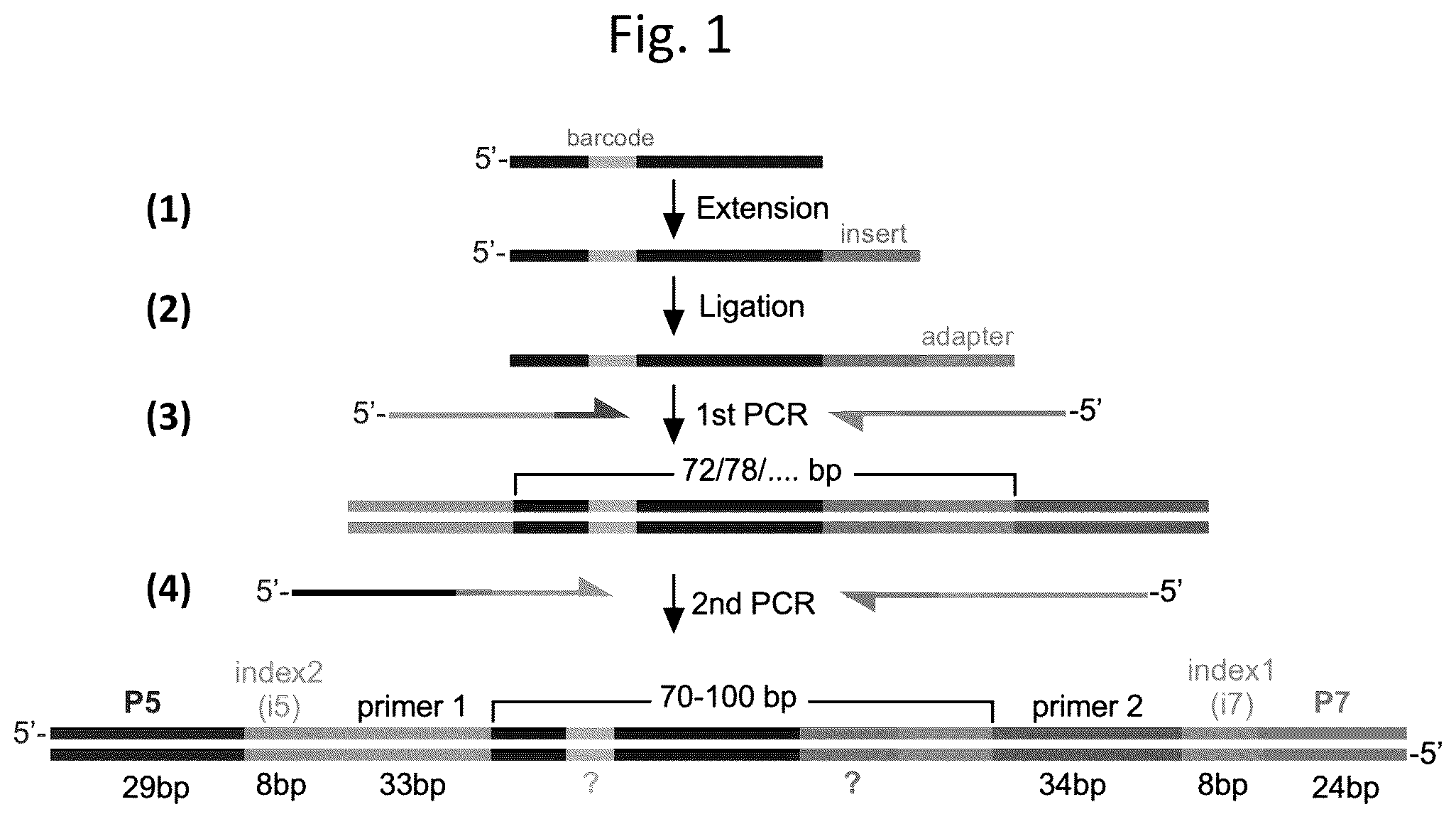
shows a schematic overview of the ultra-high-throughput assay disclosed herein, which is designed to measure telomerase activity and processivity. In step (1), a telomeric DNA primer (dark blue) comprising a nucleotide barcode (lilac) is incubated with a telomerase and dNTPs under suitable conditions for telomerase activity, such that the telomerase adds DNA repeats (green; labeled insert) to the 3′ end of the telomeric DNA primer, forming a telomerase-extended DNA product. In step (2), a hairpin adapter (orange; labeled adapter) is ligated to the 3′ end of the telomerase-extended DNA product. In step (3), the ligated product is PCR amplified using primers that add sequencing adapters (yellow and pink) to its ends. In step (4), the amplified product is subjected to a second PCR amplification, in which primers are used to add Illumina index sequences (orange and light blue; labeled as index 2 (15) and index 1 (i7), respectively) and P5/P7 sequences that will anneal to complementary oligonucleotides on the flowcell surface (black and gray), thereby generating a multiplexed DNA library for Illumina sequencing.
A shows a schematic of the telomerase primer-extension reaction. Telomerase consists of two core components, telomerase reverse transcriptase (TERT) and telomerase RNA (TR). The TERT protein catalyzes DNA synthesis to add telomeric DNA repeats (GGTTAG)n onto the DNA primer. The TR component provides the template for base pairing with the 3′-end of the DNA primer and synthesis of DNA repeats. Telomerase is processive and is capable of adding multiple repeats to the primer in a single reaction.
B shows the optimization of telomerase primer-extension reaction conditions. Telomerase repeat addition activity was assessed in the presence of two primers (“ASU-7418” (SEQ ID NO: 9) and “ASU-7419” (SEQ ID NO:10)) tested at two concentrations (0.1 μM and 0.2 μM) in a reaction performed at room temperature for either 30 or 60 min.
is a schematic depicting the secondary structure of a barcoded telomerase DNA primer. The barcode sequence is constrained within a stem loop to prevent it from interacting with neighboring sequences in the primer or the TR template sequence, which could affect telomerase activity.
is a schematic illustrating how the hairpin adapter is specifically ligated to the telomerase-extended DNA products but not to the un-extended primers.
shows the optimization of ligation reaction conditions for the hairpin adapter ASU-7420 (SEQ ID NO:2). The telomerase-extended DNA products were ligated with different concentrations of the hairpin adapter (lanes 2-5) or without the adapter (lane 1).
shows a comparison of the ability of different hairpin adapters (ASU-7420 (SEQ ID NO: 2), ASU-7540 (SEQ ID NO:3), and ASU-7541 (SEQ ID NO:4)) to be ligated to telomerase-extended DNA products.
shows a gel comprising DNA libraries with Illumina adapters. The DNA libraries were amplified from hairpin adapter-ligated DNA products synthesized by telomerase under various conditions (12 or 36 μM dGTP, or in the presence of the telomerase inhibitor BIBR). Notably, the higher dGTP concentration increased the processivity of telomerase, as demonstrated by the addition of a greater number of repeats.
shows the results of a high-throughput telomerase analysis. A total of 48 telomeric DNA primers, each comprising a randomized 7-nucleotide barcode sequence, were tested in this analysis. Each primer was used in several telomerase reactions under various conditions (i.e., various concentrations of the telomerase inhibitor BIBR, telomerase, and dGTP) and in mock reactions, as is outlined in the table at the top of the figure. The resulting extension products were pooled, used to prepare libraries for Illumina next-generation DNA sequencing, and the sequencing reads were analyzed. The graphs at the bottom of the figure show the levels of telomerase activity and telomerase processivity that were achieved using each of the 48 primers.
DETAILED DESCRIPTION
To address the need for treatments for short-telomere diseases and aging, the present inventors have developed a rapid screening method that can be used to identify small molecules or other agents that enhance the intrinsic activity of the telomerase enzyme or can be used to test for telomerase activity in a sample. This method allows telomerase repeat addition activity and processivity to be analyzed in an ultra-high-throughput manner. For example, in some embodiments, a different telomerase primer-extension reaction is performed in each well of a microplate to assess the ability of this enzyme to add DNA repeats to a telomeric DNA primer under a specific condition, such as in the presence of a small molecule or other agent, and assess the effect of the agent on telomerase activity or processivity. The telomerase-extended DNA products generated in each of the individual reactions are pooled and ligated to a hairpin adapter that is used to purify the telomerase-extended DNA products away from leftover telomeric DNA primer. The purified telomerase-extended DNA products are then PCR amplified to generate a DNA library, which is subjected to next-generation high-throughput DNA sequencing. The sequencing reads are analyzed to determine the number and length of DNA products synthesized in each well ( ). From this analysis, small molecules that enhance or inhibit telomerase processivity may be identified. Any processivity enhancing molecules can be evaluated as drugs to combat aging or treat patients with short-telomere diseases, while any telomerase inhibiting molecules can be evaluated as anti-cancer drugs.
The present invention offers several advantages. First, it is ultra-high-throughput. By using a bar-coding system and optimized telomerase primer-extension reaction conditions, this method will allow more than 500,000 small molecules to be screened in less than 6 months. Second, it is highly cost-effective, as it utilizes a secondary index system to allow DNA products from more than 30,000 reactions to be pooled and sequenced in a single next-generation sequencing reaction. Third, it identifies drugs that act on telomerase directly, reducing the likelihood of off-target, non-specific effects.
Importantly, the present invention allows one to screen for telomerase-interacting drugs that do not promote tumorigenesis in normal cells. In humans, telomerase is expressed in the germline and in stem cells, but not in normal somatic cells. Under normal circumstances, telomerase-negative cells only divide a limited number of times, referred to as the Hayflick limit, before they undergo senescence. The telomerase down-regulation and telomere shortening that occurs in normal human cells may be the result of a tumor suppressor mechanism that limits the growth potential of cancer cells. While it is repressed in most somatic cells, telomerase activity is abnormally upregulated in most human tumors or cancer cells, allowing for maintained chromosome stability and infinite growth. About 85% of malignant tumors tested exhibit telomerase activity. Thus, a drug that induces telomerase activity in telomerase-negative somatic cells may also increase the probability of tumor development. To address this complication, the inventors have designed their novel screening method to identify drugs that do not enhance tumorigenesis. In human tumor cells, telomerase activity is restored by activating expression of TERT mRNA and TERT protein. Thus, the inventors will screen for drugs that specifically enhance the activity of endogenous telomerase in stem cells and do not activate TERT protein expression in normal cells that lack telomerase. Because such drugs will not activate telomerase activity in normal cells, they will form safer anti-aging drugs than the telomerase activators currently on the market.
Methods:
The present invention provides methods for determining telomerase processivity. The methods comprise (a) incubating a telomerase, a telomeric DNA primer, and deoxyribonucleotide triphosphates (dNTPs) comprising 5-100 μM dGTP under suitable conditions for telomerase activity, optionally in the presence of an agent, thereby forming telomerase-extended DNA products; and (b) analyzing the telomerase-extended DNA products to determine the processivity of said telomerase.
In the telomerase primer-extension reaction, telomerase adds six nucleotides (i.e., GGTTAG) as a single repeat to the telomeric DNA primer. Thus, “telomerase processivity” is defined herein as the number of GGTTAG telomeric DNA repeats added to the DNA primer in a processive telomerase reaction.
The telomerase used with the present methods may be from any source and any species. Ideally, the telomerase is selected with the intended application in mind. For example, it may be advantageous to use a human telomerase for application in which the disclosed methods are used to identify drugs that affect telomerase processivity in human patients. In some embodiments, the telomerase comprises a recombinant telomerase protein produced in cell culture. For instance, the inventors expressed recombinant telomerase in human HEK293 cells, lysed the cells, and used the resulting cell lysate as a source of telomerase (see Examples). Methods for expressing recombinant protein and preparing cell extracts are well known in the art. Moreover, recombinant telomerase can be synthesized in vitro using lysates prepared from a variety of cell types, such as rabbit reticulocytes or human HELA cells. Many such in vitro protein expression systems are commercially available.
The methods and kits of the present invention may be used to assess telomerase processivity in any sample of interest. Suitable samples include, without limitation, a cell sample, tissue sample, or tumor sample. Telomerase is expressed by immortal human cells, including germline cells, embryonic cells, and certain types of tumor and cancer cells, but is not expressed by normal somatic cells. Thus, the methods of the present invention may be used to diagnose cells as cancerous based on high levels of telomerase processivity. Suitable samples for such purposes include samples obtained from various organs/tissues in a human patient as well as samples obtained from agriculturally important mammals (e.g., cattle, horses, pigs, and sheep) or any other animal of veterinary interest (e.g., cats and dogs).
As used herein, the term “telomeric DNA primer” refers to a DNA oligonucleotide that can be extended by telomerase in vitro (i.e., a telomerase substrate). The sequence of the native telomeric DNA repeat, GGTTAG, is conserved across all vertebrates and most metazoa, but it contains variations in other eukaryotes. Given that the telomerase expressed by one organism may differ from that of another organism with respect to substrate specificity, it may be advantageous to design the telomeric DNA primer in accordance with the origin of the telomerase. A suitable telomeric DNA primer may contain multiple telomeric repeats, a single telomeric repeat, or only part of a single telomeric repeat. In any case, the repeat(s) or portion thereof should be positioned at the 3′-end of the primer to facilitate base-pairing with the template sequence in the RNA component of the telomerase enzyme, ensuring that the DNA primer can be recognized and extended by the telomerase enzyme in the primer-extension reaction (see, e.g., ).
The methods of the present invention may be performed in a high-throughput format in which the telomerase-extended DNA products generated in many individual reactions are pooled and analyzed in a single sequencing reaction. To allow the products generated by each individual reaction (e.g., in the presence of specific agent) to be tracked, a telomeric DNA primer comprising a unique nucleotide barcode may be used in each individual reaction. As used herein, the term “nucleotide barcode” refers to an oligonucleotide tag sequence that allows a corresponding nucleic acid sequence to be identified (e.g., via computational data analysis). The present inventors discovered that constraining the nucleotide barcode within a stem loop structure (see, e.g., ) prevents base-pairings between the barcode and neighboring sequences, which could interfere with primer function. Thus, in some embodiments, the nucleotide barcode is flanked by sequences that form a stem such that the nucleotide barcode resides within the loop region of a stem-loop structure in the primer. The inventors have discovered that certain barcode sequences can promote or inhibit telomerase activity (see, e.g., ), which could bias the results of the present methods. Thus, in preferred embodiments, the selected nucleotide barcode sequences have a neutral effect on telomerase activity. Notably, the effect that each nucleotide barcode sequence has on telomerase activity must be determined experimentally, e.g., by comparing its effect to that of a neutral sequence in a telomerase primer-extension reaction. In Table 1, the inventors provide a list of 768 unique barcodes that do not interfere with telomerase function. Thus, in some embodiments, the nucleotide barcode sequence is selected from the sequences listed in Table 1.
Importantly, the inventors optimized several conditions of the telomerase primer-extension reaction performed in step (a) to ensure that the present methods are sensitive enough that changes in telomerase processivity (e.g., due to the presence of a telomerase inhibiting/enhancing agent) are readily apparent. In previous work, the inventors identified the incorporation of a specific dGTP nucleotide as the rate-limiting step in the human telomerase catalytic cycle (EMBO J. (2018) 37 (6): e97953), and have used this discovery to slow down and sensitize the telomerase primer-extension reaction in the present invention. Specifically, the concentration of dGTP is reduced from the conventional 1 mM to 5-100 μM in the reaction to limit the number of nucleotides added to the telomeric DNA primer. In addition to increasing the sensitivity of the assay, this also serves to reduce the cost of DNA sequencing analysis by allowing the added repeats to be covered by shorter sequencing reads. Notably, the concentration of the non-rate-limiting dNTPs in the reaction can be substantially higher. For example, in some embodiments, the dNTPs comprise 100-1000 μM dATP and 100-1000 μM dTTP. (Note: Telomerase does not utilize dCTP.) The higher concentrations of dATP and dTTP help to prevent premature termination of DNA repeat synthesis during each telomerase catalytic cycle, which generates products that are not compatible with the subsequent adapter-ligation step.
The sensitivity of this assay was further increased by reducing the reaction temperature from 37° C. to room temperature (25° C.), thereby reducing the reaction rate. Notably, this also simplifies the procedure by eliminating the need for a heating device (e.g., a thermocycler or an incubator). In conjunction, the length of the telomerase primer-extension reaction was adjusted to 20-30 minutes, which allows 4-5 repeat additions to occur at room temperature in the presence of 10-20 μM dGTP. Thus, in some embodiments of the disclosed methods, the incubating in step (a) is performed for 30 minutes at room temperature. Notably, the reaction may be terminated after a precise amount of time (e.g., after 30 minutes) by quenching the reaction (e.g., by adding EDTA). In preferred embodiments, the telomerase performs 4-5 repeat additions in step (a). Those of skill in the art will readily understand that the time and temperature are reaction conditions that may be altered within a reasonable range. For example, a similar reaction outcome may be achieved while varying the reaction temperature between 16-37° C. and varying the reaction time between 10 minutes and an hour. In general, the time should be reduced at higher temperatures, and vice versa, to achieve the same outcome.
The present methods may be used to identify agents that enhance or inhibit telomerase repeat addition processivity. As used herein, the term “agent” refers any substance that could potentially enhance or inhibit telomerase processivity. Suitable agents include therapeutic agents, such as pharmaceuticals, biologics, toxins, alkylating agents, enzymes, antibiotics, antimetabolites, antiproliferative agents, chemotherapeutic agents, hormones, neurotransmitters, DNA, RNA, siRNA, oligonucleotides, antisense RNA, aptamers, lectins, compounds that alter cell membrane permeability, photochemical compounds, small molecules, recombinant proteins or peptides, liposomes, micelles, gene therapy vectors, viral vectors, immunological therapeutic constructs, and other drugs. In some embodiments, the agent is a small molecule. In some embodiments, the agent is a potential anti-cancer drug or a potential anti-aging drug.
The analysis step (step b) may comprise any method by which telomerase processivity (i.e., the number of repeat additions added to the telomerase-extended DNA products) may be assessed. In some embodiments, processivity is assayed by running out telomerase-extended DNA products that have been labeled via incorporation of radioactive nucleotides in step (a) on a high-resolution polyacrylamide electrophoresis gel for visualization (see, e.g., B ). Here, bands with lower mobility (i.e., those on the higher part of the gel in B ) represent products with more repeats added, while the bands with higher mobility (i.e., those on the lower part of the gel in B ) represent products with fewer repeats added. A telomerase primer-extension reaction with higher repeat addition processivity will generate more DNA products with more repeats added (i.e. higher intensity bands with lower mobility). In other embodiments, the analysis step comprises sequencing the telomerase-extended DNA products. Any sequencing method may be used with the present invention. Suitable methods include, for example, Sanger sequencing, Illumina sequencing, single molecule real time (SMRT) sequencing, Nanopore DNA sequencing, massively parallel signature sequencing (MPSS), Polony sequencing, 454 pyrosequencing, combinatorial probe anchor synthesis (cPAS), Ion Torrent semiconductor sequencing, DNA nanoball sequencing, and SOLID sequencing. For high-throughput applications, the sequencing method is advantageously a next-generation sequencing method.
In some embodiments, the method further comprises adding sequencing adapters to the ends of the telomerase-extended DNA products prior to step (b) to enable next-generation sequencing. As used herein, “sequencing adapters” are short DNA oligonucleotides that contain (1) sequences needed to amplify the DNA fragment during the sequencing reaction, and (2) sequences that interact with the sequencing platform (e.g., the surface of the Illumina flow-cell or Ion Torrent beads). Accordingly, sequencing adapters should be selected based on the sequencing platform that is to be used. Sequencing adapters are commonly used to add “barcodes” to DNA sequences prior to high-throughput sequencing. Thus, in the present invention, using the sequencing adapters to incorporate a second indexing system allows a greater number of samples to be pooled in a single sequencing reaction. Many index sequences and adapter sets are commercially available and include, for example, Unique Dual Index (UDI) Adapters from IDT, TruSeq UD Indexes from Illumina, and SeqCap Dual End Adapters from Roche. In some embodiments, the sequencing adapters are added using polymerase chain reaction (PCR), e.g., using PCR primers that comprise the sequencing adapter sequences.
The methods of the present invention were designed to allow the telomerase-extended DNA products generated in many individual reactions to be pooled and analyzed in a single sequencing reaction. In some embodiments, the telomerase-extended DNA products are pooled from at least 300 reactions, from at least 3,000 reaction, or from at least 30,000 reactions, and are sequenced in the same sequencing reaction. Advantageously, the sequencing methods used in such embodiments should provide a sufficient number of reads per reaction such that the number of reads assigned to each individual telomerase primer-extension reaction will be enough to distinguish reactions with various levels of telomerase activity and processivity. For example, a single Illumina DNA sequencing reaction typically produces >300,000,000 reads. Thus, for a sequencing run containing DNA products from 30,000 reactions, about 10,000 reads should be assigned to each individual telomerase primer-extension reaction. This number of reads is expected to be more than sufficient to distinguish between reactions with different levels of telomerase activity and processivity.
The methods of the present invention are readily adapted to a high-throughput format. In such embodiments, the method is performed in a multi-well plate and a unique telomeric DNA primer is added to each well of the multi-well plate in step (a). Suitable multi-well plates include, for example, plates with 6, 12, 24, 48, 96, 384 or 1536 wells. To perform the present methods in a high-throughput format, it may be advantageous to employ a robotic liquid handling system (e.g., Beckman Coulter Biomek FX) to automate reaction setup in step (a).
Advantageously, residual telomeric DNA primers are removed from the telomerase-extended DNA products prior to the analysis step (i.e., to avoid wasting sequencing reads). However, the modest size difference between the telomeric DNA primer and the telomerase-extended DNA products makes it challenging to separate these oligonucleotides using traditional methods (e.g., size selection using magnetic beads or electrophoresis and gel extraction). Thus, in some embodiments, the methods further comprise ligating a hairpin adapter to the telomerase-extended DNA products produced in step (a) prior to step (b). The hairpin adapter used with the present invention comprises: (a) a sequence that is complementary to the 3′ end of the telomerase-extended DNA products; (b) a 5′ phosphate to allow for ligation with the telomerase-extended DNA products; (c) a purification moiety; and (d) PCR primer binding site.
To increase the specificity of the hairpin adaptor for the telomerase-extended DNA products, in some embodiments, the hairpin adapter further comprises (e) a stem-loop structure comprising a double-stranded stem and a single-stranded loop; and (f) a single-stranded 3′-overhang. This stem-loop structure reduces non-specific binding with residual primer by limiting the single-stranded regions of the hairpin adaptor to those that hybridize with the telomerase-extended DNA products (a) and the PCR primer (d). For example, in one specific embodiment, the hairpin adapter sequence forms a stem-loop comprising a 5-6 base-paired stem and an 8-10 nucleotide loop, which is followed by a single-stranded 3′-overhang comprising 6-7 nucleotides ( ). In some embodiments, the sequence that is complementary to the 3′ end of the telomerase-extended DNA products is located within the single-stranded 3′-overhang. As used herein, the terms “complementary” refers to the ability of a nucleic acid molecule to bind to (i.e., hybridize with) another nucleic acid molecule through the formation of hydrogen bonds between specific nucleotides (i.e., A with T or U; G with C), forming a double-stranded molecule.
As used herein, the term “PCR primer binding site” refers to a sequence within the hairpin adaptor that is complementary to a PCR primer. Inclusion of this sequence, thus, facilitates binding of the PCR primer to the hairpin adapter-ligated telomerase-extended DNA products in a subsequent amplification step. In some embodiments, the PCR primer binding site is contained within the single-stranded loop of the hairpin adaptor (i.e., to ensure that it is accessible to the primer). In the present methods, PCR amplification may be used, for example, to convert the adapter-ligated DNA products into a double-stranded DNA amplicon library that is compatible with a next-generation sequencing platform of choice (e.g., Illumina). Notably, the PCR primers used to prepare a sequencing library should comprise appropriate sequencing adapter sequences to ensure that the resulting library is compatible with the sequencing platform of choice.
As used herein, a “purification moiety” refers to a tag or molecule that is appended to the hairpin adapter to facilitate purification of the hairpin adapter and any DNA ligated thereto. In some embodiments, the method further comprises affinity purifying the telomerase-extended DNA products using the purification moiety of the hairpin adaptor after the telomerase-extended DNA products are ligated to the hairpin adaptor. For instance, in the Examples, the inventors use a hairpin adapter that comprises a biotin tag derivative (i.e., biotin-triethyleneglycol) as a purification moiety and affinity purification is performed using streptavidin-coated beads. Other suitable purification moieties include, without limitation, chitin binding protein (CBP), hemagglutinin (HA), maltose binding protein (MBP), strep-tag, cMyc, poly(His) tag, Flag tag, V5 tag, NE-tag, glutathione-S-transferase (GST), and the like.
The 5′ phosphate of the hairpin adaptor allows it to be ligated to the telomerase-extended DNA products using a standard DNA ligation reaction. For example, in some embodiments, the hairpin adaptor is ligated using a DNA ligase in a 1-hour ligation reaction performed at 30° C. Notably, the inventors have experimentally determined that the hairpin adapter should be used at a minimal concentration of 10 nM and should comprise a minimum of 6 nucleotides in the 3′-overhang complementary region to ensure adequate base-pairing to the telomerase-extended DNA products and efficient ligation. Thus, in some embodiments, the 3′-overhang in the hairpin adapter is at least 6 nucleotides in length, and in some embodiments, the concentration of the hairpin adaptor is at least 10 nM.
Kits:
The present invention also provides kits for performing the telomerase processivity assay disclosed herein. The kits comprise at least one telomeric DNA primer and dNTP mix comprising 5-100 μM dGTP, 100-1000 μM dTTP, and 100-100 μM dATP.
In some embodiments, the kits further comprise at least one of the following: purified telomerase, primer extension buffer, a barcoded telomeric DNA primer, a hairpin adapter, a PCR primer set, and a DNA ligase.
The present disclosure is not limited to the specific details of construction, arrangement of components, or method steps set forth herein. The compositions and methods disclosed herein are capable of being made, practiced, used, carried out and/or formed in various ways that will be apparent to one of skill in the art in light of the disclosure that follows. The phraseology and terminology used herein is for the purpose of description only and should not be regarded as limiting to the scope of the claims. Ordinal indicators, such as first, second, and third, as used in the description and the claims to refer to various structures or method steps, are not meant to be construed to indicate any specific structures or steps, or any particular order or configuration to such structures or steps. All methods described herein can be performed in any suitable order unless otherwise indicated herein or otherwise clearly contradicted by context. The use of any and all examples, or exemplary language (e.g., “such as”) provided herein, is intended merely to facilitate the disclosure and does not imply any limitation on the scope of the disclosure unless otherwise claimed. No language in the specification, and no structures shown in the drawings, should be construed as indicating that any non-claimed element is essential to the practice of the disclosed subject matter. The use herein of the terms “including,” “comprising,” or “having,” and variations thereof, is meant to encompass the elements listed thereafter and equivalents thereof, as well as additional elements. Embodiments recited as “including,” “comprising,” or “having” certain elements are also contemplated as “consisting essentially of” and “consisting of” those certain elements.
Recitation of ranges of values herein are merely intended to serve as a shorthand method of referring individually to each separate value falling within the range, unless otherwise indicated herein, and each separate value is incorporated into the specification as if it were individually recited herein. For example, if a concentration range is stated as 1% to 50%, it is intended that values such as 2% to 40%, 10% to 30%, or 1% to 3%, etc., are expressly enumerated in this specification. These are only examples of what is specifically intended, and all possible combinations of numerical values between and including the lowest value and the highest value enumerated are to be considered to be expressly stated in this disclosure. Use of the word “about” to describe a particular recited amount or range of amounts is meant to indicate that values very near to the recited amount are included in that amount, such as values that could or naturally would be accounted for due to manufacturing tolerances, instrument and human error in forming measurements, and the like. All percentages referring to amounts are by weight unless indicated otherwise.
No admission is made that any reference, including any non-patent or patent document cited in this specification, constitutes prior art. In particular, it will be understood that, unless otherwise stated, reference to any document herein does not constitute an admission that any of these documents forms part of the common general knowledge in the art in the United States or in any other country. Any discussion of the references states what their authors assert, and the applicant reserves the right to challenge the accuracy and pertinence of any of the documents cited herein. All references cited herein are fully incorporated by reference, unless explicitly indicated otherwise. The present disclosure shall control in the event there are any disparities between any definitions and/or description found in the cited references.
The following examples are meant only to be illustrative and are not meant as limitations on the scope of the invention or of the appended claims.
Examples
The following Example describes the development of an ultra-high-throughput screening assay for screening for small molecules that can effectively enhance the intrinsic activity of the telomerase enzyme and delay cellular aging in adult stem cells. Specifically, this assay is designed to assess the repeat addition processivity of telomerase enzymes in the stem cells.
Telomerase Primer-Extension Reaction
For this assay, telomerase was prepared from HEK293 cells that have been engineered to overexpress the two essential telomerase components of this enzyme, TERT and TR. A total of 3×10 5 telomerase-expressing HEK293 cells was lysed in 200 μl HEPES lysis buffer (20 mM HEPES-KOH, pH 7.9, 2 mM MgCl 2 , 400 mM NaCl, 0.2 mM EGTA, 10% glycerol, 1 mM DTT, 1 mM PMSF and protease inhibitor) at 4° C. for 20 min, followed by centrifugation at 16,000×g at 4° C. for 15 min to remove cellular debris.
In a typical telomerase primer-extension reaction, telomerase adds six nucleotides (i.e., GGTTAG) as a single repeat to the primer. Telomerase is processive, meaning that it is capable of adding multiple DNA repeats in a single turnover reaction ( A ).
The telomerase primer-extension reaction can be performed for 30 min at room temperature. Each 10 μl reaction may comprise 2 μl of HEK293 cell lysate, 0.1 μM telomeric DNA primer, 12 μM dGTP, 300 μM dATP, 300 μM dTTP, and 1× primer extension buffer. (Note: telomerase does not utilize dCTP.) This reaction may be terminated (e.g., after precisely 30 min) by the addition of 10 mM EDTA. Reaction setup may be performed using a robotic liquid handling system (e.g., Beckman Coulter BIOMEK FX automated workstation).
Importantly, several conditions of this reaction were optimized to ensure that the assay was both sensitive and cost effective. Telomerase activity and processivity are highly sensitive to the concentration of dGTP and vary dramatically within the range of 5 to 100 μM dGTP. Thus, in this assay, the telomerase primer-extension reaction is performed in the presence of 12 μM dGTP to minimize the number of nucleotides added to the primer. This serves to (1) reduce the cost of DNA sequencing analysis by allowing the added repeats to be covered by shorter sequencing reads, and (2) increase the sensitivity of the assay by slowing down telomerase enough to detect changes in its activity in the presence of enhancers or inhibitors. The sensitivity of the assay was further increased by reducing the reaction temperature from 37° C. to room temperature (25° C.), which both reduces the reaction rate and simplifies the procedure (i.e., by eliminating the need for a heating device). In conjunction, the length of the reaction was adjusted to 30 min, allowing 4-5 repeat additions to occur at room temperature. The cost per reaction is further reduced by designing the assay to use a minimal concentration of the DNA primer ( B ).
Barcoded Telomerase DNA Primers
The extended DNA products synthesized by telomerase in each well of the 384-well plate may be pooled and processed together in a single tube to generate a DNA library for Illumina sequencing. To track the DNA products produced in each individual well in the presence of a specific small molecule, each reaction mixture may contain a unique telomeric DNA primer that has been modified to include a structurally defined 6-nucleotide barcode (e.g., 5′-CAGGGATAGCATGTTGCCTCGTNNNNNNTCGAGGTTGCTGGGAGAGGTT-3′ (SEQ ID NO: 1), wherein the barcode is represented by the NNNNNN). These primers have been designed such that the barcode sequences are flanked by two sequences (underlined) that form a 5-bp stem, which constrains the barcode sequence to a stem loop ( ). This design is intended to prevent base-pairings between the barcode and the neighboring sequence (especially the 3′-end of the primer, which is crucial for telomerase primer-extension activity) from interfering with primer function.
Moreover, to avoid biasing the results of a screen, the specific barcode sequences used in the assay must be experimentally tested to ensure that their effect on telomerase activity is neutral. The ability of barcode sequences to promote or inhibit telomerase activity was tested in . A total of 48 primers, each comprising a randomized 7-nucleotide barcode sequence, were used in this experiment. The results of this experiment demonstrate that certain barcode sequences can promote or inhibit telomerase activity.
A total of 768 unique telomeric DNA primers have been designed, each comprising a different barcode sequence that does not interfere with telomerase function. The barcode sequences used in these primers and are provided in Table 1, below. Use of these primers allows 384 telomerase primer-extension reactions to performed in duplicate simultaneously. Each barcode will be assigned to a specific reaction in which a particular compound is tested for its ability to impact telomerase activity. Thus, this assay will produce up to 384 uniquely barcoded DNA products from each 384-well plate, which will be pooled and purified together in a single tube using the Oligo Clean & Concentrator™ (Zymo Research) and eluted in 10-20 μl H 2 O.
TABLE 1
Barcode sequences
used in the 786
telomeric DNA primers
1 ACCCTTG
2 CCCCTTG
3 CCCTTTT
4 CCGCTTG
5 CCGCTTT
6 CCGGCTT
7 CCGGTTG
8 CCGGTTT
9 CCGTCTT
10 CCGTTGT
11 CCGTTTT
12 CCTCCGT
13 CCTCCTT
14 CCTCGGT
15 CCTCGTG
16 CCTCTGT
17 CCTCTTG
18 CCTGCTT
19 CCTGTGT
20 CCTGTTG
21 CCTGTTT
22 CCTTCTG
23 CCTTGGT
24 CCTTGTG
25 CCTTTCG
26 CCTTTCT
27 CCTTTGG
28 CCTTTGT
29 CCTTTTG
30 CCTTTTT
31 CGCCCTT
32 CGCCGTT
33 CGCCTTG
34 CGCGCTT
35 CGCGGTT
36 CGCGTTG
37 CGCGTTT
38 CGCTCGT
39 CGCTCTT
40 CGCTTCT
41 CGCTTGT
42 CGCTTTG
43 CGCTTTT
44 CGGCCTT
45 CGGCGTT
46 CGGCTTT
47 CGGGCTT
48 CGGGTCT
49 CGGGTTG
50 CGGGTTT
51 CGGTCGT
52 CGGTCTG
53 CGGTCTT
54 CGGTGTG
55 CGGTGTT
56 CGGTTCG
57 CGGTTCT
58 CGGTTGT
59 CGGTTTT
60 CGTCCGT
61 CGTCCTT
62 CGTCGCT
63 CGTCGGT
64 CGTCGTG
65 CGTCGTT
66 CGTCTCG
67 CGTCTTT
68 CGTGCGT
69 CGTGCTT
70 CGTGGGT
71 CGTGGTG
72 CGTGTCT
73 CGTGTGG
74 CGTGTGT
75 CGTGTTG
76 CGTGTTT
77 CGTTCCT
78 CGTTCGT
79 CGTTCTG
80 CGTTCTT
81 CGTTGCG
82 CGTTGGG
83 CGTTGGT
84 CGTTGTG
85 CGTTGTT
86 CGTTTCG
87 CGTTTCT
88 CGTTTGC
89 CGTTTGG
90 CGTTTGT
91 CGTTTTC
92 CGTTTTG
93 CGTTTTT
94 CTCCCTT
95 CTCCGCT
96 CTCCGGT
97 CTCCGTG
98 CTCCGTT
99 CTCCTCG
100 CTCCTTG
101 CTCCTTT
102 CTCGCGT
103 CTCGCTG
104 CTCGCTT
105 CTCGGGT
106 CTCGTCT
107 CTCGTGG
108 CTCGTGT
109 CTCGTTG
110 CTCGTTT
111 CTCTCGG
112 CTCTCGT
113 CTCTCTG
114 CTCTCTT
115 CTCTTCG
116 CTCTTCT
117 CTCTTGG
118 CTCTTGT
119 CTCTTTG
120 CTCTTTT
121 CTGCCGT
122 CTGCGGT
123 CTGCGTG
124 CTGCGTT
125 CTGCTCT
126 CTGCTTG
127 CTGCTTT
128 CTGGCGT
129 CTGGGTG
130 CTGGGTT
131 CTGGTCT
132 CTGGTGT
133 CTGGTTG
134 CTGGTTT
135 CTGTCCG
136 CTGTCCT
137 CTGTCGG
138 CTGTCTG
139 CTGTCTT
140 CTGTGCT
141 CTGTGGT
142 CTGTGTT
143 CTGTTCG
144 CTGTTGG
145 CTGTTGT
146 CTGTTTC
147 CTGTTTG
148 CTTCCCT
149 CTTCCGT
150 CTTCCTT
151 CTTCGCG
152 CTTCGGG
153 CTTCGGT
154 CTTCGTG
155 CTTCGTT
156 CTTCTCG
157 CTTCTGG
158 CTTCTGT
159 CTTCTTC
160 CTTCTTG
161 CTTCTTT
162 CTTGCCT
163 CTTGCTG
164 CTTGCTT
165 CTTGGCT
166 CTTGGGT
167 CTTGGTT
168 CTTGTCG
169 CTTGTCT
170 CTTGTGG
171 CTTGTGT
172 CTTGTTG
173 CTTGTTT
174 CTTTCCG
175 CTTTCGG
176 CTTTCGT
177 CTTTCTC
178 CTTTCTG
179 CTTTCTT
180 CTTTGCG
181 CTTTGCT
182 CTTTGGT
183 CTTTGTG
184 CTTTGTT
185 CTTTTCG
186 CTTTTGC
187 CTTTTGG
188 CTTTTGT
189 CTTTTTG
190 CTTTTTT
191 GCCCGTT
192 GCCCTGT
193 GCCCTTT
194 GCCGCTT
195 GCCGTTT
196 GCCTCTT
197 GCCTGTT
198 GCCTTGG
199 GCCTTGT
200 GCCTTTG
201 GCCTTTT
202 GCGCCTT
203 GCGCGTT
204 GCGCTCT
205 GCGCTTG
206 GCGCTTT
207 GCGGCTT
208 GCGGGTT
209 GCGGTGT
210 GCGGTTT
211 GCGTCTG
212 GCGTCTT
213 GCGTGGT
214 GCGTGTT
215 GCGTTCG
216 GCGTTGT
217 GCGTTTC
218 GCGTTTG
219 GCGTTTT
220 GCTCCGT
221 GCTCCTT
222 GCTCGCT
223 GCTCGGT
224 GCTCGTC
225 GCTCGTG
226 GCTCGTT
227 GCTCTCG
228 GCTCTCT
229 GCTCTGG
230 GCTCTGT
231 GCTCTTC
232 GCTCTTG
233 GCTCTTT
234 GCTGCTG
235 GCTGCTT
236 GCTGGGT
237 GCTGGTT
238 GCTGTGT
239 GCTGTTT
240 GCTTCCG
241 GCTTCCT
242 GCTTCTT
243 GCTTGCT
244 GCTTGGT
245 GCTTGTC
246 GCTTGTG
247 GCTTGTT
248 GCTTTCG
249 GCTTTGC
250 GCTTTGT
251 GCTTTTC
252 GCTTTTG
253 GCTTTTT
254 GGCCCTT
255 GGCCGTT
256 GGCCTTT
257 GGCGCTT
258 GGCGGTT
259 GGCGTTT
260 GGCTCGT
261 GGCTCTC
262 GGCTCTT
263 GGCTGGT
264 GGCTGTT
265 GGCTTCG
266 GGCTTCT
267 GGCTTGC
268 GGCTTGG
269 GGCTTGT
270 GGCTTTC
271 GGCTTTG
272 GGGCTTT
273 GGGGTCT
274 GGGGTTG
275 GGGGTTT
276 GGGTCTT
277 GGGTGTT
278 GGGTTGT
279 GGGTTTT
280 GGTCCCT
281 GGTCCGT
282 GGTCCTC
283 GGTCCTG
284 GGTCCTT
285 GGTCGCT
286 GGTCGTC
287 GGTCGTT
288 GGTCTCC
289 GGTCTCT
290 GGTCTGT
291 GGTCTTC
292 GGTCTTG
293 GGTCTTT
294 GGTGCGT
295 GGTGCTC
296 GGTGCTT
297 GGTGGCT
298 GGTGTCT
299 GGTGTGT
300 GGTGTTG
301 GGTGTTT
302 GGTTCCG
303 GGTTCCT
304 GGTTCGC
305 GGTTCGG
306 GGTTCTC
307 GGTTCTG
308 GGTTGCT
309 GGTTGGG
310 GGTTGTC
311 GGTTGTG
312 GGTTGTT
313 GGTTTCC
314 GGTTTCG
315 GGTTTCT
316 GGTTTGG
317 GGTTTGT
318 GGTTTTC
319 GGTTTTG
320 GGTTTTT
321 GTCCCCT
322 GTCCCGT
323 GTCCCTT
324 GTCCGGT
325 GTCCGTG
326 GTCCGTT
327 GTCCTCG
328 GTCCTCT
329 GTCCTGT
330 GTCCTTC
331 GTCCTTG
332 GTCCTTT
333 GTCGCGT
334 GTCGCTG
335 GTCGCTT
336 GTCGGCT
337 GTCGGTG
338 GTCGGTT
339 GTCGTCT
340 GTCGTGT
341 GTCGTTG
342 GTCGTTT
343 GTCTCCG
344 GTCTCCT
345 GTCTCGC
346 GTCTCGG
347 GTCTCGT
348 GTCTCTC
349 GTCTCTG
350 GTCTCTT
351 GTCTGCT
352 GTCTGGT
353 GTCTGTT
354 GTCTTGC
355 GTCTTGT
356 GTCTTTC
357 GTCTTTG
358 GTCTTTT
359 GTGCCCT
360 GTGCCTT
361 GTGCGCT
362 GTGCGGT
363 GTGCGTT
364 GTGCTCG
365 GTGCTCT
366 GTGCTGT
367 GTGCTTC
368 GTGCTTG
369 GTGGGTC
370 GTGGTCG
371 GTGGTCT
372 GTGGTTC
373 GTGGTTG
374 GTGTCCG
375 GTGTCCT
376 GTGTCGG
377 GTGTCGT
378 GTGTCTC
379 GTGTCTG
380 GTGTCTT
381 GTGTGCT
382 GTGTGGT
383 GTGTGTC
384 GTGTGTT
385 GTGTTCG
386 GTGTTCT
387 GTGTTGC
388 GTGTTGT
389 GTGTTTG
390 GTGTTTT
391 GTTCCCT
392 GTTCCGG
393 GTTCCTC
394 GTTCCTG
395 GTTCGCG
396 GTTCGCT
397 GTTCGGT
398 GTTCGTC
399 GTTCGTG
400 GTTCGTT
401 GTTCTCT
402 GTTCTGC
403 GTTCTGT
404 GTTCTTC
405 GTTCTTG
406 GTTCTTT
407 GTTGCGG
408 GTTGCGT
409 GTTGCTC
410 GTTGCTG
411 GTTGGTC
412 GTTGGTG
413 GTTGGTT
414 GTTGTCG
415 GTTGTCT
416 GTTGTGC
417 GTTGTGG
418 GTTGTGT
419 GTTGTTC
420 GTTGTTG
421 GTTGTTT
422 GTTTCCG
423 GTTTCGT
424 GTTTCTC
425 GTTTCTG
426 GTTTCTT
427 GTTTGCG
428 GTTTGCT
429 GTTTGGC
430 GTTTGGG
431 GTTTGGT
432 GTTTGTC
433 GTTTGTG
434 GTTTTCC
435 GTTTTCG
436 GTTTTGC
437 GTTTTGG
438 GTTTTGT
439 GTTTTTG
440 GTTTTTT
441 TCCCCGG
442 TCCCCGT
443 TCCCCTG
444 TCCCCTT
445 TCCCGTT
446 TCCCTTG
447 TCCCTTT
448 TCCGCGT
449 TCCGCTG
450 TCCGGTG
451 TCCGGTT
452 TCCGTCT
453 TCCGTGT
454 TCCGTTG
455 TCCTCGG
456 TCCTCGT
457 TCCTCTT
458 TCCTGTT
459 TCCTTGG
460 TCCTTGT
461 TCCTTTG
462 TCCTTTT
463 TCGCCCT
464 TCGCCTT
465 TCGCGCT
466 TCGCGGT
467 TCGCGTG
468 TCGCGTT
469 TCGCTCG
470 TCGCTCT
471 TCGCTTG
472 TCGCTTT
473 TCGGCGT
474 TCGGCTT
475 TCGGTCT
476 TCGGTTC
477 TCGGTTG
478 TCGGTTT
479 TCGTCCG
480 TCGTCGT
481 TCGTCTG
482 TCGTCTT
483 TCGTGGG
484 TCGTGGT
485 TCGTGTG
486 TCGTGTT
487 TCGTTCG
488 TCGTTGG
489 TCGTTGT
490 TCGTTTG
491 TCGTTTT
492 TCTCCCG
493 TCTCCGG
494 TCTCCGT
495 TCTCCTG
496 TCTCCTT
497 TCTCGCT
498 TCTCGGT
499 TCTCGTC
500 TCTCGTG
501 TCTCGTT
502 TCTCTCT
503 TCTCTGG
504 TCTCTGT
505 TCTCTTG
506 TCTCTTT
507 TCTGCCT
508 TCTGCGT
509 TCTGCTG
510 TCTGCTT
511 TCTGGTG
512 TCTGGTT
513 TCTGTCT
514 TCTGTGG
515 TCTGTGT
516 TCTGTTG
517 TCTGTTT
518 TCTTCGG
519 TCTTCTG
520 TCTTCTT
521 TCTTGCG
522 TCTTGCT
523 TCTTGGG
524 TCTTGGT
525 TCTTGTT
526 TCTTTCG
527 TCTTTGG
528 TCTTTGT
529 TCTTTTG
530 TGCCCCT
531 TGCCCGT
532 TGCCCTT
533 TGCCGCT
534 TGCCGTG
535 TGCCTGT
536 TGCGCGT
537 TGCGCTG
538 TGCGCTT
539 TGCGGGT
540 TGCGGTT
541 TGCGTCT
542 TGCGTGG
543 TGCGTGT
544 TGCGTTG
545 TGCGTTT
546 TGCTCCG
547 TGCTCGC
548 TGCTCGG
549 TGCTCGT
550 TGCTCTG
551 TGCTCTT
552 TGCTGCT
553 TGCTGGT
554 TGCTGTG
555 TGCTGTT
556 TGCTTCG
557 TGCTTGC
558 TGCTTGG
559 TGCTTTC
560 TGGCCTT
561 TGGCGCT
562 TGGCGGT
563 TGGCGTT
564 TGGCTCG
565 TGGCTTC
566 TGGCTTG
567 TGGCTTT
568 TGGGCCT
569 TGGGCTG
570 TGGGCTT
571 TGGGGCT
572 TGGGGTT
573 TGGGTCT
574 TGGGTGT
575 TGGGTTC
576 TGGGTTG
577 TGGGTTT
578 TGGTCCG
579 TGGTCGT
580 TGGTCTG
581 TGGTCTT
582 TGGTGCT
583 TGGTGGT
584 TGGTGTG
585 TGGTTCG
586 TGGTTCT
587 TGGTTGG
588 TGGTTGT
589 TGGTTTC
590 TGGTTTT
591 TGTCCCG
592 TGTCCCT
593 TGTCCGG
594 TGTCCTG
595 TGTCCTT
596 TGTCGCG
597 TGTCGCT
598 TGTCGGT
599 TGTCGTT
600 TGTCTCG
601 TGTCTGG
602 TGTCTGT
603 TGTCTTG
604 TGTCTTT
605 TGTGCCT
606 TGTGCGG
607 TGTGCGT
608 TGTGCTC
609 TGTGCTG
610 TGTGCTT
611 TGTGGTG
612 TGTGGTT
613 TGTGTGC
614 TGTGTGG
615 TGTGTGT
616 TGTGTTC
617 TGTGTTG
618 TGTTCCG
619 TGTTCCT
620 TGTTCGC
621 TGTTCGT
622 TGTTCTG
623 TGTTCTT
624 TGTTGCG
625 TGTTGGG
626 TGTTGGT
627 TGTTGTC
628 TGTTGTG
629 TGTTTCG
630 TGTTTGG
631 TGTTTGT
632 TGTTTTG
633 TTCCCCG
634 TTCCCGT
635 TTCCCTG
636 TTCCCTT
637 TTCCGCG
638 TTCCGGG
639 TTCCGGT
640 TTCCGTG
641 TTCCTCG
642 TTCCTGT
643 TTCCTTG
644 TTCCTTT
645 TTCGCCG
646 TTCGCCT
647 TTCGCTC
648 TTCGCTG
649 TTCGCTT
650 TTCGGCT
651 TTCGGTG
652 TTCGGTT
653 TTCGTCG
654 TTCGTCT
655 TTCGTGG
656 TTCGTGT
657 TTCGTTC
658 TTCGTTG
659 TTCGTTT
660 TTCTCCG
661 TTCTCCT
662 TTCTCGG
663 TTCTCGT
664 TTCTCTC
665 TTCTCTG
666 TTCTCTT
667 TTCTGCT
668 TTCTGGG
669 TTCTGGT
670 TTCTGTG
671 TTCTTGC
672 TTCTTGG
673 TTCTTTG
674 TTCTTTT
675 TTGCCCG
676 TTGCCGT
677 TTGCCTG
678 TTGCCTT
679 TTGCGCG
680 TTGCGCT
681 TTGCGGG
682 TTGCGGT
683 TTGCGTG
684 TTGCTCT
685 TTGCTGT
686 TTGCTTC
687 TTGCTTG
688 TTGCTTT
689 TTGGCCG
690 TTGGCCT
691 TTGGCGT
692 TTGGCTT
693 TTGGGCT
694 TTGGGTT
695 TTGGTGG
696 TTGGTGT
697 TTGGTTC
698 TTGGTTG
699 TTGGTTT
700 TTGTCCG
701 TTGTCCT
702 TTGTCGT
703 TTGTCTC
704 TTGTCTG
705 TTGTCTT
706 TTGTGCG
707 TTGTGCT
708 TTGTGGG
709 TTGTGGT
710 TTGTGTC
711 TTGTGTG
712 TTGTGTT
713 TTGTTCG
714 TTGTTGC
715 TTGTTGT
716 TTGTTTT
717 TTTCCCG
718 TTTCCCT
719 TTTCCGC
720 TTTCCGG
721 TTTCCTG
722 TTTCCTT
723 TTTCGCG
724 TTTCGCT
725 TTTCGGC
726 TTTCGGG
727 TTTCGGT
728 TTTCGTC
729 TTTCGTT
730 TTTCTCT
731 TTTCTGC
732 TTTCTGG
733 TTTCTTG
734 TTTGCCG
735 TTTGCCT
736 TTTGCGC
737 TTTGCGG
738 TTTGCGT
739 TTTGCTC
740 TTTGCTG
741 TTTGCTT
742 TTTGGCG
743 TTTGGGT
744 TTTGGTG
745 TTTGGTT
746 TTTGTCG
747 TTTGTCT
748 TTTGTGG
749 TTTGTGT
750 TTTGTTG
751 TTTTCCG
752 TTTTCCT
753 TTTTCGC
754 TTTTCGG
755 TTTTCGT
756 TTTTCTG
757 TTTTCTT
758 TTTTGCG
759 TTTTGCT
760 TTTTGGC
761 TTTTGGG
762 TTTTGGT
763 TTTTGTG
764 TTTTTCG
765 TTTTTGC
766 TTTTTGG
767 TTTTTGT
768 TTTTTTG
Ligation of Hairpin-Adapter to Extended DNA Products
To prepare the purified DNA products for next-generation sequencing, they were ligated to a specifically designed hairpin adapter (10 nM) in a 10 μl T4 DNA ligase reaction at 30° C. for 1 hour ( ). The hairpin adapter contains a 5′-phosphate for ligation and a 3′-biotin-triethyleneglycol (TEG) spacer for affinity purification. The 3′-overhang of the adapter hybridizes specifically with the 3′-end of telomerase-extended DNA products. Importantly, the hairpin structure of this adapter serves to increase its specificity, preventing its binding to residual primer and non-specifically extended DNA products, and thereby enabling the purification of telomerase-extended DNA products only ( ). The minimal concentration of the hairpin adapter was experimentally determined to be 10 nM ( ). Additionally, it was determined that the length of the 3′-overhang of the hairpin adapter should be at least six nucleotides ( ).
After ligation, the adapter-ligated DNA products were affinity purified using 4 μl of Dynabeads MyOne Streptavidin-C1 beads diluted in 40 μl H2O with gentle rotation at room temperature for 30 min, washed twice with 75 μl H 2 O at 50° C. for 1 min to remove non-specifically bound DNA primers, and eluted in 40 μl 95% formamide buffer at 65° C. for 5 min. The eluted DNA was subjected to phenol chloroform extraction (i.e., to remove proteins) followed by ethanol precipitation.
Conversion of Adapter-Ligated DNA Products to Sequencing-Ready DNA Library
Illumina sequencing adapters were added to both ends of the purified adapter-ligated DNA products by performing PCR using primers that contain the Illumina adapter sequences ( ). The first step of PCR was performed using a touchdown annealing step (−1° C./min, ranging from 72° C. to 65° C.) to facilitate initial annealing of the reverse primer to the loop sequence in the hairpin adapter. After a sufficient numbers of PCR cycles (98° C. for 15 sec, 66° C. for 30 sec, 72° C. for 30 sec) using Phusion DNA polymerase, the 141-201 bp PCR DNA products were purified using AMPure XP beads (Beckman Coulter), optionally in a 96-well plate format. The minimal number of PCR cycles required to amplify various amounts of purified adapter-ligated DNA products needs to be experimentally determined. Typically, 10-20 cycles are required to generate a sufficient quantity of amplified DNA for the following indexing step.
Telomeric DNA products synthesized by telomerase under various conditions can be converted to PCR products that are ready for the final indexing step. In this step, PCR is performed using primers that contain additional Illumina index sequences, generating multiplexed DNA libraries for Illumina next-generation sequencing analysis ( ). Using this secondary Illumina index system, DNA products from 96 384-well plates may be pooled and sequenced in a single next-generation sequencing reaction, which will make the screening extremely cost-effective. The expected DNA size in the indexed libraries is about 201-261 bp, which can be verified by gel electrophoresis analysis.
Analysis of DNA Products by Illumina Next-Generation Sequencing
By pooling 96 indexed libraries that each contain barcoded DNA products from 768 telomerase primer-extension reactions (i.e., 384 reaction in duplicates), and running them together in a single lane of an Illumina flow cell (which typically produces >300,000,000 reads), each assay allows more than 30,000 compounds to be screened for their ability to affect telomerase activity and processivity. For a sequencing run containing 30,000 reactions, about 10,000 reads should be assigned (i.e., using computational analysis) to each individual reaction, which should be sufficient to distinguish between reactions with various levels of telomerase activity. Thus, this ultra-high-throughput screening method will allow screen U.S. Pat. No. 300,000 compounds in only 10 Illumina DNA sequencing runs.
Figures (9)
Citations
This patent cites (15)
- US5693474
- US5891639
- US8234080
- US8374838
- US8481721
- US8609736
- US8759304
- US9234230
- US2001/0039039
- US2009/0269771
- US2014/0134610
- US2014/0296081
- US2018/0051277
- US1298951
- US20030058023