Controlled Growth of Microorganisms
Abstract
It can be useful to regulate the growth of microbial cells. Some embodiments herein provide genetically engineered microbial cells that can produce bacteriocins to control the growth of microbial cells. In some embodiments, microbial cells are contained within a desired environment. In some embodiments, contaminating microbial cells are neutralized. In some embodiments, a first microbial cell type regulates the growth of a second microbial cell type so as to maintain a desired ratio of the two cell types.
Claims (31)
1. A method of controlling the growth of a microbial cell, the method comprising: culturing a genetically engineered microbial cell under conditions in which the genetically engineered microbial cell produces a secreted bacteriocin at a level sufficient to control the growth of the genetically engineered microbial cell and/or a second microbial cell, wherein said genetically engineered microbial cell comprises: a first nucleic acid comprising a first nucleic acid sequence encoding the secreted bacteriocin that is capable of inhibiting or preventing reproduction of said genetically engineered microbial cell and/or second microbial cell in the absence of an immunity modulator that confers resistance to said secreted bacteriocin; and a second nucleic acid comprising a second nucleic acid sequence that encodes the immunity modulator that confers resistance to said secreted bacteriocin, wherein the second nucleic acid sequence is on a chromosome, and wherein said genetically engineered microbial cell has been genetically engineered to conditionally decrease or eliminate at least one of transcription, post-transcriptional expression or post-transcriptional activity of said immunity modulator concurrent with expression of the secreted bacteriocin, thereby causing the secreted bacteriocin to inhibit or prevent reproduction of the genetically engineered microbial cell.
4. A system for neutralizing undesired microbial organisms, the system comprising: a first environment comprising a first microbial organism that secretes two or more different bacteriocins, wherein the first microbial organism comprises immunity modulators for each of the two or more different bacteriocins; and a second environment that is physically separated from the first environment so that the first microbial organism cannot move from the first environment to the second environment, wherein the second environment is in fluid communication with the first environment, and wherein the secreted two or more different bacteriocins enter the second environment.
21. A method of controlling the growth of microbial cells, the method comprising culturing genetically engineered microbial cells under conditions in which the genetically engineered microbial cells produce a bacteriocin, wherein said genetically engineered microbial cells comprise: a first nucleic acid encoding the bacteriocin, wherein the bacteriocin is capable of preventing survival or reproduction of said genetically engineered microbial cells; and a plasmid comprising a second nucleic acid encoding an immunity modulator that confers resistance to said bacteriocin, wherein transcription of the second nucleic acid is under control of a constitutive promoter, and wherein the plasmid does not comprise the first nucleic acid, and wherein said genetically engineered microbial cells have been genetically engineered to conditionally decrease or eliminate expression of the immunity modulator concurrent with expression of the bacteriocin, whereby survival or reproduction of the genetically engineered microbial cells is prevented by expression of the bacteriocin and the decreased or eliminated expression of the immunity modulator.
27. A system for controlling growth of microbial cells, comprising a culture medium comprising: a first population of genetically engineered microbial cells comprising: a first nucleic acid encoding a bacteriocin that is capable of preventing survival or reproduction of genetically engineered microbial cells of i) the first population; and ii) a second population of genetically engineered microbial cells; and a first plasmid comprising a second nucleic acid encoding a first immunity modulator that confers resistance to the bacteriocin, wherein transcription of the second nucleic acid is under control of a first constitutive promoter, and wherein the first plasmid does not comprise the first nucleic acid, wherein the genetically engineered microbial cells of the first population have been genetically engineered to conditionally decrease or eliminate expression of the first immunity modulator concurrent with expression of the bacteriocin, whereby survival or reproduction of the genetically engineered microbial cells of the first population is prevented by expression of the bacteriocin and the decreased or eliminated expression of the first immunity modulator; the second population of genetically engineered microbial cells comprising a third nucleic acid encoding a second immunity modulator that confers resistance to the bacteriocin, wherein transcription of the third nucleic acid is under control of a second constitutive promoter, wherein genetically engineered microbial cells of the second population are clonally related to, or are of the same species or strain as, the genetically engineered microbial cells of the first population; and bacteriophages comprising a fourth nucleic acid encoding the bacteriocin, the bacteriophage configured to introduce the fourth nucleic acid into the genetically engineered microbial cells of the second population.
Show 27 dependent claims
2. The method of claim 1 , comprising culturing continuously for at least 30 days.
3. The method of claim 1 , further comprising: detecting a presence or increase in the levels or activity of a third microbial cell during the culturing; and reengineering the first microbial cell in response to the detected presence or increase in the levels or activity of the third microbial cell to produce a second bacteriocin at a level sufficient to control the growth of the third microbial cell.
5. The system of claim 4 , further comprising a second microbial organism in the second environment, wherein the second microbial organism does not secrete the two or more different bacteriocins, and wherein the second microbial organism is not neutralized by any of the two or more different bacteriocins.
6. The system of claim 4 , wherein the second environment is separated from the first environment by at least one of a membrane, a mesh, a filter, or a valve that is permeable to the two or more different bacteriocins, but is not permeable to the first microbial organism.
7. The method of claim 1 , comprising culturing the genetically engineered microbial cell in a culture medium comprising the second microbial cell.
8. The method of claim 1 , wherein the first nucleic acid comprises a first promoter that drives expression from the first nucleic acid sequence, wherein the first promoter is regulatable.
9. The method of claim 1 , wherein the genetically engineered microbial cell has been genetically engineered to decrease or eliminate at least one of transcription, post-transcriptional expression, or post-transcriptional activity of said immunity modulator via at least one of: (a) a second promoter operably linked to the second nucleic acid that encodes the immunity modulator, the second promoter genetically engineered to be inactive concurrent with transcription of the first nucleic acid by the first promoter; (b) a second promoter operably linked to the second nucleic acid that encodes the immunity modulator; and a nucleic acid encoding a transcriptional repressor configured to repress the second promoter while the first promoter is active; (c) a ribozyme or antisense oligonucleotide complementary to the second nucleic acid that encodes the immunity modulator, the ribozyme or antisense oligonucleotide genetically engineered to be expressed while the first promoter is active; (d) a regulatable tRNA specific for a transcript of the second nucleic acid that encodes the immunity modulator, and genetically engineered to be inhibited while the first promoter is active; (e) a site-specific protease specific for a site on the immunity modulator; (f) a FLP-FRT or cre-lox cassette comprising the second nucleic acid that encodes the immunity modulator; or (g) a plasmid comprising the second nucleic acid that encodes the immunity modulator.
10. The method of claim 1 , wherein the genetically engineered microbial cell comprises a third nucleic acid encoding a second secreted bacteriocin capable of inhibiting or preventing reproduction of the second microbial cell.
11. The method of claim 10 , wherein the second microbial cell is of a different species than the genetically engineered microbial cell.
12. The method of claim 10 , wherein the third nucleic acid is under the control of the first promoter.
13. The method of claim 10 , further comprising a third promoter, wherein the third nucleic acid is under the control of the third promoter.
14. The method of claim 10 , further comprising a fourth nucleic acid which encodes a second immunity modulator that protects the genetically engineered microbial cell against the second secreted bacteriocin.
15. The method of claim 1 , wherein the engineered microbial cell is selected from the group consisting of: Bacillus spp., Paenibacillus spp., Streptomyces spp., Micrococcus spp., Corynebacterium spp., Acetobacter spp., Cyanobacteria spp., Salmonella spp., Rhodococcus spp., Pseudomonas spp., Lactobacillus spp., Enterococcus spp., Alcaligenes spp., Klebsiella spp., Paenibacillus spp., Arthrobacter spp., Corynebacterium spp., Brevibacterium spp., Thermus aquaticus, Pseudomonas stutzeri, Clostridium thermocellus , and Escherichia coli.
16. The method of claim 1 , further comprising culturing the second microbial cell, wherein the secreted bacteriocin is capable of conditionally inhibiting or preventing reproduction of the second microbial cell.
17. The method of claim 16 , wherein the second microbial cell is of the same species or strain as the genetically engineered microbial cell.
18. The method of claim 1 , comprising contacting the second microbial cell with the secreted bacteriocin, whereby the secreted bacteriocin inhibits or prevents reproduction of the second microbial cell.
19. The system of claim 4 , wherein the second environment comprise a culture medium.
20. The system of claim 4 , wherein the first microbial organism has been genetically engineered to conditionally decrease or eliminate at least one of transcription, post-transcriptional expression or post-transcriptional activity of two or more immunity modulators that confer resistance to the two or more different secreted bacteriocins in the first microbial organism, said decrease or elimination concurrent with expression of said two or more different secreted bacteriocins, thereby causing the two or more different secreted bacteriocins to inhibit or prevent reproduction of the first microbial organism.
22. The method of claim 21 , further comprising generating the genetically modified microbial cells using a viral vector to introduce the first nucleic acid into microbial cells comprising the plasmid.
23. The method of claim 22 , wherein the viral vector is a bacteriophage.
24. The method of claim 23 , wherein the genetically engineered microbial cells are selected from an Enterococcus species, a Klebsiella species, and Escherichia coli.
25. The method of claim 24 , wherein the genetically engineered microbial cells are Escherichia coli , and the bacteriocin is selected from: Colicin-E6, Colicin-E8, and Colicin-M.
26. The method of claim 21 , wherein said conditionally decreasing or eliminating expression of the immunity modulator concurrent with expression of the bacteriocin comprises conditionally decreasing or eliminating transcription of the second nucleic acid encoding the immunity modulator concurrent with expression of the bacteriocin.
28. The system of claim 27 , wherein said genetically engineered microbial cells of the first population have been genetically engineered to conditionally decrease or eliminate transcription of the second nucleic acid encoding the first immunity modulator concurrent with expression of the bacteriocin.
29. The system of claim 27 , wherein the second and third nucleic acids have the same sequence, and wherein the first and second immunity modulators are the same.
30. The system of claim 27 , wherein the first and fourth nucleic acids have the same sequence.
31. The system of claim 27 , wherein the first and second constitutive promoters are the same.
Full Description
Show full text →
RELATED APPLICATIONS
This Application is a continuation of U.S. application Ser. No. 16/227,371, filed Dec. 20, 2018, which is a continuation of U.S. application Ser. No. 15/087,706, filed Mar. 31, 2016, issued Jan. 19, 2019 as U.S. Pat. No. 10,188,114, which is a divisional of U.S. application Ser. No. 14/459,810, filed Aug. 14, 2014, issued May 10, 2016 as U.S. Pat. No. 9,333,227, which claims the benefit of U.S. Provisional Application No. 61/867,510, filed on Aug. 19, 2013, each of which is hereby incorporated by reference in its entirety.
REFERENCE TO SEQUENCE LISTING
The present application is being filed along with a Sequence Listing in electronic format. The Sequence Listing is provided as a file entitled SYNG001C2_SEQLIST.xml, created and last saved on Aug. 24, 2022, which is 798,899 bytes in size, which is replaced by a file entitled SYNG001C2_SUBST_SEQLIST.xml, created on Dec. 19, 2022, which is 811,739 bytes in size. The information in the electronic format of the Sequence Listing is incorporated herein by reference in its entirety.
BACKGROUND
Humans have used microbial organisms to generate products since the beginning of human history, for example in processing foods such as cheese, beer, and wine. During the centuries, microbial organism-mediated processes have been studied and scaled-up, often by controlling fermentation conditions or identification of phenotypic characteristics of microbial organisms.
Presently, many products are produced using a process that involves microbial organisms. In laboratories, and in some pharmaceutical manufacturing processes, microbial organisms, including genetically engineered microbial organisms, can be cultured in sterile, controlled environments. On the other hand, feedstocks used for various industrial processes involving microorganisms are not sterile, and may contain a variety of strains and species of microorganisms. As such, genetically engineered microorganisms for laboratory and pharmaceutical processes are not necessarily suited for processes, such as industrial processes, which involve using feedstocks or which are exposed to other microorganisms in the environment which could potentially contaminate the culture and which may also involve, changing environmental conditions. Herein microorganisms which have been engineered to control their own growth and the growth of other microorganisms and/or to respond to changes in their environment are described. Such microorganisms are suitable for growth in non-sterile, less rigidly controlled feedstocks. Such microorganisms can be useful for robust, consistent production of a desired product across a range of different feedstocks and environments.
Field
Embodiments herein relate generally to the control of growth of microorganisms. More particularly, some embodiments herein relate to microorganisms engineered for regulated growth in response to other microorganisms and/or conditions of the culture environment, and methods of making and using such engineered microorganisms.
SUMMARY
One embodiment disclosed herein includes a first microbial cell comprising a nucleic acid encoding a secreted bacteriocin which controls the growth of a second microbial cell and a nucleic acid which confers resistance to the secreted bacteriocin is provided, in which the first microbial cell has been genetically engineered to allow the expression or activity of the nucleic acid which confers resistance to the bacteriocin to be regulated. According to some aspects of this embodiment, the expression or activity of the nucleic acid which confers resistance to the bacteriocin is reduced to a level which causes the first microbial cell to be neutralized by the bacteriocin if the first microbial cell is released from a desired growth environment. According to some aspects of this embodiment, the first microbial cell has been genetically engineered to make a desired product. According to some aspects of this embodiment, the secreted bacteriocin further has been selected to maintain at least one condition within a culture in which the first microbial cell is producing the desired product. According to some aspects of this embodiment, the culture comprises at least one invading microbial organism. According to some aspects of this embodiment, the at least one condition of the culture comprises controlling the growth of the second microbial cell, wherein the second microbial cell is a common contaminate of the culture. According to some aspects of this embodiment, the second microbial cell is a different strain, species or genus than the first microbial cell. According to some aspects of this embodiment, the microbial cell further comprises a nucleic acid encoding a second secreted bacteriocin which controls the growth of a third microbial cell and a nucleic acid which confers resistance to the secreted second bacteriocin, and also the first microbial cell has been genetically engineered to allow the expression or activity of the nucleic acid which confers resistance to the bacteriocin to be regulated. According to some aspects of this embodiment, the bacteriocin kills the second microbial cell. According to some aspects of this embodiment, the bacteriocin reduces the growth rate of the second microbial cell. According to some aspects of this embodiment, the bacteriocin arrests the growth of the second microbial cell. According to some aspects of this embodiment, the transcription of the nucleic acid conferring resistance to the bacteriocin is under the control of a regulatable promoter. According to some aspects of this embodiment, the activity of a polypeptide encoded by the nucleic acid conferring resistance to the bacteriocin is regulatable. According to some aspects of this embodiment, the nucleic acid encoding the bacteriocin is on a chromosome of the microbial cell. According to some aspects of this embodiment, the nucleic acid conferring resistance to the bacteriocin is on a plasmid. According to some aspects of this embodiment, the nucleic acid encoding the bacteriocin is on a chromosome of the microbial cell, and the nucleic acid conferring resistance to the bacteriocin is on a plasmid. According to some aspects of this embodiment, the nucleic acid encoding the bacteriocin and the nucleic acid conferring resistance to the bacteriocin are on one or more plasmids. According to some aspects of this embodiment, the first microbial cell is selected from the group consisting of bacteria, yeast, and algae, for example photosynthetic microalgae.
Another embodiment disclosed herein includes a method of controlling the growth of a second microbial cell in a culture medium, in which the method includes comprising culturing a first microbial cell as described herein in a culture medium comprising the second microbial cell under conditions in which the first microbial cell produces a bacteriocin at a level sufficient to control the growth of the second microbial cell. According to some aspects of this embodiment, the culture is maintained continually for at least 30 days, for example at least 30, 35, 40, 45, 50, 55, 60, 65, 70, 75, 80, 85, 90, 95, 100, 110, 120, 130, 140, 150, 160, 170, 180, 190, 200, 250, 300, 350, 400, 450, or 500 days. According to some aspects of this embodiment, the method further includes detecting at least one change in the culture medium, the change comprising a presence or increase in the levels or activity of a third microbial cell, and reengineering the first microbial cell in response to the change to produce a second bacteriocin at a level sufficient to control the growth of the third microbial cell.
Another embodiment disclosed herein includes a method of detecting a presence, absence, or amount of a molecule in a culture is provided. The method can comprise culturing a first genetically engineered microbial cell comprising a bacteriocin under the control of a genetically regulatable promoter, such that the regulatable promoter is regulated by the molecule so that either (a) the regulatable promoter drives transcription in the presence of the molecule, but not in the absence of the molecule; or (b) the regulatable promoter drives transcription in the absence of the molecule, but not in the presence of the molecule. The method can comprise isolating an amount of genomic nucleic acid of the first microbial cell from the culture. The method can comprise detecting from the amount of genomic nucleic acid, a presence, absence, or quantity of a nucleic acid sequence characteristic of the first microbial cell. According to some aspects of this embodiment, the method further includes comparing the quantity of the nucleic acid sequence characteristic of the first microbial cell to a quantity of a reference nucleic acid sequence.
Another embodiment disclosed herein includes a genetically engineered vector comprising a nucleic acid conferring resistance to a bacteriocin, in which the expression or activity of the nucleic acid is configured to change in response to the presence, level or absence of a component of a feedstock. According to some aspects of this embodiment, the vector further comprises a nucleic acid encoding the bacteriocin. According to some aspects of this embodiment, the vector further comprises a nucleic acid which encodes a desired product.
Another embodiment disclosed herein includes a kit, which can includes a plurality of strains of a genetically engineered microbial organism, in which each strain has been genetically engineered to allow the expression or activity of a nucleic acid which confers resistance to a different bacteriocin to be regulated.
Another embodiment disclosed herein includes a method of identifying at least one bacteriocin which modulates the growth of at least one microbial cell in an industrial culture medium, in which the method includes contacting the industrial culture medium with a medium or composition comprising the at least one bacteriocin; and determining whether the at least one bacteriocin has a desired effect on the growth of the at least one microbial cell. According to some aspects of this embodiment, the method includes contacting the industrial culture medium with at least one bacteriocin produced by a first microbial cell as described herein. According to some aspects of this embodiment, the at least one bacteriocin produced by the first microbial cell is in a supernatant obtained from a culture comprising the first microbial cell. According to some aspects of this embodiment, the method further includes constructing a genetically engineered microbial cell to produce at least one bacteriocin which has been determined to have a desired effect on the growth of the at least one microbial cell. According to some aspects of this embodiment, the at least one microbial cell is an organism which is a common invader of the industrial culture medium. According to some aspects of this embodiment, the at least one microbial cell is an organism which has newly invaded an existing industrial culture.
Another embodiment disclosed herein includes a system for neutralizing undesired microbial organisms in a culture medium. The system can comprise a first environment comprising a culture medium, and a second environment comprising a second microbial organism that secretes two or more different bacteriocins, in which the second microbial organism comprises immunity modulators for each of the two or more different bacteriocins, in which the second environment is in fluid communication with the first environment, in which the second environment is physically separated from the first environment so that the second microbial organism cannot move from the second environment to the first environment, and in which the secreted two or more different bacteriocins enter the culture medium of the first environment. According to some aspects of this embodiment, the system further comprises a first microbial organism in the the culture medium, in which the first microbial organism does not secrete the two or more different bacteriocins, and in which the first microbial organism is not neutralized by any of the two or more different bacteriocins. According to some aspects of this embodiment, the first microbial organism is non-GMO. According to some aspects of this embodiment, the first microbial organism ferments a component of the culture medium. According to some aspects of this embodiment, the first microbial organism decontaminates the culture medium. According to some aspects of this embodiment, the first microbial organism conducts photosynthesis, and the photosynthesis comprises a substrate comprised by the culture medium. According to some aspects of this embodiment, the second environment is separated from the first environment by at least one of a membrane, a mesh, a filter, or a valve that is permeable to the two or more different bacteriocins, but is not permeable to the second microbial organisms. According to some aspects of this embodiment, the second microbial organism secretes at least 3 bacteriocins, for example at least 3, 4, 5, 6, 7, 8, 9, 10, 11, 12, 13, 14, 15, 16, 17, 18, 19, or 20 bacteriocins. According to some aspects of this embodiment, the second environment comprises at least a third microbial organism that is different from the second microbial organism, and also secretes bacteriocins. According to some aspects of this embodiment, the third microbial organism secretes at least 2 bacteriocins, for example at least 2, 3, 4, 5, 6, 7, 8, 9, 10, 11, 12, 13, 14, 15, 16, 17, 18, 19, or 20 bacteriocins.Another embodiment disclosed herein includes a method of storing a feedstock. The method can comprise providing a feedstock, providing a first microbial organism, in which the first microbial organism secretes two or more different bacteriocins, contacting the feedstock with the bacteriocins, and storing the feedstock for a desired period of time. According to some aspects of this embodiment, contacting the feedstock with the bacteriocins comprises contacting the feedstock with the microbial organism. According to some aspects of this embodiment, contacting the feedstock with the bacteriocins comprises placing the microbial organism in fluid communication with the feedstock, while maintaining physical separation between the microbial organism and the feedstock, so that the bacteriocins contact the feedstock, but the microbial organism does not directly contact the feedstock. According to some aspects of this embodiment, the separation is maintained by at least one or more of a membrane, a mesh, a filter, or a valve that is permeable to the two or more different bacteriocins, but is not permeable to the first microbial organism. According to some aspects of this embodiment, the method further comprises fermenting the feedstock with a second microbial organism prior to or concurrently with contacting the feedstock with the bacteriocins. According to some aspects of this embodiment, the fermentation comprises at least one of producing a desired component in the feedstock or removing an undesired component from the feedstock. According to some aspects of this embodiment, the desired period of time comprises at least one month, for example at least one, two, three, four, five, six, seven, eight, nine, ten, eleven, or twelve months. According to some aspects of this embodiment, the desired period of time comprises at least six months, for example six, seven, eight nine, ten, eleven, or tweleve months. According to some aspects of this embodiment, the first microbial organism secretes at least 3 bacteriocins, for example at least 3, 4, 5, 6, 7, 8, 9, 10, 11, 12, 13, 14, 15, 16, 17, 18, 19, or 20 bacteriocins.
BRIEF DESCRIPTION OF THE DRAWINGS
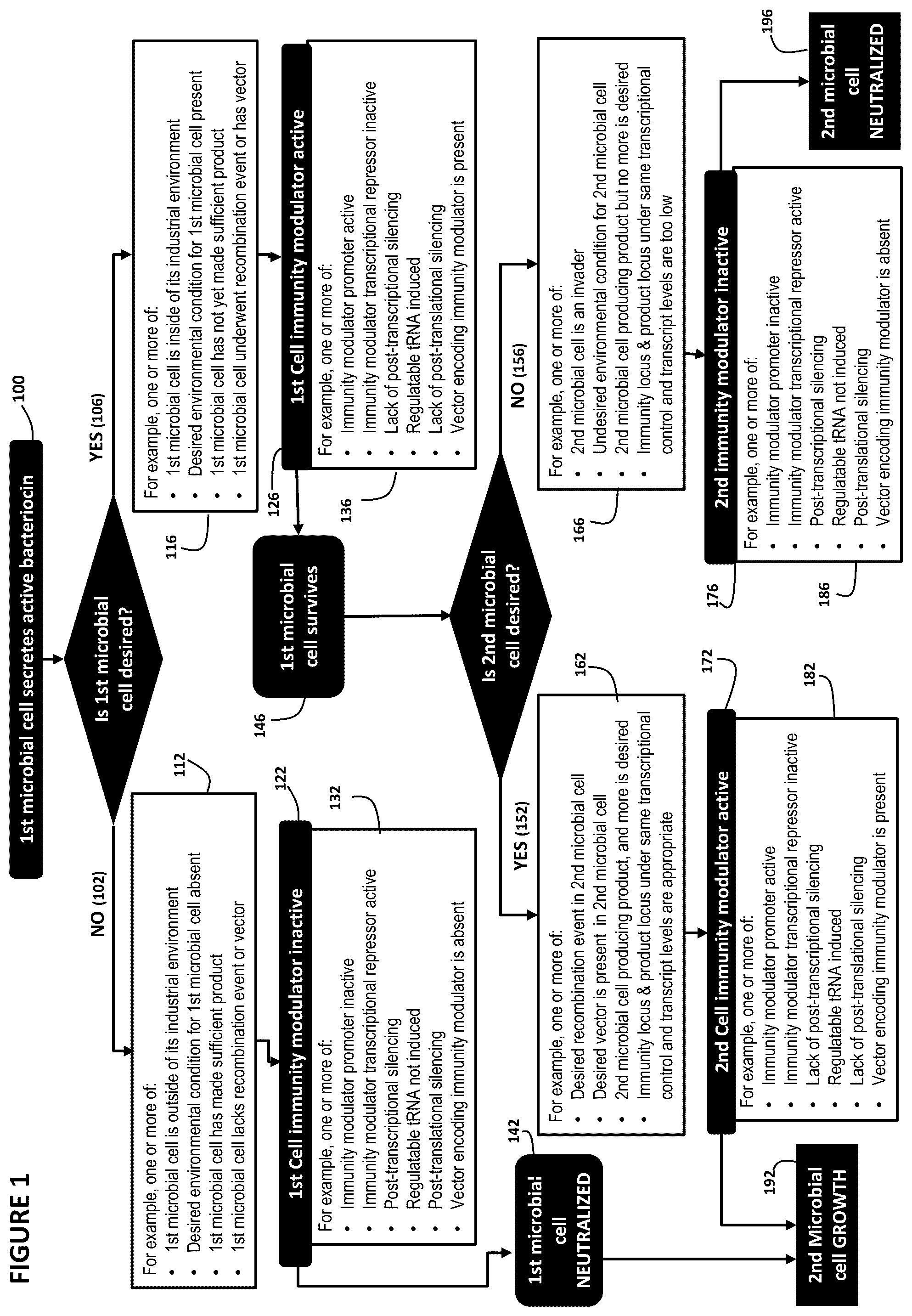
is a flow diagram depicting options for configuring a microbial cell to control the growth of a second microbial cell according to some of the embodiments herein.
A is a schematic diagram illustrating a first microbial cell controlling the growth of other microbial cells according to some of the embodiments herein. B is a schematic diagram illustrating control of the growth of a first microbial cell when the first microbial cell is no longer in a desired growth environment according to some of the embodiments herein.
is a schematic diagram illustrating a first microbial cell controlling growth of a second microbial cell and neutralizing an invading cell in a desired environment according to some of the embodiments herein.
is a schematic diagram illustrating a first microbial cell neutralizing a first invading cell with a first bacteriocin and second invading cells with a second bacteriocin in a desired environment according to some of the embodiments herein.
is a flow diagram illustrating methods of controlling the growth of at least a second microbial cell in culture according to some embodiments herein.
is a schematic diagram illustrating a system comprising a genetic guard in accordance with some embodiments herein.
is a schematic diagram illustrating a genetic guard system that can be useful for photosynthetic production in accordance with some embodiments herein.
is a flow diagram illustrating methods of producing and using bacteriocins in accordance with some embodiments herein.
DETAILED DESCRIPTION
According to some of the embodiments herein, genetically engineered microbial organisms are provided. In some embodiments, the microbial organisms are engineered to control the growth of the microbial population in an environment such as those employing a feedstock. As used herein, “neutralizing” activity (and variations of the same root word) of bacteriocins can refer to either arrest of microbial reproduction, or cytotoxicity. Microbial organisms can be engineered to produce bacteriocins, which are secreted polypeptides that can neutralize microorganisms. However, microbial organisms that produce bacteriocin immunity modulators can resist certain bacteriocins. Thus, in some embodiments, a first microbial organism is engineered to secrete bacteriocins. In some embodiments, the particular bacteriocins are selected based on the type of microbial cell, the types of microbial cells being regulated, the composition of the culture medium, or geographic location (for example, to target particular contaminating microbial organisms associated with a particular type of culture medium and/or geographical location). Other microbial organisms that possess desired characteristics for a particular environment can produce bacteriocin immunity modulators (and thus survive in the presence of bacteriocins), while undesired other microbial organisms (for example contaminants, microbial organisms that have lost a desired characteristic or organisms which are involved in an industrial process but whose growth or production of a particular product is not desired under the prevailing conditions) fail to produce bacteriocin immunity modulators, and are thus neutralized by the bacteriocins.
Microbial Organisms
According to some aspects, genetically engineered microorganisms are provided. As used herein, genetically engineered “microbial organism,” “microorganism,” and variations of these root terms (such as pluralizations and the like), encompasses genetic modification of any naturally-occurring species or fully synthetic prokaryotic or eukaryotic unicellular organism, as well as Archae species. Thus, this expression can refer to cells of bacterial species, fungal species, and algae.
Exemplary microorganisms that can be used in accordance with embodiments herein include, but are not limited to, bacteria, yeast, and algae, for example photosynthetic microalgae. Furthermore, fully synthetic microorganism genomes can be synthesized and transplanted into single microbial cells, to produce synthetic microorganisms capable of continuous self-replication (see Gibson et al. (2010), “Creation of a Bacterial Cell Controlled by a Chemically Synthesized Genome,” Science 329: 52-56, hereby incorporated by reference in its entirety). As such, in some embodiments, the microorganism is fully synthetic. A desired combination of genetic elements, including elements that regulate gene expression, and elements encoding gene products (for example bacteriocins, immunity modulators, poison, antidote, and industrially useful molecules) can be assembled on a desired chassis into a partially or fully synthetic microorganism. Description of genetically engineered microbial organisms for industrial applications can also be found in Wright, et al. (2013) “Building-in biosafety for synthetic biology” Microbiology 159: 1221-1235.
A variety of bacterial species and strains can be used in accordance with embodiments herein, and genetically modified variants, or synthetic bacteria based on a “chassis” of a known species can be provided. Exemplary bacteria with industrially applicable characteristics, which can be used in accordance with embodiments herein include, but are not limited to, Bacillus species (for example Bacillus coagulans, Bacillus subtilis , and Bacillus licheniformis ), Paenibacillus species, Streptomyces species, Micrococcus species, Corynebacterium species, Acetobacter species, Cyanobacteria species, Salmonella species, Rhodococcus species, Pseudomonas species, Lactobacillus species, Enterococcus species, Alcaligenes species, Klebsiella species, Paenibacillus species, Arthrobacter species, Corynebacterium species, Brevibacterium species, Thermus aquaticus, Pseudomonas stutzeri, Clostridium thermocellus , and Escherichia coli.
A variety of yeast species and strains can be used in accordance with embodiments herein, and genetically modified variants, or synthetic yeast based on a “chassis” of a known species can be provided. Exemplary yeast with industrially applicable characteristics, which can be used in accordance with embodiments herein include, but are not limited to Saccharomyces species (for example, Saccharomyces cerevisiae, Saccharomyces bayanus, Saccharomyces boulardii ), Candida species (for example, Candida utilis, Candida krusei ), Schizosaccharomyces species (for example Schizosaccharomyces pombe, Schizosaccharomyces japonicas ), Pichia or Hansenula species (for example, Pichia pastoris or Hansenula polymorpha ) species, and Brettanomyces species (for example, Brettanomyces claussenii ).
A variety of algae species and strains can be used in accordance with embodiments herein, and genetically modified variants, or synthetic algae based on a “chassis” of a known species can be created. In some embodiments, the algae comprises photosynthetic microalgae. Exemplary algae species that can be useful for biofuels, and can be used in accordance with embodiments herein, include Botryococcus braunii, Chlorella species, Dunahella tertiolecta, Gracilaria species, Pleurochrysis carterae , and Sargassum species. Additionally, many algaes can be useful for food products, fertilizer products, waste neutralization, environmental remediation, and carbohydrate manufacturing (for example, biofuels).
Bacteriocins
As used herein, “bacteriocin,” and variations of this root term, refers to a polypeptide that is secreted by a host cell and can neutralize at least one cell other than the individual host cell in which the polypeptide is made, including cells clonally related to the host cell and other microbial cells. As used herein, “bacteriocin” also encompasses a cell-free or chemically synthesized version of such a polypeptide. A cell that expresses a particular “immunity modulator” (discussed in more detail herein) is immune to the neutralizing effects of a particular bacteriocin or group of bacteriocins. As such, bacteriocins can neutralize a cell producing the bacteriocin and/or other microbial cells, so long as these cells do not produce an appropriate immunity modulator. As such, a host cell can exert cytotoxic or growth-inhibiting effects on a plurality of other microbial organisms by secreting bacteriocins. In some embodiments, a bacteriocin is produced by the translational machinery (e.g. a ribosome, etc.) of a microbial cell. In some embodiments, a bacteriocin is chemically synthesized. Some bacteriocins can be derived from a polypeptide precursor. The polypeptide precursor can undergo cleavage (for example processing by a protease) to yield the polypeptide of the bacteriocin itself. As such, in some embodiments, a bacteriocin is produced from a precursor polypeptide. In some embodiments, a bacteriocin comprises a polypeptide that has undergone post-translational modifications, for example cleavage, or the addition of one or more functional groups.
“Antibiotic,” and variations of this root term, refers to a metabolite, or an intermediate of a metabolic pathway which can kill or arrest the growth of at least one microbial cell. Some antibiotics can be produced by microbial cells, for example bacteria. Some antibiotics can be synthesized chemically. It is understood that bacteriocins are distinct from antibiotics, at least in that bacteriocins refer to gene products (which, in some embodiments, undergo additional post-translational processing) or synthetic analogs of the same, while antibiotics refer to intermediates or products of metabolic pathways or synthetic analogs of the same.
Neutralizing activity of bacteriocins can include arrest of microbial reproduction, or cytotoxicity. Some bacteriocins have cytotoxic activity (e.g. “bacteriocide” effects), and thus can kill microbial organisms, for example bacteria, yeast, algae, synthetic micoorganisms, and the like. Some bacteriocins can inhibit the reproduction of microbial organisms (e.g. “bacteriostatic” effects), for example bacteria, yeast, algae, synthetic micoorganisms, and the like, for example by arresting the cell cycle.
It is noted that non-bacteriocin approaches have been proposed to target various microbial organisms. For example, KAMORAN™ chemical has been proposed to target Lactic Acid Bacteria (LAB) family bacteria (see Union Nationale des Groupements de Distillateurs D'Alcool, (2005) “Kamoran”). It is noted that phage has also been proposed to target LAB family bacteria (see U.S. Pub. No. 2010/0330041). It is noted that pesticides have been proposed to target various contaminating microbial organsims (see McBride et al., “Contamination Management in Low Cost Open Algae Ponds for Biofuels Production” Industrial Biotechnology 10: 221-227 (2014)). However, bacteriocins can provide numerous advantages over chemicals, pesticides, or phages. For example, bacteriocins can avoid potentially toxic runoff or byproduct in a feedstock. For example, bacteriocins can have higher efficacy against particular undesired microbial organisms than phages, chemicals, or pesticides. For example, bacteriocins can be produced by microbial organisms that undergo logarithmic growth, and thus can readily be scaled-up or scaled down, whereas the scalability of phages or chemical/pesticide systems can be more limited. For example, bacteriocins can allow for precise control over which organsims are neutralized and which are not, for example to avoid neutralization of industrially useful microbial organisms in the culture medium. For example, phages can be difficult to produce at an industrial scale, and also can be difficult to control, in that phages can be infectious, can raise questions of gene control, and in that conservation of phages can be difficult. On the other hand, bacteriocins in accordance with some embodiments herein can comprise part of an industrial process and thus can be involved in gene containment and/or control a fermentation process via bacteriostatic activity. Additionally, the susceptibility of the microbial organisms involved in the industrial process can be tuned via immunity control. Additionally, bacteriocins typically have a low level of toxicity for industrial applications such as human or animal food, and it is contemplated that bacteriocins in accordance with some embodiments herein are suitable for use as a food preservative, such as an additive.
In some embodiments, a particular neutralizing activity (e.g. cytoxicity or arrest of microbial reproduction) is selected based on the type of microbial regulation that is desired. As such in some embodiments, microbial cells are engineered to express particular bacteriocins or combination of bacteriocins. For example, in some embodiments, microbial cells are engineered to express particular bacteriocins based on the cells being regulated. In some embodiments, for example if contaminating cells are to be killed at least one cytotoxic bacteriocin is provided. In some embodiments, a bacteriocin or combination of bacteriocins which is effective against contaminants which commonly occur in a particular culture, or a particular geographic location, or a particular type of culture grown in a particular geographic location are selected. In some embodiments, for example embodiments in which reversible regulation of microbial cell ratios is desired, a bacteriocin that inhibits microbial reproduction is provided. Without being limited by any particular theory, many bacteriocins can have neutralizing activity against microbial organisms that typically occupy the same ecological niche as the species that produces the bacteriocin. As such, in some embodiments, when a particular spectrum of bacteriocin activity is desired, a bacteriocin is selected from a host species that occupies the same (or similar) ecological niche as the microbial organism or organisms targeted by the bacteriocin.
In some embodiments, one or more bacteriocin activities are selected in advance of culture growth, and one or more microbial organisms are engineered to generate a desired culture environment. In some embodiments, bacteriocins may be selected based on their ability to neutralize one or more invading organisms which are likely to attempt to grow in a particular culture. In another embodiment, in an industrial environment in which strain A makes intermediate A, and strain B converts intermediate A into intermediate B, strains A and B can be engineered so that an abundance of intermediate A shifts the equilibrium to favor strain B by generating a bacteriocin activity profile such that growth of strain A is inhibited or prevented under these conditions, while a lack of intermediate A shifts the equilibrium to favor strain A by generating a bacteriocin activity profile such that growth of strain B is inhibited or prevented. In some embodiments, one or more bacteriocin activities are selected based on one or more conditions of an existing culture environment. For example, if particular invaders are identified in a culture environment, “neutralizer” microrganisms can be engineered to produce bacteriocins to neutralize the identified invaders. In some embodiments, genetically engineered cells that produce bacteriocins are added to an existing culture to re-equilibrate the culture, for example if a growth of a particular microbial cell type in the microbial cell culture is too high. In some embodiments, genetically engineered cells that produce bacteriocins are added to an existing culture to neutralize all or substantially all of the microbial cells in a culture, for example to eliminate an industrial culture in a culture environment so that a new industrial culture can be introduced to the culture environment.
For example, in some embodiments, an anti-fungal activity (such as anti-yeast activity) is desired. A number of bacteriocins with anti-fungal activity have been identified. For example, bacteriocins from Bacillus have been shown to have neutralizing activity against yeast strains (see Adetunji and Olaoye (2013) Malaysian Journal of Microbiology 9: 130-13, hereby incorporated by reference in its entirety), an Enterococcus faecalis peptide (WLPPAGLLGRCGRWFRPWLLWLQ SGAQY KWLGNLFGLGPK, SEQ ID NO: 1) has been shown to have neutralizing activity against Candida species (see Shekh and Roy (2012) BMC Microbiology 12: 132, hereby incorporated by reference in its entirety), and bacteriocins from Pseudomonas have been shown to have neutralizing activity against fungi such as Curvularia lunata, Fusarium species, Helminthosporium species, and Biopolaris species (Shalani and Srivastava (2008) The Internet Journal of Microbiology. Volume 5 Number 2. DOI: 10.5580/27dd—accessible on the worldwide web at archive.ispub.comjournal/the-internet-journal-of-microbiology/volume-5-number-2/screening-for-antifungal-activity-of-pseudomonas-fluorescens-against-phytopathogenic-fungi.html#sthash.d0Ys03UO.1DKuT1US.dpuf, hereby incorporated by reference in its entirety). By way of example, botrycidin AJ1316 (see Zuber, P et al. (1993) Peptide Antibiotics. In Bacillus subtilis and Other Gram-Positive Bacteria: Biochemistry, Physiology, and Molecular Genetics ed Sonenshein et al., pp. 897-916, American Society for Microbiology, hereby incorporated by reference in its entirety) and alirin B1 (see Shenin et al. (1995) Antibiot Khimioter 50: 3-7, hereby incorporated by reference in its entirity) from B. subtilis have been shown to have antifungal activities. As such, in some embodiments, for example embodiments in which neutralization of a fungal microbial organism is desired, a bacteriocin comprises at least one of botrycidin AJ1316 or alirin B 1.
For example, in some embodiments, bacteriocin activity in a culture of cyanobacteria is desirable. In some embodiments, bacteriocins are provided to neutralize cyanobacteria. In some embodiments, bacteriocins are provided to neutralize invading microbial organisms typically found in a cyanobacteria culture environment. Clusters of conserved bacteriocin polypetides have been identified in a wide variety of cyanobacteria species. For example, at least 145 putative bacteriocin gene clusters have been identified in at least 43 cyanobacteria species, as reported in Wang et al. (2011), Genome Mining Demonstrates the Widespread Occurrence of Gene Clusters Encoding Bacteriocins in Cyanobacteria. PLoS ONE 6(7): e22384, hereby incorporated by reference in its entirety. Exemplary cyanobacteria bacteriocins are shown in Table 1.2, as SEQ ID NO's 420, 422, 424, 426, 428, 30, 432, 434, 436, 438, 440, 442, 444, 446, 448, and 450.
In some embodiments, the host cell itself is a microbial cell. In some embodiments, bacteriocins neutralize cells of a different species or strain from the host cell. In some embodiments, bacteriocins neutralize cells of the same species or strain as the host cell if these cells lack an appropriate immunity modulator. As bacteriocins can mediate neutralization of both host and non-host microbial organisms, the skilled artisan will readily appreciate that a bacteriocin is distinct from poison-antidote systems (described in more detail herein), which involve an endogenous mechanism by which a host microorganism can neutralize only itself. In other words, bacteriocins can neutralize cells other than the cell in which they are produced (for example, bacteriocins can be selected and/or engineered to act as an ecological niche protector), while poison molecules kill only the individual cell in which they are produced (for example, to act as suicidal systems).
A number of bacteriocins have been identified and characterized. Without being limited by any particular theory, exemplary bacteriocins can be classified as “class I” bacteriocins, which typically undergo post-translational modification, and “class II” bacteriocins, which are typically unmodified. Additionally, exemplary bacteriocins in each class can be categorized into various subgroups, as summarized in Table 1.1, which is adapted from Cotter, P.D. et al. “Bacteriocins—a viable alternative to antibiotics” Nature Reviews Microbiology 11: 95-105, hereby incorporated by reference in its entirety.
Without being limited by any particular theory, bacteriocins can effect neutralization of a target microbial cell in a variety of ways. For example, a bacteriocin can permeablize a cell wall, thus depolarizing the cell wall and interfering with respiration.
TABLE 1
Classification of Exemplary Bacteriocins
Group Distinctive feature Examples
Class I (typically modified)
MccC7-C51-type Is covalently attached to a carboxy- MccC7-C51
bacteriocins terminal aspartic acid
Lasso peptides Have a lasso structure MccJ25
Linear azole- or Possess heterocycles but not other MccB17
azoline-containing modifications
peptides
Lantibiotics Possess lanthionine bridges Nisin, planosporicin,
mersacidin, actagardine,
mutacin 1140
Linaridins Have a linear structure and contain Cypemycin
dehydrated amino acids
Proteusins Contain multiple hydroxylations, Polytheonamide A
epimerizations and methylations
Sactibiotics Contain sulphur-a-carbon linkages Subtilosin A, thuricin CD
Group Distinctive feature Examples
Patellamide-like Possess heterocycles and undergo Patellamide A
cyanobactins macrocyclization
Anacyclamide-like Cyclic peptides consisting of Anacyclamide A10
cyanobactins proteinogenic amino acids with prenyl
attachments
Thiopeptides Contain a central pyridine, Thiostrepton, nocathiacin
dihydropyridine or piperidine ring as 1, GE2270 A, philipimycin
well as heterocycles
Bottromycins Contain macrocyclic amidine, a Bottromycin A2
decarboxylated carboxy-terminal
thiazole and carbon-methylated amino
acids
Glycocins Contain S-linked glycopeptides Sublancin 168
Class II (typically unmodified or cyclic)
IIa peptides (pediocin Possess a conserved YGNGV motif Pediocin PA-1, enterocin
PA-1-like (in which N represents any amino CRL35, carnobacteriocin
bacteriocins) acid) BM1
IIb peptides Two unmodified peptides are required ABP118, lactacin F
for activity
IIc peptides Cyclic peptides Enterocin AS-48
IId peptides Unmodified, linear, non-pediocin-like, MccV, MccS, epidermicin
single-peptide bacteriocins NI01, lactococcin A
IIe peptides Contain a serine-rich carboxy-terminal MccE492, MccM
region with a non-ribosomal
siderophore-type modification
A number of bacteriocins can be used in accordance with embodiments herein. Exemplary bacteriocins are shown in Table 1.2. In some embodiments, at least one bacteriocin comprising a polypeptide sequence of Table 1.2 is provided. As shown in Table 1.2, some bacteriocins function as pairs of molecules. As such, it will be understood that unless explicity stated otherwise, when a functional “bacteriocin” or “providing a bacteriocin,” or the like is discussed herein, functional bacteriocin pairs are included along with bacteriocins that function individually. With reference to Table 1.2, “organisms of origin” listed in parentheses indicate alternative names and/or strain information for organisms known the produce the indicated bacteriocin.
Embodiments herein also include peptides and proteins with identity to bacteriocins described in Table 1.2. The term “identity” is meant to include nucleic acid or protein sequence homology or three-dimensional homology. Several techniques exist to determine nucleic acid or polypeptide sequence homology and/or three-dimensional homology to polypeptides. These methods are routinely employed to discover the extent of identity that one sequence, domain, or model has to a target sequence, domain, or model. A vast range of functional bacteriocins can incorporate features of bacteriocins disclosed herein, thus providing for a vast degree of identity to the bacteriocins in Table 1.2. In some embodiments, a bacteriocin has at least about 50% identity, for example, at least about 50%, 51%, 52%, 53%, 54%, 55%, 56%, 57%, 58%, 59%, 60%, 61%, 62%, 63%, 64%, 65%, 66%, 67%, 68%, 69%, 70%, 71%, 72%, 73%, 74%, 75%, 76%, 77%, 78%, 79%, 80%, 81%, 82%, 83%, 84%, 85%, 86%, 87%, 88%, 89%, 90%, 91%, 92%, 93%, 94%, 95%, 96%, 97%, 98%, 99%, or 100% identity to any one of the polypeptides of Table 1.2. Percent identity may be determined using the BLAST software (Altschul, S.F., et al. (1990) “Basic local alignment search tool.” J. Mol. Biol. 215:403-410, accessible on the world wide web at blast.ncbi.nlm.nih.gov) with the default parameters.
In some embodiments, a polynucleotide encoding a bacteriocin as described herein is provided. In some embodiments, the polynucleotide is comprised within an expression vector. In some embodiments, the polynucleotide or expression vector is in a microbial cell. Exemplary polynucleotide sequences encoding the polypeptides of table 1.2 are indicated in table 1.2. SEQ ID NOs: 341 to 419 (odd SEQ ID numbers) represent exemplary polynucleotides based on the reverse translation of the respective polypeptide. The skilled artisan will readily understand that more than one polynucleotide can encode a particular polypeptide. For example, the genetic code is degenerate, and moreover, codon usage can vary based on the particular organism in which the gene product is being expressed. In some embodiments, a polynucleotide encoding a bacteriocin is selected based on the codon usage of the organism expressing the bacteriocin. In some embodiments, a polynucleotide encoding a bacteriocin is codon optimized based on the particular organism expressing the bacteriocin.
While the bacteriocins in Table 1.2 are naturally-occuring, the skilled artisan will appreciate that variants of the bacteriocins of Table 1.2, naturally-occuring bacteriocins other than the bacteriocins of Table 1.2 or variants thereof, or synthetic bacteriocins can be used according to some embodiments herein. In some embodiments, such variants have enhanced or decreased levels of cytotoxic or growth inhibition activity on the same or a different microorganism or species of microorganism relative to the wild type protein. Several motifs have been recognized as characteristic of bacteriocins. For example, the motif YGXGV (SEQ ID NO: 2), wherein X is any amino acid residue, is a N-terminal consensus sequence characteristic of class IIa bacteriocins. Accordingly, in some embodiments, a synthetic bacteriocin comprises an N-terminal sequence with at least about 50% identity to SEQ ID NO: 2, for example at least about 50%, 51%, 52%, 53%, 54%, 55%, 56%, 57%, 58%, 59%, 60%, 61%, 62%, 63%, 64%, 65%, 66%, 67%, 68%, 69%, 70%, 71%, 72%, 73%, 74%, 75%, 76%, 77%, 78%, 79%, 80%, 81%, 82%, 83%, 84%, 85%, 86%, 87%, 88%, 89%, 90%, 91%, 92%, 93%, 94%, 95%, 96%, 97%, 98%, 99%, or 100% identity to SEQ ID NO: 2. In some embodiments, a synthetic bacteriocin comprises a N-terminal sequence comprising SEQ ID NO: 2. Additionally, some class IIb bacteriocins comprise a GxxxG motif. Without being limited by any particular theory, it is believed that the GxxxG motif can mediate association between helical proteins in the cell membrane, for example to facilitate bacterioncin-mediated neutralization through cell membrane interactions. As such, in some embodiments, the bacteriocin comprises a motif that facilitates interactions with the cell membrane. In some embodiments, the bacteriocin comprises a GxxxG motif. Optionally, the bacteriocin comprising a GxxxG motif can comprise a helical structure. In addition to structures described herein, “bacteriocin” as used herein also encompasses structures that have substantially the same effect on microbial cells as any of the bacteriocins explicitly provided herein.
It has been shown that fusion polypeptides comprising two or more bacteriocins or portions thereof can have neutralizing activity against a broader range of microbial organisms than either individual bacteriocin. For example, it has been shown that a hybrid bacteriocin, Ent35-MccV (GKYYGNGVSCNKKGC SVDWGRAIGIIGNNSAANLATGGAAGWKSGGGASGRDIAM AIGTLSGQFVAGGIGAAAGGVAGGAIYDYASTHKPNPAMSP SGLGGTIKQKPEGIP SE AWNYAAGRLCNWSPNNLSDVCL, SEQ ID NO: 3), displays antimicrobial activity against pathogenic Gram-positive and Gram-negative bacteria (Acuña et al. (2012), FEBS Open Bio, 2: 12-19). It is noted that that Ent35-MccV fusion bacteriocin comprises, from N-terminus to C-terminus, an N-terminal glycine, Enterocin CRL35, a linker comprising three glycines, and a C-terminal Microcin V. It is contemplated herein that bacteriocins can comprise fusions of two or more polypeptides having bacteriocin activity. In some embodiments, a fusion polypeptide of two or more bacteriocins is provided. In some embodiments, the two or more bacteriocins comprise polypeptides from Table 1.2, or modifications thereof. In some embodiments, the fusion polypeptide comprising of two or more bacteriocins has a broader spectrum of activity than either individual bacteriocin, for example having neutralizing activity against more microbial organisms, neutralizing activity under a broader range of environmental conditions, and/or a higher efficiency of neutralization activity. In some embodiments, a fusion of two or more bacteriocins is provided, for example two, three, four, five, six, seven, eight, nine, or ten bacteriocins. In some embodiments, two or more bacteriocin polypeptides are fused to each other via a covalent bond, for example a peptide linkage. In some embodiments, a linker is positioned between the two bacteriocin polypeptides. In some embodiments, the linker comprises one or glycines, for example about 1, 2, 3, 4, 5, 6, 7, 8, 9, 10, 11, 12, 13, 14, 15, 16, 17, 18, 19, or 20 glycines. In some embodiments, the linker is cleaved within the cell to produce the individual bacteriocins included in the fusion protein. In some embodiments, a bacteriocin as provided herein is modified to provide a desired spectrum of activity relative to the unmodified bacteriocin. For example, the modified bacteriocin may have enhanced or decreased activity agains the same organisms as the unmodified bacteriocin. Alternatively, the modified bacteriocin may have enhanced activity against an organism against which the unmodified bacteriocin has less activity or no activity.
TABLE 1.2
Exemplary Bacteriocins
Poly- Poly-
pep- nucleo-
tide tide Poly-
SEQ Poly- SEQ nucleo-
ID peptide Organism of ID tide
NO: Name Class Sequence origin NO: Sequence
4 Acidocin Unclassified MISSHQKTL Lactobacillus 5 ATGATTTCATC
8912 TDKELALISG acidophilus TCATCAAAAA
GKTHYPTNA ACGTTAACTG
WKSLWKGF ATAAAGAATT
WESLRYTDG AGCATTAATTT
F CTGGGGGGAA
AACGCACTAC
CCGACTAATG
CATGGAAAAG
TCTTTGGAAA
GGTTTCTGGG
AAAGCCTTCG
TTATACTGAC
GGTTTTTAG
6 Acidocin class MISMISSHQ Lactobacillus 7 ATGATTTCAAT
A IIA/YG KTLTDKELA acidophilus GATTTCATCTC
NGV LISGGKTYY ATCAAAAAAC
GTNGVHCTK GTTAACTGAT
KSLWGKVRL AAAGAATTAG
KNVIPGTLC CATTAATTTCT
RKQSLPIKQ GGGGGGAAAA
DLKILLGWA CGTACTATGG
TGAFGKTFH TACTAATGGT
GTGCATTGTA
CTAAAAAGAG
TCTTTGGGGT
AAAGTACGCT
TAAAAAACGT
GATTCCTGGA
ACTCTTTGTCG
TAAGCAATCG
TTGCCGATCA
AACAGGATTT
AAAAATTTTA
CTGGGCTGGG
CTACAGGTGC
TTTTGGCAAG
ACATTTCATTA
A
8 Acidocin Unclassified MDKKTKILF Lactobacillus 9 ATGGATAAGA
B (AcdB) EVLYIICIIGP acidophilus AAACAAAAAT
QFILFVTAKN ATTATTTGAA
NMYQLVGSF GTATTATACAT
VGIVWFSYIF CATCTGTATA
WYIFFKQHK ATAGGCCCTC
KM AATTTATATTA
TTTGTGACTGC
AAAAAACAAT
ATGTATCAGT
TGGTGGGTTC
GTTTGTTGGA
ATAGTATGGT
TTTCGTATATT
TTTTGGTATAT
TTTTTTCAAAC
AACATAAAAA
AATGTAG
10 Acidocin Unclassified MALKTLEKH Lactobacillus 11 ATGGCTTTAA
LF221B ELRNVMGG gasseri AAACATTAGA
(Gassericin NKWGNAVI AAAACATGAA
K7 B) GAATGATRG TTAAGAAATG
VSWCRGFGP TAATGGGTGG
WGMTACAL AAACAAGTGG
GGAAIGGYL GGGAATGCTG
GYKSN TAATAGGAGC
TGCTACGGGA
GCTACTCGCG
GAGTAAGTTG
GTGCAGAGGA
TTCGGACCAT
GGGGAATGAC
TGCCTGTGCG
TTAGGAGGTG
CTGCAATTGG
AGGATATCTG
GGATATAAGA
GTAATTAA
12 Aureocin Unclassified MSWLNFLK Staphylococcus 13 ATGAGTTGGT
A53 YIAKYGKKA aureus TAAATTTTTTA
VSAAWKYK AAATACATCG
GKVLEWLN CTAAATATGG
VGPTLEWV CAAAAAAGCG
WQKLKKIAG GTATCTGCTG
L CTTGGAAGTA
CAAAGGTAAA
GTATTAGAAT
GGCTTAATGT
TGGTCCTACTC
TTGAATGGGT
ATGGCAAAAA
TTAAAGAAAA
TTGCTGGATT
ATAA
14 Avicin A class MTRSKKLNL Enterococcusavium 15 ATGACAAGAT
IIA/YG REMKNVVG (Streptococcus CAAAAAAATT
NGV GTYYGNGVS avium) AAATTTACGC
CNKKGCSVD GAAATGAAGA
WGKAISIIGN ATGTTGTTGG
NSAANLATG TGGTACCTAC
GAAGWKS TATGGAAATG
GTGTATCTTGT
AACAAGAAAG
GCTGTTCAGTT
GACTGGGGCA
AAGCCATCAG
TATTATAGGA
AATAATTCCG
CAGCAAACTT
AGCAACTGGT
GGTGCTGCTG
GTTGGAAGTC
ATAA
16 Bacteriocin Unclassified MKKKLVICG Enterococcus 17 ATGAAAAAGA
31 IIGIGFTALG faecalis AATTAGTTATT
TNVEAATYY (Streptococcus TGTGGCATTA
GNGLYCNK faecalis) TTGGGATTGG
QKCWVDWN TTTTACAGCAT
KASREIGKII TAGGAACAAA
VNGWVQHG TGTAGAAGCT
PWAPR GCTACGTATT
ACGGAAATGG
TTTATATTGTA
ATAAGCAAAA
ATGTTGGGTA
GACTGGAATA
AAGCTTCAAG
GGAAATTGGA
AAAATTATTG
TTAATGGTTG
GGTACAACAT
GGCCCTTGGG
CTCCTAGATA
G
18 Bacteriocin Unclassified MKEQNSFNL Lactococcus 19 ATGAAAGAAC
J46 LQEVTESEL lactis AAAACTCTTTT
DLILGAKGG AATCTTCTTCA
SGVIHTISHE AGAAGTGACA
VIYNSWNFV GAAAGTGAAT
FTCCS TGGACCTTATT
TTAGGTGCAA
AAGGCGGCAG
TGGAGTTATT
CATACAATTTC
TCATGAAGTA
ATATATAATA
GCTGGAACTT
TGTATTTACTT
GCTGCTCTTA
A
20 Bacteriocin class IIa MKKKVLKH Enterococcus 21 ATGAAAAAGA
T8 CVILGILGTC faecium AAGTATTAAA
LAGIGTGIKV (Streptococcus ACATTGTGTT
DAATYYGN faecium) ATTCTAGGAA
GLYCNKEKC TATTAGGAAC
WVDWNQAKG TTGTCTAGCTG
EIGKIIVNG GCATCGGTAC
WVNHGPWA AGGAATAAAA
PRR GTTGATGCAG
CTACTTACTAT
GGAAATGGTC
TTTATTGTAAC
AAAGAAAAAT
GTTGGGTAGA
TTGGAATCAA
GCTAAAGGAG
AAATTGGAAA
AATTATTGTTA
ATGGTTGGGT
TAATCATGGT
CCATGGGCAC
CTAGAAGGTA
G
22 Boticin B Unclassified MQKPEIISAD Clostridium 23 ATGCAAAAAC
LGLCAVNEF botulinum CAGAAATTAT
VALAAIPGG TAGTGCTGAT
AATFAVCQ TTAGGGCTTT
MPNLDEIVS GTGCAGTTAA
NAAYV TGAATTTGTA
GCTCTTGCTGC
CATTCCTGGT
GGTGCTGCTA
CATTTGCAGT
ATGCCAAATG
CCAAACTTGG
ATGAGATTGT
TAGTAATGCA
GCATATGTTT
AA
24 Bovicin Lantibiotic MMNATENQI Streptococcus 25 ATGATGAATG
HJ50 FVETVSDQE equinus CTACTGAAAA
LEMLIGGAD (Streptococcus CCAAATTTTTG
RGWIKTLTK bovis) TTGAGACTGT
DCPNVISSIC GAGTGACCAA
AGTIITACKN GAATTAGAAA
CA TGTTAATTGGT
GGTGCAGATC
GTGGATGGAT
TAAGACTTTA
ACAAAAGATT
GTCCAAATGT
AATTTCTTCAA
TTTGTGCAGG
TACAATTATTA
CAGCTTGTAA
AAATTGTGCT
TAA
26 Brochocin- Unclassified MHKVKKLN Brochothrix 27 ATGCACAAGG
c NQELQQIVG campestris TAAAAAAATT
GYSSKDCLK AAACAATCAA
DIGKGIGAG GAGTTACAAC
TVAGAAGG AGATCGTGGG
GLAAGLGAI AGGTTACAGT
PGAFVGAHF TCAAAAGATT
GVIGGSAACI GTCTAAAAGA
GGLLGN TATTGGTAAA
GGAATTGGTG
CTGGTACAGT
AGCTGGGGCA
GCCGGCGGTG
GCCTAGCTGC
AGGATTAGGT
GCTATCCCAG
GAGCATTCGT
TGGAGCACAT
TTTGGAGTAA
TCGGCGGATC
TGCCGCATGC
ATTGGTGGAT
TATTAGGTAA
CTAG
28 Butyrivibriocin Unclassified MSKKQIMSN Butyrivibrio 29 ATGAGTAAAA
AR10 CISIALLIALI fibrisolvens AACAAATTAT
PNIYFIADKM GAGTAACTGT
GIQLAPAWY ATATCAATTG
QDIVNWVSA CATTATTAATA
GGTLTTGFAI GCACTAATTC
IVGVTVPAW CTAATATCTAT
IAEAAAAFGI TTTATTGCAG
ASA ATAAAATGGG
AATTCAGTTA
GCACCTGCTT
GGTATCAAGA
TATTGTGAATT
GGGTATCTGC
TGGTGGAACA
CTTACTACTG
GTTTTGCGATT
ATTGTAGGAG
TTACAGTACC
GGCATGGATA
GCAGAAGCAG
CTGCAGCTTTT
GGTATAGCTT
CAGCATGA
30 Butyrivibriocin Lantibiotic MNKELNALT Butyrivibrio 31 ATGAACAAAG
OR79 NPIDEKELEQ fibrisolvens AACTTAATGC
ILGGGNGVI ACTTACAAAT
KTISHECHM CCTATTGACG
NTWQFIFTC AGAAGGAGCT
CS TGAGCAGATC
CTCGGTGGTG
GCAATGGTGT
CATCAAGACA
ATCAGCCACG
AGTGCCACAT
GAACACATGG
CAGTTCATTTT
CACATGTTGC
TCTTAA
32 Carnobacteriocin class MNSVKELN Carnobacterium 33 ATGAATAGCG
B2 IIA/YG VKEMKQLH maltaromaticum TAAAAGAATT
(Carnocin NGV GGVNYGNG (Carnobacterium AAACGTGAAA
CP52) VSCSKTKCS piscicola) GAAATGAAAC
VNWGQAFQ AATTACACGG
ERYTAGINSF TGGAGTAAAT
VSGVASGAG TATGGTAATG
SIGRRP GTGTTTCTTGC
AGTAAAACAA
AATGTTCAGT
TAACTGGGGA
CAAGCCTTTC
AAGAAAGATA
CACAGCTGGA
ATTAACTCATT
TGTAAGTGGA
GTCGCTTCTG
GGGCAGGATC
CATTGGTAGG
AGACCGTAA
34 Carnobacteriocin class MKSVKELNK Carnobacterium 35 ATGAAAAGCG
BM1 IIA/YG KEMQQINGG maltaromaticum TTAAAGAACT
(Carno NGV AISYGNGVY (Carnobacterium AAATAAAAAA
bacteriocin CNKEKCWV piscicola) GAAATGCAAC
B1) NKAENKQAI AAATTAATGG
TGIVIGGWA TGGAGCTATC
SSLAGMGH TCTTATGGCA
ATGGTGTTTAT
TGTAACAAAG
AGAAATGTTG
GGTAAACAAG
GCAGAAAACA
AACAAGCTAT
TACTGGAATA
GTTATCGGTG
GATGGGCTTC
TAGTTTAGCA
GGAATGGGAC
ATTAA
36 Carno class IIc, MNNVKELSI Carnobacterium 37 ATGAATAATG
bacteriocin-A non KEMQQVTG maltaromaticum TAAAAGAGTT
(Piscicolin subgrouped GDQMSDGV (Carnobacterium AAGTATTAAA
-61) bacteriocins NYGKGSSLS piscicola) GAAATGCAAC
(problematic) KGGAKCGL AAGTTACTGG
GIVGGLATIP TGGAGACCAA
SGPLGWLAG ATGTCAGATG
AAGVINSCM GTGTAAATTA
K TGGAAAAGGC
TCTAGCTTATC
AAAAGGTGGT
GCCAAATGTG
GTTTAGGGAT
CGTCGGCGGA
TTAGCTACTAT
CCCTTCAGGT
CCTTTAGGCT
GGTTAGCCGG
AGCAGCAGGT
GTAATTAATA
GCTGTATGAA
ATAA
38 Carnocyclin- Unclassified MLYELVAY Carnobacterium 39 ATGTTATATG
A GIAQGTAEK maltaromaticum AATTAGTTGC
VVSLINAGL (Carnobacterium ATATGGTATC
TVGSIISILG piscicola) GCACAAGGTA
GVTVGLSGV CAGCTGAAAA
FTAVKAAIA GGTTGTAAGT
KQGIKKAIQ CTAATTAACG
L CAGGTTTAAC
AGTAGGGTCT
ATTATTTCAAT
TTTGGGTGGG
GTCACAGTCG
GTTTATCAGG
TGTCTTCACA
GCAGTTAAAG
CAGCAATTGC
TAAACAAGGA
ATAAAAAAAG
CAATTCAATT
ATAA
40 Carocin D Unclassified MIKYRLYAP Pectobacterium 41 ATGATTAAAT
NDGDTMTV carotovorum ACCGTTTATAT
SGGGGWVS subsp. GCTCCAAATG
NDDRKGGN carotovorum ATGGAGACAC
DRDNGKGG ( Erwinia CATGACAGTG
SAVDFSKNP carotovora AGTGGTGGTG
EKQAIVNPY subsp. GTGGTTGGGT
LAIAIPMPVY carotovora ) TTCAAACGAT
PLYGKLGFTI GATCGCAAAG
NTTAIETELA GTGGTAATGA
NVRAAINTK CAGGGACAAT
LATLSAVIGR GGCAAAGGTG
SLPVVGRVF GTTCTGCCGTT
GVTAAGMW GATTTTAGTA
PSSTAPSSLD AAAATCCAGA
SIYNQAHQQ AAAGCAGGCT
ALAQLAAQQ ATCGTTAATCC
GVLNKGYN CTATTTGGCA
VTAMPAGFV ATCGCGATAC
SSLPVSEIKS CGATGCCGGT
LPTAPASLLA CTACCCTCTTT
QSVINTELSQ ATGGAAAGCT
RQLALTQPT AGGGTTCACA
TNAPVANIP ATAAATACGA
VVKAEKTA CGGCAATTGA
MPGVYSAKI GACTGAACTC
IAGEPAFQIK GCAAATGTCA
VDNTKPALA GAGCAGCAAT
QNPPKVKDD TAACACTAAA
IQVSSFLSSP CTTGCAACAC
VADTHHAFI TCAGTGCAGT
DFGSDHEPV GATTGGCAGA
YVSLSKIVT TCACTTCCGGT
AEEEKKQVE CGTTGGGCGG
EAKRREQEW GTATTTGGTG
LLRHPITAAE TTACTGCCGC
RKLTEIRQVI CGGAATGTGG
SFAQQLKES CCTTCTAGTAC
SVATISEKTK CGCTCCCAGT
TVAVYQEQ AGTCTCGATT
VNTAAKNR CTATATACAA
DNFYNQNR TCAAGCACAT
GLLSAGITG CAGCAGGCTT
GPGYPIYLA TAGCCCAGTT
LWQTMNNF AGCTGCTCAA
HQAYFRANN CAGGGAGTAT
ALEQESHVL TAAATAAAGG
NLARSDLAK GTATAACGTT
AEQLLAENN ACAGCAATGC
RLQVETERT CTGCAGGTTT
LAEEKEIKR CGTCAGCAGT
NRVNVSTFG TTGCCTGTTAG
TVQTQLSKL TGAAATCAAA
LSDFYAVTS TCATTGCCAA
LSQSVPSGA CAGCTCCCGC
LASFSYNPQ CAGTTTACTG
GMIGSGKIV GCACAAAGTG
GKDVDVLFS TGATTAATAC
IPVKDIPGYK CGAACTTTCCC
SPINLDDLAK AGCGTCAACT
KNGSLDLPIR GGCTCTTACTC
LAFSDENGE AGCCCACGAC
RVLRAFKAD GAATGCACCA
SLRIPSSVRG GTCGCGAATA
VAGSYDKNT TTCCCGTAGTT
GIFSAEIDGV AAAGCAGAGA
SSRLVLENP AAACAGCAAT
AFPPTGNVG GCCAGGTGTG
NTGNTAPDY TATTCAGCGA
KALLNTGVD AAATTATTGCT
VKPVDKITV GGTGAGCCTG
TVTPVADPV CATTCCAAAT
DIDDYIIWLP CAAGGTCGAT
TASGSGVEPI AATACCAAAC
YVVFNSNPY CTGCTTTGGC
GGTEKGKYS ACAGAATCCG
KRYYNPDKA CCGAAAGTAA
GGPILELDW AAGATGATAT
KNVKIDHAG TCAGGTATCTT
VDNVKLHT CTTTCCTTTCC
GRFKASVEN TCGCCAGTAG
KVMIERLENI CTGATACGCA
LNGQITATD CCATGCATTTA
TDKRFYTHE TTGATTTTGGC
LRELNRYRN AGCGATCATG
LGIKDGEVP AACCGGTATA
SSIQEESAV CGTGTCTCTTT
WNDTHTAT CAAAGATCGT
LEDYKINEK GACAGCCGAG
EQPLYTDAA GAGGAGAAAA
LQAAYEQEL AACAGGTTGA
KDALGGKH AGAGGCCAAG
G CGCCGTGAGC
AGGAGTGGTT
GTTGCGTCAT
CCAATTACAG
CTGCGGAGCG
AAAATTAACT
GAAATCCGCC
AAGTGATCTC
TTTTGCTCAAC
AGCTAAAAGA
AAGCTCTGTC
GCAACCATTT
CAGAAAAAAC
TAAAACTGTT
GCGGTTTACC
AAGAACAGGT
GAATACCGCT
GCAAAAAATC
GCGACAATTT
TTATAATCAA
AATAGAGGTC
TGTTAAGTGC
GGGTATAACT
GGGGGACCGG
GATATCCTATT
TATCTTGCTTT
ATGGCAAACG
ATGAATAACT
TTCATCAGGC
TTATTTCAGA
GCAAATAATG
CATTGGAACA
AGAGAGTCAT
GTTCTGAACC
TGGCTCGTTCT
GATCTGGCTA
AGGCTGAGCA
ATTGCTTGCTG
AGAATAATCG
ACTTCAGGTT
GAAACGGAGC
GAACGCTTGC
CGAAGAAAAA
GAGATAAAAC
GCAACAGGGT
TAATGTATCA
ACATTTGGCA
CAGTGCAAAC
TCAACTTAGT
AAATTGCTGT
CAGATTTTTAT
GCTGTTACAT
CACTTTCCCAA
AGTGTTCCTTC
GGGGGCATTA
GCCTCTTTTTC
ATATAATCCA
CAAGGGATGA
TTGGCAGCGG
TAAGATTGTT
GGGAAGGATG
TCGATGTTTTA
TTTTCCATCCC
AGTAAAAGAT
ATTCCGGGAT
ATAAATCTCCT
ATTAACTTGG
ACGATTTAGC
CAAGAAAAAT
GGAAGTCTGG
ATCTTCCCATT
CGTCTGGCAT
TTTCTGATGA
GAATGGAGAA
AGGGTTCTTC
GGGCATTCAA
AGCGGATAGT
CTGCGAATCC
CTTCGAGTGT
CAGAGGTGTA
GCGGGCAGTT
ATGACAAAAA
TACGGGTATT
TTTAGTGCAG
AAATTGATGG
TGTTTCATCTC
GCCTTGTACT
GGAAAACCCA
GCGTTTCCTCC
GACCGGAAAT
GTCGGTAATA
CGGGTAATAC
TGCACCTGAC
TATAAAGCAT
TACTGAATAC
TGGTGTTGAT
GTTAAACCTG
TTGATAAAAT
CACAGTTACG
GTAACACCAG
TTGCTGATCC
AGTGGATATT
GATGACTATA
TAATCTGGTT
GCCAACTGCG
TCTGGTTCTG
GCGTGGAACC
CATTTATGTCG
TGTTTAACAG
TAATCCGTAT
GGTGGGACGG
AAAAAGGAAA
ATATAGCAAA
CGTTATTATAA
TCCAGATAAG
GCAGGCGGTC
CGATCTTGGA
GCTGGATTGG
AAAAACGTTA
AGATTGACCA
TGCAGGTGTG
GACAATGTTA
AATTACACAC
AGGGCGTTTC
AAAGCGTCGG
TTGAAAACAA
AGTGATGATT
GAACGTTTGG
AAAACATACT
GAATGGTCAA
ATCACGGCCA
CGGATACTGA
CAAGCGATTC
TATACGCATG
AATTAAGAGA
GTTAAACCGC
TACAGAAATT
TAGGCATCAA
AGACGGTGAA
GTGCCTAGTA
GCATTCAAGA
AGAAAGCGCT
GTTTGGAACG
ACACACACAC
AGCGACGCTT
GAAGACTACA
AAATTAATGA
GAAAGAGCAA
CCGTTGTACA
CTGATGCTGC
TTTGCAGGCA
GCCTACGAAC
AGGAACTCAA
AGACGCATTA
GGAGGGAAAC
ATGGCTAA
42 Cerein 7B Unclassified MENLQMLT Bacillus 43 ATGGAAAACT
EEELMEIEG cereus TACAAATGTT
GGWWNSWG AACTGAAGAA
KCVAGTIGG GAATTAATGG
AGTGGLGGA AAATTGAAGG
AAGSAVPVI TGGAGGCTGG
GTGIGGAIG TGGAATAGCT
GVSGGLTGA GGGGTAAATG
ATFC TGTTGCTGGA
ACTATCGGTG
GAGCTGGAAC
TGGTGGTTTA
GGTGGAGCTG
CTGCAGGTTC
AGCTGTTCCG
GTTATTGGTA
CTGGTATTGG
TGGCGCTATT
GGTGGAGTTA
GCGGTGGCCT
TACAGGTGCA
GCTACTTTTTG
CTAA
44 Cinnamycin Lantibiotic MTASILQQS Strepto - 45 ATGACCGCTT
(Lanthiopeptin) VVDADFRAA verticiilium CCATTCTTCAG
LLENPAAFG griseo CAGTCCGTCG
ASAAALPTP verticillatum TGGACGCCGA
VEAQDQASL CTTCCGCGCG
DFWTKDIAA GCGCTGCTTG
TEAFACRQS AGAACCCCGC
CSFGPFTFVC CGCCTTCGGC
DGNTK GCTTCCGCCG
CGGCCCTGCC
CACGCCCGTC
GAGGCCCAGG
ACCAGGCGTC
CCTTGACTTCT
GGACCAAGGA
CATCGCCGCC
ACGGAAGCCT
TCGCCTGCCG
CCAGAGCTGC
AGCTTCGGCC
CGTTCACCTTC
GTGTGCGACG
GCAACACCAA
GTAA
46 Circularin Unclassified MSLLALVAG Geobacillus 47 ATGAGTTTGC
A TLGVSQSIAT kaustophilus TGGCGCTTGT
TVVSIVLTGS (strain TGCCGGGACG
TLISIILGIT HTA426) CTCGGCGTGT
AILSGGVDAIL CACAGTCAAT
EIGWSAFVA CGCGACGACG
TVKKIVAER GTTGTTTCGAT
GKAAAIAW TGTGTTGACC
GGCTCCACTC
TCATTTCTATT
ATTCTTGGGA
TCACCGCTATT
TTGTCAGGTG
GAGTCGACGC
CATTTTGGAA
ATTGGGTGGT
CAGCTTTTGTC
GCGACGGTGA
AAAAAATAGT
GGCGGAACGA
GGAAAAGCGG
CAGCGATTGC
ATGGTAA
48 Closticin Unclassified MRKVFLRSII Clostridium 49 TTGAGAAAAG
574 STLVMCAFV tyrobutyricum TATTTTTAAGA
SSSFSVNAD TCAATAATTTC
ESKPNDEKII AACATTAGTT
NNIENVTTT ATGTGTGCAT
KDIVKSNKN TTGTTTCAAGC
NIVYLDEGV AGCTTTTCAGT
MSIPLSGRKP AAATGCGGAT
IAIKDDNNK GAAAGCAAAC
EDLTVTLPIK CAAATGATGA
NTGDISKISS AAAAATAATT
NGTILYKNN AATAACATAG
SSNSSNIALQ AAAACGTTAC
PKNDGFKAL TACTACTAAA
ININDKLAN GATATTGTAA
KEYEFTFNL AAAGTAATAA
PKNSKLISAA AAATAATATT
TYLGKEYDT GTATATTTAG
KEVFVVDKN ATGAAGGTGT
NIITSIISPAW AATGAGTATT
AKDANGHN CCATTGTCTG
VSTYYKIVS GGAGAAAACC
NNKLVQVV CATTGCTATTA
EFTENTAFP AAGATGATAA
VVADPNWT TAATAAAGAA
KIGKCAGSIA GATTTAACTG
WAIGSGLFG TTACATTACCT
GAKLIKIKKY ATTAAGAATA
IAELGGLQK CTGGAGATAT
AAKLLVGAT ATCTAAAATT
TWEEKLHAG AGTAGTAATG
GYALINLAA GTACTATTCTG
ELTGVAGIQ TATAAAAATA
ANCF ATAGTAGTAA
TTCATCTAATA
TAGCTTTACA
ACCTAAAAAT
GATGGATTTA
AGGCTTTAAT
AAATATTAAT
GATAAGTTAG
CTAATAAAGA
ATATGAATTT
ACATTTAATTT
ACCCAAAAAC
AGTAAATTAA
TTAGTGCTGC
CACATATTTG
GGTAAAGAAT
ATGATACAAA
AGAAGTATTT
GTAGTAGACA
AAAATAATAT
AATTACGAGT
ATTATTAGTCC
AGCTTGGGCT
AAAGATGCAA
ATGGACATAA
TGTTTCTACTT
ATTATAAGAT
AGTATCGAAT
AATAAATTAG
TACAAGTTGT
TGAATTCACA
GAAAATACTG
CATTCCCGGT
GGTAGCTGAT
CCTAATTGGA
CTAAAATTGG
GAAATGCGCT
GGGTCAATAG
CATGGGCTAT
AGGTTCTGGC
CTTTTTGGTGG
AGCAAAGCTA
ATTAAAATAA
AAAAATATAT
AGCAGAGCTT
GGAGGACTTC
AAAAAGCAGC
TAAATTATTA
GTTGGTGCAA
CCACTTGGGA
AGAAAAATTA
CACGCAGGCG
GTTATGCATT
AATTAACTTA
GCTGCTGAGC
TAACAGGTGT
AGCAGGTATA
CAAGCAAATT
GTTTTTAA
50 Coagulin Unclassified MKKIEKLTE Bacillus 51 ATGAAAAAAA
A KEMANIIGG coagulans TTGAAAAATT
KYYGNGVT AACTGAAAAA
CGKHSCSVD GAAATGGCCA
WGKATTCII ATATCATTGG
NNGAMAWA TGGTAAATAC
TGGHQGTH TACGGTAATG
KC GGGTTACTTG
TGGCAAACAT
TCCTGCTCTGT
TGACTGGGGT
AAGGCTACCA
CCTGCATAAT
CAATAATGGA
GCTATGGCAT
GGGCTACTGG
TGGACATCAA
GGTACTCATA
AATGCTAG
52 Colicin-10 Unclassified MDKVTDNSP Escherichia 53 ATGGATAAAG
DVESTESTE coli TCACTGATAA
GSFPTVGVD TTCTCCAGAT
TGDTITATL GTGGAGAGCA
ATGTENVGG CAGAATCTAC
GGGAFGGAS TGAGGGGTCA
ESSAAIHATA TTCCCAACTGT
KWSTAQLKK TGGGGTTGAT
HQAEQAAR ACTGGCGATA
AAAAEAALA CGATTACAGC
KAKSQRDAL GACGCTTGCA
TQRLKDIVN ACTGGAACTG
DALRANAAR AAAATGTTGG
SPSVTDLAH TGGAGGCGGT
ANNMAMQA GGAGCATTTG
EAERLRLAK GTGGGGCCAG
AEQKAREEA TGAAAGTTCT
EAAEKALRE GCTGCGATAC
AERQRDEIA ATGCAACCGC
RQQAETAHL TAAATGGTCT
LAMAEAAEA ACCGCGCAGT
EKNRQDSLD TGAAAAAACA
EEHRAVEVA TCAGGCTGAA
EKKLAEAKA CAGGCTGCCC
ELAKAESDV GTGCTGCTGC
QSKQAIVSR GGCTGAGGCA
VAGELENAQ GCATTGGCAA
KSVDVKVTG AAGCGAAATC
FPGWRDVQ TCAGCGTGAT
KKLERQLQD GCCCTGACTC
KKNEYSSVT AACGTCTCAA
NALNSAVSI GGATATTGTT
RDAKKTEVQ AATGACGCTT
NAEIKLKEA TACGTGCTAA
KDALEKSQV TGCCGCTCGT
KDSVDTMV AGTCCATCAG
GFYQYITEQ TAACTGACCTT
YGEKYSRIA GCTCATGCCA
QDLAEKAKG ATAATATGGC
SKFNSVDEA AATGCAGGCA
LAAFEKYKN GAGGCTGAGC
VLDKKFSKV GTTTGCGCCTT
DRDDIFNAL GCGAAGGCAG
ESITYDEWA AGCAAAAAGC
KHLEKISRAL CCGTGAAGAA
KVTGYLSFG GCTGAAGCAG
YDVWDGTL CAGAAAAAGC
KGLKTGDW GCTCCGGGAA
KPLFVTLEKS GCAGAACGCC
AVDFGVAKI AACGTGATGA
VALMFSFIV GATTGCCCGC
GAPLGFWGI CAACAGGCTG
AIITGIVSSYI AAACCGCGCA
GDDELNKLN TTTGTTAGCA
ELLGI ATGGCGGAGG
CAGCAGAGGC
TGAGAAAAAT
CGACAGGATT
CTCTTGATGA
AGAGCATCGG
GCTGTGGAAG
TGGCAGAGAA
GAAGCTGGCT
GAGGCTAAAG
CTGAACTGGC
GAAGGCCGAA
AGCGATGTAC
AGAGTAAGCA
AGCGATTGTT
TCCAGAGTTG
CAGGGGAGCT
TGAAAACGCT
CAAAAAAGTG
TTGATGTGAA
GGTTACCGGA
TTTCCTGGATG
GCGTGATGTT
CAGAAAAAAC
TGGAGAGACA
ATTGCAGGAT
AAGAAGAATG
AATATTCGTC
AGTGACGAAT
GCTCTTAATTC
TGCTGTTAGC
ATTAGAGATG
CTAAAAAAAC
AGAAGTTCAG
AATGCTGAGA
TAAAATTAAA
AGAAGCTAAG
GATGCTCTTG
AGAAGAGTCA
GGTAAAAGAC
TCTGTTGATAC
TATGGTTGGG
TTTTATCAATA
TATAACCGAA
CAATATGGGG
AAAAATATTC
CAGAATAGCT
CAGGATTTAG
CTGAAAAGGC
GAAGGGTAGT
AAATTTAATA
GTGTTGATGA
AGCACTTGCT
GCATTTGAAA
AGTATAAAAA
TGTACTGGAT
AAGAAATTCA
GTAAGGTTGA
TAGGGATGAT
ATTTTTAATGC
TTTAGAGTCT
ATTACTTATGA
TGAGTGGGCC
AAGCATCTAG
AAAAGATCTC
TAGGGCTCTT
AAGGTTACTG
GATATTTGTCT
TTCGGGTATG
ATGTATGGGA
TGGTACCCTA
AAGGGATTAA
AAACAGGAGA
CTGGAAGCCT
TTATTTGTCAC
TCTGGAGAAG
AGCGCGGTAG
ATTTCGGCGT
GGCAAAAATT
GTGGCATTAA
TGTTTAGTTTT
ATTGTTGGTG
CGCCTCTTGG
CTTCTGGGGA
ATTGCAATTAT
CACAGGTATT
GTTTCTTCTTA
CATAGGGGAT
GATGAGTTGA
ACAAGCTTAA
TGAATTACTA
GGTATTTAA
54 Colicin- Unclassified METAVAYY Escherichia 55 ATGGAAACCG
E1 KDGVPYDD coli CGGTAGCGTA
KGQVIITLLN CTATAAAGAT
GTPDGSGSG GGTGTTCCTTA
GGGGKGGS TGATGATAAG
KSESSAAIHA GGACAGGTAA
TAKWSTAQL TTATTACTCTT
KKTQAEQAA TTGAATGGTA
RAKAAAEAQ CTCCTGACGG
AKAKANRD GAGTGGCTCT
ALTQRLKDI GGCGGCGGAG
VNEALRHNA GTGGAAAAGG
SRTPSATELA AGGCAGTAAA
HANNAAMQ AGTGAAAGTT
AEDERLRLA CTGCAGCTAT
KAEEKARKE TCATGCAACT
AEAAEKAFQ GCTAAATGGT
EAEQRRKEI CTACTGCTCA
EREKAETER ATTAAAGAAA
QLKLAEAEE ACACAGGCAG
KRLAALSEE AGCAGGCTGC
AKAVEIAQK CCGGGCAAAA
KLSAAQSEV GCTGCAGCGG
VKMDGEIKT AAGCACAGGC
LNSRLSSSIH GAAAGCAAAG
ARDAEMKTL GCAAACAGGG
AGKRNELAQ ATGCGCTGAC
ASAKYKELD TCAGCGCCTG
ELVKKLSPR AAGGATATCG
ANDPLQNRP TGAATGAGGC
FFEATRRRV TCTTCGTCACA
GAGKIREEK ATGCCTCACG
QKQVTASET TACGCCTTCA
RINRINADIT GCAACAGAGC
QIQKAISQVS TTGCTCATGCT
NNRNAGIAR AATAATGCAG
VHEAEENLK CTATGCAGGC
KAQNNLLNS GGAAGACGAG
QIKDAVDAT CGTTTGCGCCT
VSFYQTLTE TGCGAAAGCA
KYGEKYSK GAAGAAAAAG
MAQELADKS CCCGTAAAGA
KGKKIGNVN AGCGGAAGCA
EALAAFEKY GCAGAAAAGG
KDVLNKKFS CTTTTCAGGA
KADRDAIFN AGCAGAACAA
ALASVKYDD CGACGTAAAG
WAKHLDQF AGATTGAACG
AKYLKITGH GGAGAAGGCT
VSFGYDVVS GAAACAGAAC
DILKIKDTGD GCCAGTTGAA
WKPLFLTLE ACTGGCTGAA
KKAADAGVS GCTGAAGAGA
YVVALLFSL AACGACTGGC
LAGTTLGIW TGCATTGAGT
GIAIVTGILC GAAGAAGCTA
SYIDKNKLN AAGCTGTTGA
TINEVLGI GATCGCCCAA
AAAAAACTTT
CTGCTGCACA
ATCTGAAGTG
GTGAAAATGG
ATGGAGAGAT
TAAGACTCTC
AATTCTCGTTT
AAGCTCCAGT
ATCCATGCCC
GTGATGCAGA
AATGAAAACG
CTCGCTGGAA
AACGAAATGA
ACTGGCTCAG
GCATCCGCTA
AATATAAAGA
ACTGGATGAG
CTGGTCAAAA
AACTATCACC
AAGAGCCAAT
GATCCGCTTC
AGAACCGTCC
TTTTTTTGAAG
CAACCAGACG
ACGGGTTGGG
GCCGGTAAGA
TTAGAGAAGA
AAAACAAAAA
CAGGTAACAG
CATCAGAAAC
ACGTATTAAC
CGGATAAATG
CTGATATAAC
TCAGATCCAG
AAGGCTATTT
CTCAGGTCAG
TAATAATCGT
AATGCCGGTA
TCGCTCGTGTT
CATGAAGCTG
AAGAAAATTT
GAAAAAAGCA
CAGAATAATC
TCCTTAATTCA
CAGATTAAGG
ATGCTGTTGA
TGCAACAGTT
AGCTTTTATCA
AACGCTGACT
GAAAAATATG
GTGAAAAATA
TTCGAAAATG
GCACAGGAAC
TTGCTGATAA
GTCTAAAGGT
AAGAAAATCG
GCAATGTGAA
TGAAGCTCTC
GCTGCTTTTGA
AAAATACAAG
GATGTTTTAA
ATAAGAAATT
CAGCAAAGCC
GATCGTGATG
CTATTTTTAAT
GCGTTGGCAT
CGGTGAAGTA
TGATGACTGG
GCTAAACATT
TAGATCAGTT
TGCCAAGTAC
TTGAAGATTA
CGGGGCATGT
TTCTTTTGGAT
ATGATGTGGT
ATCTGATATCC
TAAAAATTAA
GGATACAGGT
GACTGGAAGC
CACTATTTCTT
ACATTAGAGA
AGAAAGCTGC
AGATGCAGGG
GTGAGTTATG
TTGTTGCTTTA
CTTTTTAGCTT
GCTTGCTGGA
ACTACATTAG
GTATTTGGGG
TATTGCTATTG
TTACAGGAAT
TCTATGCTCCT
ATATTGATAA
GAATAAACTT
AATACTATAA
ATGAGGTGTT
AGGGATTTAA
56 Colicin-Ia Unclassified MSDPVRITN Escherichia 57 ATGTCTGACC
PGAESLGYD coli CTGTACGTATT
SDGHEIMAV ACAAATCCCG
DIYVNPPRV GTGCAGAATC
DVFHGTPPA GCTGGGGTAT
WSSFGNKTI GATTCAGATG
WGGNEWVD GCCATGAAAT
DSPTRSDIEK TATGGCCGTT
RDKEITAYK GATATTTATGT
NTLSAQQKE AAACCCTCCA
NENKRTEAG CGTGTCGATG
KRLSAAIAA TCTTTCATGGT
REKDENTLK ACCCCGCCTG
TLRAGNADA CATGGAGTTC
ADITRQEFRL CTTCGGGAAC
LQAELREYG AAAACCATCT
FRTEIAGYD GGGGCGGAAA
ALRLHTESR CGAGTGGGTT
MLFADADSL GATGATTCCC
RISPREARSL CAACCCGAAG
IEQAEKRQK TGATATCGAA
DAQNADKK AAAAGGGACA
AADMLAEY AGGAAATCAC
ERRKGILDT AGCGTACAAA
RLSELEKNG AACACGCTCA
GAALAVLDA GCGCGCAGCA
QQARLLGQQ GAAAGAGAAT
TRNDRAISE GAGAATAAGC
ARNKLSSVT GTACTGAAGC
ESLNTARNA CGGAAAACGC
LTRAEQQLT CTCTCTGCGG
QQKNTPDGK CGATTGCTGC
TIVSPEKFPG AAGGGAAAAA
RSSTNHSIVV GATGAAAACA
SGDPRFAGTI CACTGAAAAC
KITTSAVIDN ACTCCGTGCC
RANLNYLLS GGAAACGCAG
HSGLDYKRN ATGCCGCTGA
ILNDRNPVV TATTACACGA
TEDVEGDKK CAGGAGTTCA
IYNAEVAEW GACTCCTGCA
DKLRQRLLD GGCAGAGCTG
ARNKITSAES AGAGAATACG
AVNSARNNL GATTCCGTAC
SARTNEQKH TGAAATCGCC
ANDALNALL GGATATGACG
KEKENIRNQ CCCTCCGGCT
LSGINQKIAE GCATACAGAG
EKRKQDELK AGCCGGATGC
ATKDAINFT TGTTTGCTGAT
TEFLKSVSE GCTGATTCTCT
KYGAKAEQL TCGTATATCTC
AREMAGQA CCCGGGAGGC
KGKKIRNVE CAGGTCGTTA
EALKTYEKY ATCGAACAGG
RADINKKIN CTGAAAAACG
AKDRAAIAA GCAGAAGGAT
ALESVKLSDI GCGCAGAACG
SSNLNRFSR CAGACAAGAA
GLGYAGKFT GGCCGCTGAT
SLADWITEF ATGCTTGCTG
GKAVRTEN AATACGAGCG
WRPLFVKTE CAGAAAAGGT
TIIAGNAATA ATTCTGGACA
LVALVFSILT CCCGGTTGTC
GSALGIIGYG AGAGCTGGAA
LLMAVTGAL AAAAATGGCG
IDESLVEKA GGGCAGCCCT
NKFWGI TGCCGTTCTTG
ATGCACAACA
GGCCCGTCTG
CTCGGGCAGC
AGACACGGAA
TGACAGGGCC
ATTTCAGAGG
CCCGGAATAA
ACTCAGTTCA
GTGACGGAAT
CGCTTAACAC
GGCCCGTAAT
GCATTAACCA
GAGCTGAACA
ACAGCTGACG
CAACAGAAAA
ACACGCCTGA
CGGCAAAACG
ATAGTTTCCCC
TGAAAAATTC
CCGGGGCGTT
CATCAACAAA
TGATTCTATTG
TTGTGAGCGG
TGATCCGAGA
TTTGCCGGTA
CGATAAAAAT
CACAACCAGC
GCAGTCATCG
ATAACCGTGC
AAACCTGAAT
TATCTTCTGAG
CCATTCCGGT
CTGGACTATA
AACGCAATAT
TCTGAATGAC
CGGAATCCGG
TGGTGACAGA
GGATGTGGAA
GGTGACAAGA
AAATTTATAA
TGCTGAAGTT
GCTGAATGGG
ATAAGTTACG
GCAAAGATTG
CTTGATGCCA
GAAATAAAAT
CACCTCTGCT
GAATCTGCGG
TAAATTCGGC
GAGAAATAAC
CTCAGTGCCA
GAACAAATGA
GCAAAAGCAT
GCAAATGACG
CTCTTAATGCC
CTGTTGAAGG
AAAAAGAGAA
TATCCGTAAC
CAGCTTTCCG
GCATCAATCA
GAAGATAGCG
GAAGAGAAAA
GAAAACAGGA
TGAACTGAAG
GCAACGAAAG
ACGCAATTAA
TTTCACAACA
GAGTTCCTGA
AATCAGTTTC
AGAAAAATAT
GGTGCAAAAG
CTGAGCAGTT
AGCCAGAGAG
ATGGCCGGGC
AGGCTAAAGG
GAAGAAAATA
CGTAATGTTG
AAGAGGCATT
AAAAACGTAT
GAAAAGTACC
GGGCTGACAT
TAACAAAAAA
ATTAATGCAA
AAGATCGTGC
AGCGATTGCC
GCAGCCCTTG
AGTCTGTGAA
GCTGTCTGAT
ATATCGTCTA
ATCTGAACAG
ATTCAGTCGG
GGACTGGGAT
ATGCAGGAAA
ATTTACAAGT
CTTGCTGACT
GGATCACTGA
GTTTGGTAAG
GCTGTCCGGA
CAGAGAACTG
GCGTCCTCTTT
TTGTTAAAAC
AGAAACCATC
ATAGCAGGCA
ATGCCGCAAC
GGCTCTTGTG
GCACTGGTCT
TCAGTATTCTT
ACCGGAAGCG
CTTTAGGCATT
ATCGGGTATG
GTTTACTGAT
GGCTGTCACC
GGTGCGCTGA
TTGATGAATC
GCTTGTGGAA
AAAGCGAATA
AGTTCTGGGG
TATTTAA
58 Colicin-Ib Unclassified MSDPVRITN Escherichia 59 ATGTCTGACC
PGAESLGYD coli CTGTACGTATT
SDGHEIMAV ACAAATCCCG
DIYVNPPRV GTGCAGAATC
DVFHGTPPA GCTGGGATAT
WSSFGNKTI GATTCAGATG
WGGNEWVD GCCATGAAAT
DSPTRSDIEK TATGGCCGTT
RDKEITAYK GATATTTATGT
NTLSAQQKE AAACCCTCCA
NENKRTEAG CGTGTCGATG
KRLSAAIAA TCTTTCATGGT
REKDENTLK ACCCCGCCTG
TLRAGNADA CATGGAGTTC
ADITRQEFRL CTTCGGGAAC
LQAELREYG AAAACCATCT
FRTEIAGYD GGGGTGGAAA
ALRLHTESR CGAGTGGGTC
MLFADADSL GATGATTCCC
RISPREARSL CAACCCGAAG
IEQAEKRQK TGATATCGAA
DAQNADKK AAAAGGGACA
AADMLAEY AGGAAATCAC
ERRKGILDT AGCGTACAAA
RLSELEKNG AACACGCTCA
GAALAVLDA GCGCGCAGCA
QQARLLGQQ GAAAGAGAAT
TRNDRAISE GAGAATAAGC
ARNKLSSVT GTACTGAAGC
ESLKTARNA TGGAAAACGC
LTRAEQQLT CTTTCTGCGGC
QQKNTPDGK AATTGCTGCA
TIVSPEKFPG AGGGAAAAAG
RSSTNHSIVV ATGAAAACAC
SGDPRFAGTI ACTGAAAACA
KITTSAVIDN CTCCGTGCCG
RANLNYLLT GAAACGCAGA
HSGLDYKRN TGCCGCTGAT
ILNDRNPVV ATTACACGAC
TEDVEGDKK AGGAGTTCAG
IYNAEVAEW ACTCCTGCAG
DKLRQRLLD GCAGAGCTGA
ARNKITSAES GAGAATACGG
AINSARNNV ATTCCGTACT
SARTNEQKH GAAATCGCCG
ANDALNALL GATATGATGC
KEKENIRSQ CCTCCGGCTG
LADINQKIAE CATACAGAGA
EKRKRDEIN GCCGGATGCT
MVKDAIKLT GTTTGCTGAT
SDFYRTIYDE GCTGATTCTCT
FGKQASELA TCGTATATCTC
KELASVSQG CCCGCGAGGC
KQIKSVDDA CAGGTCGTTA
LNAFDKFRN ATCGAACAGG
NLNKKYNIQ CTGAAAAACG
DRMAISKAL GCAGAAGGAT
EAINQVHMA GCGCAGAACG
ENFKLFSKAF CAGACAAGAA
GFTGKVIER GGCCGCTGAT
YDVAVELQK ATGCTTGCTG
AVKTDNWR AATACGAGCG
PFFVKLESLA CAGAAAAGGT
AGRAASAVT ATTCTGGACA
AWAFSVML CGCGGTTGTC
GTPVGILGF AGAGCTGGAA
AIIMAAVSA AAAAATGGCG
LVNDKFIEQ GGGCAGCCCT
VNKLIGI TGCCGTTCTTG
ATGCACAACA
GGCCCGTCTG
CTCGGGCAGC
AGACACGGAA
TGACAGGGCC
ATTTCAGAGG
CCCGGAATAA
ACTCAGTTCG
GTGACGGAAT
CGCTTAAGAC
GGCCCGTAAT
GCATTAACCA
GAGCTGAACA
ACAGCTGACG
CAACAGAAAA
ACACGCCTGA
CGGCAAAACG
ATAGTTTCCCC
TGAAAAATTC
CCGGGGCGTT
CATCAACAAA
TCATTCTATTG
TTGTGAGTGG
TGATCCGAGG
TTTGCCGGTA
CGATAAAAAT
CACAACCAGC
GCGGTCATCG
ATAACCGTGC
AAACCTGAAT
TATCTTCTGAC
CCATTCCGGT
CTGGACTATA
AACGCAATAT
TCTGAATGAC
CGGAATCCGG
TGGTGACAGA
GGATGTGGAA
GGTGACAAGA
AAATTTATAA
TGCTGAAGTT
GCTGAATGGG
ATAAGTTACG
GCAACGATTG
CTTGATGCCA
GAAATAAAAT
CACCTCTGCT
GAATCTGCGA
TAAATTCGGC
GAGAAATAAC
GTCAGTGCCA
GAACAAATGA
ACAAAAGCAT
GCAAATGACG
CTCTTAATGCC
CTGTTGAAGG
AAAAAGAGAA
TATCCGTAGC
CAGCTTGCTG
ACATCAATCA
GAAAATAGCT
GAAGAGAAAA
GAAAAAGGGA
TGAAATAAAT
ATGGTAAAGG
ATGCCATAAA
ACTCACCTCTG
ATTTCTACAG
AACGATATAT
GATGAGTTCG
GTAAACAAGC
ATCCGAACTT
GCTAAGGAGC
TGGCTTCTGTA
TCTCAAGGGA
AACAGATTAA
GAGTGTGGAT
GATGCACTGA
ACGCTTTTGAT
AAATTCCGTA
ATAATCTGAA
CAAGAAATAT
AACATACAAG
ATCGCATGGC
CATTTCTAAA
GCCCTGGAAG
CTATTAATCA
GGTCCATATG
GCGGAGAATT
TTAAGCTGTTC
AGTAAGGCAT
TTGGTTTTACC
GGAAAAGTTA
TTGAACGTTA
TGATGTTGCT
GTGGAGTTAC
AAAAGGCTGT
AAAAACGGAC
AACTGGCGTC
CATTTTTTGTA
AAACTTGAAT
CACTGGCAGC
AGGAAGAGCT
GCTTCAGCAG
TTACAGCATG
GGCGTTTTCC
GTCATGCTGG
GAACCCCTGT
AGGTATTCTG
GGTTTTGCAA
TTATTATGGC
GGCTGTGAGT
GCGCTTGTTA
ATGATAAGTT
TATTGAGCAG
GTCAATAAAC
TTATTGGTATC
TGA
60 Colicin-M Unclassified METLTVHAP Escherichia 61 ATGGAAACCT
SPSTNLPSYG coli TAACTGTTCAT
NGAFSLSAP GCACCATCAC
HVPGAGPLL CATCAACTAA
VQVVYSFFQ CTTACCAAGTT
SPNMCLQAL ATGGCAATGG
TQLEDYIKK TGCATTTTCTC
HGASNPLTL TTTCAGCACC
QIISTNIGYF ACATGTGCCT
CNADRNLVL GGTGCTGGCC
HPGISVYDA CTCTTTTAGTC
YHFAKPAPS CAGGTTGTTT
QYDYRSMN ATAGTTTTTTC
MKQMSGNV CAGAGTCCAA
TTPIVALAH ACATGTGTCTT
YLWGNGAE CAGGCTTTAA
RSVNIANIGL CTCAACTTGA
KISPMKINQI GGATTACATC
KDIIKSGVV AAAAAACATG
GTFPVSTKFT GGGCCAGCAA
HATGDYNVI CCCTCTCACAT
TGAYLGNIT TGCAGATCAT
LKTEGTLTIS ATCGACAAAT
ANGSWTYN ATTGGTTACTT
GVVRSYDD CTGTAACGCC
KYDFNASTH GACCGAAATC
RGIIGESLTR TGGTTCTTCAC
LGAMFSGKE CCTGGAATAA
YQILLPGEIH GCGTTTATGA
IKESGKR CGCTTACCACT
TCGCAAAACC
AGCGCCAAGT
CAATATGACT
ATCGCTCAAT
GAATATGAAA
CAAATGAGCG
GTAATGTCAC
TACACCAATT
GTGGCGCTTG
CTCACTATTTA
TGGGGTAATG
GCGCTGAAAG
GAGCGTTAAT
ATCGCCAACA
TTGGTCTTAA
AATTTCCCCTA
TGAAAATTAA
TCAGATAAAA
GACATTATAA
AATCTGGTGT
AGTAGGCACA
TTCCCTGTTTC
TACAAAGTTC
ACACATGCCA
CTGGTGATTA
TAATGTTATTA
CCGGTGCATA
TCTTGGTAAT
ATCACACTGA
AAACAGAAGG
TACTTTAACTA
TCTCTGCCAAT
GGCTCCTGGA
CTTACAATGG
CGTTGTTCGTT
CATATGATGA
TAAATACGAT
TTTAACGCCA
GCACTCACCG
TGGCATTATC
GGAGAGTCGC
TCACAAGGCT
CGGGGCGATG
TTTTCTGGTAA
AGAGTACCAG
ATACTGCTTCC
TGGTGAAATT
CACATTAAAG
AAAGTGGTAA
GCGATAA
62 Colicin-N Unclassified MGSNGADN Escherichia 63 GCAAATCGAG
AHNNAFGG coli TTTCGAATATA
GKNPGIGNT AATAACATTA
SGAGSNGSA TATCTAGTGTT
SSNRGNSNG ATTCGATGA
WSWSNKPH
KNDGFHSDG
SYHITFHGD
NNSKPKPGG
NSGNRGNN
GDGASAKV
GEITITPDNS
KPGRYISSNP
EYSLLAKLID
AESIKGTEV
YTFHTRKGQ
YVKVTVPDS
NIDKMRVDY
VNWKGPKY
NNKLVKRFV
SQFLLFRKEE
KEKNEKEAL
LKASELVSG
MGDKLGEY
LGVKYKNV
AKEVANDIK
NFHGRNIRS
YNEAMASLN
KVLANPKM
KVNKSDKD
AIVNAWKQ
VNAKDMAN
KIGNLGKAF
KVADLAIKV
EKIREKSIEG
YNTGNWGP
LLLEVESWII
GGVVAGVAI
SLFGAVLSFL
PISGLAVTAL
GVIGIMTISY
LSSFIDANRV
SNINNIISSVI
R
64 Colicin-V Unclassified MRTLTLNEL Escherichia 65 ATGAGAACTC
(Microcin DSVSGGASG coli TGACTCTAAA
-v) RDIAMAIGT TGAATTAGAT
LSGQFVAGG TCTGTTTCTGG
IGAAAGGVA TGGTGCTTCA
GGAIYDYAS GGGCGTGATA
THKPNPAMS TTGCGATGGC
PSGLGGTIK TATAGGAACA
QKPEGIPSEA CTATCCGGAC
WNYAAGRL AATTTGTTGC
CNWSPNNLS AGGAGGAATT
DVCL GGAGCAGCTG
CTGGGGGTGT
GGCTGGAGGT
GCAATATATG
ACTATGCATC
CACTCACAAA
CCTAATCCTGC
AATGTCTCCAT
CCGGTTTAGG
AGGAACAATT
AAGCAAAAAC
CCGAAGGGAT
ACCTTCAGAA
GCATGGAACT
ATGCTGCGGG
AAGATTGTGT
AATTGGAGTC
CAAATAATCT
TAGTGATGTTT
GTTTATAA
66 Columbicin Lantibiotic MMNATENQI Enterococcus 67 ATGATGAATG
A FVETVSDQE columbae CTACTGAAAA
LEMLIGGAG CCAAATTTTTG
RGWIKTLTK TTGAGACTGT
DCPNVISSIC GAGTGACCAA
AGTIITACKN GAATTAGAAA
CA TGTTAATTGGT
GGTGCAGGTC
GTGGATGGAT
TAAGACTTTA
ACAAAAGATT
GTCCAAATGT
GATTTCTTCAA
TTTGTGCAGG
TACAATTATTA
CAGCTTGTAA
AAATTGTGCT
TAA
68 Curvacin- class MNNVKELS Lactobacillus 69 ATGAATAATG
A IIA/YG MTELQTITG curvatus TAAAAGAATT
NGV GARSYGNG AAGTATGACA
VYCNNKKC GAATTACAAA
WVNRGEAT CAATTACCGG
QSIIGGMISG CGGTGCTAGA
WASGLAGM TCATATGGCA
ACGGTGTTTA
CTGTAATAAT
AAAAAATGTT
GGGTAAATCG
GGGTGAAGCA
ACGCAAAGTA
TTATTGGTGG
TATGATTAGC
GGCTGGGCTA
GTGGTTTAGC
TGGAATGTAA
70 Cypemycin Unclassified MRSEMTLTS Streptomyces 71 GTGCGATCTG
tied TNSAEALAA sp. AGATGACTCT
QDFANTVLS TACGAGCACG
AAAPGFHAD AATTCCGCTG
CETPAMATP AGGCTCTGGC
ATPTVAQFV GGCGCAGGAC
IQGSTICLVC TTTGCGAACA
CCGTTCTCAG
CGCGGCGGCC
CCGGGCTTCC
ACGCGGACTG
CGAGACGCCG
GCCATGGCCA
CCCCGGCCAC
GCCGACCGTC
GCCCAGTTCG
TGATCCAGGG
CAGCACGATC
TGCCTGGTCT
GCTGA
72 Cytolysin Lantibiotic MVNSKDLR Bacillus 73 ATGGTAAATT
NPEFRKAQG halodurans CAAAAGATTT
LQFVDEVNE (strain ATCC GCGTAATCCT
KELSSLAGS BAA-125/ GAATTCCGCA
GDVHAQTT DSM 18197/ AAGCCCAAGG
WPCATVGVS FERM 7344 TCTACAATTCG
VALCPTTKC /JCM9153/ TTGACGAGGT
TSQC C-125) GAACGAGAAG
GAACTTTCGT
CTCTAGCTGG
TTCAGGAGAT
GTGCATGCAC
AAACAACTTG
GCCTTGCGCT
ACAGTTGGTG
TCTCCGTAGC
CTTGTGCCCA
ACTACAAAGT
GTACAAGCCA
GTGCTAA
74 Divercin class MKNLKEGSY Carnobacterium 75 ATGAAAAACT
V41 IIa/YGN TAVNTDELK divergens TAAAAGAAGG
GV SINGGTKYY (Lactobacillus TTCATACACTG
GNGVYCNS divergens) CTGTTAATACT
KKCWVDWG GATGAATTAA
QASGCIGQT AAAGTATCAA
VVGGWLGG TGGTGGAACA
AIPGKC AAATATTATG
GGAATGGCGT
TTATTGCAATT
CTAAAAAATG
TTGGGTAGAT
TGGGGACAAG
CTTCAGGTTGT
ATCGGTCAAA
CTGTTGTTGG
CGGATGGCTA
GGCGGAGCTA
TACCAGGTAA
ATGCTAA
76 Divergicin Unclassified MIKREKNRT Carnobacterium 77 ATGATTAAAA
750 ISSLGYEEIS divergens GAGAAAAGAA
NHKLQEIQG (Lactobacillus CAGAACAATT
GKGILGKLG divergens) TCTTCCCTTGG
VVQAGVDF TTATGAAGAA
VSGVWAGIK ATTTCTAATCA
QSAKDHPNA TAAATTGCAA
GAAATACAAG
GTGGAAAAGG
AATTCTTGGT
AAACTAGGAG
TAGTACAGGC
AGGAGTGGAT
TTTGTATCAG
GAGTGTGGGC
TGGAATAAAA
CAGTCTGCCA
AAGATCATCC
TAATGCGTAA
78 Divergicin Class IIc MKKQILKGL Carnobacterium 79 ATGAAAAAAC
A VIVVCLSGA divergens AAATTTTAAA
TFFSTPQQAS (Lactobacillus AGGGTTGGTT
AAAPKITQK divergens) ATAGTTGTTTG
QKNCVNGQ TTTATCTGGG
LGGMLAGA GCAACATTTTT
LGGPGGVVL CTCAACACCA
GGIGGAIAG CAACAAGCTT
GCFN CTGCTGCTGC
ACCGAAAATT
ACTCAAAAAC
AAAAAAATTG
TGTTAATGGA
CAATTAGGTG
GAATGCTTGC
TGGAGCTTTG
GGTGGACCTG
GCGGAGTTGT
GTTAGGTGGT
ATAGGTGGTG
CAATAGCAGG
AGGTTGTTTTA
ATTAA
80 Durancin Unclassified MQTIKELNT Enterococcus 81 ATGCAAACGA
Q MELQEIIGGE durans TCAAAGAATT
NDHRMPYEL GAACACGATG
NRPNNLSKG GAATTACAAG
GAKCAAGIL AAATAATTGG
GAGLGAVG AGGTGAAAAT
GGPGGFISA GACCATCGGA
GISAVLGCM TGCCTTACGA
ATTGAACCGT
CCAAATAATT
TATCCAAAGG
TGGGGCTAAG
TGTGCTGCTG
GAATACTTGG
CGCTGGACTA
GGCGCAGTAG
GCGGTGGACC
TGGCGGATTT
ATTAGTGCCG
GAATCAGTGC
TGTTCTTGGTT
GTATGTAA
82 Durancin Unclassified MQTIKELNT Enterococcus 83 ATGCAAACGA
TW-49M MELQKIIGG durans TCAAAGAATT
ENDHRMPYE GAACACGATG
LNRPNNLSK GAATTACAAA
GGAKCAAGI AAATAATTGG
LGAGLGAVG AGGTGAAAAT
GGPGGFISA GACCATCGGA
GISAVLGCM TGCCTTACGA
ATTGAACCGT
CCAAATAATT
TATCCAAAGG
TGGAGCTAAG
TGCGCTGCCG
GAATACTTGG
TGCTGGATTA
GGCGCAGTAG
GCGGTGGACC
TGGCGGATTT
ATTAGTGCCG
GAATCAGTGC
TGTTCTTGGTT
GTATGTAA
84 Dysgalacticin Unclassified MKKLKRLVI Streptococcus 85 ATGAAAAAAT
SLVTSLLVIS dysgalactiae TAAAACGTCT
STVPALVYA subsp. TGTTATCTCTC
NETNNFAET equisimilis TTGTTACTTCA
QKEITTNSEA (Streptococcus TTACTAGTAAT
TLTNEDYTK equisimilis) TTCAAGTACA
LTSEVKTIYT GTTCCAGCAC
NLIQYDQTK TTGTTTACGCT
NKFYVDEDK AATGAAACAA
TEQYYNYD ATAACTTTGC
DESIKGVYL AGAAACTCAA
MKDSLNDEL AAAGAAATTA
NNNNSSNYS CAACAAATTC
EIINQKISEID AGAAGCAACA
YVLQGNDIN TTAACCAATG
NLIPSNTRVK AAGACTACAC
RSADFSWIQ TAAATTAACTT
RCLEEAWGY CCGAAGTAAA
AISLVTLKGI AACAATTTAT
INLFKAGKFE ACAAATCTGA
AAAAKLASA TTCAATACGA
TAGRIAGMA CCAAACAAAA
ALFAFVATC AACAAATTTT
GATTVS ACGTCGATGA
AGACAAAACT
GAACAATATT
ATAACTACGA
TGATGAAAGT
ATAAAAGGGG
TTTATCTCATG
AAAGATAGTT
TGAACGATGA
GTTAAACAAT
AATAACTCTTC
AAACTATTCT
GAAATAATTA
ATCAAAAAAT
CTCTGAAATT
GACTATGTCC
TTCAAGGAAA
CGATATAAAT
AATTTAATTCC
TAGCAATACC
AGAGTAAAAA
GATCAGCAGA
TTTTTCTTGGA
TTCAAAGATG
TCTAGAAGAA
GCATGGGGAT
ATGCTATTAG
TCTAGTTACTC
TAAAAGGAAT
AATCAATCTA
TTTAAAGCAG
GAAAATTTGA
AGCTGCTGCT
GCTAAATTAG
CTTCTGCTACA
GCAGGTAGAA
TCGCTGGAAT
GGCTGCCTTA
TTTGCTTTCGT
AGCAACTTGC
GGTGCGACAA
CTGTATCATA
A
86 Enterocin Unclassified MKQYKVLN Enterococcus 87 ATGAAGCAAT
1071A EKEMKKPIG faecalis ATAAAGTATT
GESVFSKIGN (Streptococcus GAATGAAAAA
AVGPAAYWI faecalis) GAAATGAAAA
LKGLGNMSD AACCTATTGG
VNQADRINR GGGAGAGTCG
KKH GTTTTTAGTAA
AATAGGTAAT
GCTGTAGGTC
CAGCTGCTTA
TTGGATTTTAA
AAGGATTAGG
TAATATGAGT
GATGTAAACC
AAGCTGATAG
AATTAATAGA
AAGAAACATT
AA
88 Enterocin bacteriocins MGAIAKLVA Enterococcus 89 ATGGGAGCAA
7A without KFGWPIVKK faecalis TCGCAAAATT
(Enterocin sequence YYKQIMQFI (Streptococcus AGTAGCAAAG
L50A) leader GEGWAINKII faecalis) TTTGGATGGC
DWIKKHI CAATTGTTAA
AAAGTATTAC
AAACAAATTA
TGCAATTTATT
GGAGAAGGAT
GGGCAATTAA
CAAAATTATT
GATTGGATCA
AAAAACATAT
TTAA
90 Enterocin Unclassified MGAIAKLVA Enterococcus 91 ATGGGAGCAA
7B KFGWPFIKK faecalis TCGCAAAATT
FYKQIMQFIG (Streptococcus AGTAGCAAAG
QGWTIDQIE faecalis) TTTGGATGGC
KWLKRH CATTTATTAAA
AAATTCTACA
AACAAATTAT
GCAGTTTATC
GGACAAGGAT
GGACAATAGA
TCAAATTGAA
AAATGGTTAA
AAAGACATTG
A
92 Enterocin Class II MLNKKLLEN Enterococcus 93 ATGTTAAATA
96 GVVNAVTID faecalis AAAAATTATT
ELDAQFGGM (strain ATCC AGAAAATGGT
SKRDCNLMK 700802/ GTAGTAAATG
ACCAGQAVT V583) CTGTAACAAT
YAIHSLLNRL TGATGAACTT
GGDSSDPAG GATGCTCAAT
CNDIVRKYC TTGGTGGAAT
K GAGCAAACGT
GATTGTAACT
TGATGAAGGC
GTGTTGTGCT
GGACAAGCAG
TAACATATGC
TATTCATAGTC
TTTTAAATCGA
TTAGGTGGAG
ACTCTAGTGA
TCCAGCTGGT
TGTAATGATA
TTGTAAGAAA
ATATTGTAAA
TAA
94 Enterocin Class MKHLKILSIK Enterococcus 95 ATGAAACATT
A IIa, IIc ETQLIYGGT faecium TAAAAATTTT
(problem THSGKYYGN (Streptococcus GTCTATTAAA
atic) GVYCTKNKC faecium) GAGACACAAC
TVDWAKAT TTATCTATGG
TCIAGMSIG GGGTACCACT
GFLGGAIPG CATAGTGGAA
KC AATATTATGG
AAATGGAGTG
TATTGCACTA
AAAATAAATG
TACGGTCGAT
TGGGCCAAGG
CAACTACTTGT
ATTGCAGGAA
TGTCTATAGG
TGGTTTTTTAG
GTGGAGCAAT
TCCAGGGAAG
TGC
96 Enterocin Unclassified MVKENKFSK Enterococcus 97 ATGGTTAAAG
AS-48 IFILMALSFL faecalis AAAATAAATT
(BACTE GLALFSASL (Streptococcus TTCTAAGATTT
RIOCIN QFLPIAHMA faecalis) TTATTTTAATG
AS-48) KEFGIPAAV GCTTTGAGTTT
AGTVLNVVE TTTGGGGTTA
AGGWVTTIV GCCTTGTTTAG
SILTAVGSG TGCAAGTCTT
GLSLLAAAG CAGTTTTTGCC
RESIKAYLK CATTGCACAT
KEIKKKGKR ATGGCTAAAG
AVIAW AGTTCGGTAT
ACCAGCAGCA
GTTGCAGGAA
CTGTGCTTAAT
GTAGTTGAAG
CTGGTGGATG
GGTCACTACT
ATTGTATCAAT
TCTTACTGCTG
TAGGTAGCGG
AGGTCTTTCTT
TACTCGCTGC
AGCAGGAAGA
GAGTCAATTA
AAGCATACCT
TAAGAAAGAA
ATTAAGAAAA
AAGGAAAAAG
AGCAGTTATT
GCTTGGTAA
98 Enterocin class IIc, MQNVKELST Enterococcus 99 ATGCAAAATG
B non KEMKQIIGG faecium TAAAAGAATT
subgrouped ENDHRMPNE (Streptococcus AAGTACGAAA
bacteriocins LNRPNNLSK faecium) GAGATGAAAC
(problematic) GGAKCGAAI AAATTATCGG
AGGLFGIPK TGGAGAAAAT
GPLAWAAGL GATCACAGAA
ANVYSKCN TGCCTAATGA
GTTAAATAGA
CCTAACAACT
TATCTAAAGG
TGGAGCAAAA
TGTGGTGCTG
CAATTGCTGG
GGGATTATTT
GGAATCCCAA
AAGGACCACT
AGCATGGGCT
GCTGGGTTAG
CAAATGTATA
CTCTAAATGC
AACTAA
100 Enterocin Class IIa MKKLTSKE Enterococcus 101 TTGAAGAAAT
CRL35 MAQVVGGK mundtii TAACATCAAA
(Mundticin YYGNGVSC AGAAATGGCA
KS) NKKGCSVD CAAGTAGTAG
WGKAIGIIGN GTGGAAAATA
NSAANLATG CTACGGTAAT
GAAGWKS GGAGTCTCAT
GTAATAAAAA
AGGGTGCAGT
GTTGATTGGG
GAAAAGCTAT
TGGCATTATT
GGAAATAATT
CTGCTGCGAA
TTTAGCTACTG
GTGGAGCAGC
TGGTTGGAAA
AGTTAA
102 Enterocin Unclassified MLAKIKAMI Enterococcus 103 ATGTTAGCAA
EJ97 KKFPNPYTL faecalis AAATTAAAGC
AAKLTTYEI (Streptococcus GATGATTAAG
NWYKQQYG faecalis) AAGTTTCCGA
RYPWERPVA ACCCTTATACT
TTAGCAGCTA
AGCTAACGAC
TTACGAAATT
AATTGGTATA
AACAACAATA
CGGTCGTTAT
CCTTGGGAGC
GCCCTGTAGC
ATAA
104 Enterocin Class MRKKLFSLA Enterococcus 105 ATGAGAAAAA
P IIa, IIb LIGIFGLVVT faecium AATTATTTAGT
and IIc NFGTKVDAA (Streptococcus TTAGCTCTTAT
(problematic) TRSYGNGVY faecium) TGGAATATTT
CNNSKCWV GGGTTAGTTG
NWGEAKENI TGACAAATTTT
AGIVISGWA GGTACAAAAG
SGLAGMGH TTGATGCAGC
TACGCGTTCA
TATGGTAATG
GTGTTTATTGT
AATAATAGTA
AATGCTGGGT
TAACTGGGGA
GAAGCTAAAG
AGAATATTGC
AGGAATCGTT
ATTAGTGGCT
GGGCTTCTGG
TTTGGCAGGT
ATGGGACATT
AA
106 Enterocin Class IIc MNFLKNGIA Enterococcus 107 ATGAATTTTCT
Q KWMTGAEL faecium TAAAAATGGT
QAYKKKYG (Streptococcus ATCGCAAAAT
CLPWEKISC faecium) GGATGACCGG
TGCTGAATTG
CAAGCGTATA
AAAAGAAATA
TGGATGCTTG
CCATGGGAAA
AAATTTCTTGT
TAA
108 Enterocin Class IIa MKKKLVKG Enterococcus 109 ATGAAAAAGA
SE-K4 LVICGMIGIG faecalis AATTAGTTAA
FTALGTNVE (Streptococcus AGGCTTAGTT
AATYYGNG faecalis) ATTTGTGGCA
VYCNKQKC TGATTGGGAT
WVDWSRAR TGGTTTTACA
SEIIDRGVKA GCATTAGGAA
YVNGFTKVL CAAATGTAGA
GGIGGR AGCCGCCACG
TATTACGGAA
ATGGTGTCTA
TTGCAATAAG
CAAAAATGTT
GGGTAGATTG
GAGTAGAGCA
CGTTCTGAAA
TTATAGACAG
AGGCGTAAAA
GCATACGTCA
ATGGATTTAC
GAAAGTGTTA
GGTGGTATAG
GTGGAAGATA
A
110 Enterocin class IIb MKKEELVG Enterococcus ill ATGAAAAAAG
W alfa MAKEDFLNV faecalis AAGAATTAGT
ICENDNKLE (Streptococcus AGGAATGGCT
NSGAKCPW faecalis) AAGGAAGACT
WNLSCHLGN TTTTAAATGTT
DGKICTYSH ATTTGTGAAA
ECTAGCNA ATGACAACAA
ACTAGAAAAT
AGTGGAGCAA
AATGTCCTTG
GTGGAATCTT
TCTTGTCATTT
AGGCAATGAT
GGTAAAATTT
GCACTTATTCA
CATGAATGTA
CCGCAGGTTG
TAATGCATAA
112 Enterocin class IIb MTELNKRLQ Enterococcus 113 ATGACTGAAC
W beta LKRDVSTEN faecalis TTAACAAAAG
SLKKISNTDE (Streptococcus ATTACAATTA
THGGVTTSIP faecalis) AAAAGAGATG
CTVMVSAA TTTCAACAGA
VCPTLVCSN AAATAGTTTG
KCGGRG AAAAAAATTT
CTAATACTGA
TGAAACACAT
GGGGGAGTTA
CTACATCAATT
CCATGTACAG
TAATGGTTAG
TGCGGCAGTA
TGTCCTACCCT
TGTTTGCTCGA
ATAAATGTGG
CGGTAGAGGC
TAG
114 Enterocin class IIb MQNVKEVS Enterococcus 115 ATGCAAAATG
Xalpha VKEMKQIIG faecium TAAAAGAAGT
GSNDSLWY (Streptococcus TTCTGTAAAA
GVGQFMGK faecium) GAGATGAAAC
QANCITNHP AAATTATCGG
VKHMIIPGY TGGTTCTAAT
CLSKILG GATAGTCTTT
GGTATGGTGT
AGGACAATTT
ATGGGTAAAC
AAGCAAACTG
TATAACAAAC
CATCCTGTTAA
ACACATGATA
ATTCCTGGAT
ATTGTTTATCG
AAAATTTTAG
GGTAA
116 Enterocin class IIb MKKYNELSK Enterococcus 117 ATGAAAAAAT
Xbeta KELLQIQGGI faecium ATAATGAGTT
APIIVAGLGY (Streptococcus ATCTAAAAAA
LVKDAWDH faecium) GAACTTCTAC
SDQIISGFKK AGATTCAAGG
GWNGGRRK AGGAATAGCA
CCTATTATAGT
TGCTGGCCTT
GGCTATTTAG
TAAAAGATGC
ATGGGATCAC
TCAGATCAAA
TAATCTCAGG
ATTTAAAAAA
GGTTGGAATG
GTGGACGTAG
AAAATAA
118 Enterolysin class III MKNILLSILG Enterococcus 119 ATGAAAAATA
A VLSIWSLAF faecalis TTTTACTTTCT
SSYSVNAAS (Streptococcus ATTCTAGGGG
NEWSWPLG faecalis) TATTATCTATC
KPYAGRYEE GTTGTTTCTTT
GQQFGNTAF GGCGTTTTCTT
NRGGTYFHD CTTATTCTGTC
GFDFGSAIY AACGCAGCTT
GNGSVYAV CTAATGAGTG
HDGKILYAG GTCGTGGCCA
WDPVGGGS CTGGGCAAAC
LGAFIVLQA CATATGCGGG
GNTNVIYQE AAGATATGAA
FSRNVGDIK GAAGGACAAC
VSTGQTVKK AATTCGGGAA
GQLIGKFTSS CACTGCATTTA
HLHLGMTK ACCGAGGAGG
KEWRSAHSS TACTTATTTCC
WNKDDGTW ATGATGGGTT
FNPIPILQGG TGACTTTGGTT
STPTPPNPGP CTGCTATTTAT
KNFTTNVRY GGAAATGGCA
GLRVLGGSW GTGTGTATGC
LPEVTNFNN TGTGCATGAT
TNDGFAGYP GGTAAAATTT
NRQHDMLYI TATATGCTGG
KVDKGQMK TTGGGATCCT
YRVHTAQSG GTAGGTGGAG
WLPWVSKG GCTCATTAGG
DKSDTVNGA TGCATTTATTG
AGMPGQAID TACTACAAGC
GVQLNYITP GGGAAACACA
KGEKLSQAY AATGTGATTT
YRSQTTKRS ATCAAGAATT
GWLKVSAD TAGCCGAAAT
NGSIPGLDSY GTTGGAGATA
AGIFGEPLDR TTAAAGTTAG
LQIGISQSNP CACTGGACAA
F ACTGTTAAAA
AAGGACAGCT
GATAGGAAAG
TTTACTTCTAG
TCATTTACATT
TAGGAATGAC
AAAAAAAGAA
TGGCGTTCTG
CTCATTCTTCT
TGGAATAAAG
ATGATGGCAC
TTGGTTTAACC
CAATTCCTATA
CTTCAAGGAG
GATCTACGCC
TACGCCTCCA
AATCCAGGAC
CAAAAAATTT
CACAACAAAT
GTTCGTTACG
GATTGCGGGT
CCTCGGAGGT
TCATGGTTAC
CAGAAGTAAC
CAACTTTAAC
AATACCAATG
ATGGTTTCGC
AGGTTACCCT
AATCGTCAAC
ATGATATGCT
TTATATAAAG
GTAGATAAAG
GGCAAATGAA
ATATCGTGTTC
ACACGGCTCA
AAGTGGATGG
TTGCCTTGGG
TAAGTAAAGG
GGATAAGAGC
GATACAGTAA
ATGGAGCGGC
AGGTATGCCT
GGACAAGCAA
TTGATGGTGT
TCAGCTAAAC
TATATAACTCC
TAAGGGAGAA
AAATTATCAC
AGGCTTACTA
TCGTTCACAA
ACTACGAAAC
GATCAGGCTG
GTTAAAAGTA
AGTGCAGATA
ATGGTTCTATT
CCTGGACTAG
ACAGTTATGC
AGGAATCTTT
GGAGAACCGT
TGGATCGCTT
GCAAATAGGT
ATTTCACAGTC
AAATCCATTTT
AA
120 Epicidin Lantibiotic MENKKDLFD Staphylococcus 121 ATGGAAAACA
280 LEIKKDNME epidermidis AAAAAGATTT
NNNELEAQS ATTTGATTTAG
LGPAIKATR AAATCAAAAA
QVCPKATRF AGATAATATG
VTVSCKKSD GAAAATAATA
CQ ATGAATTAGA
AGCTCAATCT
CTTGGTCCTGC
AATTAAGGCA
ACTAGACAGG
TATGTCCTAA
AGCAACACGT
TTTGTTACAGT
TTCTTGTAAAA
AAAGTGATTG
TCAATAG
122 Epidermicin Unclassified MAAFMKLIQ Staphylococcus 123 ATGGCAGCAT
NI01 FLATKGQKY epidermidis TTATGAAGTT
VSLAWKHK AATTCAGTTCT
GTILKWINA TAGCAACTAA
GQSFEWIYK AGGTCAAAAG
QIKKLWA TATGTTTCACT
TGCATGGAAA
CATAAAGGTA
CTATTTTAAAA
TGGATTAACG
CCGGTCAAAG
TTTTGAATGG
ATTTATAAAC
AAATCAAAAA
ATTATGGGCA
TAA
124 Epidermin Lantibiotic MEAVKEKN Staphylococcus 125 ATGGAAGCAG
DLFNLDVKV epidermidis TAAAAGAAAA
NAKESNDSG AAATGATCTTT
AEPRIASKFI TTAATCTTGAT
CTPGCAKTG GTTAAAGTTA
SFNSYCC ATGCAAAAGA
ATCTAACGAT
TCAGGAGCTG
AACCAAGAAT
TGCTAGTAAA
TTTATATGTAC
TCCTGGATGT
GCAAAAACAG
GTAGTTTTAA
CAGTTATTGTT
GTTAA
126 Epilancin Lantibiotic MNNSLFDLN Staphylococcus 127 ATGAATAACT
K7 LNKGVETQK epidermidis CATTATTCGAT
SDLSPQSAS Staphylococcus TTAAACCTAA
VLKTSIKVSK ACAAAGGTGT
KYCKGVTLT AGAAACTCAA
CGCNITGGK AAGAGTGATT
TAAGTCCGCA
ATCTGCTAGT
GTCTTGAAGA
CTTCTATTAAA
GTATCTAAAA
AATATTGTAA
AGGTGTTACT
TTAACATGCG
GTTGCAATAT
TACTGGTGGT
AAATAA
128 Gallidermin Lantibiotic MEAVKEKN Staphylococcus 129 ATGGAAGCAG
ELFDLDVKV gallinarum TAAAAGAGAA
NAKESNDSG AAATGAACTT
AEPRIASKFL TTTGATCTTGA
CTPGCAKTG CGTTAAAGTA
SFNSYCC AATGCAAAAG
AGTCTAATGA
TTCAGGCGCA
GAACCACGAA
TTGCTAGTAA
ATTTTTATGTA
CTCCTGGATG
TGCCAAAACA
GGTAGCTTCA
ATAGCTACTG
TTGTTAA
130 Garvicin IId MENNNYTV Lactococcus 131 ATGGAAAACA
A LSDEELQKID garvieae ACAATTACAC
GGIGGALGN AGTACTTTCA
ALNGLGTW GATGAAGAAC
ANMMNGGG TACAAAAAAT
FVNQWQVY TGATGGTGGA
ANKGKINQY ATCGGCGGGG
RPY CTCTTGGTAAT
GCTCTCAACG
GATTAGGTAC
CTGGGCAAAC
ATGATGAACG
GTGGAGGATT
TGTTAATCAG
TGGCAAGTTT
ATGCTAATAA
AGGAAAAATA
AATCAATACC
GTCCGTATTA
A
132 Garvicin Unclassified MFDLVATG Lactococcus 133 ATGTTTGATTT
ML MAAGVAKTI garvieae AGTCGCGACT
VNAVSAGM GGAATGGCTG
DIATALSLFS CAGGTGTAGC
GAFTAAGGI AAAAACTATT
MALIKKYAQ GTTAATGCCG
KKLWKQLIA TTAGTGCTGG
A TATGGATATT
GCCACTGCTTT
ATCATTGTTCT
CAGGAGCTTT
TACTGCAGCT
GGGGGAATTA
TGGCACTCAT
TAAAAAATAT
GCTCAAAAGA
AATTATGGAA
ACAGCTTATT
GCTGCATAA
134 Gassericin Unclassified MVTKYGRN Lactobacillus 135 ATGGTTACTA
A LGLNKVELF gasseri AGTACGGACG
AIWAVLVVA TAATTTAGGTT
LLLTTANIY TGAACAAGGT
WIADQFGIH AGAGTTGTTT
LATGTARKL GCAATTTGGG
LDAMASGAS CGGTTTTAGT
LGTAFAAIL AGTTGCTCTTT
GVTLPAWAL TATTGACCAC
AAAGALGAT AGCGAACATT
AA TATTGGATTG
CTGATCAATTC
GGGATTCATT
TAGCGACTGG
AACAGCCCGT
AAGTTATTAG
ATGCAATGGC
TTCTGGTGCCT
CATTGGGAAC
TGCCTTTGCTG
CTATTTTGGGC
GTGACATTAC
CTGCATGGGC
TTTGGCAGCT
GCAGGAGCAT
TGGGAGCGAC
TGCAGCCTAG
136 Gassericin Unclassified MKNFNTLSF Lactobacillus 137 ATGAAAAATT
T ETLANIVGG gasseri TTAATACATTA
(gassericin RNNWAANIG TCATTTGAAA
K7 B) GVGGATVA CATTGGCTAA
GWALGNAV CATAGTTGGT
CGPACGFVG GGGAGAAATA
AHYVPIAWA ATTGGGCTGC
GVTAATGGF TAATATAGGT
GKIRK GGAGTAGGTG
GAGCGACAGT
CGCTGGATGG
GCTCTTGGAA
ATGCAGTTTG
CGGTCCTGCTT
GTGGCTTTGTT
GGAGCACACT
ATGTTCCAAT
AGCATGGGCT
GGCGTAACGG
CAGCTACTGG
TGGATTCGGA
AAGATAAGAA
AGTAG
138 Glycocin Unclassified MSKLVKTLT Lactobacillus 139 ATGAGTAAAT
F ISEISKAQNN plantarum TGGTTAAGAC
GGKPAWCW ACTTACTATA
YTLAMCGA AGTGAAATTT
GYDSGTCDY CTAAGGCTCA
MYSHCFGIK AAACAACGGT
HHSSGSSSY GGAAAACCTG
HC CATGGTGTTG
GTATACTTTA
GCAATGTGTG
GTGCTGGTTA
TGATTCGGGA
ACCTGTGATT
ATATGTATTC
GCATTGTTTTG
GTATAAAGCA
TCATAGTAGT
GGTAGTAGCA
GTTATCATTGT
TAG
140 Halocin Unclassified MSKDRDGR Haloferax 141 ATGTCGAAAG
H4 RTSRRGTLK mediterranei ACAGAGATGG
KIGGFSLGAL (strain ATCC GAGAAGGACA
SFGAVGRTQ 33500/DSM AGTCGGCGAG
AATGSSVTT 1411/JCM GCACGTTAAA
ADIAPPGPN 8866/ GAAAATCGGC
GDPKSVQID NBRC 14739 GGTTTCAGTCT
DKYTGAEM /NCIMB CGGAGCGCTT
YGEGDFRVG 2177/R-4) AGTTTCGGGG
LGTDLTMYP (Halobacterium CAGTCGGACG
PVYRESLGN mediterranei) AACTCAAGCG
GSGGWEFDF GCGACCGGCT
TVCGSTACR CATCGGTTAC
FVDSNGDVK GACCGCTGAT
EDDKAKEM ATCGCACCTC
WWQEINFND CCGGACCGAA
INQDLYSRN CGGAGACCCG
DSDWVGSTP AAGAGTGTTC
ADTQPEFDY AGATAGATGA
TEFALARDG TAAATACACC
VTLALTALN GGAGCCGAGA
PAMGSLALG TGTACGGCGA
ATYFLSDMV GGGTGACTTC
NWIASQHED AGAGTCGGTC
DSSLKRKWD TCGGAACTGA
YDGLSGPLY CCTGACGATG
ADSSTYLLA TATCCGCCCG
RDEMTSNSY TGTACCGTGA
ESFTIDNIAV GAGTCTTGGA
AFPEFPVRTK AATGGAAGCG
YYVTFTAPD GGGGTTGGGA
DPSTQSISTL ATTCGACTTCA
EEEGIYRVP CCGTTTGTGG
ATEVAAARP GTCCACTGCC
PGSRRSKSA TGTCGATTTGT
ADEMVYVA GGACAGTAAC
DPKKFIEVEP GGTGACGTCA
VKNPSIPDRI AAGAGGACGA
YEEIEQKKK CAAGGCGAAA
QRSRKQ GAAATGTGGT
GGCAGGAAAT
TAACTTCAAC
GACATAAATC
AGGATTTATA
CAGTCGGAAC
GATTCCGACT
GGGTCGGGTC
GACCCCTGCC
GATACCCAAC
CGGAGTTCGA
TTACACCGAC
TTTGCGCTCGC
TCGGGACGGA
GTGACGCTCG
CTCTCACGGC
ACTCAACCCC
GCAATGGGGA
GTCTTGCACTC
GGTGCCACGT
ACTTCCTCAGC
GACATGGTGA
ACTGGATTGC
GAGCCAGCAC
GAAGACGACA
GTTCGCTCAA
GAGAAAATGG
GATTACGACG
GGCTAAGTGG
GCCGTTGTAC
GCCGATTCGT
CGACGTACCT
ACTGGCACGC
GACGAGATGA
CTTCGAACTC
GTACGAATCA
TTCACGATCG
ATAACATCGC
CGTTGCCTTCC
CAGAGTTCCC
CGTCCGGACC
AAGTACTACG
TCACATTCACT
GCGCCGGATG
ACCCGTCAAC
GCAGTCGATA
TCTACGCTCG
AAGAGGAGGG
AATCTACCGA
GTGCCCGCTA
CGGAAGTGGC
TGCGGCCAGA
CCACCGGGGT
CCCGACGTTC
CAAATCGGCA
GCCGACGAGA
TGGTGTACGT
TGCCGATCCG
AAGAAGTTCA
TAGAGGTCGA
GCCGGTGAAG
AACCCAAGTA
TCCCGGACCG
AATCTACGAG
GAGATAGAGC
AAAAAAAGAA
ACAACGGAGT
AGGAAACAGT
AG
142 Halocin- Unclassified MSDKDSINR Haloarchaeon 143 ATGTCGGATA
S8 RNVLRKIGGI S8a AAGACAGCAT
GVASAVGFS TAACAGAAGA
GLASGESLS AATGTATTAA
DDEKQDVID GAAAAATTGG
TIYKSQRVE CGGTATCGGT
QIKKKFGGV GTGGCTTCAG
NIEPKKVQS CTGTCGGATTT
VTTNQSGDL TCTGGTTTGG
VTAKLSVSD CAAGCGGGGA
GDLVYSSVK AAGTCTTAGC
DTTVIVQFD GATGATGAGA
RSASEIGES AACAAGATGT
WPKNTEAFI TATTGACACA
KSTSSGVDL ATTTACAAAT
LRTATDEEIK CACAAAGAGT
DVTEGVNTS TGAACAGATA
EIESADAVNI AAGAAAAAGT
FIDPESQTYY TCGGAGGAGT
MEKYDFNN GAATATTGAG
KVLEMFELA CCGAAAAAGG
TGGTSSGKIS TTCAATCTGTA
PTREDQNHE ACGACCAATC
YNVREHKVF AGAGCGGAGA
NSEKQNIQL TCTTGTTACGG
QSDCNINSN CGAAGCTGTC
TAADVILCF GGTTAGTGAT
NQVGSCALC GGGGATTTGG
SPTLVGGPV TATATTCGAG
PTVACLLVV TGTCAAAGAT
CFGTPNAVS ACAACTGTAA
AILEEVDNS TAGTTCAGTTC
CFNLIKDVIS GATAGATCGG
CWDEWTSF CTTCTGAAATT
W GGTGAAAGTT
GGCCCAAGAA
TACTGAGGCA
TTCATCAAATC
GACGTCCTCT
GGGGTCGATC
TTCTACGTACA
GCAACTGATG
AAGAAATAAA
GGACGTTACT
GAGGGAGTCA
ACACATCTGA
AATTGAATCT
GCGGATGCTG
TTAACATATTT
ATTGATCCTG
AATCACAGAC
ATACTATATG
GAGAAATATG
ACTTTAATAAT
AAGGTACTTG
AGATGTTTGA
ATTAGCGACA
GGTGGGACAA
GTAGTGGTAA
AATCTCCCCC
ACACGTGAAG
ACCAGAATCA
CGAATATAAT
GTTAGGGAAC
ATAAAGTATT
TAACTCAGAA
AAACAGAATA
TACAACTTCA
GAGTGACTGT
AATATAAACA
GTAACACCGC
TGCTGATGTT
ATTCTATGCTT
CAACCAGGTT
GGTTCTTGTG
CACTCTGCTCC
CCGACTTTAG
TCGGAGGTCC
AGTCCCTACA
GTTGCATGTCT
CTTAGTCGTCT
GTTTCGGCAC
TCCAAATGCT
GTGTCCGCGA
TACTTGAAGA
AGTCGATAAT
TCTTGCTTTAA
CTTGATCAAG
GATGTAATTT
CGTGTTGGGA
TGAATGGACT
AGCTTCTGGT
GA
144 Helveticin Unclassified MKHLNETTN Lactobacillus 145 ATGAAGCATT
-J VRILSQFDM helveticus TAAATGAAAC
DTGYQAVV (Lactobacillus AACTAATGTT
QKGNVGSK suntoryeus) AGAATTTTAA
YVYGLQLRK GTCAATTTGA
GATTILRGY TATGGATACT
RGSKINNPIL GGCTATCAAG
ELSGQAGGH CAGTAGTTCA
TQTWEFAGD AAAAGGCAAT
RKDINGEER GTAGGTTCAA
AGQWFIGVK AATATGTATA
PSKIEGSKII TGGATTACAA
WAKQIARVD CTTCGCAAAG
LRNQMGPH GTGCTACTAC
YSNTDFPRL TATCTTGCGTG
SYLNRAGSN GTTACCGTGG
PFAGNKMTH AAGTAAAATT
AEAAVSPDY AATAACCCTA
TKFLIATVEN TTCTTGAATTA
NCIGHFTIYN TCTGGTCAAG
LDTINEKLD CAGGTGGTCA
EKGNSEDVN CACACAGACA
LETVKYEDS TGGGAATTTG
FIIDNLYGDD CTGGTGATCG
NNSIVNSIQG TAAAGACATT
YDLDNDGNI AATGGTGAAG
YISSQKAPDF AAAGAGCAGG
DGSYYAHH TCAATGGTTT
KQIVKIPYYA ATAGGTGTTA
RSKESEDQW AACCATCGAA
RAVNLSEFG AATTGAAGGA
GLDIPGKHS AGCAAAATTA
EVESIQIIGE TTTGGGCAAA
NHCYLTVAY GCAAATTGCA
HSKNKAGEN AGAGTTGATC
KTTLNEIYEL TTAGAAATCA
SWN AATGGGACCT
CATTATTCAA
ATACTGACTTT
CCTCGATTATC
CTACTTGAATC
GCGCCGGTTC
TAATCCATTTG
CTGGTAATAA
GATGACGCAT
GCCGAAGCCG
CAGTATCACC
TGATTATACTA
AGTTTTTAATT
GCTACTGTTG
AAAATAACTG
TATTGGTCATT
TTACTATATAC
AATTTAGATA
CAATTAATGA
AAAACTTGAT
GAAAAGGGAA
ATAGTGAAGA
TGTTAATCTCG
AAACTGTTAA
ATACGAAGAT
AGTTTTATCAT
TGATAATTTAT
ATGGTGATGA
TAATAATTCTA
TTGTAAATTCA
ATTCAAGGGT
ATGATTTGGA
TAATGATGGA
AATATTTATAT
TTCCAGTCAA
AAAGCGCCAG
ATTTTGATGG
CTCTTATTATG
CACATCATAA
GCAGATTGTT
AAGATTCCAT
ATTATGCTCG
GTCTAAAGAA
AGCGAAGACC
AATGGAGAGC
TGTAAATTTA
AGCGAATTCG
GTGGCTTGGA
TATTCCAGGT
AAACATAGTG
AAGTTGAAAG
CATCCAAATT
ATTGGTGAGA
ATCATTGTTAC
TTAACTGTTGC
ATATCATTCTA
AAAATAAAGC
GGGTGAAAAT
AAAACTACTT
TGAATGAGAT
TTATGAATTAT
CTTGGAATTA
G
146 Hiracin Class II MKKKVLKH Enterococcus 147 ATGAAAAAGA
JM79 sec- CVILGILGTC hirae AAGTATTAAA
depende LAGIGTGIKV ACATTGTGTT
nt DAATYYGN ATTCTAGGAA
GLYCNKEKC TATTAGGAAC
WVDWNQAK TTGTCTAGCTG
GEIGKIIVNG GCATCGGTAC
WVNHGPWA AGGAATAAAA
PRR GTTGATGCAG
CTACTTACTAT
GGAAATGGTC
TTTATTGTAAC
AAAGAAAAAT
GTTGGGTAGA
TTGGAATCAA
GCTAAAGGAG
AAATTGGAAA
AATTATTGTTA
ATGGTTGGGT
TAATCATGGT
CCATGGGCAC
CTAGAAGGTA
G
148 Lactacin- class IIB MKQFNYLSH Lactobacillus 149 ATGAAACAAT
F (lafA) KDLAVVVG johnsonii TTAATTATTTA
GRNNWQTN (strain TCACATAAAG
VGGAVGSA CNCM I- ATTTAGCAGT
MIGATVGGT 12250/Lal/ CGTTGTTGGT
ICGPACAVA NCC 533) GGAAGAAATA
GAHYLPILW ATTGGCAAAC
TAVTAATGG AAATGTGGGA
FGKIRK GGAGCAGTGG
GATCAGCTAT
GATTGGGGCT
ACAGTTGGTG
GTACAATTTG
TGGACCTGCA
TGTGCTGTAG
CTGGTGCCCA
TTATCTTCCTA
TTTTATGGAC
AGCGGTTACA
GCTGCAACAG
GTGGTTTTGG
CAAGATAAGA
AAGTAG
150 Lactacin- class IIB MKLNDKELS Lactobacillus 151 ATGAAATTAA
F (lafX) KIVGGNRWG johnsonii ATGACAAAGA
DTVLSAASG (strain ATTATCAAAG
AGTGIKACK CNCM I- ATTGTTGGTG
SFGPWGMAI 12250/Lal/ GAAATCGATG
CGVGGAAIG NCC 533) GGGAGATACT
GYFGYTHN GTTTTATCAGC
TGCTAGTGGC
GCAGGAACTG
GTATTAAAGC
ATGTAAAAGT
TTTGGCCCAT
GGGGAATGGC
AATTTGTGGT
GTAGGAGGTG
CAGCAATAGG
AGGTTATTTTG
GCTATACTCAT
AATTAA
152 Lacticin Lantibiotic MNKNEIETQ Lactococcus 153 ATGAACAAAA
3147 A1 PVTWLEEVS lactis subsp. ATGAAATTGA
DQNFDEDVF lactis AACACAACCA
GACSTNTFS (Streptococcus GTTACATGGT
LSDYWGNN lactis) TGGAAGAAGT
GAWCTLTHE ATCTGATCAA
CMAWCK AATTTTGATG
AAGATGTATT
TGGTGCGTGT
AGTACTAACA
CATTCTCGCTC
AGTGATTACT
GGGGAAATAA
CGGGGCTTGG
TGTACACTCA
CTCATGAATG
TATGGCTTGG
TGTAAATAA
154 Lacticin Lantibiotic MKEKNMKK Lactococcus 155 ATGAAAGAAA
3147 A2 NDTIELQLG lactis subsp. AAAATATGAA
KYLEDDMIE lactis AAAGAATGAC
LAEGDESHG (Streptococcus ACTATTGAATT
GTTPATPAIS lactis) ACAATTGGGA
ILSAYISTNT AAATACCTTG
CPTTKCTRA AAGATGATAT
C GATTGAATTA
GCTGAAGGGG
ATGAGTCTCA
TGGAGGAACA
ACACCAGCAA
CTCCTGCAATC
TCTATTCTCAG
TGCATATATTA
GTACCAATAC
TTGTCCAACA
ACAAAATGTA
CACGTGCTTG
TTAA
156 Lacticin Lantibiotic MKEQNSFNL Lactococcus 157 ATGAAAGAAC
481 LQEVTESEL lactis subsp. AAAACTCTTTT
(Lactococ DLILGAKGG lactis AATCTTCTTCA
cin DR) SGVIHTISHE (Streptococcus AGAAGTGACA
CNMNSWQF lactis) GAAAGTGAAT
VFTCCS TGGACCTTATT
TTAGGTGCAA
AAGGCGGCAG
TGGAGTTATT
CATACAATTTC
TCATGAATGT
AATATGAATA
GCTGGCAATT
TGTATTTACTT
GCTGCTCTTA
A
158 Lacticin Q Unclassified MAGFLKVV Lactococcus 159 ATGGCAGGGT
QLLAKYGSK lactis TTTTAAAAGT
AVQWAWAN AGTTCAATTA
KGKILDWLN CTAGCTAAAT
AGQAIDWV ATGGTTCTAA
VSKIKQILGI AGCTGTACAA
K TGGGCTTGGG
CAAACAAGGG
TAAGATTTTA
GATTGGCTTA
ATGCAGGTCA
GGCTATTGAT
TGGGTAGTTT
CGAAAATTAA
GCAAATTTTA
GGTATTAAGT
AA
160 Lacticin Z Unclassified MAGFLKVV Lactococcus 161 ATGGCAGGGT
QILAKYGSK lactis TTTTAAAAGT
AVQWAWAN AGTCCAAATT
KGKILDWIN TTGGCTAAGT
AGQAIDWV ATGGTTCTAA
VEKIKQILGI AGCCGTACAA
K TGGGCATGGG
CAAATAAAGG
AAAAATCTTA
GATTGGATTA
ATGCAGGTCA
AGCTATTGAC
TGGGTAGTTG
AAAAGATTAA
GCAAATTTTG
GGTATTAAAT
AA
162 Lactobin- class IIB MKQLNSEQL Lactobacillus 163 ATGAAACAAT
A QNIIGGNRW amylovorus TGAATTCAGA
(Amylovo TNAYSAALG ACAATTACAA
rin-L471) CAVPGVKYG AATATTATCG
KKLGGVWG GTGGAAATAG
AVIGGVGGA ATGGACTAAT
AVCGLAGY GCATACAGCG
VRKG CAGCTTTGGG
ATGCGCTGTC
CCTGGAGTTA
AATATGGAAA
AAAACTTGGT
GGCGTATGGG
GTGCTGTAAT
TGGTGGCGTA
GGCGGTGCAG
CAGTCTGTGG
CTTGGCGGGT
TATGTTCGTA
AAGGCTAA
164 Lactocin- Lantibiotic MKTEKKVL Lactobacillus 165 ATGAAAACAG
S DELSLHASA sakei L45 AAAAAAAGGT
KMGARDVE TTTAGATGAA
SSMNADSTP CTGAGCTTAC
VLASVAVSM ACGCTTCTGC
ELLPTASVL AAAAATGGGA
YSDVAGCFK GCACGTGATG
YSAKHHC TTGAATCCAG
CATGAATGCA
GACTCAACAC
CAGTTTTAGC
ATCAGTCGCT
GTATCCATGG
AATTATTGCC
AACTGCGTCT
GTTCTTTATTC
GGATGTTGCA
GGTTGCTTCA
AATATTCTGC
AAAACATCAT
TGTTAG
166 Lactococc Unclassified MKTKSLVLA Lactococcus 167 ATGAAAACCA
in 972 LSAVTLFSA lactis subsp. AGTCTCTCGT
GGIVAQAEG lactis ATTGGCATTA
TWQHGYGV (Streptococcus TCTGCGGTTA
SSAYSNYHH lactis) CGTTATTCTCT
GSKTHSATV GCCGGAGGAA
VNNNTGRQ TTGTAGCTCA
GKDTQRAG AGCTGAAGGA
VWAKATVG ACATGGCAAC
RNLTEKASF ATGGATATGG
YYNFW TGTTAGTTCG
GCATATTCAA
ATTATCATCAT
GGTAGCAAAA
CTCATTCAGCC
ACAGTTGTAA
ATAATAATAC
TGGCCGACAA
GGTAAGGATA
CACAACGTGC
CGGTGTTTGG
GCAAAAGCTA
CTGTTGGACG
TAACTTAACT
GAAAAAGCTT
CATTTTATTAT
AACTTTTGGT
AA
168 Lactococcin- Unclassified MKNQLNFNI Lactococcus 169 ATGAAAAATC
A VSDEELSEA lactis subsp. AATTAAATTTT
NGGKLTFIQ cremoris AATATTGTTTC
STAAGDLYY (Streptococcus AGATGAAGAA
NTNTHKYV cremoris) CTTTCAGAAG
YQQTQNAFG CTAACGGAGG
AAANTIVNG AAAATTAACA
WMGGAAGG TTTATTCAATC
FGLHH GACAGCGGCT
GGAGATTTAT
ATTACAATAC
TAATACACAC
AAATATGTTT
ACCAACAAAC
TCAAAACGCT
TTTGGGGCTG
CTGCTAATAC
CATTGTTAAT
GGATGGATGG
GTGGCGCTGC
TGGAGGTTTC
GGGTTGCACC
ATTGA
170 Lactococcin- Unclassified MKNQLNFNI Lactococcus 171 ATGAAAAATC
B VSDEELAEV lactis subsp. AATTAAATTTT
NGGSLQYV cremoris AATATTGTTTC
MSAGPYTW (Streptococcus TGATGAAGAA
YKDTRTGKT cremoris) CTTGCAGAAG
ICKQTIDTAS TTAATGGAGG
YTFGVMAE AAGCTTGCAG
GWGKTFH TATGTTATGA
GTGCTGGACC
ATATACTTGG
TATAAAGATA
CTAGAACAGG
AAAAACAATA
TGTAAACAGA
CAATTGACAC
AGCAAGTTAT
ACATTTGGTG
TAATGGCAGA
AGGATGGGGA
AAAACATTCC
ACTAA
172 Lactocyclicin Unclassified MKLIDHLGA Lactococcus 173 ATGAAATTAA
Q PRWAVDTIL sp. QU 12 TTGATCATTTA
GAIAVGNLA GGTGCTCCAA
SWVLALVPG GATGGGCCGT
PGWAVKAG TGATACTATTT
LATAAAIVK TAGGTGCAAT
HQGKAAAA CGCAGTTGGG
AW AACTTAGCAA
GTTGGGTTCT
AGCGCTTGTC
CCTGGTCCAG
GGTGGGCAGT
AAAAGCTGGT
TTAGCAACTG
CTGCTGCCAT
CGTTAAACAT
CAAGGTAAAG
CTGCCGCTGC
TGCTTGGTAA
174 Laterosporulin Unclassified MACQCPDAI Brevibacillus 175 ATGGCTTGCC
SGWTHTDY sp. GI-9 AATGTCCAGA
QCHGLENK TGCGATCTCA
MYRHVYAIC GGTTGGACGC
MNGTQVYC ATACAGATTA
RTEWGSSC CCAGTGTCAC
GGTTTGGAGA
ATAAAATGTA
TAGACATGTT
TATGCAATTT
GCATGAACGG
TACTCAAGTA
TATTGCAGAA
CAGAGTGGGG
TAGCAGCTGC
TAG
176 Leucocin class IId MNKEYNSIS Leuconostoc 177 ATGAATAAAG
N NFKKITNKD pseudo AATATAATAG
LQNINGGFIG mesenteroides CATTAGCAAT
RAIGDFVYF TTTAAAAAAA
GAKGLRESG TTACTAATAA
KLLNYYYKH AGACTTGCAA
KH AACATAAATG
GTGGATTTATT
GGTAGGGCAA
TAGGTGACTT
TGTGTACTTTG
GAGCGAAGGG
ACTAAGAGAA
TCTGGTAAAC
TACTTAATTAT
TACTATAAGC
ATAAGCATTG
A
178 Leucocin class IId MKNQLMSFE Leuconostoc 179 ATGAAAAATC
Q VISEKELSTV pseudo- AGTTAATGTC
QGGKGLGKL mesenteroides TTTCGAAGTG
IGIDWLLGQ ATATCAGAAA
AKDAVKQY AAGAATTGTC
KKDYKRWH CACGGTACAA
GGTGGCAAAG
GCTTAGGTAA
ACTCATAGGA
ATTGATTGGC
TTTTGGGTCA
AGCTAAGGAC
GCTGTTAAAC
AGTACAAGAA
GGATTACAAA
CGTTGGCACT
AA
180 Leucocin- class MMNMKPTE Leuconostoc 181 ATGATGAACA
A IIA/YG SYEQLDNSA gelidum TGAAACCTAC
(Leucocin NGV LEQVVGGK GGAAAGCTAT
A-UAL YYGNGVHC GAGCAATTGG
187) TKSGCSVNW ATAATAGTGC
GEAFSAGVH TCTCGAACAA
RLANGGNGF GTCGTAGGAG
W GTAAGTATTA
TGGTAACGGA
GTTCATTGCA
CAAAAAGTGG
TTGTTCTGTAA
ACTGGGGAGA
AGCCTTTTCA
GCTGGAGTAC
ATCGTTTAGC
AAATGGTGGA
AATGGTTTCT
GGTAA
182 Leucocin- class MNNMKSAD Leuconostoc 183 ATGAATAACA
B IIA/YG NYQQLDNN carnosum TGAAATCTGC
(Leucocin NGV ALEQVVGGK GGATAATTAT
B-Ta11a) YYGNGVHC CAGCAATTGG
TKSGCSVNW ATAATAATGC
GEAFSAGVH TCTCGAACAA
RLANGGNGF GTCGTAGGAG
W GTAAGTATTA
TGGTAACGGA
GTTCATTGCA
CAAAAAGTGG
TTGTTCTGTAA
ACTGGGGAGA
AGCCTTTTCA
GCTGGAGTAC
ATCGTTTAGC
AAATGGTGGA
AATGGTTTCT
GGTAA
184 Leucocyclicin Unclassified MFLVNQLGI Leuconostoc 185 ATGTTCTTGGT
Q tied SKSLANTILG mesenteroides AAATCAGTTA
AIAVGNLAS GGGATTTCAA
WLLALVPGP AATCGTTAGC
GWATKAAL TAATACTATTC
ATAETIVKH TTGGTGCAAT
EGKAAAIAW TGCTGTTGGT
AATTTGGCCA
GTTGGTTATTA
GCTTTGGTTCC
TGGTCCGGGT
TGGGCAACAA
AAGCAGCACT
TGCGACAGCT
GAAACAATTG
TGAAGCATGA
AGGAAAAGCA
GCTGCTATTG
CGTGGTAA
186 Lichenicidin Lantibiotic MSKKEMILS Bacillus 187 ATGTCAAAAA
A1 (two- WKNPMYRT licheniformis AGGAAATGAT
peptide) ESSYHPAGNI (strain DSM TCTTTCATGGA
LKELQEEEQ 13/ATCC AAAATCCTAT
HSIAGGTITL 14580) GTATCGCACT
STCAILSKPL GAATCTTCTTA
GNNGYLCTV TCATCCAGCA
TKECMPSCN GGGAACATCC
TTAAAGAACT
CCAGGAAGAG
GAACAGCACA
GCATCGCCGG
AGGCACAATC
ACGCTCAGCA
CTTGTGCCATC
TTGAGCAAGC
CGTTAGGAAA
TAACGGATAC
CTGTGTACAG
TGACAAAAGA
ATGCATGCCA
AGCTGTAACT
AA
188 Linocin Unclassified MNNLYRELA Brevibacterium 189 GTGAATAACC
M18 PIPGPAWAEI linens TCTATCGCGA
EEEARRTFK GCTTGCCCCC
RNIAGRRIV ATCCCCGGCC
DVAGPTGFE CGGCCTGGGC
TSAVTTGHI GGAGATCGAG
RDVQSETSG GAGGAGGCTC
LQVKQRIVQ GACGGACATT
EYIELRTPFT CAAACGCAAT
VTRQAIDDV ATCGCCGGCC
ARGSGDSD GCCGGATCGT
WQPVKDAA CGATGTCGCA
TTIAMAEDR GGGCCCACGG
AILHGLDAA GCTTCGAGAC
GIGGIVPGSS CTCCGCGGTG
NAAVAIPDA ACCACTGGCC
VEDFADAVA ACATCCGAGA
QALSVLRTV CGTCCAGTCG
GVDGPYSLL GAGACGAGCG
LSSAEYTKV GACTGCAGGT
SESTDHGYPI TAAGCAGCGC
REHLSRQLG ATCGTGCAGG
AGEIIWAPAL AATACATCGA
EGALLVSTR GCTGCGGACC
GGDYELHLG CCATTCACCGT
QDLSIGYYS GACTCGGCAG
HDSETVELY GCCATCGATG
LQETFGFLA ACGTGGCCCG
LTDESSVPLS CGGGTCCGGT
L GACTCGGACT
GGCAGCCCGT
CAAGGATGCG
GCCACGACGA
TCGCGATGGC
TGAAGATCGG
GCCATTCTCCA
CGGGCTCGAT
GCGGCCGGGA
TCGGCGGAAT
CGTTCCCGGC
AGCTCGAATG
CCGCAGTGGC
CATCCCCGAC
GCCGTCGAGG
ACTTCGCGGA
CGCCGTCGCC
CAGGCGCTGA
GTGTGCTGCG
CACGGTGGGA
GTCGACGGGC
CCTACAGCCT
GTTGCTCTCCT
CCGCGGAGTA
CACCAAGGTC
TCCGAGTCCA
CCGACCACGG
CTACCCGATC
CGCGAGCACC
TCTCCCGGCA
GCTCGGCGCC
GGAGAGATCA
TCTGGGCGCC
CGCGCTCGAA
GGGGCGCTGC
TCGTCTCCAC
GCGCGGGGGT
GACTACGAGC
TCCACCTCGG
CCAGGACCTG
TCGATCGGTT
ACTACAGCCA
CGACAGCGAG
ACCGTCGAAC
TCTATCTGCA
GGAGACCTTC
GGATTCCTCG
CGCTGACCGA
CGAATCCAGT
GTGCCTTTGA
GCCTCTGA
190 Listeriocin Class IIa MKKAALKFII Listeria 191 TTGAAGAAGG
743A VIAILGFSFSF innocua CAGCGTTAAA
FSIQSEAKSY ATTTATTATTG
GNGVQCNK TTATTGCTATT
KKCWVDWG CTAGGTTTCA
SAISTIGNNS GTTTTTCTTTC
AANWATGG TTTAGCATAC
AAGWKS AATCTGAAGC
TAAATCTTATG
GAAATGGAGT
TCAGTGTAAT
AAGAAAAAAT
GTTGGGTAGA
TTGGGGTAGT
GCTATAAGTA
CTATTGGAAA
TAATTCTGCA
GCGAATTGGG
CTACAGGTGG
AGCAGCTGGT
TGGAAAAGCT
GA
192 Mersacidin Lantibiotic, MSQEAIIRS Bacillus sp. 193 ATGAGTCAAG
type WKDPFSREN (strain HIL- AAGCTATCAT
B STQNPAGNP Y85/54728) TCGTTCATGG
FSELKEAQM AAAGATCCTT
DKLVGAGD TTTCCCGTGA
MEAACTFTL AAATTCTACA
PGGGGVCTL CAAAATCCAG
TSECIC CTGGTAACCC
ATTCAGTGAG
CTGAAAGAAG
CACAAATGGA
TAAGTTAGTA
GGTGCGGGAG
ACATGGAAGC
AGCATGTACT
TTTACATTGCC
TGGTGGCGGC
GGTGTTTGTA
CTCTAACTTCT
GAATGTATTT
GTTAA
194 Mesentericin class MTNMKSVE Leuconostoc 195 ATGACGAATA
Y105 IIA/YG AYQQLDNQ mesenteroides TGAAGTCTGT
NGV NLKKVVGG GGAAGCATAT
KYYGNGVH CAGCAATTAG
CTKSGCSVN ATAACCAGAA
WGEAASAGI TCTCAAGAAA
HRLANGGN GTTGTTGGTG
GFW GAAAGTATTA
TGGGAATGGT
GTTCACTGTA
CAAAAAGTGG
ATGCTCTGTTA
ACTGGGGAGA
AGCTGCCTCA
GCTGGCATAC
ATCGTTTGGC
CAATGGTGGA
AATGGATTTT
GGTAA
196 Michiganin- Lantibiotic MNDILETET Clavibacter 197 ATGAACGACA
A PVMVSPRW michiganensis TCCTCGAGAC
DMLLDAGE subsp. GGAGACCCCC
DTSPSVQTQI michiganensis GTCATGGTCA
DAEFRRVVS GCCCCCGGTG
PYMSSSGWL GGACATGCTG
CTLTIECGTII CTCGACGCGG
CACR GCGAGGACAC
CAGCCCGTCC
GTCCAGACCC
AGATCGACGC
GGAGTTCCGT
CGCGTCGTGA
GCCCGTACAT
GTCCAGCAGC
GGCTGGCTCT
GCACGCTCAC
CATCGAATGT
GGCACCATCA
TCTGCGCGTG
TCGCTGA
198 Microcin Unclassified MELKASEFG Escherichia 199 ATGGAATTAA
B17 VVLSVDALK coli AAGCGAGTGA
(MccB17) LSRQSPLGV ATTTGGTGTA
GIGGGGGGG GTTTTGTCCGT
GGGSCGGQ TGATGCTCTTA
GGGCGGCSN AATTATCACG
GCSGGNGGS CCAGTCTCCAT
GGSGSHI TAGGTGTTGG
CATTGGTGGT
GGTGGCGGCG
GCGGCGGCGG
CGGTAGCTGC
GGTGGTCAAG
GTGGCGGTTG
TGGTGGTTGC
AGCAACGGTT
GTAGTGGTGG
AAACGGTGGC
AGCGGCGGAA
GTGGTTCACA
TATC
200 Microcin Unclassified MRTGNAN Escherichia 201 ATGCGTACTG
C7 coli GTAATGCAAA
CTAA
202 Microcin Unclassified MREISQKDL Klebsiella 203 ATGAGAGAAA
E492 NLAFGAGET pneumoniae TTAGTCAAAA
DPNTQLLND GGACTTAAAT
LGNNMAWG CTTGCTTTTGG
AALGAPGGL TGCAGGAGAG
GSAALGAAG ACCGATCCAA
GALQTVGQ ATACTCAACTT
GLIDHGPVN CTAAACGACC
VPIPVLIGPS TTGGAAATAA
WNGSGSGY TATGGCATGG
NSATSSSGS GGTGCTGCTC
GS TTGGCGCTCCT
GGCGGATTAG
GATCAGCAGC
TTTGGGGGCC
GCGGGAGGTG
CATTACAAAC
TGTAGGGCAA
GGATTAATTG
ACCATGGTCC
TGTAAATGTC
CCCATCCCTGT
ACTCATCGGG
CCAAGCTGGA
ATGGTAGCGG
TAGTGGTTAT
AACAGCGCAA
CATCCAGTTCC
GGTAGTGGTA
GTTAA
204 Microcin Unclassified MREITESQL Escherichia 205 ATGCGAGAAA
H47 RYISGAGGA coli TAACAGAATC
PATSANAAG ACAGTTAAGA
AAAIVGALA TATATTTCCGG
GIPGGPLGV GGCGGGAGGT
VVGAVSAGL GCGCCAGCGA
TTAIGSTVGS CTTCAGCTAAT
GSASSSAGG GCCGCAGGTG
GS CTGCAGCTAT
TGTTGGAGCT
CTCGCCGGAA
TACCTGGTGG
TCCACTTGGG
GTTGTAGTTG
GAGCCGTATC
TGCCGGTTTG
ACAACAGCAA
TTGGCTCGAC
CGTGGGAAGT
GGTAGTGCCA
GTTCTTCTGCT
GGTGGCGGTA
GCTAA
206 Microcin Unclassified MIKHFHFNK Escherichia 207 ATGATTAAGC
J25 LSSGKKNNV coli ATTTTCATTTT
PSPAKGVIQI AATAAACTGT
KKSASQLTK CTTCTGGTAA
GGAGHVPEY AAAAAATAAT
FVGIGTPISF GTTCCATCTCC
YG TGCAAAGGGG
GTTATACAAA
TAAAAAAATC
AGCATCGCAA
CTCACAAAAG
GTGGTGCAGG
ACATGTGCCT
GAGTATTTTGT
GGGGATTGGT
ACACCTATAT
CTTTCTATGGC
TGA
208 Microcin- Unclassified MYMRELDR Escherichia 209 ATGTATATGA
24 EELNCVGGA coli GAGAGTTAGA
GDPLADPNS TAGAGAGGAA
QIVRQIMSN TTAAATTGCG
AAWGPPLVP TTGGTGGGGC
ERFRGMAVG TGGAGATCCG
AAGGVTQT CTTGCAGATC
VLQGAAAH CTAATTCCCA
MPVNVPIPK AATTGTAAGA
VPMGPSWN CAGATAATGT
GSKG CTAATGCGGC
ATGGGGCCCG
CCTTTGGTGCC
AGAGCGGTTT
AGGGGAATGG
CTGTTGGAGC
CGCAGGTGGG
GTTACGCAGA
CAGTTCTTCAA
GGAGCAGCAG
CTCATATGCC
GGTTAATGTC
CCTATACCTA
AAGTTCCGAT
GGGACCCTCA
TGGAACGGAA
GTAAAGGATA
A
210 Mundticin Unclassified MSQVVGGK Enterococcus 211 ATGTCACAGG
KS YYGNGVSC mundtii TAGTAGGTGG
NKKGCSVD AAAATACTAC
WGKAIGIIGN GGTAATGGAG
NSAANLATG TCTCATGTAAT
GAAGWKS AAAAAAGGGT
GCAGTGTTGA
TTGGGGAAAA
GCGATTGGCA
TTATTGGAAA
TAATTCTGCTG
CGAATTTAGC
TACTGGTGGA
GCAGCTGGTT
GGAAAAGTTA
A
212 Mundticin class MKKLTSKE Enterococcus 213 TTGAAGAAAT
L IIA/YG MAQVVGGK mundtii TAACATCAAA
NGV YYGNGLSCN AGAAATGGCA
KKGCSVDW CAAGTAGTAG
GKAIGIIGNN GTGGGAAATA
SAANLATGG CTACGGTAAT
AAGWKS GGATTATCAT
GTAATAAAAA
AGGGTGCAGT
GTTGATTGGG
GAAAAGCTAT
TGGCATTATT
GGAAATAATT
CTGCTGCGAA
TTTAGCTACTG
GTGGAGCAGC
TGGTTGGAAA
AGTTAA
214 Mutacin Lantibiotic MSNTQLLEV Streptococcus 215 ATGTCAAACA
1140 LGTETFDVQ mutans CACAATTATT
(Mutacin EDLFAFDTT AGAAGTCCTT
III) DTTIVASND GGTACTGAAA
DPDTRFKSW CTTTTGATGTT
SLCTPGCAR CAAGAAGATC
TGSFNSYCC TCTTTGCTTTT
GATACAACAG
ATACTACTATT
GTGGCAAGCA
ACGACGATCC
AGATACTCGT
TTCAAAAGTT
GGAGCCTTTG
TACGCCTGGT
TGTGCAAGGA
CAGGTAGTTT
CAATAGTTAC
TGTTGCTGA
216 Mutacin-2 Lantibiotic MNKLNSNA Streptococcus 217 ATGAACAAGT
VVSLNEVSD mutans TAAACAGTAA
SELDTILGGN CGCAGTAGTT
RWWQGVVP TCTTTGAATG
TVSYECRMN AAGTTTCAGA
SWQHVFTCC TTCTGAATTG
GATACTATTTT
GGGTGGTAAT
CGTTGGTGGC
AAGGTGTTGT
GCCAACGGTC
TCATATGAGT
GTCGCATGAA
TTCATGGCAA
CATGTTTTCAC
TTGCTGTTAA
218 Nisin A Lantibiotic MSTKDFNLD Lactococcus 219 ATGAGTACAA
LVSVSKKDS lactis subsp. AAGATTTTAA
GASPRITSISL lactis CTTGGATTTG
CTPGCKTGA (Streptococcus GTATCTGTTTC
LMGCNMKT lactis) GAAGAAAGAT
ATCHCSIHV TCAGGTGCAT
SK CACCACGCAT
TACAAGTATTT
CGCTATGTAC
ACCCGGTTGT
AAAACAGGAG
CTCTGATGGG
TTGTAACATG
AAAACAGCAA
CTTGTCATTGT
AGTATTCACG
TAAGCAAATA
A
220 Nisin F Lantibiotic MSTKDFNLD Lactococcus 221 ATGAGTACAA
LVSVSKKDS lactis AAGATTTCAA
GASPRITSISL CTTGGATTTG
CTPGCKTGA GTATCTGTTTC
LMGCNMKT GAAGAAAGAT
ATCNCSVHV TCAGGTGCAT
SK CACCACGCAT
TACAAGTATTT
CGCTATGTAC
ACCCGGTTGT
AAAACAGGAG
CTCTGATGGG
TTGTAACATG
AAAACAGCAA
CTTGTAATTGT
AGCGTTCACG
TAAGCAAA
222 Nisin Q Lantibiotic MSTKDFNLD Lactococcus 223 ATGAGTACAA
LVSVSKTDS lactis AAGATTTCAA
GASTRITSIS CTTAGATTTG
LCTPGCKTG GTATCTGTTTC
VLMGCNLKT AAAAACAGAT
ATCNCSVHV TCTGGCGCTTC
SK AACACGTATT
ACCAGCATTT
CGCTTTGTAC
ACCAGGTTGT
AAAACAGGTG
TTCTGATGGG
ATGTAACCTG
AAAACAGCAA
CTTGTAATTGT
AGCGTTCACG
TAAGCAAATA
A
224 Nisin U Lantibiotic MNNEDFNL Streptococcus 225 ATGAACAATG
DLIKISKENN uberis AAGATTTTAA
SGASPRITSK TTTGGATCTCA
SLCTPGCKT TCAAAATCTC
GILMTCPLK AAAGGAAAAC
TATCGCHFG AACTCAGGAG
CTTCACCTCGA
ATAACTAGTA
AATCATTATGT
ACTCCTGGAT
GTAAGACGGG
TATTTTGATGA
CTTGTCCACTA
AAAACTGCAA
CCTGTGGTTG
TCATTTTGGAT
AA
226 Nisin Z Lantibiotic MSTKDFNLD Lactococcus 227 ATGAGTACAA
LVSVSKKDS lactis subsp. AAGATTTTAA
GASPRITSISL lactis CTTGGATTTG
CTPGCKTGA (Streptococcus GTATCTGTTTC
LMGCNMKT lactis) GAAGAAAGAT
ATCNCSIHV TCAGGTGCAT
SK CACCACGCAT
TACAAGTATTT
CGCTATGTAC
ACCCGGTTGT
AAAACAGGAG
CTCTGATGGG
TTGTAACATG
AAAACAGCAA
CTTGTAATTGT
AGTATTCACG
TAAGCAAATA
A
228 Nukacin Lantibiotic MENSKVMK Staphylococcus 229 ATGGAAAATT
ISK-1 DIEVANLLE warneri CTAAAGTTAT
EVQEDELNE GAAGGACATT
VLGAKKKSG GAAGTAGCAA
VIPTVSHDC ATTTATTAGA
HMNSFQFVF AGAGGTTCAA
TCCS GAAGATGAAT
TGAATGAAGT
CTTAGGAGCT
AAGAAAAAGT
CAGGAGTAAT
CCCAACTGTG
TCACACGATT
GCCATATGAA
TTCTTTCCAAT
TTGTATTTACT
TGTTGTTCATA
A
230 Paenicidin Lantibiotic MAENLFDLD Paenibacillus 231 ATGGCTGAAA
A IQVNKSQGS polymyxa ACTTATTTGAT
VEPQVLSIV (Bacillus CTGGACATTC
ACSSGCGSG polymyxa) AAGTAAACAA
KTAASCVET ATCTCAAGGT
CGNRCFTNV TCTGTAGAGC
GSLC CTCAGGTTCT
GAGCATTGTT
GCATGTTCTA
GCGGATGTGG
TAGCGGTAAA
ACAGCTGCCA
GTTGTGTTGA
AACTTGTGGC
AACCGGTGCT
TTACTAACGTT
GGTTCACTCT
GCTAA
232 Pediocin class MKKIEKLTE Pediococcus 233 ATGAAAAAAA
PA-1 IIA/YG KEMANIIGG acidilactici TTGAAAAATT
(Pediocin NGV KYYGNGVT AACTGAAAAA
ACH) CGKHSCSVD GAAATGGCCA
WGKATTCII ATATCATTGG
NNGAMAWA TGGTAAATAC
TGGHQGNH TACGGTAATG
KC GGGTTACTTG
TGGCAAACAT
TCCTGCTCTGT
TGACTGGGGT
AAGGCTACCA
CTTGCATAATC
AATAATGGAG
CTATGGCATG
GGCTACTGGT
GGACATCAAG
GTAATCATAA
ATGCTAG
234 Penocin A class MTEIKVLND Pediococcus 235 ATGACTGAAA
IIA/YG KELKNVVGG pentosaceus TTAAAGTACT
NGV KYYGNGVH (strain ATCC AAACGATAAG
CGKKTCYVD 25745/183- GAACTAAAAA
WGQATASIG iw) ATGTCGTAGG
KIIVNGWTQ AGGAAAGTAT
HGPWAHR TACGGTAACG
GAGTGCATTG
TGGTAAAAAG
ACTTGCTATGT
GGACTGGGGA
CAAGCTACAG
CTAGCATTGG
AAAAATTATA
GTGAACGGAT
GGACACAACA
CGGGCCTTGG
GCACATAGAT
AA
236 Pep5 Lantibiotic MKNNKNLF Staphylococcus 237 ATGAAAAATA
DLEIKKETSQ epidermidis ACAAAAATTT
NTDELEPQT ATTTGATTTAG
AGPAIRASV AAATTAAAAA
KQCQKTLKA AGAAACAAGT
TRLFTVSCK CAAAACACTG
GKNGCK ATGAACTTGA
ACCTCAAACT
GCTGGACCAG
CGATTAGAGC
TTCTGTGAAA
CAATGTCAGA
AAACTTTGAA
AGCTACGCGT
TTATTTACAGT
GTCTTGCAAA
GGAAAAAACG
GATGTAAATA
G
238 Piscicolin class MKTVKELSV Carnobacteriumum 239 ATGAAAACTG
126 IIA/YG KEMQLTTGG maltaromaticum TTAAAGAACT
NGV KYYGNGVS (Carnobacterium TAGCGTTAAA
CNKNGCTV piscicola) GAAATGCAAC
DWSKAIGIIG TAACTACAGG
NNAAANLTT AGGTAAGTAT
GGAAGWNK TACGGAAATG
G GCGTTTCCTGT
AATAAAAATG
GTTGTACTGT
AGATTGGAGC
AAAGCTATTG
GGATTATAGG
AAACAATGCA
GCAGCAAATT
TGACTACAGG
TGGAGCCGCT
GGTTGGAACA
AAGGATAA
240 Plantaricin Unclassified MYKELTVDE Lactobacillus 241 ATGTATAAAG
1.25 β LALIDGGKK plantarum AATTAACAGT
KKKKVACT TGATGAATTA
WGNAATAA GCATTGATTG
ASGAVXGIL ATGGAGGAAA
GGPTGALAG AAAGAAGAAG
AIWGVSQCA AAAAAAGTAG
SNNLHGMH CTTGTACTTGG
GGAAATGCAG
CAACAGCCGC
TGCTTCTGGT
GCAGTTANGG
GTATTCTTGGT
GGGCCTACTG
GTGCACTGGC
TGGAGCTATC
TGGGGCGTTT
CACAATGCGC
GTCTAACAAC
TTACACGGCA
TGCACTAA
242 Plantaricin class IIa MMKKIEKLT Lactobacillus 243 ATGATGAAAA
423 EKEMANIIG plantarum AAATTGAAAA
GKYYGNGV ATTAACTGAA
TCGKHSCSV AAAGAAATGG
NWGQAFSCS CCAATATCATT
VSHLANFGH GGTGGTAAAT
GKC ACTATGGTAA
TGGGGTTACT
TGTGGTAAAC
ATTCCTGCTCT
GTTAACTGGG
GCCAAGCATT
TTCTTGTAGTG
TGTCACATTTA
GCTAACTTCG
GTCATGGAAA
GTGCTAA
244 Plantaricin Unclassified MSKLVKTLT Lactobacillus 245 ATGAGTAAAC
ASM1 VDEISKIQTN plantarum TAGTTAAAAC
GGKPAWCW ATTAACTGTC
YTLAMCGA GATGAAATCT
GYDSGTCDY CTAAGATTCA
MYSHCFGVK AACCAATGGT
HSSGGGGSY GGAAAACCTG
HC CATGGTGTTG
GTACACATTG
GCAATGTGCG
GTGCTGGTTA
TGATTCAGGC
ACTTGTGATT
ATATGTATTCA
CACTGCTTTG
GTGTAAAACA
CTCTAGCGGT
GGTGGCGGTA
GCTACCATTG
TTAG
246 Plantaricin Unclassified MLQFEKLQY Lactobacillus 247 ATGCTACAGT
E SRLPQKKLA plantarum TTGAGAAATT
KISGGFNRG ACAATATTCC
GYNFGKSVR AGGTTGCCGC
HVVDAIGSV AAAAAAAGCT
AGIRGILKSI TGCCAAAATA
R TCTGGTGGTTT
TAATCGGGGC
GGTTATAACT
TTGGTAAAAG
TGTTCGACAT
GTTGTTGATG
CAATTGGTTC
AGTTGCAGGC
ATTCGTGGTA
TTTTGAAAAG
TATTCGTTAA
248 Plantaricin class IIb MKKFLVLRD Lactobacillus 249 ATGAAAAAAT
F RELNAISGG plantarum TTCTAGTTTTG
VFHAYSARG CGTGACCGTG
VRNNYKSAV AATTAAATGC
GPADWVISA TATTTCAGGT
VRGFIHG GGCGTTTTCC
ATGCCTATAG
CGCGCGTGGC
GTTCGGAATA
ATTATAAAAG
TGCTGTTGGG
CCTGCCGATT
GGGTCATTAG
CGCTGTCCGA
GGATTCATCC
ACGGATAG
250 Plantaricin class IIb MTVNKMIK Lactobacillus 251 ATGACTGTGA
J DLDVVDAFA plantarum ACAAAATGAT
PISNNKLNG TAAGGATTTG
VVGGGAWK GATGTAGTAG
NFWSSLRKG ATGCATTTGC
FYDGEAGRA ACCTATTTCTA
IRR ATAATAAGTT
GAACGGGGTT
GTTGGGGGAG
GCGCTTGGAA
AAATTTCTGG
TCTAGTTTAA
GAAAAGGATT
TTATGATGGC
GAAGCTGGCA
GAGCAATCCG
TCGTTAA
252 Plantaricin Unclassified MKIKLTVLN Lactobacillus 253 ATGAAAATTA
K EFEELTADA plantarum AATTAACTGTT
EKNISGGRR TTAAATGAAT
SRKNGIGYAI TTGAAGAATT
GYAFGAVER AACTGCTGAC
AVLGGSRDY GCTGAAAAGA
NK ATATTTCTGGT
GGCCGTCGGA
GTCGTAAAAA
TGGAATTGGA
TACGCTATTG
GTTATGCGTTT
GGCGCGGTTG
AACGGGCCGT
GCTTGGTGGT
TCAAGGGATT
ATAATAAGTG
A
254 Plantaricin Unclassified MDKFEKIST Lactobacillus 255 ATGGATAAAT
NC8 α SNLEKISGG plantarum TTGAAAAAAT
DLTTKLWSS TAGTACATCT
WGYYLGKK AACCTAGAAA
ARWNLKHP AGATCTCTGG
YVQF CGGTGATTTA
ACAACCAAGT
TATGGAGCTC
TTGGGGATAT
TATCTTGGCA
AGAAAGCACG
TTGGAATTTA
AAGCACCCAT
ATGTTCAATTT
256 Plantaricin Unclassified MNNLNKFST Lactobacillus 257 ATGAATAACT
NC8 β LGKSSLSQIE plantarum TGAATAAATT
GGSVPTSVY TTCTACTCTAG
TLGIKILWSA GCAAGAGTAG
YKHRKTIEK CTTGTCTCAAA
SFNKGFYH TTGAGGGCGG
ATCAGTCCCA
ACTTCAGTAT
ATACGCTTGG
AATTAAAATT
CTATGGTCTG
CGTATAAGCA
TCGCAAAACG
ATTGAAAAAA
GTTTTAATAA
AGGCTTTTATC
ATTAA
258 Plantaricin Unclassified MNNALSFEQ Lactobacillus 259 ATGAATAACG
S α QFTDFSTLSD plantarum CATTAAGTTTT
SELESVEGG GAACAACAAT
RNKLAYNM TTACAGACTTC
GHYAGKATI AGCACCTTAT
FGLAAWALL CGGACTCTGA
A ATTAGAATCC
GTTGAGGGTG
GCCGAAATAA
GCTTGCATAT
AATATGGGGC
ATTACGCTGG
TAAGGCAACC
ATTTTTGGACT
TGCAGCATGG
GCACTCCTTG
CATGA
260 Plantaricin Unclassified MDKIIKFQGI Lactobacillus 261 ATGGATAAGA
S β SDDQLNAVI plantarum TTATTAAGTTT
GGKKKKQS CAAGGGATTT
WYAAAGDAI CTGATGATCA
VSFGEGFLN ATTAAATGCT
AW GTTATCGGTG
GGAAAAAGAA
AAAACAATCT
TGGTACGCAG
CAGCTGGTGA
TGCAATCGTT
AGTTTTGGTG
AAGGATTTTT
AAATGCTTGG
TAA
262 Plantaricin Lantibiotic MKISKIEAQ Lactobacillus 263 ATGAAAATTT
W α (two- ARKDFFKKI plantarum CTAAGATTGA
peptide) DTNSNLLNV AGCTCAGGCT
NGAKCKWW CGTAAAGATT
NISCDLGNN TTTTTAAAAA
GHVCTLSHE AATCGATACT
CQVSCN AACTCGAACT
TATTAAATGT
AAATGGTGCC
AAATGCAAGT
GGTGGAATAT
TTCGTGTGATT
TAGGAAATAA
TGGCCATGTTT
GTACCTTGTC
ACATGAATGC
CAAGTATCTT
GTAACTAA
264 Plantaricin Lantibiotic MTKTSRRKN Lactobacillus 265 ATGACTAAAA
W β (two- AIANYLEPV plantarum CTAGTCGTCG
peptide) DEKSINESFG TAAGAATGCT
AGDPEARSG ATTGCTAATTA
IPCTIGAAVA TTTAGAACCA
ASIAVCPTTK GTCGACGAAA
CSKRCGKRK AAAGTATTAA
K TGAATCTTTTG
GGGCTGGGGA
TCCGGAAGCA
AGATCCGGAA
TTCCATGTACA
ATCGGCGCAG
CTGTCGCAGC
ATCAATTGCA
GTTTGTCCAA
CTACTAAGTG
TAGTAAACGT
TGTGGCAAGC
GTAAGAAATA
A
266 Plantaricin- Unclassified MKIQIKGMK Lactobacillus 267 ATGAAAATTC
A QLSNKEMQK plantarum AAATTAAAGG
IVGGKSSAY (strain ATCC TATGAAGCAA
SLQMGATAI BAA-793/ CTTAGTAATA
KQVKKLFKK NCIMB AGGAAATGCA
WGW 8826/ AAAAATAGTA
WCFS1) GGTGGAAAGA
GTAGTGCGTA
TTCTTTGCAGA
TGGGGGCAAC
TGCAATTAAA
CAGGTAAAGA
AACTGTTTAA
AAAATGGGGA
TGGTAA
268 Propionicin Unclassified MNKTHKMA Propioni 269 ATGAACAAAA
SM1 TLVIAAILAA bacterium CACACAAAAT
GMTAPTAYA jensenii GGCGACGCTG
DSPGNTRITA GTAATTGCCG
SEQSVLTQIL CGATCTTGGC
GHKPTQTEY CGCCGGAATG
NRYVETYGS ACCGCACCAA
VPTEADINA CTGCCTATGC
YIEASESEGS AGATTCTCCT
SSQTAAHDD GGAAACACCA
STSPGTSTEI GAATTACAGC
YTQAAPARF CAGCGAGCAA
SMFFLSGTW AGCGTCCTTA
ITRSGVVSLS CCCAGATACT
LKPRKGGIG CGGCCACAAA
NEGDERTW CCTACACAAA
KTVYDKFHN CTGAATATAA
AGQWTRYK CCGATACGTT
NNGVDASM GAGACTTACG
KKQYMCHF GAAGCGTACC
KYGMVKTP GACCGAAGCA
WNLEPHKK GACATCAACG
AADVSPVKC CATATATAGA
N AGCGTCTGAA
TCTGAGGGAT
CATCAAGTCA
AACGGCTGCT
CACGATGACT
CGACATCACC
CGGCACGAGT
ACCGAAATCT
ACACGCAGGC
AGCCCCTGCC
AGGTTCTCAA
TGTTTTTCCTG
TCCGGAACTT
GGATCACTAG
GAGTGGTGTA
GTATCGCTCTC
CTTGAAGCCA
AGGAAGGGTG
GTATTGGCAA
CGAGGGGGAC
GAGCGTACCT
GGAAGACTGT
ATACGACAAA
TTCCATAACG
CTGGGCAATG
GACACGATAC
AAGAACAACG
GCGTAGACGC
CAGCATGAAA
AAGCAGTACA
TGTGCCACTTC
AAGTACGGGA
TGGTGAAGAC
GCCATGGAAT
CTGGAGCCCC
ACAAGAAGGC
TGCAGACGTC
AGTCCAGTCA
AGTGCAACTA
G
270 Propionicin Unclassified MKKTLLRSG Propionibacterium 271 ATGAAGAAGA
T1 TIALATAAAF thoenii CCCTCCTGCG
GASLAAAPS AAGTGGAACG
AMAVPGGC ATCGCACTGG
TYTRSNRDV CGACCGCGGC
IGTCKTGSG TGCATTTGGC
QFRIRLDCN GCATCATTGG
NAPDKTSVW CAGCCGCCCC
AKPKVMVS ATCTGCCATG
VHCLVGQPR GCCGTTCCTG
SISFETK GTGGTTGCAC
GTACACAAGA
AGCAATCGCG
ACGTCATCGG
TACCTGCAAG
ACTGGAAGCG
GCCAGTTCCG
AATCCGACTT
GACTGCAACA
ACGCTCCAGA
CAAAACTTCA
GTCTGGGCCA
AGCCCAAGGT
AATGGTGTCG
GTTCACTGTCT
TGTTGGTCAA
CCGAGGTCCA
TCTCGTTCGA
GACCAAGTGA
272 Propionicin- Unclassified MNTKAVNL Propioni 273 ATGAATACCA
F KSENTTKLV bacterium AAGCTGTAAA
SYLTENQLD freudenreichii TCTGAAGTCA
EFIRRIRIDG subsp. GAAAACACGA
ALVEEVSQN freudenreichii CTAAGTTGGT
AKQALDNTG GAGCTACCTT
LNGWINTDC ACGGAAAATC
DEGLLSDFIS AATTGGATGA
KIASARWIPL GTTTATTAGA
AESIRPAVTD AGGATTCGCA
RDKYRVSC TTGATGGCGC
WFYQGMNI TCTTGTGGAA
AIYANIGGV GAGGTCAGTC
ANIIGYTEAA AAAATGCTAA
VATLLGAVV GCAGGCCTTA
AVAPVVPGT GATAATACTG
PTPPKDKSS GGCTCAATGG
QYKEVPLAV CTGGATAAAT
RLSETYHEE ACTGATTGCG
GVRGLFDEL ATGAAGGCCT
NYSESRMIS TCTCTCTGATT
TLRRASTDG TCATTTCAAA
VLINSWNDG GATAGCAAGT
QDTILLKKY GCTAGATGGA
NFQDLQLTV TTCCATTAGCT
RSRIVGNQTI GAGTCAATTC
IEECKITDGR GACCTGCGGT
KTLSDETV GACTGACAGG
GATAAGTATC
GAGTAAGTTG
CTGGTTCTACC
AGGGGATGAA
TATAGCAATTT
ACGCAAATAT
CGGTGGCGTG
GCCAATATTA
TCGGCTATAC
GGAGGCCGCA
GTCGCAACAC
TCCTTGGTGC
AGTTGTGGCG
GTAGCTCCTG
TGGTCCCTGG
AACTCCAACC
CCTCCAAAGG
ACAAGAGTTC
GCAATATAAG
GAGGTTCCCC
TTGCCGTTCGT
CTTTCCGAAA
CATACCACGA
AGAGGGAGTA
CGAGGTCTAT
TCGACGAGCT
GAACTACTCC
GAGAGCCGTA
TGATCTCTACT
CTAAGGCGAG
CATCAACCGA
TGGAGTCCTA
ATTAATTCTTG
GAACGATGGG
CAGGATACAA
TTCTGCTTAAG
AAGTACAATT
TCCAAGACTT
GCAACTGACT
GTCAGGAGCC
GCATTGTTGG
GAATCAAACA
ATAATTGAAG
AATGCAAAAT
CACTGATGGT
AGAAAAACTC
TTTCAGACGA
GACTGTGTAG
274 Pyocin S1 Unclassified MARPIADLIH Pseudomonas 275 ATGGCACGAC
FNSTTVTAS aeruginosa CCATTGCTGA
GDVYYGPG CCTTATCCACT
GGTGIGPIAR TCAACTCTAC
PIEHGLDSST AACTGTCACG
ENGWQEFES GCAAGCGGAG
YADVGVDP ACGTTTATTAC
RRYVPLQVK GGCCCTGGGG
EKRREIELQF GAGGTACCGG
RDAEKKLEA CATTGGCCCC
SVQAELDKA ATTGCCAGAC
DAALGPAKN CTATAGAGCA
LAPLDVINRS CGGCTTGGAT
LTIVGNALQ TCGTCCACTG
QKNQKLLLN AAAATGGCTG
QKKITSLGA GCAAGAGTTT
KNFLTRTAE GAAAGTTATG
EIGEQAVRE CTGATGTGGG
GNINGPEAY CGTTGACCCC
MRFLDREME AGACGCTATG
GLTAAYNVK TTCCTCTTCAG
LFTEAISSLQI GTTAAAGAAA
RMNTLTAAK AACGCAGGGA
ASIEAAAAN GATCGAGCTT
KAREQAAAE CAGTTCCGAG
AKRKAEEQA ATGCCGAGAA
RQQAAIRAA AAAACTTGAG
NTYAMPAN GCGTCGGTAC
GSVVATAAG AAGCCGAGCT
RGLIQVAQG GGATAAGGCT
AASLAQAIS GATGCCGCTC
DAIAVLGRV TTGGTCCGGC
LASAPSVMA AAAGAATCTT
VGFASLTYS GCACCATTGG
SRTAEQWQ ACGTCATCAA
DQTPDSVRY CCGCAGTCTG
ALGMDAAK ACCATCGTTG
LGLPPSVNL GAAACGCCCT
NAVAKASGT CCAGCAAAAG
VDLPMRLTN AATCAAAAAC
EARGNTTTL TACTGCTGAA
SVVSTDGVS TCAGAAGAAG
VPKAVPVRM ATTACCAGCC
AAYNATTGL TGGGTGCAAA
YEVTVPSTT GAATTTCCTTA
AEAPPLILTW CCCGTACGGC
TPASPPGNQ GGAAGAGATC
NPSSTTPVVP GGTGAACAAG
KPVPVYEGA CGGTGCGAGA
TLTPVKATP AGGCAATATT
ETYPGVITLP AACGGGCCTG
EDLIIGFPAD AAGCCTATAT
SGIKPIYVMF GCGCTTCCTC
RDPRDVPGA GACAGGGAAA
ATGKGQPVS TGGAAGGTCT
GNWLGAAS CACGGCAGCT
QGEGAPIPSQ TATAACGTAA
IADKLRGKT AACTCTTCACC
FKNWRDFRE GAAGCGATCA
QFWIAVAND GTAGTCTCCA
PELSKQFNP GATCCGCATG
GSLAVMRD AATACGTTGA
GGAPYVRES CCGCCGCCAA
EQAGGRIKIE AGCAAGTATT
IHHKVRVAD GAGGCGGCCG
GGGVYNMG CAGCAAACAA
NLVAVTPKR GGCGCGTGAA
HIEIHKGGK CAAGCAGCGG
CTGAGGCCAA
ACGCAAAGCC
GAAGAGCAGG
CCCGCCAGCA
AGCGGCGATA
AGAGCTGCCA
ATACCTATGC
CATGCCGGCC
AATGGCAGCG
TTGTCGCCAC
CGCCGCAGGC
CGGGGTCTGA
TCCAGGTCGC
ACAAGGCGCC
GCATCCCTTG
CTCAAGCGAT
CTCCGATGCG
ATTGCCGTCCT
GGGCCGGGTC
CTGGCTTCAG
CACCCTCGGT
GATGGCCGTG
GGCTTTGCCA
GTCTGACCTA
CTCCTCCCGG
ACTGCCGAGC
AATGGCAGGA
CCAAACGCCC
GATAGCGTTC
GTTACGCCCT
GGGCATGGAT
GCCGCTAAAT
TGGGGCTTCC
CCCAAGCGTA
AACCTGAACG
CGGTTGCAAA
AGCCAGCGGT
ACCGTCGATC
TGCCGATGCG
CCTGACCAAC
GAGGCACGAG
GCAACACGAC
GACCCTTTCG
GTGGTCAGCA
CCGATGGTGT
GAGCGTTCCG
AAAGCCGTTC
CGGTCCGGAT
GGCGGCCTAC
AATGCCACGA
CAGGCCTGTA
CGAGGTTACG
GTTCCCTCTAC
GACCGCAGAA
GCGCCGCCAC
TGATCCTGAC
CTGGACGCCG
GCGAGTCCTC
CAGGAAACCA
GAACCCTTCG
AGTACCACTC
CGGTCGTACC
GAAGCCGGTG
CCGGTATATG
AGGGAGCGAC
CCTTACACCG
GTGAAGGCTA
CCCCGGAAAC
CTATCCTGGG
GTGATTACAC
TACCGGAAGA
CCTGATCATC
GGCTTCCCGG
CCGACTCGGG
GATCAAGCCG
ATCTATGTGA
TGTTCAGGGA
TCCGCGGGAT
GTACCTGGTG
CTGCGACTGG
CAAGGGACAG
CCCGTCAGCG
GTAATTGGCT
CGGCGCCGCC
TCTCAAGGTG
AGGGGGCTCC
AATTCCAAGC
CAGATTGCGG
ATAAACTACG
TGGTAAGACA
TTCAAAAACT
GGCGGGACTT
TCGGGAACAA
TTCTGGATAG
CTGTGGCTAA
TGATCCTGAG
TTAAGTAAAC
AGTTTAATCCT
GGTAGTTTAG
CTGTAATGAG
AGATGGAGGG
GCTCCTTATGT
CAGAGAGTCA
GAACAGGCTG
GCGGGAGAAT
AAAGATCGAA
ATCCACCACA
AGGTTCGAGT
AGCAGATGGA
GGCGGCGTTT
ACAATATGGG
GAACCTTGTT
GCAGTAACGC
CAAAACGTCA
TATAGAAATC
CACAAGGGAG
GGAAGTGA
276 Pyocin S2 colicin/ MAVNDYEP Pseudomonas 277 ATGGCTGTCA
pyosin GSMVITHVQ aeruginosa ATGATTACGA
nuclease GGGRDIIQYI (strain ATCC ACCTGGTTCG
family PARSSYGTPP 15692/ ATGGTTATTA
FVPPGPSPYV PAO1/1C/ CACATGTGCA
GTGMQEYR PRS 101/ GGGTGGTGGG
KLRSTLDKS LMG 12228) CGTGACATAA
HSELKKNLK TCCAGTATATT
NETLKEVDE CCTGCTCGAT
LKSEAGLPG CAAGCTACGG
KAVSANDIR TACTCCACCAT
DEKSIVDAL TTGTCCCACCA
MDAKAKSL GGACCAAGTC
KAIEDRPAN CGTATGTCGG
LYTASDFPQ TACTGGAATG
KSESMYQSQ CAGGAGTACA
LLASRKFYG GGAAGCTAAG
EFLDRHMSE AAGTACGCTT
LAKAYSADI GATAAGTCCC
YKAQIAILK ATTCAGAACT
QTSQELENK CAAGAAAAAC
ARSLEAEAQ CTGAAAAATG
RAAAEVEAD AAACCCTGAA
YKARKANV GGAGGTTGAT
EKKVQSELD GAACTCAAGA
QAGNALPQL GTGAAGCGGG
TNPTPEQWL GTTGCCAGGT
ERATQLVTQ AAAGCGGTCA
AIANKKKLQ GTGCCAATGA
TANNALIAK CATCCGCGAT
APNALEKQK GAAAAGAGTA
ATYNADLLV TCGTTGATGC
DEIASLQARL ACTCATGGAT
DKLNAETAR GCCAAAGCAA
RKEIARQAAI AATCGCTAAA
RAANTYAM GGCCATTGAG
PANGSVVAT GATCGCCCGG
AAGRGLIQV CCAATCTTTAT
AQGAASLAQ ACGGCTTCAG
AISDAIAVLG ACTTTCCTCAG
RVLASAPSV AAGTCAGAGT
MAVGFASLT CGATGTACCA
YSSRTAEQW GAGTCAGTTG
QDQTPDSVR CTGGCCAGCC
YALGMDAA GAAAATTCTA
KLGLPPSVN TGGAGAGTTC
LNAVAKASG CTGGATCGCC
TVDLPMRLT ATATGAGTGA
NEARGNTTT GCTGGCCAAA
LSVVSTDGV GCGTACAGCG
SVPKAVPVR CCGATATCTAT
MAAYNATT AAGGCGCAAA
GLYEVTVPS TCGCTATCTTG
TTAEAPPLIL AAACAAACGT
TWTPASPPG CTCAAGAGCT
NQNPSSTTP GGAGAATAAA
VVPKPVPVY GCCCGGTCAT
EGATLTPVK TGGAAGCAGA
ATPETYPGVI AGCCCAGCGA
TLPEDLIIGFP GCCGCTGCTG
ADSGIKPIYV AGGTGGAGGC
MFRDPRDVP GGACTACAAG
GAATGKGQP GCCAGGAAGG
VSGNWLGA CAAATGTCGA
ASQGEGAPIP GAAAAAAGTG
SQIADKLRG CAGTCCGAGC
KTFKNWRDF TTGACCAGGC
REQFWIAVA TGGGAATGCT
NDPELSKQF TTGCCTCAACT
NPGSLAVMR GACCAATCCA
DGGAPYVRE ACGCCAGAGC
SEQAGGRIKI AGTGGCTTGA
EIHHKVRIA ACGCGCTACT
DGGGVYNM CAACTGGTTA
GNLVAVTPK CGCAGGCGAT
RHIEIHKGG CGCCAATAAG
K AAGAAATTGC
AGACTGCAAA
CAATGCCTTG
ATTGCCAAGG
CACCCAATGC
ACTGGAGAAA
CAAAAGGCAA
CCTACAACGC
CGATCTCCTA
GTGGATGAAA
TCGCCAGCCT
GCAAGCACGG
CTGGACAAGC
TGAACGCCGA
AACGGCAAGG
CGCAAGGAAA
TCGCTCGTCA
AGCGGCGATC
AGGGCTGCCA
ATACTTATGCC
ATGCCAGCCA
ATGGCAGCGT
TGTCGCCACC
GCCGCAGGCC
GGGGTCTGAT
CCAGGTCGCA
CAAGGCGCCG
CATCCCTTGCT
CAAGCGATCT
CCGATGCGAT
TGCCGTCCTG
GGCCGGGTCC
TGGCTTCAGC
ACCCTCGGTG
ATGGCCGTGG
GCTTTGCCAG
TCTGACCTACT
CCTCCCGGAC
TGCCGAGCAA
TGGCAGGACC
AAACGCCCGA
TAGCGTTCGTT
ACGCCCTGGG
CATGGATGCC
GCTAAATTGG
GGCTTCCCCC
AAGCGTAAAC
CTGAACGCGG
TTGCAAAAGC
CAGCGGTACC
GTCGATCTGC
CGATGCGCCT
GACCAACGAG
GCACGAGGCA
ACACGACGAC
CCTTTCGGTG
GTCAGCACCG
ATGGTGTGAG
CGTTCCGAAA
GCCGTTCCGG
TCCGGATGGC
GGCCTACAAT
GCCACGACAG
GCCTGTACGA
GGTTACGGTT
CCCTCTACGA
CCGCAGAAGC
GCCGCCACTG
ATCCTGACCT
GGACGCCGGC
GAGTCCTCCA
GGAAACCAGA
ACCCTTCGAG
TACCACTCCG
GTCGTACCGA
AGCCGGTGCC
GGTATATGAG
GGAGCGACCC
TTACACCGGT
GAAGGCTACC
CCGGAAACCT
ATCCTGGGGT
GATTACACTA
CCGGAAGACC
TGATCATCGG
CTTCCCGGCC
GACTCGGGGA
TCAAGCCGAT
CTATGTGATG
TTCAGGGATC
CGCGGGATGT
ACCTGGTGCT
GCGACTGGCA
AGGGACAGCC
CGTCAGCGGT
AATTGGCTCG
GCGCCGCCTC
TCAAGGTGAG
GGGGCTCCAA
TTCCAAGCCA
GATTGCGGAT
AAACTACGTG
GTAAGACATT
CAAAAACTGG
CGGGACTTTC
GGGAACAATT
CTGGATAGCT
GTGGCTAATG
ATCCTGAGTT
AAGTAAACAG
TTTAATCCTGG
TAGTTTAGCT
GTAATGAGAG
ATGGAGGGGC
TCCTTATGTCA
GAGAGTCAGA
ACAGGCTGGC
GGGAGAATAA
AGATCGAAAT
CCACCACAAG
GTTCGAATAG
CAGATGGAGG
CGGCGTTTAC
AATATGGGGA
ACCTTGTTGC
AGTAACGCCA
AAACGTCATA
TAGAAATCCA
CAAGGGAGGG
AAGTGA
278 Ruminococcin- Lantibiotic MRNDVLTLT Ruminococcus 279 ATGAGAAATG
A NPMEEKELE gnavus ACGTATTAAC
QILGGGNGV ATTAACAAAC
LKTISHECN CCAATGGAAG
MNTWQFLFT AGAACGAACT
CC GGAGCAGATC
TTAGGTGGTG
GCAATGGTGT
GTTAAAAACG
ATTAGCCACG
AATGCAATAT
GAACACATGG
CAGTTCCTGTT
TACTTGTTGCT
AA
280 Sakacin G Class IIa MKNAKSLTI Lactobacillus 281 ATGAAAAACG
QEMKSITGG sakei CAAAAAGCCT
KYYGNGVS AACAATTCAA
CNSHGCSVN GAAATGAAAT
WGQAWTCG CTATTACAGG
VNHLANGG TGGTAAATAC
HGVC TATGGTAATG
GCGTTAGCTG
TAACTCTCAC
GGCTGTTCAG
TAAATTGGGG
GCAAGCATGG
ACTTGTGGAG
TAAACCATCT
AGCTAATGGC
GGTCATGGAG
TTTGTTAA
282 Sakacin-A class MNNVKELS Lactobacillus 283 ATGAATAATG
IIA/YG MTELQTITG sakei TAAAAGAATT
NGV GARSYGNG AAGTATGACA
VYCNNKKC GAATTACAAA
WVNRGEAT CAATTACCGG
QSIIGGMISG CGGTGCTAGA
WASGLAGM TCATATGGCA
ACGGTGTTTA
CTGTAATAAT
AAAAAATGTT
GGGTAAATCG
GGGTGAAGCA
ACGCAAAGTA
TTATTGGTGG
TATGATTAGC
GGCTGGGCTA
GTGGTTTAGC
TGGAATGTAA
284 Sakacin-P class MEKFIELSLK Lactobacillus 285 ATGGAAAAGT
(Sakacin IIA/YG EVTAITGGK sakei TTATTGAATTA
674) NGV YYGNGVHC TCTTTAAAAG
GKHSCTVD AAGTAACAGC
WGTAIGNIG AATTACAGGT
NNAAANWA GGAAAATATT
TGGNAGWN ATGGTAACGG
K TGTACACTGT
GGAAAACATT
CATGTACCGT
AGACTGGGGA
ACAGCTATTG
GAAATATCGG
AAATAATGCA
GCTGCAAACT
GGGCCACAGG
CGGAAACGCT
GGCTGGAATA
AATAA
286 Salivaricin lantibioti MKSTNNQSI Streptococcus 287 ATGAAATCAA
9 c AEIAAVNSL salivarius CAAATAATCA
QEVSMEELD AAGTATCGCA
QIIGAGNGV GAAATTGCAG
VLTLTHECN CAGTAAACTC
LATWTKKLK ACTACAAGAA
CC GTAAGTATGG
AGGAACTAGA
CCAAATTATT
GGTGCCGGAA
ACGGAGTGGT
TCTTACTCTTA
CTCATGAATG
TAACCTAGCA
ACTTGGACAA
AAAAACTAAA
ATGTTGCTAA
288 Salivaricin Lantibiotic MSFMKNSK Streptococcus 289 ATGAGTTTTAT
A DILTNAIEEV pyogenes GAAAAATTCA
SEKELMEVA serotype AAGGATATTT
GGKKGSGW M28 (strain TGACTAATGC
FATITDDCPN MGAS6180) TATCGAAGAA
SVFVCC GTTTCTGAAA
AAGAACTTAT
GGAAGTAGCT
GGTGGTAAAA
AAGGTTCCGG
TTGGTTTGCA
ACTATTACTG
ATGACTGTCC
GAACTCAGTA
TTCGTTTGTTG
TTAA
290 Salivaricin Lantibiotic MKNSKDVL Streptococcus 291 ATGAAAAACT
A3 NNAIEEVSE salivarius CAAAAGATGT
KELMEVAG TTTGAACAAT
GKKGPGWIA GCTATCGAAG
TITDDCPNSI AGGTTTCTGA
FVCC AAAAGAACTT
ATGGAAGTAG
CTGGTGGTAA
AAAAGGTCCA
GGTTGGATTG
CAACTATTACT
GATGACTGTC
CAAACTCAAT
ATTCGTTTGTT
GTTAA
292 Salivaricin Lantibiotic MKNSKDILN Streptococcus 293 ATGAAAAACT
-A sa NAIEEVSEKE salivarius CAAAAGATAT
LMEVAGGK TTTGAACAAT
RGSGWIATIT GCTATCGAAG
DDCPNSVFV AAGTTTCTGA
CC AAAAGAACTT
ATGGAAGTAG
CTGGTGGTAA
AAGAGGTTCA
GGTTGGATTG
CAACTATTACT
GATGACTGTC
CAAACTCAGT
ATTCGTTTGTT
GTTAA
294 Staphylococcin Lantibiotic MKSSFLEKDI Staphylococcus 295 ATGAAAAGTT
C55 (two- EEQVTWFEE aureus CTTTTTTAGAA
alpha peptide) VSEQEFDDD AAAGATATAG
IFGACSTNTF AAGAACAAGT
SLSDYWGNK GACATGGTTC
GNWCTATH GAGGAAGTTT
ECMSWCK CAGAACAAGA
ATTTGACGAT
GATATTTTTGG
AGCTTGTAGT
ACAAACACTT
TTTCTTTGAGT
GACTATTGGG
GTAATAAAGG
AAATTGGTGT
ACTGCTACTC
ACGAATGTAT
GTCTTGGTGT
AAATAA
296 Staphylococcin Lantibiotic MKNELGKFL Staphylococcus 297 ATGAAAAATG
C55 (two- EENELELGK aureus AATTAGGTAA
beta peptide) FSESDMLEIT GTTTTTAGAA
DDEVYAAG GAAAACGAAT
TPLALLGGA TAGAGTTAGG
ATGVIGYISN TAAATTTTCAG
QTCPTTACT AATCAGACAT
RAC GCTAGAAATT
ACTGATGATG
AAGTATATGC
AGCTGGAACA
CCTTTAGCCTT
ATTGGGTGGA
GCTGCCACCG
GGGTGATAGG
TTATATTTCTA
ACCAAACATG
TCCAACAACT
GCTTGTACAC
GCGCTTGCTA
G
298 Streptin lantibioti MNNTIKDFD Streptococcus 299 ATGAATAACA
c LDLKTNKKD pyogenes CAATTAAAGA
TATPYVGSR CTTTGATCTCG
YLCTPGSCW ATTTGAAAAC
KLVCFTTTV AAATAAAAAA
K GACACTGCTA
CACCTTATGTT
GGTAGCCGTT
ACCTATGTAC
CCCTGGTTCTT
GTTGGAAATT
AGTTTGCTTTA
CAACAACTGT
TAAATAA
300 Streptococcin Lantibiotic MEKNNEVIN Streptococcus 301 ATGGAAAAAA
A- SIQEVSLEEL pyogenes ATAATGAAGT
FF22 DQIIGAGKN AATCAACTCT
GVFKTISHEC ATTCAAGAAG
HLNTWAFLA TTAGTCTTGA
TCCS AGAACTCGAT
CAAATTATCG
GTGCTGGAAA
AAATGGTGTG
TTTAAAACAA
TTTCTCATGAG
TGTCATTTGA
ATACATGGGC
ATTCCTTGCTA
CTTGTTGTTCA
TAA
302 Streptococcin Lantibiotic MTKEHEIINS Streptococcus 303 ATGGAAAAAA
A- IQEVSLEELD pyogenes ATAATGAAGT
M49 QIIGAGKNG serotype AATCAACTCT
VFKTISHECH M49 ATTCAAGAAG
LNTWAFLAT TTAGTCTTGA
CCS AGAACTCGAT
CAAATTATCG
GTGCTGGAAA
AAATGGTGTG
TTTAAAACAA
TTTCTCATGAG
TGTCATTTGA
ATACATGGGC
ATTCCTTGCTA
CTTGTTGCTCA
TAA
304 Sublancin Lantibiotic MEKLFKEVK Bacillus 305 ATGGAAAAGC
168 LEELENQKG subtilis TATTTAAAGA
SGLGKAQCA (strain 168) AGTTAAACTA
ALWLQCASG GAGGAACTCG
GTIGCGGGA AAAACCAAAA
VACQNYRQF AGGTAGTGGA
CR TTAGGAAAAG
CTCAGTGTGC
TGCGTTGTGG
CTACAATGTG
CTAGTGGCGG
TACAATTGGT
TGTGGTGGCG
GAGCTGTTGC
TTGTCAAAAC
TATCGTCAATT
CTGCAGATAA
306 Subtilin Lantibiotic MSKFDDFDL Bacillus 307 ATGTCAAAGT
DVVKVSKQ subtilis TCGATGATTTC
DSKITPQWK GATTTGGATG
SESLCTPGC TTGTGAAAGT
VTGALQTCF CTCTAAACAA
LQTLTCNCK GACTCAAAAA
ISK TCACTCCGCA
ATGGAAAAGT
GAATCACTTT
GTACACCAGG
ATGTGTAACT
GGTGCATTGC
AAACTTGCTTC
CTTCAAACAC
TAACTTGTAA
CTGCAAAATC
TCTAAATAA
308 Subtilosin Unclassified MKLPVQQV Bacillus 309 TTGAAATTGC
YSVYGGKDL subtilis CGGTGCAACA
PKGHSHSTM (strain 168) GGTCTATTCG
PFLSKLQFLT GTCTATGGGG
KIYLLDIHTQ GTAAGGATCT
PFFI CCCAAAAGGG
CATAGTCATTC
TACTATGCCCT
TTTTAAGTAA
ATTACAATTTT
TAACTAAAAT
CTACCTCTTGG
ATATACATAC
ACAACCGTTTT
TCATTTGA
310 Subtilosin Unclassified MKKAVIVEN Bacillus 311 ATGAAAAAAG
-A KGCATCSIG subtilis CTGTCATTGTA
AACLVDGPI (strain 168) GAAAACAAAG
PDFEIAGAT GTTGTGCAAC
GLFGLWG ATGCTCGATC
GGAGCCGCTT
GTCTAGTGGA
CGGTCCTATC
CCTGATTTTGA
AATTGCCGGT
GCAACAGGTC
TATTCGGTCTA
TGGGGGTAA
312 Thermophilin Lantibiotic MMNATENQI Streptococcus 313 ATGATGAATG
1277 FVETVSDQE thermophilus CTACTGAAAA
LEMLIGGAD CCAAATTTTTG
RGWIKTLTK TTGAGACTGT
DCPNVISSIC GAGTGACCAA
AGTIITACKN GAATTAGAAA
CA TGTTAATTGGT
GGTGCAGATC
GTGGATGGAT
TAAGACTTTA
ACAAAAGATT
GTCCAAATGT
AATTTCTTCAA
TTTGTGCAGG
TACAATTATTA
CAGCCTGTAA
AAATTGTGCT
TAA
314 Thermophilin Unclassified MKQYNGFE Streptococcus 315 ATGAAGCAGT
13 VLHELDLAN thermophilus ATAATGGTTTT
VTGGQINWG GAGGTTCTAC
SVVGHCIGG ATGAACTTGA
AIIGGAFSGG CTTAGCAAAT
AAAGVGCL GTAACTGGCG
VGSGKAIIN GTCAAATTAA
GL TTGGGGATCA
GTTGTAGGAC
ACTGTATAGG
TGGAGCTATT
ATCGGAGGTG
CATTTTCAGG
AGGTGCAGCG
GCTGGAGTAG
GATGCCTTGTT
GGGAGCGGAA
AGGCAATCAT
AAATGGATTA
TAA
316 Thermophilin Unclassified MNTITICKFD Streptococcus 317 ATGAATACAA
A VLDAELLST thermophilus TAACTATTTGT
VEGGYSGKD AAATTTGATG
CLKDMGGY TTTTAGATGCT
ALAGAGSGA GAACTTCTTTC
LWGAPAGG GACAGTTGAG
VGALPGAFV GGTGGATACT
GAHVGAIAG CTGGTAAGGA
GFACMGGMI TTGTTTAAAA
GNKFN GACATGGGAG
GATATGCATT
GGCAGGAGCT
GGAAGTGGAG
CTCTGTGGGG
AGCTCCAGCA
GGAGGTGTTG
GAGCACTTCC
AGGTGCATTT
GTCGGAGCTC
ATGTTGGGGC
AATTGCAGGA
GGCTTTGCAT
GTATGGGTGG
AATGATTGGT
AATAAGTTTA
ACTAA
318 Thiocillin Unclassified MSEIKKALN Bacillus 319 ATGAGTGAAA
(Micrococcin TLEIEDFDAI cereus (strain TTAAAAAAGC
P1) EMVDVDAM ATCC 14579 ATTAAATACG
(Micrococcin PENEALEIM /DSM31) CTTGAAATTG
P2) GASCTTCVC AAGATTTTGA
(Thiocillin TCSCCTT TGCAATTGAA
I) ATGGTTGATG
(Thiocillin TTGATGCTAT
II) GCCAGAAAAC
(Thiocillin GAAGCGCTTG
III) AAATTATGGG
(Thiocillin AGCGTCATGT
IV) ACGACATGCG
(Antibiotic TATGTACATG
YM- CAGTTGTTGT
266183) ACAACTTGA
(Antibiotic
YM-
266184)
320 Thuricin two- MEVMNNALI Bacillus 321 ATGGAAGTTA
CD alpha peptide TKVDEEIGG cereus TGAACAATGC
lantibiotic NAACVIGCI 95/8201 TTTAATTACAA
GSCVISEGIG AAGTAGATGA
SLVGTAFTL GGAGATTGGA
G GGAAACGCTG
CTTGTGTAATT
GGTTGTATTG
GCAGTTGCGT
AATTAGTGAA
GGAATTGGTT
CACTTGTAGG
AACAGCATTT
ACTTTAGGTT
AA
322 Thuricin two- MEVLNKQN Bacillus 323 ATGGAAGTTT
CD beta peptide VNIIPESEEV cereus TAAACAAACA
lantibiotic GGWVACVG 95/8201 AAATGTAAAT
ACGTVCLAS ATTATTCCAG
GGVGTEFAA AATCTGAAGA
ASYFL AGTAGGTGGA
TGGGTAGCAT
GTGTTGGAGC
ATGTGGTACA
GTATGTCTTGC
TAGTGGTGGT
GTTGGAACAG
AGTTTGCAGC
TGCATCTTATT
TCCTATAA
324 Thuricin- class IId METPVVQPR Bacillus 325 ATGGAAACAC
17 DWTCWSCL thuringiensis CAGTAGTACA
VCAACSVEL ACCAAGGGAT
LNLVTAATG TGGACTTGTT
ASTAS GGAGTTGCTT
AGTATGTGCA
GCATGTTCTGT
GGAATTATTA
AATTTAGTTAC
TGCGGCAACA
GGGGCTAGTA
CTGCAAGCTA
A
326 Trifolitoxin Unclassified MDNKVAKN Rhizobium 327 ATGGATAACA
tied VEVKKGSIK leguminosarum AGGTTGCGAA
ATFKAAVLK bv. trifolii GAATGTCGAA
SKTKVDIGG GTGAAGAAGG
SRQGCVA GCTCCATCAA
GGCGACCTTC
AAGGCTGCTG
TTCTGAAGTC
GAAGACGAAG
GTCGACATCG
GAGGTAGCCG
TCAGGGCTGC
GTCGCTTAA
328 Ubericin Class IIa MNTIEKFENI Streptococcus 329 ATGAATACAA
A KLFSLKKIIG uberis TTGAAAAATT
GKTVNYGN TGAAAATATT
GLYCNQKKC AAACTTTTTTC
WVNWSETA ACTAAAGAAA
TTIVNNSIM ATTATCGGTG
NGLTGGNA GCAAAACTGT
GWHSGGRA AAATTATGGT
AATGGCCTTT
ATTGTAACCA
AAAAAAATGC
TGGGTAAACT
GGTCAGAAAC
TGCTACAACA
ATAGTAAATA
ATTCCATCATG
AACGGGCTCA
CAGGTGGTAA
TGCGGGTTGG
CACTCAGGCG
GGAGAGCATA
A
330 Uberolysin Unclassified MDILLELAG Streptococcus 331 ATGGACATTT
YTGIASGTA uberis TATTAGAACT
KKVVDAIDK CGCAGGATAT
GAAAFVIISII ACTGGGATAG
STVISAGAL CCTCAGGTAC
GAVSASADF TGCAAAAAAA
IILTVKNYIS GTTGTTGATG
RNLKAQAVI CCATTGATAA
W AGGAGCTGCA
GCCTTTGTTAT
TATTTCAATTA
TCTCAACAGT
AATTAGTGCG
GGAGCATTGG
GAGCAGTTTC
AGCCTCAGCT
GATTTTATTAT
TTTAACTGTAA
AAAATTACAT
TAGTAGAAAT
TTAAAAGCAC
AAGCTGTCAT
TTGGTAA
332 UviB Unclassified MDSELFKLM Clostridium 333 ATGGATAGTG
ATQGAFAILF perfringens AATTATTTAA
SYLLFYVLK GTTAATGGCA
ENSKREDKY ACACAAGGAG
QNIIEELTEL CCTTTGCAATA
LPKIKEDVE TTATTTTCGTA
DIKEKLNK TTTATTGTTTT
ATGTTTTAAA
AGAGAATAGT
AAAAGAGAAG
ATAAGTATCA
AAATATAATA
GAGGAGCTTA
CAGAATTATT
GCCAAAAATA
AAAGAAGATG
TAGAAGATAT
AAAAGAAAAA
CTTAATAAAT
AG
334 Variacin Lantibiotic, MTNAFQALD Micrococcus 335 ATGACGAACG
Type EVTDAELDA varians CATTTCAGGC
A ILGGGSGVIP ACTGGACGAA
TISHECHMN GTCACGGACG
SFQFVFTCCS CCGAGCTCGA
CGCCATCCTT
GGCGGGGGCA
GTGGTGTTAT
TCCCACGATC
AGCCACGAGT
GCCACATGAA
CTCCTTCCAGT
TCGTGTTCACC
TGCTGCTCCTG
A
336 Zoocin A Unclassified MKRIFFAFLS Streptococcus 337 ATGAAACGTA
LCLFIFGTQT equi subsp. TATTTTTTGCT
VSAATYTRP zooepidemicus TTCTTAAGTTT
LDTGNITTGF ATGCTTATTTA
NGYPGHVG TATTCGGAAC
VDYAVPVGT ACAAACGGTA
PVRAVANGT TCTGCAGCTA
VKFAGNGA CTTATACTCG
NHPWMLWM GCCATTAGAT
AGNCVLIQH ACGGGAAATA
ADGMHTGY TCACTACAGG
AHLSKISVST GTTTAACGGA
DSTVKQGQII TACCCTGGTC
GYTGATGQ ATGTTGGAGT
VTGPHLHFE CGATTATGCA
MLPANPNW GTACCCGTTG
QNGFSGRID GAACTCCGGT
PTGYIANAP TAGAGCAGTT
VFNGTTPTE GCAAATGGTA
pttpttnlki CAGTCAAATT
YKVDDLQKI TGCAGGTAAT
NGIWQVRN GGGGCTAATC
NILVPTDFT ACCCATGGAT
WVDNGIAA GCTTTGGATG
DDVIEVTSN GCTGGAAACT
GTRTSDQVL GTGTTCTAATT
QKGGYFVIN CAACATGCTG
PNNVKSVGT ACGGGATGCA
PMKGSGGLS TACTGGATAT
WAQVNFTT GCACACTTAT
GGNVWLNT CAAAAATTTC
TSKDNLLYG AGTTAGCACA
K GATAGTACAG
TTAAACAAGG
ACAAATCATA
GGTTATACTG
GTGCCACCGG
CCAAGTTACC
GGTCCACATT
TGCATTTTGA
AATGTTGCCA
GCAAATCCTA
ACTGGCAAAA
TGGTTTTTCTG
GAAGAATAGA
TCCAACCGGA
TACATCGCTA
ATGCCCCTGT
ATTTAATGGA
ACAACACCTA
CAGAACCTAC
TACTCCTACA
ACAAATTTAA
AAATCTATAA
AGTTGATGAT
TTACAAAAAA
TTAATGGTATT
TGGCAAGTAA
GAAATAACAT
ACTTGTACCA
ACTGATTTCAC
ATGGGTTGAT
AATGGAATTG
CAGCAGATGA
TGTAATTGAA
GTAACTAGCA
ATGGAACAAG
AACCTCTGAC
CAAGTTCTTCA
AAAAGGTGGT
TATTTTGTCAT
CAATCCTAAT
AATGTTAAAA
GTGTTGGAAC
TCCGATGAAA
GGTAGTGGTG
GTCTATCTTGG
GCTCAAGTAA
ACTTTACAAC
AGGTGGAAAT
GTCTGGTTAA
ATACTACTAG
CAAAGACAAC
TTACTTTACGG
AAAATAA
338 Fulvocin- Unclassified ANCSCSTAS Myxococcus 339 GCGAACTGCA
C DYCPILTFCT fulvus GCTGCAGCAC
TGTACSYTP CGCGAGCGAT
TGCGTGWV TATTGCCCGA
YCACNGNFY TTCTGACCTTT
TGCACCACCG
GCACCGCGTG
CAGCTATACC
CCGACCGGCT
GCGGCACCGG
CTGGGTGTAT
TGCGCGTGCA
ACGGCAACTT
TTAT
340 Duramycin- Lantibiotic CANSCSYGP Streptomyces 341 TGCGCGAACA
C LTWSCDGNT griseoluteus GCTGCAGCTA
K TGGCCCGCTG
ACCTGGAGCT
GCGATGGCAA
CACCAAA
342 Duramycin Lantibiotic CKQSCSFGPF Strepto- 343 TGCAAACAGA
(duramycin-B) B TFVCDGNTK verticiilium GCTGCAGCTT
(Leucopeptin) griseo TGGCCCGTTT
verticillatum ACCTTTGTGTG
CGATGGCAAC
ACCAAA
344 Carnocin lantibioti GSEIQPR Carnobacterium 345 GGCAGCGAAA
UI49 c sp. (strain TTCAGCCGCG
UI49) C
346 Lactococc Unclassified GTWDDIGQG Lactococcus 347 GGCACCTGGG
in-G α tied IGRVAYWVG lactis subsp. ATGATATTGG
KAMGNMSD lactis CCAGGGCATT
VNQASRINR (Streptococcus GGCCGCGTGG
KKKH lactis) CGTATTGGGT
GGGCAAAGCG
ATGGGCAACA
TGAGCGATGT
GAACCAGGCG
AGCCGCATTA
ACCGCAAAAA
AAAACAT
348 Lactococc Unclassified KKWGWLAW Lactococcus 349 AAAAAATGGG
in-G β VDPAYEFIK lactis subsp. GCTGGCTGGC
GFGKGAIKE lactis GTGGGTGGAT
GNKDKWKN (Streptococcus CCGGCGTATG
1 lactis) AATTTATTAA
AGGCTTTGGC
AAAGGCGCGA
TTAAAGAAGG
CAACAAAGAT
AAATGGAAAA
ACATT
350 Ancovenin Lantibiotic CVQSCSFGP Streptomyces 351 TGCGTGCAGA
LTWSCDGNT sp. (strain GCTGCAGCTT
K A647P-2) TGGCCCGCTG
ACCTGGAGCT
GCGATGGCAA
CACCAAA
352 Actagardine Lantibiotic SSGWVCTLT Actinoplanes 353 AGCAGCGGCT
(Gardimycin) IECGTVICAC liguriae GGGTGTGCAC
CCTGACCATT
GAATGCGGCA
CCGTGATTTG
CGCGTGC
354 Curvaticin Unclassified YTAKQCLQA Lactobacillus 355 TATACCGCGA
FS47 IGSCGIAGTG curvatus AACAGTGCCT
AGAAGGPA GCAGGCGATT
GAFVGAXV GGCAGCTGCG
VXI GCATTGCGGG
CACCGGCGCG
GGCGCGGCGG
GCGGCCCGGC
GGGCGCGTTT
GTGGGCGCGN
NNGTGGTGNN
NATT [IN
WHICH NNN =
ANY AMINO-
ACID CODING
TRIPLET]
356 Bavaricin- class TKYYGNGV Lactobacillus 357 ACCAAATATT
MN IIA/YG YCNSKKCW sakei ATGGCAACGG
NGV VDWGQAAG CGTGTATTGC
GIGQTVVXG AACAGCAAAA
WLGGAIPGK AATGCTGGGT
GGATTGGGGC
CAGGCGGCGG
GCGGCATTGG
CCAGACCGTG
GTGNNNGGCT
GGCTGGGCGG
CGCGATTCCG
GGCAAA[IN
WHICH NNN =
ANY AMINO-
ACID CODING
TRIPLET]
358 Mutacin Lantibiotic FKSWSFCTP Streptococcus 359 TTTAAAAGCT
B-Ny266 GCAKTGSFN mutans GGAGCTTTTG
SYCC CACCCCGGGC
TGCGCGAAAA
CCGGCAGCTT
TAACAGCTAT
TGCTGCTTTAA
AAGCTGGAGC
TTTTGCACCCC
GGGCTGCGCG
AAAACCGGCA
GCTTTAACAG
CTATTGCTGC
360 Mundticin class KYYGNGVS Enterococcus 361 AAATATTATG
IIA/YG CNKKGCSVD mundtii GCAACGGCGT
NGV WGKAIGIIGN GAGCTGCAAC
NSAANLATG AAAAAAGGCT
GAAGWSK GCAGCGTGGA
TTGGGGCAAA
GCGATTGGCA
TTATTGGCAA
CAACAGCGCG
GCGAACCTGG
CGACCGGCGG
CGCGGCGGGC
TGGAGCAAA
362 Bavaricin- class KYYGNGVH Lactobacillus 363 AAATATTATG
A IIA/YG XGKHSXTVD sakei GCAACGGCGT
NGV WGTAIGNIG GCATNNNGGC
NNAAANXA AAACATAGCN
TGXNAGG NNACCGTGGA
TTGGGGCACC
GCGATTGGCA
ACATTGGCAA
CAACGCGGCG
GCGAACNNNG
CGACCGGCNN
NAACGCGGGC
GGC [IN
WHICH NNN =
ANY AMINO-
ACID CODING
TRIPLET]
364 Lactocin- class IIb GMSGYIQGI Lactobacillus 365 GGCATGAGCG
705 PDFLKGYLH paracasei GCTATATTCA
GISAANKHK GGGCATTCCG
KGRL GATTTTCTGA
AAGGCTATCT
GCATGGCATT
AGCGCGGCGA
ACAAACATAA
AAAAGGCCGC
CTG
366 Leucocin- Unclassified KGKGFWSW Leuconostoc 367 AAAGGCAAAG
B ASKATSWLT mesenteroides GCTTTTGGAG
GPQQPGSPL CTGGGCGAGC
LKKHR AAAGCGACCA
GCTGGCTGAC
CGGCCCGCAG
CAGCCGGGCA
GCCCGCTGCT
GAAAAAACAT
CGC
368 Leucocin class KNYGNGVH Leuconostoc 369 AAAAACTATG
C IIA/YG CTKKGCSVD mesenteroides GCAACGGCGT
NGV WGYAWTNI GCATTGCACC
ANNSVMNG AAAAAAGGCT
LTGGNAGW GCAGCGTGGA
HN TTGGGGCTAT
GCGTGGACCA
ACATTGCGAA
CAACAGCGTG
ATGAACGGCC
TGACCGGCGG
CAACGCGGGC
TGGCATAAC
370 LCI Unclassified AIKLVQSPN Bacillus 371 GCGATTAAAC
GNFAASFVL subtilis TGGTGCAGAG
DGTKWIFKS CCCGAACGGC
KYYDSSKGY AACTTTGCGG
WVGIYEVW CGAGCTTTGT
DRK GCTGGATGGC
ACCAAATGGA
TTTTTAAAAGC
AAATATTATG
ATAGCAGCAA
AGGCTATTGG
GTGGGCATTT
ATGAAGTGTG
GGATCGCAAA
372 Lichenin Unclassified ISLEICXIFHD Bacillus 373 ATTAGCCTGG
N licheniformis AAATTTGCNN
NATTTTTCATG
ATAAC [IN
WHICH NNN =
ANY AMINO-
ACID CODING
TRIPLET]
374 Lactococcin class TSYGNGVHC Lactococcus 375 ACCAGCTATG
MMFII IIA/YG NKSKCWIDV lactis subsp. GCAACGGCGT
NGV SELETYKAG lactis GCATTGCAAC
TVSNPKDIL (Streptococcus AAAAGCAAAT
W lactis) GCTGGATTGA
TGTGAGCGAA
CTGGAAACCT
ATAAAGCGGG
CACCGTGAGC
AACCCGAAAG
ATATTCTGTG
G
376 Serracin-P Phage- DYHHGVRV Serratia 377 GATTATCATC
Tail- L plymuthica ATGGCGTGCG
Like CGTGCTG
378 Halocin- Unclassified DIDITGCSAC Halobacterium 379 GATATTGATA
C8 KYAAG sp. (strain TTACCGGCTG
AS7092) CAGCGCGTGC
AAATATGCGG
CGGGC
380 Subpeptin Unclassified XXKEIXHIFH Bacillus 381 NNNNNNAAAG
JM4-B DN subtilis AAATTNNNCA
TATTTTTCATG
ATAAC [IN
WHICH NNN =
ANY AMINO-
ACID CODING
TRIPLET]
382 Curvalicin Unclassified TPVVNPPFL Lactobacillus 383 ACCCCGGTGG
-28a QQT curvatus TGAACCCGCC
GTTTCTGCAG
CAGACC
384 Curvalicin Unclassified VAPFPEQFL Lactobacillus 385 GTGGCGCCGT
-28b X curvatus TTCCGGAACA
GTTTCTGNNN
[IN WHICH
NNN = ANY
AMINO-ACID
CODING
TRIPLET]
386 Curvalicin Unclassified NIPQLTPTP Lactobacillus 387 AACATTCCGC
-28c curvatus AGCTGACCCC
GACCCCG
388 Thuricin- Unclassified DWTXWSXL Bacillus 389 GATTGGACCN
S VXAACSVEL thuringiensis NNTGGAGCNN
L subsp. NCTGGTGNNN
entomocidus GCGGCGTGCA
GCGTGGAACT
GCTG [IN
WHICH NNN =
ANY AMINO-
ACID CODING
TRIPLET]
390 Curvaticin Unclassified AYPGNGVH Lactobacillus 391 GCGTATCCGG
L442 CGKYSCTVD curvatus GCAACGGCGT
KQTAIGNIG GCATTGCGGC
NNAA AAATATAGCT
GCACCGTGGA
TAAACAGACC
GCGATTGGCA
ACATTGGCAA
CAACGCGGCG
392 Divergicin class TKYYGNGV Carnobacterium 393 ACCAAATATT
M35 IIa/YGN YCNSKKCW divergens ATGGCAACGG
GV VDWGTAQG (Lactobacillus CGTGTATTGC
CIDVVIGQL divergens) AACAGCAAAA
GGGIPGKGK AATGCTGGGT
C GGATTGGGGC
ACCGCGCAGG
GCTGCATTGA
TGTGGTGATT
GGCCAGCTGG
GCGGCGGCAT
TCCGGGCAAA
GGCAAATGC
394 Enterocin class IIb NRWYCNSA Enterococcus 395 AACCGCTGGT
E-760 AGGVGGAA sp. ATTGCAACAG
VCGLAGYV CGCGGCGGGC
GEAKENIAG GGCGTGGGCG
EVRKGWGM GCGCGGCGGT
AGGFTHNKA GTGCGGCCTG
CKSFPGSGW GCGGGCTATG
ASG TGGGCGAAGC
GAAAGAAAAC
ATTGCGGGCG
AAGTGCGCAA
AGGCTGGGGC
ATGGCGGGCG
GCTTTACCCAT
AACAAAGCGT
GCAAAAGCTT
TCCGGGCAGC
GGCTGGGCGA
GCGGC
396 Bacteriocin Unclassified TTKNYGNG Enterococcus 397 ACCACCAAAA
E50-52 VCNSVNWC faecium ACTATGGCAA
QCGNVWAS (Streptococcus CGGCGTGTGC
CNLATGCAA faecium) AACAGCGTGA
WLCKLA ACTGGTGCCA
GTGCGGCAAC
GTGTGGGCGA
GCTGCAACCT
GGCGACCGGC
TGCGCGGCGT
GGCTGTGCAA
ACTGGCG
398 Paenibacillin Unclassified ASIIKTTIKVS Paenibacillus 399 GCGAGCATTA
KAVCKTLTC polymyxa TTAAAACCAC
ICTGSCSNCK (Bacillus CATTAAAGTG
polymyxa) AGCAAAGCGG
TGTGCAAAAC
CCTGACCTGC
ATTTGCACCG
GCAGCTGCAG
CAACTGCAAA
400 Epilancin Unclassified SASIVKTTIK Staphylococcus 401 AGCGCGAGCA
15x ASKKLCRGF epidermidis TTGTGAAAAC
TLTCGCHFT CACCATTAAA
GKK GCGAGCAAAA
AACTGTGCCG
CGGCTTTACC
CTGACCTGCG
GCTGCCATTTT
ACCGGCAAAA
AA
402 Enterocin class IIa KYYGNGVS Enterococcus 403 AAATATTATG
-HF CNKKGCSVD faecium GCAACGGCGT
WGKAIGIIGN (Streptococcus GAGCTGCAAC
NAAANLTTG faecium) AAAAAAGGCT
GKAAWAC GCAGCGTGGA
TTGGGGCAAA
GCGATTGGCA
TTATTGGCAA
CAACGCGGCG
GCGAACCTGA
CCACCGGCGG
CAAAGCGGCG
TGGGCGTGC
404 Bacillocin Class IIa ATYYGNGL Paenibacillus 405 GCGACCTATT
602 YCNKQKHY polymyxa ATGGCAACGG
TWVDWNKA (Bacillus CCTGTATTGC
SREIGKITVN polymyxa) AACAAACAGA
GWVQH AACATTATAC
CTGGGTGGAT
TGGAACAAAG
CGAGCCGCGA
AATTGGCAAA
ATTACCGTGA
ACGGCTGGGT
GCAGCAT
406 Bacillocin Class IIa VNYGNGVS Bacillus 407 GTGAACTATG
1580 CSKTKCSVN circulans GCAACGGCGT
WGIITHQAF GAGCTGCAGC
RVTSGVASG AAAACCAAAT
GCAGCGTGAA
CTGGGGCATT
ATTACCCATC
AGGCGTTTCG
CGTGACCAGC
GGCGTGGCGA
GCGGC
408 Bacillocin Unclassified FVYGNGVTS Paenibacillus 409 TTTGTGTATG
B37 ILVQAQFLV polymyxa GCAACGGCGT
NGQRRFFYT (Bacillus GACCAGCATT
PDK polymyxa) CTGGTGCAGG
CGCAGTTTCT
GGTGAACGGC
CAGCGCCGCT
TTTTTTATACC
CCGGATAAA
410 Rhamnosin Unclassified AVPAVRKTN Lactobacillus 411 GCGGTGCCGG
A ETLD rhamnosus CGGTGCGCAA
AACCAACGAA
ACCCTGGAT
412 Lichenicidin Lantibiotic MKNSAARE Bacillus 413 ATGAAAAACA
A2 (two- AFKGANHPA licheniformis GCGCGGCGCG
peptide) GMVSEEELK (strain DSM CGAAGCGTTT
ALVGGNDV 13/ATCC AAAGGCGCGA
NPETTPATTS 14580) ACCATCCGGC
SWTCITAGV GGGCATGGTG
TVSASLCPTT AGCGAAGAAG
KCTSRC AACTGAAAGC
GCTGGTGGGC
GGCAACGATG
TGAACCCGGA
AACCACCCCG
GCGACCACCA
GCAGCTGGAC
CTGCATTACC
GCGGGCGTGA
CCGTGAGCGC
GAGCCTGTGC
CCGACCACCA
AATGCACCAG
CCGCTGC
414 Plantaricin Class IIa KYYGNGLSC Lactobacillus 415 AAATATTATG
C19 SKKGCTVN plantarum GCAACGGCCT
WGQAFSCG GAGCTGCAGC
VNRVATAG AAAAAAGGCT
HGK GCACCGTGAA
CTGGGGCCAG
GCGTTTAGCT
GCGGCGTGAA
CCGCGTGGCG
ACCGCGGGCC
ATGGCAAA
416 Acidocin class IIb GNPKVAHCA Lactobacillus 417 GGCAACCCGA
J1132 β SQIGRSTAW acidophilus AAGTGGCGCA
GAVSGA TTGCGCGAGC
CAGATTGGCC
GCAGCACCGC
GTGGGGCGCG
GTGAGCGGCG
CG
418 factor Unclassified WLPPAGLLG Enterococcus 419 TGGCTGCCGC
with anti- RCGRWFRP faecalis CGGCGGGCCT
Candida WLLWLQSG GCTGGGCCGC
activity AQYKWLGN TGCGGCCGCT
LFGLGPK GGTTTCGCCC
GTGGCTGCTG
TGGCTGCAGA
GCGGCGCGCA
GTATAAATGG
CTGGGCAACC
TGTTTGGCCT
GGGCCCGAAA
420 Ava_1098 Unclassified NLDQWLTE Anabaena 421 TAATTTAGATC
(putative QVHEFQDM variabilis AGTGGTTAAC
heterocyst YLEPQAISN ATCC 29413 AGAACAAGTT
differentiation QDITFKLSDL CATGAGTTTC
protein) DFIHN AAGATATGTA
CTTGGAACCA
CAAGCAATAT
CCAATCAAGA
CATTACCTTCA
AACTATCTGA
CCTAGATTTTA
TTCATAATTGA
422 alr2818 Unclassified NLDQWLTE Nostoc sp 423 AATTTAGATC
(putative QVHEFQDM 7120 AATGGTTAAC
heterocyst YLEPQAISN AGAACAAGTT
differentiation QDITFKLSDL CATGAGTTTC
protein) DFIHN AAGATATGTA
CTTGGAACCA
CAAGCAATAT
CCAATCAAGA
CATTACCTTCA
AACTGTCAGA
CCTAGATTTTA
TTCATAATTGA
424 Aazo_072 Unclassified HREKKSA Nostoc 425 CACAGAGAGA
4 azollae 0708 AAAAATCAGC
(putative ATAG
heterocyst
differentiation
protein)
426 AM1_401 Unclassified TSNNWLAK Acaryochloris 427 ACAAGCAATA
0 NYLSMWNK marina ACTGGCTAGC
(putative KSSNPNL MBIC11017 CAAAAACTAT
heterocyst CTTTCTATGTG
differentiation GAATAAAAAG
protein) AGCAGTAATC
CAAACCTTTA
G
428 PCC8801 Unclassified FRYFWW Cyanothece 429 TTTAGATATTT
_3266 PCC 8801 TTGGTGGTAA
(putative
heterocyst
differentiation
protein)
430 Cyan8802 Unclassified FRYFWW Cyanothece 431 TTTAGATATTT
_2855 PCC 8802 TTGGTGGTAA
(putative
heterocyst
differentiation
protein)
432 PCC7424 Unclassified CGEKWRIFS Cyanothece 433 TGTGGAGAAA
3517 PCC 7424 AATGGAGAAT
TTTTAGC
434 cce_2677 Unclassified FRLQLWQF Cyanothece 435 TTTCGCTTACA
(putative ATCC 51142 ACTGTGGCAA
HetP TTT
protein)
436 CY0110_ Unclassified LGCNQSSIW Cyanothece 437 CTAGGATGTA
11572 SIFFWNH CCY0110 ACCAGAGCAG
(putative TATCTGGTCA
heterocyst ATTTTTTTCTG
differentiation GAATCATTAA
protein)
438 MC7420_ Unclassified YNLQGLPAI Microcoleus 439 TATAACCTAC
4637 ESEDCIPDSV chthonoplastes AGGGGTTGCC
APSDDWFSG PCC 7420 AGCAATTGAG
VSSLFNRLT TCAGAAGACT
GLG GTATCCCAGA
TTCTGTAGCG
CCTTCGGATG
ATTGGTTTTCA
GGCGTATCGT
CTCTGTTTAAC
CGCTTGACTG
GGTTGGGTTA
G
440 asr1611 Unclassified WMAIRRILR Nostoc sp 441 TGGATGGCGA
(putative CHPFHPGGY 7120 TTCGCCGCATT
DUF37 DPVPELGEH TTGCGTTGTCA
family CCHHDSGNK TCCATTCCACC
protein) G CAGGGGGTTA
TGATCCTGTA
CCAGAGTTGG
GTGAGCATTG
TTGTCATCATG
ATAGCGGGAA
TAAGGGGTGA
442 Ava_4222 Unclassified WMGIRRILR Anabaena 443 TGGATGGGGA
(putative CHPFHPGGY variabilis TTCGCCGCATT
DUF37 DPVPEVGEH ATCC 29413 TTGCGTTGTCA
family CCHHDSGK TCCATTCCACC
protein) CAGGCGGTTA
TGATCCTGTA
CCAGAGGTGG
GTGAGCATTG
TTGTCATCATG
ATAGCGGGAA
GTAG
444 N9414_0 Unclassified WMATRRILR Nodularia 445 TGGATGGCGA
7129 CHPFHPGGY spumigena CTCGGCGGAT
(putative DPVPEVKHN CCY9414 TTTGCGTTGTC
DUF37 CCDQHLSDS ATCCCTTCCAT
family GKQTTEDHH CCTGGTGGAT
protein) KGS ATGATCCAGT
TCCAGAGGTA
AAACACAATT
GCTGCGATCA
GCATCTGTCC
GATTCTGGGA
AACAGACCAC
AGAAGACCAT
CACAAAGGCT
CGTAG
446 Aazo_008 Unclassified WMATLRILC Nostoc 447 TGGATGGCAA
3 HPFHPGGYD azollae 0708 CTTTGCGGATT
(putative PVPGLAEKS TTACGCTGTC
DUF37 CCDHHD ATCCTTTCCAT
family CCTGGTGGTT
protein) ATGATCCTGT
ACCAGGACTA
GCGGAAAAAT
CCTGTTGTGA
CCATCATGATT
GA
448 S7335_34 Unclassified WLTAKRFCR Synechococcus 449 TGGCTAACAG
09 CHPLHPGGY PCC 7335 CCAAGCGCTT
(putative DPVPEKKSV TTGTCGCTGTC
DUF37 L ATCCGCTTCAT
family CCTGGCGGGT
protein) ATGATCCGGT
ACCGGAGAAG
AAATCGGTAC
TCTAA
450 P9303_21 Unclassified WLTLRRLSR Prochlorococcus 451 TGGCTCACCC
151 CHPFTPCGC marinus TGCGGCGCCT
(putative DPVPD MIT 9303 GTCTCGTTGCC
DUF37 ATCCTTTTACC
family CCCTGTGGTT
protein) GCGACCCGGT
GCCTGATTAA
As used herein “bacteriocin polynucleotide” refers to a polynucleotide encoding a bacteriocin. In some embodiments, the host cell comprises at least one bacteriocin.
Bacteriocin Immunity Modulators
Exemplary bacteriocin immunity modulators are shown in Table 2. While the immunity modulators in Table 2 are naturally-occuring, the skilled artisan will appreciate that variants of the immunity modulators of Table 2, naturally-occuring immunity modulators other than the immunity modulators of Table 2, or synthetic immunity modulators can be used according to some embodiments herein.
In some embodiments, a particular immunity modulator or particular combination of immunity modulators confers immunity to a particular bacteriocin, particular class or category of bacteriocins, or particular combination of bacteriocins. Exemplary bacteriocins to which immunity modulators can confer immunity are identified in Table 2. While Table 2 identifies an “organism of origin” for exemplary immunity modulators, these immunity modulators can readily be expressed in other naturally-occurring, genetically modified, or synthetic microorganisms to provide a desired bacteriocin immunity activity in accordance with some embodiments herein. As such, as used herein “immunity modulator” refers not only to structures expressly provided herein, but also to structure that have substantially the same effect as the “immunity modulator” structures described herein, including fully synthetic immunity modulators, and immunity modulators that provide immunity to bacteriocins that are functionally equivalent to the bacteriocins disclosed herein.
Exemplary polynucleotide sequences encoding the polypeptides of Table 2 are indicated in Table 2. The skilled artisan will readily understand that the genetic code is degenerate, and moreover, codon usage can vary based on the particular organism in which the gene product is being expressed, and as such, a particular polypeptide can be encoded by more than one polynucleotide. In some embodiments, a polynucleotide encoding a bacteriocin immunity modulator is selected based on the codon usage of the organism expressing the bacteriocin immunity modulator. In some embodiments, a polynucleotide encoding a bacteriocin immunity modulator is codon optimized based on the particular organism expressing the bacteriocin immunity modulator. A vast range of functional immunity modulators can incorporate features of immunity modulators disclosed herein, thus providing for a vast degree of identity to the immunity modulators in Table 2. In some embodiments, an immunity modulator has at least about 50% identity, for example, at least about 50%, 51%, 52%, 53%, 54%, 55%, 56%, 57%, 58%, 59%, 60%, 61%, 62%, 63%, 64%, 65%, 66%, 67%, 68%, 69%, 70%, 71%, 72%, 73%, 74%, 75%, 76%, 77%, 78%, 79%, 80%, 81%, 82%, 83%, 84%, 85%, 86%, 87%, 88%, 89%, 90%, 91%, 92%, 93%, 94%, 95%, 96%, 97%, 98%, 99%, or 100% identity to any one of the polypeptides of Table 2.
TABLE 2
Exemplary bacteriocin immunity modulators
Poly-
peptide Poly-
SEQ nucleotide
ID Polypeptide Organism SEQ Polynucleotide
NO: Name Sequence of origin ID NO: Sequence
452 Microcin MSYKKLY Escherichia 453 ATGAGTTATAAAAAAC
H47 QLTAIFSLP coli TGTACCAATTGACGGCT
immunity LTILLVSLS ATATTTAGTTTACCTCT
modulator SLRIVGEG TACTATCTTATTGGTTT
Mehl NSYVDVFL CACTTTCATCCCTTCGG
SFIIFLGFIE ATTGTTGGCGAAGGGA
LIHGIRKIL ATTCTTATGTTGACGTT
VWSGWKN TTTCTAAGCTTTATAAT
GS ATTTCTTGGTTTTATTG
AGCTGATTCATGGGATT
CGAAAGATTTTGGTCTG
GTCAGGCTGGAAAAAC
GGAAGTTAA
454 Colicin-E3 MGLKLDLT Escherichia 455 ATGGGACTTAAATTGG
immunity WFDKSTED coli ATTTAACTTGGTTTGAT
modulator FKGEEYSK AAAAGTACAGAAGATT
(Colicin-E3 DFGDDGSV TTAAGGGTGAGGAGTA
chain B) MESLGVPF TTCAAAAGATTTTGGAG
(ImmE3) KDNVNNG ATGACGGTTCAGTTATG
(Microcin- CFDVIAEW GAAAGTCTAGGTGTGC
E3 VPLLQPYF CTTTTAAGGATAATGTT
immunity NHQIDISD AATAACGGTTGCTTTGA
modulator) NEYFVSFD TGTTATAGCTGAATGG
YRDGDW GTACCTTTGCTACAACC
ATACTTTAATCATCAAA
TTGATATTTCCGATAAT
GAGTATTTTGTTTCGTT
TGATTATCGTGATGGTG
ATTGGTGA
456 Colicin-E1 MSLRYYIK Escherichia 457 ATGAGCTTAAGATACTA
immunity NILFGLYC coli CATAAAAAATATTTTAT
modulator TLIYIYLIT TTGGCCTGTACTGCACA
(ImmE1) KNSEGYYF CTTATATATATATACCT
(Microcin- LVSDKML TATAACAAAAAACAGC
E1 YAIVISTIL GAAGGGTATTATTTCCT
immunity CPYSKYAI TGTGTCAGATAAGATG
modulator) EYIAFNFIK CTATATGCAATAGTGAT
KDFFERRK AAGCACTATTCTATGTC
NLNNAPVA CATATTCAAAATATGCT
KLNLFMLY ATTGAATACATAGCTTT
NLLCLVLA TAACTTCATAAAGAAA
IPFGLLGLF GATTTTTTCGAAAGAAG
ISIKNN AAAAAACCTAAATAAC
GCCCCCGTAGCAAAATT
AAACCTATTTATGCTAT
ATAATCTACTTTGTTTG
GTCCTAGCAATCCCATT
TGGATTGCTAGGACTTT
TTATATCAATAAAGAAT
AATTAA
458 Cloacin MGLKLHIH Escherichia 459 ATGGGGCTTAAATTAC
immunity WFDKKTEE coli ATATTCATTGGTTTGAT
modulator FKGGEYSK AAGAAAACCGAAGAGT
DFGDDGSV TTAAAGGCGGTGAATA
IESLGMPL CTCAAAAGACTTCGGT
KDNINNG GATGATGGTTCTGTCAT
WFDVEKP TGAAAGTCTGGGGATG
WVSILQPH CCTTTAAAGGATAATAT
FKNVIDISK TAATAATGGTTGGTTTG
FDYFVSFV ATGTTGAAAAACCATG
YRDGNW GGTTTCGATATTACAGC
CACACTTTAAAAATGTA
ATCGATATTAGTAAATT
TGATTACTTTGTATCCT
TTGTTTACCGGGATGGT
AACTGGTAA
460 Colicin-E2 MELKHSIS Escherichia 461 ATGGAACTGAAACATA
immunity DYTEAEFL coli GTATTAGTGATTATACC
modulator EFVKKICR GAGGCTGAATTTCTGG
(ImmE2) AEGATEED AGTTTGTAAAAAAAAT
(Microcin- DNKLVREF ATGTAGAGCTGAAGGT
E2 ERLTEHPD GCTACTGAAGAGGATG
immunity GSDLIYYP ACAATAAATTAGTGAG
modulator) RDDREDSP AGAGTTTGAGCGATTA
EGIVKEIKE ACTGAGCACCCAGATG
WRAANGK GTTCAGATCTGATTTAT
SGFKQG TATCCTCGCGATGACAG
GGAAGATAGTCCTGAA
GGGATTGTCAAGGAAA
TTAAAGAATGGCGAGC
TGCTAACGGTAAGTCA
GGATTTAAACAGGGCT
GA
462 Colicin-A MMNEHSID Citrobacter 463 ATGATGAATGAACACT
immunity TDNRKAN freundii CAATAGATACGGACAA
modulator NALYLFIII CAGAAAGGCCAATAAC
(Microcin- GLIPLLCIF GCATTGTATTTATTTAT
A immunity VVYYKTPD AATAATCGGATTAATAC
modulator) ALLLRKIA CATTATTGTGCATTTTT
TSTENLPSI GTTGTTTACTACAAAAC
TSSYNPLM GCCAGACGCTTTACTTT
TKVMDIYC TACGTAAAATTGCTACA
KTAPFLALI AGCACTGAGAATCTCCC
LYILTFKIR GTCAATAACATCCTCCT
KLINNTDR ACAACCCATTAATGACA
NTVLRSCL AAGGTTATGGATATTTA
LSPLVYAA TTGTAAAACAGCGCCTT
IVYLFCFR TCCTTGCCTTAATACTA
NFELTTAG TACATCCTAACCTTTAA
RPVRLMAT AATCAGAAAATTAATC
NDATLLLF AACAACACCGACAGGA
YIGLYSIIFF ACACTGTACTTAGATCT
TTYITLFTP TGTTTATTAAGTCCATT
VTAFKLLK GGTCTATGCAGCAATTG
KRQ TTTATCTATTCTGCTTC
CGAAATTTTGAGTTAAC
AACAGCCGGAAGGCCT
GTCAGATTAATGGCCA
CCAATGACGCAACACT
ATTGTTATTTTATATTG
GTCTGTACTCAATAATT
TTCTTTACAACCTATAT
CACGCTATTCACACCAG
TCACTGCATTTAAATTA
TTAAAAAAAAGGCAGT
AA
464 Colicin-Ia MNRKYYF Escherichia 465 ATGAACAGAAAATATT
immunity NNMWWG coli ATTTTAATAATATGTGG
modulator WVTGGYM TGGGGATGGGTGACGG
LYMSWDY GGGGATATATGCTGTA
EFKYRLLF TATGTCATGGGATTATG
WCISLCGM AGTTTAAATACAGATTA
VLYPVAK CTGTTCTGGTGTATTTC
WYIEDTAL TCTCTGCGGAATGGTTT
KFTRPDFW TGTATCCGGTTGCAAAA
NSGFFADT TGGTATATTGAAGATAC
PGKMGLLA AGCTCTAAAATTTACCC
VYTGTVFI GGCCTGATTTCTGGAAC
LSLPLSMIY AGCGGTTTTTTTGCTGA
ILSVIIKRLS TACACCTGGAAAAATG
VR GGGTTGCTTGCGGTTTA
TACGGGTACTGTTTTCA
TATTATCTCTTCCGTTA
AGTATGATATATATTCT
TTCTGTTATTATAAAAA
GGCTGTCTGTAAGATA
G
466 Colicin-Ib MKLDISVK Escherichia 467 ATGAAACTGGATATATC
immunity YLLKSLIPI coli TGTAAAGTATTTACTGA
modulator LIILTVFYL AAAGCCTGATACCAAT
GWKDNQE CCTCATTATTCTTACAG
NARMFYAF TTTTTTATCTGGGATGG
IGCIISAITF AAAGATAACCAGGAAA
PFSMRIIQK ATGCAAGAATGTTTTAT
MVIRFTGK GCGTTCATCGGATGCAT
EFWQKDFF TATCAGTGCCATTACTT
TNPVGGSL TTCCTTTTTCAATGAGG
TAIFELFCF ATAATACAGAAAATGG
VISVPVVAI TAATAAGGTTTACAGG
YLIFILCKA GAAAGAATTCTGGCAA
LSGK AAAGACTTCTTTACAAA
TCCAGTTGGCGGAAGC
TTAACTGCAATATTTGA
ATTATTCTGTTTCGTTA
TATCAGTTCCTGTGGTT
GCCATTTACTTAATTTT
TATACTCTGCAAAGCCC
TTTCAGGAAAATGA
468 Colicin-N MHNTLLEK Escherichia 469 ATGCACAATACACTCCT
immunity IIAYLSLPG coli CGAAAAAATCATCGCA
modulator FHSLNNPP TACCTATCCCTACCAGG
(Microcin- LSEAFNLY ATTTCATTCATTAAACA
N immunity VHTAPLAA ACCCGCCCCTAAGCGA
modulator) TSLFIFTHK AGCATTCAATCTCTATG
ELELKPKS TTCATACAGCCCCTTTA
SPLRALKIL GCTGCAACCAGCTTATT
TPFTILYIS CATATTCACACACAAAG
MIYCFLLT AATTAGAGTTAAAACC
DTELTLSS AAAGTCGTCACCTCTGC
KTFVLIVK GGGCACTAAAGATATT
KRSVFVFF AACTCCTTTCACTATTC
LYNTIYWD TTTATATATCCATGATA
IYIHIFVLL TACTGTTTCTTGCTAAC
VPYRNI TGACACAGAACTAACC
TTGTCATCAAAAACATT
TGTATTAATAGTCAAAA
AACGATCTGTTTTTGTC
TTTTTTCTATATAACAC
TATATATTGGGATATAT
ATATTCACATATTTGTA
CTTTTGGTTCCTTATAG
GAACATATAA
470 Colicin-E8 MELKNSIS Escherichia 471 ATGGAACTGAAAAACA
immunity DYTETEFK coli GCATTAGTGATTACACT
modulator KIIEDIINCE GAAACTGAATTCAAAA
(ImmE8) GDEKKQD AAATTATTGAAGACATC
(Microcin- DNLEHFIS ATCAATTGTGAAGGTG
E8 VTEHPSGS ATGAAAAAAAACAGGA
immunity DLIYYPEG TGATAACCTCGAGCATT
modulator) NNDGSPEA TTATAAGTGTTACTGAG
VIKEIKEW CATCCTAGTGGTTCTGA
RAANGKSG TCTGATTTATTACCCAG
FKQG AAGGTAATAATGATGG
TAGCCCTGAAGCTGTTA
TTAAAGAGATTAAAGA
ATGGCGAGCTGCTAAC
GGTAAGTCAGGATTTA
AACAGGGCTGA
472 Lactococcin- MKKKQIEF Lactococcus 473 ATGAAAAAAAAACAAA
A ENELRSML lactis TAGAATTTGAAAACGA
immunity ATALEKDI subsp. GCTAAGAAGTATGTTG
modulator SQEERNAL lactis GCTACCGCCCTTGAAAA
NIAEKALD ( Streptococcus AGACATTAGTCAAGAG
NSEYLPKII lactis ) GAAAGAAATGCTCTGA
LNLRKALT ATATTGCAGAAAAGGC
PLAINRTL GCTTGACAATTCTGAAT
NHDLSELY ATTTACCAAAAATTATT
KFITSSKAS TTAAACCTCAGAAAAG
NKNLGGG CCCTAACTCCATTAGCT
LIMSWGRL ATAAATCGAACACTTAA
F CCATGATTTATCTGAAC
TGTATAAATTCATTACA
AGTTCCAAAGCATCAA
ACAAAAATTTAGGTGG
TGGTTTAATTATGTCGT
GGGGACGACTATTCTA
A
474 Lactococcin- MKKKQIEF Lactococcus 475 ATGAAAAAAAAACAAA
A ENELRSML lactis TAGAATTTGAAAACGA
immunity ATALEKDI subsp. GCTAAGAAGTATGTTG
modulator SQEERNAL cremoris GCTACCGCCCTTGAAAA
NIAEKALD (Streptococcus AGACATTAGTCAAGAG
NSEYLPKII cremoris ) GAAAGAAATGCTCTGA
LNLRKALT ATATTGCAGAAAAGGC
PLAINRTL GCTTGACAATTCTGAAT
NHDLSELY ATTTACCAAAAATTATT
KFITSSKAS TTAAACCTCAGAAAAG
NKNLGGG CCCTAACTCCATTAGCT
LIMSWGRL ATAAATCGAACACTTAA
F CCATGATTTATCTGAAC
TGTATAAATTCATTACA
AGTTCCAAAGCATCAA
ACAAAAATTTAGGTGG
TGGTTTAATTATGTCGT
GGGGACGACTATTCTA
A
476 Colicin-D MNKMAMI Escherichia 477 ATGATCGATTTGGCGA
immunity DLAKLFLA coli AATTATTTTTAGCTTCG
modulator SKITAIEFS AAAATTACAGTGATTG
(Microcin- ERICVERR AGTTTTCAGAGCGAATT
D immunity RLYGVKDL TGTGTTGAACGGAGAA
modulator) SPNILNCG GATTGTATGGTGTTAAG
EELFMAAE GATTTGTCTCCGAATAT
RFEPDADR ATTAAATTGTGGGGAA
ANYEIDDN GAGTTGTCTATGGCTGC
GLKVEVRS TGAGCGATTTGAGCCT
ILEKFKL GATGCAGATAGGGCTA
ATTATGAAATTGATGAT
AATGGACTTAAGGTCG
AGGTCCGATCTATCTTG
GAAAAACTTAAATCAT
AA
478 Colicin-E5 MKLSPKAA Escherichia 479 ATGAAGTTATCACCAA
immunity IEVCNEAA coli AAGCTGCAATAGAAGT
modulator KKGLWILG TTGTAATGAAGCAGCG
(ImmE5) IDGGHWLN AAAAAAGGCTTATGGA
(Microcin- PGFRIDSSA TTTTGGGCATTGATGGT
E5 SWTYDMP GGGCATTGGCTGAATC
immunity EEYKSKIPE CTGGATTCAGGATAGA
modulator) NNRLAIENI TAGTTCAGCATCATGGA
KDDIENGY CATATGATATGCCGGA
TAFIITLKM GAATACAAATCAAAAA
TCCCTGAAAATAATAG
ATTGGCTATTGAAAATA
TTAAAGATGATATTGA
GAATGGATACACTGCTT
TCATTATCACGTTAA
480 Colicin-E6 MGLKLHIN Escherichia 481 ATGGGGCTTAAATTAC
immunity WFDKRTEE coli ATATTAATTGGTTTGAT
modulator FKGGEYSK AAGACGACCGAGGAAT
(ImmE6) DFGDDGSV TTAAAGGTGGTGAGTA
(Microcin- IERLGMPF TTCAAAAGATTTTGGAG
E6 KDNINNG ATGATGGCTCGGTCATT
immunity WFDVIAEW GAACGTCTTGGAATGC
modulator) VPLLQPYF CTTTAAAAGATAATATC
NHQIDISD AATAATGGTTGGTTTGA
NEYFVSFD TGTTATAGCTGAATGG
YRDGDW GTACCTTTGCTACAACC
ATACTTTAATCATCAAA
TTGATATTTCCGATAAT
GAGTATTTTGTTTCGTT
TGATTATCGTGATGGTG
ATTGGTGA
482 Colicin-E8 MELKKSIG Escherichia 483 GTGGAGCTAAAGAAAA
immunity DYTETEFK coli GTATTGGTGATTACACT
modulator KIIENIINCE GAAACCGAATTCAAAA
in ColE6 GDEKKQD AAATTATTGAAAACATC
(E8Imm[E DNLEHFIS ATCAATTGTGAAGGTG
6]) VTEHPSGS ATGAAAAAAAACAGGA
DLIYYPEG TGATAACCTCGAGCATT
NNDGSPEA TTATAAGTGTTACTGAG
VIKEIKEW CATCCTAGTGGTTCTGA
RAANGKSG TCTGATTTATTACCCAG
FKQG AAGGTAATAATGATGG
TAGCCCTGAAGCTGTTA
TTAAAGAGATTAAAGA
ATGGCGAGCTGCTAAC
GGTAAGTCAGGATTTA
AACAGGGCTGA
484 Colicin-E9 MELKHSIS Escherichia 485 ATGGAACTGAAGCATA
immunity DYTEAEFL coli GCATTAGTGATTATACA
modulator QLVTTICN GAAGCTGAATTTTTACA
(ImmE9) ADTSSEEE ACTTGTAACAACAATTT
(Microcin- LVKLVTHF GTAATGCGAACACTTCC
E9 EEMTEHPS AGTGAAGAAGAACTGG
immunity GSDLIYYP TTAAATTGGTTACACAC
modulator) KEGDDDSP TTTGAGGAAATGACTG
SGIVNTVK AGCACCCTAGTGGTAG
QWRAANG TGATTTAATATATTACC
KSGFKQG CAAAAGAAGGTGATGA
TGACTCACCTTCAGGTA
TTGTAAACACAGTAAA
ACAATGGCGAGCCGCT
AACGGTAAGTCAGGAT
TTAAACAGGGCTAA
486 Colicin-M MLTLYGYI Escherichia 487 ATGAAAGTAATTAGCA
immunity RNVFLYR coli TGAAATTTATTTTTATT
modulator MNDRSCG TTAACGATTATTGCTCT
(Microcin- DFMKVISM TGCTGCTGTTTTTTTCT
M KFIFILTIIA GGTCTGAAGATAAAGG
immunity LAAVFFWS TCCGGCATGCTATCAGG
modulator) EDKGPACY TCAGCGATGAACAGGC
QVSDEQAR CAGAACGTTTGTAAAA
TFVKNDYL AATGATTACCTGCAAA
QRMKRWD GAATGAAACGCTGGGA
NDVQLLGT CAACGATGTACAACTTC
EIPKITWEK TTGGTACAGAAATCCC
IERSLTDVE GAAAATTACATGGGAA
DEKTLLVP AAGATTGAGAGAAGTT
FKAEGPDG TAACAGATGTTGAAGA
KRMYYGM TGAAAAAACACTTCTTG
YHCEEGY TCCCATTTAAAGCTGAA
VEYAND GGCCCGGACGGTAAGA
GAATGTATTATGGCATG
TACCATTGTGAGGAGG
GATATGTTGAATATGCG
AATGACTAA
488 Colicin-B MTSNKDK Escherichia 489 ATGACCAGCAATAAAG
immunity NKKANEIL coli ATAAGAACAAGAAAGC
modulator YAFSIIGIIP AAACGAAATATTATAT
(Microcin- LMAILILRI GCATTTTCCATAATCGG
B immunity NDPYSQVL GATTATTCCATTAATGG
modulator) YYLYNKV CTATATTAATACTTCGA
AFLPSITSL ATAAATGATCCATATTC
HDPVMTTL TCAAGTGCTGTACTACT
MSNYNKT TATATAATAAGGTGGC
APVMGILV ATTTCTCCCTTCTATTA
FLCTYKTR CATCATTGCATGATCCC
E1IKPVTRK GTCATGACAACACTTAT
LVVQSCFW GTCAAACTACAACAAG
GPVFYAILI ACAGCGCCAGTTATGG
YITLFYNLE GTATTCTCGTTTTTCTT
LTTAGGFF TGCACATATAAGACAA
KLLSHNVI GAGAAATCATAAAGCC
TLFILYCSI AGTAACAAGAAAACTT
YFTVLTMT GTTGTGCAATCCTGTTT
YAILLMPL CTGGGGGCCCGTTTTTT
LVIKYFKG ATGCCATTCTGATTTAT
RQ ATCACACTGTTCTATAA
TCTGGAACTAACAACA
GCAGGTGGTTTTTTTAA
ATTATTATCTCATAATG
TCATCACTCTGTTTATT
TTATATTGCTCCATTTA
CTTTACTGTTTTAACCA
TGACATATGCGATTTTA
CTGATGCCATTACTTGT
CATTAAATATTTTAAAG
GGAGGCAGTAA
490 Colicin-V MDRKRTK Escherichia 491 ATGGATAGAAAAAGAA
immunity LELLFAFII coli CAAAATTAGAGTTGTTA
modulator NATAIYIAL TTTGCATTTATAATAAA
(Microcin- AIYDCVFR TGCCACCGCAATATATA
V immunity GKDFLSMH TTGCATTAGCTATATAT
modulator) TFCFSALM GATTGTGTTTTTAGAGG
SAICYFVG AAAGGACTTTTTATCCA
DNYYSISD TGCATACATTTTGCTTC
KIKRRSYE TCTGCATTAATGTCTGC
NSDSK AATATGTTACTTTGTTG
GTGATAATTATTATTCA
ATATCCGATAAGATAA
AAAGGAGATCATATGA
GAACTCTGACTCTAAAT
GA
492 Colicin- MSLRYYIK Shigella 493 ATGAGTTTAAGATACTA
E1* NILFGLYC sonnei CATAAAAAATATTTTGT
immunity ALIYIYLIT TTGGCCTATACTGCGCA
modulator KNNEGYYF CTTATATATATATACCT
(ImmE1) LASDKMLY TATAACAAAAAACAAC
(Microcin- AIVISTILCP GAAGGGTATTATTTCCT
E1* YSKYAIEHI AGCGTCAGATAAGATG
immunity FFKFIKKDF CTATACGCAATAGTGAT
modulator) FRKRKNLN AAGCACTATTCTATGCC
KCPRGKIK CATATTCAAAATATGCT
PYLCVYNL ATTGAACACATATTTTT
LCLVLAIPF TAAGTTCATAAAGAAA
GLLGLVYI GATTTTTTCAGAAAAAG
NKE AAAAAACCTAAATAAA
TGCCCCCGTGGCAAAA
TTAAACCGTATTTATGC
GTATACAATCTACTTTG
TTTGGTCCTAGCAATCC
CATTTGGATTGCTAGGA
CTTGTTTATATCAATAA
AGAATAA
494 Colicin-E1 MSLRYYIK Escherichia 495 ATGAGCTTAAGATACTA
immunity NILFGLYC coli CATAAAAAATATTTTAT
modulator TLIYIYLIT TTGGCCTGTACTGCACA
(ImmE1) KNSEEYYF CTTATATATATATACCT
(Microcin- LVTDKML TATAACAAAAAACAGC
E1 YAIVISTIL GAAGAGTATTATTTCCT
immunity CPYSKYAI TGTGACAGATAAGATG
modulator) EHIAFNFIK CTATATGCAATAGTGAT
KHFFERRK AAGCACTATTCTATGTC
NLNNAPVA CATATTCAAAATATGCT
KLNLFMLY ATTGAACACATAGCTTT
NLLCLVLA TAACTTCATAAAGAAAC
IPFGLLGLF ATTTTTTCGAAAGAAGA
ISIKNN AAAAACCTAAATAACG
CCCCCGTAGCAAAATTA
AACCTATTTATGCTATA
TAATCTACTTTGTTTGG
TCCTAGCAATCCCATTT
GGATTGCTAGGACTTTT
TATATCAATAAAGAATA
ATTAA
496 Probable MRKNNILL Leuconostoc 497 TTGAGAAAAAATAACA
leucocin-A DDAKIYTN gelidum TTTTATTGGACGATGCT
immunity KLYLLLID AAAATATACACGAACA
modulator RKDDAGY AACTCTATTTGCTATTA
GDICDVLF ATCGATAGAAAAGATG
QVSKKLDS ACGCTGGGTATGGAGA
TKNVEALI TATTTGTGATGTTTTGT
NRLVNYIRI TTCAGGTATCCAAAAA
TASTNRIKF ATTAGATAGCACAAAA
SKDEEAVII AATGTAGAAGCATTGA
ELGVIGQK TTAACCGATTGGTCAAT
AGLNGQY TATATACGAATTACCGC
MADFSDKS TTCAACAAACAGAATTA
QFYSIFER AGTTTTCAAAAGATGA
AGAGGCTGTAATTATA
GAACTTGGTGTAATTG
GTCAGAAGGCTGGATT
AAACGGCCAATACATG
GCTGATTTTTCTGACAA
ATCTCAGTTTTATAGTA
TCTTTGAAAGATAA
498 Lactococcin- MKKKVDT Lactococcus 499 ATGAAAAAAAAAGTTG
B EKQITSWA lactis ATACAGAAAAACAAAT
immunity SDLASKNE subsp. TACTTCTTGGGCATCTG
modulator TKVQEKLI cremoris ACTTAGCTTCCAAAAAT
LSSYIQDIE ( Streptococcus GAAACAAAGGTTCAAG
NHVYFPKA cremoris ) AAAAATTAATACTGTCT
MISLEKKL TCTTATATTCAGGACAT
RDQNNICA CGAAAACCATGTTTACT
LSKEVNQF TTCCAAAAGCAATGATT
YFKVVEVN TCTTTAGAAAAAAAATT
QRKSWMV ACGAGACCAAAATAAT
GLIV ATTTGCGCTTTATCAAA
AGAAGTCAATCAGTTTT
ATTTTAAAGTTGTTGAA
GTAAATCAAAGAAAAT
CCTGGATGGTAGGTTTG
ATAGTTTAA
500 Pediocin MNKTKSE Pediococcus 501 ATGAATAAGACTAAGT
PA-1 HIKQQALD acidilactici CGGAACATATTAAACA
immunity LFTRLQFLL ACAAGCTTTGGACTTAT
modulator QKHDTIEP TTACTAGGCTACAGTTT
(Pediocin YQYVLDIL TTACTACAGAAGCACG
ACH ETGISKTK ATACTATCGAACCTTAC
immunity HNQQTPER CAGTACGTTTTAGATAT
modulator) QARVVYN TCTGGAGACTGGTATCA
KIASQALV GTAAAACTAAACATAA
DKLHFTAE CCAGCAAACGCCTGAA
ENKVLAAI CGACAAGCTCGTGTAG
NELAHSQK TCTACAACAAGATTGCC
GWGEFNM AGCCAAGCGTTAGTAG
LDTTNTWP ATAAGTTACATTTTACT
SQ GCCGAAGAAAACAAAG
TTCTAGCAGCCATCAAT
GAATTGGCGCATTCTCA
AAAAGGGTGGGGCGAG
TTTAACATGCTAGATAC
TACCAATACGTGGCCTA
GCCAATAG
502 Putative MIKDEKIN Carnobacterium 503 ATGATAAAAGATGAAA
carno- KIYALVKS maltaromaticum AAATAAATAAAATCTAT
bacteriocin- ALDNTDV ( Carnobacterium GCTTTAGTTAAGAGCGC
BM1 KNDKKLSL piscicola ) ACTTGATAATACGGAT
immunity LLMRIQET GTTAAGAATGATAAAA
modulator SINGELFY AACTTTCTTTACTTCTT
DYKKELQP ATGAGAATACAAGAAA
AISMYSIQ CATCAATTAATGGAGA
HNFRVPDD ACTATTTTACGATTATA
LVKLLALV AAAAAGAATTACAGCC
QTPKAWS AGCTATTAGTATGTACT
GF CTATTCAACATAACTTT
CGGGTTCCTGACGATCT
AGTAAAACTGTTAGCAT
TAGTTCAAACACCTAAA
GCTTGGTCAGGGTTTTA
A
504 Putative MDIKSQTL Carnobacterium 505 ATGGATATAAAGTCTCA
carno- YLNLSEAY maltaromaticum AACATTATATTTGAATC
bacteriocin- KDPEVKAN ( Carnobacterium TAAGCGAGGCATATAA
B2 EFLSKLVV piscicola ) AGACCCTGAAGTAAAA
immunity QCAGKLTA GCTAATGAATTCTTATC
modulator SNSENSYIE AAAATTAGTTGTACAAT
(Carnocin- VISLLSRGI GTGCTGGGAAATTAAC
CP52 SSYYLSHK AGCTTCAAACAGTGAG
immunity RIIPSSMLTI AACAGTTATATTGAAGT
modulator) YTQIQKDI AATATCATTGCTATCTA
KNGNIDTE GGGGTATTTCTAGTTAT
KLRKYEIA TATTTATCCCATAAACG
KGLMSVPY TATAATTCCTTCAAGTA
IYF TGTTAACTATATATACT
CAAATACAAAAGGATA
TAAAAAACGGGAATAT
TGACACCGAAAAATTA
AGGAAATATGAGATAG
CAAAAGGATTAATGTC
CGTTCCTTATATATATT
TCTAA
506 Nisin MRRYLILI Lactococcus 507 ATGAGAAGATATTTAAT
immunity VALIGITGL lactis ACTTATTGTGGCCTTAA
modulator SGCYQTSH subsp. TAGGGATAACAGGTTT
KKVRFDEG lactis ATCAGGGTGTTATCAA
SYTNFIYD ( Streptococcus ACAAGTCATAAAAAGG
NKSYFVTD lactis ) TGAGGTTTGACGAAGG
KEIPQENV AAGTTATACTAATTTTA
NNSKVKFY TTTATGATAATAAATCG
KLLIVDMK TATTTCGTAACTGATAA
SEKLLSSSN GGAGATTCCTCAGGAG
KNSVTLVL AACGTTAACAATTCCAA
NNIYEASD AGTAAAATTTTATAAGC
KSLCMGIN TGTTGATTGTTGACATG
DRYYKILP AAAAGTGAGAAACTTT
ESDKGAVK TATCAAGTAGCAACAA
ALRLQNFD AAATAGTGTGACTTTGG
VTSDISDD TCTTAAATAATATTTAT
NFVIDKND GAGGCTTCTGACAAGT
SRKIDYMG CGCTATGTATGGGTATT
NIYSISDTT AACGACAGATACTATA
VSDEELGE AGATACTTCCAGAAAG
YQDVLAE TGATAAGGGGGCGGTC
VRVFDSVS AAAGCTTTGAGATTACA
GKSIPRSE AAACTTTGATGTGACAA
WGRIDKD GCGATATTTCTGATGAT
GSNSKQSR AATTTTGTTATTGATAA
TEWDYGEI AAATGATTCACGAAAA
HSIRGKSLT ATTGACTATATGGGAA
EAFAVEIN ATATTTACAGTATATCG
DDFKLATK GACACCACCGTATCTGA
VGN TGAAGAATTGGGAGAA
TATCAGGATGTTTTAGC
TGAAGTACGTGTGTTTG
ATTCAGTTAGTGGCAA
AAGTATCCCGAGGTCT
GAATGGGGGAGAATTG
ATAAGGATGGTTCAAA
TTCCAAACAGAGTAGG
ACGGAATGGGATTATG
GCGAAATCCATTCTATT
AGAGGAAAATCTCTTA
CTGAAGCATTTGCCGTT
GAGATAAATGATGATT
TTAAGCTTGCAACGAA
GGTAGGAAACTAG
508 Trifolitoxin MNDEICLT Rhizobium 509 ATGAATGATGAGATTT
immunity GGGRTTVT leguminosarum GCCTGACAGGTGGCGG
modulator RRGGVVY bv . ACGAACGACTGTCACG
REGGPWSS trifolii CGGCGCGGCGGAGTCG
TVISLLRHL TGTATCGCGAAGGCGG
EASGFAEA CCCGTGGTCATCAACCG
PSVVGTGF TCATTTCGCTCCTGCGG
DERGRETL CATCTGGAAGCCTCTGG
SFIEGEFVH CTTCGCTGAAGCTCCTT
PGPWSEEA CCGTTGTCGGCACCGGT
FPQFGMML TTCGATGAGCGCGGCC
RRLHDATA GGGAGACATTATCGTTT
SFKPPENS ATCGAGGGTGAGTTTG
MWRDWFG TTCACCCAGGCCCTTGG
RNLGEGQH TCGGAGGAGGCTTTTCC
VIGHCDTG GCAATTTGGAATGATGT
PWNIVCRS TGCGGCGACTGCACGA
GLPVGLID TGCCACCGCCTCGTTCA
WEVAGPV AACCTCCCGAAAACTC
RADIELAQ GATGTGGCGCGATTGG
ACWLNAQ TTCGGGCGTAACCTCG
LYDDDIAE GTGAGGGTCAACACGT
RVGLGSVT AATAGGACACTGCGAC
MRAHQVR ACAGGCCCATGGAACA
LLLDGYGL TTGTTTGCCGGTCAGGA
SRKQRGGF TTGCCTGTCGGGTTGAT
VDKLITFA AGATTGGGAGGTGGCT
VHDAAEQ GGGCCTGTCAGGGCGG
AKEAAVTP ATATCGAATTGGCCCA
ESNDAEPL GGCTTGTTGGCTGAATG
WAIAWRT CCCAGCTCTACGATGAC
RSASWML GACATTGCGGAGAGGG
HHRQTLEA TCGGATTAGGCTCTGTG
ALA ACCATGAGAGCGCATC
AAGTTCGCCTGCTGCTT
GACGGCTATGGTCTGTC
TCGGAAGCAACGCGGC
GGCTTCGTCGACAAGCT
AATCACGTTCGCAGTTC
ACGATGCGGCCGAGCA
GGCGAAAGAGGCGGCT
GTCACGCCAGAGTCGA
ACGATGCGGAACCGCT
ATGGGCAATTGCCTGG
CGCACTAGAAGTGCCT
CCTGGATGCTCCATCAT
CGGCAAACACTGGAAG
CAGCGCTGGCATAG
510 Antilisterial MNNIIPIMS Bacillus 511 ATGAATAACATAATCCC
bacteriocin LLFKQLYS subtilis TATCATGTCTTTGCTGT
subtilosin RQGKKDAI (strain 168) TCAAACAGCTTTACAGC
biosynthesis RIAAGLVIL CGGCAAGGGAAAAAGG
protein AVFEIGLIR ACGCCATCCGCATTGCC
AlbD QAGIDESV GCAGGCCTTGTCATTCT
LRKTYIILA GGCCGTGTTTGAAATC
LLLMNTY GGGCTGATCCGCCAGG
MVFLSVTS CCGGCATTGATGAATC
QWKESYM GGTGTTGCGCAAAACG
KLSCLLPIS TATATCATACTCGCGCT
SRSFWLAQ TCTTTTGATGAACACAT
SVVLFVDT ATATGGTGTTTCTTTCC
CLRRTLFFF GTGACATCACAATGGA
ILPLFLFGN AGGAATCTTATATGAA
GTLSGAQT GCTGAGCTGCCTGCTGC
LFWLGRFS CGATTTCTTCACGGAGC
FFTVYSIIF TTTTGGCTCGCCCAGAG
GVVLSNHF TGTCGTTTTGTTTGTCG
VKKKNLM ATACCTGTTTGAGAAG
FLLHAAIFA AACTTTATTCTTTTTTA
CVCISAAL TTTTACCGCTGTTCTTA
MPAATIPL TTTGGAAACGGAACGC
CAVHILWA TGTCAGGGGCGCAAAC
VVIDFPVFL ATTGTTTTGGCTCGGCA
QAPPQQGK GGTTTTCGTTTTTTACC
MHSFMRRS GTTTACTCCATTATTTT
EFSFYKRE CGGAGTTGTGCTAAGC
WNRFISSK AACCACTTCGTCAAAAA
AMLLNYA GAAGAACTTGATGTTTC
VMAVFSGF TGCTGCATGCGGCGAT
FSFQMMNT ATTCGCCTGTGTATGTA
GIFNQQVI TCAGCGCCGCTTTGATG
YIVISALLL CCGGCCGCCACGATTCC
ICSPIALLY GCTTTGCGCGGTTCATA
SIEKNDRM TCCTGTGGGCGGTGGT
LLITLPIKR CATTGACTTTCCTGTCT
KTMFWAK TTCTGCAGGCGCCTCCG
YRFYSGLL CAGCAGGGCAAGATGC
AGGFLLVV ATTCATTTATGCGGCGA
MIVGFISGR TCTGAATTTTCGTTTTA
SISVLTFLQ CAAAAGAGAATGGAAC
CIELLLAG CGATTTATCTCTTCTAA
AYIRLTAD AGCGATGCTGTTAAATT
EKRPSFSW ACGCGGTAATGGCGGT
QTEQQLWS ATTCAGCGGCTTCTTTT
GFSKYRSY CGTTCCAGATGATGAA
LFCLPLFLA CACCGGCATCTTCAATC
ILAGTAVS AGCAAGTGATTTATATC
LAVIPIAGL GTGATTTCCGCGCTTTT
VIVYYLQK GCTCATCTGCTCGCCGA
QDGGFFDT TCGCCCTTTTGTATTCG
SKRERLGS ATTGAAAAAAATGACC
GGATGCTGCTCATCACG
CTTCCGATCAAGCGAA
AAACGATGTTTTGGGC
GAAATATCGCTTTTATT
CAGGCCTATTGGCAGG
CGGATTTCTCCTTGTCG
TGATGATTGTGGGTTTC
A
512 Putative MSILDIHD Bacillus 513 GCATTTTGGATATACAC
ABC VSVWYER subtilis GATGTATCCGTTTGGTA
transporter DNVILEQV (strain 168) TGAACGGGACAACGTC
ATP- DLHLEKGA ATCTTAGAGCACGTGG
binding VYGLLGV ACTTACACTTAGAAAAA
protein NGAGKTTL GGCGCCGTTTACGGATT
AlbC INTLTGVN GCTTGGGGTAAACGGT
(Anti- RNFSGRFT GCCGGCAAAACAACAC
listerial LCGIEAEA TGATCAATACGCTGACA
bacteriocin GMPQKTSD GGAGTGAACCGCAATT
subtilosin QLKTHRYF ACAGCGGGGGCTTTAC
biosynthesis AADYPLLF GCTGTGCGGCATTGAA
protein TEITAKDY GCTGAGGCCGGCATGC
AlbC) VSFVHSLY CGCAGAAAACATCAGA
QKDFSEQQ TCAACTGAAGATTCACC
FASLAEAF GTTACTTCGCCGCTGAT
HFSKYINR TATCCGCTGCTGTTTAC
RISELSLGN AGAAATTACGGCGAAG
RQKVVLM GACTATGTGTCTTTCGT
TGLLLRAP CCATTCGCTTTATCAAA
LFILDEPLV AGGATTTTTCAGAGCG
GLDVESIE ACAGTTTGCCAGTTTGG
VFYQKMR CTGAGGCCTTTCATTTT
EYCEAGGT TCAAAATACATCAACA
ILFSSHLLD GGAGAATCTCGGAGCT
VVQRFCDY GTCCTTGGGGAACAGG
AAILHNKQ CAAAAGGTTGTGTTGAT
IQKVIPIGE GACAGGATTATTGCTGC
ETDLRREF GGGCTCCCCTGTTTATT
FEVIGHE TTGGATGAGCCGCTCGT
CGGTTTGGATGTGGAA
TCAATAGAGGTCTTTTA
TCAGAAAATGCGGGAG
TACTGTGAGGAAGGCG
GAACCATTTTGTTTTCT
TCCCATCTGCTCGATGT
CGTGCAGAGATTTTGTG
ATTTTGCGGCCATTCTG
CACAACAAACAGATCC
AAAAGGTCATTCCGATT
GGGGAGGAGACCGATC
TGCGGCGGGAATTTTTT
GAGGTTATCGGCCATG
AATAA
514 Antilisterial MSPAQRRI Bacillus 515 TTGTCACCAGCACAAA
bacteriocin LLYILSFIF subtilis GAAGAATTTTACTGTAT
subtilosin VIGAVVYF (strain 168) ATCCTTTCATTTATCTT
biosynthesis VKSDYLFT TGTCATCGGCGCAGTC
protein LIFIAIAILF GTCTATTTTGTCAAAAG
AlbB GMRARKA CGATTATCTGTTTACGC
DSR TGATTTTCATTGCCATT
GCCATTCTGTTCGGGAT
GCGCGCGCGGAAGGCT
GACTCGCGATGA
516 Colicin-E7 MELKNSIS Escherichia 517 ATGGAACTGAAAAATA
immunity DYTEAEFV coli GTATTAGTGATTACACA
modulator QLLKEIEK GAGGCTGAGTTTGTTCA
(ImmE7) ENVAATD ACTTCTTAAGGAAATTG
(Microcin- DVLDVLLE AAAAAGAGAATGTTGC
E7 HFVKITEH TGCAACTGATGATGTGT
immunity PDGTDLIY TAGATGTGTTACTCGAA
modulator) YPSDNRDD CACTTTGTAAAAATTAC
SPEGIVKEI TGAGCATCCAGATGGA
KEWRAAN ACGGATCTGATTTATTA
GKPGFKQG TCCTAGTGATAATAGA
GACGATAGCCCCGAAG
GGATTGTCAAGGAAAT
TAAAGAATGGCGAGCT
GCTAACGGTAAGCCAG
GATTTAAACAGGGCTG
A
518 Pyocin-S1 MKSKISEY Pseudomonas 519 ATGAAGTCCAAGATTTC
immunity TEKEFLEF aeruginosa CGAATATACGGAAAAA
modulator VEDIYTNN GAGTTTCTTGAGTTTGT
KKKFPTEE TGAAGACATATACACA
SHIQAVLE AACAATAAGAAAAAGT
FKKLTEHP TCCCTACCGAGGAGTCT
SGSDLLYY CATATTCAAGCCGTGCT
PNENREDS TGAATTTAAAAAACTAA
PAGVVKEV CGGAACACCCAAGCGG
KEWRASK CTCAGACCTTCTTTACT
GLPGFKAG ACCCCAACGAAAATAG
AGAAGATAGCCCAGCT
GGAGTTGTAAAGGAAG
TTAAAGAATGGCGTGC
TTCCAAGGGGCTTCCTG
GCTTTAAGGCCGGTTA
G
520 Pyocin-S2 MKSKISEY Pseudomonas 521 ATGAAGTCCAAGATTTC
immunity TEKEFLEF aeruginosa CGAATATACGGAAAAA
modulator VKDIYTNN (strain GAGTTTCTTGAGTTTGT
KKKFPTEE ATCC TAAAGACATATACACA
SHIQAVLE 15692/ AACAATAAGAAAAAGT
FKKLTEHP PAOl / 1C TCCCTACCGAGGAGTCT
SGSDLLYY /PRS 101 / CATATTCAAGCCGTGCT
PNENREDS LMG TGAATTTAAAAAACTAA
PAGVVKEV 12228) CGGAACACCCAAGCGG
KEWRASK CTCAGACCTTCTTTACT
GLPGFKAG ACCCCAACGAAAATAG
AGAAGATAGCCCAGCT
GGAGTTGTAAAGGAAG
TTAAAGAATGGCGTGC
TTCCAAGGGGCTTCCTG
GCTTTAAGGCCGGTTA
G
522 Hiracin- MDFTKEEK Enterococcus 523 ATGGATTTTACTAAAGA
JM79 LLNAISKV hirae AGAAAAACTTTTAAAT
immunity YNEATIDD GCAATTAGTAAAGTAT
factor YPDLKEKL ACAATGAAGCAACTAT
FLYSKEISE AGATGACTATCCTGACT
GKSVGEVS TAAAAGAAAAGCTCTTT
MKLSSFLG CTTTATTCTAAAGAAAT
RYILKHKF CAGTGAGGGAAAAAGT
GLPKSLIEL GTTGGTGAAGTTAGTAT
QEIVSKES GAAATTAAGTAGTTTTC
QVYRGWA TTGGAAGATATATTTTA
SIGIWS AAACATAAATTTGGATT
ACCTAAATCTTTAATAG
AATTACAAGAAATTGTT
AGTAAGGAATCTCAAG
TATATAGAGGATGGGC
TTCTATTGGTATTTGGA
GTTAA
524 Probable MKKKYRY Leuconostoc 525 TTGAAAAAAAAGTATC
mesentericin- LEDSKNYT mesenteroides GGTATTTAGAAGATAG
Y105 STLYSLLV CAAAAATTACACTAGTA
immunity DNVDKPG CACTCTATTCTCTGTTA
modulator YSDICDVL GTTGATAATGTTGACAA
LQVSKKLD ACCTGGATACTCAGATA
NTQSVEAL TTTGCGATGTTTTGCTT
INRLVNYIR CAAGTTTCTAAGAAGTT
ITASTYKIIF GGATAATACTCAAAGT
SKKEEELII GTTGAAGCGCTAATTA
KLGVIGQK ATCGATTGGTTAATTAT
AGLNGQY ATTCGTATTACTGCTTC
MADFSDKS AACATACAAAATTATTT
QFYSVFDQ TTTCAAAAAAAGAAGA
GGAATTGATTATAAAA
CTTGGTGTTATTGGACA
AAAAGCTGGACTTAAT
GGTCAGTATATGGCTG
ATTTTTCAGACAAGTCT
CAGTTTTACAGCGTTTT
CGATCAGTAA
526 Microcin- MSFLNFAF Escherichia 527 ATGAGTTTTCTTAATTT
24 SPVFFSIMA coli TGCATTTTCTCCTGTAT
immunity CYFIVWRN TCTTCTCCATTATGGCG
modulator KRNEFVCN TGTTATTTCATTGTATG
RLLSIIIISFL GAGAAATAAACGAAAC
ICFIYPWLN GAATTTGTCTGCAATAG
YKIEVKYY ATTGCTATCAATTATAA
IFEQFYLFC TAATATCTTTTTTGATA
FLSSLVAV TGCTTCATATATCCATG
VINLIVYFI GCTAAATTACAAAATC
LYRRCI GAAGTTAAATATTATAT
ATTTGAACAGTTTTATC
TTTTTTGTTTTTTATCGT
CACTCGTGGCTGTTGTA
ATAAACCTAATTGTATA
CTTTATATTATACAGGA
GATGTATATGA
528 Colicin-K MHLKYYL Escherichia 529 ATGCATTTAAAATACTA
immunity HNLPESLIP coli CCTACATAATTTACCTG
modulator WILILIFND AATCACTTATACCATGG
NDNTPLLFI ATTCTTATTTTAATATT
FISSIHVLL TAACGACAATGATAAC
YPYSKLTIS ACTCCTTTGTTATTTAT
RYIKENTK ATTTATATCATCAATAC
LKKEPWYL ATGTATTGCTATATCCA
CKLSALFY TACTCTAAATTAACCAT
LLMAIPVG ATCTAGATATATCAAAG
LPSFIYYTL AAAATACAAAGTTAAA
KRN AAAAGAACCCTGGTAC
TTATGCAAGTTATCTGC
ATTGTTTTATTTATTAA
TGGCAATCCCAGTAGG
ATTGCCAAGTTTCATAT
ATTACACTCTAAAGAG
AAATTAA
530 Microcin MMIQSHPL Escherichia 531 ATGATGATACAATCTCA
C7 self- LAAPLAVG coli TCCACTACTGGCCGCTC
immunity DTIGFFSSS CCCTGGCAGTAGGAGA
modulator APATVTAK TACAATTGGTTTCTTTT
MccF NRFFRGVE CATCATCTGCTCCGGCA
FLQRKGFK ACAGTTACTGCAAAAA
LVSGKLTG ATCGTTTTTTTCGGGGA
KTDFYRSG GTTGAGTTTCTTCAGAG
TIKERAQE AAAGGGATTTAAGCTG
FNELVYNP GTATCAGGGAAGCTTA
DITCIMSTI CCGGTAAAACAGATTTT
GGDNSNSL TATCGTTCAGGTACTAT
LPFLDYDA TAAAGAAAGAGCTCAA
IIANPKIIIG GAATTTAATGAGTTAGT
YSDTTALL CTACAATCCTGATATTA
AGIYAKTG CCTGTATAATGTCAACG
LITFYGPAL ATCGGTGGAGATAACA
IPSFGEHPP GTAATTCACTACTACCG
LVDITYESF TTTCTGGACTATGATGC
IKILTRKQS TATCATTGCAAACCCCA
GIYTYTLP AAATTATCATAGGTTAC
EKWSDESI TCAGATACAACTGCTTT
NWNENKIL ATTAGCAGGAATATAT
RPKKLYKN GCAAAAACAGGGTTAA
NCAFYGSG TAACATTCTATGGACCA
KVEGRVIG GCTCTTATTCCTTCGTT
GNLNTLTG TGGTGAACATCCACCTC
IWGSEWM TTGTGGATATAACATAT
PEILNGDIL GAATCATTTATTAAAAT
FIEDSRKSI ACTAACAAGAAAACAA
ATIERLFS TCAGGAATATATACCTA
MLKLNRVF CACATTACCTGAAAAGT
DKVSAIILG GGAGTGATGAGAGCAT
KHELFDCA AAACTGGAATGAAAAC
GSKRRPYE AAGATATTAAGGCCTA
VLTEVLDG AGAAGCTATATAAAAA
KQIPVLDG CAACTGTGCCTTTTATG
FDCSHTHP GTTCCGGAAAAGTTGA
MLTLPLGV GGGGCGTGTAATTGGA
KLAIDFDN GGAAATCTAAATACTTT
KNISITEQY GACAGGTATATGGGGG
LSTEK AGTGAATGGATGCCTG
AAATTCTTAATGGAGAT
ATATTGTTTATTGAGGA
CAGTCGGAAAAGCATT
GCAACAATTGAACGAT
TATTCTCTATGCTAAAG
CTTAATCGCGTGTTTGA
TAAAGTTAGTGCAATA
ATACTCGGGAAACATG
AGCTTTTTGATTGTGCA
GGAAGTAAACGCAGAC
CATATGAAGTATTAACA
GAGGTATTAGATGGGA
AACAGATTCCTGTACTG
GATGGATTTGATTGTTC
ACATACACATCCAATGC
TAACTCTTCCACTTGGT
GTAAAATTAGCTATTGA
CTTTGACAACAAAAATA
TAT
532 Sakacin-A MKADYKKI Lactobacillus 533 GGCAGATTATAAAAAA
immunity NSILTYTST sakei ATAAATTCAATACTAAC
factor ALKNPKIIK TTACACATCTACTGCTT
DKDLVVLL TAAAAAACCCTAAAATT
TIIQEEAKQ ATAAAAGATAAAGATT
NRIFYDYK TAGTAGTCCTTCTAACT
RKFRPAVT ATTATTCAAGAAGAAG
RFTIDNNFE CCAAACAAAATAGAAT
IPDCLVKL CTTTTATGATTATAAAA
LSAVETPK GAAAATTTCGTCCAGC
AWSGFS GGTTACTCGCTTTACAA
TTGATAATAATTTTGAG
ATTCCTGATTGTTTGGT
TAAACTACTGTCAGCTG
TTGAAACACCTAAGGC
GTGGTCTGGATTTAGTT
AG
534 Colicin-E5 MKLSPKAA Escherichia 535 TGAAGTTATCACCAAA
immunity IEVCNEAA coli AGCTGCAATAGAAGTT
modulator KKGLWILG TGTAATGAAGCAGCGA
in ColE9 IDGGHWLN AAAAAGGCTTATGGAT
(E5Imm[E PGFRIDSSA TTTGGGCATTGATGGTG
9]) SWTYDMP GGCATTGGCTGAATCCT
EEYKSKTP GGATTCAGGATAGATA
ENNRLAIE GTTCAGCATCATGGAC
NIKDDIEN ATATGATATGCCGGAG
GYTAFIITL GAATACAAATCAAAAA
KM CCCCTGAAAATAATAG
ATTGGCTATTGAAAATA
TTAAAGATGATATTGA
GAATGGATACACTGCTT
TCATTATCACGTTAAAG
ATGTAA
536 Antilisterial MNNIFPIM Bacillus 537 TTGGGGAGGAGACCGA
bacteriocin SLLFKQLY subtilis TCTGCGGCGGGAATTTT
subtilosin SRQGKKDA TTGAGGTTATCGGCCAT
biosynthesis IRIAAGLVI GAATAACATATTCCCCA
protein LAVFEIGLI TCATGTCGTTGCTGTTC
AlbD RQAGIDES AAACAGCTGTACAGCC
VLGKTYIIL GGCAAGGGAAAAAGGA
ALLLMNTY CGCTATCCGCATTGCTG
MVFLSVTS CAGGGCTTGTGATTCTC
QWKESYM GCCGTGTTTGAAATCG
KLSCLLPIS GGCTGATCCGACAAGC
SRSFWLAQ CGGCATTGACGAATCG
SVVLFVDT GTGTTGGGAAAAACGT
CLRRTLFFF ATATCATATTGGCGCTT
ILPLFLFGN CTCTTAATGAACACGTA
GTLSGAQT TATGGTGTTTCTTTCCG
LFWLGRFS TGACATCACAATGGAA
FFTVYSILF GGAATCTTATATGAAG
GVMLSNHF CTGAGCTGTCTGCTGCC
VKKKNSM GATTTCATCACGGAGCT
FLLHAAVF TTTGGCTCGCCCAGAGT
AFVCLSAA GTCGTTCTGTTTGTCGA
FMPAVTIP TACCTGTTTGAGAAGA
LCAVHML ACGTTATTCTTTTTTAT
WAVIIDFP TTTACCGCTGTTCTTAT
VFLQAPPH TTGGAAACGGAACGCT
QSKMHFF GTCAGGGGCGCAAACA
MRRSEFSF TTGTTTTGGCTTGGCAG
YKREWNR ATTTTCGTTTTTTACCG
FISSKAMLL TTTACTCGATTCTATTC
NYVVMAA GGAGTTATGCTAAGCA
FSGFFSFQ ACCATTTCGTCAAAAAG
MMNTGIFN AAGAACTCGATGTTTCT
QQVIYIVIS GCTGCATGCGGCGGTA
ALLLICSPI TTCGCCTTTGTATGCCT
ALLYSIEK CAGTGCCGCTTTTATGC
NDRMLLIT CGGCCGTCACGATCCC
LPIKRRTM GCTATGCGCGGTTCACA
FWAKYRF TGCTATGGGCGGTGAT
YSGLLAGG CATTGACTTTCCGGTCT
FLLVAIIVG TTCTGCAGGCGCCTCCG
FISGRPISA CATCAGAGCAAGATGC
LTFVQCME ATTTTTTTATGCGGCGA
LLLAGAFIR TCTGAATTTTCGTTTTA
LTADEKRP CAAAAGAGAATGGAAC
SFGWQTEQ CGATTTATTTCTTCTAA
QLWSGFSK AGCGATGCTGTTAAATT
YRSYLFCL ACGTGGTGATGGCGGC
PLFLATLA GTTCAGCGGATTCTTTT
GTAVSLAV CGTTCCAGATGATGAA
IPIAALIIVY CACTGGCATCTTCAATC
YLQKQDG AGCAAGTGATTTATATT
GFFDTSKR GTGATTTCCGCTCTATT
ERIGS GCTGATTTGCTCGCCGA
TCGCCCTTTTGTACTCT
ATTGAAAAAAACGATC
GCATGCTGCTCATCACG
CTTCCAATTAAAAGAA
GAACGATGTTTTGGGC
GAAATATCGCTTTTATT
CAG
538 Microcin- MERKQKN Escherichia 539 ATGGAAAGAAAACAGA
J25 export SLFNYIYSL coli AAAACTCATTATTTAAT
ATP- MDVRGKF TATATTTATTCATTAAT
binding/per LFFSMLFIT GGATGTAAGAGGTAAA
mease SLSSIIISISP TTTTTATTCTTTTCCAT
protein LILAKITDL GTTATTCATTACATCAT
McjD LSGSLSNFS TATCATCGATAATCATA
(Microcin- YEYLVLLA TCTATTTCACCATTGAT
J25 CLYMFCVI TCTTGCAAAGATTACAG
immunity SNKASVFL ATTTACTGTCTGGCTCA
modulator) FMILQSSLR TTGTCAAATTTTAGTTA
(Microcin- INMQKKM TGAATATCTGGTTTTAC
J25 SLKYLREL TTGCCTGTTTATACATG
secretion YNENITNL TTTTGCGTTATATCTAA
ATP- SKNNAGYT TAAAGCAAGTGTTTTTT
binding TQSLNQAS TATTTATGATACTGCAA
protein NDIYILVR AGTAGTCTACGTATTAA
McjD) NVSQNILS CATGCAGAAAAAAATG
PVIQLISTI TCGCTAAAGTATTTGAG
VVVLSTKD AGAATTGTATAACGAA
WFSAGVFF AATATAACTAACTTGAG
LYILVFVIF TAAAAATAATGCTGGA
NTRLTGSL TATACAACGCAAAGTCT
ASLRKHSM TAACCAGGCTTCAAATG
DITLNSYSL ACATTTATATTCTTGTG
LSDTVDN AGAAATGTTTCCCAGA
MIAAKKNN ATATCCTGTCACCTGTT
ALRLISERY ATACAACTTATTTCCAC
EDALTQEN TATTGTTGTTGTTTTAT
NAQKKYW CTACGAAGGACTGGTTT
LLSSKVLL TCTGCCGGTGTGTTTTT
LNSLLAVIL TCTCTATATTCTGGTAT
FGSVFIYNI TTGTAATTTTTAATACC
LGVLNGV AGACTGACTGGCAGTTT
VSIGHFIMI AGCGTCTCTCAGAAAA
TSYIILLST CACAGCATGGATATCA
PVENIGAL CTCTTAACTCTTATAGT
LSEIRQSM CTGTTATCTGATACTGT
SSLAGFIQR TGATAACATGATAGCA
HAENKATS GCTAAAAAGAATAATG
PSIPFLNME CATTAAGACTTATTTCT
RKLNLSIRE GAACGTTATGAAGATG
LSFSYSDD CTCTCACTCAGGAAAAC
KKILNSVS AATGCTCAGAAAAAAT
LDLFTGKM ACTGGTTACTCAGTTCT
YSLTGPSG AAAGTTCTTTTATTGAA
SGKSTLVK CTCTTTACTTGCTGTAA
IISGYYKN TATTATTTGGTTCTGTA
YFGDIYLN TTCATATATAATATTTT
DISLRNISD AGGTGTGCTGAATGGT
EDLNDAIY GTAGTTAGTATCGGCCA
YLTQDDYI CTTCATTATGATTACAT
FMDTLRFN CATATATCATTCTTCTT
LRLANYDA TCAACGCCAGTGGAAA
SENEIFKVL ATATAGGGGCATTGCT
KLANLSVV AAGTGAGATCAGGCAG
NNEPVSLD TCAATGTCTAGCCTGGC
THLINRGN AGGTTTTATTCAACGTC
NYSGGQK ATGCCGAGAATAAAGC
QRISLARLF CACATCTCCTTCAA
LRKPAIIIID
EATSALDY
INESEILSSI
RTHFPDALI
INISHRINL
LECSDCVY
VLNEGNIV
ASGHFRDL
MVSNEYIS
GLASVTE
540 Microcin MTLLSFGF Klebsiella 541 ATGACATTACTTTCATT
E492 SPVFFSVM pneumoniae TGGATTTTCTCCTGTTT
immunity AFCIISRSK TCTTTTCAGTCATGGCG
modulator FYPQRTRN TTCTGTATCATTTCACG
KVIVLILLT TAGTAAATTCTATCCGC
FFICFLYPL AGAGAACGCGAAACAA
TKVYLVGS AGTTATTGTTCTGATTT
YGIFDKFY TACTAACTTTTTTTATT
LFCFISTLI TGTTTTTTATATCCATT
AIAINVVIL AACAAAAGTGTATCTG
TINGAKNE GTGGGAAGTTACGGTA
RN TATTTGACAAATTCTAC
CTCTTTTGCTTTATTTC
TACGTTAATTGCAATAG
CAATTAACGTAGTGATA
CTTACAATAAATGGAG
CTAAGAATGAGAGAAA
TTAG
Poison-Antidote Systems
It can be desirable to contain a particular microbial cell within a desired environment, for example by killing or arresting the growth of the microbial cell if it is no longer in the desired environment. Poison-antidote systems, which are distinct from bacteriocins, can be useful for accomplishing such containment, or for other selective growth of microbial cells. Exemplary poison antidote systems are described in U.S. Pat. Nos. 5,910,438, 6,180,407, 7,176,029, and 7,183,097, each of which is hereby incorporated by reference in its entirety. In some embodiments, a poison-antidote system comprises a cytotoxic (poison) polypeptide, and a corresponding antitoxin (antidote) polypeptide in a single cell. As used herein, a “poison polynucleotide” refers to a polynucleotide encoding a poison polypeptide, and an “antidote polynucleotide” refers to a polynucleotide encoding an antidote polypeptide.
In some embodiments, the poison polypeptide is expressed constitutively, while the antidote polypeptide is only expressed under desired conditions. In some embodiments, the poison polypeptide is only expressed under undesired conditions, while the antidote polypeptide is only expressed under desired conditions. For example, in some embodiments, a poison/antidote system is configured so that the microbial cell survives under desired environmental conditions, but dies under undesired environmental conditions. For example, in some embodiments, a poison antidote system is configured so that the microbial cell is killed if it escapes from the environment in which it is being used in an industrial process. In other embodiments, a poison antidote system is configured so that the microbial cell survives when a vector (e.g. a plasmid) encoding an antidote polypeptide is present, but dies when the vector is absent. In some embodiments, the poison polypeptide is encoded by a poison polynucleotide in the host genome, while the antidote polypeptide is encoded by an antidote polynucleotide on a vector (such as a plasmid or extrachromosomal array or episome or minichromosome), and as such is only expressed when the vector is present in the host cell. In some embodiments, the poison polypeptide is encoded by a poison polynucleotide on a first vector, while the antidote polypeptide is encoded by an antidote polynucleotide on a second vector, and as such is only expressed when the second vector is present. In some embodiments, the presence of the antidote polynucleotide (and thus the presence of the antidote polypeptide) depends on the presence or absence of a recombination event, for example the integration of a polynucleotide sequence encoding the antidote polynucleotide into the host genome. It should be appreciated that in some embodiments in which expression of the antidote polypeptide depends on the presence or absence of a vector or recombination event, the poison and antidote polypeptide can each be expressed constitutively. Optionally, in some embodiments in which expression of the antidote polypeptide depends on the presence or absence of a vector or a recombination event, expression of the poison polypeptide and/or antidote polypeptide is conditional, for example so that the poison is only expressed in conditions in which the microbial cell is not desired, and/or the antidote polypeptide is only expressed in conditions in which the microbial cell is desired.
Exemplary microbial toxin polypeptide/antitoxin polypeptide pairs (also referred to as “poison/antidote” pairs) that can used in poison antidote systems in conjunction with some embodiments herein include, but are not limited to RelE/RelB, CcdB/CcdA, Kis/Kid, SoK/HoK, PasB (or PasC)/PasA, PemK/PemI, Doc/Phd, MazE/MazF and ParE/ParD. Without being limited by any particular theory, many poison polypeptides, for example RelE, are highly conserved across Gram-positive and Gram-negative bacteria and Archae, and as such, can have cytotoxic activity in a broad range of naturally occurring, genetically modified, and fully synthetic microbial cells. Further, without being limited by any particular theory, it is contemplated that an antidote polypeptide can generally inhibit the activity of its poison polypeptide partner in a variety of host environments, and as such, poison/antidote pairs such as those described herein can readily be used in a broad range of naturally occurring, genetically modified, and fully synthetic microbial cells.
It is noted that a poison-antidote system is distinct from a bacteriocin system at least in that a poison-antidote system provides an endogenous system by which a microbial cell can kill or arrest itself, while a bacteriocin system provides an exogenous system by which a microbial cell can kill or arrest other cells. It is further noted, however, that, while a poison-antidote system cannot be used to kill or arrest cells other than the individual cell in which the poison is produced, in some embodiments, a poison-antidote system may be used along with a bacteriocin system as described herein. For example, in some embodiments a bacteriocin system as described herein may be used to kill or arrest the growth of cells other than the bacteriocin producing cell in a culture while the poison-antidote system may be used to kill or arrest the growth of the bacteriocin producing cell should it escape from its desired environment. A poison-antidote system may also be used to select for bacteriocin producing cells which have been genetically engineered to express a molecule useful in an industrial process (an “industrially useful molecule”). For example, in some embodiments, expression of an antidote can be tied to expression of an industrially useful molecule or bacteriocin by placing polynucleotides encoding the bacteriocin and the industrially useful molecule, or polynucleotides encoding the bacteriocin and antidote under the control of a single promoter. Accordingly, in some embodiments, a microbial cell encoding a bacteriocin or bacteriocin immunity modulator further comprises a poison antidote system. In some embodiments, the bacteriocin system is useful for regulating growth of the microbial cell or other microbial cells within a particular environment, while the poison-antidote system is useful for containing the microbial cell within a particular environment.
Promoters
Promoters are well known in the art. A promoter can be used to drive the transcription of one or more genes. In some embodiments, a promoter drives expression of polynucleotide encoding a desired gene product as described herein. In some embodiments, a promoter drives expression of a bacteriocin polynucleotide as described herein. In some embodiments, a promoter drives expression of an immunity modulator polynucleotide as described herein. In some embodiments, a promoter drives expression of a bacteriocin nucleotide and an immunity modulator polynucleotide. In some embodiments, a promoter drives expression of polynucleotide encoding at least one of a bacteriocin, immunity modulator, industrially useful molecule, poison molecule, or antidote molecule. Some promoters can drive transcription at all times (“constitutive promoters”). Some promoters can drive transcription under only select circumstances (“conditional promoters”), for example depending on the presence or absence of an environmental condition, chemical compound, gene product, stage of the cell cycle, or the like.
The skilled artisan will appreciate that depending on the desired expression activity, an appropriate promoter can be selected, and placed in cis with a sequence to be expressed. Exemplary promoters with exemplary activities are provided in Table 3.1-3.11 herein. The skilled artisan will appreciate that some promoters are compatible with particular transcriptional machinery (e.g. RNA polymerases, general transcription factors, and the like). As such, while compatible “species” are identified for some promoters described herein, it is contemplated that according to some embodiments herein, these promoters can readily function in microorganisms other than the identified species, for example in species with compatible endogenous transcriptional machinery, genetically modified species comprising compatible transcriptional machinery, or fully synthetic microbial organisms comprising compatible transcriptional machinery.
The promoters of Tables 3.1-3.11 herein are publicly available from the Biobricks foundation. Per the Biobricks foundation, use of these promoters in accordance with BioBrick™ Public Agreement (BPA) is encouraged.
It should be appreciated that any of the “coding” polynucleotides described herein (for example a bacteriocin polynucleotide, immunity polynucleotide, poison polynucleotide, antidote polynucleotide, or product polynucleotide) is generally amenable to being expressed under the control of a desired promoter. In some embodiments, a single “coding” polynucleotide is under the control of a single promoter. In some embodiments, two or more “coding” polynucleotides are under the control of a single promoter, for example two, three, four, five, six, seven, eight, nine, or ten polynucleotides. As such, in some embodiments, a “cocktail” of different bacteriocins can be produced by a single microbial organism. In some embodiments, a bacteriocin polynucleotide is under the control of a promoter. In some embodiments, an immunity modulator is under the control of a promoter. In some embodiments, a polynucleotide encoding a desired gene product is under the control of a promoter. In some embodiments, the bacteriocin polynucleotide and the polynucleotide encoding a desired gene product are under the control of the same promoter. In some embodiments, a bacteriocin polynucleotide and the polynucleotide encoding a desired gene product are under the control of different promoters. In some embodiments, the immunity modulator polynucleotide and the polynucleotide encoding a desired gene product are under the control of the same promoter. In some embodiments, the bacteriocin polynucleotide and the immunity modulator polynucelotide are under the control of different promoters.
Generally, translation initiation for a particular transcript is regulated by particular sequences at or 5′ of the 5′ end of the coding sequence of a transcript. For example, a coding sequence can begin with a start codon configured to pair with an initiator tRNA. While naturally-occurring translation systems typically use Met (AUG) as a start codon, it will be readily appreciated that an initiator tRNA can be engineered to bind to any desired triplet or triplets, and accordingly, triplets other than AUG can also function as start codons in certain embodiments. Additionally, sequences near the start codon can facilitate ribosomal assembly, for example a Kozak sequence ((gcc)gccRccAUGG, SEQ ID NO: 542, in which R represents “A” or “G”) or Internal Ribosome Entry Site (IRES) in typical eukaryotic translational systems, or a Shine-Delgarno sequence (GGAGGU, SEQ ID NO: 543) in typical prokaryotic translation systems. As such in some embodiments, a transcript comprising a “coding” polynucleotide sequence, for example a bacteriocin polynucleotide or immunity modulator polynucleotide, or polynucleotide encoding a desired industrial product, comprises an appropriate start codon and translational initiation sequence. In some embodiments, for example if two or more “coding” polynucleotide sequences are positioned in cis on a transcript, each polynucleotide sequence comprises an appropriate start codon and translational initiation sequence(s). In some embodiments, for example if two or more “coding” polynucleotide sequences are positioned in cis on a transcript, the two sequences are under control of a single translation initiation sequence, and either provide a single polypeptide that can function with both encoded polypeptides in cis, or provide a means for separating two polypeptides encoded in cis, for example a 2A sequence or the like. In some embodiments, a translational intiator tRNA is regulatable, so as to regulate initiation of translation of a bacteriocin, immunity modulator, poison molecule, antidote molecule, or industrially useful molecule.
TABLE 3.1
Exemplary Metal-Sensitive Promoters
SEQ
ID
NO: Name Description Sequence
544 BBa_I721001 Lead gaaaaccttgtcaat
Promoter gaagagcgatctatg
545 BBa_I731004 FecA ttctcgttcgactca
promoter tagctgaacacaaca
546 BBa_I760005 Cu-sensitive atgacaaaattgtca
promoter t
547 BBa_I765000 Fe promoter accaatgctgggaac
ggccagggcacctaa
548 BBa_I765007 Fe and UV ctgaaagcgcatacc
promoters gctatggagggggtt
549 BBa_J3902 PrFe (PI + PII tagatatgcctgaaa
rus operon) gcgcataccgctatg
TABLE 3.2
Exemplary Cell Signaling-Responsive Promoters
SEQ
ID
NO: Name Description Sequence
550 BBa_I1051 Lux cassette right promoter tgttatagtcgaatacctctggcggtgata
551 BBa_I14015 P(Las) TetO ttttggtacactccctatcagtgatagaga
552 BBa_I14016 P(Las) CIO ctttttggtacactacctctggcggtgata
553 BBa_I14017 P(Rhl) tacgcaagaaaatggtttgttatagtcgaa
554 BBa_I739105 Double Promoter (LuxR/HSL, cgtgcgtgttgataacaccgtgcgtgttga
positive/cI, negative)
555 BBa_I746104 P2 promoter in agr operon agattgtactaaatcgtataatgacagtga
from S. aureus
556 BBa_I751501 plux-cl hybrid promoter gtgttgatgcttttatcaccgccagtggta
557 BBa_I751502 plux-lac hybrid promoter agtgtgtggaattgtgagcggataacaatt
558 BBa_I761011 CinR, CinL and glucose acatcttaaaagttttagtatcatattcgt
controlled promotor
559 BBa_I06403 RhIR promoter repressible by tacgcaagaaaatggtttgttatagtcgaa
CI
560 BBa_I102001 Reverse Lux Promoter tcttgcgtaaacctgtacgatcctacaggt
561 BBa_I64000 rhlI promoter atcctcctttagtcttccccctcatgtgtg
562 BBa_I64010 lasI promoter taaaattatgaaatttgcataaattcttca
563 BBa_I64067 LuxR + 3OC6HSL independent gtgttgactattttacctctggcggtgata
R0065
564 BBa_I64712 LasR/LasI Inducible & gaaatctggcagtttttggtacacgaaagc
RHLR/RHLI repressible
Promoter
565 BBa_K091107 pLux/cI Hybrid Promoter acaccgtgcgtgttgatatagtcgaataaa
566 BBa_K091117 pLas promoter aaaattatgaaatttgtataaattcttcag
567 BBa_K091143 pLas/cI Hybrid Promoter ggttctttttggtacctctggcggtgataa
568 BBa_K091146 pLas/Lux Hybrid Promoter tgtaggatcgtacaggtataaattcttcag
569 BBa_K091156 pLux caagaaaatggtttgttatagtcgaataaa
570 BBa_K091157 pLux/Las Hybrid Promoter ctatctcatttgctagtatagtcgaataaa
571 BBa_K145150 Hybrid promoter: HSL-LuxR tagtttataatttaagtgttctttaatttc
activated, P22 C2 repressed
572 BBa_K266000 PAI + LasR -> LuxI (AI) caccttcgggtgggcctttctgcgtttata
573 BBa_K266005 PAI + LasR -> LasI & AI + LuxR aataactctgatagtgctagtgtagatctc
--|LasI
574 BBa_K266006 PAI + LasR -> LasI + GFP & caccttcgggtgggcctttctgcgtttata
AI + LuxR --| LasI + GFP
575 BBa_K266007 Complex QS -> LuxI & LasI caccttcgggtgggcctttctgcgtttata
circuit
576 BBa_K658006 position 3 mutated promoter caagaaaatggtttgttatagtcgaataaa
lux pR-3 (luxR & HSL
regulated)
577 BBa_K658007 position 5 mutated promoter caagaaaatggtttgttatagtcgaataaa
lux pR-5 (luxR & HSL
regulated)
578 BBa_K658008 position 3&5 mutated caagaaaatggtttgttatagtcgaataaa
promoter lux pR-3/5 (luxR &
HSL regulated)
579 BBa_R0061 Promoter (HSL-mediated luxR ttgacacctgtaggatcgtacaggtataat
repressor)
580 BBa_R0062 Promoter (luxR & HSL caagaaaatggtttgttatagtcgaataaa
regulated-lux pR)
581 BBa_R0063 Promoter (luxR & HSL cacgcaaaacttgcgacaaacaataggtaa
regulated-lux pL)
582 BBa_R0071 Promoter (RhIR & C4-HSL gttagctttcgaattggctaaaaagtgttc
regulated)
583 BBa_R0078 Promoter (cinR and HSL ccattctgctttccacgaacttgaaaacgc
regulated)
584 BBa_R0079 Promoter (LasR & PAI ggccgcgggttctttttggtacacgaaagc
regulated)
585 BBa_R1062 Promoter, Standard (luxR and aagaaaatggtttgttgatactcgaataaa
HSL regulated -- lux pR)
TABLE 3.3
Exemplary Constitutive E. coli σ 70 Promoters
SEQ
ID
NO: Name Description Sequence
586 BBa_114018 P(Bla) gtttatacataggcgagtactctgttatgg
587 BBa_114033 P(Cat) agaggttccaactttcaccataatgaaaca
588 BBa_114034 P(Kat) taaacaactaacggacaattctacctaaca
589 BBa_I732021 Template for Building Primer acatcaagccaaattaaacaggattaacac
Family Member
590 BBa_I742126 Reverse lambda cI-regulated gaggtaaaatagtcaacacgcacggtgtta
promoter
591 BBa_J01006 Key Promoter absorbs 3 caggccggaataactccctataatgcgcca
592 BBa_I23100 constitutive promoter family ggctagctcagtcctaggtacagtgctagc
member
593 BBa_I23101 constitutive promoter family agctagctcagtcctaggtattatgctagc
member
594 BBa_I23102 constitutive promoter family agctagctcagtcctaggtactgtgctagc
member
595 BBa_I23103 constitutive promoter family agctagctcagtcctagggattatgctagc
member
596 BBa_I23104 constitutive promoter family agctagctcagtcctaggtattgtgctagc
member
597 BBa_I23105 constitutive promoter family ggctagctcagtcctaggtactatgctagc
member
598 BBa_I23106 constitutive promoter family ggctagctcagtcctaggtatagtgctagc
member
599 BBa_I23107 constitutive promoter family ggctagctcagccctaggtattatgctagc
member
600 BBa_I23108 constitutive promoter family agctagctcagtcctaggtataatgctagc
member
601 BBa_I23109 constitutive promoter family agctagctcagtcctagggactgtgctagc
member
602 BBa_I23110 constitutive promoter family ggctagctcagtcctaggtacaatgctagc
member
603 BBa_I23111 constitutive promoter family ggctagctcagtcctaggtatagtgctagc
member
604 BBa_I23112 constitutive promoter family agctagctcagtcctagggattatgctagc
member
605 BBa_I23113 constitutive promoter family ggctagctcagtcctagggattatgctagc
member
606 BBa_I23114 constitutive promoter family ggctagctcagtcctaggtacaatgctagc
member
607 BBa_I23115 constitutive promoter family agctagctcagcccttggtacaatgctagc
member
608 BBa_I23116 constitutive promoter family agctagctcagtcctagggactatgctagc
member
609 BBa_I23117 constitutive promoter family agctagctcagtcctagggattgtgctagc
member
610 BBa_I23118 constitutive promoter family ggctagctcagtcctaggtattgtgctagc
member
611 BBa_I23119 constitutive promoter family agctagctcagtcctaggtataatgctagc
member
612 BBa_J23150 1 bp mutant from J23107 ggctagctcagtcctaggtattatgctagc
613 BBa_J23151 1 bp mutant from J23114 ggctagctcagtcctaggtacaatgctagc
614 BBa_J44002 pBAD reverse aaagtgtgacgccgtgcaaataatcaatgt
615 BBa_I48104 NikR promoter, a protein of gacgaatacttaaaatcgtcatacttattt
the ribbon helix-helix family of
trancription factors that repress
expre
616 BBa_J54200 lacq_Promoter aaacctttcgcggtatggcatgatagcgcc
617 BBa_J56015 lacIQ-promoter sequence tgatagcgcccggaagagagtcaattcagg
618 BBa_I64951 E. Coli CreABCD phosphate ttatttaccgtgacgaactaattgctcgtg
sensing operon promoter
619 BBa_K088007 GlnRS promoter catacgccgttatacgttgtttacgctttg
620 BBaKI 19000 Constitutive weak promoter of ttatgcttccggctcgtatgttgtgtggac
lacZ
621 BBa_K119001 Mutated LacZ promoter ttatgcttccggctcgtatggtgtgtggac
622 BBa_K137029 constitutive promoter with atatatatatatatataatggaagcgtttt
(TA) 10 between −10 and −35
elements
623 BBa_K137030 constitutive promoter with atatatatatatatataatggaagcgtttt
(TA)9 between −10 and −35
elements
624 BBa_K137031 constitutive promoter with ccccgaaagcttaagaatataattgtaagc
(C)10 between −10 and −35
elements
625 BBa_K137032 constitutive promoter with ccccgaaagcttaagaatataattgtaagc
(C)12 between −10 and −35
elements
626 BBa_K137085 optimized (TA) repeat tgacaatatatatatatatataatgctagc
constitutive promoter with 13
bp between −10 and −35
elements
627 BBa_K137086 optimized (TA) repeat acaatatatatatatatatataatgctagc
constitutive promoter with 15
bp between −10 and −35
elements
628 BBa_K137087 optimized (TA) repeat aatatatatatatatatatataatgctagc
constitutive promoter with 17
bp between −10 and −35
elements
629 BBa_K137088 optimized (TA) repeat tatatatatatatatatatataatgctagc
constitutive promoter with 19
bp between −10 and −35
elements
630 BBa_K137089 optimized (TA) repeat tatatatatatatatatatataatgctagc
constitutive promoter with 21
bp between −10 and −35
elements
631 BBa_K137090 optimized (A) repeat aaaaaaaaaaaaaaaaaatataatgctagc
constitutive promoter with 17
bp between −10 and −35
elements
632 BBa_K137091 optimized (A) repeat aaaaaaaaaaaaaaaaaatataatgctagc
constitutive promoter with 18
bp between −10 and −35
elements
633 BBa_K256002 J23101:GFP caccttcgggtgggcctttctgcgtttata
634 BBa_K256018 J23119:IFP caccttcgggtgggcctttctgcgtttata
635 BBa_K256020 J23119:HO1 caccttcgggtgggcctttctgcgtttata
636 BBa_K256033 Infrared signal reporter caccttcgggtgggcctttctgcgtttata
(J23119:IFP:J23119:HO1)
637 BBa_K292000 Double terminator + ggctagctcagtcctaggtacagtgctagc
constitutive promoter
638 BBa_K292001 Double terminator + tgctagctactagagattaaagaggagaaa
Constitutive promoter + Strong
RBS
639 BBa_K418000 IPTG inducible Lac promoter ttgtgagcggataacaagatactgagcaca
cassette
640 BBa_K418002 IPTG inducible Lac promoter ttgtgagcggataacaagatactgagcaca
cassette
641 BBa_K418003 IPTG inducible Lac promoter ttgtgagcggataacaagatactgagcaca
cassette
642 BBa_M13101 M13K07 gene I promoter cctgtttttatgttattctctctgtaaagg
643 BBa_M13102 M13K07 gene II promoter aaatatttgcttatacaatcttcctgtttt
644 BBa_M13103 M13K07 gene III promoter gctgataaaccgatacaattaaaggctcct
645 BBa_M13104 M13K07 gene IV promoter ctcttctcagcgtcttaatctaagctatcg
646 BBa_M13105 M13K07 gene V promoter atgagccagttcttaaaatcgcataaggta
647 BBa_M13106 M13K07 gene VI promoter ctattgattgtgacaaaataaacttattcc
648 BBa_M13108 M13K07 gene VIII promoter gtttcgcgcttggtataatcgctgggggtc
649 BBa_M13110 M13110 ctttgcttctgactataatagtcagggtaa
650 BBa_M31519 Modified promoter sequence of aaaccgatacaattaaaggctcctgctagc
g3.
651 BBa_R1074 Constitutive Promoter I caccacactgatagtgctagtgtagatcac
652 BBa_R1075 Constitutive Promoter II gccggaataactccctataatgcgccacca
653 BBa_S03331 --Specify Parts List-- ttgacaagcttttcctcagctccgtaaact
TABLE 3.4
Exemplary Constitutive E. coli σ s Promoters
SEQ
ID
NO: Name Description Sequence
654 BBa_ Full-length ggtttcaaaattgtg
J45992 stationary phase atctatatttaacaa
osmY promoter
655 BBa_ Minimal stationary ggtttcaaaattgtg
I45993 phase osmY atctatatttaacaa
promoter
TABLE 3.5
Exemplary Constitutive E. coli σ 32 Promoters
SEQ
ID
NO: Name Description Sequence
656 BBa_ htpG Heat tctattccaataaag
J45504 Shock Promoter aaatcttcctgcgtg
TABLE 3.6
Exemplary Constitutive B. subtilis σ A Promoters
SEQ
ID
NO: Name Description Sequence
657 BBa_ Promoter veg aaaaatgggctcgtg
K143012 a constitutive ttgtacaataaatgt
promoter for
B. subtilis
658 BBa_ Promoter 43 a aaaaaaagcgcgcga
K143013 constitutive ttatgtaaaatataa
promoter for
B. subtilis
659 BBa_ Strong aattgcagtaggcat
K780003 constitutive gacaaaatggactca
promoter
for Bacillus
subtilis
660 BBa_ PliaG caagcttttccttta
K823000 taatagaatgaatga
661 BBa_ PlepA tctaagctagtgtat
K823002 tttgcgtttaatagt
662 BBa_ Pveg aatgggctcgtgttg
K823003 tacaataaatgtagt
TABLE 3.7
Exemplary Constitutive B. subtilis σ B Promoters
SEQ
ID
NO: Name Description Sequence
663 BBa_ Promoter etc atccttatcgttatg
K143010 for B. subtilis ggtattgtttgtaat
664 BBa_ Promoter gsiB taaaagaattgtgag
K143011 for B. subtilis cgggaatacaacaac
665 BBa_ Promoter 43 a aaaaaaagcgcgcga
K143013 constitutive ttatgtaaaatataa
promoter for
B. subtilis
TABLE 3.8
Exemplary Constitutive Promoters
from miscellaneous prokaryotes
SEQ
ID
NO: Name Description Sequence
666 a_K112706 Pspv2 from tacaaaataattccc
Salmonella ctgcaaacattatca
667 BBa_K112707 Pspv from tacaaaataattccc
Salmonella ctgcaaacattatcg
TABLE 3.9
Exemplary Constitutive Promoters
from bacteriophage T7
SEQ
ID
NO: Name Description Sequence
668 BBa_ T7 promoter agggaatacaagcta
I712074 (strong cttgttctttttgca
promoter
from T7
bacteriophage)
669 BBa_ T7 Promoter taatacgactcacta
I719005 tagggaga
670 BBa_ T7 Promoter gaatttaatacgact
J34814 cactatagggaga
671 BBa_ T7 consensus taatacgactcacta
J64997 −10 tagg
and rest
672 BBa_ overlapping gagtcgtattaatac
K113010 T7 promoter gactcactatagggg
673 BBa_ more agtgagtcgtactac
K113011 overlapping gactcactatagggg
T7
promoter
674 BBa_ weaken gagtcgtattaatac
K113012 overlapping gactctctatagggg
T7
promoter
675 BBa_R0085 T7 Consensus taatacgactcacta
Promoter tagggaga
Sequence
676 BBa_R0180 T7 RNAP ttatacgactcacta
promoter tagggaga
677 BBa_R0181 T7 RNAP gaatacgactcacta
promoter tagggaga
678 BBa_R0182 T7 RNAP taatacgtctcacta
promoter tagggaga
679 BBa_R0183 T7 RNAP tcatacgactcacta
promoter tagggaga
680 BBa_Z0251 T7 strong taatacgactcacta
promoter tagggagaccacaac
681 BBa_Z0252 T7 weak taattgaactcacta
binding and aagggagaccacagc
processivity
682 BBa_Z0253 T7 weak cgaagtaatacgact
binding cactattagggaaga
promoter
TABLE 3.10
Exemplary Constitutive Promoters from yeast
SEQ
ID
NO: Name Description Sequence
683 BBa_1766555 pCyc acaaacacaaataca
(Medium) cacactaaattaata
Promoter
684 BBa_1766556 pAdh ccaagcatacaatca
(Strong) actatctcatataca
Promoter
685 BBa_1766557 pSte5 gatacaggatacagc
(Weak) ggaaacaacttttaa
Promoter
686 BBa_J63005 yeast tttcaagctatacca
ADH1 agcatacaatcaact
promoter
687 BBa_K105027 cyc100 cctttgcagcataaa
minimal ttactatacttctat
promoter
688 BBa_K105028 cyc70 cctttgcagcataaa
minimal ttactatacttctat
promoter
689 BBa_K105029 cyc43 cctttgcagcataaa
minimal ttactatacttctat
promoter
690 BBa_K105030 cyc28 cctttgcagcataaa
minimal ttactatacttctat
promoter
691 BBa_K105031 eye cctttgcagcataaa
16 ttactatacttctat
minimal
promoter
692 BBa_K122000 pPGK1 ttatctactttttac
aacaaatataaaaca
693 BBa_K124000 pCYC acaaacacaaataca
Yeast cacactaaattaata
Promoter
694 BBa_K124002 Yeast gtttcgaataaacac
GPD acataaacaaacaaa
(TDH3)
Promoter
695 BBa_K319005 yeast ccaagcatacaatca
mid- actatctcatataca
length
ADH1
promoter
696 BBa_M31201 Yeast accatcaaaggaagc
CLBI tttaatcttctcata
promoter
region,
G2/M
cell
cycle
specific
TABLE 3.11
Exemplary Constitutive Promoters
from miscellaneous eukaryotes
SEQ
ID
NO: Name Description Sequence
697 BBa_ CMV promoter agaacccactgctta
I712004 ctggcttatcgaaat
698 BBa_ Ube Promoter ggccgtttttggctt
K076017 ttttgttagacgaag
The above-referenced promoters are provided by way of non-limiting example only. The skilled artisan will readily recognize that many variants of the above-referenced promoters, and many other promoters (including promoters isolated from naturally existing organisms, variations thereof, and fully synthetic promoters) can readily be used in accordance with some embodiments herein.
Regulation of Gene Activity
Gene activity can be regulated to either increase or decrease activity of the gene product. In some embodiments, the gene product for which activity is regulated comprises a bacteriocin, immunity modulator, industrially useful molecule, poison molecule, or antidote molecule. In some embodiments, two or more of such gene products are regulated under a single gene regulation system. In some embodiments, gene activity is regulated at the level of gene expression. In some embodiments, gene activity is regulated at the transcriptional level, for example by activating or repressing a promoter. In some embodiments, gene activity is regulated at the post-transcriptional level, for example through regulation of RNA stability. In some embodiments, gene activity is regulated at the translational level, for example through regulation of initiation of translation. In some embodiments, gene activity is regulated at the post-translational level, for example through regulation of polypeptide stability, post-translational modifications to the polypeptide, or binding of an inhibitor to the polypeptide.
In some embodiments, gene activity is increased. In some embodiments, activity of at least one of a bacteriocin, immunity modulator, industrially useful molecule, poison molecule, or antidote molecule is increased. Conceptually, gene activity can be increased by directly activating gene activity, or by decreasing the activity of an inhibitor of gene activity. In some embodiments, gene activity is activated by at least one of: inducing promoter activity, inhibiting a transcriptional repressor, increasing RNA stability, inhibiting a post-transcriptional inhibitor (for example, inhibiting a ribozyme or antisense oligonucleotide), inducing translation (for example, via a regulatable tRNA), making a desired post-translational modification, or inhibiting a post-translational inhibitor (for example a protease directed to a polypeptide encoded by the gene). In some embodiments, a compound present in a desired environment induces a promoter. For example, the presence of iron in culture medium can induce transcription by an iron-sensitive promoter as described herein. In some embodiments, a compound present in a desired culture medium inhibits a transcriptional repressor. For example, the presence of tetracycline in an environment can inhibit the tet repressor, and thus allow activity from the tetO promoter. In some embodiments, a compound found only outside of a desired culture medium induces transcription.
In some embodiments, gene activity is decreased. Conceptually, gene activity can be decreased by directly inhibiting gene activity, or by decreasing the activity of an activator of gene activity. In some embodiments, gene activity is reduced, but some level of activity remains. In some embodiments, gene activity is fully inhibited. In some embodiments, gene activity is decreased by at least one of inhibiting promoter activity, activating a transcriptional repressor, decreasing RNA stability, activating a post-transcriptional inhibitor (for example, expressing a ribozyme or antisense oligonucleotide), inhibiting translation (for example, via a regulatable tRNA), failing to make a required post-translational modification, inactivating a polypeptide (for example by binding an inhibitor or via a polypeptide-specific protease), or failing to properly localize a polypeptide (e.g. failing to secrete a bacteriocin). In some embodiments, gene activity is decreased by removing a gene from a desired location, for example by excising a gene using a FLP-FRT or cre-lox cassette, or through loss or degradation of a plasmid. In some embodiments, a gene product (e.g. a polypeptide) or a product produced by a gene product (e.g. the product of an enzymatic reaction) inhibits further gene activity (e.g. a negative feedback loop).
Genetic Modification of Microbial Organisms
Techniques of genetically modifying microorganisms are well known in the art. In some embodiments, a microorganism is genetically modified to comprise nucleic acid sequence regulating the expression of, and encoding, at least one of bacteriocins, immunity modulators, industrially useful molecules, poison molecules, or antidote molecules. Polynucleotides can be delivered to microorganisms, and can be stably integrated into the chromosomes of these microorganisms, or can exist free of the genome, for example in a plasmid, extrachromosomal array, episome, minichromosome, or the like.
Exemplary vectors for genetic modification of microbial cells include, but are not limited to, plasmids, viruses (including bacteriophage), and transposable elements. Additionally, it will be appreciated that entire microbial genomes comprising desired sequences can be synthesized and assembled in a cell (see, e.g. Gibson et al. (2010), Science 329: 52-56). As such, in some embodiments, a microbial genome (or portion thereof) is synthesized with desired features such as bacteriocin polynucleotide(s), and introduced into a microbial cell.
It can be useful to flexibly genetically modify a microbial cell, for example to engineer or reengineer a microbial cell to have a desired type and/or spectrum of bacteriocin or immunity modulator activity. In some embodiments, a cassette for inserting one or more desired bacteriocin and/or immunity modulator polynucleotides into a polynucleotide sequence is provided. Exemplary cassettes include, but are not limited to, a Cre/lox cassette or FLP/FRT cassette. In some embodiments, the cassette is positioned on a plasmid, so that a plasmid with the desired bacteriocin and/or immunity modulator combination can readily be introduced to the microbial cell. In some embodiments, the cassette is positioned in the genome of the microbial cell, so that a cassette with the desired bacteriocin and/or immunity modulator combination can be introduced to the desired location.
In some embodiments, plasmid conjugation can be used to introduce a desired plasmid from a “donor” microbial cell to a recipient microbial cell. Goñi-Moreno, et al. (2013) Multicellular Computing Using Conjugation for Wiring. PLoS ONE 8(6): e65986, hereby incorporated by reference in its entirety. In some embodiments, plasmid conjugation can genetically modify a recipient microbial cell by introducing a conjugation plasmid from a donor microbial cell to a recipient microbial cell. Without being limited by any particular theory, conjugation plasmids that comprise the same or functionally same set of replication genes typically cannot coexist in the same microbial cell. As such, in some embodiments, plasmid conjugation “reprograms” a recipient microbial cell by introducing a new conjugation plasmid to supplant another conjugation plasmid that was present in the recipient cell. In some embodiments, plasmid conjugation is used to engineer (or reengineer) a microbial cell with a particular combination of one or more bacteriocins and/or immunity modulators. According to some embodiments, a variety of conjugation plasmids comprising different combinations of bacteriocins and/or immunity modulators is provided. The plasmids can comprise additional genetic elements as described herein, for example promoters, translational initiation sites, and the like. In some embodiments the variety of conjugation plasmids is provided in a collection of donor cells, so that a donor cell comprising the desired plasmid can be selected for plasmid conjugation. In some embodiments, a particular combination of bacteriocins and/or immunity modulators is selected, and an appropriate donor cell is conjugated with a microbial cell of interest to introduce a conjugation plasmid comprising that combination into a recipient cell. In some embodiments, the recipient cell is a “newly engineered” cell, for example to be introduced into or for initiating a culture. In some embodiments, the recipient cell is a “reengineered cell,” for example to introduce a new bacteriocin (and optionally immunity modulator) activity to an existing culture that has encountered a new type of invader cell, and/or to remove a bacteriocin activity that is no longer desired in the culture.
Culture Media
Microbial culture environments can comprise a wide variety of culture media, for example feedstocks. The selection of a particular culture medium can depend upon the desired application. Conditions of a culture medium include not only chemical composition, but also temperature, amounts of light, pH, CO 2 levels, and the like.
In some embodiments, a genetically engineered microorganism as described herein is added to a culture medium that comprises other microorganisms and at least one feedstock. In some embodiments, the culture medium comprises a compound that induces the activity or expression of a bacteriocin and/or immunity modulator. In some embodiments, the culture medium comprises a compound that represses the activity or expression of a bacteriocin and/or immunity modulator. In some embodiments, a compound that induces the activity of the bacteriocin is present outside of the feedstock, but not in the feedstock. In some embodiments, a compound that represses the activity of the immunity modulator is present outside the feedstock, but not in the feedstock.
The term “feedstock” is used herein in a broad sense to encompass material that can be consumed, fermented, purified, modified, or otherwise processed by microbial organisms, for example in the context of industrial processes. As such, “feedstock” is not limited to food or food products. As used herein a “feedstock” is a category of culture medium. Accordingly, as used herein “culture medium” includes, but it is not limited to feedstock. As such, whenever a “culture medium” is referred to herein, feedstocks are also expressly contemplated.
Genetically Engineered Microbial Cells
In some embodiments, genetically modified microbial cells are provided. Genetically modified microbial cells can be configured for a wide variety of purposes. In some embodiments, microbial cells comprise genetic modifications to regulate the expression of at least one of bacteriocins, immunity modulators, industrially useful molecules, poison molecules, or antidote molecules. In some embodiments, microbial cells comprise genetic modifications to regulate the expression of bacteriocins. In some embodiments, microbial cells comprise genetic modifications to regulate the expression of immunity modulators.
In some embodiments, the genetically modified microbial cells are modified to produce a product. In some embodiments, the product is a gene product, for example a polypeptide or RNA. As such, polynucleotide “coding” sequence as referred to herein can refer to sequence encoding either a polypeptide or an RNA. In some embodiments, microbial cells can be configured to produce one or more gene products that contribute to synthesis of a desired product, for example a carbohydrate, biofuel, lipid, small molecule, or metal. In some embodiments, the product is synthesized via the activity of one or more gene products of the microbial cell. Optionally, synthesis of the product can also involve the activity of one or more gene products of one or more other microbial cells. In some embodiments, microbial cells can be configured to decontaminate or decompose one or more substances in a culture media, for example a feedstock. The decontamination can be mediated wholly, or partially by one or more gene products of the microbial cells. In some embodiments, microbial cells can be configured to scavenge for a material, for example a metal such as iron or a rare earth metal.
Controlling the Growth of Microbial Cells
In some embodiments, genetically modified microbial cells are modified to regulate the growth of other microbial cells. In some embodiments, the microbial cells regulate the growth of other microbial cells of the same species or strain, for example their own clones. In some embodiments, the microbial cells regulated the growth of microbial cells of a different species or strain, for example invaders. In some embodiments, a microbial cell secretes a bacteriocin to regulate other microbial cells. The regulation of each of the other microbial cells can depend on its expression (or lack thereof) of an immunity modulator having protective effects against the particular the secreted bacteriocin.
As used herein “desired cell” and the like refer to a microbial cell with at least one characteristic for which survival, growth, and/or proliferation of the microbial cell is desired, or at least an absence of negative control of the cell's growth is desired. In some embodiments, a desired cell is in an appropriate environment, for example its industrially-applicable feedstock. In some embodiments, a desired cell is a cell that is positively selected for, for example a cell that has undergone a particular recombination even, or is expressing high levels of a useful gene product. In some embodiments, a desired cell is a cell configured to neutralize contaminating cells, for example pathogenic cells. In some embodiments a desired cell is positively selected for by its expression of an immunity modulator corresponding to at least one bacteriocin that can be present in the environment. Without being bound by any particular theory, it is contemplated that a microbial cell capable of neutralizing other microbial cells which lack a similar neutralizing function will have a competitive advantage. As such, in some embodiments, a desired cell is selected for through its ability to neutralize other cells. In some embodiments a desired cell is positively selected for by expressing both a bacteriocin and a corresponding immunity modulator.
As used herein “undesired cell” and the like refer to a microbial cell with at least one characteristic making survival, growth, or proliferation undesirable. In some embodiments, the undesired cell is an invading microbial cell, for example a contaminating cell that has entered a culture environment. In some embodiments, an undesired cell has escaped from an appropriate culture medium, for example its industrially-applicable feedstock. In some embodiments, an undesired cell has lost a particular plasmid, or has failed to undergo a particular recombination event. In some embodiments, an undesired cell has failed to produce, or produces low levels of desired gene product. In some embodiments, an undesired cell is selected against. In some embodiments, an undesired cell is selected against through by reducing the cell's expression or activity of an immunity modulator that protects against a bacteriocin in the environment. In some embodiments, an undesired cell is selected against through by reducing the cell's expression or activity of an immunity modulator that protects against a bacteriocin secreted by the cell and clones thereof. In some embodiments, an undesired cell is selected against by reducing the cell's expression of a bacteriocin, thereby putting the cell at a competitive disadvantage against other microbial cells.
is a flow diagram depicting options for configuring a microbial cell to control the growth of a second microbial cell according to some embodiments herein. In some embodiments, a first microbial cell is provided. In some embodiments, the first microbial cell secretes an active bacteriocin 100 . In some embodiments, the first microbial cell is not desired 102 . For example, in some embodiments, one or more of the first microbial cell being outside its industrial environment, a desired environmental conditional for the first microbial cell being absent, the first microbial cell having made sufficient product, or the first microbial cell lacking a recombination event or vector can make the first microbial cell undesirable in a particular environment at a particular time 112 . As such, when the first microbial cell is not desired, its immunity modulator (corresponding to the bacteriocin) can be inactive 122 . For example, one or more of an immunity modulator promoter can be inactive, an immunity modulator transcriptional repressor can be active, post-transcriptional silencing (e.g. by a ribozyme or antisense) can occur, a regulatable tRNA can not be induced, post-transcriptional silencing can occur (e.g. by a site-specific protease, or a silencing post-translational modification), or a vector encoding an immunity modulator can be absent 132 . In some embodiments, when the first cell does not have an active immunity modulator, the first cell is neutralized by the bacteriocin 142 produced by other cells in the culture. In some embodiments, a second microbial cell proceeds with growth 192 as a result of the first cell being neutralized.
In some embodiments, the first microbial cell is desired 106 . For example, one or more of the first microbial cell being inside of its industrial environment, a desired environmental condition for the first microbial cell being present, the first microbial cell having not yet made sufficent product yet, or the first microbial cell having undergone a recombination event or comprising a particular vector can make the microbial cell desirable in a particular environment at a particular time 116 . As such, when the first microbial cell is desired, it can produce an active immunity modulator 126 . For example, in some embodiments, the first microbial cell can be configured to have one or more of a constitutive promoter for the immunity modulator polynucleotide, an activated (but not necessarily constitutive) promoter for the immunity modulator polynucleotide, an inactive repressor of immunity modulator transcription, a regulatable tRNA that is induced to facilitate production of the immunity modulator, an absence of post-translational and post-transcriptional silencing of the immunity modulator, or a vector encoding the immunity modulator can be present 136 . As such, the first microbial cell can survive 146 in the presence of bacteriocin secreted by the first microbial cell. As a result of the bacteriocin secreted by the first microbial cell, a second microbial cell can grow 192 or be neutralized 196 , depending on whether the second microbial cell has 172 or does not have 176 immunity modulator activity.
In some embodiments, the second microbial cell is desired 152 . For example, one or more of a desired recombination event having occurred in the second microbial cell, a desired vector present in the second microbial cell, the second microbial cell producing a product of which more is desired (e.g. a positive feedback loop), or the immunity locus and the desired product being under the same transcriptional control when appropriate levels of desired product are being transcribed can a make the second microbial cell desirable 162 . When the second microbial cell is desired, it can provide immunity modulator activity to protect against the particular bacteriocin (or bacterocins) produced by the first microbial cell 172 . For example, in some embodiments, the second microbial cell can be configured such that an immunity modulator promoter is active (for example, a constitutive promoter), an immunity modulator transcriptional repressor is inactive, there is a lack of post-transcriptional silencing, a regulatable tRNA being induced to facilitate the expression of the immunity modulator, a lack of post-translational silencing (e.g. by a site-specific protease) of the immunity modulator, or a vector encoding an immunity modulator can be present 182 . As such, in some embodiments, when immunity modulator activity is provided, the second microbial cell can survive 192 .
In some embodiments, a second microbial cell is not desired 156 . For example, one or more of the second microbial cell being an invader (e.g. a contaminating cell), an undesired environmental condition for the second microbial cell (e.g. the presence of an undesired compound or condition, or the absence of a desired compound or condition), the second microbial cell having produced product, but no more product being desired (e.g. a negative feedback loop), or an immunity modulator locus and desired product locus being under the same transcriptional control and transcript levels being undesirably low (e.g. indicating an inability to produce a desired product) can make the second microbial cell undesirable 166 . As such, in some embodiments, there can be no immunity modulator activity or an insufficient amount of an immunity modulator to protect against the action of the bacteriocin in the second microbial cell 176 . For example, one or more of an immunity modulator promoter can be inactive, an immunity modulator transcriptional repressor can be active, post-transcriptional silencing of the immunity modulator (e.g. by a ribozyme or antisense oligonucleotide) can occur, a regulatable tRNA can not be induced (so that expression of the immunity modulator is not facilitated), post-transcriptional silencing of the immunity modulator can occur (e.g. by a site-specific protease, or a silencing post-translational modification), or a vector encoding an immunity modulator can be absent 186 . In some embodiments, the first microbial cell provides secreted bacteriocin activity 100 . As such, in some embodiments, the second microbial cell can be killed by the bacteriocin 196 .
One skilled in the art will appreciate that, for this and other functions, structures, and processes, disclosed herein, the functions, structures and steps may be implemented or performed in differing order or sequence. Furthermore, the outlined functions and structures are only provided as examples, and some of these functions and structures may be optional, combined into fewer functions and structures, or expanded into additional functions and structures without detracting from the essence of the disclosed embodiments.
For a large variety of genetically modified microbial cells, it can be useful to control the growth of other microbial cells in the culture. In some embodiments, a microbial cell controls the growth of other microbial cells in the culture. Exemplary functions and configurations by which a first microbial cell can control the growth of one or more other microbial cells according to some embodiments herein are described in Table 4.
TABLE 4
Exemplary uses of bacteriocin systems in genetically modified microbial cells
according to some embodiments herein
Exemplary configurations (according to some
Exemplary Function embodiments)
Biological containment: Immunity modulator activity only in the desired culture
medium, but not outside and bacteriocin activity at least
outside of the desired culture medium; escape of the
bacteriocin producing cell outside the desired culture
environment results in cytotoxicity or growth inhibition of
the bacteriocin producing cell
Genetic guard Bacteriocin constitutively produced; genetic guard
microbial organism does not produce gene products for
modulating industrial process of interest; immunity
modulator constitutively produced (e.g under control of
constitutive promoter) and/or genetic guard microbial
organism is insensitive to the bacteriocin (e.g. a S.
cerevisiae genetic guard producing bacteriocins that
target E. coli )
Selection of recombinants: Desired recombination event causes an immunity
modulator to be restored in a bacteriocin-expressing host.
Alternatively the immunity modulator can be restored only
after the desired recombination event.
Vector stability: Immunity modulator (or at least one gene essential for
immunity is encoded on a plasmid, and a corresponding
bacteriocin locus is encoded on chromosome); clones that
lose the desired plasmid lack immunity and are neutralized
by the bacteriocin
Minimization of genetic drift Immunity modulator activity dependent on production of
industrial product (e.g. immunity modulator expression
controlled by an operon, in which a repressor is active in
the absence of industrial product, and inactive in the
presence of industrial product); if a mutation causes the
microbial organism’s production of industrial product to
fall below a desired level or cease, the microbial organism
ceases to produce immunity modulator, and is neutralized
by the bacteriocin.
Selection for microbes presenting Immunity modulator is co-expressed with the gene of
a high yield of expression interest; microbial organisms producing high levels of
expression (and/or expressing gene product of interest can be selected by increasing
clones) bacteriocin concentration; microbial organisms producing
low levels of gene product of interest (e.g. having a low
“industrial fitness”) are neutralized
Destruction during fermentation Desired microbial cells constitutively express at least one
type of bacteriocin; secreted bacteriocins neutralize
invading microbial cells
of contaminating microbes. Desired microbial cells express at least one type of
bacteriocin when in the desired environment (e.g.
bacteriocin is under the control of an inducible promoter
that is activated by an intermediate of the fermentation
process); secreted bacteriocins neutralize contaminating
cells
Control of the ratio of a Immunity modulator activity is repressed by accumulated
microbial flora. product made by a microbial cell; bacteriocins secreted by
the microbial cell (or other cells) neutralize the microbial
cell
is a schematic diagram depicting a genetically engineered microbial cell controlling the growth of at least one other microbial cell according to some embodiments herein. A first microbial cell 200 can comprise a bacteriocin polynucleotide and a corresponding immunity modulator polynucleotide. The bacteriocin polynucleotide can optionally be integrated into the cell's genome, while the immunity modulator polynucleotide can optionally be integrated into a plasmid present in the cell. In some embodiments an undesired clone of the cell 210 (a “non-expressing clone”) can lack immunity modulator activity, and optionally can lack bacteriocin activity. The bacteriocin activity of the first microbial cell 200 can neutralize the non-expressing clone 210 . In some embodiments, an undesired clone of the cell 220 can lose a plasmid comprising the immunity modulator polynucleotide. The bacteriocin activity of the first microbial cell 200 can neutralize the undesired clone 220 . In some embodiments, the microbial cell 230 can escape from the desired environment, causing the clone to lack immunity modulator activity. Bacteriocin activity from the escaped cell 230 and/or clones of the escaped cell can neutralize the escaped cell 230 . In some embodiments, the escaped cell 230 further comprises a poison-antidote system to facilitate killing of the escaped cell upon its escape.
is a schematic diagram of a first genetically engineered microbial cell 300 controlling the growth of a second genetically engineered microbial cell 310 and an invader cell 320 in a desired environment according to some embodiments herein. The first genetically engineered microbial cell 300 can comprise a first bacteriocin polynucleotide. The second genetically engineered microbial cell 310 can comprise a second bacteriocin polynucleotide. Each of the first and second genetically engineered microbial cells ( 300 and 310 ) can comprise a first immunity modulator polynucleotide encoding resistance to the first bacteriocin, and a second immunity modulator polynucleotide encoding resistance to the second bacteriocin. If the second genetically engineered microbial cell 310 becomes undesired, it can lose first immunity modulator activity via any of the mechanisms discussed herein, and thus be controlled by the first bacteriocin activity from the first genetically engineered microbial cell 300 . If an invader cell 320 enters the desired environment, the first bacteriocin from the first genetically engineered microbial cell 300 and the second bacteriocin from the second genetically engineered microbial cell 310 can neutralize the invader cell.
is a schematic diagram of a first genetically engineered microbial cell 400 controlling the growth of a first invader cell 410 and a second invader cell 420 in a desired environment according to some embodiments herein. The first genetically engineered cell 400 can comprise at least a first bacteriocin polynucleotide encoding a first bacteriocin, and at least a second bacteriocin polynucleotide encoding a second bacteriocin. The first genetically engineered cell 400 can produce the first bacteriocin to neutralize a first invader cell 410 . The first genetically engineered cell 410 can produce the second bacteriocin to neutralize a second invader cell 420 . In some embodiments, the first invader cell is of a different strain or species from the second invader cell. In some embodiments, the first invader cell responds to a different spectrum of bacteriocin activity than the second invader cell. In some embodiments, the first invader cell typically occupies a different ecological niche than the second invader cell.
is a flow diagram illustrating methods of controlling the growth of at least a second microbial cell in culture according to some embodiments herein. The method can comprise culturing a first microbial cell in a culture medium comprising a second microbial cell under conditions in which the first microbial cell produces a bacteriocin at a level sufficient to control the growth of the second microbial cell 510 . The culturing of the first microbial cell can optionally be continually maintained for a period of time 520 . In some embodiments, the culturing of the first microbial cell is maintained continually for at least 3 days, for example at least 3, 4, 5, 6, 7, 8, 9, 10, 11, 12, 13, 14, 15, 16, 17, 18, 19, 20, 25, 30, 35, 40, 45, 50, 55, 60, 65, 70, 75, 80, 85, 90, 95, 100, 150, 200, 250, 300, 350, 400, 450, or 500 days, including ranges between any two of the listed values. A change in the culture medium comprising a presence or increase in the levels or activity of a third microbial cell can be detected 530 . The first microbial cell can be re-engineered in response to the change to produce a second bacteriocin at a level sufficient to control the growth of the third microbial cell 540 . The re-engineered first microbial cell can be cultured in the culture under conditions in which the first microbial cell produces a bacteriocin at a level sufficient to control the growth of the third microbial cell 550 . The culture of the re-engineered microbial cell can be repeated continually for a period of time 560 . In some embodiments, the culturing of the re-engineered microbial cell is maintained continually for at least 3 days, for example at least 3, 4, 5, 6, 7, 8, 9, 10, 11, 12, 13, 14, 15, 16, 17, 18, 19, 20, 25, 30, 35, 40, 45, 50, 55, 60, 65, 70, 75, 80, 85, 90, 95, 100, 150, 200, 250, 300, 350, 400, 450, or 500 days, including ranges between any two of the listed values.
In some embodiments, a first microbial cell can control the growth of a second microbial cell. In some embodiments, a first microbial cell can control the growth of a second microbial cell of the same strain as the first microbial cell. Each cell of the strain can comprise a bacteriocin polynucleotide and an immunity modulator polynucleotide, such that the immunity modulator, if expressed, protects against the bacteriocin. As such, if a clone of the strain loses expression of the immunity modulator, it will be neutralized by bacteriocin activity from the same strain. In some embodiments, the immunity modulator polynucleotide is in cis to the bacteriocin polynucleotide. As such, even if the bacteriocin polynucleotide and immunity modulator polynucleotide are both eliminated (e.g. if a plasmid is lost or a FLP-FRT cassette is excised), bacteriocin activity from other cells can still neutralize the cell. In some embodiments, the immunity modulator polynucleotide is in trans to the bacteriocin polynucleotide. The immunity modulator activity can be lost when the microbial cell is undesired (for example, if a plasmid is lost, or if a particular environmental condition induces a loss of immunity modulator activity). Accordingly, bacteriocin activity from both the microbial cell and also other cells of the strain can induce the neutralizing of the microbial cell.
In some embodiments, a ratio of two or more microbial species or strains is controlled. An exemplary control of ratios is illustrated in (see cells 300 and 310 ). In some embodiments, a first microbial strain or species loses an immunity modulator activity via any of the mechanisms discussed herein when it is less desired than a bacteriocin-producing second strain or species, increasing the ratio of second strain or species to the first strain or species. In some embodiments in which the ratio of a first and second strain or species is controlled, a bacteriostatic bacteriocin or bacteriocins are selected (as opposed to bacteriocitic bacteriocins) so that the control of growth can be readily reversible, and/or to minimize the risk of eliminating either of the strains or species. In some embodiments, a first microbial strain or species produces a first bacteriocin under the control of a promoter that is activated in the presence of a compound or substance of interest, for example an intermediate or a product such as an industrially useful molecule. As such, levels of the bacteriocin increase as the levels of the compound of interest increase. In some embodiments, a second microbial strain or species produces (or catalyzes the production of) the compound or substance of interest, but does not have immunity modulator activity for the bacteriocin. As levels of the compound or substance of interest increase, levels of the bacteriocin increase, thus neutralizing the second strain (which lacks an appropriate immunity modulator or which has an insufficient amount of an appropriate immunity modulator to protect against the action of the bacteriocin). As such, relative levels of the first strain compared to the second strain increase. In some embodiments, a first microbial strain produces a first product and first bacteriocin activity, and a second microbial strain produces a second product and second bacteriocin activity. In some embodiments, the first product and the second product are intermediates in the same biosynthetic pathway. The first microbial strain can provide a first and second immunity modulator activity, in which the second immunity modulator activity can protect against the second bacteriocin and is negatively regulated by accumulation of the first product (e.g. expression of the second immunity modulator is repressed by the presence of the first product), and the first immunity modulator activity can protect against the first bacteriocin. The second microbial strain can also provide a first and second immunity modulator activity, except that the first immunity modulator activity is negatively regulated by accumulation of the second product (e.g. expression of the first immunity modulator is repressed by the presence of the second product). As such, when a relatively high amount of the first product has accumulated, the second immunity modulator in the first microbial strain is inactivated, and the microbial cells of the first strain are neutralized by the second bacteriocin, thus increasing the ratio of the second strain to the first strain, and increasing the relative amount of second product to first product. When a relatively high amount of the second product has accumulated, the first immunity modulator in the second microbial strain is inactivated, and the microbial cells of the second strain are neutralized by the first bacteriocin, the increasing the ratio of the first strain to the second strain and increasing the relative amount of first product to second product. As such, the ratio of the first stain to the second strain can be adjusted, depending on relative levels of product. In some embodiments, an equilibrium of ratios of the first strain to the second strain is maintained. In some embodiments, an equilibrium of ratios of the first product to the second product is maintained. In some embodiments, the first microbial strain's second immunity modulator responds to a first environmental condition or compound, and the ratio between the first and second microbial strain is otherwise controlled as above. In some embodiments, the second microbial strain's first immunity modulator responds to a second environmental condition or compound, and the ratio between the first and second microbial strain is otherwise controlled as above.
In some embodiments, it is desired that a microbial cell be contained within a particular environment, for example so that the first microbial cell can only survive in a particular culture medium such as industrial feedstock. In some embodiments, a microbial cell comprises a bacteriocin polynucleotide and an immunity modulator polynucleotide, such that the immunity modulator corresponds to the bacteriocin. In some embodiments, when the microbial cell is in a desired environment, the microbial cell produces an active bacteriocin and corresponding immunity modulator, but when the microbial cell escapes the desired environment, the microbial cell produces the active bacteriocin but no active immunity modulator. As a result, the microbial cell can grow in the desired environment, but is neutralized by its own bacteriocin when it escapes. For example, in some embodiments, the bacteriocin encoded by the bacteriocin polynucleotide is constitutively expressed, while the immunity modulator is expressed only when the microbial cell is in a desired environment. For example, in some embodiments, the bacteriocin encoded by the bacteriocin polynucleotide is constitutively expressed, while the immunity modulator is expressed only when the microbial cell is in an environment. For example, in some embodiments, a transcriptional activator of the immunity modulator is only present in the desired environment. For example, in some embodiments, the bacteriocin encoded by the bacteriocin polynucleotide and the immunity modulator is constitutively expressed, but if the microbial cell escapes, the immunity modulator is deleted (for example via the FLP-FRT system). Without being limited to any particular theory, if a genetic system for neutralizing an escaped microbial cell is not used within the culture itself, there may be little or no selective pressure to maintain the system within the culture, so that mutations can accumulate which reduce or eliminate the functioning of that genetic system. As such, if the microbial cell escapes from the culture, there is a possibility that the genetic system will no longer function. In contrast, it is appreciated herein that if a bacteriocin/immunity modulator system is useful both within a culture (for example, to control the growth of other genetically engineered cells in the culture, and/or to neutralize invading microbial cells), and also outside of a culture (for example, to neutralize a microbial cell that has escaped from culture), the use within the culture can provide selective pressure for the bacteriocin system to continue to function. Such selective pressure in accordance with some embodiments herein can minimize genetic drift. Such selective pressure in accordance with some embodiments herein can help to ensure that if the microbial cell escapes from the desired culture environment, the bacteriocin/immunity modulator system will be functioning to appropriately neutralize the escaped cell. As such, in some embodiments a single genetically engineered circuit, for example a bacteriocin/immunity modulator system is useful both to neutralize other microbial cells within a desired culture environment, and further to neutralize a microbial cell and/or its clones upon escape from a desired culture environment. It is contemplated in accordance with some embodiments herein, any or all of the configuration of bacteriocins disclosed herein can be tuned so that upon escape from the desired culture environment, the escaping microbial organism will be neutralized by its own bacteriocins (and/or bacteriocins of its direct or indirect progeny, and/or bacteriocins of another escaped cell and/or its direct or indirect progeny).
In some embodiments, a microbial cell can control growth in two or more ways. In some embodiments, a microbial cell can perform two or more of the functions described in Table 4. In some embodiments, the microbial cell uses the same bacteriocin/immunity modulator pair for two or more different functions. In some embodiments, the microbial cell uses a first bacteriocin/immunity modulator pair for a first function, and a second bacteriocin/immunity modulator pair for a second function. For example, in some embodiments, a microbial cell can express a bacteriocin which limits the growth of “non-expressing” clones that have lost immunity modulator activity in a desired environment, and can also provide containment within the desired environment by failing to express its own immunity modulator (while still expressing bacteriocin) if the microbial cell is outside of a desired environment. A schematic illustration of such two forms of growth regulation is illustrated in . For example, in some embodiments, a first microbial cell can express a bacteriocin which limits the growth of a second microbial cell, and can also neutralize the invading cell. A schematic illustration of such two forms of growth regulation is illustrated in . In some embodiments, two or more forms of growth control are provided using the same bacteriocin-immunity modulator pair. In some embodiments, each form of growth control is provided using a different bacteriocin immunity modulator pair. For example, a first immunity locus can be present on a plasmid that also includes a polynucleotide encoding a desired product. A clone that loses the plasmid will be neutralized by a corresponding first bacteriocin. A second immunity modulator polynucleotide (corresponding to a second immunity modulator) can be integrated into the genome of the microbial cell and can be silenced when the microbial cell escapes from its desired environment (for example, the second immunity modulator polypeptide can be in a FLP-FRT cassette that is excised upon escape). As such, upon escape, the microbial cell can be neutralized by the second bacteriocin.
It is noted that some embodiments described herein are compatible with poison-antidote systems. As such, in some embodiments a microbial cell, in addition to a bacteriocin and immunity modulator further comprises a poison-antidote system configured to kill or arrest the cell when it is not in a desired environment.
It can be useful to control the growth of two or more different types of microbial cells. For example, an environment can comprise, or can potentially comprise, two or more different types of undesired microbial organisms. As different microbial organisms can have different susceptibility to bacteriocins (for example, by possessing different profiles of immunity modulators), a combination of two or more bacteriocins (e.g. a “cocktail” of bacteriocins) can be useful for controlling the growth of two or more microbial organisms. In some embodiments, a single microbial cell produces two or more different bacteriocins for example, at least 2, 3, 4, 5, 6, 7, 8, 9, 10, 11, 12, 13, 14, 15, 16, 17, 18, 19, 20, 25, 30, 35, 40, 45, or 50 different bacteriocins, including ranges between any two of the listed values. In some embodiments, a mixture of two or more different bacteriocin-producing microbial cells are provided, for example, 2, 3, 4, 5, 6, 7, 8, 9, 10, 11, 12, 13, 14, 15, 16, 17, 18, 19, 20, 25, 30, 35, 40, 45, or 50 different bacteriocin-producing microbial cells, including ranges between any two of the listed values. Optionally, one or more of the bacteriocin-producing microbial cells can produce two or more different bacteriocins.
It can be useful for a single microbial cell to regulate the growth of two or more different types of microbial cells. For example, it can be possible for a first type of invading cell to possess immunity to a first type of bacteriocin but not a second type of bacteriocin. As such, in some embodiments, a microbial cell comprises two or more bacteriocin polynucleotides, each of which encodes a different bacteriocin (see, e.g. ). In some embodiments, the microbial cell comprises polynucleotides encoding at least three different bacteriocins, for example at least three, four five, six, seven, eight, nine, ten, eleven, twelve, thirteen, fourteen, fifteen, sixteen, seventeen, eighteen, nineteen, twenty, or more different bacteriocins, including ranges between any two of the listed values. In some embodiments, two or more bacteriocin polynucleotides are under control of a single promoter. In some embodiments, each bacteriocin polynucleotide under the control of a single promoter comprises its own translational initiation site. In some embodiments, each bacteriocin polynucleotide is under the control of a different promoter. In some embodiments, two different bacteriocins are under the control of two different but structurally or functionally identical promoters.
It can be useful for a microbial cell to control the growth of other microbial cells in its industrial environment, so as to help ensure the consistent production of an industrial product, regardless of the geographical location of the culture environment. Without being limited by any particular theory, certain industrial products manufactured via microbial culture may have certain characteristics that result from local microbial flora associated with a certain region (for example, Camembert cheese can have particular characteristics that result from local microbial flora in Camembert, France, or sourdough bread can have particular characteristics that result from local microbial flora in San Francisco, CA). As such, it can be desirable to control the microbial flora in a particular feedstock, so that a consistent industrial product can be produced in a variety of geographical locations. In some embodiments, a microbial cell is engineered to produce bacteriocins to neutralize invading microbial cells found in a variety of geographical locations, which can ensure more consistent industrial product characteristics for product produced in a variety of locations. For example, a microbial cell designed to be used in a particular industrial process and to be grown in a first geographic location may be engineered to express one or more bacteriocins effective against one or more invading organisms commonly encountered in the first geographic location. A microbial cell designed to be used in the same industrial process and to be grown in a second geographic location may be engineered to express one or more bacteriocins effective against one or more invading organisms commonly encountered in the second geographic location. Alternatively, a microbial cell designed to be used in a particular industrial process and to be grown in two different geographical locations may be engineered to express on or more bacteriocins effective against one or more invading organisms commonly encountered in each of the two geographical locations.
Frequently in industrial biotechnology, the goal is to work in continuous process, and it is contemplated that the longer the process continues, the higher the probability of contamination. Accordingly, the capacity to fight against contaminants can be useful for a continuous industrial process. Synthetic microorganisms designed in laboratories are frequently used in industrial processes. As such, it can be useful for these lab-engineered “champions” to fight against undesired invading microbial strains (for example wild-type strains from the environment and/or cross-contaminants from another industrial process) and also control their potential genetic drift and escape in the environment. In accordance with some embodiments herein, invading microbial strains can be fought, genetic drift can be minimized, and escape can be minimized by inducing suicidal bacteriocins based genetic circuits.
It can be useful for a microbial culture to remain stable for a continuous period of time, for example to ensure consistent industrial product characteristics over a continuous period of time. In some embodiments, a culture is stably maintained, at least in part, by bacteriocin-mediated neutralization of invading microbial cells. In some embodiments, a culture is stably maintained, at least in part, by bacteriocin-mediated control of ratios of two or more types of genetically engineered microbial cell in the culture. In some embodiments, a culture is stably maintained, at least in part, by reengineering a microbial cell already present in the culture. In some embodiments, the microbial cell is reengineered to add at least one additional bacteriocin activity (for example by adding a new bacteriocin, or expanding the expression of a bacteriocin already present) to neutralize a new type of invading microbial organism. In some embodiments, the microbial cell is reengineered to remove at least one bacteriocin activity that is no longer needed. Exemplary methods of maintaining a stable culture according to some embodiments herein are illustrated in . In some embodiments, a stable culture is maintained for at least about 3 days, for example about 3, 4, 5, 6, 7, 8, 9, 10, 11, 12, 13, 14, 15, 16, 17, 18, 19, 20, 25, 30, 35, 40, 45, 50, 55, 60, 65, 70, 75, 80, 85, 90, 95, 100, 150, 200, 250, 300, 350, 400, 450, or 500 days, including ranges between any two of the listed values.
Method for Detection of Ratios of Microbial Organisms
According to some embodiments herein, the ratios of two or more microbial strains or species can be controlled, depending on relative quantities of product, and/or compounds in the environment. Accordingly, in some embodiments, the ratios of the two or more microbial strains or species can be indicative of relative quantities of the product and/or compounds in the environment. In some embodiments, relative quantities of microbes of a first strain or species and second strain or species as described herein are detected, thereby indicating relative ratios or quantities of a first product or compound to a second product or compound. Relative quantities of each microbial strain or species can be detected in a variety of ways. In some embodiments, each strain or species comprises a unique oligonucleotide or polypeptide “bar code” sequence to facilitate specific detection. In some embodiments, each strain or species comprises a different bacteriocin (and thus a different bacteriocin polynucleotide), which can serve as a bar code. In some embodiments, at least one of quantitative PCR, oligonucleotide array analysis, flow cytometry, immunocytochemistry, in situ hybridization, ELISA, immunoblotting, oligonucleotide spot blotting, or the like is performed to determine relative quantities of the two different microbial strains or species.
Method for Determining Modulation of Growth of Microbial Organisms in Industrial Medium
In some embodiments, growth of microbial organisms in industrial medium is modulated. Before adding a particular genetically engineered microbial cell or combination of genetically engineered cells to an existing industrial culture of microbial cells, it can be useful to determine the effects, if any, of the bacteriocins on the growth of the microbial cells in the existing industrial culture. In some embodiments, the effect of a particular bacteriocin or combination of bacteriocins produced by genetically engineered cells on microbial organisms is assessed. A medium or other composition comprising one or more bacteriocins produced by genetically engineered microbial cells as described herein can be provided. In some embodiments, the medium comprises a supernatant comprising one or more bacteriocins. In some embodiments, the composition comprises one or more enriched or purified bacteriocins. In some embodiments, the supernatant or composition is thermally stable, for example to facilitate elimination of any microbes therein through high-temperature incubation, while retaining the function of any bacteriocins therein. In some embodiments, the medium or composition comprises a lyophilized material comprising bacteriocins. In some embodiments, the medium or composition comprises a substrate bound to bacteriocins, for example a gel, a matrix, or beads. The medium or compositions comprising bacteriocins can be added to the existing culture. In some embodiments, the medium or composition is added to a culture in an industrial culture environment. In some embodiments, the medium or composition is contacted with a sample of a culture from an industrial culture environment. The growth or absence of growth of microbial organisms in the industrial culture can be assessed for example to determine whether the one or more bacteriocins are effective against a new invading organism which has appeared in the culture or to determine the effects of the one or more bacteriocins on the existing organisms in the culture.
Before a genetically engineered microbial cell is produced, it can be useful to simulate the effects of one or more bacteriocins on a particular culture environment. In some embodiments, a particular bacteriocin or combination of bacteriocins with desired activity in a known culture environment is identified, and a microbial cell is constructed to produce the desired bacteriocin combination of bacteriocins. In some embodiments, a candidate bacteriocin or combination of bacteriocins is contacted with a portion of an industrial culture of interest, and effects of the bacteriocin or bacteriocins on microbial organisms in the culture are identified. In some embodiments, a variety of bacteriocins is provided. In some embodiments, the variety of bacteriocins is provided in a kit. In some embodiments, the bacteriocins were produced by microbial cells. In some embodiments, the bacteriocins are in supernatant from one or more microbial cells as described herein. In some embodiments, the bacteriocins were chemically synthesized. One or more candidate bacteriocins or mixtures of bacteriocins can be prepared, and can be contacted with a portion of the industrial culture environment. In some embodiments, one or more bacteriocins are added to the supernatant of a bacteriocin-producing genetically engineered cell that is already present in culture, for example to ascertain the effects of engineering the cell to produce at least one additional bacteriocin. In some embodiments, a sample from the industrial culture environment is contacted with each candidate bacteriocin or mixture of bacteriocins. In some embodiments, each candidate bacteriocin or mixture of bacteriocins is added to the culture environment. In some embodiments, effects of each candidate bacteriocin or mixture of bacteriocins are observed, for example as effects on the growth of at least one desired microbial cell in the culture, and/or the growth of at least one undesired microbial cell in the culture.
Upon identification of a desired combination of bacteriocins, a microbial cell can be constructed to produce the desired combination of bacteriocins. In some embodiments, an existing microbial cell, for example a microbial cell that is producing a desired product or intermediate in industrial culture is reengineered to produce the desired combination of bacteriocins. In some embodiments, the microbial cell is reengineered via plasmid conjugation. In some embodiments, a new cell is engineered to produce the desired combination of bacteriocins and added to the industrial culture.
Genetic Guard Microbial Organisms and Systems
It can be useful for a bacteriocin-producing microbial organism to protect other microbial organisms from undesired microbial organisms. Accordingly, in some embodiments, a “genetic guard microbial organism” is provided (which, as a shorthand, may also be referred to herein as a “genetic guard”). As used herein, a “genetic guard” refers to a microbial organism or collection of microbial organisms that produces one or more bacteriocins so as to protect a “protected” microbial organism that is immune to neutralizing effects of the bacteriocins, but does not itself produce the bacteriocins. The “protected” microbial organism can perform a desired industrial process (for example, fermentation), while, as used herein, the “genetic guard” itself does not perform the desired industrial process. The genetic guard microbial organsism can express and secrete one or more bacteriocins. Optionally, the genetic guard microbial organsism can constititvely express and secrete one or more of the bacteriocins. The genetic guard microbial organism can be non-susceptible to the bacteriocins produced by the genetic guard, for example by producing immunity modulator(s) to the bacteriocin(s) secreted by the genetic guard, and/or by being a type of microbial organism that is not susceptible to the to the bacteriocin(s) produced by the genetic guard (e.g. if the genetic guard comprises a yeast and secretes bacteriocins that specifically neutralize particular bacteria such as lactic acid bacteria). In some embodiments, the protected microbial organism produces immunity modulator(s) to the bacteriocin(s) produced by the genetic guard. In some embodiments, the protected microbial organism is not susceptible to the bacteriocins produced by the genetic guard (e.g. if the protected microbial organism comprises a yeast, and the genetic guard microbial organism produces bacteriocins that specifically neutralize particular bacteria). In some embodiments, the protected microbial organism is not genetically modified (“non-GMO”). In some embodiments, the protected microbial organism is non-GMO, but is from a strain selected to have desired properties, for example via selective pressure, and/or classical mutagenesis. It is contemplated that even if the protected microbial organism has desirable industrial properties, the protected microbial organism may be insufficient at fighting-off one or more undesired microbial organisms, for example invading local flora. Accordingly, in some embodiments herein, a genetic guard protects a protected microbial organism from undesired microbial organisms. By way of example, non-GMO microbial organisms can be useful in a number of processes, for example food production, or purification such as water purification. In some embodiments, non-GMO “protected” microbial organisms are selected based on their ability to destroy one or more contaminants (for example, known water contaminants), and a genetic guard is provided to protect the protected microbial organisms from known or potential invading undesired microbial organisms. In some embodiments, systems comprising a genetic guard as described herein are provided.
It can be useful to maintain a culture medium that does not contain genetically modified organisms, for example to perform particular industrial processes, and/or to comply with certain production standards or specifications. It is contemplated that in accordance with some embodiments herein, genetic guards can be separated from the “protected” microbial organism by a membrane that is permeable to bacteriocins, but not to the genetic guard microbial organisms. As such, bacteriocins produced by the genetic guard can enter a culture medium occupied by the protected microbial organisms, thus protecting the protected organisms from one or more undesired microbial organisms while the genetic guard remains separated from the microbial organism.
It is contemplated herein that a particular culture medium can be invaded by and/or subject to a variety of undesired microbial organisms, which may susceptible to different bacteriocins or combinations of bacteriocins. Accordingly, in some embodiments, the genetic guard microbial organism produces two or more different bacteriocins, for example, 2, 3, 4, 5, 6, 7, 8, 9, 10, 11, 12, 13, 14, 15, 16, 17, 18, 19, 20, 2, 30, 35, 40, 45, 50, 55, 60, 65, 70, 75, 80, 85, 90, 95, or 100 different bacteriocins, including ranges between any two of the listed values, for example 2 to 100, 2 to 50, 2 to 20, 2 to 10, 5 to 100, 5 to 50, 5 to 20, 5 to 10, 10 to 100, 10 to 50, 10 to 20, 20 to 100, 20 to 50, or 50 to 100 different bacteriocins. By way of example, in some embodiments, the genetic guard comprises a single E. coli strains, which produces 20 different bacteriocins. In some embodiments, the genetic guard produces a cocktail of bacteriocins. In some embodiments, the genetic guard comprises a mixture of two or more different bacteriocin-producing microbial organisms, for example, 2, 3, 4, 5, 6, 7, 8, 9, 10, 11, 12, 13, 14, 15, 16, 17, 18, 19, 20, 2, 30, 35, 40, 45, or 50 different bacteriocin-producing microbial organisms, so as to provide a desired combination of bacteriocins. By way of example, in some embodiments, the genetic guard comprises a combination of 4 different E. coli strains, each of which produces 5 different bacteriocins (for a total of 20 different bacteriocins). In some embodiments, the genetic guard produces a cocktail of bacteriocins that target a particular category of microbial organism, for example lactic acid bacteria.
It can be useful for the genetic guard to be separated from a particular environment or culture medium, for example to maintain an industrial culture environment or feedstock free of genetically modified organisms (GMOs). In some embodiments, the genetic guard is physically separated from the protected microbial organism. Optionally, the protected microbial organism is non-GMO. In some embodiments, the genetic guard is temporally separated from the protected microbial organism. Optionally, the protected microbial organism is non-GMO. For example, temporal separation in accordance with some embodiments can comprise adding the genetic guard to a culture medium to neutralize invading organisms, and subsequently adding the protected microbial organism to the culture medium. Optionally, the genetic guard can be neutralized prior to adding the protected microbial organism, for example via bacteriocins or a poison-antidote system as described herein. Optionally, the genetic guard can be neutralized by their own bacteriocins, for example by repressing expression of the corresponding immunity modulator or immunity modulators in the genetic guard. For example, temporal separation in accordance with some embodiments can comprise culturing the protected microbial organism in a culture medium, and subsequently adding the genetic guard to the culture medium.
In some embodiments, the genetic guard is positioned in a first environment, and the protected microbial organism or organisms are positioned in a second environment. The first environment can be separated from a second environment by a membrane permeable to bacteriocins produced by the genetic guard but not the genetic guard itself. In some embodiments, the membrane is not permeable to the protected microbial organism. In some embodiments, the first environment is in fluid communication with the second environment. Without being limited by any theory it is contemplated that as bacteriocins typically comprise diffusible stable peptide molecules, the bacteriocins can readily move in aqueous solution from the first environment to the second environment. In some embodiments, the first environment comprises a first chamber, tank, or pond and the second environment comprises a second chamber, tank, or pond. In some embodiments, the second environment comprises an open-air environment. Optionally, an industrial process, for example fermentation, is taking place in the second environment. In some embodiments, the first environment comprises a capsule positioned inside of the second environment. A variety of membranes are suitable for arrangements and systems in accordance with embodiments herein, so long as the membranes are permeable to bacteriocins, but not to genetic guards. In some embodiments, the membrane comprises at least one of a mesh, strainer, filter, selective valve, unidirectional valve, or porous membrane. In some embodiments, the membrane comprises one or more pores having a diameter smaller than the diameter of the genetic guard. In some embodiments, the bacteriocins diffuse through the membrane. In some embodiments, fluidic motion from the first environment to the second environment drives the movement of the bacteriocins. In some embodiments, the genetic guard is selected based on known or likely undesired microbial organisms in the culture medium. In some embodiments, the genetic guard is changed after a period of time. For example, in response to changes in the invading undesired microbial organisms, the genetic guard can be adjusted so that additional bacteriocins are added, and/or some bacteriocins are removed.
In some embodiments, an existing microbially-mediated industrial process is performed in a new location, which is characterized by one or more potential undesired microbial organisms. As the microbial organisms of the existing industrial process may not produce bacteriocins against some or all of the undesired microbial organisms of the new location, a genetic guard producing bacteriocins targeting the undesired microbial organisms can be added to the culture medium in the new location. As such, the bacteriocins of the genetic guard can neutralize one or more undesired microbial organisms, if present in the culture medium.
In some embodiments, the genetic guard produces a cocktail of bacteriocins. The cocktail of bacteriocins can be collected while the genetic guard is not, and the cocktail of bacteriocins can be contacted with a culture medium of interest. As such, separation can be maintained between the culture medium and the genetic guard. The skilled artisan will appreciate that a number of methods are suitable for separating the bacteriocins from the genetic guard, so long as the methods do not substantially damage, denature, or destroy the bacteriocins. In some embodiments, the cocktail of bacteriocins is collected by filtering out the genetic guard. In some embodiments, the cocktail of bacteriocins is collected by centrifuging to separate the genetic guard from the bacteriocins. In some embodiments, the cocktail of bacteriocins is collected by neutralizing the genetic guard. In some embodiments, the cocktail is stored prior to contact with the culture medium.
is a schematic diagram illustrating a system 600 comprising a genetic guard in accordance with some embodiments herein. The system 600 can comprise a first environment 610 and a second environment 620 . Optionally, the second environment 620 can comprise an inlet 622 and/or an outlet 624 . A fluid or culture medium to be treated, for example polluted water or feedstock can enter 626 via the inlet 622 , and exit 628 via the outlet. The first environment 610 can be separated from the second environment 620 by a membrane 630 that is permeable to bacteriocins, but is not permeable to genetic guard microbial organisms 640 . The first environment 610 can comprise genetic guard microbial organisms 640 , which produce bacteriocins that can move 650 between the first environment 610 and the second environment 620 . The second environment 620 can comprise protected microbial organisms 660 , which are not susceptible to the neutralizing effects of the bacteriocins produced by the genetic guard 640 . Optionally, the protected microbial organisms 660 can be non-GMO. However, if undesired microbial organisms 670 , 675 are present, the undesired microbial organisms 670 , 675 can be neutralized by the bacteriocins. In some embodiments, the system 600 comprises a treatment system for polluted water. In some embodiments, the system comprises a second inlet 623 so that fluid to be treated enters 627 the first environment 610 before entering the second environment 620 . Optionally, the system can comprise the second inlet 623 but not the first inlet 622 . Optionally, the system can comprise the second inlet 623 and the first inlet 622 . As such, the genetic guard microbial organisms 640 can secrete bacteriocins to neutralize invading undesired organisms 670 , 675 , while maintaining physical separation between the genetic guard microbial organisms 640 and protected microbial organisms 660 .
is a schematic diagram illustrating a genetic guard system 700 that can be useful for photosynthetic production in accordance with some embodiments herein. The system 700 can comprise a first environment 710 . Optionally, the first environment 710 can comprise an inlet 715 . The first environment 710 and optional inlet 715 can be in fluid and gas communication with a second environment 720 . The first environment 710 can be separated from the second environment 720 by a membrane 730 that is permeable to bacteriocins and gas, but is not permeable to genetic guard microbial organisms 640 . The first environment 710 can comprise genetic guard microbial organisms 640 , which produce bacteriocins 740 that can move between the first environment 710 and the second environment 720 . The second environment can comprise photosynthetic microbial organisms 750 , for example photosynthetic microalgae. Optionally, the photosynthetic microbial organisms 750 are non-GMO. A source of light 760 can be in optical communication with the second environment 720 . It is contemplated that the source of light 760 can comprise sunlight and/or artificial light. CO 2 770 can enter the second environment 720 , and can be used in combination with light from the light source 760 for photosynthetic production by the photosynthetic microbial organisms 750 . Optionally the CO 2 770 can enter the inlet 715 of the first environment 710 , and enter the second environment 720 through the membrane 730 . Bacteriocins 740 produced by the genetic guard microbial organisms 740 can enter the second environment 720 through the membrane 730 , and can neutralize undesired microbial organisms 780 , 785 in the second environment. Optionally, the second environment can comprise an outlet 780 , and biomass 790 produced by the photosynthetic microbial organism 760 can exit the second environment 720 via the outlet 790 . As such, the genetic guard microbial organisms 640 can secrete bacteriocins to neutralize invading undesired organisms 670 , 675 , while maintaining physical separation between the genetic guard microbial organisms 640 and photosynthetic microbial organisms 750 and biomass 790 .
Preservation and/or Storage of Feedstock
It can be useful to store a feedstock without performing an industrial process in the feedstock, for example to build up a reserve in case additional output is needed later on, to decrease output for the time being, and/or to transport the feedstock to a different location. For example, a feedstock for feeding animals can be harvested in the summer, and stored until winter, when it is used to feed animals. For example, a feedstock may undergo an initial round of fermentation to produce a desired component in the feedstock, or to destroy or remove a desired component in the feedstock, and/or to stabilize the feedstock for storage, and the feedstock may then be preserved until it is to be consumed.
It is contemplated herein that undesired microbial organisms can contaminate a feedstock during storage, and/or consume or destroy one or more components of the feedstock. For example, microbial organisms can be selected or engineered to produce glucose from cellulose in a feedstock. However, in a feedstock comprising glucose, undesired microbial organisms can catabolize the glucose. Accordingly, in some embodiments, a genetic guard is added to a feedstock so as to protect the feedstock from one or more undesired microbial organisms during storage. In some embodiments, the feedstock undergoes an initial round of processing (e.g. fermentation) to produce, remove, or destroy at least one component (for example to stabilize the feedstock for storage and/or to provide a desired component in the feedstock such as glucose from cellulose), and the genetic guard then protects the feedstock from subsequent undesired microbial organisms. In some embodiments, the genetic guard is physically separated from the feedstock by a bacteriocin-permeable membrane during fermentation and/or during storage. It is contemplated that bacteriocin-mediated neutralization of undesired microbial organisms in a feedstock in accordance with some embodiments herein can permit a feedstock to be stored stably for long periods of time. In some embodiments, the feedstock is stably stored for at least one month, for example, at least one month, 2, 3, 4, 5, 6, 7, 8, 9, 10, 11, 12, 13, 14, 15, 16, 17, 18, 19, 20, 21, 22, 23, or 24 months.
In some embodiments, the genetic guard is contacted with the feedstock. In some embodiments, the genetic guard is already present in the feedstock, and proliferation of the genetic guard is induced prior to or during storage so that the genetic guard produces bacteriocins to neutralize undesired microbial organisms in the feedstock.
Methods of Preparing and using Bacteriocin-Producing Microbial Organisms:
In accordance with some embodiments herein, bacteriocin-producing microbial organisms can be prepared for use in an industrial process which is subject to, or at risk of contamination or interference by undesired microbial organisms. In some embodiments, a circuit for desired production of bacteriocins is designed, nucleic acid sequences are engineered, and the circuit is assembled and introduced to a host microbial organism.
is a flow diagram illustrating methods of preparing and using bacteriocin. The method can comprise identifying a set of genes coding for bacteriocins targeting the undesired microbial organisms 810 . An approach for identifying genes in accordance with some embodiments herein comprises identifying bacteriocin genes using an electronic database, for example bactibase, accessible on the world wide web at bactibase.pfba-lab-tun.org/main.php. The method can comprise designing a construct for expressing a bacteriocin, comprising integrating the gene set, promoter(s), and genetic regulatory elements 820 . As such, a construct can be designed. Approaches for designing an appropriate construct in accordance with some embodiments herein can comprise using parts databases, for example electronic databases such as the Biobricks foundation parts database. It is contemplated herein that in accordance with some embodiments, the skilled artisan can selected desired components (including, but not limited to bacteriocin nucleotides, promoters, and genetic regulatory elements) based on their identified functions, and engineer a construct with a desired functionality based upon the identified functionality of these components. By way of example, functionalities of different possible components can be found in one or more databases, such as the Biobricks catalog. A catalog of Biobricks components is accessible on the world wide web at parts.igem.org. The method can comprise engineering the gene set with compatible integration sites 830 , which can allow the genes to be assembled in a desired manner and/or appropriately introduced to a desired host. A variety of suitable integration sites can be used, for example restriction sites, substrates for an enzymatic recombination reaction, or sequences for homologous recombination. In some embodiments, the gene set is synthesized. In some embodiments, a nucleic acid comprising the gene set is synthesized. In some embodiments, the gene set is provided in one or more vectors such as plasmids. The method can comprise assembling the circuits 840 . The circuits can include one or more bacteriocin nucleic acids, and a suitable promoter(s) and regulatory element(s). A variety of configurations of circuits can be suitable. In some embodiments, a single promoter drives expression of multiple bacteriocins and optional gene products of interest. In some embodiments, different bacteriocin nucleic acids are under the control of different promoters. In some embodiments, a circuit is comprised in a single construct such as a plasmid. In some embodiments, a circuit is comprised in two or more constructs such as plasmids. In some embodiments, a nucleic acid comprising the complete circuit is synthesized. In some embodiments, the circuit is assembled using conventional molecular cloning techniques, or a combination of nucleic acid synthesis and molecular cloning. Molecular cloning techniques are well known to the skilled artisan. Many suitable molecular cloning techniques are described in Green and Sambrook “Molecular Cloning: A Laboratory Manual” (2012) Cold Spring Harbor Laboratory Press; 4th edition, which is hereby incorporated by reference in its entirety. The method can comprise introducing the circuits into the desired host 850 . Suitable hosts include, but are not limited to, naturally occurring, genetically engineered, and fully synthetic microbial organisms, including, but not limited to the exemplary microbial organisms described herein. Optionally, the method includes performing phenotypic characterization 860 , for example strain behavior. For example, it can be useful to select for desired transformants or recombinants, confirm that a strain is producing the desired bacteriocins, and/or confirm that a regulatory circuit is responsive to an appropriate stimulus such as industrial precursor or product. The method can comprise industrial application comprising using the produced strain in the production plan 870 . For example, a bacteriocin-producing strain can be introduced to an existing culture medium, or can be used as a starter culture for a new culture medium.
Kits
Kits are provided according to some embodiments herein. In some embodiments, the kits contain at least one of bacteriocins, bacteriocin polynucleotides, immunity modulators, immunity modulator polynucleotides, other genetic elements (such as promoters, expression vectors, conjugation plasmids, and the like), genetically engineered microbial cells, and/or culture medium as described herein. In some embodiments, the kits further contain packaging, and/or instructions for use of the contents therein. In some embodiments, the kits comprise a variety of bacteriocins, for example for use in ascertaining the effects of a candidate bacteriocin or combination thereof on a culture environment. In some embodiments, the kits comprise a variety of bacteriocin polynucleotides and immunity modulator polynucleotides, for example for constructing a microbial cell with desired characteristics. In some embodiments, the kits comprise a variety of donor microbial cells that comprise donor plasmids encoding a variety of combinations of at least one bacteriocin and/or at least one immunity modulator.
EXAMPLE 1
Protection of Cyanobacteria and Neutralization Upon Escape
A cyanobacterium comprising a biosynthetic pathway for a lipid is provided. The cyanobacterium has been genetically engineered to comprise a bacteriocin polynucleotide under the control of a first promoter that is constitutively active. The cyanobacterium comprises an immunity modulator polynucleotide for an immunity modulator that protects against the bacteriocin, and that is under the control of a second promoter that is only active in the presence of a precursor found in an industrially useful feedstock. The cyanobacterium is placed in the feedstock. While it is producing lipids in the feedstock, the cyanobacterium also secretes active bacteriocin, thus neutralizing invading microorganisms. Upon escape from the feedstock, the cyanobacterium no longer possesses immunity modulator activity, but still produces bacteriocin, and thus is neutralized by the bacteriocin.
EXAMPLE 2
Protection of Bacillus , Maintenance of a Plasmid, and Neutralization Upon Escape
A genetically engineered Bacillus cell is provided, comprising a bacteriocin polynucleotide integrated into its chromosomal genome, and a plasmid comprising an immunity modulator polynucleotide for an immunity modulator that protects against the bacteriocin as well as a polynucleotide encoding a polypeptide to be manufactured. The bacteriocin is under the control of a constitutive promoter. The immunity modulator polynucleotide is under the control of a promoter that is only active in the presence of a precursor found in the industrially useful feedstock. As such, when the Bacillus is in the feedstock, it produces the bacteriocin to kill invading microbial cells. Moreover, when Bacillus clones lose the plasmid, they become undesirable (as they no longer can produce the polypeptide to be manufactured), and as a result of also losing the immunity modulator, are killed by the bacteriocin. Upon escape from the feedstock, the Bacillus cell no longer possesses immunity modulator activity, but still produces bacteriocin, and thus is neutralized by the bacteriocin produced by the other genetically engineered Bacillus cells in its environment.
EXAMPLE 3
Regulation of Levels of Two Partner Strains of S. cerevisiae
A first S. cerevisiae strain is provided. The first strain comprises a bacteriocin polynucleotide under the control of a first promoter that is induced by the presence of a metabolite. As such, the bacteriocin is expressed more strongly as levels of the metabolite increase. The encoded bacteriocin arrests the S. cerevisiae cell cycle, but is bacteriostatic, not bacteriolytic. The first strain also comprises an immunity modulator polynucleotide for conferring immunity to the first bacteriocin under control of a promoter that is activated by a compound present only in the industrial feedstock. A second, partner strain of S. cerevisiae comprises a polynucleotide encoding an enzyme that produces the metabolite, but does not comprise a corresponding immunity modulator activity. As levels of the metabolite increase through activity of the second strain, the first strain produces more and more bacteriocin, thus arresting the cell cycle of the second strain, and reducing the relative amount of cells of the second strain available. Meanwhile, the first strain continues to proliferate. Accordingly, the relative ratio of the first strain to the second strain is increased, and buildup of the metabolite is reduced.
EXAMPLE 4
Regulation of A. ferrooxidans by E. coli
An Acidithiobacillus ferrooxidans strain is engineered to produce stored energy from the oxidation of Fe(II) to Fe(III) in a feedstock comprising an iron source that diffuses Fe(II) into the feedstock. An E. coli strain is engineered to control the growth of the first strain of A. ferrooxidans . The A. ferroxidans strain comprises a nucleic acid encoding Colicin-Ia (SEQ ID NO: 56) under the control of a rus operon promoter (SEQ ID NO: 549), and a nucleic acid encoding a Colicin-Ia immunity modulator (SEQ ID NO: 464) under the control of a constitutive promoter ( B. subtilis ctc promoter, SEQ ID NO: 663). However, the ferroxidans strain does not produce any Colicin-E1 immunity modulator. The E. coli strain comprises a nucleic acid encoding Colicin-E1 (SEQ ID NO: 54) and Colicin-E1 immunity modulator (SEQ ID NO: 465) under the control of a constitutive promoter (SEQ ID NO: 651) integrated into its genome. However, the E. coli strain does not produce Colicin-Ia immunity modulator (SEQ ID NO: 464). As the A. ferroxidans oxidizes Fe(II) to Fe(III), levels of Fe(II) decrease. As such, activity of the rus promoter decreases, and the A. ferroxidans produces lower levels of Colicin-Ia (SEQ ID NO: 54). Accordingly, any neutralization of the E. coli strain is minimized. The second strain of E. coli proliferates, producing higher levels of Colicin-E1 (SEQ ID NO: 54). The Colicin-E1 neutralizes the A. ferroxidans , so that less A. ferroxidans is present to oxidize Fe(II) into Fe(III). Accordingly levels of Fe(II) increase again. As Fe(II) accumulates, the A. ferroxidans produce higher levels of Colicin-Ia (SEQ ID NO: 56), neutralizing organisms the second strain of E. coli . Accordingly, there in minimal E. coli producing Colicin-E1, and neutralization of A. ferroxidans is minimal as well. The A. ferroxidans proliferates, oxidizing the Fe(II) into Fe(III) and storing energy.
EXAMPLE 5
Genetic Guard for Ethanol Synthesis by Non-GMO Microbial Organism
A genetic guard in accordance with some embodiments herein is used to protect a non-GMO microbial organism that produces ethanol from glucose in a feedstock. The genetic guard comprises an E. coli strain comprising and expressing 20 different bacteriocin nucleic acids under the control of a single constitutive promoter, and as such, produces 20 different bacteriocins in approximately stoichiometric ratios. It is also contemplated that in accordance with some embodiments herein, another suitable option is to provide a genetic guard comprising five different E. coli strains, each of which comprise and express five different bacteriocins. The genetic guard is disposed in the first environment 610 of a system as illustrated in . The bacteriocins diffuse through a porous membrane to enter the second environment. The porous membrane is made of porous polytetrafluoroethylene that is permeable to bacteriocins and liquid, but is not permeable to the genetic guard. Non-GMO fermenting S. cerevisiae are cultured in the second environment. The non-GMO fermenting S. cerevisiae produce ethanol from glucose in the feedstock. The bacteriocins from the genetic guard neutralize invading microbial organisms, preventing contamination of the feedstock and consumption of the ethanol by invading microbial organisms. The porous membrane maintains physical separation between the genetically-engineered genetic guard and non-GMO fermenting yeast. As such, the fermenting yeast is protected from undesired microbial organisms, while a portion of the feedstock is keep free of GMO's.
EXAMPLE 6
Protection of Non-GMO Photosynthetic Microalgae by Genetic Guard
A genetic guard in accordance with some embodiments herein is used to protect a non-GMO photosynthetic microalgae that produces biomass. The biomass can be suitable for a variety of downstream applications, for example extracting compounds of interest, energy, or animal feed. The genetic guard comprises a mixture of 50 different B. subtilis strains, each of which produces a different bacteriocin. The genetic guard is disposed in an aqueous first environment 710 of a system as illustrated in . The system further comprises an aqueous second environment 720 , which contains non-GMO photosynthetic microalgae, which yield biomass. The first environment is separated from the second environment by a 0.5 μm fiberglass filter, so as to allow gas, liquid, and bacteriocins to pass between the first environment and second environment, while blocking bacteriocins from passing between the first environment and second environment. CO 2 enters the system through an inlet in the first environment, and diffuses through the first environment and second environment. Sunlight enters the second environment, and drives the photosynthetic microalgae to produce biomass. As a result, a high-glucose biomass is produced in the second environment. The 50 different bacteriocins also diffuse from the first environment to the second environment. The bacteriocins neutralize invading undesired microbial organisms, thus preventing contamination the biomass and preventing undesired microbial organisms from interfering with biomass production and/or catabolizing the biomass. Biomass is harvested from the second environment via an outlet. As such, physical separation is maintained between genetically engineered genetic guard and non-GMO photosynthetic microalgae, while neutralizing invading microorganisms in the second environment.
EXAMPLE 7
Protection of Saccharomyces cerevisiae against Lactic Acid Bacteria family (LAB)
A Saccharomyces cerevisiae is engineered to produce multiple bacteriocins active on Lactic Acid Bacteria (LAB). Leucococin C (SEQ ID NO: 368) and Diversin V41 (SEQ ID NO: 74) are shown to be active on LAB bacteria according to the bactibase database, which is accessible on the world wide web at bactibase.pfba-lab-tun.org/main.php. It is appreciated that as S. cerevisiae are not sensitive to Leucococin or Diversin V41, there is no need to integrate corresponding immunity loci into the S. cerevisiae . As such, Leucococin C (SEQ ID NO: 368) and Diversin V41 (SEQ ID NO: 74) are selected, and polynucleotides are encoding Leucococin C (SEQ ID NO: 369) and Diversin V41 (SEQ ID NO: 75) are provided. The polynucleotides encode Leucococin C (SEQ ID NO: 368) and Diversin V41 (SEQ ID NO: 74), each fused to signal peptide from yeast mating factor alpha to facilitate secretion by the S. cerevisiae . The polynucleotides are integrated into the genome of a single S. cerevisiae strain under the control of a strong constitutive promoter, PPGK1 (3-Phosphoglyceratekinase) (SEQ ID NO: 692). The transformation is performed using standard homologous recombination. It is contemplated herein that other suitable strong constitutive promoters include, but are not limited to PTEF1 (translation elongation factor) and PGAP (glycerinaldehyde-3-phosphate dehydrogenase) (a list of constitutive yeast promoters is accessible on the world wide web at parts.igem.org/Promoters/Catalog/Yeast/Constitutive). The bacteriocin activity expressed by the transformed S. cerevisiae is measured by inhibitory assays on LAB cultures invading the production plan. As the makeup of undesired microbial organisms invading the feedstock changes over time, S. cerevisiae strains producing additional, fewer, and/or different bacteriocins can be produced and introduced into the industrial feedstock.
Figures (8)
Citations
This patent cites (65)
- US5300431
- US5549895
- US5631153
- US5670370
- US5855732
- US5888732
- US5910438
- US5922583
- US6143557
- US6171861
- US6180407
- US6270969
- US6271359
- US6528285
- US7176029
- US7183097
- US7595185
- US7595186
- US8318497
- US8470580
- US8476048
- US8697426
- US8877504
- US9333227
- US10188114
- US11427800
- US11492651
- US11932672
- US2004/0115811
- US2005/0130308
- US2005/0260585
- US2010/0330041
- US2013/0115658
- US2013/0280810
- US2014/0148379
- US2014/0178956
- US2015/0050253
- US2021/0070812
- US2021/0238645
- US2022/0017573
- US2023/0193191
- US10038573
- US1 111 061
- US2 543 255
- USH05-56790
- US2014-502501
- USWO 94/03616
- USWO 97/13401
- USWO 97/14805
- USWO 99/02555
- USWO 99/21977
- USWO 99/58652
- USWO 01/31039
- USWO 01/42509
- USWO 01/46444
- USWO 02/12474
- USWO 02/66657
- USWO 2004/022745
- USWO 2009/011940
- USWO 2010/060057
- USWO 2019/046577
- USWO 2019/121983
- USWO 2019/236761
- USWO 2022/104320
- USWO 2022/104321