Method for Predicting a Subjects Response to SLC Modulator Therapy
Abstract
The present invention provides, inter alia, methods for treating or ameliorating the effects of a disorder, such as schizophrenia or bipolar disorder, by increasing or decreasing proline levels. Further provided are methods of predicting and monitoring the clinical response in a patient, and diagnostic systems for identifying a patient likely to benefit from proline modulation.
Claims (10)
1. A method for predicting the clinical response of a subject with a disorder to a solute carrier (SLC) modulator comprising: a) obtaining a biological sample from the subject; b) determining the identity of the allele(s) of the Val 158/108 Met locus associated with the COMT gene in the sample; wherein the presence of Val/Val is indicative of a subject who will benefit from an SLC modulator that increases proline levels, and wherein the presence of at least one Met allele is indicative of a subject who will benefit from an SLC modulator that decreases proline levels; and c) administering, if appropriate based on the results of step b), an effective amount of an SLC modulator to the subject to achieve an appropriate clinical response, wherein the disorder is selected from the group consisting of schizophrenia, bipolar disorder, schizophrenia spectrum and other psychotic disorders, 22q11.2 deletion syndrome, depressive disorders, mood disorders, Alzheimer's disease, substance use disorders, ethanol use disorders, addictive disorders, anxiety disorders, obsessive-compulsive disorders, and trauma and stressor-related disorders.
Show 9 dependent claims
2. The method of claim 1 , wherein the SLC to be modulated is selected from the group consisting of SLC6A7, SLC6A17, SLC6A20, SLC6A9, SLC7A11, SLC1A1, SLC1A2, SLC1A3, SLC1A4, SLC1A5, SLC1A6, SLC3A2, SLC7A5, SLC7A8, SLC7A13, SLC7A10, SLC17A6, SLC17A7, SLC17A8, SLC32A1, SLC36A1, SLC36A2, SLC36A4, SLC38A2, SLC38A4, SLC38A9, SLC6A1, SLC6A13, SLC6A11, SLC6A12, SLC6A5, SLC6A14, SLC6A15, SLC6A18, SLC6A19, and combinations thereof.
3. The method of claim 2 , wherein the SLC to be modulated is SLC6A7.
4. The method of claim 1 , wherein the SLC modulator that increases proline levels is an SLC6A7 modulator selected from the group consisting of LX-6171, Benztropine, LP-403812, 2′,3,3′,4′,5-pentachloro-4-hydroxybiphenyl, Dronabinol, ethanol, N-Methyl-3,4-methylenedioxyamphetamine, Methionine-enkephalin, [D-Ser 2 ]Leu-enkephalin-Thr, Leucine enkephalin, (des-Tyr)-Leucine enkephalin, Leucine enkephalinamide, [D-ser 2 ]Leu-enkephalin-Thr, [D-Ala2, D-Leu5]Leu-enkephalin, GGFL, YGGFL, YGGFM, GFL, GGFL-NH2, YGGFLR, YGGFLRRI (dynorphin A1-8), GGFLRRI (des-Tyr-dynorphinA1-8), L-pipecolate (PIP), L-norleucine, sarcosine, Ammonium Chloride, bisphenol A, Copper, Morphine, Nicotine, Propylthiouracil, pyrachlostrobin, Imatinib mesylate, Fluoxetine, miR-205, microRNA-140, Imatinib, and combinations thereof.
5. The method of claim 4 , wherein the SLC6A7 modulator is selected from the group consisting of LX-6171, Benztropine, LP-403812, and combinations thereof.
6. The method of claim 4 , wherein the SLC6A7 modulator is LX-6171.
7. The method of claim 1 , further comprising determining a proline level in the subject and adjusting a treatment protocol for the subject based on the determined proline level.
8. The method of claim 1 , wherein the disorder is schizophrenia.
9. The method of claim 1 , wherein the disorder is bipolar disorder.
10. The method of claim 1 , wherein the biological sample is selected from the group consisting of a blood sample, a biopsy sample, a plasma sample, a saliva sample, a tissue sample, a serum sample, a tear sample, a sweat sample, a skin sample, a cell sample, a hair sample, an excretion sample, a waste sample, a bodily fluid sample, a nail sample, a cheek swab, a cheek cell sample, and a mucous sample.
Full Description
Show full text →
CROSS REFERENCE TO RELATED APPLICATIONS
The present application is a continuation in part of PCT international application no. PCT/US2018/048345, filed Aug. 28, 2018, which claims benefit of U.S. Provisional Patent Application Ser. No. 62/550,879, filed on Aug. 28, 2017 which applications are incorporated by reference herein in their entireties.
FIELD OF THE INVENTION
The present invention provides, inter alia, methods for treating or ameliorating the effects of a disorder, such as schizophrenia or bipolar disorder, in a subject. Methods and diagnostic systems for identifying subjects with such a disorder, and for predicting clinical response to treatments of such disorders, are also provided herein.
INCORPORATION BY REFERENCE OF SEQUENCE LISTING
This application contains references to amino acids and/or nucleic acid sequences that have been filed as sequence listing text file “1035795-000660-seq.txt”, file size of 10 KB, created on Jun. 30, 2020. The aforementioned sequence listing is hereby incorporated by reference in its entirety pursuant to 37 C.F.R. § 1.52(e)(5).
BACKGROUND OF THE INVENTION
Negative symptoms, including avolition, blunted affect and social withdrawal, are amongst the most persistent and debilitating in schizophrenia, and are largely unaddressed by current medications (Blanchard et al., 2011). Negative symptoms, which are present across psychiatric disorders (Lindenmayer et al., 2008; Fernandez-Garcimartin et al., 2014), contribute significantly to the huge personal and economic costs of severe psychiatric illness and other disorders.
Proline is a precursor of the neurotransmitter glutamate and may function as a central nervous system (CNS) neuromodulator (Phang et al., 2001; and references therein). Peripheral hyperprolinemia, which reflects CNS proline elevation (Dingman and Sporn, 1959; Efrom, 1965; Baxter et al., 1985; Gogos et al., 1999; Paterlini et al., 2005; Luykx et al., 2015), has been associated with psychiatric disorders including schizophrenia (Tomiya et al., 2007; Clelland et al., 2011; Orešič et al., 2011). The proline dehydrogenase gene (PRODH) encodes proline oxidase (POX), the enzyme that catalyzes the first step in proline catabolism. The direct consequences of elevated proline for neurotransmission have been demonstrated by work on the hyperprolinemic Prodh null model (Gogos et al., 1999; Paterlini et al., 2005). In the presence of POX deficiency and elevated proline (peripheral and CNS), the mouse exhibits altered glutamate and dopamine (DA) signaling, including an enhancement of glutamatergic synaptic transmission, prefrontal DA transmission, and functional hyper-DA responses (Paterlini et al., 2005).
PRODH maps to chromosome 22q11, a region associated with the highest known genetic risk for schizophrenia, aside from that shared by monozygotic twins. In addition, this location is also associated with the hemizygous microdeletion found in 22q11 deletion syndrome (22q11DS), and there is an increased risk of schizophrenia as well as other psychotic, mood-, obsessive compulsive-, and autism spectrum disorders in 22q11DS patients (Karayiorgou et al., 2010; Baker and Skuse, 2005; Fine et al., 2005; Gothelf et al., 2004). Approximately 37-50% of 22q11DS patients have significant elevation of fasting plasma proline, and proline levels inversely correlate with intelligence quotient in 22q11DS (Raux et al., 2007).
The catechol-O-methyltransferase gene (COMT) encodes the eponymous enzyme that methylates and inactivates catecholamines including DA, and also maps to 22q11, distal to PRODH. The COMT Val 158/108 Met functional polymorphism (substitution of valine (Val) to methionine (Met) at codon 158 (or at codon 108 for soluble catechol-O-methyltransferase (S-COMT)), has been studied with regards to DA neurotransmission because Val/Val homozygotes have pre-frontal cortex (PFC) enzyme activity approximately 40% higher than Met/Met homozygotes and are considered to have concomitant lower PFC DA levels (Lachman et al., 1996; Chen et al., 2004). It has thus been suggested that the Val 158/108 Met polymorphism modulates cognitive functioning (Bilder et al., 2004; and references therein). Whilst COMT has been associated with psychotic and mood disorders including schizophrenia and bipolar disorder (Shifman et al., 2002; Shifman et al., 2004), results have been inconsistent (Allen et al., 2008).
A CNS functional interaction between COMT and PRODH has been proposed by Paterlini et al. (2005), who suggested that significant cortical Comt upregulation in the Prodh null mouse represents a compensatory response to increased PFC DA transmission, arising as a consequence of PRODH deficiency enhancing glutamatergic synaptic transmission. In addition, high levels of plasma proline in 22q11DS with the low activity Met allele have been associated with psychosis with positive symptoms (Raux et al., 2007), and significantly decreased smooth pursuit eye movement (SPEM) (Vorstman et al., 2009).
Recent reports have shown significantly elevated fasting peripheral proline in schizophrenia patients versus healthy controls (Clelland et al., 2011). Given the finding of increased COMT expression in the Prodh null mouse (Paterlini et al., 2005), and the significant interaction between proline and COMT genotype on psychosis risk in 22q11DS patients (Raux et al., 2007), this data suggests that COMT genotype and proline levels could be employed for treatment decisions for schizophrenia and other psychiatric disorders.
SUMMARY OF THE INVENTION
The present invention provides a method for predicting the clinical response of a subject with a disorder to a solute carrier (SLC) modulator comprising:
•
• a) obtaining a biological sample from the subject; • b) determining the identity of the allele(s) of the Val 158/108 Met locus associated with the COMT gene in the sample; • wherein the presence of Val/Val is indicative of a subject who will benefit from an SLC modulator that increases proline levels, and wherein the presence of at least one Met allele is indicative of a subject who will benefit from an SLC modulator that decreases proline levels; and • c) administering, if appropriate based on the results of step b), an effective amount of an SLC modulator to the subject to achieve an appropriate clinical response.
The present invention also provides a method for monitoring the treatment of a subject in need thereof, the method comprising:
•
• a) obtaining a biological sample from the subject; • b) determining the genotype for the allele(s) of the COMT gene at codon 158 (and/or codon 108 for S-COMT) in the biological sample; • c) determining the subject's proline level; and • d) modifying the course of treatment, if necessary, including administering a solute carrier (SLC) modulator to the subject, or stopping or omitting treatment with an SLC modulator, or administering a different SLC modulator to the subject, based upon the presence or absence of a Val 158/108 Met polymorphism in the COMT gene, and/or an increase or decrease in the subject's proline level.
The present invention also provides a diagnostic system for identifying a subject with a disorder who will benefit from a solute carrier (SLC) modulator that increases or decreases proline levels comprising:
•
• a) obtaining a biological sample from the subject; and • b) determining the identity of alleles of the Val 158/108 Met locus associated with the COMT gene in the sample; • wherein the presence of Val/Val at codon 158 (and/or codon 108 for S-COMT) is indicative of a subject who will benefit from an SLC modulator that increases proline levels and wherein the presence of at least one Met allele at codon 158 (and/or codon 108 for S-COMT) is indicative of a subject who will benefit from an SLC modulator that decreases proline levels. Kits comprising the diagnostic systems of the present invention packaged together with instructions for use are also provided.
The present invention also provides a method for predicting the clinical response of a subject with a disorder to a solute carrier (SLC) modulator comprising:
•
• a) determining the identity of the allele(s) of the Val 158/108 Met locus associated with the COMT gene using a biological sample of the subject; wherein the presence of Val/Val at the locus is indicative of a subject who will benefit from an SLC modulator that increases proline levels, and wherein the presence of at least one Met allele at the locus is indicative of a subject who will benefit from an SLC modulator that decreases proline levels; and • b) administering, if appropriate based on the results of step (a), an effective amount of an SLC modulator to the subject to achieve a clinically appropriate response.
The present invention also provides a method for monitoring the treatment of a subject with a disorder, the method comprising:
•
• a) determining the genotype for the allele(s) of the COMT gene at codon 158 (and/or codon 108 for S-COMT) in a biological sample of the subject; • b) determining the proline level of the subject; and • c) modifying the course of treatment of the subject, if necessary, including administering a solute carrier (SLC) modulator to the subject or stopping or omitting treatment with an SLC modulator, or administering a different SLC modulator to the subject, based upon the presence or absence of a Val 158/108 Met polymorphism in the COMT gene.
The present invention also provides a diagnostic system for identifying a subject with a disorder who will benefit from treatment with a solute carrier (SLC) modulator that increases or decreases proline levels comprising: determining the identity of the allele(s) of the Val 158/108 Met locus associated with the COMT gene using a biological sample from the subject; wherein the presence of Val/Val at the locus is indicative of a subject who will benefit from an SLC modulator that increases proline levels and wherein the presence of at least one Met allele at the locus is indicative of a subject who will benefit from an SLC modulator that decreases proline levels.
The present invention also provides a method for treating or ameliorating the effects of a disorder in a subject in need thereof comprising:
•
• a) obtaining a biological sample from the subject; • b) determining, in the biological sample, the presence or absence of a Val 158/108 Met polymorphism in the COMT gene; and
• ci) administering to the subject, if appropriate based on the results of step (b), an effective amount of a solute carrier (SLC) modulator that increases proline levels if the subject is determined from step (b) to have a Val/Val genotype at codon 158 (and/or codon 108 for S-COMT); or • cii) administering to the subject, if appropriate based on the results of step (b), an effective amount of an SLC modulator that decreases proline levels if the subject is determined from step (b) to have a Val/Met or Met/Met genotype at codon 158 (and/or codon 108 for S-COMT).
The present invention also provides a method for treating or ameliorating the effects of a disorder in a subject in need thereof comprising:
•
• a) determining, using a biological sample of the subject, the presence or absence of a Val 158/108 Met polymorphism in the COMT gene of the subject; and
• bi) administering to the subject, if clinically appropriate, an effective amount of a solute carrier (SLC) modulator that increases proline levels if the subject is determined from step (a) to have a Val/Val genotype at codon 158 (and/or codon 108 for S-COMT); or • bii) administering to the subject, if clinically appropriate, an effective amount of an SLC modulator that decreases proline levels if the subject is determined from step (a) to have a Val/Met or Met/Met genotype at codon 158 (and/or codon 108 for S-COMT).
The present invention also provides a method for eradicating or reducing a negative symptom experienced by a subject who suffers from a disorder comprising:
•
• a) obtaining a biological sample from the subject; • b) determining, in the biological sample, the presence or absence of a Val 158/108 Met polymorphism in the COMT gene; and
• ci) administering to the subject, if clinically appropriate, an effective amount of a solute carrier (SLC) modulator that increases proline levels if the subject is determined from step (b) to have a Val/Val genotype at codon 158 (and/or codon 108 for S-COMT); or • cii) administering to the subject, if clinically appropriate, an effective amount of an SLC modulator that decreases proline levels if the subject is determined from step (b) to have at least one Met allele at codon 158 (and/or codon 108 for S-COMT); or • ciii) modifying the course of treatment of the subject, if clinically appropriate, including stopping or omitting treatment with an SLC modulator, based upon the presence or absence of a Val 158/108 Met polymorphism in the COMT gene.
The present invention also provides a method for monitoring the treatment of a subject with a disorder, the method comprising:
•
• a) determining the genotype for the allele(s) of the COMT gene at codon 158 (and/or codon 108 for S-COMT) in a biological sample of the subject; • b) determining the proline level of the subject; • c) determining the level of one or more of glycine, serine, GABA, glutamate of the subject; and • d) modifying the course of treatment of the subject, if necessary, including administering a solute carrier (SLC) modulator to the subject or stopping or omitting treatment with an SLC modulator, or administering a different SLC modulator to the subject, based upon the presence or absence of a Val 158/108 Met polymorphism in the COMT gene.
The present invention also provides a method for monitoring the treatment of a subject with a disorder, the method comprising:
•
• a) determining the genotype for the allele(s) of the COMT gene at codon 158 (and/or codon 108 for S-COMT) in a biological sample of the subject; • b) determining the level of one or more of glycine, serine, GABA, glutamate of the subject; and
• modifying the course of treatment of the subject, if necessary, including administering a solute carrier (SLC) modulator to the subject or stopping or omitting treatment with an SLC modulator, or administering a different SLC modulator to the subject, based upon the presence or absence of a Val 158/108 Met polymorphism in the COMT gene.
BRIEF DESCRIPTION OF THE DRAWINGS
The patent or application file contains at least one drawing executed in color. Copies of this patent or patent application publication with color drawing(s) will be provided by the Office upon request and payment of the necessary fee.
The following drawings form part of the present specification and are included to further demonstrate certain aspects of the present invention. The invention may be better understood by reference to one or more of these drawings in combination with the detailed description of specific embodiments presented herein.
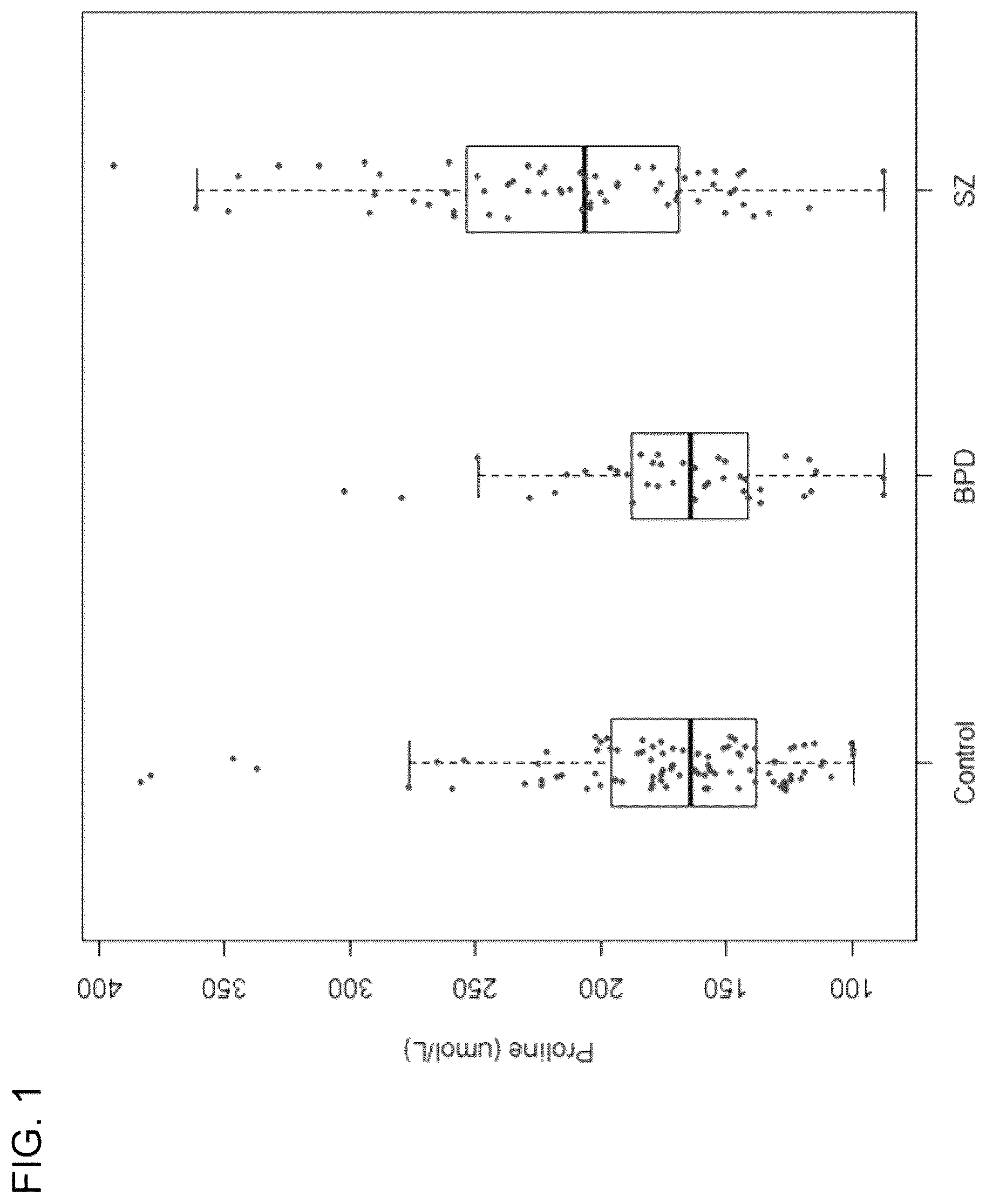
shows a boxplot of fasting plasma proline levels plotted for controls (174.28±55.97, n=90), bipolar disorder patients (168.75±45.50, n=40) and schizophrenia patients (215.84±63.00, n=64). Red jittered points represent individual data. The horizontal line within each box represents the group mean (mean±SD reported). The box indicates the interquartile range (IQR). The whiskers extend to the most extreme data point which is 1.5 times the IQR. While hyperprolinemia was present in 26.6% of schizophrenia (SZ) patients (17/64), the proportion of bipolar disorder (BPD) patients exhibiting peripheral hyperprolinemia (3/37; 7.5%) was not significantly different to controls (5/85; 5.6%) (Fisher's exact p=0.70).
A shows a scatterplot graph of the relationship between proline and negative symptoms as measured using the Scale for the Assessment of Negative Symptoms (SANS), plotted for patients with the Met/Met (n=21, red diamonds), Val/Met (n=32, blue triangles) and Val/Val (n=42, green squares) COMT genotypes. Lines represent the predicted values from the regression model for each genotype, with 95% confidence intervals. There was a significant positive relationship between proline and SANS score in Met/Met and Val/Met patients, with high proline levels being associated with high SANS scores. Conversely there existed a significant negative relationship in Val/Val patients, with high proline associated with lower levels of negative symptoms.
B shows scatterplot graphs of the relationship between proline and total negative symptoms, as assessed using the SANS, by COMT genotype (Met allele (left panel) or Val/Val (right panel)). There was a significant positive relationship between total SANS score and proline in schizophrenia patients with the Met allele (spearman's rho=0.36, p=0.009, n=53), while conversely there was a significant negative relationship between total SANS score and proline in Val/Val schizophrenia patients (spearman's rho=−0.47, p=0.0019, n=42).
shows a boxplot illustrating that negative symptoms, as assessed by the total SANS score, were significantly lower in VPA treated patients with the COMT Val/Val genotype (mean=14.6±12.67, n=15, green), as compared to pooled Met/Met (mean=30.67±17.1, n=3, red) and Val/Met (mean=25.6±17.93, n=10, blue) genotypes (F(1,26)=4.63, p=0.0408). Subjects were included if they had received 48 hours or more of VPA treatment, within 48 hours of the study visit (n=28, three subjects were dropped because they had less than 48 hours of VPA treatment). Black jittered points represent individual data. The horizontal line within each box represents the group median. The box indicates the IQR. The whiskers extend to the most extreme data point which is 1.5 times the IQR.
is a graph showing the relationship between proline and percent change in negative symptoms, plotted for patients with the COMT Met allele (n=27, purple diamonds) and Val/Val genotype (n=16, green triangles). Lines represent the predicted values from the regression model. As proline rose, Val/Val patients exhibited a greater negative percent change in symptoms, thus their symptoms decreased. Conversely, there existed a positive relationship between change in symptoms and proline in Met allele carriers: those with high proline had less of a decrease of negative symptoms. Negative symptoms were evaluated using the following items from the Brief Rating Psychiatric Scale (BPRS): item 3 (emotional withdrawal), 13 (motor retardation), 14 (uncooperativeness), 16 (blunted affect) and 18 (disorientation). Percent change in symptoms was calculated using the following formula: ((negative symptoms at visit 2−negative symptoms at visit 1)/negative symptoms at visit 1)×100%.
is a graph showing the percent change in negative symptoms in bipolar disorder patients treated with VPA, by COMT genotype. Val/Val VPA treated bipolar patients had a greater overall percent reduction in negative symptoms (mean=−0.156±0.10, n=8) as compared to Met carrier patients (mean=−0.056±0.28, n=13). However, this result did not reach statistical significance (Mann-Whitney z=0.95, p=0.34), likely due to the variability observed in the Met patients as well as the small sample size. Black jittered points represent individual data. The horizontal line within each box represents the group median. The box indicates the IQR. The whiskers extend to the most extreme data point which is 1.5 times the IQR. The percent change in symptoms was calculated as: ((total negative symptoms subscale at visit 2−total negative subscale at visit 1)/(total negative subscale at visit 1))×100%.
shows scatterplot graphs of the direct relationship between the change in proline level (pre- to post-medication) and the change in negative symptoms. The top panel shows ten bipolar disorder Met allele carriers (Met/Met or Val/Met) that had a strong positive relationship between the change in proline and the percent change in negative symptoms: as proline increased, a positive change was observed in negative symptoms, suggesting a worsening of symptoms over time, although this result did not reach significance (p=0.19), likely due to the small sample size. The bottom panel shows that Val/Val patients treated with valproate (n=8) had a negative relationship between the change in proline and symptoms (spearman's rho=−0.4), although this result again did not reach significance likely due to the small sample size (p=0.3).
is a scatterplot graph showing the relationship between blood VPA level (in μg/ml) and percent change in negative symptoms. The left panel shows nine Met allele carriers, only two of whom showed improvement in negative symptoms after treatment onset. The right panel shows seven Val/Val patients, five of whom improved after VPA treatment. The difference between genotypes did not reach significance (p=0.07), likely due to the small sample size.
DETAILED DESCRIPTION OF THE INVENTION
One embodiment of the present invention is a method for predicting the clinical response of a subject with a disorder to a solute carrier (SLC) modulator comprising:
•
• a) obtaining a biological sample from the subject; • b) determining the identity of the allele(s) of the Val 158/108 Met locus associated with the COMT gene in the sample; • wherein the presence of Val/Val at codon 158 (and/or codon 108 for S-COMT) is indicative of a subject who will benefit from an SLC modulator that increases proline levels, and wherein the presence of at least one Met allele at codon 158 (and/or codon 108 for S-COMT) is indicative of a subject who will benefit from an SLC modulator that decreases proline levels; and • c) administering, if appropriate based on the results of step b), an effective amount of an SLC modulator to the subject to achieve an appropriate clinical response.
As used herein, the term “disorder” broadly refers to a syndrome, condition, chronic illness or a particular disease. For example, the disorder may be a psychiatric disorder. In the present invention, a “psychiatric disorder” is one of a number of disorders that affect mood, thinking, and behavior. Thus, as used herein, “psychiatric disorder” includes but is not limited to: schizophrenia, bipolar disorder, schizoaffective disorders, schizophreniform disorders, schizotypal and schizoid personality disorders, delusional disorders, 22q11.2 deletion syndrome, mood disorders, anxiety disorders, substance use disorders, and personality disorders.
Other non-limiting examples of disorders according to the present invention include: schizophrenia, bipolar disorder, schizophrenia spectrum and other psychotic disorders, 22q11.2 deletion syndrome, depressive disorders, mood disorders, Alzheimer's disease, alcohol use disorder, substance use disorders, addictive disorders, anxiety disorders, obsessive-compulsive disorders, and trauma and stressor-related disorders. In a preferred embodiment, the disorder is e.g., schizophrenia or bipolar disorder.
As used herein, the terms “treat,” “treating,” “treatment” and grammatical variations thereof mean subjecting an individual subject to a protocol, regimen, process or remedy, in which it is desired to obtain a physiologic response or outcome in that subject, e.g., a patient. However, because every treated subject may not respond to a particular treatment protocol, regimen, process or remedy, treating does not require that the desired physiologic response or outcome be achieved in each and every subject or subject population, e.g., patient population. Accordingly, a given subject or subject population, e.g., patient population may fail to respond or respond inadequately to treatment. The term “clinical response” as used herein means a reduction of the severity or number of symptoms or characteristics of a disorder, during or following treatment.
In some aspects of this and other embodiments, the subject is a mammal. Preferably, the mammal is selected from the group consisting of humans, primates, farm animals, and domestic animals. More preferably, the mammal is a human.
As used herein, a “biological sample” means a biological specimen, which may be a bodily fluid or a tissue. Biological samples include, for example, whole blood, serum, plasma, cerebro-spinal fluid, leukocytes or leukocyte subtype cells (e.g. neutrophils, basophils, and eosinophils, lymphocytes, monocytes, macrophages), fibroblast sample, olfactory neuron sample, and tissues from the central nervous system, such as the cortex and hippocampus, and cells previously exposed to the CNS environment, such as dendritic cells trafficked from the brain, or other immune or other cell types (Mohamed-M G et al., 2014). Examples of preferred biological samples include, e.g., a blood sample, a biopsy sample, a plasma sample, a saliva sample, a tissue sample, a serum sample, a tear sample, a sweat sample, a skin sample, a cell sample, a hair sample, an excretion sample, a waste sample, a bodily fluid sample, a nail sample, a cheek swab, a cheek cell sample, or a mucous sample.
There is one single gene for COMT, which codes for both soluble COMT (S-COMT) and membrane-bound COMT (MB-COMT) using two separate promoters. The nucleic acid sequence for the human COMT gene is set forth in GenBank Accession Number Z26491 (see, e.g., SEQ ID NO: 1). Human S-COMT contains 221 amino acids (see, e.g., SEQ ID NO: 2), and the molecular mass is 24.4 kDa. Human MB-COMT (see, e.g., SEQ ID NO: 3) contains 50 additional amino acids, of which 20 are hydrophobic membrane anchors. The remainder of the MB-COMT molecule is suspended on the cytoplasmic side of the intracellular membranes. The corresponding molecular mass is 30.0 kDa.
A single nucleotide polymorphism (SNP) in the COMT gene causes a trimodal distribution of low, intermediate, and high activity. That polymorphism is caused by autosomal codominant alleles and leads to 3- to 4-fold differences in COMT activity. It has been shown that the molecular basis for this variation in activity is due to a transition of guanine to adenine at codon 158 (and/or codon 108 for S-COMT) of the COMT gene that results in a substitution of valine (Val) by methionine (Met) at codon 158 in MB-COMT (SEQ ID NO: 3) or the corresponding amino acid 108 in S-COMT (SEQ ID NO: 2). The SNP polymorphism is referred to interchangeably herein as “rs4680” or “G158A” or “Val 158 Met” or Val 158/108 Met or Val 108/158 Met. In subjects with 22q11.2 deletion syndrome (22q11DS), there is only one allele which determines COMT activity.
COMT Enzyme Activity can also be measured as a separate and/or additional measure of COMT activity with or without without COMT genotyping. Different methods can be utilized to assay COMT activity in a patient/person, these include but are not limited to assay of COMT enzyme activity in erythrocytes using a method developed by Masuda et al., which is based upon the conversion to normetanephrine (NML) using norepinephrine as a substrate, and which has good inter-, and intra-day precision (Masuda et al. 2002). This assay has recently been set-up in the Clelland lab, and is briefly described as follows: After blood draw, erythrocytes were obtained via gradient centration and cell pellets stored at −80° C. prior to downstream assay. Cell pellets were then lysed and protein concentrations assayed. COMT activity was determined via the Normetanephrine (Plasma) ELISA (IBL America), according to the manufacturer's instructions. Specific COMT activity was calculated after subtracting out the amount of product resulting from endogenous cellular methyltransferase activity in parallel reaction using a COMT inhibitor (OR486). To date all values have obtained have been within the range of internal standard controls. This COMT activity assay has been successfully employed to assay COMT activity in human erythrocytes (Segall et al. 2010), CNS tissue from murine models (Lorenz et al. 2014), and in vitro cell lines (Nackley et al. 2006).
Dopaminergic activity may also be measured with or without assay of COMT genotype: Estimation of dopamine activity can be assayed via methods including but not limited to: MRI, functional MRI, MRS, PET and/or SPECT imaging of CNS. Other methods include but are not limited to biochemical assays such as plasma HVA and MHPH: Fasting pHVA is considered a good indicator of central dopaminergic neuronal activity, particularly when fasting MHPG are also considered. pHVA and Pmhpg will be assayed via HPLC assays. Both assays are robust and reproducible (Donnelly et al. 1996; Huber-Smith et al. 1986).
Exemplary methods which may be used for the determination/identification of the COMT genotype or Val 158/108 Met polymorphism in the present invention are disclosed, for example, in US2003/0100476, which is incorporated herein by reference. Further examples of such methods include, but are not limited to, PCR-based restriction fragment length polymorphism analysis using the restriction enzyme αIII, allele specific hybridization, use of a primer in a polymerase chain reaction (PCR), such as, for example, anchor PCR or RACE PCR or in a ligase chain reaction (LCR), identification of alterations in restriction enzyme cleavage patterns, sequencing reactions, analysis of the protection from cleavage agents (such as, for example, nuclease, hydroxylamine or osmium tetroxide and with piperidine), recognition of mismatched base pairs in double strand DNA by specific enzymes, alterations in electrophoretic mobility, analysis of the movement of polymorphic fragments in polyacrylamide gels containing gradients of denaturant (denaturing gradient gel electrophoresis, DGGE), selective oligonucleotide hybridization (for example using a specialized exonuclease-resistance nucleotide), selective amplification depending on selective PCR or selective primer extension, oligonucleotide ligation assays, expansion methods using dideoxynucleotides derivatives, and Genetic Bit Analysis (GBA™). The detection of a variant in the COMT protein sequence can also be determined by methods such as in situ detection using an antibody specific to a variant sequence, immunoassays such as, for example, EIA or ELISA, immunofluorescence and the like. A preferred method for determining a COMT genotype is disclosed in Example 1.
As set forth above, the determination/identification of the COMT genotype or mutation in the COMT protein of a subject may be carried out by methods known to the skilled artisan. Such methods may be carried out, e.g., on a biological sample obtained from the subject, such as for example, a blood sample or a sample obtained after a biopsy has been carried out on the subject. Furthermore, any cell type or tissue may be utilized in the detection procedures described above. In a preferred embodiment, a bodily fluid, e.g., blood, is obtained from the subject to determine the presence of the allelic variant of a polymorphic region, such as the region including the Val 158/108 Met, in the COMT gene. A bodily fluid, e.g., blood, can be obtained by known techniques (e.g., venipuncture). Alternatively, nucleic acid tests can be performed on dry samples (e.g., skin).
As used herein, “a solute carrier (SLC)” means any member in the solute carrier family of membrane transport proteins, which transport various solutes including both charged and uncharged organic molecules such as amino acids as well as inorganic ions and the gas ammonia. Non-limiting examples of SLCs include SLC6A7, SLC6A17, SLC6A20, SLC6A9, SLC7A11, SLC1A1, SLC1A2, SLC1A3, SLC1A4, SLC1A5, SLC1A6, SLC3A2, SLC7A5, SLC7A8, SLC7A13, SLC7A10, SLC17A6, SLC17A7, SLC17A8, SLC32A1, SLC36A1, SLC36A2, SLC36A4, SLC38A2, SLC38A4, SLC38A9, SLC6A1, SLC6A13, SLC6A11, SLC6A12, SLC6A5, SLC6A14, SLC6A15, SLC6A18, and SLC6A19. As used herein, “a solute carrier modulator” or “an SLC modulator” means any drug or other composition that inhibits/modulates/affects specific SLC transporter to increase or decrease the plasma levels of certain solutes (e.g., D- and/or L-forms of proline, glycine, glutamate, serine, alanine, threonine, glutamine, and GABA, etc.) in a subject. Such SLC modulators and their formulations and/or derivatives with stability and/or CNS transport characteristics may be administered to a subject as therapeutics, e.g. via incorporation of stable isotopes including Carbon-13, Oxygen-18, and/or methylation, acetylation, glycosylation and/or other derivatization or decoration, and/or incorporation into nanoparticles and/or liposomes and/or other carriers, including conjugation to carrier moieties, for example polyamines and/or pyrene and/or pyrene derivatives. In the present invention, combinations of such SLC modulators are also contemplated.
Examples of SLC6A7 modulator include, but are not limited to, LX-6171, Benztropine, LP-403812, 2′,3,3′,4′,5-pentachloro-4-hydroxybiphenyl, Dronabinol, ethanol, N-Methyl-3,4-methylenedioxyamphetamine, Methionine-enkephalin, [D-Ser 2 ]Leu-enkephalin-Thr, Leucine enkephalin, (des-Tyr)-Leucine enkephalin, Leucine enkephalinamide, [D-ser 2 ]Leu-enkephalin-Thr, [D-Ala2, D-Leu5]Leu-enkephalin, SLC6A7(PROT) inhibiting peptides and modified peptides and derivatives, including (denoted in amino acid single letter codes) GGFL, YGGFL, YGGFM, GFL, GGFL-NH2, YGGFLR, YGGFLRRI (dynorphin A1-8), GGFLRRI (des-Tyr-dynorphinA1-8), L-pipecolate (PIP), L-norleucine, sarcosine, Ammonium Chloride, bisphenol A, Copper, Morphine, Nicotine, Propylthiouracil, pyrachlostrobin, Imatinib mesylate, Fluoxetine, miR-205, microRNA-140, Imatinib, hsa-miR-490-3p, hsa-miR-143, hsa-miR-874, hsa-miR-491-5p, hsa-miR-485-5p, hsa-miR-128, hsa-miR-339-5p, hsa-miR-324-5p, hsa-miR-3064-5p, hsa-miR-6504-5p, hsa-miR-138-5p, hsa-miR-150-5p, hsa-miR-4319, hsa-miR-125b-5p, hsa-miR-125a-5p, hsa-miR-122-5p, hsa-miR-876-5p, hsa-miR-3167, hsa-miR-532-3p, hsa-miR-1287-5p, hsa-miR-3135b, hsa-miR-152-5p, hsa-miR-133a-5p, hsa-miR-550a-3p, hsa-miR-200c-5p, hsa-miR-132-5p, hsa-miR-874-3p, hsa-miR-3692-5p, hsa-miR-597-3p, hsa-miR-873-5p.2, and combinations thereof.
The entities below have also been found to effect SLC6A7: the transporter regulatory molecules named Compound 1, Compound 2, Compound 3, Compound 4, Compound 5, Compound 6, Compound 7, Compound 8, Compound 9, Compound 10, Compound 11, Compound 12, Compound 13, Compound 14, Compound 15, Compound 16, Compound 17, Compound 18, Compound 19, Compound 20, Compound 21, Compound 22, Compound 23, Compound 24, Compound 25, Compound 26, Compound 27, Compound 28, Compound 29, Compound 30, Compound 31, Compound 32, Compound 33, Compound 34, Compound 35, Compound 36, Compound 37, Compound 38, Compound 39, Compound 40, Compound 41, Compound 42, Compound 43, Compound 44, Compound 45, Compound 46, Compound 47, Compound 48, Compound 49, Compound 50, Compound 51, Compound 52, Compound 53, Compound 54, Compound 55, Compound 56, Compound 57 and Compound 58 disclosed in Zipp et al 2014 (PMID:25037917 DOI:10.1016/j.bmcl.2014.06.049).
Examples of SLC6A17 modulator include, but are not limited to, Fluoxetine, bupropion, N-Methyl-D-Glucosamine tartrate, Resveratrol, pioglitazone, 2,2′,3′,4,4′,5-hexachlorobiphenyl, 2′,3,3′,4′,5-pentachloro-4-hydroxybiphenyl, bisphenol A, furan, Gentamicins, jinfukang, Paraquat, Soman, hsa-miR-140-3p.1, hsa-miR-15b-5p, hsa-miR-16-5p, hsa-miR-195-5p, hsa-miR-6838-5p, hsa-miR-424-5p, hsa-miR-497-5p, hsa-miR-15a-5p, hsa-miR-141-3p, hsa-miR-200a-3p, hsa-miR-183-5p.2, hsa-miR-424-5p, hsa-miR-497-5p, hsa-miR-16-5p, hsa-miR-195-5p, hsa-miR-15a-5p, hsa-miR-15b-5p, hsa-miR-6838-5p, hsa-miR-449a, hsa-miR-34a-5p, hsa-miR-449b-5p, hsa-miR-34c-5p, hsa-miR-218-5p, hsa-miR-218-5p, hsa-miR-29a-3p, hsa-miR-29b-3p, hsa-miR-29c-3p, hsa-miR-22-3p, hsa-miR-138-5p, hsa-miR-218-5p, hsa-miR-218-5p, hsa-miR-137, hsa-miR-200c-3p, hsa-miR-429, hsa-miR-200b-3p, hsa-miR-144-3p, hsa-miR-4319, hsa-miR-125a-5p, hsa-miR-125b-5p, hsa-miR-367, hsa-miR-32, hsa-miR-363, hsa-miR-92a, hsa-miR-92b, hsa-miR-25, hsa-miR-144, hsa-miR-374a, hsa-miR-374b, hsa-miR-222, hsa-miR-449a, hsa-miR-449b, hsa-miR-34a, hsa-miR-34c-5p, and combinations thereof.
Examples of SLC6A20 modulator include, but are not limited to, Pipecolate, N-methyl-l-proline, N-methylaminoisobutyrate (MeAlB), sarcosine (N-methylglycine), α-methylamino-isobutyric acid (MeAlB), 2-Aminobicyclo[2.2.1]heptane-2-carboxylic acid (BCH), d-proline, miR-221, Imatinib mesylate, Creatine, zinc, miR-122, High phosphate, Estradiol, Cyclosporine, oxaliplatin, Topotecan, Acetaminophen, Amiodarone, Ammonium Chloride, AZM551248, beta-Naphthoflavone, Benzo(a)pyrene, bisphenol A, Chlorpromazine, Diethylstilbestrol, Ethinyl Estradiol, Fonofos, Hydrogen Peroxide, (+)-JQ1 compound, octylphenol, Paclitaxel, Paraquat, Parathion, Propylthiouracil, terbufos, Tetracycline, Thioacetamide, Valproic Acid, Vancomycin, zoledronic acid, hsa-miR-138-5p, hsa-miR-1-3p, hsa-miR-203a-3p.1, hsa-miR-204-5p, hsa-miR-206, hsa-miR-208a-3p, hsa-miR-208b-3p, hsa-miR-211-5p, hsa-miR-613, hsa-miR-448, hsa-miR-133a, hsa-miR-133b, hsa-miR-19a, hsa-miR-19b, hsa-miR-125a-3p, hsa-miR-376a, hsa-miR-376b, hsa-miR-599, hsa-miR-149, hsa-miR-214, hsa-miR-194 hsa-miR-539, hsa-miR-129-5p, hsa-miR-124, hsa-miR-506, and combinations thereof.
Examples of SLC6A9 modulator include, but are not limited to, ASP2535, Bitopertin (RG1678), Org 25935, PF-03463275, RG1678 (R 1678, R1678, RG 1678, RO 4917838, RO49 17838, RO4917838), SCH900435 (Org 25935, Org25935, SCH 900435, SCH900435), SSR103800 (SSR 103800), SSR504734 (SSR 504734), AMG747 (AMG 747), AMR-GLY-3 (GlyT 1 inhibitor ALBANY), B1425809 (BI 425809), CST1200 (CSTI 200), DNS006 (DNS 006, GIyT1 Inhibitor DART, GIyT1 Program), GSK1018921 (1018921, GSK 1018921), JNJ17305600 (Glycine Reuptake Inhibitors, JNJ 17305600), Org26041 (Org 26041), PF03463275 (PF 03463275, PF 3463275, PF3463275), TASPO315003 (TASP 0315003). microRNA-128, Aldosterone, JQ1, miR-34, acrylamide, microRNA-140, Ribavirin, Tetrachlorodibenzodioxin, Benzo(a)pyrene, Nanotubes Carbon, bisphenol A, Phenobarbital, benzamide, benzyloxycarbonylleucyl-leucyl-leucine aldehyde, Cuprizone, Cyclosporine, decabromobiphenyl ether, Cisplatin, Diethylhexyl Phthalate, Ethinyl Estradiol, Fenofibrate, Flutamide, jinfukang, Monensin, nobiletin, oxaliplatin, Paraquat, Tetradecanoylphorbol Acetate, Topotecan, 1-(2-trifluoromethoxyphenyl)-2-nitroethanone, 1,4-bis(2-(3,5-dichloropyridyloxy))benzene, 2-(1′H-indolo-3′-carbonyl)thiazole-4-carboxylic acid methyl ester, 2,2′,4,4′-tetrabromodiphenyl ether, 2,2-bis(4-hydroxyphenyl)-1,1,1-trichloroethane, 3,4,3′,4′-tetrachlorobiphenyl, 3-biphenyl-4-yl-4-(2-fluorophenyl)-5-isopropyl-4H-1,2,4-triazole, Acetaminophen, adefovir dipivoxil, Amphetamine, Atrazine, Betaine, 8-Bromo Cyclic Adenosine Monophosphate, caffeic acid phenethyl ester, Cannabidiol, Cihorine, chloroacetaldehyde, Choline, cidofovir, Ciguatoxins, Clodronic Acid, Clofibric Acid, Copper, coumarin, Dronabinol, Dexamethasone, Diazinon, dibenzo(a,l)pyrene, Dibutyl Phthalate, Diethylnitrosamine, Disulfiram, Diuron, Ethanol, fipronil, Flavonoids, Folic Acid, Ibuprofen, ICG 001, Ifosfamide, (+)-JQ1 compound, lead acetate, Magnetite Nanoparticles, Metformin, Methamphetamine, Methionine, Methotrexate, 1-Methyl-4-phenylpyridinium, n-butoxyethanol, nefazodone, nimesulide, N-methyl-N-(6-methoxy-1-phenyl-1,2,3,4-tetrahydronaphthalen-2-ylmethyl)aminomethylcarboxylic acid, NSC668394, Oxycodone, Ozone, Pentachlorophenol, phorone, pirinixic acid, Pregnenolone Carbonitrile, Propylthiouracil, rosiglitazone, sevoflurane, Sodium Fluoride, Sodium Selenite, Tamoxifen, tauroursodeoxycholic acid, Thapsigargin, troglitazone, Tunicamycin, Vanadium, hsa-miR-184, hsa-miR-3064-5p, hsa-miR-6504-5p, hsa-miR-140-3p.2, hsa-miR-140-5p, hsa-miR-222-3p, hsa-miR-221-3p, hsa-miR-200a-3p, hsa-miR-141-3p, hsa-miR-520a-3p, hsa-miR-302e, hsa-miR-520d-3p, hsa-miR-372-3p, hsa-miR-302d-3p, hsa-miR-302c-3p.1, hsa-miR-302b-3p, hsa-miR-302a-3p, hsa-miR-520e, hsa-miR-520c-3p, hsa-miR-520b, hsa-miR-373-3p, hsa-miR-183-5p.2, hsa-miR-200a-3p, hsa-miR-302c-3p.2, hsa-miR-520f-3p, hsa-miR-7-5p, hsa-miR-182-5p, hsa-miR-519d-3p, hsa-miR-106b-5p, hsa-miR-20a-5p, hsa-miR-106a-5p, hsa-miR-93-5p, hsa-miR-17-5p, hsa-miR-20b-5p, hsa-miR-526b-3p, hsa-miR-1271-5p, hsa-miR-96-5p, hsa-miR-30b-5p, hsa-miR-30a-5p, hsa-miR-30d-5p, hsa-miR-30e-5p, hsa-miR-30c-5p, hsa-miR-137, hsa-miR-214-5p, hsa-miR-490-3p, hsa-miR-455-3p.2, hsa-miR-425-5p, hsa-miR-125a-5p, hsa-miR-193a-3p, hsa-miR-125b-5p, hsa-miR-193b-3p, hsa-miR-744-5p, hsa-miR-615-3p, and combinations thereof.
Examples of SLC7A11 modulator include, but are not limited to, SXC2023 (SXC 2023), PRO4051 (Cpd X, CpdX, PRO 4051), Glucosamine, Gamma-tocotrienol, miR-221/222, Ribavirin, Imatinib, 1,2,4-benzenetriol, Nickel, Camptothecin, Benzo(a)pyrene, Sulfasalazine, Cyclosporine, 4-(5-benzo(1,3)dioxol-5-yl-4-pyridin-2-yl-1H-imidazol-2-yl)benzamide, (6-(4-(2-piperidin-1-ylethoxy)phenyl))-3-pyridin-4-ylpyrazolo(1,5-a)pyrimidine, Valproic Acid, arsenic trioxide, Estradiol, bisphenol A, Glutathione, Tetrachlorodibenzodioxin, Cystine, Bilirubin, Paraquat, diethyl maleate, Hydrogen Peroxide, (+)-JQ1 compound, Tetradecanoylphorbol Acetate, Acetaminophen, aluminum citrate, Cadmium, Chlorpyrifos, Cocaine, Copper, Copper Sulfate, Cisplatin, lead acetate, Magnetite Nanoparticles, Phenobarbital, Succimer, trichostatin A, Zymosan, 1-(2-cyano-3,12-dioxooleana-1,9-dien-28-oyl) imidazole, 1,2-dihydroxynaphthalene, 1-(2-trifluoromethoxyphenyl)-2-nitroethanone, 2,2′,4,4′-tetrabromodiphenyl ether, 2,3-bis(3′-hydroxybenzyl)butyrolactone, 3,4,5,3′,4′-pentachlorobiphenyl, 4-(4-fluorophenyl)-2-(4-hydroxyphenyl)-5-(4-pyridyl)imidazole, Acetylcysteine, Air Pollutants, alpha-Tocopherol, Ampicillin, Azathioprine, 7,8-Dihydro-7,8-dihydroxybenzo(a)pyrene 9,10-oxide, tert-Butylhydroperoxide, p-Chloromercuribenzoic Acid, cinnamic aldehyde, Coumestrol, Cuprizone, Curcumin, Cyclophosphamide, Dronabinol, Diazinon, Diethylstilbestrol, elesclomol, entinostat, Formaldehyde, glycidamide, Lindane, Lipopolysaccharides, motexafin gadolinium, nickel chloride, panobinostat, pentabromodiphenyl ether, Phenylmercuric Acetate, Prednisolone, Quercetin, Reactive Oxygen Species, tetrabromobisphenol A, Tretinoin, tripterine, Vitamin K 3, vorinostat, Zinc Acetate, 1,2-diamino-4-nitrobenzene, 1,6-hexamethylenediisocyanate,2′,3,3′,4′,5-pentachloro-4-hydroxybiphenyl, 2,3-dichloro-1-propanol, 2-amino-3,8-dimethylimidazo(4,5-f)quinoxaline, 2-amino-3-methylimidazo(4,5-f)quinolone, 2-amino-4-methylphenol, 2-chloromethylpyridine, 2-tert-butylhydroquinone, 2-xylene, 3,4,3′,4′-tetrachlorobiphenyl, 4-anisidine, 4-carboxyphenylglycine, 4-hydroxy-2-nonenal, 7-aminocephalosporanic acid, Acrolein, Acrylamide, ammonium hexachloroplatinate, andrographolide, Arachidonic Acid, Crocidolite, Ascorbic Acid, Atrazine, belinostat, benz(a)anthracene, benzidine, benzyloxycarbonylleucyl-leucyl-leucine aldehyde, bicalutamide, BIRB 796, bis(tri-n-butyltin)oxide, 8-Bromo Cyclic Adenosine Monophosphate, butyraldehyde, candoxin, Cannabidiol, captax, Carbamazepine, Ceftriaxone, chlorantranilipole, chloroacetaldehyde, chloropicrin, Chloroprene, chloroquine diphosphate, Choline, Coumaphos, cresidine, cyanoginosin LR, cypermethrin, DDT, Demecolcine, dibutyldichlorotin, Diclofenac, Dieldrin, Dimethylnitrosamine, Diquat, Endosulfan, Epichlorohydrin, Estriol, Estrone, Ethinyl Estradiol, ethyl acrylate, ethylbenzene, Ethyl Methanesulfonate, Eugenol, Zearalenone, Fluoxetine, Folic Acid, Maleic Anhydrides, gedunin, Genistein, glycidol, Gold Sodium Thiomalate, Hypochlorous Acid, Ibuprofen, ICG 001, Indomethacin, lonomycin, K 7174, Metformin, Methionine, Methotrexate, Methylenebis(chloroaniline), Methylene Chloride, Methylmethacrylate, Methylprednisolone, Mitomycin, mono-(2-ethylhexyl)phthalate, monomethylarsonous acid, Mycophenolic Acid, Nanotubes Carbon, naphthalene, Naphthoquinones, n-butoxyethanol, nickel sulfate, N-methyl-4-aminophenol, nonylphenol, NSC668394, NSC 689534, ochratoxin A, Oxadiazoles, Ozone, PCI 5002, Phenol, Piroxicam, Polychlorinated Biphenyls, Potassium Dichromate, Progesterone, Propylthiouracil, racecadotril, Raloxifene Hydrochloride, resorcinol, S-(1,1,2,2-tetrafluoroethyl)cysteine, Silver, si-wu-tang, sodium bichromate, Sodium Selenite, tetrathiomolybdate, Thiram, triacsin C, Trichloroethylene, trimellitic anhydride, Tunicamycin, vanillin, Vincristine, Zinc, and combinations thereof.
Examples of SLC1A1 modulator include, but are not limited to, dihydrokaininc acid, kainic acid monohydrate, kainite, DL-Threo-β-Benzyloxyaspartic acid (DL-TBOA). Threo-β-benzyloxyaspartate (TBOA), dihydrokainic acid (DHK), Vemurafenib, Potassium chloride, FNA-1-2, Gamma-tocotrienol, Progesterone, Vitamin D, Interleukin-22, Valproic Acid, Tretinoin, Tetradecanoylphorbol Acetate, wortmannin, Benzo(a)pyrene, bisphenol A, chelerythrine, Staurosporine, 2-(4-morpholinyl)-8-phenyl-4H-1-benzopyran-4-one, Estradiol, Carbamazepine, 1-Methyl-4-phenyl-1,2,3,6-tetrahydropyridine, Pregabalin, tamibarotene, Tetrachlorodibenzodioxin, Acetylcysteine, Ammonia, tert-Butylhydroperoxide, 4-(5-benzo(1,3)dioxol-5-yl-4-pyridin-2-yl-1H-imidazol-2-yl)benzamide, (6-(4-(2-piperidin-1-ylethoxy)phenyl))-3-pyridin-4-ylpyrazolo(1,5-a)pyrimidine, Amino Acids, Caffeine, calphostin C, Cyclosporine, Cisplatin, Ethinyl Estradiol, HX 630, lead acetate, Nicotine, Phenobarbital, Phenylmercuric Acetate, Pilocarpine, Rotenone, trichostatin A, Zinc, 2,2′,4,4′-tetrabromodiphenyl ether, Acetaminophen, afimoxifene, Ammonium Chloride, Androgen Antagonists, Antirheumatic Agents, Astemizole, 7,8-Dihydro-7,8-dihydroxybenzo(a)pyrene 9,10-oxide, butylparaben, caffeic acid phenethyl ester, Chlorodiphenyl (54% Chlorine), Chloroprene, Chlorpyrifos, Clozapine, Cycloheximide, diazepinylbenzoic acid, Diethylnitrosamine, Calcitriol, diphenyldiselenide, entinostat, enzacamene, Excitatory Amino Acid Agents, Fonofos, Haloperidol, Ibotenic Acid, Ibuprofen, Kainic Acid, Ketone Bodies, LE 540, N-Methyl-3,4-methylenedioxyamphetamine, Mitomycin, Nanotubes Carbon, 1-Naphthylisothiocyanate, octylmethoxycinnamate, Paclitaxel, panobinostat, Parathion, pentabromodiphenyl ether, pirinixic acid, potassium chromate(VI), Pregnanolone, Pregnenolone Carbonitrile, profenofos, Propofol, resveratrol, Selenium, St. Thomas' Hospital cardioplegic solution, terbufos, Thallium, titanium dioxide, Trinitrobenzenesulfonic Acid, Tunicamycin, undecane, Vanadium, Vitamin K 3, vorinostat, Win 55212-2, Zidovudine, zonisamide, hsa-miR-7-5p, hsa-miR-520f-3p, hsa-miR-302c-3p.2, hsa-miR-200b-3p, hsa-miR-429, hsa-miR-200c-3p, hsa-miR-203a-3p.1, hsa-miR-144-3p, hsa-miR-101-3p.2, hsa-miR-138-5p, hsa-miR-200a-3p, hsa-miR-141-3p, hsa-miR-23a-3p, hsa-miR-23b-3p, hsa-miR-23c, hsa-miR-130a-5p, hsa-miR-25-3p, hsa-miR-32-5p, hsa-miR-363-3p, hsa-miR-367-3p, hsa-miR-92b-3p, hsa-miR-92a-3p, hsa-miR-101-3p.1, hsa-miR-137, hsa-miR-182-5p, hsa-miR-183-5p.2, hsa-miR-9-5p, hsa-miR-1271-5p, hsa-miR-96-5p, hsa-miR-202-5p, hsa-miR-217, hsa-miR-6807-3p, hsa-miR-1271, hsa-miR-96, hsa-miR-23a, hsa-miR-23b, hsa-miR-146a, hsa-miR-146b-5p, hsa-miR-876-5p, hsa-miR-544, hsa-miR-101, hsa-miR-429, hsa-miR-200b, hsa-miR-200c, hsa-miR-193a-3p, hsa-miR-193b, hsa-miR-1297, hsa-miR-26a, hsa-miR-26b, hsa-miR-200a, hsa-miR-141, hsa-miR-374b, hsa-miR-374a, hsa-miR-485-5p, hsa-miR-212, hsa-miR-132, hsa-miR-542-3p, hsa-miR-211, hsa-miR-204, hsa-miR-203, hsa-miR-494, hsa-miR-182, hsa-miR-382, hsa-miR-33a, hsa-miR-33b, hsa-miR-384, hsa-miR-376a, hsa-miR-376b, hsa-miR-186, hsa-miR-340, hsa-miR-143, hsa-miR-145, hsa-miR-138, hsa-miR-9, and combinations thereof.
Examples of SLC1A2 modulator include, but are not limited to, LDN 212320, DL-TBOA, (+/−)-threo-3-Methylglutamic acid, Dihydrokainic acid, WAY 213613, TFB-TBOA, L-trans-2,4-PDC, 7-Chlorokynurenate. Cocaine, nicotine, heroin, alcohol, N-acetylcysteine, Dihydrokainic acid, L-trans-2,4-PDC, TFB-TBOA, (2S,4R)-4-methylglutamate, D-aspartic acid, L-aspartic acid, SYM2081, threo-3-methylglutamate, WAY-213613, (±)-HIP-A, (±)-HIP-B, (±)-threo-3-Methylglutamic acid, 7-Chlorokynurenic acid, cis-ACBD, Congo Red, L-(−)-threo-3-Hydroxyaspartic acid, L-CCG-III, LDN 212320, MPDC, UCPH, WAY 213613, Creatine, Fluoxetine, Ascorbic acid, 2,3,7,8-tetrachlorodibenzo-p-dioxin, miR-122, 1-(4-(6-bromobenzo(1,3)dioxol-5-yl)-3a,4,5,9b-tetrahydro-3H-cyclopenta(c)quinolin-8-yl)ethanone, Raloxifene Hydrochloride, Manganese, Valproic Acid, manganese chloride, Estradiol, Riluzole, trichostatin A, 1,3,5-tris(4-hydroxyphenyl)-4-propyl-1H-pyrazole, 2-(2-amino-3-methoxyphenyl)-4H-1-benzopyran-4-one, diarylpropionitrile, methylmercuric chloride, tyrphostin AG 1478, Ceftriaxone, Corticosterone, N-(2-(4-bromocinnamylamino)ethyl)-5-isoquinolinesulfonamide, pyrrolidine dithiocarbamic acid, 2-(4-morpholinyl)-8-phenyl-4H-1-benzopyran-4-one, 4-(5-benzo(1,3)dioxol-5-yl-4-pyridin-2-yl-1H-imidazol-2-yl)benzamide, 4-(6-bromo-1,3-benzodioxol-5-yl)-3a,4,5,9b-3H-cyclopenta(c)quinolone, (6-(4-(2-piperidin-1-ylethoxy)phenyl))-3-pyridin-4-ylpyrazolo(1,5-a)pyrimidine, bisphenol A, Clozapine, Cocaine, copper(II)(1,10-phenanthroline)3, fulvestrant, Kainic Acid, manganese sulfate, Pertussis Toxin, Phenobarbital, pirinixic acid, Vitamin A, Acetaminophen, Acetylcysteine, arsenic disulfide, Benzo(a)pyrene, Blood Glucose, Chlorodiphenyl (54% Chlorine), p-Chloromercuribenzoic Acid, Chlorpyrifos, decitabine, Ethanol, Ethinyl Estradiol, Excitatory Amino Acid Agents, furan, Hydrogen Peroxide, Methamphetamine, Paraoxon, Phenylmercuric Acetate, resveratrol, romidepsin, Tretinoin, vorinostat, 2-(1′H-indolo-3′-carbonyl)thiazole-4-carboxylic acid methyl ester, 2,3-dimethoxy-1,4-naphthoquinone, 3,4,3′,4′-tetrachlorobiphenyl, 3-hydroxyacetanilide, 4-toluidine, AG 1879, Aldehydes, Ammonium Chloride, Ampicillin, Antirheumatic Agents, arsenic trioxide, Atorvastatin Calcium, benzo(k)fluoranthene, Bleomycin, butylparaben, butyraldehyde, Butyric Acid, Ethylene Chlorohydrin, cinnamic aldehyde, Clofibrate, Cobalt, Copper Sulfate, coumarin, Cuprizone, Cyclosporine, Diazinon, Dibutyl Phthalate, Cisplatin, Dichlorodiphenyl Dichloroethylene, Diethylhexyl Phthalate, dihydrokainic acid, Dithiothreitol, Levodopa, enzacamene, epoxiconazole, ethylene dichloride, Genistein, Haloperidol, indole-3-carbinol, lonomycin, (+)-JQ1 compound, Ketamine, Ketolides, KT 5720, lard, lead acetate, Linuron, Methoxychlor, 2-Methyl-4-chlorophenoxyacetic Acid, Nanotubes Carbon, N-methyl-N-(6-methoxy-1-phenyl-1,2,3,4-tetrahydronaphthalen-2-ylmethyl)aminomethylcarboxylic acid, N-nitrosomorpholine, ochratoxin A, octylmethoxycinnamate, Oxidopamine, Oxycodone, Paclitaxel, Penicillins, Pentachlorophenol, pentanal, perfluorooctane sulfonic acid, Potassium Dichromate, prochloraz, procymidone, Progesterone, propionaldehyde, Propylthiouracil, Quercetin, Quinazolines, sodium bisulfide, Soman, Triiodothyronine, Tamoxifen, Tetradecanoylphorbol Acetate, Trichloroethylene, tungsten carbide, U 0126, vinclozolin, Win 55212-2, Zinc, zinc chloride, hsa-miR-142-5p, hsa-miR-5590-3p, hsa-miR-221-3p, hsa-miR-222-3p, hsa-miR-31-5p, hsa-miR-182-5p, hsa-miR-145-5p, hsa-miR-5195-3p, hsa-miR-187-3p, hsa-miR-218-5p, hsa-miR-203a-3p.1, hsa-miR-16-5p, hsa-miR-195-5p, hsa-miR-6838-5p, hsa-miR-15b-5p, hsa-miR-424-5p, hsa-miR-15a-5p, hsa-miR-497-5p, hsa-miR-455-3p.1, hsa-miR-183-5p.1, hsa-miR-429, hsa-miR-200c-3p, hsa-miR-200b-3p, hsa-miR-1271-5p, hsa-miR-96-5p, hsa-miR-526b-3p, hsa-miR-93-5p, hsa-miR-106b-5p, hsa-miR-20a-5p, hsa-miR-20b-5p, hsa-miR-17-5p, hsa-miR-519d-3p, hsa-miR-106a-5p, hsa-miR-369-3p, hsa-miR-374c-5p, hsa-miR-655-3p, hsa-miR-542-3p, hsa-miR-376c, hsa-miR-186, and combinations thereof.
Examples of SLC1A3 modulator include, but are not limited to, 7-Chlorokynurenate. DL-TBOA, L-Glutamic Acid, 7-Chlorokynurenic acid sodium salt, Dihydrokainic acid, L-trans-2,4-PDC, TFB-TBOA, (2S,4R)-4-methylglutamate, D-aspartic acid, L-aspartic acid, UCPH-101, (±)-HIP-A 103, (±)-HIP-B, (±)-threo-3-Methylglutamic acid, 7-Chlorokynurenic acid, cis-ACBD, Congo Red, L-(−)-threo-3-Hydroxyaspartic acid, L-CCG-III, LDN 212320, MPDC, UCPH, WAY 213613, ETB-TBOA, DL-TBOA, Dihydrokainate, 13-cis retinoic acid, Potassium chloride, pioglitazone, olanzapine, Palmitate, Raloxifene Hydrochloride, Valproic Acid, Estradiol, manganese chloride, Streptozocin, Manganese, Riluzole, 4-(5-benzo(1,3)dioxol-5-yl-4-pyridin-2-yl-1H-imidazol-2-yl)benzamide, (6-(4-(2-piperidin-1-ylethoxy)phenyl))-3-pyridin-4-ylpyrazolo(1,5-a)pyrimidine, Tetrachlorodibenzodioxin, bisphenol A, Ethinyl Estradiol, Glucose, resveratrol, Tamoxifen, trichostatin A, manganese sulfate, perfluorooctane sulfonic acid, 1-(4-(6-bromobenzo(1,3)dioxol-5-yl)-3a,4,5,9b-tetrahydro-3H-cyclopenta(c)quinolin-8-yl)ethanone, 4-(6-bromo-1,3-benzodioxol-5-yl)-3a,4,5,9b-3H-cyclopenta(c)quinolone, Ammonium Chloride, Benzo(a)pyrene, butylparaben, Ethylene Chlorohydrin, Chlorpyrifos, Copper, Dexamethasone, enzacamene, Ethanol, Excitatory Amino Acid Agents, lead acetate, octylmethoxycinnamate, oxaliplatin, panobinostat, Paraoxon, Progesterone, pyrrolidine dithiocarbamic acid, vorinostat, 2-(1′H-indolo-3′-carbonyl)thiazole-4-carboxylic acid methyl ester, 2,2′,3′,4,4′,5-hexachlorobiphenyl, 22,4,4-tetrabromodiphenyl ether, 2,4,5,2′,4′,5′-hexachlorobiphenyl, 2-amino-4-(4-methoxyphenyl)-7-(naphthalen-1-yl)-5-oxo-5,6,7,8-tetrahydro-4H-chromene-3-carbonitrile, 3,4,5,3′,4′-pentachlorobiphenyl, Acetaminophen, Acrylamide, Amino Acids, Peptides, and Proteins, Androgen Antagonists, Crocidolite, Atorvastatin Calcium, belinostat, bexarotene, Chloroprene, Cholesterol, CI 1044, Curcumin, Diazepam, Diazinon, Dibutyl Phthalate, Cisplatin, 9,10-Dimethyl-1,2-benzanthracene, diphenyldiselenide, furan, Genistein, Haloperidol, Hydrogen Peroxide, Kanamycin, Medroxyprogesterone Acetate, Methamphetamine, N-Methyl-3,4-methylenedioxyamphetamine, Nanotubes Carbon, 1-Naphthylisothiocyanate, nitrosobenzylmethylamine, NSC 689534, ochratoxin A, Oxidopamine, Ozone, Paclitaxel, palm oil, perfluorooctanoic acid, Phenylephrine, pirinixic acid, Pregnenolone Carbonitrile, SCH 442416, titanium dioxide, Topotecan, Tretinoin, trimellitic anhydride, Tunicamycin, vinclozolin, zoledronic acid, hsa-miR-23a, hsa-miR-23b, hsa-miR-194, hsa-miR-361-5p, hsa-miR-142-3p, hsa-miR-382, hsa-miR-143, hsa-miR-203, hsa-miR-216b, hsa-miR-371-5p, hsa-miR-125a-3p, hsa-miR-486-5p, hsa-miR-370, hsa-miR-155, hsa-miR-499-5p, hsa-miR-384, hsa-miR-490-3p, hsa-miR-128, hsa-miR-190, hsa-miR-365, hsa-miR-410, hsa-miR-190b, hsa-miR-488, hsa-miR-22, hsa-miR-23b-3p, hsa-miR-23a-3p, hsa-miR-23c, hsa-miR-130a-5p, hsa-miR-155-5p, hsa-miR-203a-3p.1, hsa-miR-455-3p.1, hsa-miR-22-3p, hsa-miR-142-3p.1, hsa-miR-613, hsa-miR-206, hsa-miR-1-3p, hsa-miR-216a-5p, hsa-miR-142-3p.2, hsa-miR-194-5p, hsa-miR-140-3p.2, hsa-miR-499a-5p, hsa-miR-5195-3p, hsa-miR-145-5p, hsa-miR-153-3p, hsa-miR-143-3p, hsa-miR-6088, hsa-miR-4770, hsa-miR-365b-3p, hsa-miR-365a-3p, and combinations thereof.
Examples of SLC1A4 modulator include, but are not limited to, L-alanine, hydroxyproline, L-cystine, L-serine, L-threonine, L-proline, D-proline. d,l-threo-benzyloxy aspartate (d,l-TBOA), Glucosamine, Tretinoin, miR-122, dexamethasone, Gamma-tocotrienol, pregnenolone, 16alpha-carbonitrile, Tetrachlorodibenzodioxin, Valproic Acid, Estradiol, Cyclosporine, bisphenol A, pirinixic acid, Benzo(a)pyrene, Progesterone, 4-(5-benzo(1,3)dioxol-5-yl-4-pyridin-2-yl-1H-imidazol-2-yl)benzamide, (6-(4-(2-piperidin-1-ylethoxy)phenyl))-3-pyridin-4-ylpyrazolo(1,5-a)pyrimidine, Coumestrol, 1-(2-cyano-3,12-dioxooleana-1,9-dien-28-oyl) imidazole, andrographolide, Chlorpyrifos, Copper, Cuprizone, Cisplatin, Diethylnitrosamine, Ethanol, Genistein, motexafin gadolinium, pentabromodiphenyl ether, Phenylmercuric Acetate, Zidovudine, Zinc Acetate, 1-(2-trifluoromethoxyphenyl)-2-nitroethanone, 2-(1′H-indolo-3′-carbonyl)thiazole-4-carboxylic acid methyl ester, 2,2′,4,4′-tetrabromodiphenyl ether, 2,3-bis(3′-hydroxybenzyl)butyrolactone, 2,4,5,2′,4′,5′-hexachlorobiphenyl, 3,4,5,3′,4′-pentachlorobiphenyl, Acetaminophen, AM 251, Crocidolite, Atrazine, benz(a)anthracene, beta-Naphthoflavone, 7,8-Dihydro-7,8-dihydroxybenzo(a)pyrene 9,10-oxide, tert-Butylhydroperoxide, Cannabidiol, Carbamazepine, chloroacetaldehyde, cidofovir, Clodronic Acid, Clofibrate, Cocaine, Copper Sulfate, Dasatinib, Dronabinol, Dexamethasone, Diazinon, dibenzothiophene, Dibutyl Phthalate, diethyl maleate, Ethinyl Estradiol, Ethyl Methanesulfonate, Formaldehyde, Ibuprofen, ICG 001, indole-3-carbinol, lonomycin, K 7174, lead acetate, Lucanthone, Magnetite Nanoparticles, Metformin, Methyl Methanesulfonate, N-Methyl-3,4-methylenedioxyamphetamine, Mitomycin, monomethylarsonous acid, N-methyl-N-(6-methoxy-1-phenyl-1,2,3,4-tetrahydronaphthalen-2-ylmethyl)aminomethylcarboxylic acid, NSC 689534, Orphenadrine, Phenobarbital, potassium chromate(VI), Potassium Dichromate, propiconazole, Propylthiouracil, resveratrol, S-(1,1,2,2-tetrafluoroethyl)cysteine, Succimer, Testosterone, Tetracycline, Tetradecanoylphorbol Acetate, Thapsigargin, Thiram, Lamivudine, Tunicamycin, Vanadium, vinclozolin, vorinostat, Zinc, hsa-miR-526b-3p, hsa-miR-20b-5p, hsa-miR-17-5p, hsa-miR-93-5p, hsa-miR-106b-5p, hsa-miR-20a-5p, hsa-miR-519d-3p, hsa-miR-106a-5p, hsa-miR-3064-5p, hsa-miR-6504-5p, hsa-miR-203a-3p.1, hsa-miR-124-3p.2, hsa-miR-506-3p, hsa-miR-124-3p.1, hsa-let-7d-5p, hsa-miR-4458, hsa-let-7b-5p, hsa-miR-98-5p, hsa-let-7c-5p, hsa-let-7e-5p, hsa-let-7a-5p, hsa-let-7i-5p, hsa-let-7f-5p, hsa-miR-4500, hsa-let-7g-5p, hsa-miR-135a, hsa-miR-135b, hsa-miR-214, hsa-miR-590-3p, hsa-miR-31, hsa-miR-382, hsa-miR-103, hsa-miR-107, hsa-miR-145, hsa-miR-26a, hsa-miR-26b, hsa-let-7f, hsa-let-7b, hsa-let-7g, hsa-let-7i, hsa-let-7a, hsa-let-7c, hsa-let-7e, hsa-miR-98, hsa-let-7d, hsa-miR-132, hsa-miR-212, hsa-miR-203, hsa-miR-326, hsa-miR-330-5p, hsa-miR-485-5p, hsa-miR-496, hsa-miR-1297, and combinations thereof.
Examples of SLC1A5 modulator include, but are not limited to, I-γ-glutamyl-p-nitroanilide, Benzylcysteine, benzylserine, p-nitrophenyl glutamyl anilide, L-glutamine, gamma-L-glutamyl-p-nitroanilide (GPNA), Ribavirin, Silica, miR-542-3p, Imatinib, Glucosamine, microRNA-140, Adriamycin, Tretinoin, bisphenol A, Cyclosporine, Progesterone, Tetrachlorodibenzodioxin, Benzo(a)pyrene, Cisplatin, Ethinyl Estradiol, Genistein, Estradiol, Chlorpyrifos, Ethanol, Manganese, Phenobarbital, Tetradecanoylphorbol Acetate, Thiazoles, Valproic Acid, 2-(1H-indazol-4-yl)-6-(4-methanesulfonylpiperazin-1-ylmethyl)-4-morpholin-4-ylthieno(3,2-d)pyrimidine, 2,2′,3′,4,4′,5-hexachlorobiphenyl, 2,2′,4,4′-tetrabromodiphenyl ether, 2′,3,3′,4′,5-pentachloro-4-hydroxybiphenyl, 2,4,4′-trichlorobiphenyl, 2,4,5,2′,4′,5′-hexachlorobiphenyl, 2,4,5,2′,5′-pentachlorobiphenyl, 2,5,2′,5′-tetrachlorobiphenyl, 3,4,5,3′,4′-pentachlorobiphenyl, 4,4′-diaminodiphenylmethane, 4′-cyanobiphenyl-4-sulfonic acid (6-aminopyridin-2-yl)amide, Acetaminophen, Ammonium Chloride, Beclomethasone, C646 compound, caffeic acid phenethyl ester, Cephaloridine, chloroacetaldehyde, chloropicrin, Chlorpromazine, Choline, cidofovir, Clodronic Acid, Colchicine, Copper, Cuprizone, Dronabinol, Dexamethasone, Diazinon, Dibutyl Phthalate, Dieldrin, Diethylnitrosamine, 9,10-Dimethyl-1,2-benzanthracene, Dithioerythritol, Etoposide, Zearalenone, Folic Acid, Gentamicins, Hydrocortisone, Hydroxyurea, Ifosfamide, indeno(1,2,3-cd)pyrene, lonomycin, 1-Methyl-3-isobutylxanthine, K 7174, Lipopolysaccharides, Methionine, Mitomycin, 1-Naphthylisothiocyanate, Nickel, nonylphenol, NSC668394, o,p′-DDT, palm oil, PCB 180, pentabromodiphenyl ether, Pentachlorophenol, prochloraz, resveratrol, rosiglitazone, Sodium Selenite, Tamoxifen, Thioacetamide, Lamivudine, tolcapone, tributyltin, trichostatin A, Adenine, Zidovudine, zinc chloride, zoledronic acid, hsa-miR-122, hsa-miR-122-5p, hsa-miR-125a-5p, hsa-miR-125b, hsa-miR-137, hsa-miR-137 hsa-miR-146a, hsa-miR-146b-5p, hsa-miR-199a-5p, hsa-miR-199b-5p, hsa-miR-214 hsa-miR-302c-3p.2, hsa-miR-338-3p, hsa-miR-520f-3p, hsa-miR-542-3p, hsa-miR-590-3p, and combinations thereof.
Examples of SLC1A6 modulator include, but are not limited to, DL-TBOA, threo-3-methylglutamate, 7-Chlorokynurenic acid sodium salt, Dihydrokainic acid, L-trans-2,4-PDC, TFB-TBOA, 7-Chlorokynurenate, L-glutamic acid, glutamate, Potassium chloride, 4-nonylphenol, Aldosterone, cisplatin, Valproic Acid, 4-(5-benzo(1,3)dioxol-5-yl-4-pyridin-2-yl-1H-imidazol-2-yl)benzamide, (6-(4-(2-piperidin-1-ylethoxy)phenyl))-3-pyridin-4-ylpyrazolo(1,5-a)pyrimidine, trichostatin A, Phenylmercuric Acetate, Tetrachlorodibenzodioxin, Tretinoin, 2,2′,3′,4,4′,5-hexachlorobiphenyl, 2,4,4′-trichlorobiphenyl, 2,4,5,2′,4′,5′-hexachlorobiphenyl, 2,4,5,2′,5′-pentachlorobiphenyl, 2,5,2′,5′-tetrachlorobiphenyl, 3,4-dichloroaniline, Acetaminophen, Ammonium Chloride, Androgen Antagonists, Atrazine, bisphenol A, butylparaben, Chlorine, Chlorpyrifos, Dibutyl Phthalate, Dichlorodiphenyl Dichloroethylene, Diethylhexyl Phthalate, Calcitriol, Diuron, enzacamene, epoxiconazole, Ethanol, Ethinyl Estradiol, Fatty Acids, Omega-3, furan, (+)-JQ1 compound, Linuron, Lipopolysaccharides, Methoxychlor, octylmethoxycinnamate, Fatty Acids, Omega-6, Ozone, PCB 180, Phthalic Acids, Potassium Dichromate, prochloraz, procymidone, Propylthiouracil, pyrachlostrobin, Soman, tamibarotene, Thioacetamide, Trichloroethylene, vinclozolin, hsa-miR-153-3p, hsa-miR-3064-5p, hsa-miR-6504-5p, hsa-miR-223-3p, hsa-miR-129-2-3p, hsa-miR-129-1-3p, hsa-miR-33a-5p, hsa-miR-33b-5p, hsa-miR-135a-5p, hsa-miR-135b-5p, hsa-miR-153, hsa-miR-186, hsa-miR-33a, hsa-miR-33b, hsa-miR-199b-5p, hsa-miR-495, hsa-miR-135a, hsa-miR-135b, hsa-miR-224, hsa-miR-223, hsa-miR-590-3p, hsa-miR-149, hsa-miR-302e, hsa-miR-373, hsa-miR-302a, hsa-miR-302b, hsa-miR-302c, hsa-miR-302d, hsa-miR-520a-3p, hsa-miR-520d-3p, hsa-miR-520e, hsa-miR-372, hsa-miR-520b, hsa-miR-520c-3p, and combinations thereof.
Examples of SLC3A2 modulator include, but are not limited to, Erastin, Erastin-A8, SAS, RSL3, and molecules numbered analog #s 3,4,5,6,7,8,9,10,11,12,13,14,15,16,17,18,19,20,21,22 (see Dixon-S J et al. PMID:24844246. Elife. 2014 May 203:e02523, ), (S)-4-carboxyphenylglycine, glutamate, Glucosamine, cyclopamine, Dioxin, Probiotic Lactobacillus GG soluble factors, Palmitate, Ascorbic acid, Nickel, miR-221, miR-542-3p, Tetrachlorodibenzodioxin, Cyclosporine, Benzo(a)pyrene, Bilirubin, Cystine, Ethinyl Estradiol, Valproic Acid, 4-(5-benzo(1,3)dioxol-5-yl-4-pyridin-2-yl-1H-imidazol-2-yl)benzamide, (6-(4-(2-piperidin-1-ylethoxy)phenyl))-3-pyridin-4-ylpyrazolo(1,5-a)pyrimidine, Acetaminophen, Amino Acids, Peptides, and Proteins, Estradiol, Genistein, pirinixic acid, 2-methyl-2H-pyrazole-3-carboxylic acid (2-methyl-4-o-tolylazophenyl)amide, bisphenol A, Cisplatin, lonomycin, Phenobarbital, Tetradecanoylphorbol Acetate, 1-(2-trifluoromethoxyphenyl)-2-nitroethanone, 2,2′,4,4′-tetrabromodiphenyl ether, Chlorodiphenyl (54% Chlorine), p-Chloromercuribenzoic Acid, Choline, Cuprizone, Curcumin, Dronabinol, Dibutyl Phthalate, Diethylnitrosamine, entinostat, Estrogens, Fenofibrate, Fluorouracil, Flutamide, Folic Acid, Glutathione, Indomethacin, Methionine, motexafin gadolinium, Nanotubes Carbon, palm oil, pentabromodiphenyl ether, perfluorooctanoic acid, Phenylmercuric Acetate, rosiglitazone, Trichloroethylene, Zidovudine, Zinc Acetate, zoledronic acid, 2′,3,3′,4′,5-pentachloro-4-hydroxybiphenyl, 2,4-dinitro 2,6-dinitro 2-tert-butylhydroquinone, 3,4,5,3′,4′-pentachlorobiphenyl, 4,4′-diaminodiphenylmethane, (4-amino-1,4-dihydro-3-(2-pyridyl)-5-thioxo-1,2,4-triazole)copper(II), 4-amino-2,6-dinitro afimoxifene, AGN 194204, Amiodarone, arsenic trioxide, arsenite, Crocidolite, Atrazine, benz(a)anthracene, beta-Naphthoflavone, bicalutamide, 8-Bromo Cyclic Adenosine Monophosphate, C646 compound, Cadmium, Cannabidiol, Carbamazepine, Carmustine, CC-8490, chloroacetaldehyde, Chlorpromazine, chrysene, Cidofovir, Clodronic Acid, Clofibrate, Clofibric Acid, Copper, Copper Sulfate, Cycloheximide, Cyclophosphamide, Dactinomycin, decitabine, Dexamethasone, Diethylstilbestrol, Diuron, Drugs Ethyl Methanesulfonate, Zearalenone, fipronil, Formaldehyde, gamma-Linolenic Acid, gedunin, Heptachlor Epoxide, Fenretinide, Hydralazine, Hydrogen Peroxide, Ibuprofen, ICG 001, Ifosfamide, jinfukang, (+)-JQ1 compound, K 7174, lead acetate, leflunomide, Lindane, Lithium Chloride, Mercaptoethanol, Metformin, Methapyrilene, Methotrexate, Methyl Methanesulfonate, 1-Methyl-4-phenylpyridinium, monomethylarsonous acid, Naphthoquinones, 1-Naphthylisothiocyanate, n-butoxyethanol, nefazodone, nimesulide, NSC305787, NSC668394, NSC 689534, Paraquat, PCI 5002, Pentachlorophenol, phorone, Phosgene, Phthalic Acids, Piperonyl Butoxide, Piroxicam, Pregnenolone Carbonitrile, Proton Pump Inhibitors, pyrrolidine dithiocarbamic acid, Quercetin, quinocetone, Raloxifene Hydrochloride, roscovitine, S-(1,1,2,2-tetrafluoroethyl)cysteine, Selenium, sevoflurane, sodium bichromate, Sodium Fluoride, Sulfasalazine, Sulindac, sulindac sulfide, systhane, tallow, Tamoxifen, Thapsigargin, Thioacetamide, Thioguanine, Lamivudine, triadimefon, tripterine, troglitazone, Tunicamycin, valdecoxib, vinclozolin, Zinc, hsa-miR-7-5p, hsa-miR-425, hsa-miR-490-3p, hsa-miR-128, hsa-miR-7, and combinations thereof.
Examples of SLC7A5 modulator include, but are not limited to, Aminobicyclo[2.2.1]heptane-2-carboxylic acid (BCH), dexamethasone, JPH203/KYT-0353, D-leucine, D-phenylalanine, Imatinib mesylate, nickel, Glucosamine, Dioxin, Camptothecin, Ascorbic acid, Imatinib, ethanol, Tetrachlorodibenzodioxin, 4-(5-benzo(1,3)dioxol-5-yl-4-pyridin-2-yl-1H-imidazol-2-yl)benzamide, (6-(4-(2-piperidin-1-ylethoxy)phenyl))-3-pyridin-4-ylpyrazolo(1,5-a)pyrimidine, Estradiol, Benzo(a)pyrene, Cyclosporine, Valproic Acid, Genistein, bisphenol A, Coumestrol, Ethinyl Estradiol, Nanotubes Carbon, nickel sulfate, Tretinoin, trichostatin A, 2,3-dibromopropyl-2,4,6-tribromophenyl ether, 3,4,5,3′,4′-pentachlorobiphenyl, Acetaminophen, 7,8-Dihydro-7,8-dihydroxybenzo(a)pyrene 9,10-oxide, p-Chloromercuribenzoic Acid, Cuprizone, Dexamethasone, Cisplatin, Diethylstilbestrol, entinostat, (+)-JQ1 compound, Mercury, Nickel, O,O-diethyl O-3,5,6-trichloro-2-pyridyl phosphate, oxaliplatin, panobinostat, Phenobarbital, Phenylmercuric Acetate, Topotecan, zoledronic acid, 1-(2-trifluoromethoxyphenyl)-2-nitroethanone, 1,3,5-tribromobenzene, 2,2′,3′,4,4′,5-hexachlorobiphenyl, 2,2′,4,4′-tetrabromodiphenyl ether, 2,2,5,7,8-pentamethyl-1-hydroxychroman, 2′,3,3′,4′,5-pentachloro-4-hydroxybiphenyl, 2,3-bis(3′-hydroxybenzyl)butyrolactone, 2,4,4′-trichlorobiphenyl, 2,4,5,2′,4′,5′-hexachlorobiphenyl, 2,4,5,2′,5′-pentachlorobiphenyl, 2,5,2′,5′-tetrachlorobiphenyl, 2,6-dinitro 2-amino-3-(4-((5-amino-2-phenylbenzo(d)oxazol-7-yl)methoxy)-3,5-dichlorophenyl)propanoic acid, 2-methyl-2H-pyrazole-3-carboxylicacid(2-methyl-4-o-tolylazophenyl)amide, (4-amino-1,4-dihydro-3-(2-pyridyl)-5-thioxo-1,2,4-triazole)copper(II), 9,10-dihydro-9,10-dihydroxybenzo(a)pyrene, Acetylglucosamine, afimoxifene, Air Pollutants, Occupational, AM 251, Amino Acids, Peptides, and Proteins, Ammonium Chloride, Crocidolite, Atrazine, benz(a)anthracene, beta-Naphthoflavone, beta-methylcholine, bexarotene, Bortezomib, tert-Butylhydroperoxide, C646 compound, Carbamazepine, carbonyl sulfide, Cephaloridine, chloroacetaldehyde, chloropicrin, Chloroprene, Cholesterol, chrysene, cidofovir, Clodronic Acid, Clofibrate, Cycloheximide, Cysteine, Dactinomycin, daidzein, decitabine, Dinitrochlorobenzene, Estrone, Ethanol, Mestranol, Ethyl Methanesulfonate, Etoposide, Zearalenone, Fenofibrate, Flavonoids, Flutamide, fulvestrant, furan, gabapentin, Fenretinide, Hydrogen Peroxide, Ibuprofen, ICG 001, Ifosfamide, Indomethacin, lonomycin, K 7174, lipopolysaccharide, E. coli O55-B5, Lipopolysaccharides, Metformin, Methyl Methanesulfonate, 1-Methyl-4-phenylpyridinium, Mitoxantrone, nickel chloride, Nicotine, NSC668394, o,p′-DDT, Oxazolone, PCB 180, pentabromodiphenyl ether, Piperonyl Butoxide, pirinixic acid, Piroxicam, polyhexamethyleneguanidine, Progesterone, Propylthiouracil, Quercetin, quinocetone, Raloxifene Hydrochloride, resveratrol, Isotretinoin, riddelliine, roscovitine, rosiglitazone, S-(1,1,2,2-tetrafluoroethyl)cysteine, Selenium, Sodium Selenite, Tamoxifen, Tetradecanoylphorbol Acetate, Thapsigargin, Thioacetamide, Trichloroethylene, Tunicamycin, vinclozolin, Zidovudine, hsa-miR-124-3p.1, hsa-miR-506-3p, hsa-miR-124-3p.2, hsa-miR-199b-5p, hsa-miR-199a-5p, hsa-miR-3064-5p, hsa-miR-6504-5p, hsa-miR-27b-3p, hsa-miR-27a-3p, hsa-miR-148b-3p, hsa-miR-148a-3p, hsa-miR-152-3p, hsa-miR-194-5p, hsa-miR-126-3p.1, and combinations thereof.
Examples of SLC7A11 modulator include, but are not limited to, L-alanosine, Erastin, Erastin-A8, SAS, RSL3, and molecules numbered analog #s 3,4,5,6,7,8,9,10,11,12,13,14,15,16,17,18,19,20,21,22 (see Dixon-S J et al. PMID:24844246. Elife. 2014 May 20; 3:e02523, ), Riluzole, Sulfasalazine, L-Cystine, Acetylcysteine, Rosuvastatin, Tauroursodeoxycholic acid, Taurocholic acid, L-Glutamic Acid, miR-221/222, Gamma-tocotrienol, Ribavirin, Imatinib, Nickel, Camptothecin, Palmitate, Sebacic acid, Glucosamine, Benzo(a)pyrene, Sulfasalazine, Cyclosporine, 4-(5-benzo(1,3)dioxol-5-yl-4-pyridin-2-yl-1H-imidazol-2-yl)benzamide, (6-(4-(2-piperidin-1-ylethoxy)phenyl))-3-pyridin-4-ylpyrazolo(1,5-a)pyrimidine, Valproic Acid, arsenic trioxide, Estradiol, bisphenol A, Glutathione, Tetrachlorodibenzodioxin, Cystine, Bilirubin, Paraquat, diethyl maleate, Hydrogen Peroxide, (+)-JQ1 compound, Tetradecanoylphorbol Acetate, Acetaminophen, aluminum citrate, Cadmium, Chlorpyrifos, Cocaine, Copper, Copper Sulfate, Cisplatin, lead acetate, Magnetite Nanoparticles, Phenobarbital, Succimer, trichostatin A, Zymosan, 1-(2-cyano-3,12-dioxooleana-1,9-dien-28-oyl) imidazole, 1,2-dihydroxynaphthalene, 1-(2-trifluoromethoxyphenyl)-2-nitroethanone, 2,2′,4,4′-tetrabromodiphenyl ether, 2,3-bis(3′-hydroxybenzyl)butyrolactone, 3,4,5,3′,4′-pentachlorobiphenyl, 4-(4-fluorophenyl)-2-(4-hydroxyphenyl)-5-(4-pyridyl)imidazole, Acetylcysteine, Air Pollutants, alpha-Tocopherol, Ampicillin, Azathioprine, 7,8-Dihydro-7,8-dihydroxybenzo(a)pyrene 9,10-oxide, tert-Butylhydroperoxide, p-Chloromercuribenzoic Acid, cinnamic aldehyde, Coumestrol, Cuprizone, Curcumin, Cyclophosphamide, Dronabinol, Diazinon, Diethylstilbestrol, elesclomol, entinostat, Formaldehyde, glycidamide, Lindane, Lipopolysaccharides, motexafin gadolinium, Nickel, nickel chloride, panobinostat, pentabromodiphenyl ether, Phenylmercuric Acetate, Prednisolone, Quercetin, Reactive Oxygen Species, tetrabromobisphenol A, Tretinoin, tripterine, Vitamin K3, vorinostat, Zinc Acetate, 1,2-diamino-4-nitrobenzene, 1,6-hexamethylene diisocyanate, 2′,3,3′,4′,5-pentachloro-4-hydroxybiphenyl, 2,3-dichloro-1-propanol, 2-amino-3,8-dimethylimidazo(4,5-f)quinoxaline, 2-amino-3-methylimidazo(4,5-f)quinolone, 2-amino-4-methylphenol, 2-chloromethylpyridine, 2-tert-butylhydroquinone, 2-xylene, 3,4,3′,4′-tetrachlorobiphenyl, 4-anisidine, 4-carboxyphenylglycine, 4-hydroxy-2-nonenal, 7-aminocephalosporanic acid, Acrolein, Acrylamide, ammonium hexachloroplatinate, andrographolide, Arachidonic Acid, Crocidolite, Ascorbic Acid, Atrazine, belinostat, benz(a)anthracene, benzidine, benzyloxycarbonylleucyl-leucyl-leucine aldehyde, bicalutamide, BIRB 796, bis(tri-n-butyltin)oxide, 8-Bromo Cyclic Adenosine Monophosphate, butyraldehyde, candoxin, Cannabidiol, captax, Carbamazepine, Ceftriaxone, chlorantranilipole, chloroacetaldehyde, chloropicrin, Chloroprene, chloroquine diphosphate, Choline, Coumaphos, cresidine, cyanoginosin LR, cypermethrin, DDT, Demecolcine, dibutyldichlorotin, Diclofenac, Dieldrin, Dimethylnitrosamine, Diquat, Drugs Endosulfan, Epichlorohydrin, Estriol, Estrone, Ethinyl Estradiol, ethyl acrylate, ethylbenzene, Ethyl Methanesulfonate, Eugenol, Zearalenone, Fluoxetine, Folic Acid, Maleic Anhydrides, gedunin, Genistein, glycidol, Gold Sodium Thiomalate, Hypochlorous Acid, Ibuprofen, ICG 001, Indomethacin, lonomycin, K7174, Metformin, Methionine, Methotrexate, Methylenebis(chloroaniline), Methylene Chloride, Methylmethacrylate, Methylprednisolone, Mitomycin, mono-(2-ethylhexyl)phthalate, monomethylarsonous acid, Mycophenolic Acid, Nanotubes Carbon, naphthalene, Naphthoquinones, n-butoxyethanol, nickel sulfate, N-methyl-4-aminophenol, nonylphenol, NSC668394, NSC 689534, ochratoxin A, Oxadiazoles, Ozone, PCI 5002, Phenol, Piroxicam, Polychlorinated Biphenyls, Potassium Dichromate, Progesterone, Propylthiouracil, racecadotril, Raloxifene Hydrochloride, resorcinol, S-(1,1,2,2-tetrafluoroethyl)cysteine, Silver, si-wu-tang, sodium bichromate, Sodium Selenite, tetrathiomolybdate, Thiram, triacsin C, Trichloroethylene, trimellitic anhydride, Tunicamycin, vanillin, Vincristine, Zinc, hsa-miR-199b-5p, hsa-miR-199a-5p, hsa-miR-489-3p, hsa-miR-23c, hsa-miR-23b-3p, hsa-miR-23a-3p, hsa-miR-130a-5p, hsa-miR-338-3p, hsa-miR-142-3p.2, hsa-miR-3064-5p, hsa-miR-6504-5p, hsa-miR-3064-5p, hsa-miR-6504-5p, hsa-miR-155-5p, hsa-miR-375, hsa-miR-429, hsa-miR-200c-3p, hsa-miR-200b-3p, hsa-miR-375, hsa-miR-148b-3p, hsa-miR-148a-3p, hsa-miR-152-3p, hsa-miR-199b-3p, hsa-miR-199a-3p, hsa-miR-3129-5p, hsa-miR-148b-3p, hsa-miR-152-3p, hsa-miR-148a-3p, hsa-miR-30c-5p, hsa-miR-30b-5p, hsa-miR-30a-5p, hsa-miR-30e-5p, hsa-miR-30d-5p, hsa-miR-142-3p.1, hsa-miR-30b-5p, hsa-miR-30c-5p, hsa-miR-30d-5p, hsa-miR-30a-5p, hsa-miR-30e-5p, hsa-miR-3681-3p, hsa-miR-128-3p, hsa-miR-216a-3p, hsa-miR-30c-5p, hsa-miR-30b-5p, hsa-miR-30a-5p, hsa-miR-30d-5p, hsa-miR-30e-5p, hsa-miR-144-3p, hsa-miR-25-3p, hsa-miR-363-3p, hsa-miR-32-5p, hsa-miR-367-3p, hsa-miR-92b-3p, hsa-miR-92a-3p, hsa-miR-27b-3p, hsa-miR-27a-3p, and combinations thereof.
Examples of SLC7A8 modulator include, but are not limited to, BCH, JPH203, Acivicin, 3-iodo-L-tyrosine, ESK242, ESK246, Vitamin D, Imatinib, miR-122, Dopaminergic transcription factors, Valproic Acid, bisphenol A, Ethinyl Estradiol, Progesterone, Tetrachlorodibenzodioxin, Dibutyl Phthalate, Glucosamine, trichostatin A, 4-(5-benzo(1,3)dioxol-5-yl-4-pyridin-2-yl-1H-imidazol-2-yl)benzamide, (6-(4-(2-piperidin-1-ylethoxy)phenyl))-3-pyridin-4-ylpyrazolo(1,5-a)pyrimidine, Acetaminophen, Estradiol, Calcitriol, Nanotubes Carbon, 3,4,5,3′,4′-pentachlorobiphenyl, Amino Acids, Peptides, and Proteins, Ammonium Chloride, arsenic trioxide, arsenite, Benzo(a)pyrene, Ciguatoxins, Copper, Cisplatin, Diclofenac, Dieldrin, Docosahexaenoic Acids, Ethanol, lonomycin, lead acetate, lipopolysaccharide, E coli 055-B5, Manganese, Medroxyprogesterone Acetate, Methotrexate, N-Methyl-3,4-methylenedioxyamphetamine, MRK 003, nickel sulfate, nitrosobenzylmethylamine, NSC 689534, palm oil, Pentachlorophenol, Phthalic Acids, pirinixic acid, Piroxicam, Prednisolone, Selenium, Silver, Smoke, Tamoxifen, Testosterone, Tetradecanoylphorbol Acetate, titanium dioxide, Trichloroethylene, Vancomycin, Zidovudine, hsa-miR-124-3p.1, hsa-miR-124-3p.2, hsa-miR-1271-5p, hsa-miR-133a-3p.1, hsa-miR-133a-3p.2, hsa-miR-133b, hsa-miR-145-5p, hsa-miR-182-5p, hsa-miR-183-5p.2, hsa-miR-3064-5p, hsa-miR-506-3p, hsa-miR-5195-3p, hsa-miR-6504-5p, hsa-miR-9-5p, hsa-miR-96-5p, and combinations thereof.
Examples of SLC7A13 modulator include, but are not limited to, Acrylamide, resveratrol, antipsychotic drugs, olanzapine quetiapine, miR-221, cyclopamine, miR-365, Laccaic acid, microRNA-140, adrenocorticotropin zinc, amphotericin B deoxycholate drug combination, Aristolochic Acids, bisphenol A, Cyclosporine, furan, hsa-miR-3129-5p, hsa-miR-199a-3p, hsa-miR-199b-3p, and combinations thereof.
Examples of SLC7A10 modulator include, but are not limited to, BMS-466442, miR-122, Valproic Acid, 4-(5-benzo(1,3)dioxol-5-yl-4-pyridin-2-yl-1H-imidazol-2-yl)benzamide, (6-(4-(2-piperidin-1-ylethoxy)phenyl))-3-pyridin-4-ylpyrazolo(1,5-a)pyrimidine, entinostat, Cuprizone, Nanotubes Carbon, panobinostat, Zidovudine, Aldehydes, Ammonium Chloride, Atrazine, bisphenol A, butyraldehyde, Cephaloridine, Chloroprene, Copper Sulfate, decitabine, Dibutyl Phthalate, Cisplatin, Diethylstilbestrol, Gentamicins, Ketamine, lead acetate, palm oil, pentanal, Phosgene, propionaldehyde, Propylthiouracil, sevoflurane, Tetrachlorodibenzodioxin, titanium dioxide, trichostatin A, trimellitic anhydride, hsa-miR-455-3p.1, hsa-miR-30a-5p, hsa-miR-30e-5p, hsa-miR-30d-5p, hsa-miR-30c-5p, hsa-miR-30b-5p, and combinations thereof.
Examples of SLC17A6 modulator include, but are not limited to, Resveratrol, Dopaminergic transcription factors, Fluoxetine, Gonadotropin-releasing hormone, pioglitazone, microRNA-140, Valproic Acid, Clozapine, Estradiol, Ethanol, Haloperidol, Lithium, Risperidone, 2,2′,3′,4,4′,5-hexachlorobiphenyl, 2′,3,3′,4′,5-pentachloro-4-hydroxybiphenyl, 2,4,4′-trichlorobiphenyl, 2,4,5,2′,4′,5′-hexachlorobiphenyl, 2,4,5,2′,5′-pentachlorobiphenyl, 2,5,2′,5′-tetrachlorobiphenyl, Ammonium Chloride, arsenite, Atrazine, beta-Naphthoflavone, bisphenol A, Cocaine, Cytarabine, Dronabinol, Diethylnitrosamine, entinostat, fullerene C60, furan, glycidol, Ketone Bodies, lead acetate, Methotrexate, Methoxychlor, Morphine, nickel monoxide, Nicotine, PCB 180, Phencyclidine, pirinixic acid, Polyphenols, Progesterone, sevoflurane, T-2 Toxin, hsa-miR-7-5p, hsa-miR-130a-5p, hsa-miR-23c, hsa-miR-23a-3p, hsa-miR-23b-3p, hsa-miR-33b-5p, hsa-miR-33a-5p, hsa-miR-203a-3p.1, hsa-miR-200a-3p, hsa-miR-141-3p, hsa-miR-455-3p.1, hsa-miR-33b-5p, hsa-miR-33a-5p, hsa-miR-455-3p.2, hsa-miR-19b-3p, hsa-miR-19a-3p, hsa-miR-218-5p, hsa-miR-373-3p, hsa-miR-520e, hsa-miR-520a-3p, hsa-miR-520d-3p, hsa-miR-372-3p, hsa-miR-520b, hsa-miR-520c-3p, hsa-miR-302e, hsa-miR-302b-3p, hsa-miR-302c-3p.1, hsa-miR-302d-3p, hsa-miR-302a-3p, hsa-miR-32-5p, hsa-miR-92b-3p, hsa-miR-25-3p, hsa-miR-367-3p, hsa-miR-92a-3p, hsa-miR-363-3p, hsa-miR-137, and combinations thereof.
Examples of SLC17A7 modulator include, but are not limited to, Zinc, Vitamin D, Imatinib, miR-483, Imatinib mesylate, Fluoxetine, Valproic Acid, Excitatory Amino Acid Agents, bafilomycin A1, Cisplatin, bisphenol A, Clozapine, Desipramine, Folic Acid, lead acetate, Lithium, Silver, 2,2′,3′,4,4′,5-hexachlorobiphenyl, 2,2′,4,4′-tetrabromodiphenyl ether, 2′,3,3′,4′,5-pentachloro-4-hydroxybiphenyl, 2,5,2′,5′-tetrachlorobiphenyl, Acetaminophen, Ammonium Chloride, Dextroamphetamine, Androgen Antagonists, Antirheumatic Agents, Benzo(a)pyrene, butylparaben, Cocaine, Cuprizone, diphenyldiselenide, enzacamene, Ethanol, furan, jinfukang, (+)-JQ1 compound, Ketamine, lipopolysaccharide, E coli 055-B5, Morphine, octylmethoxycinnamate, PCB 180, Phosphates, Pilocarpine, pirinixic acid, pyrachlostrobin, Raloxifene Hydrochloride, Riluzole, S-2-pentyl-4-pentynoic hydroxamic acid, Sodium, Tetrachlorodibenzodioxin, Trichloroethylene, trichostatin A, Valinomycin, hsa-miR-138-5p, hsa-miR-142-5p, hsa-miR-5590-3p, hsa-miR-4319, hsa-miR-125b-5p, hsa-miR-125a-5p, hsa-miR-520f-3p, hsa-miR-302c-3p.2, hsa-miR-125b-5p, hsa-miR-125a-5p, hsa-miR-4319, hsa-miR-93-5p, hsa-miR-20a-5p, hsa-miR-519d-3p, hsa-miR-526b-3p, hsa-miR-106b-5p, hsa-miR-106a-5p, hsa-miR-20b-5p, hsa-miR-17-5p, hsa-miR-138-5p, hsa-miR-17-5p, hsa-miR-106a-5p, hsa-miR-519d-3p, hsa-miR-93-5p, hsa-miR-20b-5p, hsa-miR-106b-5p, hsa-miR-526b-3p, hsa-miR-20a-5p, and combinations thereof.
Examples of SLC17A8 modulator include, but are not limited to, miR-122 antisense oligonucleotide, Homocysteine, Interleukin 6, Chlorpyrifos, Diethylnitrosamine, Folic Acid, Valproic Acid, Acetaminophen, Acetylcholine, Ammonium Chloride, Atrazine, bisphenol A, Bromodeoxyuridine, caffeic acid phenethyl ester, Choline, Cocaine, Diazinon, ethylene dichloride, Ethylnitrosourea, furan, Haloperidol, Maneb, Methionine, muraglitazar, Paraquat, pirinixic acid, Propylthiouracil, rosiglitazone, Tamoxifen, Tetrachlorodibenzodioxin, Trichloroethylene, troglitazone, Zidovudine, hsa-miR-31-5p, hsa-miR-203a-3p.1, and combinations thereof.
Examples of SLC32A1 modulator include, but are not limited to, Potassium chloride, Glycine, Vigabatrin, ultrafine particles, miR-124, bisphenol A, lead acetate, Pilocarpine, Valproic Acid, 1-anilino-4-methyl-2-methylthio-4-phenylimidazolin-5-one, 2,2′,3′,4,4′,5-hexachlorobiphenyl, 2,2′,4,4′-tetrabromodiphenyl ether, 2′,3,3′,4′,5-pentachloro-4-hydroxybiphenyl, 2,4,4′-trichlorobiphenyl, 2,4,5,2′,4′,5′-hexachlorobiphenyl, 2,4,5,2′,5′-pentachlorobiphenyl, 2,5,2′,5′-tetrachlorobiphenyl, 4-(5-benzo(1,3)dioxol-5-yl-4-pyridin-2-yl-1H-imidazol-2-yl)benzamide, (6-(4-(2-piperidin-1-ylethoxy)phenyl))-3-pyridin-4-ylpyrazolo(1,5-a)pyrimidine, Ammonium Chloride, arsenite, Benzo(a)pyrene, butyraldehyde, Choline, Citalopram, Cocaine, Copper, Dibutyl Phthalate, Diethylhexyl Phthalate, Ethanol, Flavonoids, Fluoxetine, Folic Acid, gluconic acid, Sodium Oxybate, Ketamine, Methionine, Paraquat, PCB 180, pentabromodiphenyl ether, pentanal, Phenylmercuric Acetate, Propylthiouracil, sodium arsenate, Tretinoin, trichostatin A, hsa-miR-138-5p, hsa-miR-32-5p, hsa-miR-25-3p, hsa-miR-363-3p, hsa-miR-92b-3p, hsa-miR-92a-3p, hsa-miR-367-3p, and combinations thereof.
Examples of SLC36A1 modulator include, but are not limited to, Glycine, L-Alanine, L-Tryptophan, Oxitriptan, hydroxyproline, Acamprosate, Spaglumic acid, Vigabatrin, D-Proline, Gaboxadol, indole-3-propionic acid, 5-Hydroxytryptamine, Glycine-Sarcosine, Glycine-Glycine, δ-aminolevulinic acid, β-aminoethylglycine, δ-aminopentanoic acid, GABA, Glycine, Proline, miR-221, miR-221/222, Imatinib, 1,2,4-benzenetriol, Tretinoin, Valproic Acid, Tetrachlorodibenzodioxin, Acetaminophen, Dibutyl Phthalate, N-Methyl-3,4-methylenedioxyamphetamine, vinclozolin, Ammonium Chloride, Atrazine, Betaine, bisphenol A, Celecoxib, Choline, Cyclosporine, dibenzo(a,l)pyrene, Ethanol, Folic Acid, Methionine, Methyl Methanesulfonate, Nickel, pirinixic acid, Propylthiouracil, sodium bichromate, tamibarotene, testosterone-3-carboxymethyloxime-bovine serum albumin conjugate, Thapsigargin, Tunicamycin, Vancomycin, hsa-miR-205-5p, hsa-miR-6838-5p, hsa-miR-424-5p, hsa-miR-497-5p, hsa-miR-195-5p, hsa-miR-15b-5p, hsa-miR-15a-5p, hsa-miR-16-5p, hsa-miR-129-2-3p, hsa-miR-129-1-3p, hsa-miR-6504-5p, hsa-miR-3064-5p, hsa-miR-503-5p, hsa-miR-489-3p, hsa-miR-4770, hsa-miR-143-3p, hsa-miR-6088, hsa-miR-187-3p, hsa-miR-9-5p, hsa-miR-497-5p, hsa-miR-6838-5p, hsa-miR-195-5p, hsa-miR-424-5p, hsa-miR-203a-3p.1, hsa-miR-101-3p.1, hsa-miR-93-5p, hsa-miR-106a-5p, hsa-miR-20b-5p, hsa-miR-17-5p, hsa-miR-20a-5p, hsa-miR-106b-5p, hsa-miR-519d-3p, hsa-miR-526b-3p, hsa-miR-124-3p.2, hsa-miR-506-3p, hsa-miR-124-3p.1, hsa-miR-142-5p, hsa-miR-5590-3p, hsa-miR-208a-3p, hsa-miR-208b-3p, hsa-miR-142-3p.2, hsa-miR-30d-5p, hsa-miR-30a-5p, hsa-miR-30c-5p, hsa-miR-30b-5p, hsa-miR-30e-5p, hsa-miR-29a-3p, hsa-miR-29b-3p, hsa-miR-29c-3p, hsa-miR-101-3p.1, hsa-miR-101-3p.2, hsa-miR-144-3p, hsa-miR-140-3p.1, hsa-miR-1306-5p, hsa-miR-222-3p, hsa-miR-221-3p, hsa-miR-7-5p, hsa-miR-19a-3p, hsa-miR-19b-3p, and combinations thereof.
Examples of SLC36A2 modulator include, but are not limited to, D- and L-enantiomers of 2-azetidine-carboxylate, proline, cycloserine, sarcosine, betaine, alanine-O-methyl ester, Oxitriptan, Cycloserine, α-Methyl-DL-tryptophan, Sarcosine, lysophosphatidic acid, microRNA-140, miR-205, olanzapine, Tetrachlorodibenzodioxin, Ethinyl Estradiol, bisphenol A, Cisplatin, Nanotubes Carbon, 1,2,5,6-dibenzanthracene, 2-(1′H-indolo-3′-carbonyl)thiazole-4-carboxylic acid methyl ester, Aldrin, Ammonium Chloride, AZM551248, benz(a)anthracene, benzo(b)fluoranthene, Estradiol, Dibutyl Phthalate, Isoproterenol, jinfukang, palm oil, Tamoxifen, trimellitic anhydride, Vinyl Chloride, hsa-miR-6504-5p, hsa-miR-3064-5p, hsa-miR-183-5p.2, hsa-miR-23b-3p, hsa-miR-23a-3p, hsa-miR-130a-5p, hsa-miR-23c, hsa-miR-183-5p.2, hsa-miR-138-5p, and combinations thereof.
Examples of SLC36A4 modulator include, but are not limited to, miR-221, Ribavirin, Casiopeina-II-gly, Fluoxetine, Imatinib mesylate, Valproic Acid, Acetaminophen, bisphenol A, butyraldehyde, Copper Sulfate, Cyclosporine, Flutamide, lonomycin, jinfukang, N-Methyl-3,4-methylenedioxyamphetamine, pentabromodiphenyl ether, potassium chromate(VI), Tetradecanoylphorbol Acetate, vinclozolin, hsa-miR-520e, hsa-miR-520c-3p, hsa-miR-520b, hsa-miR-520d-3p, hsa-miR-520a-3p, hsa-miR-372-3p, hsa-miR-373-3p, hsa-miR-302c-3p.1, hsa-miR-302d-3p, hsa-miR-302a-3p, hsa-miR-302b-3p, hsa-miR-302e, hsa-miR-7153-5p, hsa-miR-146b-5p, hsa-miR-146a-5p, hsa-miR-140-3p.1, hsa-miR-183-5p.2, hsa-miR-155-5p, hsa-miR-137, hsa-miR-199a-5p, hsa-miR-199b-5p, hsa-miR-208a-3p, hsa-miR-499a-5p, hsa-miR-208b-3p, hsa-miR-202-5p, hsa-miR-802, hsa-miR-142-3p.2, hsa-miR-30d-5p, hsa-miR-30a-5p, hsa-miR-30e-5p, hsa-miR-30c-5p, hsa-miR-30b-5p, hsa-miR-183-5p.1, hsa-miR-5590-3p, hsa-miR-142-5p, hsa-miR-455-3p.2, hsa-miR-433, hsa-miR-539, hsa-miR-653, hsa-miR-186, hsa-miR-204, hsa-miR-211, hsa-miR-137, hsa-miR-590-3p, hsa-miR-185, hsa-miR-200a, hsa-miR-141, hsa-miR-129-5p, hsa-miR-376a, hsa-miR-376b, and combinations thereof.
Examples of SLC38A2 modulator include, but are not limited to, Alanine, SRPIN803, Beta-catenin depletion, Ethanol, zinc deficiency, miR-203, Imatinib, arsenite, Acetaminophen, arsenic trioxide, 7,8-Dihydro-7,8-dihydroxybenzo(a)pyrene 9,10-oxide, Estradiol, motexafin gadolinium, Testosterone, Tetrachlorodibenzodioxin, titanium dioxide, Valproic Acid, Zinc Acetate, Benzo(a)pyrene, bisphenol A, Clofibrate, Diethylnitrosamine, Lipopolysaccharides, Magnetite Nanoparticles, methylformamide, Nanotubes Carbon, Nickel, pirinixic acid, Progesterone, Succimer, 1,4-bis(2-(3,5-dichloropyridyloxy))benzene, 2-(1′H-indolo-3′-carbonyl)thiazole-4-carboxylic acid methyl ester, 2,2,4,4-tetrabromodiphenyl ether, 2,2,5,7,8-pentamethyl-1-hydroxychroman, 2′,3,3′,4′,5-pentachloro-4-hydroxybiphenyl, 2,4-dinitro 2-(methylamino)isobutyric acid, 2-xylene, 3,4,3′,4′-tetrachlorobiphenyl, 3,4,5,3′,4′-pentachlorobiphenyl, 3-(4′-hydroxy-3′-adamantylbiphenyl-4-yl)acrylic acid, 4-phenylbutyric acid, Acetylcysteine, Ammonium Chloride, arsenic disulfide, beta-Naphthoflavone, caffeic acid phenethyl ester, carbonyl sulfide, chloropicrin, Ciguatoxins, Copper Sulfate, Cuprizone, cyclonite, Cyclosporine, Dichlororibofuranosylbenzimidazole, 9,10-Dimethyl-1,2-benzanthracene, domoic acid, Doxorubicin, Drugs Erythromycin Estolate, ethylbenzene, Ethyl Methanesulfonate, Flavonoids, Formaldehyde, Gentamicins, ICG 001, lonomycin, jinfukang, K 7174, lead acetate, Levofloxacin, lipopolysaccharide, E coli 055-B5, Manganese, methoxyacetic acid, Methylene Chloride, N-Methyl-3,4-methylenedioxyamphetamine, 1-Methyl-4-phenylpyridinium, monomethylarsonous acid, Naphthoquinones, PCI 5002, perfluorooctanoic acid, Phenobarbital, phorone, pinosylvin, propiconazole, Quercetin, Raloxifene Hydrochloride, Ranitidine, salubrinal, sevoflurane, sodium arsenate, Sulindac, Tamoxifen, Tetradecanoylphorbol Acetate, Thioctic Acid, Trichloroethylene, trichostatin A, Vancomycin, Zidovudine, Zinc, hsa-miR-92b-3p, hsa-miR-32-5p, hsa-miR-92a-3p, hsa-miR-25-3p, hsa-miR-363-3p, hsa-miR-367-3p, hsa-miR-130a-5p, hsa-miR-23c, hsa-miR-23b-3p, hsa-miR-23a-3p, hsa-miR-365b-3p, hsa-miR-365a-3p, hsa-miR-455-3p.1, hsa-miR-101-3p.2, hsa-miR-23b-3p, hsa-miR-23c, hsa-miR-130a-5p, hsa-miR-23a-3p, hsa-miR-140-3p.2, hsa-miR-137, hsa-miR-199b-5p, hsa-miR-199a-5p, hsa-miR-30d-5p, hsa-miR-30a-5p, hsa-miR-30b-5p, hsa-miR-30c-5p, hsa-miR-30e-5p, hsa-miR-203a-3p.1, hsa-miR-152-3p, hsa-miR-148b-3p, hsa-miR-148a-3p, hsa-miR-101-3p.1, hsa-miR-5195-3p, hsa-miR-145-5p, hsa-miR-141-3p, hsa-miR-200a-3p, hsa-miR-142-3p.2, hsa-miR-6088, hsa-miR-4770, hsa-miR-143-3p, hsa-miR-140-5p, hsa-miR-7-5p, hsa-miR-613, hsa-miR-206, hsa-miR-1-3p, hsa-miR-302c-3p.2, hsa-miR-520f-3p, hsa-miR-181a-5p, hsa-miR-181b-5p, hsa-miR-181c-5p, hsa-miR-181d-5p, hsa-miR-4262, hsa-miR-200b-3p, hsa-miR-429, hsa-miR-200c-3p, and combinations thereof.
Examples of SLC38A4 modulator include, but are not limited to, miR-221, miR-222, Sebacic acid, GW8510, Pyruvate, Imatinib, Tetrachlorodibenzodioxin, Valproic Acid, Benzo(a)pyrene, Cyclosporine, Estradiol, potassium chromate(VI), trichostatin A, 4-(5-benzo(1,3)dioxol-5-yl-4-pyridin-2-yl-1H-imidazol-2-yl)benzamide, (6-(4-(2-piperidin-1-ylethoxy)phenyl))-3-pyridin-4-ylpyrazolo(1,5-a)pyrimidine, belinostat, Endosulfan, (+)-JQ1 compound, N-Methyl-3,4-methylenedioxyamphetamine, Nickel, perfluorooctanoic acid, Testosterone, 3,4,3′,4′-tetrachlorobiphenyl, 4,4′-diaminodiphenylmethane, Acetaminophen, Aldehydes, Ammonium Chloride, beta-Naphthoflavone, bisphenol A, Chloroprene, Ciguatoxins, decabromobiphenyl ether, Diethylnitrosamine, Diethylstilbestrol, 9,10-Dimethyl-1,2-benzanthracene, EMD 53998, epigallocatechin gallate, Flavonoids, glycidol, kojic acid, Methotrexate, Nanotubes Carbon, Oxycodone, Ozone, pentanal, perfluoro-n-undecanoic acid, perfluorooctane sulfonic acid, Phenobarbital, pirinixic acid, Progesterone, Propylthiouracil, Quercetin, Simvastatin, sodium arsenate, Surface-Active Agents, testosterone enanthate, tetrabromobisphenol A, Trichloroethylene, trimellitic anhydride, tris(1,3-dichloro-2-propyl)phosphate, Vanadates, vinclozolin, Zidovudine, hsa-miR-182-5p, hsa-miR-183-5p.2, hsa-miR-1271-5p, hsa-miR-96-5p, hsa-miR-142-3p.1, hsa-miR-27b-3p, hsa-miR-27a-3p, hsa-miR-3681-3p, hsa-miR-216a-3p, hsa-miR-128-3p, hsa-miR-200c-3p, hsa-miR-200b-3p, hsa-miR-429, hsa-miR-7-5p, and combinations thereof.
Examples of SLC38A9 modulator include, but are not limited to, antagonists listed in WO2015173398A1, miR-122, estradiol, miR-205, miR-140, hsa-miR-146a-5p, hsa-miR-7153-5p, hsa-miR-338-3p, hsa-miR-6504-5p, hsa-miR-3064-5p, hsa-miR-203a-3p.1, hsa-miR-140-3p.2, hsa-miR-200a-3p, hsa-miR-141-3p, hsa-miR-125a-5p, hsa-miR-125b-5p, hsa-miR-4319, hsa-miR-4458, hsa-let-7i-5p, hsa-miR-4500, hsa-let-7d-5p, hsa-let-7g-5p, hsa-let-7e-5p, hsa-let-7a-5p, hsa-miR-98-5p, hsa-let-7b-5p, hsa-let-7f-5p, hsa-let-7c-5p, hsa-miR-140-3p.1, hsa-miR-148a-3p, hsa-miR-152-3p, hsa-miR-148b-3p, hsa-miR-429, hsa-miR-200b-3p, hsa-miR-200c-3p, hsa-miR-4770, hsa-miR-143-3p, hsa-miR-6088, hsa-miR-520f-3p, hsa-miR-302c-3p.2, hsa-let-7i-5p, Vitamin D, bisphenol A, Nanotubes, Carbon, potassium chromate(VI), Tetrachlorodibenzodioxin, Valproic Acid, 2,2′,3′,4,4′,5-hexachlorobiphenyl, 2,4,4′-trichlorobiphenyl, 2,4,5,2′,4′,5′-hexachlorobiphenyl, 2,4,5,2′,5′-pentachlorobiphenyl, 2,5,2′,5′-tetrachlorobiphenyl, Acetaminophen, Atrazine, benzo(b)fluoranthene, Estradiol, Copper Sulfate, epigallocatechin gallate, Ethyl Methanesulfonate, lonomycin, Lipopolysaccharides, Methyl Methanesulfonate, PCB 180, Phenobarbital, pirinixic acid, Quercetin, salinomycin, Tetradecanoylphorbol Acetate, Vanadates, MeAlB, and combinations thereof.
Examples of SLC6A1 modulator include, but are not limited to, (R/S)-EF-1502, LU32-176B, Tiagabine hydrochloride, (S)-SNAP 5114, CI 966 hydrochloride, NNC 05-2090 hydrochloride, NNC 711, Potassium Chloride, Fluoxetine, Estradiol, Bis(2-chloroethoxy)methane, manganese chloride, Iron, Valproic Acid, gamma-Aminobutyric Acid, Ethinyl Estradiol, Morphine, NNC 711, Pilocarpine, 2,2′,4,4′-tetrabromodiphenyl ether, Ammonium Chloride, Antirheumatic Agents, Estradiol, bisphenol A, Cyclosporine, Dronabinol, Dexamethasone, entinostat, estradiol 3-benzoate, furan, glyphosate, L 742694, Lipopolysaccharides, Niflumic Acid, Progesterone, Surface-Active Agents, Tacrine, tiagabine, troglitazone, hsa-miR-218, hsa-miR-27a, hsa-miR-27b, hsa-miR-376a, hsa-miR-376b, hsa-miR-590-3p, hsa-miR-133a, hsa-miR-133b, hsa-miR-200b, hsa-miR-200c, hsa-miR-429, hsa-miR-425, hsa-miR-217, hsa-miR-132, hsa-miR-212, hsa-miR-210, hsa-miR-873, hsa-miR-23a, hsa-miR-23b, hsa-miR-340, hsa-miR-365, hsa-miR-128, hsa-miR-539, hsa-miR-377, hsa-miR-876-5p, hsa-miR-449a, hsa-miR-449b, hsa-miR-34a, hsa-miR-22, hsa-miR-708, hsa-miR-25, hsa-miR-92a, hsa-miR-92b, hsa-miR-32, hsa-miR-28-5p, hsa-miR-363, hsa-miR-34c-5p, hsa-miR-367, hsa-miR-320a, hsa-miR-320b, hsa-miR-320c, hsa-miR-320d, hsa-miR-182, hsa-miR-137, hsa-miR-342-3p, hsa-miR-455-5p, hsa-miR-128, hsa-miR-132, hsa-miR-133a, hsa-miR-133b, hsa-miR-137, hsa-miR-182, hsa-miR-200b, hsa-miR-200c, hsa-miR-210, hsa-miR-212, hsa-miR-217, hsa-miR-218, hsa-miR-22, hsa-miR-23a, hsa-miR-23b, hsa-miR-25, hsa-miR-27a, hsa-miR-27b, hsa-miR-28-5p, hsa-miR-32, hsa-miR-320a, hsa-miR-320b, hsa-miR-320c, hsa-miR-320d, hsa-miR-340, hsa-miR-342-3p, hsa-miR-34a, hsa-miR-34c-5p, hsa-miR-363, hsa-miR-365, hsa-miR-367, hsa-miR-376a, hsa-miR-376b, hsa-miR-377, hsa-miR-425, hsa-miR-429, hsa-miR-449a, hsa-miR-449b, hsa-miR-455-5p, hsa-miR-539, hsa-miR-590-3p, hsa-miR-708, hsa-miR-873, hsa-miR-876-5p, hsa-miR-92a, hsa-miR-92b, hsa-let-7a-5p, hsa-let-7b-5p, hsa-let-7c-5p, hsa-let-7d-5p, hsa-let-7e-5p, hsa-let-7f-5p, hsa-let-7g-5p, hsa-let-7i-5p, hsa-miR-128-3p, hsa-miR-128-3p, hsa-miR-128-3p, hsa-miR-128-3p, hsa-miR-132-3p, hsa-miR-132-3p, hsa-miR-133a-3p.1, hsa-miR-133a-3p.2, hsa-miR-133b, hsa-miR-137, hsa-miR-138-5p, hsa-miR-200b-3p, hsa-miR-200c-3p, hsa-miR-212-3p, hsa-miR-212-3p, hsa-miR-216a-3p, hsa-miR-216a-3p, hsa-miR-216a-3p, hsa-miR-216a-3p, hsa-miR-217, hsa-miR-218-5p, hsa-miR-218-5p, hsa-miR-218-5p, hsa-miR-22-3p, hsa-miR-25-3p, hsa-miR-25-3p, hsa-miR-27a-3p, hsa-miR-27a-3p, hsa-miR-27a-3p, hsa-miR-27b-3p, hsa-miR-27b-3p, hsa-miR-27b-3p, hsa-miR-32-5p, hsa-miR-32-5p, hsa-miR-34a-5p, hsa-miR-34c-5p, hsa-miR-363-3p, hsa-miR-363-3p, hsa-miR-365a-3p, hsa-miR-365b-3p, hsa-miR-367-3p, hsa-miR-367-3p, hsa-miR-3681-3p, hsa-miR-3681-3p, hsa-miR-3681-3p, hsa-miR-3681-3p, hsa-miR-425-5p, hsa-miR-429, hsa-miR-4458, hsa-miR-449a, hsa-miR-449b-5p, hsa-miR-4500, hsa-miR-503-5p, hsa-miR-6807-3p, hsa-miR-92a-3p, hsa-miR-92a-3p, hsa-miR-92b-3p, hsa-miR-92b-3p, hsa-miR-98-5p, and combinations thereof.
Examples of SLC6A13 modulator include, but are not limited to, Guvacine hydrochloride, (±)-Nipecotic acid, Riluzole hydrochloride, Guvacine, (S)-SNAP 5114, CI 966 hydrochloride, NNC 05-2090 hydrochloride, NNC 711, Tiagabine hydrochloride, SRPIN803, Interleukin-22, Androgen deprivation, Potassium chloride, Tetrachlorodibenzodioxin, Benzo(a)pyrene, bisphenol A, Cisplatin, jinfukang, Magnetite Nanoparticles, Methamphetamine, potassium chromate(VI), SCH 23390, Succimer, Valproic Acid, 1,2-dithiol-3-thione, 2,4-dinitro 2,6-dinitro 3,4,5,3′,4′-pentachlorobiphenyl, Acetaminophen, alachlor, gamma-Aminobutyric Acid, Ammonium Chloride, Atrazine, Clofibrate, Clofibric Acid, coumarin, Diethylnitrosamine, Dioxins, epigallocatechin gallate, Ethinyl Estradiol, Ethyl Methanesulfonate, Flavonoids, Fluconazole, Flutamide, furan, GW 4064, Hydralazine, leflunomide, Methyl Methanesulfonate, muraglitazar, PCI 5002, Phenobarbital, pirinixic acid, Pregnenolone Carbonitrile, Propylthiouracil, rosiglitazone, systhane, tesaglitazar, titanium dioxide, Tretinoin, triadimefon, trichostatin A, trimellitic anhydride, troglitazone, Zinc, hsa-miR-206, hsa-miR-1-3p, hsa-miR-613, and combinations thereof.
Examples of SLC6A11 modulator include, but are not limited to, (S)-SNAP 5114, CI 966 hydrochloride, NNC 05-2090 hydrochloride, NNC 711, Tiagabine hydrochloride, Clobazam, Guvacine, microRNA-128, Creatine, miR-221, pioglitazone, Vitamin D, gamma-Aminobutyric Acid, Chlorides, Sodium, bisphenol A, Phenylmercuric Acetate, Progesterone, Tetrachlorodibenzodioxin, Valproic Acid, 2,2′,4,4′-tetrabromodiphenyl ether, 4-(5-benzo(1,3)dioxol-5-yl-4-pyridin-2-yl-1H-imidazol-2-yl)benzamide, (6-(4-(2-piperidin-1-ylethoxy)phenyl))-3-pyridin-4-ylpyrazolo(1,5-a)pyrimidine, Ammonium Chloride, Benzo(a)pyrene, Estradiol, Diazepam, Diethylnitrosamine, Flufenamic Acid, JP8 aviation fuel, lead acetate, Lipopolysaccharides, Niflumic Acid, Ozone, Paraquat, phenobarbital quinidine, Pilocarpine, Potassium Dichromate, prochloraz, Propylthiouracil, Quercetin, trichostatin A, Zidovudine, hsa-miR-205-5p, hsa-miR-338-3p, hsa-miR-6504-5p, hsa-miR-3064-5p, hsa-miR-22-3p, hsa-miR-138, hsa-miR-205-5p, hsa-miR-338-3p, hsa-miR-6504-5p, hsa-miR-3064-5p, hsa-miR-22-3p, hsa-miR-3064-5p, hsa-miR-6504-5p, hsa-miR-142-3p.1, hsa-miR-142-3p.2, hsa-miR-15b-5p, hsa-miR-15a-5p, hsa-miR-6838-5p, hsa-miR-16-5p, hsa-miR-195-5p, hsa-miR-497-5p, hsa-miR-424-5p, hsa-miR-101-3p.1, hsa-miR-503-5p, hsa-miR-19b-3p, hsa-miR-19a-3p, hsa-miR-200c-3p, hsa-miR-200b-3p, hsa-miR-429, hsa-miR-15a-5p, hsa-miR-497-5p, hsa-miR-424-5p, hsa-miR-6838-5p, hsa-miR-15b-5p, hsa-miR-16-5p, hsa-miR-195-5p, and combinations thereof.
Examples of SLC6A12 modulator include, but are not limited to, betaine, Aspirin, Guvacine, (R/S) EF-1500, (R)-EF-1520, (S)-EF-1520, (S)-SNAP 5114, CI 966 hydrochloride, NNC 05-2090 hydrochloride, NNC 711, (R/S)-EF-1502, LU32-176B, NNC052090, Tiagabine hydrochloride, (+/−)-Nipecotic acid, IL-13, Ribavirin, pregnenolone 16alpha-carbonitrile, High phosphate diet, Benzo(a)pyrene, Sodium Chloride, pirinixic acid, Cisplatin, Lipopolysaccharides, gamma-Aminobutyric Acid, Estradiol, Cyclosporine, Diethylhexyl Phthalate, jinfukang, Magnetite Nanoparticles, Pilocarpine, Succimer, Tetrachlorodibenzodioxin, 4,4′-diaminodiphenylmethane, Acetaminophen, Aminooxyacetic Acid, Ammonium Chloride, arsenic trioxide, Aspirin, AZM551248, Betaine, bisphenol A, Bleomycin, Chlorine, Clofibrate, Copper Sulfate, Diazepam, Dieldrin, Flavonoids, Flutamide, fumonisin B1, furan, gallium nitrate, Genistein, hydrazine, lonomycin, myxothiazol, Nanotubes, Carbon, nefazodone, Ozone, Paraquat, perfluorooctane sulfonic acid, phenobarbital quinidine, Quercetin, Rotenone, Tetradecanoylphorbol Acetate, valdecoxib, Valproic Acid, Zidovudine, hsa-miR-193b-3p, hsa-miR-193a-3p and combinations thereof.
Examples of SLC6A5 modulator include, but are not limited to, Glycine, Haloperidol, Amoxapine, ALX 1393, ALX 1405, Org 25543, Sarcosine, LY 2365109 hydrochloride, NFPS, Org 24598 lithium salt, Org 25543 hydrochloride, Bitopertin, N-Arachidonylglycine, Dopaminergic transcription factors Ascl1, Lmx1a, Nurr1, low-dose cadmium, Sonic hedgehog homolog, transcription factors and signaling proteins, Creatine, ethanol, microRNA-140, Interleukin-22, bisphenol A, Benzo(a)pyrene, Copper, 4-benzyloxy-3,5-dimethoxy-N-(1-(dimethylaminocyclopently)methyl)benzamide, Ammonium Chloride, Amoxapine, arsenic trioxide, arsenite, Ethanol, furan, lonomycin, Propylthiouracil, Sodium Selenite, testosterone undecanoate, Tetradecanoylphorbol Acetate, hsa-miR-103 145, hsa-miR-107 hsa-miR-203a-3p.1, hsa-miR-142-5p, hsa-miR-5590-3p, hsa-miR-33b-5p, hsa-miR-33a-5p, hsa-miR-200a-3p, hsa-miR-141-3p, hsa-miR-519d-3p, hsa-miR-20b-5p, hsa-miR-93-5p, hsa-miR-17-5p, hsa-miR-106a-5p, hsa-miR-106b-5p, hsa-miR-20a-5p, hsa-miR-526b-3p, hsa-miR-9-5p, hsa-miR-135b-5p, hsa-miR-135a-5p, hsa-miR-10b-5p, hsa-miR-10a-5p, hsa-miR-124-3p.1, hsa-miR-124-3p.2, hsa-miR-506-3p, hsa-miR-135b-5p, hsa-miR-135a-5p, hsa-miR-93-5p, hsa-miR-106a-5p, hsa-miR-17-5p, hsa-miR-20b-5p, hsa-miR-519d-3p, hsa-miR-106b-5p, hsa-miR-526b-3p, hsa-miR-20a-5p, hsa-miR-4458, hsa-miR-4500, hsa-let-7d-5p, hsa-et-7c-5p, hsa-miR-98-5p, hsa-let-7e-5p, hsa-let-7b-5p, hsa-let-7f-5p, hsa-let-7a-5p, hsa-et-7i-5p, hsa-let-7g-5p, and combinations thereof.
Examples of SLC6A14 modulator include, but are not limited to, α-methyl-dl-tryptophan, L-Proline, Valaciclovir, Valganciclovir, D-serine, Alternaria, Pterygium, Interleukin-13, Interleukin-22, Estradiol, bisphenol A, Coumestrol, Tetrachlorodibenzodioxin, Benzo(a)pyrene, Genistein, methylmercury cysteine, Nanotubes Carbon, 1,2,5,6-dibenzanthracene, 2,3-bis(3′-hydroxybenzyl)butyrolactone, Acetaminophen, Ampicillin, 7,8-Dihydro-7,8-dihydroxybenzo(a)pyrene 9,10-oxide, 8-Bromo Cyclic Adenosine Monophosphate, tert-Butylhydroperoxide, Cyclosporine, cyfluthrin, Dexamethasone, Diethylstilbestrol, Ethinyl Estradiol, Hydrogen Peroxide, 1-Methyl-3-isobutylxanthine, pirinixic acid, Polychlorinated Biphenyls, resveratrol, Vitamin K3, Zeranol, hsa-miR-130a-5p, hsa-miR-23b-3p, hsa-miR-23a-3p, hsa-miR-23c, hsa-miR-29a-3p, hsa-miR-29b-3p, hsa-miR-29c-3p, hsa-miR-130a-5p, hsa-miR-23a-3p, hsa-miR-23c, hsa-miR-23b-3p, and combinations thereof.
Examples of SLC6A15 modulator include, but are not limited to, Loratadine and analogs, antihistamines, Potassium chloride, NSC319726, Rosiglitazone, Sleep and ethanol, resveratrol, miR-221/222, Valproic Acid, 4-(5-benzo(1,3)dioxol-5-yl-4-pyridin-2-yl-1H-imidazol-2-yl)benzamide, (6-(4-(2-piperidin-1-ylethoxy)phenyl))-3-pyridin-4-ylpyrazolo(1,5-a)pyrimidine, bisphenol A, Cisplatin, PD 0325901, Phenylmercuric Acetate, Piroxicam, vorinostat, 3-(4′-hydroxy-3′-adamantylbiphenyl-4-yl)acrylic acid, (4-amino-1,4-dihydro-3-(2-pyridyl)-5-thioxo-1,2,4-triazole)copper(II), Acetaminophen, adrenocorticotropin zinc, Aldehydes, Ammonium Chloride, Benzo(a)pyrene, butyraldehyde, Catechin, Chlorine, Chloroprene, Copper Sulfate, Cuprizone, Cyclosporine, Dronabinol, Grape Seed Proanthocyanidins, hydrazine, Indomethacin, (+)-JQ1 compound, ormosil, Ozone, pentabromodiphenyl ether, pentanal, Polyethylene Glycols, potassium chromate(VI), propionaldehyde, Silver, 2,4,5-Trichlorophenoxyacetic Acid, tesaglitazar, Tetrachlorodibenzodioxin, Tretinoin, trichostatin A, hsa-miR-10a-5p, hsa-miR-10b-5p, hsa-miR-155-5p, hsa-miR-203a-3p.1, hsa-miR-153-3p, hsa-miR-30d-5p, hsa-miR-30a-5p, hsa-miR-30e-5p, hsa-miR-30c-5p, hsa-miR-30b-5p, hsa-miR-137, hsa-let-7f-5p, hsa-let-7i-5p, hsa-miR-4500, hsa-et-7d-5p, hsa-let-7g-5p, hsa-let-7e-5p, hsa-let-7a-5p, hsa-let-7c-5p, hsa-miR-98-5p, hsa-let-7b-5p, hsa-miR-4458, and combinations thereof.
Examples of SLC6A18 modulator include, but are not limited to, miRNAs, pioglitazone, mir-221, 2,3,7,8-tetrachlorodibenzo-p-dioxin, 2,2′,4,4′-tetrabromodiphenyl ether, 3-iodothyronamine, Acetaminophen, Amiodarone, Ammonium Chloride, Benzo(a)pyrene, bisphenol A, Chlorpromazine, Ciguatoxins, Clofibrate, Cyclosporine, Cisplatin, Ethinyl Estradiol, Fonofos, fullerene C60, Gentamicins, Morphine, muraglitazar, ochratoxin A, Paraquat, Parathion, pirinixic acid, ptaquiloside, rosiglitazone, terbufos, tesaglitazar, Tetracycline, Thioacetamide, troglitazone, Valproic Acid, hsa-miR-138-5p, and combinations thereof.
Examples of SLC6A19 modulator include, but are not limited to, Nimesulide, NS-398, Berberine HCL, verapamil, omeprazole, desipramine HCL, quercetine, cloramphenicol, coumaric acid, hsa-miR-377-3p, hsa-miR-10b-5p, hsa-miR-10a-5p, bupivacaine, lidocaine, tetracycline, scopolamine, quinidine, sulpiride, Benztropine, PKB/Ak, Creatine, miR-124, microRNA-140, Lipopolysaccharides, Triiodothyronine, Berberine, Tetrachlorodibenzodioxin, 2,3,4,5-tetrachlorophenate, Acetaminophen, benzo(k)fluoranthene, bisphenol A, Cysteine, Dioxins, Methionine, Methylcholanthrene, pentabromodiphenyl ether, Pentachlorophenol, perfluorooctane sulfonic acid, Selenomethionine, selenomethylselenocysteine, Vancomycin, and combinations thereof.
As used herein, “a solute carrier (SLC) modulator that increases or decreases proline levels” means any drug or other composition that increases or decreases the plasma proline levels in a subject. Such SLC modulators may be administered to a subject in partly or fully deuterated forms, or containing other stable, medically appropriate isotopes such as, e.g., 13 C. Non-limiting examples of SLC modulators that increase proline levels include LX-6171, Benztropine, LP-403812, valproic acid (VPA, 2-propylpentanoic acid), divalproex sodium, valproate (2-propylpentanoate), sodium valproate, magnesium valproate, lactic acid, miR-23b, miR-23a/b, (L or D)-proline, (L or D)-arginine, (L or D)-glutamine, (L or D)-ornithine, (L or D)-glutamic acid, (L or D)-glutamate, poly(L or D)-proline, poly(L or D)-glutamine, poly(L or D)-ornithine, poly(L or D)-glutamate, poly(L or D)-arginine, analogs of any of the foregoing, and combinations thereof, including mixed polypeptides of (L or D)-proline, (L or D)-glutamine, (L or D)-ornithine, (L or D)-arginine, (L or D)-glutamic acid, or (L or D)-glutamate. As used herein, an “analog” of an SLC modulator means a chemical compound that is structurally and functionally similar to the SLC modulator. In the present invention, combinations of such SLC modulator and/or their analogs are also contemplated.
Non-limiting examples of SLC modulators that decrease proline levels include, e.g., activators of PRODH or activators of peroxisomal proliferator-activated receptor gamma (PPARy). As used herein, “activators” when used with respect to PRODH or PPARy, means a drug or other composition that can increase the function or expression of PRODH or PPARy. In the present invention, an SLC modulator that decreases proline levels in a subject includes, e.g., vitamin D 1 , vitamin D 2 , vitamin D 3 , vitamin D 4 , vitamin D 5 , Calcitriol, curcumin, one or more thiazolidinedione compounds, colchicine, Etanercept (Amgen/Pfizer), S26948 (Sigma-Aldrich), INT131 (InteKrin), phentoin, analogs of any of the foregoing, and combinations thereof.
In the present invention, a “solute carrier (SLC) modulator” also includes any molecule, enzyme, or treatment that affects circulating proline levels. For example, Table S1 (provided at the end of this application) identifies molecules that up- or down-regulate expression of genes regulating proline synthesis, transport, or metabolism. All such molecules are “SLC modulators” of the present invention. The products of these genes influence circulating proline levels. These genes may also be targeted using known gene editing tools including, for example, CRISPR/Cas9 based systems, TALENs, etc., and thus are also considered “proline modulators” of the present invention. Table 1 contains a list of genes that are up- or down-regulated by valproate compounds, including VPA, valproate sodium salt and divalproate salt. These genes may provide targets for new treatments to modulate proline.
In the present invention, each embodiment optionally includes determining a proline level in the subject. Based on the determined proline level, if appropriate, the subject's treatment protocol may be adjusted. For example, by modifying the course of treatment, if necessary, including administering a different SLC modulator to the subject, or stopping or omitting treatment with an SLC modulator.
TABLE 1
Genes regulated by VPA, valproate sodium salt or divalproate sodium salt
Up-regulated genes
ABAT FOS EHHADH EGR1 Acot1 THRSP
Cyp4a14 DBP PDK4 CA3 TUBB2B CYP1A1
NR1D2 DPP8 AKR1D1 ANGPTL4 ELOVL4 AIG1
KIF5C RETSAT ELOVL6 FZD5 PEX11A TIMP3
CPT1A RRAGD CKB VNN1 SPP1 SAP30
DLX5 SLC22A8 LYZ GCFC2 MAPT HSD17B2
ZFP37 CLIC6 FMO2 PPAP2C CTSH CYP51A1
SLC34A2 CD36 RGN TUBB2A H1F0 GRPR
CYP4A11 UBR2 AKR1C3 Plscr2 EGLN3 NGFRAP1
PFN2 GPC3 PENK USP2 ARMCX2 CEP104
BCL6 LRP11 GABRB1 IL1B TNRC18 HLA-DQB1
ABAT FOS EHHADH EGR1 Acot1 THRSP
SERPINE1 MT2A PGM2L1 HMGCS1 ATP8B3 EDNRA
GUCY1B3 Prl2c2 TNFRSF9 FAM5C GJB5 KRT23
L1TD1 RSPO4 LOC284379 S100A8 PODXL Retnla
AKR1C3 FETUB CYP2S1 UGT2B10 BCMO1 SERPINB2
PRR15L DIO2 CEACAM19 GJB3 GPX2 PPBP
SLC17A6 GATA4 MGARP FAM163A UPP1 MMP10
CD7 EPGN ACPP LRRC2 ATP13A4 BST1
TMPRSS11BNL GPR115 WFDC12 MUC5B HDC KRT8
C4orf26 GRIK2 KRT18 DPPA4 QRFPR KCNA3
LOC643037 CRYAA FGB
Down-regulated genes
FAM111A CDK1 ALAS2 ARNTL TOLLIP CCNA2
DCXR MX1 SLC16A1 C1orf210 GPR37 INMT
IGFBP3 IL6 NPAS2 MFAP4 CDKN1A RRM2
CHKA ENPP2 LOC100912446 FBXW5 CCNB2 IRF7
CDH17 RBM8A PC ADAMTSL3 MFAP4 ITGA11
C1QTNF3 ASPN DLK1 PAPPA2 CSPG4 THBS4
EGFL6 COL8A1 TSPAN18 POSTN TIr13 LYZ
FMOD SOX10 AFF3 ITGBL1 TNMD NGFR
AW551984 ELN OGN PTGDS EPHA3 NKD2
COL14A1 LPAR4 PODN LDB2 TRIM66 FAM180A
ADRA1B Ccl9 HR MDGA1 LPPR4 SLC6A17
PCSK9 MSR1 EDIL3 SEMA3D LAMA2 LCP1
CTSS PTN EMR1 CHRDL1 RSPO2
As used herein, an “analog” of vitamin D means a chemical compound that is structurally and functionally similar to vitamin D, or (1,25-dihydroxyvitamin D3 [1,25(OH) 2 D3]). Non-limiting examples of vitamin D and analogs thereof include ergocalciferol, cholecalciferol, 22-oxacalcitriol, paricalcitol, doxercalciferol, alfacalcidol, dihydrotachystero, pharmaceutically acceptable salts thereof, and combinations thereof.
As used herein, an “analog” of curcumin means a chemical compound that is structurally and functionally similar to curcumin, and curcuminoid species. Non-limiting examples of curcumin and analogs thereof include curcumin, curcuma oil, turmerone, demethoxycurcumin, bisdemethoxycurcumin, pharmaceutically acceptable salts thereof, and combinations thereof.
Non-limiting examples of thiazolidinedione compounds include troglitazone, rosiglitazone, roglitazone, ciglitazone, darglitazone, englitazone, hydroxypioglitazone, ketopioglitazone, pioglitazone, pioglitazone hydrochloride, ragaglitazar, naveglitazar, aleglitazar, rivoglitazone, netoglitazone, pharmaceutically acceptable salts thereof, analogs of any of the foregoing, and combinations thereof.
Non-limiting examples of pharmaceutically acceptable salts include, for example, acid salts formed from inorganic or organic acids. Such acid salts are non-toxic and include those derived from inorganic acids such as hydrochloric, hydrobromic, sulfuric, sulfamic, phosphoric, and nitric acid; and the salts prepared from organic acids such as acetic, propionic, succinic, glycolic, stearic, lactic, malic, tartaric, citric, ascorbic, palmoic, maleic, hydroxymaleic, phenylacetic, glutamic, mesylate, benzoic, salicylic, sulfanilic, 2-acetoxybenzoic, fumaric, toluenesulfonic, methanesulfonic, ethane disulfonic, oxalic, and isethionic acid. Non-limiting examples of pharmaceutically acceptable base salts include, for example, ammonium, calcium, copper, ferric, ferrous, lithium, magnesium, manganic, manganous, potassium, sodium, and zinc salts.
In some preferred embodiments, a pharmaceutically acceptable salt of valproate is sodium valproate. In other preferred embodiments, a pharmaceutically acceptable salt of valproate is magnesium valproate.
The terms “administering”, “administration” and variants thereof (particularly “administering” an agent or modulator) as used herein means introducing an agent, e.g., SLC modulator into the body of a subject, such as a human, in need of such treatment. In the present invention, however, administration of such an SLC modulator or agent is “appropriate” only if such administration will reduce, alleviate, or eradicate at least one negative symptom as defined herein. In the present invention, based on the result of the COMT genotype analysis and/or a subject's proline levels, it may be that no treatment should be administered, that a prior treatment with an SLC modulator should be reduced or discontinued, or that a different SLC modulator be administered. The appropriateness of a particular treatment option is readily determined by a medical professional based on the COMT genotype analysis and/or proline determination as disclosed herein.
In the present invention, an “effective amount” or a “therapeutically effective amount” of an SLC modulator, an agent, a compound, or a composition disclosed herein is an amount of such material that is sufficient to effect beneficial or desired results as described herein when administered to a subject. Effective dosage forms, modes of administration, and dosage amounts may be determined empirically, and making such determinations is within the skill of the art. It is understood by those skilled in the art that the dosage amount will vary with the route of administration, the rate of excretion, the duration of the treatment, the identity of any other drugs being administered, the age, size, and species of mammal, e.g., human patient, and like factors well known in the arts of medicine and veterinary medicine. In general, a suitable dose of any active agent disclosed herein or a composition containing the same will be that amount of the active agent or composition, which is the lowest dose effective to produce the desired effect.
A suitable, non-limiting example of a dosage of an SLC modulator according to the present invention may be from about 1 ng/kg to about 5000 mg/kg. In general, however, doses employed for adult human treatment typically may be in the range of 0.0001 mg/kg/day to 0.0010 mg/kg/day, 0.0010 mg/kg/day to 0.010 mg/kg/day, 0.010 mg/kg/day to 0.10 mg/kg/day, 0.10 mg/kg/day to 1.0 mg/kg/day, 1.00 mg/kg/day to about 200 mg/kg/day, 200 mg/kg/day to about 5000 mg/kg/day. For example, the dosage may be about 1 mg/kg/day to about 100 mg/kg/day, such as, e.g., 2-10 mg/kg/day, 10-50 mg/kg/day, or 50-100 mg/kg/day. The dosage of the proline modulator also may be about 1 mg/kg, 5 mg/kg, 10 mg/kg, 15 mg/kg, 20 mg/kg, 25 mg/kg, 30 mg/kg, 35 mg/kg, 40 mg/kg, 45 mg/kg, 50 mg/kg, 60 mg/kg, 70 mg/kg, 80 mg/kg, 90 mg/kg, 100 mg/kg, 125 mg/kg, 150 mg/kg, 175 mg/kg, 200 mg/kg, 250 mg/kg, 300 mg/kg, 400 mg/kg, 500 mg/kg, 600 mg/kg, 700 mg/kg, 800 mg/kg, 900 mg/kg, 1000 mg/kg, 1 100 mg/kg, 1200 mg/kg, 1300 mg/kg, 1400 mg/kg, 1500 mg/kg, 1600 mg/kg, 1700 mg/kg, 1800 mg/kg, 1900 mg/kg, 2000 mg/kg, 2100 mg/kg, 2200 mg/kg, 2300 mg/kg, 2400 mg/kg, 2500 mg/kg, 2600 mg/kg, 2700 mg/kg, 2800 mg/kg, 2900 mg/kg, 3000 mg/kg, 3500 mg/kg, 4000 mg/kg, 5000 mg/kg.
With respect to SLC modulators that are vitamin D and its analogs, the dosage of the proline modulator also may be denominated in International Units (IU) per day (IU/Day) and about 100 IU/day, 200 IU/day, 300 IU/day, 400 IU/day, 500 IU/day, 600 IU/day, 700 IU/day, 800 IU/day, 900 IU/day, 1000 IU/day, 1 100 IU/day, 1200 IU/day, 1300 IU/day, 1400 IU/day, 1500 IU/day, 1600 IU/day, 1700 IU/day, 1800 IU/day, 1900 IU/day, 2000 IU/day, 2100 IU/day, 2200 IU/day, 2300 IU/day, 2400 IU/day, 2500 IU/day, 2600 IU/day, 2700 IU/day, 2800 IU/day, 2900 IU/day, 3000 IU/day, 3100 IU/day, 3200 IU/day, 3300 IU/day, 3400 IU/day, 3500 IU/day, 3600 IU/day, 3700 IU/day, 3800 IU/day, 3900 IU/day, 4000 IU/day, 4500 IU/day, 5000 IU/day, 5500 IU/day, 6000 IU/day, 6500 IU/day, 7000 IU/day, 7500 IU/day, 8000 IU/day, 9000 IU/day, 10,000 IU/day, 20,000 IU/day, 30,000 IU/day, 40,000 IU/day, 50,000 IU/day, 60,000 IU/day, 70,000 IU/day, 90,000 IU/day, 100,000 IU/day, 200,000 IU/day, 300,000 IU/day, 400,000 IU/day, 500,000 IU/day, 600,000 IU/day, 700,000 IU/day, 800,000 IU/day, 900,000 IU/day, 1,000,000 IU/day, 1,100,000 IU/day, 1,200,000 IU/day, 1,300,000 IU/day, 1,400,000 IU/day, or 1,500,000 IU/day. Preferably, the dosage of the vitamin D species and analogs range between about 1,000-1,500,000 IU administered on a periodic basis of dosing per day or per week or per month.
The effective dose of the SLC modulator may be administered as two, three, four, five, six or more sub-doses, administered separately at appropriate intervals throughout the day.
The SLC modulators, agents and compositions of the present invention may be administered in any desired and effective manner: for oral ingestion, or as an ointment or drop for local administration to the eyes, or for parenteral or other administration in any appropriate manner such as intraperitoneal, subcutaneous, topical, intradermal, inhalation, intrapulmonary, rectal, vaginal, sublingual, intramuscular, intravenous, intraarterial, intrathecal, or intralymphatic. Further, the SLC modulators, agents and compositions of the present invention may be administered in conjunction with other treatments. Each SLC modulator, agent and composition of the present invention may be encapsulated or otherwise protected against gastric or other secretions, if desired.
Another embodiment of the present invention is a method for monitoring the treatment of a subject in need thereof, the method comprising:
•
• a) obtaining a biological sample from the subject, • b) determining the genotype for the allele(s) of the COMT gene at codon 158 (and/or codon 108 for S-COMT) in the biological sample; • c) determining the subject's proline level; and • d) modifying the course of treatment, if necessary, including administering a solute carrier (SLC) modulator to the subject, or stopping or omitting treatment with a proline modulator, or administering a different SLC modulator to the subject, based upon the presence or absence of a Val 158/108 Met polymorphism in the COMT gene, and/or an increase or decrease in the subject's proline level.
Assays for determining a subject's genotype for the allele(s) of the COMT gene have been disclosed previously herein. Assays for determining a subject's proline level are well-known in the art. See, e.g., Wu, 1993; Inoue et al., 1996; Le Boucher et al., 1997; and Grainger et al., 2004; Liang et al., 2015. Non-limiting examples of assays of proline and/or other molecules including D and/or L forms of: glycine, gamma-aminobutyric acid (GABA), serine, glutamate include high throughput (HTP) proline assay, liquid chromatography/mass spectrometry (LC-MS/MS), and automated ion-exchange chromatography. In addition, commercial services for such assays are also available from vendors such as ARUP Laboratories (Salt Lake City, Utah), or the Nathan Kline Institute Analytical Psychopharmacology laboratory. Other methods include but are not limited to enzyme-linked immunosorbent assays.
As used herein, “modifying the course of treatment” refers to any change in the subject's treatment type and/or dosage, including administering a different SLC modulator to the subject, stopping or omitting treatment with a SLC modulator, adding an additional SLC modulator to the treatment, and increasing or decreasing the dosage of an SLC modulator. For subjects homozygous for Val, when it is determined that a subject's proline levels are not optimal, a target overnight fasting proline range after treatment onset of greater than about 158 μM is desired. Other target proline ranges of the invention include, for example, between 150 μM to 700 μM or 150 μM to 550 μM. For subjects with at least one Met allele, when it is determined that a subject's proline levels are not optimal, a target overnight fasting proline range after treatment onset below about 258 μM, such as below 170 μM, is desired. Other target proline ranges of the invention include, for example, between 80 μM to 318 μM.
Another embodiment of the present invention is a diagnostic system for identifying a subject with a disorder who will benefit from a solute carrier (SLC) modulator that increases or decreases proline levels, comprising:
•
• a) obtaining a biological sample from the subject; • b) determining the identity of alleles of the Val 158/108 Met locus associated with the COMT gene in the sample; • wherein the presence of Val/Val at codon 158 (and/or codon 108 for S-COMT) is indicative of a subject who will benefit from an SLC modulator that increases proline levels and wherein the presence of at least one Met allele at codon 158 (and/or codon 108 for S-COMT) is indicative of a subject who will benefit from an SLC modulator that decreases proline levels.
In one aspect of the present invention, the diagnostic system may be used to assess prodromal subjects prior to onset of, e.g., psychotic symptoms, and to determine possible treatment protocols based on COMT and/or proline status.
One aspect of this embodiment may further comprise c) administering, to the subject who will benefit from an SLC modulator that increases proline levels, a composition that is selected from the group consisting of LX-6171, Benztropine, LP-403812, valproic acid (VPA), divalproex sodium, valproate, sodium valproate, magnesium valproate, lactic acid, miR-23b, miR-23a/b, (L or D)-proline, (L or D)-arginine, (L or D)-glutamine, (L or D)-ornithine, (L or D)-glutamic acid, (L or D)-glutamate, poly(L or D)-proline, poly(L or D)-glutamine, poly(L or D)-ornithine, poly(L or D)-glutamate, poly(L or D)-arginine, analogs of any of the foregoing, and combinations thereof, including mixed polypeptides of (L or D)-proline, (L or D)-glutamine, (L or D)-ornithine, (L or D)-arginine, (L or D)-glutamic acid, or (L or D)-glutamate. Alternatively, another aspect of this embodiment may further comprise c) administering, to the subject who will benefit from an SLC modulator that decreases proline levels, a composition that is selected from the group consisting of vitamin D 1 , vitamin D 2 , vitamin D 3 , vitamin D 4 , vitamin D 5 , Calcitriol, curcumin, one or more thiazolidinedione compounds, colchicine, Etanercept, S26948, INT131, phentoin, analogs of any of the foregoing, and combinations thereof. In this embodiment, the obtaining and determining steps are previously disclosed herein.
Another embodiment of the present invention is a kit comprising any of the diagnostic systems disclosed herein. Such kits are packaged together with instructions for its use. Such a kit may include, for example, one or more reagents for determination/identification of a COMT genotype or Val 158/108 Met polymorphism, a collection device, and one or more containers. The kit may be used in determining how to regulate proline levels in a subject to effect reduction or eradication of one or more negative symptoms of the subject. Exemplary reagents include, but are not limited to, primers, probes, antibodies, enzymes, oligonucleotides, and immunoassays.
Another embodiment of the present invention is a method for predicting the clinical response of a subject with a disorder to a solute carrier (SLC) modulator comprising:
•
• a) determining the identity of the allele(s) of the Val 158/108 Met locus associated with the COMT gene using a biological sample of the subject; • wherein the presence of Val/Val at the locus is indicative of a subject who will benefit from an SLC modulator that increases proline levels, and wherein the presence of at least one Met allele at the locus is indicative of a subject who will benefit from an SLC modulator that decreases proline levels; and • b) administering, if appropriate based on the results of step (a), an effective amount of an SLC modulator to the subject to achieve a clinically appropriate response. The determining and administering steps as well as the SLC modulators of this embodiment are as previously disclosed herein.
Another embodiment of the present invention is a method for monitoring the treatment of a subject with a disorder, the method comprising:
•
• a) determining the genotype for the allele(s) of the COMT gene at codon 158 (and/or codon 108 for S-COMT) in a biological sample of the subject; • b) determining the proline level of the subject; and • c) modifying the course of treatment of the subject, if necessary, including administering a solute carrier (SLC) modulator to the subject or stopping or omitting treatment with an SLC modulator, or administering a different SLC modulator to the subject, based upon the presence or absence of a Val 158/108 Met polymorphism in the COMT gene.
Another embodiment of the present invention is a diagnostic system for identifying a subject with a disorder who will benefit from treatment with a solute carrier (SLC) modulator that increases or decreases proline levels comprising:
•
• determining the identity of the allele(s) of the Val 158/108 Met locus associated with the COMT gene using a biological sample from the subject; • wherein the presence of Val/Val at the locus is indicative of a subject who will benefit from an SLC modulator that increases proline levels and wherein the presence of at least one Met allele at the locus is indicative of a subject who will benefit from an SLC modulator that decreases proline levels.
In the last two embodiments, the determining and modifying steps, if present, and the proline modulators, are as disclosed previously herein.
Another embodiment of the present invention is a method for treating or ameliorating the effects of a disorder in a subject in need thereof. The method includes:
•
• a) obtaining a biological sample from the subject; • b) determining, in the biological sample, the presence or absence of a Val 158/108 Met polymorphism in the COMT gene; and
• ci) administering to the subject, if appropriate based on the results of step (b), an effective amount of a solute carrier (SLC) modulator that increases proline levels if the subject is determined from step (b) to have a Val/Val genotype at codon 158 (and/or codon 108 for S-COMT); or • cii) administering to the subject, if appropriate based on the results of step (b), an effective amount of an SLC modulator that decreases proline levels if the subject is determined from step (b) to have a Val/Met or Met/Met genotype at codon 158 (and/or codon 108 for S-COMT).
In this embodiment, the obtaining, determining, and administering steps have been disclosed previously herein. As used herein, the terms “ameliorate”, “ameliorating” and grammatical variations thereof mean to decrease the severity of the symptoms, particularly negative symptoms, of a disease in a subject, preferably a human. The polymorphism, disorders, biological samples, and agents for increasing or decreasing proline levels in this embodiment are as disclosed previously herein.
In one aspect of this embodiment, carrying out the method results in reducing or eradicating negative symptoms associated with the disorder. Examples of such negative symptoms include, but are not limited to, flat or blunted affect, social withdrawal, apathy, diminished emotional expression, avolition, alogia, autonomic dysfunction, impairment of executive performances, inattention, and behavioral problems. Preferred examples of negative symptoms according to the present invention include diminished emotional expression, avolition, impaired social functioning, alogia, anhedonia, or combinations thereof.
In another aspect of this embodiment, numerous ways to assess negative symptoms in a subject are provided, including, e.g., a Scale for Negative Symptoms (SANS) score, a Brief Psychiatric Rating Scale (BPRS) negative symptom sub-scale score, a Positive and Negative Syndrome Scale (PANSS) negative symptom sub-scale score, a Brief Negative Symptom Scale (BNSS) score, clinical assessment interview for negative symptoms, negative assessment, or other measures of negative symptoms in the subject. Other methods for detecting negative symptoms known in the art may also be used. Such additional methods include, e.g., tests and assessments for physical, physiological, or behavioral markers, including neuroimaging, electroencephalogram (EEG), and neurophysiological tests such as mismatched negativity (MMN), P3a, P50, and P100 indices, pre-pulse inhibition (PPI), startle habituation, and antisaccade. In the present invention, however, the preferred method for assessing negative symptoms is the SANS score as disclosed in more detail in the Examples and Figures.
Another embodiment of the present invention is a method for treating or ameliorating the effects of a disorder in a subject in need thereof comprising:
•
• a) determining, using a biological sample of the subject, the presence or absence of a Val 158/108 Met polymorphism in the COMT gene of the subject; and
• bi) administering to the subject, if clinically appropriate, an effective amount of a solute carrier (SLC) modulator that increases proline levels if the subject is determined from step a) to have a Val/Val genotype at codon 158 (and/or codon 108 for S-COMT); or • bii) administering to the subject, if clinically appropriate, an effective amount of an SLC modulator that decreases proline levels if the subject is determined from step a) to have a Val/Met or Met/Met genotype at codon 158 (and/or codon 108 for S-COMT).
In this embodiment, the determining and administering steps, and the SLC modulators, are as disclosed previously herein.
Yet another embodiment of the present invention is a method for eradicating or reducing a negative symptom experienced by a subject who suffers from a disorder comprising:
•
• a) obtaining a biological sample from the subject; • b) determining, in the biological sample, the presence or absence of a Val 158/108 Met polymorphism in the COMT gene; and
• ci) administering to the subject, if clinically appropriate, an effective amount of a solute carrier (SLC) modulator that increases proline levels if the subject is determined from step b) to have a Val/Val genotype at codon 158 (and/or codon 108 for S-COMT); or • cii) administering to the subject, if clinically appropriate, an effective amount of an SLC modulator that decreases proline levels if the subject is determined from step b) to have at least one Met allele at codon 158 (and/or codon 108 for S-COMT).
In this embodiment, the negative symptoms are as described previously. Furthermore, the obtaining, determining, and, if appropriate, administering steps in this embodiment have been described previously.
Another embodiment of the present invention is a method for monitoring the treatment of a subject with a disorder, the method comprising:
•
• a) determining the genotype for the allele(s) of the COMT gene at codon 158 (and/or codon 108 for S-COMT) in a biological sample of the subject; • b) determining the proline level of the subject; • c) determining the level of one or more of glycine, serine, GABA, glutamate of the subject; and • d) modifying the course of treatment of the subject, if necessary, including administering a solute carrier (SLC) modulator to the subject or stopping or omitting treatment with an SLC modulator, or administering a different SLC modulator to the subject, based upon the presence or absence of a Val 158/108 Met polymorphism in the COMT gene.
Another embodiment of the present invention is a method for choosing and/or monitoring the treatment of a subject with a disorder, the method comprising:
•
• a) determining the genotype for the allele(s) of the COMT gene at codon 158 (and/or codon 108 for S-COMT) in a biological sample of the subject; • b) determining the level of one or more of glycine, serine, GABA, glutamate of the subject; and • c) modifying the course of treatment of the subject, if necessary, including administering a solute carrier (SLC) modulator to the subject or stopping or omitting treatment with an SLC modulator, or administering a different SLC modulator to the subject, based upon the presence or absence of a Val 158/108 Met polymorphism in the COMT gene.
Below are a set of genes and variants which (individually and/or in various combinations and/or groups) may modify interaction(s) of proline and/or (glutamate, GABA, glycine, L- and/or D-serine, D-cycloserine, and molecules listed above) with COMT. They include proline and dopamine metabolism and transporter genes.
COMT genotypes and/or gene-associated variants according to the present invention include the Val 158/108 Met polymorphism and/or rs6270 and/or rs6269 and/or rs4633 and/or rs4818 and/or rs6267 and/or rs5031015 and/or rs4986871 and/or rs4680 (including either allele and/or sequence alternative for COMT Uniprot variant Ids: VAR_013925 and/or VAR_013926 and/or VAR_020274 and/or VAR_020275 and/or VAR_005139 (both alleles (Val and/or Met)) and/or VSP_018778.
PRODH variants according to the present invention include the rs450046 and/or rs372055 and/or rs2904552 and/or rs137852934 and/or rs4819756 and/or rs193919334 and/or rs2008720 and/or rs2904551 and/or rs3970559 and/or rs1807467 and/or rs2870983 and/or rs3970555 and/or rs2238731 and/or rs2870984 and/or (including either allele alternative for PRODH Uniprot Variant ids: VAR_029566 and/or VAR_029568 and/or VAR_029569 and/or VAR_029570 and/or VAR_029571 and/or VAR_029572 and/or VAR_029573 and/or VAR_029575 and/or VAR_029577 and/or VAR_029567 and/or VAR_029569 and/or VAR_029571 and/or VAR_029574 and/or VAR_029575 and/or VAR_029577.
SLC6A7 variants and associated variants according to the present invention include rs1468564, and/or rs13153971 and/or rs3776083.
SLC6A20 variants and associated variants according to the present invention include rs17279437 and/or rs2271615 and/or rs6770261 and/or rs758386 and/or rs4327428.
SLC6A15 variants and associated variants according to the present invention include rs1545843 and/or rs12424429 and/or rs3782369 and/or rs1031681.
SLC6A18 variants and associated variants according to the present invention include rs34469326 and/or rs7728667 and/or rs7705355 and/or rs113861454 and/or rs4073918 and/or rs147278493 and/or rs12522796 and/or rs4975623 and/or rs4975625 and/or rs7447815 and/or rs7728646.
PEPD variants and associated variants according to the present invention include rs121917721 and/or rs121917724 and/or rs121917723 and/or rs17570 and/or rs121917722 and/or rs121917725 and/or rs267606944 and/or rs267606943 and/or rs757386104 and/or rs797045185 and/or rs794728007 and/or rs747700126 and/or rs794728008 and/or rs3786897 and/or rs4805885 and/or rs731839 and/or rs8182584 and/or rs889140 and/or (including either allele alternative for Prolidase PEPD Uniprot Variant ids:VAR_011614 and/or VAR_004404 and/or VAR_011615 and/or VAR_004405 and/or VAR_004406).
MAOA variants and associated variants according to the present invention include rs77698881 and/or rs587777457 and/or rs1799835 and/or rs1800466 and/or rs1137070 and/or rs1465107 and/or rs2072743 and/or rs2235186 and/or rs2283725 and/or rs3027400 and/or rs3027407 and/or rs3027409 and/or rs5906883 and/or rs5906957 and/or rs5953210 and/or rs6323 and/or rs6609257 and/or rs72554632 and/or rs796065311 and/or rs796065312 and/or rs909525 and/or rs979606 and/or (including either allele and/or sequence alternative for MAOA Uniprot Variant and associated variant ids VAR_036545 and/or id VSP_045173).
MAOB variants and associated variants according to the present invention include rs10521432 and/or rs1799836 and/or rs2283729 and/or rs3027415 and/or rs6651806 and/or (including either allele and/or sequence alternative for MAOB Uniprot Variant and associated variant ids VSP_057047 and/or VSP_057048 and/or VSP_057049).
GAD1 variants and associated variants according to the present invention include rs121918345 and/or rs45566933 and/or rs769403 and/or rs769402 and/or rs1049736 and/or rs11542313 and/or rs12185692 and/or rs2058725 and/or rs2241165 and/or rs3749034 and/or rs3762555 and/or rs3791850 and/or rs3791851 and/or rs3791878 and/or rs3828275 and/or rs769390 and/or rs769391 and/or rs769404 and/or rs769407.
GAD2 variants and associated variants according to the present invention include rs8190591 and/or rs8190600 and/or rs2839672 and/or rs2839673 and/or rs8190671 and/or rs2839678 and/or rs8190730 and/or rs1805398 and/or rs185649317 and/or rs2236418 and/or rs8190590 and/or rs8190748 and/or rs992990.
Additional Definitions
The term “amino acid” means naturally occurring and synthetic amino acids, as well as amino acid analogs and amino acid mimetics that function similarly to the naturally occurring amino acids. Naturally occurring amino acids are those encoded by the genetic code, as well as those amino acids that are later modified, e.g., hydroxyproline, gamma-carboxyglutamate, and O-phosphoserine. An “amino acid analog” means compounds that have the same basic chemical structure as a naturally occurring amino acid, e.g., a carbon that is bound to a hydrogen, a carboxyl group, an amino group, and an R group, e.g., homoserine, norleucine, methionine sulfoxide, methionine methyl sulfonium. Such analogs may have modified R groups (e.g., norleucine) or modified peptide backbones, but retain the same basic chemical structure as a naturally occurring amino acid. Imino acids such as, e.g., proline, are also within the scope of “amino acid” as used here. An “amino acid mimetic” means a chemical compound that has a structure that is different from the general chemical structure of an amino acid, but that functions similarly to a naturally occurring amino acid.
As used herein, the terms “polypeptide,” “peptide” and “protein” are used interchangeably herein to refer to a polymer of amino acid residues. The terms apply to amino acid polymers in which one or more amino acid residue is an artificial chemical mimetic of a corresponding naturally occurring amino acid, as well as to naturally occurring amino acid polymers, those containing modified residues, and non-naturally occurring amino acid polymers.
“Nucleic acid” or “oligonucleotide” or “polynucleotide” used herein mean at least two nucleotides covalently linked together. Many variants of a nucleic acid may be used for the same purpose as a given nucleic acid. Thus, a nucleic acid also encompasses substantially identical nucleic acids and complements thereof.
Nucleic acids may be single stranded or double stranded, or may contain portions of both double stranded and single stranded sequences. The nucleic acid may be DNA, both genomic and cDNA, RNA, or a hybrid, where the nucleic acid may contain combinations of deoxyribo- and ribo-nucleotides, and combinations of bases including uracil, adenine, thymine, cytosine, guanine, inosine, xanthine hypoxanthine, isocytosine and isoguanine. Nucleic acids may be synthesized as a single stranded molecule or expressed in a cell (in vitro or in vivo) using a synthetic gene. Nucleic acids may be obtained by chemical synthesis methods or by recombinant methods.
The nucleic acid may also be a RNA such as a mRNA, tRNA, short hairpin RNA (shRNA), short interfering RNA (siRNA), double-stranded RNA (dsRNA), transcriptional gene silencing RNA (ptgsRNA), Piwi-interacting RNA, pri-miRNA, pre-miRNA, micro-RNA (miRNA), or anti-miRNA, as described, e.g., in U.S. patent application Ser. Nos. 11/429,720, 11/384,049, 11/418,870, and 11/429,720 and Published International Application Nos. WO 2005/116250 and WO 2006/126040.
The terminology used herein is for the purpose of describing particular embodiments only and is not intended to be limiting. As used in the specification and the appended claims, the singular forms “a,” “an,” and “the” include plural referents unless the context clearly dictates otherwise.
For recitation of numeric ranges herein, each intervening number there between with the same degree of precision is explicitly contemplated. For example, for the range of 6-9, the numbers 7 and 8 are contemplated in addition to 6 and 9, and for the range 6.0-7.0, the numbers 6.0, 6.1, 6.2, 6.3, 6.4, 6.5, 6.6, 6.7, 6.8, 6.9, and 7.0 are explicitly contemplated.
EXAMPLES
The following examples are provided to further illustrate certain aspects of the present invention. These examples are illustrative only and are not intended to limit the scope of the invention in any way.
Example 1
Materials and Methods
Participants:
Male and female, African American, Caucasian and Hispanic patients, aged 18-65, were recruited from Bellevue Hospital Center (BHC). A diagnosis of schizophrenia or bipolar disorder was confirmed using the Structured Clinical Interview for DSM IV Disorders (SCID). After description of the study to subjects, written informed consent was obtained in accordance with IRB regulations.
For schizophrenia inpatients, recruitment was cross-sectional and independent of their duration of hospitalization. Psychiatric symptoms were measured using the Scale for the Assessment of Negative Symptoms (SANS), the Scale for the Assessment of Positive Symptoms (SAPS), and the Brief Psychiatric Rating Scale (BPRS). Proline levels of a subset of the schizophrenia patients, those who did not receive treatment with VPA or divalproex, were reported previously (Clelland et al., 2011).
Bipolar patients were recruited upon presentation at the BHC Comprehensive Emergency Psychiatric Program. Psychiatric symptoms in bipolar disorder patients were measured at an admission visit (visit 1), using the BPRS. At a follow-up inpatient ward visit (visit 2), fasting bloods were collected plus a repeat BPRS assessment performed. Additionally, as shown in , an association with elevated proline in bipolar disorder patients was tested. It was found that patients did not have fasting proline levels different to controls, consistent with previous findings (Jacquet et al., 2005).
Determination of Fasting Plasma Levels:
Fasting morning blood draws were performed and proline measured in pmoles/liter as reported (Clelland et al., 2011).
Genotyping:
DNA was extracted from blood using the Puregene Blood Core Kit (Qiagen Inc) and the COMT fragment containing the Val 158/108 Met polymorphism amplified using the 5′-3′ primers: ACTGTGGCTACTCAGCTGTG (SEQ ID No: 4) and CCTTTTTCCAGGTCTGACAA (SEQ ID NO: 5). A step-down PCR was employed with an initial denaturation of 94° C.:15 minutes, then 12 cycles of 94° C.:30 seconds, 58° C.:45 seconds and 72° C.:30 seconds, followed by 31 cycles of 94° C.:30 seconds, 50° C.:45 seconds and 72° C.:30 seconds, with a final 72° C.:7 minute extension. Restriction enzyme N1aIII recognizes and cleaves the amplicon into Val (114 bp) or Met (96 bp) fragments, visualized following electrophoreses. To confirm genotyping accuracy, 25% of samples were repeat assayed.
Statistical Analysis:
Group differences were assessed using ANOVA, Kruskal-Wallis and Mann-Whitney tests (following skewness and kurtosis normality tests), χ 2 or Fisher exact tests. Means±standard deviations (SD) were reported, plus Bonferroni adjusted p-values where appropriate. Genotype distributions were tested for Hardy-Weinberg equilibrium (HWE) using a χ 2 or exact test.
Linear regression was employed to test for an interaction between fasting plasma proline and COMT on symptoms in schizophrenia, modelling the relationships of these variables on outcomes of total SANS, SAPS and BPRS scores. Based upon the schizophrenia sample result, the primary outcome for bipolar patients was assessed using the BPRS negative symptom subscale (Kane et al., 1988), and percent reduction in negative symptoms calculated. Positive symptom subscale of the BPRS (Id.) and total BPRS scores were also investigated. When outliers in the data or leverage points were identified, a robust regression procedure was employed using an MM estimator to minimize data-point effects (SASv9.3).
Significant models were investigated further: To assess utility in adjusting the dependent variable, demographic and clinical covariates were entered into a bivariate regression and terms found to have p-values of <0.10 carried forward to a multivariate model. Gender was a covariate in all models, to adjust for previously reported proline gender differences (Jacquet et al., 2005; Tomiya et al., 2007; Clelland et al., 2011). Model fit and selection was determined using the Wald test, testing the null hypothesis that non-significant (p>0.05) covariate parameters were simultaneously equal to zero in full and subsequent reduced models. Statistical analysis was performed in SASv9.3, Stata ICv12, with graphs plotted in GGplot2v1.0.1 in Rv3.1.2.
Example 2
Results
COMT Genotype Modifies the Relationship Between Proline and Negative Symptoms of Schizophrenia:
The schizophrenia sample consisted of 95 patients. Although recruitment was not targeted by COMT genotype, patients were well matched on demographic characteristics and medication use across genotypes (Table 2).
In the entire sample, fasting plasma proline was not significantly different across genotypes (range 87 μM to 502 μM). There were also no differences in BPRS total or negative symptoms (SANS total score), however positive symptoms were significantly different: Met/Met patients had lower SAPS scores than Val/Met (Mann-Whitney z=2.52, adjusted p=0.035) or Val/Val patients (z=2.92, adjusted p=0.001), as previously reported (Goghari & Sponheim, 2008). 100% accuracy was achieved from confirmatory re-genotyping and a sample of 90 control subjects were in HWE for COMT Val 158/108 Met (p>0.05, data not shown). However, COMT distributions of the schizophrenia patients deviated from HWE (χ 2 =8.08, df=1, p<0.05). Although deviations for this polymorphism in schizophrenia have been reported (Joober et al., 2002), this finding may represent substructure due to mixed ethnicity: when stratified by ethnicity, all groups were in HWE (p>0.05).
TABLE 2
Demographic and Clinical Characteristics of Schizophrenic Patients (SZ), n = 95
Met/Met Val/Met Val/Val
Characteristic n = 21 n = 32 n = 42 Prob a
Gender, n (row %) 0.288
Female 11 (23.4) 19 (40.4) 17 (36.2)
Males 10 (20.8) 13 (27.1) 25 (52.1)
Ethnicity, n (row %) 0.096
African American 5 (13.5) 10 (27.0) 22 (59.5)
Caucasian 10 (35.7) 10 (35.7) 8 (28.6)
Hispanic 6 (20.0) 12 (40.0) 12 (40.0)
Age (years), mean ± SD 40.9 ± 10.9 39.1 ± 11.5 39.9 ± 11.6 0.820
Smoking Status b , n (row %) 0.389
Current or Previous 15 (24.6) 24 (39.3) 22 (36.1)
Never Smoked 6 (20.7) 8 (27.6) 15 (51.7)
History of Alcoholism, n (%) 0.426
Neither 17 (23.6) 27 (37.5) 28 (38.9)
Abuse 1 (10.0) 2 (20.0) 7 (70.0)
Dependence 3 (23.1) 3 (23.1) 7 (53.8)
Education c 3.6 ± 1.9 3.1 ± 1.0 3.4 ± 1.5 0.859
Age at First Hospitalization d , mean ± 23.5 ± 8.0 25 ± 6.5 23.7 ± 7.5 0.465
SD
Hospital Duration (days) e , mean ± SD 19.1 ± 17.1 21.9 ± 23.4 20.0 ± 9.6 0.998
Fasting Plasma Proline, umol/L 219.9 ± 91.6 240.5 ± 68.6 246.4 ± 91.1 0.391
Symptoms
BPRS f Total Symptoms, mean ± SD 32 ± 8.5 33.6 ± 7.1 33.6 ± 8.4 0.500
SAPS g Total Symptoms, mean ± SD 10.3 ± 8.3 15.8 ± 9.6 18.2 ± 10.1 0.006*
SANS h Total Symptoms, mean ± SD 24 ± 16.8 21.8 ± 13.1 17.5 ± 13.9 0.127
Neuroleptic Medications
Neuroleptic Type, n (row %) 0.348
Typical only 5 (27.8) 3 (16.7) 10 (55.6)
Atypical only 13 (22.4) 19 (32.8) 26 (44.8)
Both 3 (16.7) 9 (50.0) 6 (33.3)
None 0 1 (100) 0
Daily CPZE dose i , mean ± SD 490.6 ± 234.0 571.1 ± 418.1 526.8 ± 281.0 0.981
Mood Stabilizing Medications
Total Number Administered, n 0.786
(row %)
0 15 (26.3) 19 (33.3) 23 (40.4)
1 6 (16.7) 12 (33.3) 18 (50.0)
2 0 1 (50) 1 (50)
VPA Treatment, n (row %) 0.327
Yes 4 (12.9) 11 (35.5) 16 (51.6)
No 17 (26.6) 21 (32.8) 26 (40.6)
Other Medications
Benzodiazapines, yes: n (row %) 4 (21.0) 8 (42.1) 7 (36.8) 0.641
Antidepressants, yes: n (row %) 1 (9.1) 5 (45.4) 5 (45.4) 0.596
a *= significant p-value when comparing characteristic across three COMT genotypes, calculated by one-way ANOVA, Kruskal-Wallis, or Fisher exact tests.
b n = 90, five subjects not reported.
c Recorded as a continuous variable from the SCID (range 2-8). n = 93, two subjects not reported.
d n = 60 for whom this characteristic could be obtained.
e Days in hospital prior to fasting blood draw.
f Brief Psychiatric Rating Scale.
g Schedule for Assessment of Positive Symptoms.
h Schedule for Assessment of Negative Symptoms.
i Chlorpromazine (CPZ) equivalent dose, n = 94 as one subject's NL had no CPZ equivalent.
Testing the primary hypothesis of effect modification, a significant interaction was observed between COMT genotype and proline on negative symptoms in schizophrenia patients (n=95, interaction β coefficient=0.082, p<0.0001). As shown in A and 2 B , for patients with both the Met/Met or Val/Met genotypes, high proline was associated with high SANS scores, while conversely high proline in Val/Val patients was associated with lower levels of negative symptoms. Stratifying by COMT (Met allele carrier or Val/Val), for Met carriers, every 100 μM increase in proline (approximately 1SD from the mean proline level) was associated with a SANS total score increase of over 8 points (β coefficient=0.084, p=0.001). Conversely, for Val/Val patients, every 100 μM increase in proline decreased SANS total scores by nearly 7 points (β=−0.067, p=0.003). Thus at proline levels only approximately 1 SD above the group means, Met carriers with a fasting plasma proline of 332 μM had a predicated SANS score of 30, while Val/Val patients with proline of 346 μM had a predicted score of only 10.
Possible confounds on this relationship were assessed (see Table 3). While there was no relationship between SANS score and either medication type, neuroleptic dose (summarized as daily chlorpromazine equivalents), or the number of days in hospital prior to blood draw and symptom assessment, covariate analysis showed that ethnicity and alcohol use were predictors of SANS score (p<0.1, Table 3), and along with gender were taken forward to a multivariate model (Table 4). Model fit was determined with the final model retaining genotype, proline, alcohol use, and the highly significant COMT-proline interaction (p<0.0001). The significant interaction also remained in a stratified analysis following removal of patients reporting alcohol abuse/dependence (p<0.001, n=72). Interestingly, there was no interaction of COMT genotype on the relationship between fasting peripheral proline and positive symptoms (interaction β=−0.005, p=0.64), or total symptoms (interaction β=−0.23, p=0.097), suggesting specificity of the relationship to negative symptoms.
TABLE 3
Bivariate Association Between Schizophrenia Patient Demographic
and Clinical Characteristics, with Total SANS Score, n = 95
Characteristic β (95% CI) Prob
Gender a −1.697 (−7.609, 4.215) 0.570
Ethnicity b
African American v Caucasian 6.059 (−1.026, 13.143) 0.093*
African American v Hispanic 7.028 (0.079, 13.977) 0.047*
Age 0.024 (−0.239, 0.287) 0.857
Education c 0.389 (−1.660, 2.438) 0.707
Alcohol Dependence/abuse b
None v Abuse −0.236 (−9.775, 9.303) 0.961
None v Dependence −9.505 (−18.023, −0.987) 0.029*
Smoking Status d −0.882 (−4.112, 2.349) 0.589
Hospital Duration e 0.026 (−0.121, 0.172) 0.729
Daily CPZE dose f 0.004 (−0.005, 0.014) 0.353
Neuroleptic (NL) Type b,g
Atypical v Typical 2.082 (−5.763, 9.930) 0.599
Atypical v both −1.584 (−9.430, 6.261) 0.689
Total Number of NLs −2.961 (−10.614, 4.692) 0.444
Administered h
Total Number of Mood 1.320 (−4.886, 7.526) 0.674
Stabilizers Administered i
VPA Treatment j −0.578 (−7.157, 6.001) 0.862
Benzodiazapines −3.342 (−10.713, 4.028) 0.370
a Binary variable: Male v female.
bFor categorical analysis the reference category is the first level listed for each variable.
c Recorded as a continuous variable from the SCID (range 2-8)
d Binary variable: Never v current or previous smokers, n = 90 as four subjects did not report smoking status.
e Days in hospital prior to fasting blood draw and symptoms assessment.
f Chlorpromazine (CPZ) equivalent dose, n = 93 as one subject's NL had no CPZ equivalent, and one subjects did not receive a NL.
g n = 94, as one subject did not receive a NL.
h Binary variable: one v two, n = 92 (as one subject did not receive a NL, and only two subjects were administered > 2 different NLs).
i Binary variable: no versus yes, n = 92 (as three subjects had not received < 48 hours of VPA treatment).
j Binary variable: none versus one, n = 93 (as only two subjects were administered > 1 mood stabilizers).
TABLE 4
Prediction of Negative Symptoms from Proline Level and COMT in Psychiatric Patients
β Test
Coefficient SE statistic a Prob Wald test
Schizophrenia Models (DV = Total SANS Score, n = 95)
Full Model b
Proline −0.1050 0.0333 9.94 0.0016*
COMT (ValVal, ValMet, MetMet) −13.0179 4.2452 9.40 0.0022*
Interaction (Proline × COMT) 0.0744 0.0169 19.48 <.0001*
Alcohol Use
Alcohol Abuse v None −4.2178 4.2706 0.98 0.3233
Alcohol Dependence v None −9.0807 3.5632 6.49 0.0108*
Gender −1.0466 2.3795 0.19 0.6600
Ethnicity
African-American v Caucasian 3.0258 3.0258 1.14 0.2866
African-American v Hispanic 4.6703 2.8214 2.74 0.0979 p = 0.517 c
Full Model b
Proline −0.0804 0.0321 6.28 0.0122*
COMT (ValVal, ValMet, MetMet) −9.6576 4.0300 5.74 0.0166*
Interaction (Proline × COMT) 0.0651 0.0161 16.39 <.0001*
Alcohol Use
Alcohol Abuse v None −5.1234 3.9854 1.65 0.1986
Alcohol Dependence v None −9.7478 3.3526 8.45 0.0036* p = 0.020 d
Bipolar Disorder Models (DV = % Change in BPRS Negative Symptoms Scale, n = 43)
Full Model
Proline 0.0012 0.0006 2.09 0.044*
COMT (Met/Met v ValVal) 0.4281 0.1650 2.60 0.014*
Interaction (Proline × COMT) −0.0017 0.0007 −2.42 0.022*
Gender 0.1960 0.0656 2.99 0.005*
Ethnicity
African-American v Caucasian 0.0186 0.0839 0.22 0.826
African-American v Hispanic −0.1528 0.1052 −1.45 0.156
Duration (days) between
Assessments 0.0049 0.0070 0.69 0.492
Neuroleptic Type
Atypical Neuroleptic v None −0.0802 0.0818 −0.98 0.334
Typical Neuroleptic v None −0.1401 0.2087 −0.67 0.507
Both v None −0.1531 0.1184 −1.29 0.206
Benzodiazepines −0.0840 0.0714 −1.18 0.249 p = 0.056 e
Final Model
Proline 0.0016 0.0006 2.55 0.015*
COMT (Met/Met v ValVal) 0.5029 0.1766 2.85 0.007*
Interaction (Proline × COMT) −0.0021 0.0007 −2.83 0.007*
Gender 0.1856 0.0656 2.83 0.007* p = 0.0074 f
a X 2 (Schizophrenia models using Robust linear regression) or t (Bipolar models using linear regression)
b Robust regression, MM Estimation Method (28).
c Robust Wald tests canonical linear hypothesis that combined effect of non-significant covariates (Gender and Ethnicity) is zero.
d Robust Wald tests hypothesis that covariate effect (Alcohol use) is zero.
e Wald tests canonical linear hypothesis that combined effect of non-significant covariates (Ethnicity, Duration, Neuroleptic Type and use of Benzodiazepines) is zero.
f Wald tests hypothesis that covariate effect (Gender) is zero.
Example 3
Valproate Treated COMT Val/Val Schizophrenia Patients have Significantly Lower Negative Symptoms than Met Allele Carriers:
An effect of VPA on plasma proline has been reported (Jacquet et al., 2005) and VPA-treated schizophrenia patients in the current study had significantly higher proline (mean=299.29±94.76, n=28) than those who did not receive VPA (mean=215.84±63, n=64) (z=−3.97, p=0.0001). Considering the finding of an interaction between COMT and proline on negative symptoms, the hypothesis was that VPA treated Val/Val patients would respond differently to the concomitant high levels of proline, with respect to their negative symptoms, as compared to Met carriers. As shown in , VPA-treated Val/Val schizophrenia patients had significantly lower SANS total scores, averaging twelve points lower than Val/Met and Met/Met patients (P=−12.17, p=0.041, n=28). This result remained significant after adjusting for the dose of VPA administered in the 48 hours prior to the blood draw (p=0.043).
Example 4
LX-6171 Treated COMT Val/Val Schizophrenia Patients are Expected to have Significantly Lower Negative Symptoms than Met Allele Carriers:
According to some embodiments, LX-6171-treated schizophrenia patients in the current study will have significantly higher proline than those who do not receive VPA (data not shown). Considering the finding of an interaction between COMT and proline on negative symptoms, the hypothesis is that LX-6171 treated Val/Val patients would respond differently to the concomitant high levels of proline, with respect to their negative symptoms, as compared to Met carriers. According to some embodiments, LX-6171-treated Val/Val schizophrenia patients had significantly lower SANS total scores, averaging, for example, twelve points lower than Val/Met and Met/Met patients (data not shown). This result is expected to remain significant after adjusting for the dose of LX-6171 administered in the 48 hours prior to the blood draw (data not shown).
Example 5
COMT Genotype Modifies the Relationship Between Proline and Negative Symptom Change in in Bipolar Disorder:
The hypothesis that COMT genotype modifies the relationship between proline and negative symptoms across psychiatric illnesses was explored, employing a second patient sample: 43 subjects with bipolar disorder who had completed a BPRS assessment upon admission to the psychiatric ER (visit 1) plus a second BPRS assessment and fasting blood draw during their follow-up visit (mean duration between assessments=9.5±4.6 days). Thus, for this sample the relationship between COMT and proline on the change in symptoms was calculated by the percent reduction in negative symptoms from admission to follow-up.
As for the schizophrenia cohort, recruitment of the bipolar sample was not targeted by COMT genotype, but subjects were matched on demographic characteristics (Table 5) and medication use at both study visits (Table 6). The distribution of COMT genotypes was in HWE (χ 2 =0.387, df=1, p>0.05). Due to the finding in schizophrenia that Met allele carriers have a similar response to high proline, and because of the smaller bipolar sample size, Met/Met and Val/Met bipolar groups were pooled for further analysis.
TABLE 5
Demographic and Clinical Characteristics of Bipolar Disorder Patients, n = 43
Met/Met Val/Met Val/Val
Characteristic n = 5 n = 22 n = 16 Prob a
Gender, n (row %) 0.328
Female 1 (6.2) 11 (68.8) 4 (25.0)
Male 4 (14.8) 11 (40.7) 12 (44.4)
Ethnicity, n (row %) 0.450
African American 0 4 (57.1) 3 (42.9)
Asian 0 0 1 (100)
Caucasian 3 (11.5) 13 (50.0) 10 (38.5)
Hispanic 2 (22.2) 5 (55.6) 2 (22.2)
Age (years), mean ± SD 34 ± 9.7 32.8 ± 8.4 33.2 ± 11.2 0.933
Smoking Status b , n (row %) 1.000
Current or Previous 4 (13.3) 15 (50.0) 11 (36.7)
Never Smoked 1 (8.3) 6 (50.0) 5 (41.7)
History of Alcoholism, n (row %) 1.000
Abuse 1 (7.1) 8 (57.1) 5 (35.7)
Dependence 1 (12.5) 4 (50.0) 3 (37.5)
Neither 3 (14.3) 10 (47.6) 8 (38.1)
Education c , mean ± SD 4.2 ± 2.0 3.8 ± 1.6 4.2 ± 2.0 0.709
Fasting Plasma Proline d , umol/L 213.6 ± 72.7 205.5 ± 63.2 245.8 ± 123.4 0.669
Age at Onset, mean ± SD 25.8 ± 2.8 26.4 ± 8.3 24.1 ± 7.8 0.207
Age at First Hospitalization, mean ± SDª 26 ± 3.2 26.8 ± 9.3 22.9 ± 7.4 0.112
Days between Symptom Assessments, 10.2 ± 6.2 9.4 ± 3.7 9.5 ± 5.1 0.382
mean ± SD
a P-value values when comparing Met allele carriers to Val/Val patients, calculated by Satterthwaite t-test, Mann-Whitney, Chi-Square or Fisher exact test.
b n = 42, one subject not reported.
c Recorded as a continuous variable from the SCID (range 2-8).
d Sampled at visit 2.
TABLE 6
Clinical Characteristics of Bipolar Disorder Patients, n = 43
Admission (Visit 1) Follow-up (Visit 2)
Met/Met Val/Met Val/Val MetMet Val/Met ValVal
Characteristic n = 5 n = 22 n = 16 Prob a n = 5 n = 22 n = 16 Prob a
Brief Psychiatric Rating Scale b
Total Symptoms, mean ± SD 42 ± 7.3 36.3 ± 5.9 36.4 ± 4.7 0.592 34.8 ± 8.8 25.9 ± 5.8 27.4 ± 5.2 0.772
Negative Symptom c , mean ± SD 9.0 ± 5.1 6.3 ± 2.2 6.2 ± 1.7 0.872 6.0 ± 1.4 5.6 ± 0.9 5.6 ± 1.0 0.711
Positive Symptoms d , mean ± SD 24.6 ± 5.0 18.7 ± 6.2 18.2 ± 6.2 0.457 18.4 ± 5.3 12.4 ± 4.8 13.7 ± 4.2 0.553
Psychosise e : yes, n (row %) 4 (13.3) 14 (46.7) 12 (40) 0.735
Neuroleptic (NL) Medications
NL Type, n (row %) 1.000 0.745
Typical only 2 (22.2) 4 (44.4) 3 (33.3) 0 0 1 (100)
Atypical only 1 (12.5) 4 (50.0) 3 (37.5) 3 (9.7) 17 (54.8) 11 (35.5)
Both 0 3 (75) 1 (25) 2 (40.0) 1 (20.0) 2 (40.0)
None 2 (9.1) 11 (50.0) 9 (40.9) 0 4 (66.7) 2 (33.3)
Daily CPZE dose f , mean ± SD 282.3 + 202.1 284.1 + 109.7 239.3 + 81.5 0.403 566.7 + 372.1 344.4 + 162.6 362.3 + 202.6 0.863
Total number of NLs, n (row %) 0.906 0.731
0 2 (9.1) 1 (50) 9 (40.9) 0 4 (66.7) 2 (33.3)
1 3 (17.6) 8 (47.1) 6 (35.3) 2 (7.1) 16 (57.1) 10 (35.7)
2 0 3 (75.0) 1 (25.0) 3 (37.5) 2 (25) 3 (37.5)
Mood Stabilizing Medications
Total number of mood stabilizers, 0.282 0.785
n (row %)
0 5 (12.5) 19 (47.5) 16 (40.0) 0 1 (100) 0
1 0 3(100) 0 3 (8.3) 20 (55.6) 13 (36.1)
2 0 0 0 2 (33.3) 1 (16.7) 3 (50)
VPA: yes, n (row %) 0 1 (100) 0 1.000 2 (9.5) 11 (52.4) 8 (38.1) 1.000
Other Medications
Benzodiazapines: yes, n (row %) 3 (15.8) 10 (52.6) 6 (31.6) 0.542 4 (22.2) 4 (22.2) 10 (55.6) 0.055
Antidepressants: yes, n (row %) 0 2 (66.7) 1 (33.3) 1.000 1 (5.6) 7 (38.9) 10 (55.6) 0.055
a P-value values when comparing M allele carriers to ValVal patients, calculated by Satterthwaite t-test, Mann-Whitney, Chi-Square or Fisher exact test.
b BPRS = Brief Psychiatric Rating Scale.
c Negative Symptoms (BPRS items 3 + 13 + 14 + 16 + 18)
d Positive Symptoms (BPRS items 4 + 7 + 8 + 10 + 11 + 12 + 15 + 17)
e Psychosis determined as current or previous psychotic illness at admission only.
f Chlorpromazine (CPZ) equivalent dose.
A significant interaction was observed between COMT and fasting peripheral proline on the percent change in negative symptoms (n=43, interaction β coefficient=−0.0017, p=0.04). As shown in , high proline was associated with a greater reduction of negative symptoms for Val/Val bipolar patients but conversely, Met carrier patients with high proline levels had, in general, either no change or a positive change in negative symptoms, suggesting a worsening of symptoms over time. Again, possible confounds were assessed (Table 7). Regarding medication, while there was no relationship between the percent change in negative symptoms and mood stabilizer use or neuroleptic dose, covariate analysis indicated that neuroleptic type and benzodiazepine use, plus the duration between visits, were predictors of the change in negative symptoms, as were the demographic characteristics of ethnicity and gender (p<0.1, Table 7). These covariates were taken forward to multivariate models (Table 4). Sequential Wald Tests were performed, determining goodness-of-fit, with the proline-COMT interaction remaining significant after adjustment for gender in the final model (interaction β coefficient=−0.0021, p=0.0007).
As found with the schizophrenia sample, bipolar VPA-treated patients had significantly higher fasting plasma proline than those who did not receive VPA ( ). According to some embodiments, bipolar LX-6171-treated patients also have significantly higher fasting plasma proline than those who do not receive LX-6171 (data not shown). However, while Val/Val treated patients had a greater overall reduction in negative symptoms compared to Met carriers, this result did not reach significance, possibly due to the variability observed and the small sample ( ). There was no significant effect modification of COMT on the relationship between proline and percent change in positive symptoms (interaction β=0.0005, p=0.950), or percent change in total BPRS scores (interaction β=−0.0009, p=0.153), again suggesting specificity of the relationship between COMT and proline to negative symptoms.
TABLE 7
Bivariate Association Between Bipolar Disorder Patient Demographic
and Clinical Characteristics, with Percent Change in Negative
Symptoms, n = 43
Characteristic (at Visit 2) β (95% CI) Prob a
Gender b 1.359 (0.003, 0.268) 0.045*
Ethnicity c
African American v Caucasian d −0.048 (−0.022, 0.121) 0.566
African American v Hispanic −0.272 (−0.473, −0.071) 0.009*
Age 0.003 (−0.004, 0.010) 0.369
Education e 0.013 (−0.026, 0.051) 0.513
Alcohol Dependence/abuse b
None v Abuse −0.020 (−0.174, 0.133) 0.790
None v Dependence −0.055 (−0.240, 0.130) 0.554
Smoking Status f −0.104 (−0.045, 0.253) 0.165
Duration (days) between symptom 0.013 (−0.002, 0.028) 0.082*
assessments
Daily CPZE dose g −0.000 (−0.000, 0.000) 0.607
Neuroleptic (NL) Type b
None v Atypical −0.091 (−0.285, 0.103) 0.348
None v Typical −0.006 (−0.476, 0.465) 0.981
None v both −0.230 (−0.494, 0.033) 0.085*
Total Number of NLs Administered h −0.074 (−0.192, 0.043) 0.209
Total Number of Mood Stabilizers −0.050 (−0.154, 0.054) 0.338
Administered i
VPA Treatment −0.013 (−0.148, 0.122) 0.845
Benzodiazapines −0.120 (−0.251, 0.011) 0.072*
Antidepressants 0.004 (−0.133, 0.140) 0.958
a *Taken forward into multivariate model.
b Binary variable: Male v female.
cFor categorical analysis the reference category is the first level listed for each variable.
d Includes n = 1 Asian subject. Parameter estimates did not change following the removal of this subject, and so they were included in all final models.
e Recorded as a continuous variable from the SCID (range 2-8).
f Binary variable: Never v current or previous smokers, n = 42 (as one subject did not report smoking status).
g Chlorpromazine (CPZ) equivalent dose, n = 37 (as six subjects did not receive a NL).
h Continuous variable with three levels (none, one or two), n = 42 (as only subject was administered >two NLs).
i Binary variable: one v two, n = 42 (as one subject did not receive a mood stabilizer).
Example 6
Discussion
The data presented herein demonstrate that fasting peripheral proline and COMT Val 158/108 Met genotype predict negative symptom severity across psychiatric diagnoses. Specifically, evidence is presented that in schizophrenia patients with the Val/Val genotype (encoding the high activity COMT enzyme), high proline was associated with lower levels of negative symptoms. As proline rose across the Val/Val patient sample, negative symptoms decreased. Conversely, Met allele carriers displayed the opposite relationship, exhibiting significantly more negative symptoms as proline levels rose. Over the range of fasting proline in the schizophrenia sample (87-502 μM), this represents a significant and clinically relevant difference in negative symptoms between COMT genotype groups.
VPA upregulates circulating proline (Jacquet et al., 2005) and VPA-treated schizophrenia Val/Val patients had significantly less negative symptoms than VPA-treated Met allele patients, likely due to the impact of VPA on proline level. Similarly, LX-6171 also upregulates circulating proline and LX-6171-treated schizophrenia Val/Val patients have significantly less negative symptoms than LX-6171-treated Met allele patients, accordingly, likely due to the impact of LX-6171 on proline level. Interestingly, the relationship between proline, COMT and negative symptoms was consistent across the entire schizophrenia sample, whether subjects received VPA or not, suggesting that the source of circulating proline is less important than the actual level in predicting symptoms. This data has implications for treatment decisions, because proline-modulating medications such as VPA, which is very commonly used to treat bipolar disorder and also schizophrenia, may have differential benefits on negative symptoms and conversely, detrimental effects, based upon the Val 158/108 Met genotype.
In a second sample, the interaction between COMT and proline on negative symptom change was explored in patients with bipolar disorder (using the BPRS negative symptom subscale). Supporting the earlier schizophrenia finding, a significant interaction was observed between proline and COMT: high proline was associated with improvement of negative symptoms in homozygous Val/Val bipolar patients, while high proline in Met allele carriers was associated with less improvement or an increase in negative symptom severity. This finding was not confounded by medication use, the duration of time between assessments, or demographic characteristics of the bipolar sample. Interestingly, the bipolar patients did not have proline levels significantly higher than controls, suggesting that proline may impact negative symptoms and their severity, but not bipolar disorder risk.
The present disclosure is believed to be the first to document that proline and COMT interact to predict negative symptom outcomes in psychiatric and other disorders. The finding of a detrimental effect of high proline in combination with the COMT Met allele on schizophrenia and bipolar disorder negative symptoms, is in part supported by studies of 22q11DS patients, who have an increased risk of psychosis (albeit exhibiting positive symptoms (Raux et al., 2007)) plus a neurophysiological visual sensory deficit (Vorstman et al., 2009), when carrying the Met allele in the presence of high proline.
This finding that high proline is protective in Val/Val patients with schizophrenia and bipolar disorder is novel and significant. Intriguingly, Zarchi et al. (2013), reported the protective effect of a PRODH variant (the Tryptophan (Trp) allele of the Arg 185 Trp polymorphism) on a neurophysiological measure (MMN) in COMT Val 22q11DS patients. Since the Trp allele exhibits decreased POX activity in vitro (Bender et al., 2005), Zarchi et al., discussed either an opposite effect of this allele in vivo, or alternatively that the Arg 185 Trp polymorphism is in linkage disequilibrium with another functional SNP; in each circumstance likely resulting in increased POX activity and low peripheral proline. The data disclosed herein suggests the opposite to that interpretation: that high proline is actually protective in hemizygous 22q11DS patients with the Val genotype, with regards to MMN.
Putative CNS roles of proline have been described both in terms of its potential as a neurotransmitter, suggested by its uptake into and direct synthesis within synaptosomes and its release at the synapse after K+ induced depolarization (Phang et al., 2001; Nickolson, 1982; Yoneda and Roberts, 1982; Nadler, 1987), as well as a neuromodulator of neurotransmitter systems, suggested by the presence of high-affinity proline transporters in glutamatergic neurons (Phang et al., 2001; Renick et al., 1999; Cohen and Nadler, 1997a; Cohen and Nadler, 1997b), and the enhancements of glutamatergic and prefrontal DA transmission in the presence of Prodh deficiency and elevated proline (Paterlini et al., 2005). Although the mechanism by which proline elevation may impact neurotransmission requires further investigation, it is apparent from the Prodh null model (Gogos et al., 1999; Paterlini et al., 2005) and the human hyperprolinemias (Phang et al., 2001) that elevated proline can be detrimental in the CNS. In schizophrenia and bipolar disorder, carrying the Met allele may further accentuate proline's toxicity. In this model, enhanced DA-transmission in the PFC as a result of excess proline is exacerbated by low COMT activity and concomitant higher prefrontal DA availability, ultimately resulting in a frontal hyperdopaminergic state that mimics that of the Prodh null mouse (Paterlini et al., 2005; and as reviewed in Drew et al., 2011).
A hyperdopaminergic model influencing negative symptom severity is somewhat counterintuitive, given that negative symptoms are generally considered to arise from deficient mesocortical DA stimulation. However, COMT is involved in maintaining PFC cognitive stability (Bilder et al., 2004; Turnbridge et al., 2006), and in situations of high cortical DA concentrations and D 1 receptor stimulation (likely present in Met/Met and to a lesser degree Val/Met psychiatric patients), enhanced cognitive stability of neuronal network activation has been theorized by Bilder et al. (2004) to result in a cognitive rigidity that may increase the likelihood of negative symptoms. Thus, the Met allele may be less effective in alleviating the increased dopaminergic tone in schizophrenia and bipolar disorder patients with elevated proline, significantly impacting negative symptoms or at least the persistence of negative symptoms and their improvement after treatment.
Conversely, as disclosed herein, proline elevation beneficially influences negative symptom severity in Val/Val patients. In a COMT Val homozygous state, high enzymatic activity in the PFC would likely reduce prefrontal DA, limiting D 1 receptor-mediated excitation (Bilder et al., 2004; Turnbridge et al., 2006). Speculatively, proline elevation may increase prefrontal DA signaling, through interference with glutamatergic pathways (Paterlini et al., 2005), reducing vulnerability to a prefrontal hypodopaminergic state in Val/Val patients (Bilder et al., 2004). Taken together these models suggest that negative symptoms are significantly impacted in conditions of both hyper- or hypo-DA activity.
Interestingly, no relationship was found between COMT and proline on positive symptoms. Positive symptoms are considered to arise from hyperactive subcortical mesolimbic projections, and the current finding is consistent with the action of proline in murine cortical but not striatal DA potentiation (Paterlini et al., 2005). Additionally, DA transporters are relatively sparse in the PFC (Lewis et al., 2001), and the removal of DA there may be more impacted by COMT activity and the interaction with proline, as compared to subcortical regions.
Some study limitations exist: in the schizophrenia sample, proline was measured and symptoms assessed cross-sectionally. Thus the findings may be confounded by enrollment differences across genotypes. However, negative symptoms were not significantly different between genotypes, there was no significant main effect of COMT on negative symptoms, and the length of hospitalization prior to symptom assessment had no relationship with negative symptoms, suggesting that the cross-sectional nature of the study did not confound the results. Additionally, while the bipolar study allowed investigation of symptom change, the bipolar sample size was smaller and negative symptoms assessed using only a subscale of the BPRS. Further research would therefore benefit from a longitudinal approach, investigating the interaction between proline and COMT on the change in negative symptoms assessed via the SANS, in a large sample of both schizophrenia and bipolar disorder patients.
Nonetheless, there are currently no medications approved for the treatment of negative symptoms in psychiatric illness, which are associated with poor functional outcomes and quality of life, are highly persistent, and are a great burden for caregivers (Blanchard et al., 2011). The finding of a beneficial effect on negative symptoms of high proline in Val/Val patients suggests that personalization of treatments based upon a patient's COMT genotype, for the purpose of up- or down-regulating proline level, holds promise as a pharmacogenomics approach to intervene and target this unaddressed symptom domain.
Example 7
Relationship Between Change in Proline and Negative Symptoms:
Preliminary data also suggests that a change in proline level is directly related to change in negative symptoms. Specifically, twelve bipolar disorder patients had a pre- and post-medication fasting blood draw (with proline measured), plus pre- and post-assessment. Of these, ten were Met allele carriers (Met/Met or Val/Met). Findings suggest that high proline is associated with no improvement or a worsening of symptoms in the presence of high proline. Thus, it was expected that for these subjects, an increase in proline would be related to a worsening of symptoms. Testing this hypothesis, a strong positive relationship was found between the change in proline and the percent change in negative symptoms (see ). As proline increased (change in proline was calculated as the post medication proline level—pre-medication proline level, and for all ten subjects proline increased), a positive change was observed in negative symptoms, suggesting a worsening of symptoms over time (spearman's rho=0.45), although this result did not reach significance (p=0.19), likely due to the small sample size.
Only two subjects were Val/Val homozygotes with both pre- and post-medication values. Interestingly, one subject whose proline went down (from 167 μM to 119 μM) had no change in negative symptoms. However, the other subject, whose proline went up (from 206 μM to 332 μM), had a corresponding decrease in negative symptoms (from a score of 8 to 6). Again, this supports the hypothesis that high proline is good for Val/Val homozygotes.
However, valproate increases peripheral proline, so it can be assumed that all Val/Val patients treated with Valproate (n=8) had an increase in peripheral proline between blood draws (regardless of whether the blood draw at visit one was fasting). Therefore, using this subsample, there was seen a negative relationship between the change in proline and symptoms (spearman's rho=−0.4), although this result again did not reach significance likely due to the small sample size (p=0.3).
Example 8
Proline and COMT in Other Disorders:
Pomara et al. (1992) showed elevated cerebrospinal fluid (CSF) proline level in Alzheimers disease (AD). Patients with AD are also known to display negative symptoms. Treatment to modulate proline levels based upon COMT Val 158/108 Met genotype would be beneficial to control those symptoms in AD.
Ethanol increases circulating proline levels, and comorbid alcohol use disorder is the most common comorbidity in schizophrenia (Drake and Mueser, 2002), and is also common in bipolar disorder (Sonne and Brady, 2002). Up- or down-regulation of proline level may exacerbate negative symptoms or conversely improve them, depending on COMT genotype. Alcohol use may be a form of self-medication that could be replaced by other proline modulation methods/treatments. Recently, differential effects were found of alcohol abuse or dependence frequency based on genotype (COMT Val/Val subjects were 2.4 times more likely to report alcohol abuse and/or dependence than Met allele patients, p=0.09, unpublished).
Susceptibility to alcohol abuse and/or dependence may be related to differential effects on mood and/or pleasure-ability based upon proline level and COMT genotype. Treatments to alter proline level based on COMT genotype may be useful for the treatment of alcohol use disorders and potentially for gambling disorders (Guillot et al., 2015).
Example 9
Relationship Between Negative Symptoms and VPA Level:
The relationship between blood levels of VPA and negative symptoms was investigated by COMT genotype. It was hypothesized that those with the Met allele and high levels of blood VPA would have a lower % negative symptom change, i.e. a positive % change, indicating increased negative symptoms, due to exacerbation by increased proline level. Conversely, Val/Val patients would be expected to have a greater % decrease in negative symptoms as levels of VPA rose. As hypothesized, and as shown in , negative symptoms generally either increased or did not change after treatment onset (red points) for Met allele carriers as VPA levels rose, as compared to Val/Val patients. A blood level of 50 μg/ml of VPA is considered the lower end of the therapeutic range: of the Met allele carriers within this range, only 2 out of 9 showed improvement in negative symptoms, as opposed to 5 out of 7 Val/Val patients (p=0.07).
Example 10
Relationship Between Negative Symptoms and LX-6171 Level:
The relationship between blood levels of LX-6171 and negative symptoms will be investigated by COMT genotype. It is hypothesized that those with the Met allele and high levels of blood LX-6171 may have a lower % negative symptom change, i.e. a positive % change, indicating increased negative symptoms, due to exacerbation by increased proline level. Conversely, Val/Val patients are expected to have a greater % decrease in negative symptoms as levels of VPA rose. According to some embodiments, negative symptoms generally either increase or do not change after treatment onset for Met allele carriers as LX-6171 levels rise, as compared to Val/Val patients. A blood level of 50 μg/ml of LX-6171 is considered the lower end of the therapeutic range: of the Met allele carriers within this range, fewer may show improvement in negative symptoms, compared to Val/Val patients (data not shown).
Example 11
Proline may function as a neuromodulator via stimulation or alteration of neuronal glutamate and/or GABA signaling, which may underlie its effect on negative and other neuropsychiatric symptoms (Clelland et al., 2016; Crabtree et al., 2016). Molecules that can modulate neuronal glutamate signaling including NMDA receptor and/or glutamatergic signaling functions, and have been considered and/or tested in clinical trials in psychiatric disorders include glycine, D-serine, D-cycloserine and bitopterin (Roche RG1678; RO-4917838), sarcosine, SSR103800, Org 25935 and betaine. These are thought to alter glutamate receptor activity or function either directly or indirectly via modulation of the concentration of glycine and/or function of the glycine binding site.
Considering that clinical studies of molecules also thought to influence glutamate signaling have had mixed results, an initial exploratory analysis was performed of fasting plasma glycine and I-serine and an interaction with COMT genotype on negative symptoms of schizophrenia. Plasma glycine concentrations reflect CNS levels (Jiménez-Jiménez et al., 1998; Scholl-Bürgi et al., 2008; Luykx et al., 2013) and CSF D-serine, which is derived from L-serine via serine racemase, is significantly correlated with plasma L-serine (Luykx et al., 2013; Hashimoto et al., 2003).
In a sample of schizophrenia patients (n=95), fasting plasma glycine and I-serine significantly predicted increased negative symptoms in those subjects with the COMT Val/Met or Met/Met genotypes (glycine r=0.48, p=0.0003, n=53; I-serine r=0.32, p=0.02, n=53), but not in Val/Val carriers (glycine r=−0.05, p=0.78, n=42; I-serine r=−0.12, p=0.46, n=42). Following on from this, in regression analysis any significant effect of glycine was tested for after adjusting for the potential confounding effect of proline. A significant effect of glycine on negative symptoms remained (p=0.013) with medium effect size (partial eta 2 =0.116). As for proline, as glycine increased, so did negative symptoms in Met allele carrier patients.
In addition, analysis of valproate versus non-valproate-treated subjects indicated that valproate significantly upregulates fasting glycine levels (268 uM no valp n=64, 361 uM valp n=31, p=0.0007) and L-serine levels (103 uM no valp n=64, 117 uM valp n=31, p=0.004).
Given these findings of glycine and serine interactions with COMT, the interaction of COMT Val 158/108 Met genotype with glycine on negative symptoms therefore also likely occurs when glycine modulators, including those listed above, are used in psychiatric and neuropsychiatric disorders.
As some of the molecules listed above have been extensively tested in clinical trials, reanalysis of the trial data and/or new trials accounting for COMT genotype when determining efficacy, may lead to evidence of therapeutic efficacy that has been previously undetected.
Trials of the molecules listed above for the treatment of psychiatric, neuropsychiatric, psychotic, mood and personality disorders, and symptoms thereof such as negative symptoms, should therefore be analyzed to account for the interaction of individuals' COMT Val 158/108 Met genotype with glycine and (L- and/or D-) serine levels (and/or with potentially glutamate and/or GABA), with the expectation that COMT Val/Val genotype individuals will respond differently from Met allele carriers, and the failure of clinical trials to achieve efficacy may be due to patients not being chosen based on their COMT genotype (and thus whether they would benefit or be harmed by such treatment).
A further embodiment of the invention is that for patients treated with an SLC modulator, for example, LX-6171, inhibition of glutamic acid decarboxylase (GAD) activity will be decreased via decreased transport of synaptic proline across the pre- and/or post-synaptic membrane and relaxation of proline-mediated GAD inhibition, thus increasing gabaergic signaling (Crabtree et al. 2016). This may lead to increased inhibition of dopamine signaling to the prefrontal cortex and worsened negative symptoms for COMT Val/Val carriers. Conversely, for COMT Met allele carriers, LX-6171 may alleviate negative symptoms.
Proline concentration is also influenced by (one or more of) the genes and/or gene variants, and/or gene RNA and protein products of the following genes: PTPRE, AC089984.3, RAB21, DGCR2, MYL7, TBC1D7, KCNQ5, STK32A, NCAM1, LINC01288, DGCR5, DGCR6, DGCR9, FAM230F, AC007326.4, PRODH, ASPG (Rhee et al. 2013; Imaizumi et al. 2019). One or more of the above may interact for patients treated with one or more SLC modulator, for example LX-6171, inhibition of glutamic acid decarboxylase (GAD) activity will be decreased via decreased transport of synaptic proline across the pre- and/or post-synaptic membrane and relaxation of proline-mediated GAD inhibition, thus increasing gabaergic signaling (Crabtree et al. 2016). This may lead to increased inhibition of dopamine signaling and worsened symptoms (e.g., Negative symptoms) for COMT Val/Val carriers. Conversely, for COMT Met allele carriers, LX-6171 may alleviate negative symptoms.
Proline modulating molecules, e.g., upregulators including valproate, ethanol etc. and/or downregulators, e.g., Vitamin D and/or thiazolidinediones including, e.g., rosiglitazone and/or pioglitazone will interact with (one or more of) the above genes and/or gene variants, and/or gene RNA and protein products, and/or along with SLC genes, and/or gene variants, and/or gene RNA and protein products and/or SLC modulators (e.g., LX-6171), to regulate pre-synaptic and/or synaptic and/or post-synaptic proline, and its concomitant effects on neurotransmission and/or neuromodulation. These effects and/or interactions may cause proline upregulation and/or downregulation to have differential effects on symptoms, dependent upon COMT genotype, and may be associated with increased symptom severity or decreased symptom severity for COMT rs4680 V/V and/or V/M and/or M/M carriers, dependent upon optimal or ideal or beneficial proline level for individuals.
TABLE S1
Molecules that regulate genes or gene products relevant to proline transport and metabolism.
A1. Molecules that upregulate PRODH:
gefitinib harman Dimethylformamide
Pyrilamine Fluocinolone Acetonide cephalonium
Phenacetin Methylnitrosourea Ketoconazole
dexibuprofen Cortisone Ceftriaxone
aristolochic acid I Mycophenolic Acid GW 501516
Betamethasone Rifabutin Caffeine
Methotrexate Fluphenazine dihydroquinghaosu
piperaquine Isotretinoin Naproxen
leflunomide bromodichloromethane Itraconazole
Roxarsone Dicumarol fluvastatin
Hydrocortisone diindolylmethane cyclonite
Gliclazide cerivastatin Digoxin
Doxorubicin Hexachlorophene Ifosfamide
meloxicam Melatonin Malathion
Triiodothyronine Sulfacetamide Tacrolimus
Fluoxetine Desoxycorticosterone chloroxylenol
genipin Trenbolone Acetate, (17beta)- phenacemide
isomer
erlotinib Chlorpropamide arsenic trioxide
decitabine Terfenadine Paraquat
Dantrolene Cymarine quelamycin
Maprotiline 2,2-bis(bromomethyl)-1,3- Ethamsylate
propanediol
Dexamethasone AICA ribonucleotide methyl salicylate
Doxazosin Methylprednisolone loxoprofen
pipenzolate Epirubicin monobenzone
Valproic Acid fluticasone naphthalene
Ofloxacin enrofloxacin Hemicholinium 3
Acrolein 4-dichlorobenzene 4,4'-diaminodiphenylmethane
depudecin 1,3-dichlorobenzene riddelliine
halofuginone Ethyl Methanesulfonate Clioquinol
p-Aminohippuric Acid Antipyrine N-benzyladenine
Oxprenolol Diflunisal Cyclosporine
Bithionol loracarbef ebastine
Chlorpyrifos oxiconazole Sulindac
Amoxapine Oxyquinoline Thioguanine
Pyrethrins phenethyl isothiocyanate Ultraviolet Rays
gefitinib harman Dimethylformamide
amprenavir Cisapride Bromisovalum
oxcarbazepine Thioctic Acid blebbistatin
trichlorofluoromethane Methyldopa Clemastine
Altretamine Gold Hydrochloric Acid
9-(2-hydroxy-3-nonyl)adenine torsemide Etidronic Acid
Bisacodyl Sulfisoxazole Clobetasol
Erythromycin Ethylsuccinate 1-Methyl-4-phenyl-1,2,3,6- Pimozide
tetrahydropyridine
Betahistine Iproniazid sodium arsenite
valdecoxib oxybutynin Promazine
letrozole 4'-N-benzoylstaurosporine Trichloroethylene
4-octylphenol naringin Hydralazine
dibenzazepine Gallamine Triethiodide Flavoxate
Xylazine Terazosin Chlorpromazine
acetylleucine Meclofenoxate N-Methyl-3,4-
methylenedioxyamphetamine
Acetazolamide Calcium Cephalexin
Saquinavir Etoposide Sulpiride
nabumetone Luteolin Metyrapone
Glipizide Trimetazidine Foscarnet
hexachlorobutadiene adiphenine lapatinib
n-hexanal Trichlormethiazide lamotrigine
benoxinate 8-Bromo Cyclic Adenosine Nitrazepam
Monophosphate
Moxisylyte N-(2-cyclohexyloxy-4- fipexide
nitrophenyl)methanesulfonamide
Y 27632 Interleukins Mianserin
Amiloride Sulfadimethoxine Amikacin
1,1,1-trichloroethane Lactic Acid Rolipram
Tobramycin oxaliplatin Buspirone
Lithium Chloride carbinoxamine Cisplatin
gabapentin Choline Naphazoline
Cefuroxime Flurbiprofen anisindione
oxaprozin Cholecalciferol Dexfenfluramine
rescinnamine Pivampicillin Plicamycin
Dicyclomine laudanosine Antibodies, Monoclonal
trichostatin A Daunorubicin vesamicol
Ketoprofen oxolamine Captopril
Atovaquone Fluorouracil Furosemide
gefitinib harman Dimethylformamide
2-amino-1-methyl-6- Neomycin carbetapentane
phenylimidazo(4,5-b)pyridine
Isoflurophate Prochlorperazine Alprenolol
olanzapine Oxymetazoline Acarbose
Metaraminol Levamisole Trifluridine
oltipraz arsenic acid candesartan
Sulfamethoxazole vorinostat Metoclopramide
Prazosin Dizocilpine Maleate 2-(4-morpholinyl)-8-phenyl-4H-1-
benzopyran-4-one
Metoprolol Angiotensin-Converting Enzyme imatinib
Inhibitors
Phenelzine Risperidone Terbutaline
Harmaline Fluspirilene chelidonine
irinotecan 6-thioguanosine Imipramine
Vincristine Atenolol Haloperidol
2,2'-Dipyridyl Puromycin Aminonucleoside Domperidone
Fenoprofen Dobutamine Norfloxacin
3,3',4',5-tetrachlorosalicylanilide Hydroxyurea Diltiazem
Dichlorvos Felodipine N-Methylaspartate
Dyphylline Zidovudine sodium selenate
Clarithromycin Nystatin Azacitidine
Trihexyphenidyl ONO 2235 Aspirin
Busulfan Nocodazole Amlodipine
Nimodipine 1-Methyl-3-isobutylxanthine dasatinib
Nortriptyline Losartan Verapamil
Mebendazole Loratadine Baclofen
Piroxicam Ionomycin Zalcitabine
Flunarizine Guanethidine Deoxyglucose
Levodopa 8-((4-chlorophenyl)thio)cyclic-3',5'- triptolide
AMP
Lorazepam Sarin Cyclophosphamide
Chlorambucil Methyl Methanesulfonate Ascorbic Acid
A2. Molecules that downregulate PRODH:
Aminosalicylic Acid Ursodeoxycholic Acid Miconazole
anastrozole Clotrimazole Nafenopin
Thioacetamide Tinidazole Salicylates
Spironolactone rabeprazole Hexachlorobenzene
Aminosalicylic Acid Ursodeoxycholic Acid Miconazole
Carbon Tetrachloride bromfenac Fenofibrate
Lovastatin Praziquantel Bezafibrate
pirinixic acid Methapyrilene Ethylestrenol
Fluconazole Theobromine Indomethacin
7,8-Dihydro-7,8- Isoniazid Dipyrone
dihydroxybenzo(a)pyrene 9,10-oxide
celecoxib Stavudine geraniol
Dimethylnitrosamine Ketorolac Simvastatin
Aminoglutethimide pantoprazole ferulic acid
Cyproterone Acetate Stanozolol Econazole
N-nitrosomorpholine vinylidene chloride Chloroform
Diethylstilbestrol Ecdysterone Mestranol
Benzbromarone naftopidil beta-Naphthoflavone
temafloxacin atorvastatin Ticlopidine
Aphidicolin Ticrynafen Piperonyl Butoxide
rosiglitazone TO-901317 Estriol
Proglumide Cyproterone Ibuprofen
bromobenzene artemisinine Ethinyl Estradiol
Chlormezanone Gemfibrozil Ajmaline
benziodarone Diethylhexyl Phthalate Diethylnitrosamine
Clonazepam Clofibrate beta-cyclodextrin-benzaldehyde
Pravastatin Chloramphenicol Phenobarbital
tranilast Dehydroepiandrosterone piclamilast
Bupropion Pentobarbital Fendiline
cetraxate terbinafine Danazol
Clonidine Vinblastine Ethylnitrosourea
carvedilol pioglitazone abacavir
Clofibric Acid Cefixime Shiga Toxin
Disulfiram 2-Acetylaminofluorene Carisoprodol
ipriflavone Spectinomycin irbesartan
perfluorooctanoic acid Flutamide methylformamide
lornoxicam Mifepristone bendazolic acid
ciprofibrate Finasteride Neostigmine
Methylcholanthrene nimesulide zileuton
Vitamin K 3 2-nitrofluorene Metronidazole
amitraz closantel 4-nonylphenol
Oxytetracycline penciclovir Secobarbital
Cinnarizine Ethambutol Colchicine
salicylamide zopiclone desloratadine
Aminosalicylic Acid Ursodeoxycholic Acid Miconazole
Methyltestosterone Tetrachlorodibenzodioxin Granisetron
Safrole trovafloxacin 2-dichlorobenzene
Doxepin Gonadotropins eperisone
Carbamazepine Roflumilast N-methylolacrylamide
Azathioprine hydrazine Parathion
Ondansetron Monocrotaline Pyrogallol
Estradiol balsalazide Carmustine
phenothiazine sparfloxacin triadimefon
Clofazimine 1-hydroxycholecalciferol pristane
bortezomib Mefloquine Fonofos
Clomipramine Tretinoin systhane
coumarin amineptin naphthalenediimide
Acetaminophen Enoxacin Omeprazole
telmisartan 4-(5-benzo(1,3)dioxol-5-yl-4-pyridin- Zimeldine
2-yl-1H-imidazol-2-yl)benzamide
Isoproterenol Benzalkonium Compounds Dimercaprol
Bicuculline tenofovir tenidap
hydroxytamoxifen norethindrone acetate sulfathiazole
Erythromycin Tolazamide Galantamine
Minoxidil Sertraline Trimethadione
Dactinomycin perfluorooctane sulfonic acid Ethionine
Progesterone Vanadates venlafaxine
Tetracycline rofecoxib graveoline
tazobactam lactacystin Glycerol
Amitriptyline Diclofenac Griseofulvin
Naloxone Caerulein benoxaprofen
urapidil Benzethonium Megestrol
Floxuridine quintozene shikonin
Buthionine Sulfoximine Prednisone Lamivudine
Propylthiouracil ranolazine Protoveratrines
oxfendazole Cefotetan Aflatoxin B1
Amantadine Capsaicin Megestrol Acetate
Todralazine Amiodarone ibufenac
sunitinib Nifedipine Norethindrone
meropenem 1,10-phenanthroline Ethionamide
Phenylephrine compactin Lasalocid
oxalylglycine esmolol lansoprazole
homatropine Penicillamine Lead
Nitroprusside bambuterol Bleomycin
Aminosalicylic Acid Ursodeoxycholic Acid Miconazole
Diphenhydramine etofylline Benzo(a)pyrene
Lomustine methylparaben Ouabain
etiracetam idebenone cilostazol
ochratoxin A isoconazole guanadrel
Nickel 1-ethyl-2-benzimidazolinone Rifampin
Raloxifene Thiabendazole Benzydamine
indole-3-carbinol Hydroxyzine Astemizole
Diazepam Vitamin B 12 Chitosan
Nisoldipine Alprazolam Aconitine
4-hydroxytamoxifen Oxazepam Bacitracin
Dipyridamole Citalopram Atropine
efavirenz Sotalol Genistein
dironyl Soman U 0126
deferiprone pralidoxime Propranolol
Camptothecin Tolazoline HI 6
resveratrol Cytarabine Allopurinol
Quercetin Clozapine sildenafil
Labetalol Albendazole valsartan
Famotidine Ciprofloxacin Gentamicins
Tacrine Amphetamine Nadolol
Chlorpheniramine Mitomycin MRK 003
Netilmicin Paroxetine Pregnenolone Carbonitrile
6-bromoindirubin-3'-oxime doxofylline Azauridine
Paclitaxel benzyloxycarbonylleucyl-leucyl- NG-Nitroarginine Methyl Ester
leucine aldehyde
N,N'-diphenyl-4-phenylenediamine Calcitriol Enalapril
SB 203580 bisphenol A Inosine Monophosphate
Perhexiline cyanoginosin LR gemcitabine
Kainic Acid Pentylenetetrazole 6-Mercaptopurine
Promethazine
B1. Molecules that upregulate COMT:
Sulbactam 6-methoxy-2-naphthylacetic acid Cefuroxime
Diazoxide Stanozolol Lead
2,4-Dinitrophenol tenidap Norfloxacin
Cephalexin rosiglitazone pirinixic acid
Vanadates Levobunolol lorglumide
Metoprolol Trimetazidine oltipraz
Omeprazole Methylcholanthrene Quinpirole
Sulbactam 6-methoxy-2-naphthylacetic acid Cefuroxime
chloroxylenol Pyridoxine tropisetron
Noscapine Inosine Monophosphate Nitroprusside
beta-Naphthoflavone Clomipramine Netilmicin
Fluphenazine Itraconazole bromodichloromethane
4-dichlorobenzene Benserazide nabumetone
apramycin Altretamine butenafine
tomatidine Econazole Pemoline
NG-Nitroarginine Methyl Ester Epirubicin tazobactam
Diethylnitrosamine etofenamate Mitoxantrone
graveoline betulinic acid arsenic trioxide
Cortisone Sotalol Promethazine
temsirolimus Dimethylformamide Progesterone
sulfathiazole beta-cyclodextrin-benzaldehyde Galantamine
oxaliplatin Trichloroethylene vinorelbine
pentachlorobenzene riddelliine Ethacrynic Acid
Neomycin Ethionine valsartan
gefitinib Terazosin Mifepristone
Acarbose bestatin 1-Methyl-4-phenyl-1,2,3,6-
tetrahydropyridine
Iproniazid 3,3',4',5-tetrachlorosalicylanilide Warfarin
Benzethonium Chloroquine Citalopram
Vitamin K 2 gabapentin Sulindac
Roxithromycin oxfendazole letrozole
Chitosan N-Methyl-3,4- Azithromycin
methylenedioxyamphetamine
Clindamycin Cytochalasin B Sulfinpyrazone
pristane Simazine Cholecalciferol
Doxapram erlotinib Tetracycline
marimastat Atropine fenbufen
Tetrachlorodibenzodioxin Flunarizine Niacin
PK 11195 Polychlorinated Biphenyls Clonidine
homosalate spiradoline Phentolamine
Ethamsylate Scopolamine Hydrobromide Chlorambucil
1,1,1-trichloroethane asperflavin zomepirac
Selenomethionine N-(2-aminophenyl)-4-(N-(pyridin-3- Benzo(a)pyrene
ylmethoxycarbonyl)aminomethyl)benzamide
clebopride Concanavalin A Lovastatin
mebeverine Doxorubicin Lorazepam
Sulbactam 6-methoxy-2-naphthylacetic acid Cefuroxime
Simvastatin 6-bromoindirubin-3'-oxime sorafenib
rofecoxib U 0126 celecoxib
SU 5402 sildenafil imatinib
anastrozole 2-(4-morpholinyl)-8-phenyl-4H-1- adiphenine
benzopyran-4-one
methantheline clemizole olanzapine
fluvastatin chelidonine lansoprazole
ebastine cyanoginosin LR clopidogrel
bromfenac alfuzosin carvedilol
dihydroquinghaosu idebenone vitexin
fragment C, human serum albumin closantel cobaltous chloride
bromopride ceforanide ascorbate-2-phosphate
ciclopirox 2,4-diaminotoluene 9-(2-hydroxy-3-nonyl)adenine
cineole tolfenamic acid 6-thioguanosine
hexylcaine pimethixene 5-fluorouridine
triptolide Cardiotoxins Dichlororibofuranosylbenzimidazole
Antibodies, Monoclonal Caerulein Ionomycin
Streptomycin Bleomycin Chorionic Gonadotropin
Beclomethasone Cyproterone Acetate Chlormadinone Acetate
Finasteride Colistin Alpha-Amanitin
Rifampin Amoxapine Mianserin
Clozapine Dactinomycin Enoxacin
Ciprofloxacin 1-Methyl-3-isobutylxanthine Acyclovir
8-Bromo Cyclic Adenosine Allopurinol Melatonin
Monophosphate
Cytochalasin D gamma-Tocopherol alpha-Tocopherol
Vitamin E Acenocoumarol Astemizole
Diltiazem Nitrazepam Diazepam
Apazone Cotinine Kainic Acid
Fluorouracil Risperidone Zidovudine
Stavudine Cytarabine Chlorpheniramine
Nevirapine Nicardipine Trazodone
Amiodarone Fluconazole Clotrimazole
Nicotine Pilocarpine Lobeline
Reserpine Vinblastine Quinidine
Papaverine Apomorphine Dacarbazine
Acetazolamide Thiethylperazine Bithionol
Isoflurophate Auranofin Ethylnitrosourea
Dimethylnitrosamine Erythromycin Haloperidol
Sulbactam 6-methoxy-2-naphthylacetic acid Cefuroxime
Ifosfamide Cyclophosphamide Chloroform
7,8-Dihydro-7,8- Naproxen Demeclocycline
dihydroxybenzo(a)pyrene 9,10-oxide
Loratadine Amitriptyline Losartan
Ketamine Isoniazid Ketoprofen
Ibuprofen Fenoprofen Diflunisal
Mefenamic Acid Diethylcarbamazine Aminocaproic Acids
Gemfibrozil Clofibric Acid Azoxymethane
Azauridine Methapyrilene Dobutamine
Amrinone Guanethidine Amoxicillin
Cefotaxime Dibucaine Sulpiride
Busulfan Isoxsuprine Bismuth
Calcium
B2. Molecules that downregulate COMT:
Tin Fluorides Tobramycin Phenacetin
dexibuprofen bendazolic acid 3-hydroxyacetanilide
Cyclosporine flubendazole Acrolein
cephalonium Fluoxetine valdecoxib
Hesperidin nimetazepam Niacinamide
Diethylstilbestrol ajmalicine Trichlorfon
2-nitrofluorene clinafloxacin Ethinyl Estradiol
methiazole Gentamicins Cyproheptadine
Chlorpropamide lornoxicam Bezafibrate
Methoxsalen 4-hydroxyestradiol-17 beta Suprofen
Piperonyl Butoxide norethindrone acetate Clomiphene
Nizatidine 4-acetylaminofluorene DDT
Meptazinol Trioxsalen Carmustine
acidocin CH5, Lactobacillus Cymarine Acetylmuramyl-Alanyl-Isoglutamine
acidophilus
Tiletamine atorvastatin salicylamide
cilostazol vinylidene chloride ferulic acid
Cyclizine ifenprodil hydroquinone
Dyphylline Procarbazine Ampicillin
Estriol Propylthiouracil Fursultiamin
Cloxacillin fipronil Theophylline
apicidin Coumaphos ONO 2235
meloxicam lomefloxacin phosphonoacetamide
oxiconazole fulvestrant Podophyllotoxin
Tin Fluorides Tobramycin Phenacetin
Acetaminophen cinchonine Aspirin
Atractyloside penciclovir Cinnarizine
Terfenadine Ketorolac Raloxifene
trichostatin A Tretinoin Natamycin
Mestranol Estradiol Nystatin
2-chloropyrazine Azathioprine Flufenamic Acid
picrotoxinin Aminosalicylic Acid asiaticoside
daidzein Tiapamil Hydrochloride Valproic Acid
Diquat Carboplatin Tacrolimus
ranolazine piperacetazine Curcumin
pramoxine Idoxuridine Ethylestrenol
Todralazine boldine sparfloxacin
Cetylpyridinium Nafenopin abamectin
Canrenoate Potassium Dantrolene Cisapride
bisphenol A Dihydroergocristine Calcitriol
decitabine Diethylhexyl Phthalate Budesonide
2-dichlorobenzene Okadaic Acid eperisone
Carbimazole Genistein Hymecromone
biphenylylacetic acid Ampyrone canadine
U 54494A syrosingopine tetrahydrotriamcinolone
blebbistatin phenacemide Hydralazine
Propranolol Oxazepam terbinafine
Pyrantel Leucovorin Mustard Gas
nimesulide Acetohexamide Propanil
pioglitazone benfluorex Pregnenolone
1,2-dithiol-3-thione Dinoprostone Phenobarbital
Thioctic Acid Propantheline Protriptyline
Clofibrate Cytokines bis(tri-n-butyltin)oxide
Sulfaphenazole Piribedil hydrazine
Aztreonam tosufloxacin Oxymetazoline
4-biphenylamine Lomustine 1-hydroxycholecalciferol
ubiquinol Doxylamine Levamisole
scriptaid phenylhydrazine hydroxyhydroquinone
Betamethasone Pheniramine Tolnaftate
4-(5-benzo(1,3)dioxol-5-yl-4-pyridin- direct black 3 Dipyridamole
2-yl-1H-imidazol-2-yl)benzamide
repaglinide naphthalenediimide rimexolone
Thiostrepton Sulfamethazine Timolol
Tacrine acetovanillone Trichloroepoxypropane
Tin Fluorides Tobramycin Phenacetin
eticlopride 8-aminohexylamino cAMP Streptozocin
HC toxin vorinostat genipin
dibenzazepine 4-methyl-N-(3-(4-methylimidazol-1- LBH589
yl)-5-(trifluoromethyl)phenyl)-3-((4-
pyridin-3-ylpyrimidin-2-
yl)amino)benzamide
lapatinib dasatinib bevacizumab
CPG-oligonucleotide bortezomib 17-(allylamino)-17-
demethoxygeldanamycin
Y 27632 1-ethyl-2-benzimidazolinone azacyclonol
tenofovir benzyloxycarbonylvalyl-alanyl- bexarotene
aspartyl fluoromethyl ketone
daboiatoxin piclamilast cerivastatin
telmisartan irbesartan colforsin
benzyloxycarbonylleucyl-leucyl- zardaverine zileuton
leucine aldehyde
2,3-dioxo-6-nitro-7- dorzolamide resveratrol
sulfamoylbenzo(f)quinoxaline
1,2-dilinolenoyl-3-(4- gemcitabine aceclofenac
aminobutyryl)propane-1,2,3-triol
levocabastine buparvaquone leflunomide
vanoxerine 1,3-dichlorobenzene oxalylglycine
monorden ozagrel artemether
lysophosphatidic acid bromobenzene beta-glycerophosphoric acid
artemisinine doxofylline sulmazole
dexamisole ochratoxin A perfluorooctanoic acid
2-methoxyestradiol 4-O-methyl-12-O- ciprofibrate
tetradecanoylphorbol 13-acetate
sodium arsenite 4-hydroxytamoxifen 8-((4-chlorophenyl)thio)cyclic-3',5'-
AMP
lycorine dipivefrin amitraz
tranilast compactin benoxaprofen
acadesine halofuginone diphenylpyraline
wortmannin 4,4'-diaminodiphenylmethane alginic acid
naringin isoascorbic acid benzothiazide
geldanamycin Shiga Toxin Cholera Toxin
BCG Vaccine Ribavirin Phytohemagglutinins
Antigen-Antibody Complex Enalapril Captopril
Phenylalanine Palmitic Acid Alprostadil
Tin Fluorides Tobramycin Phenacetin
Deoxyglucose Clobetasol Dexamethasone
Danazol Vecuronium Bromide Dihydrotestosterone
Androsterone Viomycin Bacitracin
Clofazimine Carbamazepine Quinacrine
Oxolinic Acid Clioquinol Oxyquinoline
Amodiaquine Thioguanine Bucladesine
Vidarabine Methotrexate Saquinavir
Indomethacin Dicumarol Rotenone
Quercetin Luteolin Aflatoxin B1
Nocodazole Atrazine Rolipram
Clemastine Triprolidine 2,2'-Dipyridyl
Nifedipine Trihexyphenidyl Aminoglutethimide
Cycloheximide Paroxetine Domperidone
Ketoconazole Betazole Miconazole
Pentylenetetrazole Caffeine Dextromethorphan
Vincristine Ajmaline Harmaline
Dihydroergotamine Pergolide Colchicine
Camptothecin Fusaric Acid Hydroxyurea
Allantoin Dimethyl Sulfoxide Hydrochlorothiazide
6-Mercaptopurine Triflupromazine Thioridazine
Promazine Perphenazine Mesoridazine
Chlorpromazine Acetylcysteine Mitomycin
Diazinon Dichlorvos Pregnenolone Carbonitrile
Clarithromycin Brefeldin A Melphalan
Carbon Tetrachloride Pravastatin Vitamin K 3
Plicamycin Daunorubicin Aclarubicin
Meclizine Thapsigargin Paclitaxel
Amantadine Methyl Methanesulfonate Phenelzine
Doxepin Diclofenac Dicyclomine
Puromycin Ascorbic Acid Dextropropoxyphene
Disulfiram Mycophenolic Acid Butyric Acid
Vigabatrin Baclofen Azacitidine
Ipratropium Granisetron Edrophonium
Gallamine Triethiodide Benzalkonium Compounds Aminophylline
Fluvoxamine Verapamil Mephentermine
Methamphetamine Amphetamine Methyldopa
Levodopa Bromhexine Furosemide
Ceftazidime Cephaloridine Cephalothin
Cefazolin 2-Acetylaminofluorene Nadolol
Tin Fluorides Tobramycin Phenacetin
Metaproterenol Midodrine Isoproterenol
Epinephrine Clenbuterol Choline
Cisplatin Lithium Carbonate
C1. Molecules that upregulate PYCR1:
Ethionamide halofuginone coumarin
Asbestos Hyaluronic Acid methylformamide
Teriparatide Phenylephrine Carbon Tetrachloride
Mannitol Ethambutol 1,3-dichloro-2-propanol
artemisinine clebopride 4-(4-fluorophenyl)-2-(4-
hydroxyphenyl)-5-(4-
pyridyl)imidazole
Methimazole Hypericum extract LI 160 Carbimazole
Riluzole bromobenzene 6-bromoindirubin-3'-oxime
Methapyrilene Chlormezanone U 0126
Trimethadione Chloroform Tunicamycin
Nafcillin Cloxacillin hydrazine
crotamiton Ticlopidine Procyclidine
ceforanide estradiol 3-benzoate 4-methyl-N-(3-(4-methylimidazol-
1-yl)-5-(trifluoromethyl)phenyl)-3-
((4-pyridin-3-ylpyrimidin-2-
yl)amino)benzamide
Okadaic Acid ascorbate-2-phosphate GW 3965
Azoxymethane Estriol Propylthiouracil
Trenbolone Acetate, (17beta)- 4-dichlorobenzene Estradiol
isomer
Cymarine 3-nitropropionic acid Molindone
Tryptophan Trichlormethiazide Propoxycaine
graveoline Glycocholic Acid Mestranol
4,5-dianilinophthalimide N-(2-aminophenyl)-4-(N-(pyridin-3- Thioctic Acid
ylmethoxycarbonyl)aminomethyl)benzamide
Thiabendazole Insulin Clodronic Acid
2-dichlorobenzene Disulfiram Cephapirin
Doxycycline Carbamazepine anastrozole
Acetaminophen Cephalexin Cyproterone Acetate
shogaol Stavudine 2,4-Dinitrophenol
Dihydrotestosterone Carcinogens Bromocriptine
iodoform Thapsigargin Danazol
Dimethylformamide arcaine vanoxerine
Ethionamide halofuginone coumarin
fosfosal Thioacetamide Canavanine
Piromidic Acid pantoprazole KCB-1 protein, recombinant
epidermal growth factor (1-45) oltipraz Omeprazole
diisopropyl methylphosphonate Hydrogen Peroxide Clonazepam
acetylleucine Reserpine Dapsone
Fluconazole Ethinyl Estradiol Sulfadimethoxine
Nalidixic Acid Estrogens Azacitidine
etofenamate Erythromycin Sulindac
epoxomicin sulconazole Methylene Chloride
Pipemidic Acid Cefazolin Bleomycin
Trimipramine Ultraviolet Rays tolfenamic acid
Spiperone Todralazine Phenobarbital
Allopurinol Isoniazid 1,2-dithiol-3-thione
oxaliplatin Equilin Orphenadrine
Amphotericin B N-(2-cyclohexyloxy-4- zaprinast
nitrophenyl)methanesulfonamide
apicidin BCG Vaccine closantel
Roxithromycin kavain dironyl
tracazolate Methyltestosterone Ionomycin
Amanitins Lasalocid withaferin A
Pentolinium Tartrate pristane Hexachlorobenzene
oxolamine Hydroflumethiazide Hydroxyzine
Stanozolol sodium nitrate Triflupromazine
Oxyquinoline Roflumilast Thiethylperazine
Gossypol phenothiazine Fursultiamin
Muromonab-CD3 Ibuprofen Trimethoprim
cerivastatin N-benzyladenine Tetrachlorodibenzodioxin
X-Rays Diazepam Phenazopyridine
Cyproheptadine Selegiline salmeterol
bromperidol Clioquinol Pizotyline
Ketorolac acetorphan Cefaclor
verteporfin Phenelzine Khellin
(melle-4)cyclosporin Nifedipine Isoproterenol
Diethylstilbestrol Vitamin E Diquat
Prenylamine Deoxyglucose gibberellic acid
Cinnarizine Azathioprine Acetazolamide
Carmustine butoconazole Diclofenac
Domperidone abamectin Benzocaine
famprofazone Particulate Matter Progesterone
Ethionamide halofuginone coumarin
Gentamicins Desoxycorticosterone Monensin
Remoxipride sodium arsenite Benzethonium
Genistein hydrastinine Phenylalanine
Felodipine Glycerol Captopril
fulvestrant Acetohexamide nifuroxazide
hydroxyachillin Tobramycin bisphenol A
Astemizole rituximab Folic Acid
methylbenzethonium enterotoxin B, staphylococcal Hydrogel
Cyclosporine Caerulein Mesalamine
Naproxen bicalutamide fragment C, human serum
albumin
tibolone Antibodies, Monoclonal LBH589
phorbolol myristate acetate Soman Niclosamide
Tiapamil Hydrochloride Clotrimazole SC 514
Mitomycin Dactinomycin Quercetin
Flecainide Ketoconazole N-nitrosomorpholine
sunitinib Aminoglutethimide irinotecan
Apomorphine thymoglobulin HC toxin
methyleugenol Anti-Retroviral Agents Dipyridamole
Berberine mometasone furoate Promethazine
ethotoin 4-hydroxytamoxifen HI 6
Diazinon Flutamide 8-Bromo Cyclic Adenosine
Monophosphate
beta-Naphthoflavone Cardiotoxins Piracetam
Dantrolene Lithium arsenic trioxide
Itraconazole Ozone scriptaid
N-Methylaspartate methylatropine Econazole
nimesulide Diphenhydramine acadesine
mono-(2-ethylhexyl)phthalate vorinostat Selenomethionine
Mebendazole Choline Iproniazid
Indomethacin Dichlororibofuranosylbenzimidazole Furosemide
Altretamine bortezomib Enoxacin
Citalopram Sotalol atorvastatin
Pregnenolone Carbonitrile Aspirin valdecoxib
olanzapine meloxicam Clozapine
Risperidone Perphenazine Chlorpromazine
Amitriptyline
C2. Molecules that down regulate PYCR1:
1-(5-Isoquinolinesulfonyl)-2- Aphidicolin Methylnitrosourea
Methylpiperazine
monastrol Aclarubicin geldanamycin
mafosfamide blebbistatin Ornidazole
N-methylpyrrolidone 4-(N-methyl-N-nitrosamino)-1-(3- Dimethyl Sulfoxide
pyridyl)-1-butanone
Disopyramide Metaproterenol gefitinib
sesamin Immunoglobulin M Lithium Carbonate
Mycophenolic Acid Clofibric Acid benziodarone
Idarubicin enzastaurin 2-(1H-indazol-4-yl)-6-(4-
methanesulfonylpiperazin-1-
ylmethyl)-4-morpholin-4-
ylthieno(3,2-d)pyrimidine
edelfosine Doxorubicin Puromycin Aminonucleoside
bendazolic acid Daunorubicin Mycotoxins
Camptothecin imatinib MRK 003
nickel sulfate Synephrine Etoposide
naringenin Clofibrate Coumaphos
Cycloheximide Sirolimus ethaverine
Gemfibrozil trichostatin A Idoxuridine
imiquimod Cisplatin Vincristine
Protriptyline CEP 14083 Paroxetine
decitabine Benzbromarone Potassium Dichromate
hydrastine tetrahydrozoline 17-(allylamino)-17-
demethoxygeldanamycin
Diethylhexyl Phthalate Fonofos Dexamethasone
Minocycline Streptozocin pronethalol
Dihydroergotamine bamipine perfluorooctane sulfonic acid
Dilazep Ethyl Methanesulfonate eticlopride
levocabastine Santonin CD 437
Ceftriaxone Sulfapyridine Gonadotropins
cidofovir 4-acetylaminofluorene wortmannin
troglitazone Hemin 1-Methyl-3-isobutylxanthine
zardaverine Simvastatin Vinblastine
Prazosin sulforafan Fenofibrate
Mafenide 2-(4-morpholinyl)-8-phenyl-4H-1- Curcumin
benzopyran-4-one
clinafloxacin Benzo(a)pyrene buparvaquone
cyanopindolol Caffeine Zimeldine
Fenoterol everolimus 2-Acetylaminofluorene
1-(5-Isoquinolinesulfonyl)-2- Aphidicolin Methylnitrosourea
Methylpiperazine
minaprine pioglitazone 1-ethyl-2-benzimidazolinone
Dichlorphenamide methiazole TO-901317
8-((4-chlorophenyl)thio)cyclic-3',5'- Chitosan 4-(5-benzo(1,3)dioxol-5-yl-4-pyridin-
AMP 2-yl-1H-imidazol-2-yl)benzamide
Doxepin alpha-Amino-3-hydroxy-5-methyl-4- Tretinoin
isoxazolepropionic Acid
Bezafibrate colforsin Phalloidine
Diltiazem Deferoxamine flubendazole
biphenylylacetic acid Oxolinic Acid SB 203580
3,3',5-triiodothyroacetic acid carcinine Luteinizing Hormone
Plicamycin Phenylbutazone lapatinib
15-deoxy-delta(12,14)-prostaglandin Enalapril Allantoin
J2
diloxanide furoate Etidronic Acid Metribolone
chelidonine marimastat Chorionic Gonadotropin
fenspiride Valproic Acid Clonidine
dibenzazepine gabazine Corticosterone
vinylidene chloride Thioguanine Ethionine
Isoetharine Vidarabine LPS 9
letrozole salsolidine Betazole
Oxymetazoline Ethylnitrosourea Dextran Sulfate
linalool NG-Nitroarginine Methyl Ester Pyrantel
Zinc Oxide Fusaric Acid Tetradecanoylphorbol Acetate
Ranitidine Dexfenfluramine canadine
mycophenolate mofetil rosiglitazone AICA ribonucleotide
Metolazone Tolazoline Alprostadil
Oxazepam Colchicine Mefenamic Acid
dexchlorpheniramine alginic acid Sulpiride
Dinoprost Acetylcysteine systhane
Finasteride vinorelbine Fluphenazine
gemcitabine erlotinib Raloxifene
1,2-dilinolenoyl-3-(4- bis(tri-n-butyltin)oxide Pergolide
aminobutyryl)propane-1,2,3-triol
Ascorbic Acid Monocrotaline Papaverine
Imipramine Trifluoperazine Phenol
Metformin benzyloxycarbonylleucyl-leucyl- triadimefon
leucine aldehyde
Rifampin leflunomide nimetazepam
1-(5-Isoquinolinesulfonyl)-2- Aphidicolin Methylnitrosourea
Methylpiperazine
Methyl Methanesulfonate Dimethylnitrosamine Ajmaline
Tetracycline Cefuroxime monorden
cobaltous chloride Paraquat Chlorambucil
naphthalan Chlorpheniramine Emetine
terbinafine lansoprazole Methotrexate
Nicotine Cyclophosphamide Diethylnitrosamine
Prochlorperazine Haloperidol Quinidine
Digoxin Losartan fluvastatin
Puromycin Cytarabine Paclitaxel
pirinixic acid Tranylcypromine dasatinib
resveratrol carvedilol Ribavirin
Calcitriol Ofloxacin Rolipram
Amiodarone Thioridazine Lovastatin
Fluoxetine
D1. Molecules that upregulate ALDH18A1:
halofuginone bestatin Tunicamycin
Ecdysterone beta-cyclodextrin-benzaldehyde Methapyrilene
Vanadates Captopril Dimethylnitrosamine
ONO 2235 Azathioprine Thapsigargin
Loratadine acodazole Biperiden
Stanozolol 3-nitropropionic acid Clodronic Acid
Naloxone enterotoxin B, staphylococcal rifapentine
1,3-dichloro-2-propanol sildenafil Glycocholic Acid
Hypericum extract LI 160 irbesartan sulconazole
apicidin Paroxetine Lomustine
balsalazide Cyclosporine U 0126
cetraxate amineptin Ethambutol
ascorbate-2-phosphate Levodopa Capsaicin
Calcium 4,4'-diaminodiphenylmethane Etodolac
Cardiotoxins Carmustine Allopurinol
Acetaminophen Indinavir SB 203580
Piracetam valdecoxib Niridazole
Altretamine lornoxicam Ethylnitrosourea
Ethionamide Diflunisal 6-Mercaptopurine
Hyaluronic Acid Busulfan Doxepin
Fluphenazine cyanoginosin LR Salicylic Acid
Isoproterenol Promazine Clomipramine
halofuginone bestatin Tunicamycin
Rifampin Thioacetamide tetrandrine
amprenavir LG 268 Ketoconazole
pristane Ampicillin Albendazole
Itraconazole Triiodothyronine Muromonab-CD3
fulvestrant nimesulide meloxicam
telmisartan Raloxifene Bromisovalum
Terbutaline Nitrofurazone tracazolate
6-bromoindirubin-3'-oxime Bleomycin vinylidene chloride
valsartan geraniol Progesterone
lacidipine tropisetron 4-(4-fluorophenyl)-2-(4-
hydroxyphenyl)-5-(4-
pyridyl)imidazole
Sulindac enterotoxin I, staphylococcal eperisone
Stavudine estradiol 3-benzoate testosterone 17 beta-cypionate
Thiorphan Podophyllotoxin Doxapram
ferulic acid Ethinyl Estradiol ovalicin
Pentobarbital Ethionine Tetracycline
Cyproterone Acetate desloratadine Vinblastine
olanzapine lead acetate Chloroform
Isotretinoin artemisinine pirenperone
Aspirin Diethylstilbestrol Diclofenac
N-(2-aminophenyl)-4-(N-(pyridin-3- Estradiol Mebendazole
ylmethoxycarbonyl)aminomethyl)benzamide
Valproic Acid pantoprazole Ticrynafen
Isoflurophate Lithium Carbonate Labetalol
lansoprazole Carbon Tetrachloride Particulate Matter
1-amino-2,4-dibromoanthraquinone clorsulon Pentylenetetrazole
Lead tris(2,3-dibromopropyl)phosphate Pregnenolone Carbonitrile
alginic acid ciclopirox Phenylephrine
Teriparatide Glipizide thymoglobulin
Folic Acid Ozone linezolid
Oxyquinoline Clotrimazole fazarabine
8-Bromo Cyclic Adenosine Monophosphate Serotonin Caerulein
Neostigmine Lithium Proglumide
Morantel Saquinavir CpG ODN 2216
Dipyrone Tinidazole Cisapride
Glycerol Mannitol Chlormadinone Acetate
Memantine Minoxidil Tetracaine
1,5-naphthalenediamine Monensin nateglinide
halofuginone bestatin Tunicamycin
bromodichloromethane Phytohemagglutinins Insulin
erlotinib Trifluridine zomepirac
Aminosalicylic Acid Amitriptyline Hydrogen Peroxide
2,4-diaminotoluene Triacetin Mestranol
Ethanol 4'-N-benzoylstaurosporine ferric nitrilotriacetate
Nortriptyline Thiamphenicol Metformin
benzyloxycarbonylleucyl-leucyl-leucine Risperidone Calcitriol
aldehyde
Pyrethrins Melphalan BCG Vaccine
R 848 4-acetylaminofluorene bortezomib
Diphenhydramine procyanidin Soman
Tranexamic Acid Atovaquone Cyclophosphamide
Pempidine Luteolin Metaraminol
Indomethacin HI 6 Citric Acid
Omeprazole anastrozole Diethylnitrosamine
N-acetylsphingosine Imipramine Curcumin
Ritonavir Lobeline Ipratropium
Digitoxin temsirolimus lonomycin
Metoprolol flavopiridol 1-Methyl-4-phenyl-1,2,3,6-
tetrahydropyridine
Promethazine Lamivudine Streptomycin
Tubocurarine Vitamin E Nitrendipine
Riluzole Glycine 2,2'-Dipyridyl
Enalapril Doxazosin Aphidicolin
Amlodipine Ketoprofen benazepril
Hydrochlorothiazide Vincristine dexchlorpheniramine
Nisoldipine Lisinopril Alpha-Amanitin
doxofylline Piroxicam Dimenhydrinate
Amphetamine Cimetidine Naproxen
Ketorolac Citalopram tenidap
efavirenz Sulpiride 4-(5-benzo(1,3)dioxol-5-yl-4-
pyridin-2-yl-1H-imidazol-2-
yl)benzamide
candesartan gemcitabine ochratoxin A
Ribavirin Deoxyglucose Chitosan
Nevirapine Miconazole Nicotine
Hydroxyurea Ticlopidine Sarin
Nafenopin Atropine
D2. Molecules that downregulate ALDH18A1:
neuropeptide Y (18-36) Platelet Activating Factor Chloroquine
sodium chromate(VI) GW 501516 Methylnitronitrosoguanidine
troglitazone Natriuretic Peptide, C-Type scriptaid
1-hydroxycholecalciferol amitraz Perhexiline
Terfenadine Amiodarone hexachloroethane
Prostaglandins E Gentian Violet Rolipram
Zalcitabine Vecuronium Bromide HC toxin
Ethylestrenol vinorelbine AICA ribonucleotide
torsemide sodium selenate Mephentermine
8-aminohexylamino cAMP artemether Idarubicin
Fluocinolone Acetonide Thioguanine Humic Substances
monastrol trovafloxacin insulin-like growth factor I (57-70)
Hexachlorophene benoxaprofen rofecoxib
rosiglitazone Chlorpyrifos Shiga Toxin
Methylnitrosourea Fluoxetine Cyclandelate
Etoposide methyl salicylate Tolazoline
Acrolein Benzocaine zardaverine
Roflumilast parbendazole Methyl Methanesulfonate
CPG-oligonucleotide zopiclone ibufenac
carvedilol Methylcholanthrene benzyloxycarbonylvalyl-alanyl-
aspartyl fluoromethyl ketone
quintozene 4-dichlorobenzene Sulfadiazine
Clofibrate Puromycin Aminonucleoside hydrastine
Metronidazole Menthol beta-Naphthoflavone
Sirolimus Dexfenfluramine sodium arsenite
Cisplatin Daunorubicin 2-Acetylaminofluorene
Phenobarbital Simvastatin Camptothecin
Niacin Tacrine Sotalol
Nifedipine nitrosobenzylmethylamine Alprazolam
fenspiride Immunoglobulin M mafosfamide
Doxorubicin Dichlorvos Dihydrostreptomycin Sulfate
Clofazimine Ceftazidime Niacinamide
Emodin naphthalan clinafloxacin
naphthalenediimide rabeprazole Diazinon
Propantheline Pergolide 6-methoxy-2-naphthylacetic acid
Digoxin Probenecid Pimozide
Carboplatin benfluorex terbinafine
Tetrachlorodibenzodioxin Ampyrone Mafenide
tetrahydrozoline Lindane phosphonoacetamide
neuropeptide Y (18-36) Platelet Activating Factor Chloroquine
Maprotiline Neomycin infliximab
2-methoxyestradiol Finasteride Dexamethasone
Methylene Chloride Cycloheximide 1-(5-Isoquinolinesulfonyl)-2-
Methylpiperazine
Flavoxate Hydralazine Etidronic Acid
Poly I-C Mercuric Chloride zileuton
trichostatin A DDT Methotrexate
atorvastatin Bismuth oxcarbazepine
tosufloxacin piclamilast Vidarabine
Anti-Retroviral Agents Benzo(a)pyrene cerivastatin
cobaltous chloride Propylthiouracil Erythromycin
Hydrocortisone Bepridil Caffeine
Benserazide LBH589 Amikacin
Trifluoperazine Harmaline Fenofibrate
tranilast chromium hexavalent ion Aflatoxin B1
gabapentin lomefloxacin fomepizole
Metoclopramide Chlorpropamide Phenol
Histidinol Chlorpromazine chelidonine
myricetin Bezafibrate letrozole
phenacemide everolimus edelfosine
Clonidine imatinib celecoxib
Pravastatin Prochlorperazine nifenazone
Granisetron oxiconazole Isoniazid
phorbolol myristate acetate Suloctidil Albuterol
Acetazolamide Diethylhexyl Phthalate Ethosuximide
Halothane tenofovir 1,2,3-trichloropropane
Metaproterenol N-(2-cyclohexyloxy-4- Fusaric Acid
nitrophenyl)methanesulfonamide
beta-1,3-glucan ipriflavone Fluconazole
2-(1H-indazol-4-yl)-6-(4- Inosine Monophosphate hydrazine
methanesulfonylpiperazin-1-
ylmethyl)-4-morpholin-4-ylthieno(3,2-
d)pyrimidine
Betamethasone isoconazole Cyproheptadine
Gonadotropins Sumatriptan Dihydroergotamine
Furosemide Fluspirilene Ciprofloxacin
Azaguanine Mifepristone Clarithromycin
Gentamicins arsenic trioxide Dihydroergocristine
decitabine Ultraviolet Rays Genistein
neuropeptide Y (18-36) Platelet Activating Factor Chloroquine
Sertraline Ethylene Glycol Zinc Oxide
Sulfaphenazole Rifabutin 4-octylphenol
hydroquinone Paclitaxel Foscarnet
lingzhi tazobactam Bithionol
Furazolidone calycanthine Thioridazine
2-(4-morpholinyl)-8-phenyl-4H-1- Iproniazid Flutamide
benzopyran-4-one
diphenylpyraline Chorionic Gonadotropin 2-dichlorobenzene
15-deoxy-delta(12,14)-prostaglandin Dinoprost hexachlorobutadiene
J2
Clozapine CEP 14083 pioglitazone
betulinic acid Fludrocortisone Lovastatin
Pyridoxine Sulfadoxine Acetylcysteine
glycidol isocorydine blebbistatin
1,3-dichlorobenzene Clofibric Acid X-Rays
1-ethyl-2-benzimidazolinone Troleandomycin boldine
Tretinoin Amoxapine Pregnenolone
Tolazamide Ethacrynic Acid Coumaphos
5-episisomicin oxaliplatin Cefadroxil
pyrvinium Monocrotaline Tramadol
harmol Phenelzine fluvastatin
ethotoin Puromycin Ergocalciferols
oltipraz Penicillamine acemetacin
dexibuprofen Piperonyl Butoxide Topotecan
Choline PI103 dorzolamide
Dantrolene Norethindrone Bromocriptine
Gossypol bisphenol A Alprostadil
Carbachol repaglinide Melatonin
Clonazepam Quinacrine Moxalactam
Domperidone Bisacodyl Prednisolone
phenethyl isothiocyanate Butyric Acid ebastine
Malathion Azacitidine Lorazepam
Ethyl Methanesulfonate Nitric Oxide 1-Methyl-3-isobutylxanthine
geldanamycin Nimodipine Colchicine
Fluvoxamine Nystatin monorden
Mitomycin Atenolol vorinostat
Chlorambucil NG-Nitroarginine Methyl Ester Metergoline
irinotecan Netilmicin gefitinib
3-deazaneplanocin Benperidol Deferoxamine
neuropeptide Y (18-36) Platelet Activating Factor Chloroquine
Y 27632 canadine Losartan
Dizocilpine Maleate Cytarabine Haloperidol
Clemastine resveratrol dibenzazepine
Enoxacin Rotenone Amiloride
Prazosin Terazosin Quercetin
17-(allylamino)-17- mono-(2-ethylhexyl)phthalate Gemfibrozil
demethoxygeldanamycin
SU 5402 Emetine Flunarizine
Plicamycin Vitamin K 3 4-hydroxy-2-nonenal
Nocodazole Fenoprofen Zidovudine
Ranitidine Dicyclomine Mycophenolic Acid
compactin dasatinib leflunomide
Econazole Galantamine Diazepam
lysophosphatidic acid 8-((4-chlorophenyl)thio)cyclic-3',5'- Dactinomycin
AMP
Ofloxacin Fluorouracil Oxymetazoline
Papaverine Ifosfamide Amantadine
Disulfiram Methyldopa
E1. Molecules that upregulate OAT:
Forskolin LBH589 fipronil
sorafenib riddelliine Sirolimus
trichostatin A decitabine tetra(4-N-methylpyridyl)porphine
testosterone 17 beta-cypionate Sodium Benzoate Aphidicolin
Diquat bevacizumab ellipticine
Amitrole benzimidazole Ecdysterone
marimastat Copper Sulfate dasatinib
Sulpiride Cantharidin erlotinib
Meptazinol 4,4'-diaminodiphenylmethane Aclarubicin
Idoxuridine Diethylhexyl Phthalate Tolnaftate
sulforafan 2-nitrofluorene thermozymocidin
fludarabine Theophylline suxibuzone
Valproic Acid beta-Naphthoflavone HC toxin
Methylnitrosourea 1-ethyl-2-benzimidazolinone vorinostat
Molindone Triiodothyronine cidofovir
Pyrethrins Fenoterol Aflatoxins
butamben diisopropyl methylphosphonate Paraquat
Thapsigargin Mannitol geldanamycin
monastrol Hycanthone Pregnenolone Carbonitrile
Forskolin LBH589 fipronil
Ofloxacin Thiostrepton bafilomycin A
tripterine tenidap 4-cyclododecyl-2,6-
dimethylmorpholine acetate
senecionine Vincristine Benzalkonium Compounds
Methyldopa zardaverine Phenylmercuric Acetate
Papaverine Isoniazid Fenofibrate
sanguinarine Haloperidol Pregnenolone
Metribolone 2-methoxyestradiol phenethyl isothiocyanate
imatinib Camptothecin Ozone
blebbistatin Gabexate 4-nonylphenol
Amphetamine Clodronic Acid Methylprednisolone
VX Cytokines Dihydrotestosterone
Tretinoin doxofylline Thioctic Acid
Fenoprofen oxaprozin cerivastatin
Yellow Fever Vaccine Hemin N-methylpyrrolidone
Zidovudine Etidronic Acid tenofovir
Diflunisal isoconazole trilinolein
Methanol Folic Acid Clofibrate
nimesulide Fluphenazine Quercetin
Botulinum Toxins, Type A Prostaglandins E Acrolein
Cefuroxime Chlorpheniramine Tetanus Toxin
Ribavirin bis(tri-n-butyltin)oxide Methylcholanthrene
heliotrine triptolide ciclopirox
Bupropion Clenbuterol Dicyclomine
Strophanthidin gefitinib Hydrogen Peroxide
gedunin Caffeine Trenbolone Acetate, (17beta)-isomer
atorvastatin romidepsin Hydroxyurea
Flurbiprofen Nevirapine Moxisylyte
Cytochalasin B pristane bicalutamide
Cholera Toxin Zalcitabine gamma-Tocopherol
8-Bromo Cyclic Adenosine Anti-Retroviral Agents Phenylbutazone
Monophosphate
8-((4-chlorophenyl)thio)cyclic-3',5'- 1-(5-Isoquinolinesulfonyl)-2- Corticosterone
AMP Methylpiperazine
thymoglobulin Insulin cathelicidin antimicrobial peptide
everolimus BCG Vaccine X-Rays
letrozole Mycophenolic Acid Doxepin
Enalapril NG-Nitroarginine Methyl Ester Dimethyl Sulfoxide
Metoprolol Methotrexate Furosemide
Forskolin LBH589 fipronil
Enoxacin alpha-Tocopherol Cyclosporine
Phenylephrine 4-methyl-N-(3-(4-methylimidazol-1- Deferoxamine
yl)-5-(trifluoromethyl)phenyl)-3-((4-
pyridin-3-ylpyrimidin-2-
yl)amino)benzamide
Rifampin Vinblastine Amitriptyline
Quinidine oxybutynin Dactinomycin
lysophosphatidic acid Atropine resveratrol
Terbutaline Paroxetine 17-(allylamino)-17-
demethoxygeldanamycin
Losartan Albendazole Diphenhydramine
Fluoxetine Fluorouracil bisphenol A
acetopyrrothine 1-Methyl-3-isobutylxanthine Cytarabine
Vitamin K 3 Paclitaxel Benomyl
E2. Molecules that downregulate OAT:
Thioacetamide Ticlopidine bendazolic acid
Dimethylnitrosamine Hexachlorobenzene methylformamide
Chlormezanone coumarin bromobenzene
Flutamide Ethambutol lornoxicam
Piperonyl Butoxide Clonazepam nitrosobenzylmethylamine
N-nitrosomorpholine Propylthiouracil Diethylnitrosamine
1,3-dichloro-2-propanol pantoprazole Methimazole
Aminoglutethimide Hexamethonium Carbamazepine
artemisinine 1,2-dithiol-3-thione oltipraz
Chloroform Monocrotaline 4-dichlorobenzene
Ethionamide Stavudine Asbestos
hydroxytamoxifen Carbimazole Phenobarbital
ochratoxin A Pyrogallol Disopyramide
Gemfibrozil alachlor Carbon Tetrachloride
2-dichlorobenzene Acetaminophen Cinnarizine
Chloramphenicol 2-Acetylaminofluorene terbinafine
Naproxen Colchicine Lorazepam
gentamicin C salicylamide Econazole
estradiol 3-benzoate Omeprazole bambuterol
Phenacetin garcinol Gentian Violet
Okadaic Acid Phenytoin Clotrimazole
Testosterone iodoform Trimethadione
Citrinin Hydroxyzine nimetazepam
Thioacetamide Ticlopidine bendazolic acid
Polychlorinated Biphenyls crotamiton benziodarone
iturelix Dehydroepiandrosterone Mestranol
Methyltestosterone Etodolac Miconazole
Dantrolene PI103 Safrole
Estriol Niclosamide Ibuprofen
Malathion Penicillamine Calcium Chloride
Carmustine Methapyrilene lead tetraacetate
vanadyl sulfate Benperidol dexamisole
Procarbazine hexachlorobutadiene Benzbromarone
Methylene Chloride Cymarine ranolazine
Azathioprine Chromium Famotidine
Tryptophan Lead Ketanserin
Atovaquone Phleomycins Trypsin Inhibitor, Bowman-Birk
Soybean
Amanitins meloxicam Sulfasalazine
Mifepristone Salicylates Dinoprostone
Sulindac 5'-methylthioadenosine Patulin
Danazol Doxorubicin Metolazone
pioglitazone zileuton Canavanine
Dizocilpine Maleate Urethane Tacrine
sodium chromate(VI) Estradiol Disulfiram
fosfosal 4-(5-benzo(1,3)dioxol-5-yl-4-pyridin- fenamiphos
2-yl-1H-imidazol-2-yl)benzamide
Vancomycin Dimethylformamide Lomustine
Luteolin Lasalocid naphthalene
Diazepam perfluorooctanoic acid 2,4-Dinitrophenol
phenothiazine Nitrazepam acetovanillone
acadesine Gentamicins Diltiazem
Ketorolac shikonin Edrophonium
Isotretinoin rabeprazole Fursultiamin
Lidocaine Fluocinolone Acetonide Genistein
Minocycline syrosingopine GW 3965
Thiabendazole Ethinyl Estradiol Itraconazole
Fluorometholone 3-deazaneplanocin Fluconazole
Diethylstilbestrol Cyproterone Acetate Promethazine
rosiglitazone aristolochic acid I Cisplatin
scriptaid Ganciclovir Emetine
Diclofenac lingzhi ferric nitrilotriacetate
Ethionine Khellin hydrazine
Thioacetamide Ticlopidine bendazolic acid
Canrenoate Potassium Nystatin 9-(2-hydroxy-3-nonyl)adenine
Tunicamycin systhane Caerulein
Phenylalanine Calcium Clofibric Acid
arsenic trioxide Hemicholinium 3 Ethylnitrosourea
sodium arsenite Remoxipride Oxazepam
Dexamethasone Hydrocortisone dirithromycin
homatropine U 0126 Clobetasol
triadimefon Melphalan Zimeldine
Antigen-Antibody Complex Nitrofurazone Ethanol
cephaelin apratoxin A Aspirin
arsenic acid Betamethasone furaltadon
flunixin 1,3-dichlorobenzene anastrozole
nifuroxazide Lovastatin Pivampicillin
Nifedipine Tolazoline Nocodazole
tropisetron Orotic Acid Simvastatin
Carcinogens CpG ODN 2216 isoxicam
naftopidil leflunomide Nicotine
Dihydroergotamine acidocin CH5, Lactobacillus Bezafibrate
acidophilus
Serotonin Allopurinol Spironolactone
Piribedil Glyburide Clomiphene
temozolomide Nordefrin Niacinamide
Primidone Lobeline Ethylestrenol
Tetrachlorodibenzodioxin Carnitine 4-(4-fluorophenyl)-2-(4-
hydroxyphenyl)-5-(4-
pyridyl)imidazole
Trichloroethylene Clonidine sevoflurane
Immunoglobulin M motexafin gadolinium Pilocarpine
Deoxycholic Acid dihydroquinghaosu piperaquine
Amiodarone Ajmaline Amantadine
picrotoxinin versipelostatin Mephentermine
Calcitriol tracazolate gatifloxacin
nilutamide securinine Azaguanine
Ampicillin Epitestosterone Y 27632
Nicergoline Isoproterenol 16-ketoestradiol
mycophenolate mofetil Aminocaproic Acids Epirubicin
fulvestrant Immunoglobulins, Intravenous Amphotericin B
Shiga Toxin Pemoline balsalazide
Chlortetracycline Inosine Monophosphate Pimozide
Thioacetamide Ticlopidine bendazolic acid
Betaxolol MF59 oil emulsion Nimodipine
enterotoxin B, staphylococcal Nitrofurantoin pirinixic acid
carvedilol Methazolamide Azacitidine
Indomethacin Rotenone Rolipram
Propranolol Albuterol Dichlorvos
Sotalol enzastaurin Nitric Oxide
N-Ac-CHAVC-NH2 Tranylcypromine Cyclophosphamide
Puromycin mono-(2-ethylhexyl)phthalate Neomycin
Plicamycin phosphonoacetamide Ascorbic Acid
bortezomib rofecoxib Mitomycin
Chlorpromazine fluvastatin Clindamycin
Palmitic Acid Deoxyglucose Kainic Acid
Alpha-Amanitin Pergolide Oxymetazoline
Vitamin E Mebendazole Ketoconazole
Ciprofloxacin Clomipramine isoascorbic acid
lonomycin Thioguanine Cycloheximide
Methyl Methanesulfonate
F1. Molecules that upregulate ALDH4A1:
Cyclopenthiazide Sulfadimethoxine Mephenesin
Tiletamine Methotrimeprazine Trimethoprim
tomatidine Pilocarpine citiolone
Bisoprolol butacaine Glycopyrrolate
Bufexamac chloropyramine pipenzolate
Meclizine Zimeldine acetylleucine
Albuterol amylocaine Methoxamine
bacampicillin Etanidazole Riluzole
Propranolol zaprinast telenzepine
Azathioprine Cefixime Buspirone
Bemegride 4-acetylaminofluorene Sulfisoxazole
ajmalicine pelargonic acid trimethobenzamide
naringin sulfanilamide Oxyquinoline
Dihydrostreptomycin Sulfate triadimefon Hydralazine
oxaliplatin Norethindrone Chlorpheniramine
Procaine Aclarubicin diflorasone diacetate
Felodipine Tolmetin Sulfacetamide
Amiloride Bromocriptine harman
Propidium TO-901317 benzothiazide
Propylthiouracil Remoxipride efavirenz
Cyclopenthiazide Sulfadimethoxine Mephenesin
Cefazolin tridihexethyl Aristolochic Acids
Dipyrone Moricizine Dihydrotestosterone
1-(2-cyano-3,12-dioxooleana-1,9- Etoposide Pargyline
dien-28-oyl) imidazole
triptolide diisopropyl methylphosphonate Ethylnitrosourea
Hymecromone Josamycin Methylnitrosourea
clopidogrel Heptaminol Orphenadrine
Tobramycin 4-(N-methyl-N-nitrosamino)-1-(3- Nalidixic Acid
pyridyl)-1-butanone
eperisone Moxisylyte Ondansetron
arcaine Spironolactone trichostatin A
fenhexamid Doxorubicin monastrol
Cyclopentolate clidinium Hydrocortisone
artemisinine lorglumide Forskolin
troglitazone 8-(3-Chlorostyryl)-1,3,7- geldanamycin
trimethylxanthine
Cromolyn Sodium Selenomethionine 2-nitrofluorene
4,4'-diaminodiphenylmethane Glutamic Acid Vecuronium Bromide
Guanfacine vorinostat Streptozocin
Ethambutol Diethylnitrosamine Mephenytoin
Azaperone diperodon Allantoin
fomepizole Lamivudine Etilefrine
Sulfasalazine VX oxolamine
1-Methyl-3-isobutylxanthine Enalapril carbinoxamine
Hydroxyzine Dilazep Cisplatin
Glycocholic Acid Sulfameter clemizole
apicidin ethotoin decitabine
Levodopa isopyrin Aminopyrine
Ticlopidine salicylamide enzastaurin
chloroacetaldehyde butenafine fenspiride
gefitinib Acetaminophen 2-Acetylaminofluorene
Kinetin Clarithromycin Practolol
Cortisone Thiabendazole Nisoldipine
Aflatoxin B1 HC toxin discretamine
Thiethylperazine Ketanserin 3-nitropropionic acid
tris(2,3-dibromopropyl)phosphate Mianserin Megestrol Acetate
Aflatoxins Ultraviolet Rays vinorelbine
pyrithyldione pirenperone Daunorubicin
LBH589 lapatinib asiaticoside
Cyclopenthiazide Sulfadimethoxine Mephenesin
Methacholine Chloride oxcarbazepine Ipratropium
8-((4-chlorophenyl)thio)cyclic-3',5'- Etidronic Acid Tin Fluorides
AMP
Sulfamethazine rosiglitazone 3,3',4',5-tetrachlorosalicylanilide
amitraz romidepsin ascorbate-2-phosphate
Corticosterone Pyrazinamide vinpocetine
Ethamsylate Minocycline Ketamine
Rolipram Ronidazole Curcumin
Pinacidil Trichlormethiazide Mitomycin
Luteolin lomefloxacin Dexamethasone
piclamilast 1,3-dichlorobenzene tranilast
Carboplatin Glafenine diphemanil methylsulfate
Sulfadiazine Testosterone Verapamil
velnacrine Phorbol Esters Zalcitabine
Zidovudine butamben Atrazine
Ciprofloxacin Sumatriptan Tacrine
fazarabine Cytochalasin B Carbimazole
Botulinum Toxins, Type A Mustard Gas Carbamazepine
Amphotericin B Dipyridamole Furosemide
lead tetraacetate Mannitol cefepime
Sorbitol letrozole Serotonin
Tolbutamide Androsterone abacavir
blebbistatin Cisapride Flunarizine
Ritodrine Pentoxifylline scriptaid
Camptothecin Bupropion picrotoxinin
delsoline Hydroxyurea 4-hydroxy-2-nonenal
Valproic Acid Amoxapine Metaraminol
Oxazepam Theophylline marimastat
Citric Acid Podophyllotoxin Altretamine
Mycophenolic Acid candesartan Paclitaxel
Fenoprofen Gentamicins Vincristine
versipelostatin erlotinib Nitric Oxide
Phenoxybenzamine Prochlorperazine 8-Bromo Cyclic Adenosine
Monophosphate
Enoxacin Chlortetracycline Choline
Pregnenolone Carbonitrile Phenobarbital Chloramphenicol
Vitamin E Clofibrate Busulfan
sodium selenate Methotrexate Trifluoperazine
Physostigmine Dimethyl Sulfoxide benazepril
Cyclopenthiazide Sulfadimethoxine Mephenesin
imatinib Galantamine Azauridine
Diflunisal Fluorouracil 4-(5-benzo(1,3)dioxol-5-yl-4-pyridin-
2-yl-1H-imidazol-2-yl)benzamide
Phenylephrine sodium arsenite Aspirin
Neomycin Iproniazid Saquinavir
Melphalan 1-Methyl-4-phenyl-1,2,3,6- dasatinib
tetrahydropyridine
Ascorbic Acid Nocodazole Soman
U 0126 HI 6 Captopril
lonomycin Chitosan Digoxin
Dactinomycin Cycloheximide Amitrole
Nicotine Chlorpyrifos Dichlorvos
Cyclophosphamide Azacitidine
F2. Molecules that downregulate ALDH4A1:
spiradoline alfuzosin Buthionine Sulfoximine
hydroxytamoxifen Oxolinic Acid Nialamide
tianeptine amineptin homosalate
9-(2-hydroxy-3-nonyl)adenine Vinblastine Lidoflazine
Gliclazide althiazide Isosorbide
Isotretinoin sunitinib enrofloxacin
telmisartan Cefuroxime doxofylline
Estradiol Quinidine Ursodeoxycholic Acid
piretanide ubiquinol daidzein
Aminosalicylic Acid Colchicine Genistein
fulvestrant Imipramine Probenecid
Amantadine desloratadine Pheniramine
Fluoxetine Disopyramide Ecdysterone
Simvastatin Methylergonovine ebselen
betulinic acid repaglinide Anti-Retroviral Agents
naringenin Reserpine nickel chloride
Lithocholic Acid N-acetylsphingosine bisphenol A
vinylidene chloride valdecoxib Tetracycline
beta-Naphthoflavone Cinoxacin bendazolic acid
Diclofenac Cytochalasin D Ethinyl Estradiol
venlafaxine Lovastatin Mestranol
moroxydine Cephapirin alachlor
Chloroquine norethindrone acetate Erythromycin
Sparteine Labetalol 2-dichlorobenzene
spiradoline alfuzosin Buthionine Sulfoximine
Clonidine lacidipine Indomethacin
Gold Sulindac Etodolac
Clemastine 4-hydroxytamoxifen Diethylstilbestrol
Ranitidine Oxytetracycline Zinc Sulfate
Natamycin etofylline isopropamide iodide
olanzapine Estriol triflusal
Canrenoate Potassium Methapyrilene Lobeline
Alprazolam Pergolide pioglitazone
Ethionamide hydrastinine Clozapine
Pravastatin calycanthine N-(2-cyclohexyloxy-4-
nitrophenyl)methanesulfonamide
Sertraline Naproxen Digitoxin
Carbon Tetrachloride estradiol 3-benzoate bicalutamide
Roflumilast suxibuzone acetorphan
Viomycin Dichlorphenamide aluminum sulfate
Acetohexamide carvedilol Vincamine
Thioacetamide Metoprolol Raloxifene
Doxepin Promethazine geraniol
Niridazole Nafenopin Antigen-Antibody Complex
dexchlorpheniramine Nitrendipine Isoflurophate
Amitriptyline Miconazole Biotin
Betamethasone Glycine Phenelzine
Sotalol Trihexyphenidyl Tacrolimus
famciclovir Isoniazid 4-dichlorobenzene
Cimetidine Bumetanide Dinitrophenols
benziodarone Paroxetine Fluocinolone Acetonide
Dimethylformamide sulfathiazole Danazol
Rifampin Phenindione boldine
Pirenzepine Fluphenazine Naloxone
Ethionine sorafenib Pemoline
Amiodarone Capsaicin Disulfiram
motexafin gadolinium Hydrogel oxfendazole
Antimycin A prochloraz sildenafil
ipriflavone Deoxycholic Acid N-Methylscopolamine
gabapentin dexibuprofen Cyclosporine
Brefeldin A Secobarbital anastrozole
rabeprazole Meclofenamic Acid Diphenhydramine
oxybutynin Phenytoin atorvastatin
canadine biphenylylacetic acid Dobutamine
spiradoline alfuzosin Buthionine Sulfoximine
pantoprazole Diltiazem Risperidone
Astemizole Methylcholanthrene aceclofenac
genipin Rotenone idebenone
cobaltous chloride Diazinon titanium dioxide
Estrogens deferiprone alpha-Amino-3-hydroxy-5-methyl-4-
isoxazolepropionic Acid
Sirolimus Ifosfamide 1,1,1-trichloroethane
halofuginone pristane Chloroform
sulforafan Flutamide phenylhydrazine
5'-methylthioadenosine lysophosphatidic acid Ecdysone
quetiapine Acyclovir Finasteride
epoxomicin Indapamide Nalbuphine
Gemfibrozil Azlocillin beta-cyclodextrin-benzaldehyde
modafinil rifapentine 4-octylphenol
Nortriptyline Ofloxacin Dantrolene
efalizumab Diethylhexyl Phthalate Poly I-C
tazobactam sparfloxacin nimesulide
Citalopram Phentolamine 4-nonylphenol
Bacitracin Tiapamil Hydrochloride Nimodipine
Bezafibrate Chlorpromazine Metyrapone
benfluorex Chlormadinone Acetate Coumaphos
Potassium Dichromate 6-Mercaptopurine Clomipramine
leflunomide Thioridazine Chlorambucil
cyanoginosin LR Thapsigargin 2-(4-morpholinyl)-8-phenyl-4H-1-
benzopyran-4-one
Clonazepam meloxicam 2-methoxyestradiol
cilostazol Quinacrine Ibuprofen
fluvastatin phenethyl isothiocyanate chlorcyclizine
Vanadates lactacystin Ketoconazole
Itraconazole Econazole Isoproterenol
Tocainide benzamil Floxuridine
Thioguanine Tranexamic Acid temsirolimus
Concanavalin A Aminoglutethimide Deoxyglucose
Clotrimazole Terazosin resveratrol
SB 203580 Nadolol cerivastatin
Fluconazole Tinidazole Promazine
Allopurinol lansoprazole Perhexiline
linezolid Pentylenetetrazole ONO 2235
Deferoxamine Loratadine bortezomib
spiradoline alfuzosin Buthionine Sulfoximine
ferulic acid Sulpiride Tropicamide
Cytarabine Baclofen Nifedipine
acadesine Fluvoxamine Melatonin
Haloperidol Methazolamide Streptomycin
Omeprazole Clindamycin terbinafine
Terfenadine Diazepam Ramipril
Caffeine Cinnarizine Calcitriol
Quercetin Granisetron Phenylalanine
valsartan Dicyclomine Ketorolac
Lisinopril Cyproheptadine Nevirapine
Pyrogallol Piroxicam Stavudine
rofecoxib benzyloxycarbonylleucyl-leucyl- zileuton
leucine aldehyde
gemcitabine irinotecan pirinixic acid
isoascorbic acid Oxymetazoline Papaverine
Acetazolamide Hydrochlorothiazide Lomustine
Carmustine Clofibric Acid Amphetamine
G1. Molecules that upregulate SLC36A1:
pridinol Talampicillin N(1)-methyl-2-lysergic acid
diethylamide
Piperacillin sertaconazole Theobromine
isopyrin Sulfaquinoxaline adrenosterone
iturelix troglitazone Salicylates
CpG ODN 2216 Grape Seed Proanthocyanidins pioglitazone
4-hydroxy-2-nonenal Insulin tripterine
lenalidomide Erythromycin Ethylsuccinate Pentolinium Tartrate
Aclarubicin SC 514 cryptoxanthin
tridihexethyl Cromolyn Sodium Mycotoxins
Endotoxins Glafenine SB 203580
Yellow Fever Vaccine Vitamin E withaferin A
Botulinum Toxins, Type A lorglumide flumequine
Propanil rosiglitazone Albuterol
CD 437 Fluorometholone 1,3-dichlorobenzene
MF59 oil emulsion Inosine Monophosphate Trimethoprim
Methoxamine romidepsin Didanosine
diphemanil methylsulfate sodium chlorate 15-deoxy-delta(12,14)-prostaglandin
J2
gefitinib Trimeprazine fazarabine
pridinol Talampicillin N(1)-methyl-2-lysergic acid
diethylamide
Valproic Acid Tetrachloroethylene 1,5-naphthalenediamine
decitabine procyanidin monobenzone
indole-3-carbinol Mexiletine direct black 3
Biotin Metribolone mefexamide
trichostatin A Quercetin GW 3965
2-dichlorobenzene 4-dichlorobenzene alginic acid
Roxarsone rilmenidine Nefopam
Fludrocortisone lapatinib Dexamethasone
midecamycin Hycanthone Monocrotaline
caffeic acid zaprinast Dihydrotestosterone
blebbistatin monastrol enzastaurin
Calcitriol pristane vesamicol
geldanamycin Pempidine cyanopindolol
Trifluoperazine Cytochalasin B Lincomycin
fragment C, human serum albumin LPS 9 Thioridazine
Dimethylnitrosamine Epirizole Cefuroxime
Perhexiline N-nitrosomorpholine Octopamine
Dichlororibofuranosylbenzimidazole Paclitaxel Metoclopramide
Bleomycin Acetylcysteine Vincristine
ajmalicine Gonadotropins Simazine
Pipemidic Acid homatropine daboiatoxin
lomefloxacin Rifabutin Amiloride
Heparin Chlorpromazine celecoxib
homochlorocyclizine quintozene Lynestrenol
Carcinogens Ascorbic Acid Immunoglobulin M
Carbachol Oxyquinoline Doxepin
Malathion vorinostat Rolipram
kavain Vitamin K 3 16-ketoestradiol
4-amino-6-hydrazino-7-beta-D- Apomorphine Phenoxybenzamine
ribofuranosyl-7H-pyrrolo(2,3-d)-
pyrimidine-5-carboxamide
imatinib Dinoprost sapphyrin
benzyloxycarbonylleucyl-leucyl- Doxorubicin Disulfiram
leucine aldehyde
sulfathiazole triadimefon LBH589
Diltiazem Hydroxyzine Aztreonam
adalimumab Benzo(a)pyrene heliotrine
resveratrol Methylnitrosourea rituximab
pridinol Talampicillin N(1)-methyl-2-lysergic acid
diethylamide
Ethacrynic Acid Propylthiouracil Diazinon
fluticasone Tetradecanoylphorbol Acetate Methotrexate
Sulfasalazine Clomipramine fulvestrant
copolymer 1 Piperonyl Butoxide Levonorgestrel
4-hydroxytamoxifen bromodichloromethane dasatinib
Acetaminophen Tretinoin Azathioprine
Hemin Chorionic Gonadotropin Labetalol
Fluoxetine Nifedipine Iproniazid
Aflatoxin B1 Phenacetin testosterone 17 beta-cypionate
Ergocalciferols HI 6 Topotecan
irinotecan Mycophenolic Acid Methyl Methanesulfonate
colforsin bortezomib Hydrogen Peroxide
4-(5-benzo(1,3)dioxol-5-yl-4-pyridin- methylatropine Nitric Oxide
2-yl-1H-imidazol-2-yl)benzamide
pantoprazole Pregnenolone Carbonitrile Immunotoxins
sulforafan Ethosuximide Promazine
Methylene Chloride Colchicine Nortriptyline
Particulate Matter Medroxyprogesterone Acetate torsemide
rabeprazole Risperidone Nocodazole
Puromycin ochratoxin A Tacrine
Penicillamine Enalapril Atropine
Caffeine Indomethacin Camptothecin
fluvastatin sodium arsenite Diazepam
Fluorouracil Clotrimazole Amitriptyline
Azacitidine
G2. Molecules that downregulate SLC36A1:
carbetapentane Methoxsalen lonidamine
Alpha-Amanitin genipin quinethazone
Betaxolol clemizole Bisoprolol
verteporfin Prenylamine Nafronyl
fenspiride ciclopirox ascorbate-2-phosphate
Indapamide GW 501516 Cholera Toxin
Dihydroergotamine Methamphetamine parbendazole
harmol Trioxsalen BCG Vaccine
Eugenol Benserazide Apigenin
moxonidine Immunoglobulin G naphthalene
enterotoxin I, staphylococcal Bethanechol Curcumin
carbetapentane Methoxsalen lonidamine
Mesalamine Famotidine Growth Hormone
Santonin mebhydroline Cisapride
Coumarins Platelet Activating Factor Mannitol
Tetrachlorodibenzodioxin 2-nitrofluorene Ambroxol
Aflatoxins Ganciclovir hydroxyachillin
Ethambutol MK 0591 Tolmetin
flunixin Acetohexamide phthalylsulfathiazole
Thapsigargin Tunicamycin Sulfadimethoxine
rauwolscine-OHPC lobelanidine acidocin CH5, Lactobacillus
acidophilus
infliximab Glipizide Concanavalin A
chelidonine Clorgyline Antigen-Antibody Complex
2,2'-(hydroxynitrosohydrazono)bis- Practolol Azoxymethane
ethanamine
Oxytocin skimmianine Ethisterone
shikonin Minocycline 1-Methyl-3-isobutylxanthine
Flutamide Primaquine Mafenide
Diethylhexyl Phthalate Acepromazine Cyclophosphamide
Harmine Protoveratrines solasodine
Dinoprostone 17-(allylamino)-17- Prednisolone
demethoxygeldanamycin
Corticosterone Ceftazidime CPG-oligonucleotide
Palmitic Acid Selenomethionine Cholecalciferol
halofuginone Beclomethasone beta-cyclodextrin-benzaldehyde
amlexanox trilinolein amylocaine
Staurosporine Deoxycholic Acid Gemfibrozil
Atrazine Isoniazid sangivamycin
triptolide Enterotoxins Rifampin
titanium dioxide ellipticine AICA ribonucleotide
nifuroxazide Estriol Paroxetine
Dextran Sulfate Pyrazinamide Procainamide
Dilazep Imipramine TO-901317
Clonidine salsolidine Estradiol
6-azathymine 4-acetylaminofluorene Chlorprothixene
Niclosamide Methyltestosterone Ethanol
8-Bromo Cyclic Adenosine Propofol Poly I-C
Monophosphate
Immunoglobulins, Intravenous Hydralazine sanguinarine
Dextromethorphan Piracetam Acrolein
carbetapentane Methoxsalen lonidamine
Cyclosporine Vincamine Lovastatin
Cycloheximide ciprofibrate Luteinizing Hormone
Penicillin G vinclozolin emtricitabine
bis (tri-n-butyltin)oxide Benzbromarone Folic Acid
bicalutamide Pyrogens Bicuculline
Doxazosin Deoxyglucose docetaxel
R 848 Phenobarbital tenofovir
arsenic trioxide Luteolin Pentylenetetrazole
Mitoxantrone Norfloxacin poly ICLC
lead acetate Diethylstilbestrol cobaltous chloride
Hydroxyurea fasudil piclamilast
dibenzazepine Sirolimus X-Rays
2-(4-morpholinyl)-8-phenyl-4H-1- enterotoxin B, staphylococcal trovafloxacin
benzopyran-4-one
Cisplatin Cytokines Dinitrofluorobenzene
Cephalothin quelamycin Epitestosterone
Albendazole Anti-Retroviral Agents salicylamide
Niacinamide Chlormadinone Acetate Guanethidine
Amoxicillin versipelostatin lonomycin
Metformin Papaverine mycophenolate mofetil
pirinixic acid balsalazide Bezafibrate
Trimethadione Sulpiride Haloperidol
Forskolin Ticlopidine Ultraviolet Rays
Tacrolimus Methapyrilene Chloroform
Nicotine Procarbazine Dactinomycin
Phytohemagglutinins bisphenol A erlotinib
nimesulide Cytarabine Carmustine
Naproxen Diclofenac Aspirin
Clofibrate
H1. Molecules that upregulate SLC36A2:
Ascorbic Acid Teriparatide aluminum sulfate
Gonadotropins Bismuth Salicylates
acodazole Enterotoxins rosiglitazone
beta-Naphthoflavone Tretinoin Chorionic Gonadotropin
Azacitidine Hyaluronic Acid 4-(5-benzo(1,3)dioxol-5-yl-4-pyridin-
2-yl-1H-imidazol-2-yl)benzamide
Cycloheximide Metronidazole bisphenol A
Heparin MF59 oil emulsion pioglitazone
Ascorbic Acid Teriparatide aluminum sulfate
Tetracycline Phenobarbital blebbistatin
Niacinamide CPG-oligonucleotide Trenbolone Acetate, (17beta)-isomer
4-hydroxytamoxifen Dimethylnitrosamine Hemin
Insulin Azoxymethane imatinib
Quercetin Doxorubicin Immunotoxins
Clomipramine Dinoprostone Sulindac
gefitinib Tetrachlorodibenzodioxin Genistein
Indomethacin Dactinomycin bortezomib
Diethylstilbestrol Methotrexate Sirolimus
H2. Molecules that downregulate SLC36A2:
ubiquinol BRL 37344 Bleomycin
Trichloroepoxypropane ranolazine Nandrolone
chlorinated dibenzofurans pristane withaferin A
Berberine lysophosphatidic acid Ouabain
Melphalan 1,5-naphthalenediamine vanadium pentoxide
Ozone quintozene resveratrol
Chitosan R 848 Dinitrofluorobenzene
Anti-Retroviral Agents Estradiol dexibuprofen
sulforafan Cytokines enterotoxin B, staphylococcal
Megestrol Acetate Isoproterenol acidocin CH5, Lactobacillus
acidophilus
Hydralazine Antigen-Antibody Complex Betamethasone
Growth Hormone Vitamin E Dexamethasone
Methylene Chloride Fluoxetine Estriol
Cyclophosphamide Phenytoin Captopril
Progesterone Kainic Acid Tetradecanoylphorbol Acetate
Calcitriol Colchicine Valproic Acid
Bezafibrate Cisplatin
I1. Molecules that upregulate SLC36A4:
Glutamic Acid Phytohemagglutinins Cymarine
daidzein Brefeldin A Caffeine
2,2-bis(bromomethyl)-1,3- Ergocalciferols Patulin
propanediol
Deferoxamine Cefuroxime 1-ethyl-2-benzimidazolinone
Dihydrotestosterone Methylnitrosourea Tretinoin
8-Bromo Cyclic Adenosine 25-hydroxycholesterol Lithium
Monophosphate
Glutamic Acid Phytohemagglutinins Cymarine
Ecdysone bisphenol A Eugenol
Medroxyprogesterone Acetate R 848 fragment C, human serum albumin
Genistein Malathion alpha-Tocopherol
Potassium Dichromate N-Methylaspartate infliximab
bafilomycin A 6-bromoindirubin-3'-oxime Estradiol
4-biphenylamine tenofovir Dinoprostone
2,2'-(hydroxynitrosohydrazono)bis- DDT Enterotoxins
ethanamine
Diethylstilbestrol benzyloxycarbonylleucyl-leucyl- interferon alfa-2b
leucine aldehyde
gamma-Tocopherol cyanoginosin LR Glycerol
Folic Acid Azacitidine vorinostat
sorafenib procyanidin Progesterone
Tunicamycin Pregnenolone Carbonitrile Cardiotoxins
Dexamethasone Calcitriol Nifedipine
Captopril Piperonyl Butoxide Plicamycin
Acetaminophen indole-3-carbinol Levonorgestrel
Vincristine Cholecalciferol Thapsigargin
Ranitidine pristane quintozene
Theophylline triadimefon Doxepin
Choline 2-(4-morpholinyl)-8-phenyl-4H-1- Azoxymethane
benzopyran-4-one
Y 27632 rosiglitazone letrozole
Enalapril Dactinomycin Acetylcysteine
Cisplatin Phosphorylcholine cobaltous chloride
Aflatoxin B1 Propylthiouracil colforsin
Cadmium Insulin Ecdysterone
lead acetate 4-hydroxytamoxifen Paclitaxel
Promethazine Chlorpromazine Camptothecin
lonomycin Amitrole Ethanol
Isoniazid sodium arsenite Pyrazinamide
Chlorambucil Ultraviolet Rays 4-(5-benzo(1,3)dioxol-5-yl-4-pyridin-
2-yl-1H-imidazol-2-yl)benzamide
bortezomib imatinib gefitinib
Ethinyl Estradiol Vitamin K 3 Hydroxyurea
I2. Molecules that downregulate SLC36A4:
chromium hexavalent ion 3-deazaneplanocin 1-(2-cyano-3,12-dioxooleana-1,9-
dien-28-oyl) imidazole
chromium hexavalent ion 3-deazaneplanocin 1-(2-cyano-3,12-dioxooleana-1,9-
dien-28-oyl) imidazole
Metformin Inosine Monophosphate Am 580
cryptoxanthin lapatinib 1-(5-Isoquinolinesulfonyl)-2-
Methylpiperazine
SC 514 4-cyclododecyl-2,6- 4-dichlorobenzene
dimethylmorpholine acetate
Histidinol Aphidicolin N-(2-aminophenyl)-4-(N-(pyridin-3-
ylmethoxycarbonyl)aminomethyl)
benzamide
trichostatin A Hemin blebbistatin
Sirolimus Quercetin N-nitrosomorpholine
Azithromycin decitabine Methylene Chloride
Cycloheximide TO-901317 Poly I-C
lactacystin Polychlorinated Biphenyls Benzo(a)pyrene
fulvestrant romidepsin Diethylhexyl Phthalate
bicalutamide Dinitrofluorobenzene enzastaurin
monastrol fluticasone salmeterol
Doxycycline Bucladesine 2-dichlorobenzene
Calcium 2-(1H-indazol-4-yl)-6-(4- Calcium Chloride
methanesulfonylpiperazin-1-
ylmethyl)-4-morpholin-4-ylthieno(3,2-
d)pyrimidine
halofuginone 4-acetylaminofluorene CPG-oligonucleotide
geldanamycin Cyproterone Acetate Phenobarbital
withaferin A Hydrogen Peroxide Raloxifene
bexarotene Dimethyl Sulfoxide Curcumin
atorvastatin Doxorubicin erlotinib
dihydroquinghaosu piperaquine fasudil
sapphyrin BCG Vaccine acidocin CH5, Lactobacillus
acidophilus
Antigen-Antibody Complex Lactic Acid Vitamin E
bromobenzene troglitazone Zinc Oxide
Tacrine phorbolol myristate acetate pioglitazone
Ribavirin Papaverine Bleomycin
LBH589 X-Rays Ascorbic Acid
Cyclosporine Daunorubicin bevacizumab
Pyrogens beta-Naphthoflavone Ozone
1-Methyl-3-isobutylxanthine gatifloxacin Methimazole
2-Acetylaminofluorene peginterferon alfa-2a Tetradecanoylphorbol Acetate
chromium hexavalent ion 3-deazaneplanocin 1-(2-cyano-3,12-dioxooleana-1,9-
dien-28-oyl) imidazole
Etoposide docetaxel beta-glycerophosphoric acid
leflunomide Indomethacin Diclofenac
Formaldehyde Cyclophosphamide Methotrexate
Valproic Acid
J1. Molecules that upregulate SLC6A20:
Sulfamerazine sodium selenate gefitinib
dibenzazepine Hemin N,N-dimethylarginine
aluminum sulfate fingolimod 7-aminocephalosporanic acid
1-Methyl-4-phenyl-1,2,3,6- MRK 003 everolimus
tetrahydropyridine
acodazole SB 203580 carbinoxamine
Curcumin Pizotyline Cephalexin
picrotoxinin trichlorofluoromethane Chlorhexidine
bis(tri-n-butyltin)oxide Perhexiline picotamide
Tetradecanoylphorbol Acetate Particulate Matter naphthalan
thioperamide Fursultiamin levocabastine
erlotinib isocorydine ochratoxin A
Cyclopenthiazide SEW2871 esculetin
Atractyloside Dihydrostreptomycin Sulfate lobelanidine
acetorphan Vehicle Emissions Naltrexone
Loxapine medrysone Pancuronium
Ultraviolet Rays cyanoginosin LR Dichlororibofuranosylbenzimidazole
N-(2-cyclohexyloxy-4- Pentetic Acid iodoform
nitrophenyl)methanesulfonamide
Pheniramine Indapamide Meptazinol
Flutamide Acebutolol Edrophonium
Spiramycin Etiocholanolone Alprostadil
boldine asiaticoside Loperamide
Sulfamethazine gibberellic acid citiolone
vanoxerine Cefotaxime Bicuculline
pyrvinium hesperetin Isradipine
Tiapamil Hydrochloride Suloctidil Ganciclovir
Paraquat Selegiline Mesalamine
diphenidol Clodronic Acid decitabine
Dilazep Bleomycin Hexetidine
Meclofenoxate clemizole Paclitaxel
bicalutamide Gabexate Enterotoxins
Sulfamerazine sodium selenate gefitinib
Heparin Amiloride triptolide
Cytokines Metribolone enzastaurin
Tranylcypromine Am 580 enterotoxin B, staphylococcal
flunisolide Carboplatin Zinc Oxide
Methylnitrosourea trichostatin A pramoxine
Sirolimus Phenelzine Hydrogen Peroxide
Reserpine Genistein phosphonoacetamide
Primaquine Dihydrotestosterone Flurbiprofen
Clonidine glimepiride Carbimazole
Fenoprofen Fluorouracil Chlorambucil
Naproxen Roxithromycin Valproic Acid
Chloroquine Probenecid geldanamycin
Ergocalciferols Cortisone Phenobarbital
Acyclovir Nitrofurantoin Pyrogens
Calcium Neomycin Ifosfamide
R 848 X-Rays imatinib
gatifloxacin resveratrol Cyclosporine
Quercetin Nifedipine Ranitidine
Azithromycin Benzo(a)pyrene Doxorubicin
Diethylstilbestrol Tretinoin Methyl Methanesulfonate
Lactic Acid Azacitidine Methapyrilene
Acetaminophen Cisplatin
J2. Molecules that downregulate SLC6A20:
Go 6976 Progesterone Parathion
testosterone 17 beta-cypionate Apomorphine Fonofos
Alpha-Amanitin Shiga Toxin Grape Seed Proanthocyanidins
shikonin Malathion sulfanilamide
Fusaric Acid polidocanol Teriparatide
Doxylamine tibolone Ethylene Oxide
mefexamide infliximab quintozene
Arecoline Dextran Sulfate caffeic acid
Gonadotropins Estradiol acyline
gabapentin Puromycin chlorcyclizine
sodium arsenite 3-deazaneplanocin Hydrochloric Acid
estradiol 3-benzoate Isoniazid Folic Acid
nilutamide Eugenol imiquimod
Levodopa Rifampin Diethylhexyl Phthalate
Chorionic Gonadotropin Epitestosterone Deoxyglucose
Go 6976 Progesterone Parathion
Luteinizing Hormone Cocaine Zinc
rosiglitazone Anti-Retroviral Agents bromodichloromethane
Captopril Azoxymethane bisphenol A
Choline Methylene Chloride Tetrachlorodibenzodioxin
efavirenz Deferoxamine Cholecalciferol
bortezomib vorinostat Dexamethasone
Clomipramine Lamivudine Etoposide
Diclofenac Fluoxetine Metformin
K1. Molecules that upregulate SLC6A13:
sapphyrin 1-(5-Isoquinolinesulfonyl)-2- Furosemide
Methylpiperazine
Diethylhexyl Phthalate Chitosan triptolide
Clofibrate Ethyl Methanesulfonate monastrol
Digitoxin Isoflurane Carteolol
phosphonoacetamide Zinc Oxide fosfosal
topiramate Mexiletine Carbarson
2-nitrofluorene flunisolide tiaprofenic acid
sildenafil Estradiol Sulfameter
Proglumide Cytokines butenafine
deferiprone hexachloroethane Ethylene Glycol
Lidoflazine sulforafan cefepime
carcinine Amiodarone tenoxicam
prednicarbate Meclofenamic Acid Acetaminophen
lead tetraacetate midecamycin myricetin
Clarithromycin Lithium Chloride trovafloxacin
Propranolol Amprolium Simvastatin
shikonin glycidol ochratoxin A
scriptaid sodium chlorate Puromycin Aminonucleoside
VX sulfathiazole Talampicillin
Isoflurophate Diclofenac Auranofin
torsemide bendazolic acid Hymecromone
Busulfan Deoxycholic Acid sparfloxacin
phenylhydrazine Vidarabine Ibuprofen
Dichlororibofuranosylbenzimidazole Lomustine Clofibric Acid
Mianserin troglitazone picotamide
Pantothenic Acid Quercetin Penicillamine
Polychlorinated Biphenyls Niacinamide sodium nitrate
ponasterone A Valproic Acid Indomethacin
sapphyrin 1-(5-Isoquinolinesulfonyl)-2- Furosemide
Methylpiperazine
Fenofibrate oltipraz Meclofenoxate
benoxaprofen Dexamethasone erlotinib
Xylazine Minoxidil Finasteride
Sulfachlorpyridazine Aspirin diindolylmethane
amitraz Chlorzoxazone tropisetron
Doxorubicin Captopril Meptazinol
vinylidene chloride benphothiamine Azaguanine
Perhexiline compactin phenethyl isothiocyanate
Diquat Mitomycin Neomycin
zaleplon trichostatin A Testosterone
balsalazide alitretinoin hesperetin
Kinetin Cycloheximide rofecoxib
chloroxylenol Lindane Dimethylformamide
sesamin Ciprofloxacin Staurosporine
Vincristine Cefixime fluvastatin
aplidine Oxyquinoline Ticrynafen
Azacitidine Spironolactone venlafaxine
Sulfadoxine Tocainide Pregnenolone
ibufenac graveoline 1-hydroxycholecalciferol
Amlodipine Carmustine phenothiazine
Prednisolone romidepsin bromfenac
Procarbazine Thiabendazole CPG-oligonucleotide
tranilast sodium selenate Methyl Methanesulfonate
Aristolochic Acids terbinafine carbinoxamine
Digoxin Gliclazide Pivampicillin
leflunomide oxcarbazepine Gentamicins
Fenbendazole rosiglitazone decitabine
Methylcholanthrene lead acetate Megestrol Acetate
Chlorambucil Pravastatin homatropine
dioxybenzone Betamethasone 6-methoxy-2-naphthylacetic acid
Promethazine Ritonavir modafinil
dexibuprofen Lovastatin Kanamycin
Naproxen Nevirapine hydrastinine
Etoposide Thioguanine Triamterene
Cyproterone Acetate Ofloxacin 4-dichlorobenzene
Deferoxamine nabumetone sodium arsenite
R 848 bisphenol A sangivamycin
Epirubicin Benzocaine wortmannin
sapphyrin 1-(5-Isoquinolinesulfonyl)-2- Furosemide
Methylpiperazine
Netilmicin Nitrofurantoin 1,2,3-trichloropropane
Raloxifene Cisplatin BCG Vaccine
Canavanine lamotrigine hydroxyachillin
Antibodies, Monoclonal Nitrofurazone famciclovir
Mercuric Chloride Triiodothyronine Droperidol
irinotecan Acetazolamide Maprotiline
Tacrine Thiostrepton Lithium
cerivastatin Tretinoin Dibucaine
Domperidone Rifabutin Benzethonium
Camptothecin Azoxymethane Imipramine
Disopyramide Pregnenolone Carbonitrile Losartan
Ketoprofen Methotrexate Baclofen
SU 5402 Vitamin K 3 Diflunisal
alpha-Tocopherol vorinostat Sulpiride
Luteolin Cyclosporine valsartan
Genistein phenacemide 1-Methyl-3-isobutylxanthine
Ascorbic Acid N,N'-diphenyl-4-phenylenediamine 2-(4-morpholinyl)-8-phenyl-4H-1-
benzopyran-4-one
Reserpine Erythromycin Pergolide
Streptomycin Nitric Oxide Lorazepam
Chlorpyrifos lapatinib Melphalan
efavirenz atorvastatin bortezomib
Enalapril Dactinomycin Fluorouracil
Lamivudine Hydroxyurea Isoproterenol
K2. Molecules that downregulate SLC6A13:
Aroclors ferric nitrilotriacetate Ethionine
Aminosalicylic Acid Methapyrilene amineptin
tianeptine carvedilol Labetalol
Paclitaxel Itraconazole Yohimbine
desloratadine sulconazole Sotalol
Methiocarb Amantadine coumarin
Chloroquine Colchicine cyanoginosin LR
TO-901317 Hexachlorobenzene Doxepin
Omeprazole tenidap Methylcellulose
piperidolate Monocrotaline Estriol
beta-Naphthoflavone Ethinyl Estradiol Safrole
norethindrone acetate Chloroform lansoprazole
Aroclors ferric nitrilotriacetate Ethionine
Bacitracin Tinidazole Fluoxetine
Zidovudine Ketoconazole Tacrolimus
Clomipramine Isotretinoin gibberellic acid
Etodolac Sulfisoxazole Granisetron
lobelanidine Loratadine Dicumarol
Citalopram Cyproterone Hypericum extract LI 160
methylparaben N-nitrosomorpholine Nortriptyline
Clozapine Trimethadione Metronidazole
KCB-1 protein, recombinant epidermal growth factor (1-45) Ethisterone
meloxicam 2-Acetylaminofluorene sunitinib
Tetracycline Fursultiamin Carbenoxolone
Desipramine Carbon Tetrachloride N-acetylsphingosine
Miconazole Naloxone gefitinib
Amphetamine Secobarbital bromobenzene
valdecoxib Bretylium Tosylate Chlorpromazine
Atropine nimesulide Amitriptyline
Doxapram Ifosfamide Lithium Carbonate
Acebutolol Khellin Cinnarizine
Thioctic Acid Diethylstilbestrol piperacetazine
mebeverine pralidoxime Ethambutol
Mestranol Clotrimazole flubendazole
Methyltestosterone Sarin eticlopride
aristolochic acid Diethylnitrosamine Fonofos
Mycotoxins Fluphenazine Guanfacine
oxolamine Metformin Stavudine
Teriparatide apicidin Stanozolol
Mephentermine pantoprazole Isoniazid
Deoxyglucose naringin Diazepam
Rifampin 6-Mercaptopurine crotamiton
norflurane 4-octylphenol Sirolimus
Sulbactam Cytarabine Ramipril
Bicuculline Vinblastine Nifedipine
Paroxetine Chlortetracycline sulfabenzamide
Allopurinol Cortisone 1,2-dithiol-3-thione
HC toxin rabeprazole Sertraline
harman acetovanillone Mebendazole
Melatonin Danazol Hexamethonium
letrozole Choline marimastat
Aflatoxin B1 Cetylpyridinium pristane
Aroclors ferric nitrilotriacetate Ethionine
Chlormezanone Carbamazepine 2,3-dioxo-6-nitro-7-
sulfamoylbenzo(f)quinoxaline
Mifepristone Tamoxifen Roxithromycin
4-nonylphenol DDT dexamisole
Ajmaline Promazine Folic Acid
cineole pioglitazone Propylthiouracil
Phenobarbital Bezafibrate testosterone 17 beta-cypionate
Abscisic Acid olanzapine 4-biphenylamine
salicylamide Phalloidine Azithromycin
beta-cyclodextrin-benzaldehyde Ethionamide Clonazepam
Vancomycin ferulic acid Tolazamide
tetrahydrotriamcinolone Cytochalasin B Benzo(a)pyrene
Cyclophosphamide Azauridine amlexanox
Fluocinolone Acetonide Haloperidol temozolomide
Minocycline nimetazepam Norethindrone
sorafenib nateglinide Dihydrotestosterone
2-dichlorobenzene Tetrachlorodibenzodioxin Fluconazole
Alpha-Amanitin idebenone Amoxicillin
Vitamin E Gemfibrozil Bromisovalum
ascorbate-2-phosphate Catechin tosufloxacin
Ampicillin Nafenopin Nitrazepam
Chlormadinone Acetate anastrozole Spectinomycin
Glipizide Econazole Clomiphene
Sulindac Azathioprine quetiapine
Dinitrofluorobenzene Dimenhydrinate Clonidine
Amrinone Thioacetamide Levobunolol
Cephaloridine Vanadates Neostigmine
quintozene Enoxacin bromodichloromethane
diflorasone diacetate Altretamine Phenacetin
Phenelzine Amoxapine Streptozocin
Procainamide artemisinine lomefloxacin
enterotoxin B, staphylococcal direct black 3 Oxazepam
Lead estradiol 3-benzoate alginic acid
Levonorgestrel Phenol Phenformin
mono-(2-ethylhexyl)phthalate Chlorpheniramine LBH589
Methylnitrosourea pirinixic acid Ethacrynic Acid
Chloramphenicol Saquinavir versipelostatin
Calcitriol imatinib 6-bromoindirubin-3'-oxime
doxofylline Bupropion perfluorooctanoic acid
Aroclors ferric nitrilotriacetate Ethionine
Diltiazem Caffeine Disulfiram
Zalcitabine Nicotine Hydroxyzine
celecoxib Theophylline tenofovir
Perphenazine Shiga Toxin Rolipram
Ticlopidine
L1. Molecules that upregulate SLC6A14:
infliximab moroxydine Diethylhexyl Phthalate
Progesterone N-methylolacrylamide quintozene
Calcium Trichloroepoxypropane naphthalenediimide
bisphenol A Lithium Carbonate naphthalan
8-Bromo Cyclic Adenosine Vincamine Vitamin K 2
Monophosphate
Methylene Chloride cidofovir Pyrogens
Dimethylnitrosamine pipenzolate Bismuth
Practolol dipropizine Penicillin G
Ticlopidine 4-hydroxyestradiol-17 beta 8-(3-Chlorostyryl)-1,3,7-
trimethylxanthine
Pivampicillin Quinidine Ethinyl Estradiol
Idoxuridine Terbutaline BW B70C
4,5-dianilinophthalimide Enterotoxins Netilmicin
CD 437 1-Methyl-3-isobutylxanthine Amrinone
Cefotetan 4'-N-benzoylstaurosporine N-Methylscopolamine
vanadium pentoxide Pregnenolone Poly I-C
Hydrochloric Acid picrotoxinin Ethynodiol Diacetate
fenbufen Hymecromone Tetracycline
Pyocyanine Spectinomycin Pentamidine
Ultraviolet Rays Dibucaine Cyclopenthiazide
Tetradecanoylphorbol Acetate Bleomycin irinotecan
mycophenolate mofetil lobelanidine Proscillaridin
letrozole canadine Metronidazole
benfluorex Clobetasol daidzein
Cytochalasin B Antimycin A vinclozolin
Lactic Acid Estrogens 4-methyl-N-(3-(4-methylimidazol-1-
yl)-5-(trifluoromethyl)phenyl)-3-((4-
pyridin-3-ylpyrimidin-2-
yl)amino)benzamide
wortmannin Flecainide Dexamethasone
Minoxidil decitabine Folic Acid
infliximab moroxydine Diethylhexyl Phthalate
Vehicle Emissions Piperonyl Butoxide Podophyllotoxin
Dantrolene Zalcitabine Dichlororibofuranosylbenzimidazole
blebbistatin Ascorbic Acid Phosgene
Bupropion Finasteride Insulin
U 0126 Disopyramide 4-nonylphenol
docetaxel Epitestosterone celecoxib
Particulate Matter colforsin acidocin CH5, Lactobacillus
acidophilus
Tetrachlorodibenzodioxin pralidoxime quelamycin
4-(5-benzo(1,3)dioxol-5-yl-4-pyridin- Methapyrilene Ribavirin
2-yl-1H-imidazol-2-yl)benzamide
Dactinomycin Carboplatin
L2. Molecules that downregulate SLC6A14:
1-amino-2,4-dibromoanthraquinone fulvestrant trimethobenzamide
Fluocinonide gefitinib tetrafluoroethylene
4-amino-6-hydrazino-7-beta-D- iodoform Norethynodrel
ribofuranosyl-7H-pyrrolo(2,3-d)-
pyrimidine-5-carboxamide
Dihydroergotamine solasodine Benzo(a)pyrene
Milrinone Thyroxine 4-acetylaminofluorene
Estradiol Levonorgestrel Dilazep
Curcumin Genistein tris(2,3-dibromopropyl)phosphate
Thiostrepton verteporfin 15-deoxy-delta(12,14)-prostaglandin
J2
Corticosterone withaferin A Diethylstilbestrol
Azoxymethane Reserpine 2-methoxyestradiol
phthalylsulfathiazole Oxytocin Apigenin
Scopolamine Hydrobromide medrysone 4-biphenylamine
meropenem Carbachol Niridazole
Chloroquine 4-hydroxytamoxifen diindolylmethane
Diazinon Ethisterone Isradipine
Alcuronium chlorinated dibenzofurans Trimipramine
tribenoside Oxyphenbutazone tyrphostin AG 1478
Luteolin Furazolidone Atovaquone
Halcinonide salmeterol ergocryptine
Bromocriptine ebselen Clioquinol
Sulfisoxazole Promegestone Am 580
polidocanol chloropyramine Trimethoprim
1-amino-2,4-dibromoanthraquinone fulvestrant trimethobenzamide
fluticasone Phenoxybenzamine rottlerin
piperlonguminine lansoprazole mometasone furoate
hydrastine flunisolide Zimeldine
Amoxicillin Equilin Cotinine
everolimus skimmianine 17-(dimethylaminoethylamino)-17-
demethoxygeldanamycin
harpagoside bromperidol Isosorbide
prednicarbate rosiglitazone Theobromine
Etidronic Acid Flavoxate Clofazimine
sapphyrin LBH589 Fludrocortisone
Gossypol resveratrol cephaelin
Felodipine Malathion Imipenem
1-(5-Isoquinolinesulfonyl)-2- Natamycin imatinib
Methylpiperazine
epitiostanol zardaverine Catechin
phenethyl isothiocyanate Atenolol securinine
17-(allylamino)-17- 6-thioguanosine Prenylamine
demethoxygeldanamycin
sanguinarine Propidium discretamine
Androsterone Lindane ciclopirox
Methylergonovine dironyl Betahistine
Budesonide famprofazone Ethacrynic Acid
Clonidine tripterine Metaraminol
acacetin Dextran Sulfate Quercetin
nifuroxazide Astemizole oltipraz
Dinitrofluorobenzene Sulfamerazine methylbenzethonium
Vancomycin triptolide Vitamin K 3
Tolbutamide buparvaquone Cadmium
sulconazole enzastaurin Bucladesine
Betaxolol Griseofulvin Bepridil
cinchonine geldanamycin Azathioprine
Vitamin E Sulfamethoxazole sulforafan
Trifluoperazine Paclitaxel vanoxerine
monorden Diclofenac Doxorubicin
Tretinoin parthenolide Mefloquine
Tunicamycin torsemide Thapsigargin
Lithium Promazine monastrol
GW 3965 Selenomethionine Aflatoxin B1
Primaquine Hydrocortisone Raloxifene
1-amino-2,4-dibromoanthraquinone fulvestrant trimethobenzamide
Mexiletine dibenzazepine Dipyrone
Dipyridamole Freund's Adjuvant Papaverine
2-(4-morpholinyl)-8-phenyl-4H-1- Cyclosporine Hydrogen Peroxide
benzopyran-4-one
trichostatin A Valproic Acid Triiodothyronine
1-Methyl-4-phenyl-1,2,3,6- enterotoxin B, staphylococcal Puromycin
tetrahydropyridine
Isotretinoin Pyrazinamide Cycloheximide
benzyloxycarbonylleucyl-leucyl- Estriol vorinostat
leucine aldehyde
erlotinib Testosterone Nifedipine
Carbamazepine dasatinib Chlorpromazine
Amiodarone Hemin Ketoconazole
Fluphenazine Vincristine Omeprazole
Sirolimus Cyclophosphamide Simvastatin
Lovastatin Tamoxifen Acetaminophen
Thioacetamide Ethanol Cisplatin
M1. Molecules that upregulate SLC6A15:
flavanone PI103 alginic acid
Ethylene Dibromide Oxymetholone Hydroxyzine
Azacitidine Cefixime Cymarine
4-octylphenol Dimethadione Doxycycline
Megestrol Acetate Alprazolam nimesulide
Diflunisal nifenazone versipelostatin
Finasteride Diethylstilbestrol Miconazole
Calcium temsirolimus Idarubicin
Ethisterone Mephenytoin Valproic Acid
Chorionic Gonadotropin edelfosine Carboplatin
Diethylhexyl Phthalate vanadyl sulfate Bromisovalum
Hydrochloric Acid Norethindrone X-Rays
Econazole Chlorambucil leflunomide
Simvastatin Trichloroepoxypropane Chlorpromazine
Ascorbic Acid cefepime Plicamycin
2-(1H-indazol-4-yl)-6-(4- LBH589 Ibuprofen
methanesulfonylpiperazin-1-
ylmethyl)-4-morpholin-4-ylthieno(3,2-
d)pyrimidine
Caerulein Ethamsylate Deoxyglucose
flavanone PI103 alginic acid
quintozene pioglitazone Pargyline
flumequine Clopenthixol gefitinib
Lactic Acid amprenavir N-methylolacrylamide
Rifampin Enterotoxins clemizole
Ivermectin Acetylmuramyl-Alanyl-Isoglutamine Nadolol
Cytokines Clotrimazole oxaliplatin
picotamide Carbon Tetrachloride Secobarbital
bromfenac beta-cyclodextrin-benzaldehyde Chloroquine
Rolitetracycline Niacinamide MRK 003
Cytarabine Equilin Glycocholic Acid
Cyclopenthiazide suxibuzone tranilast
Metformin Isocarboxazid Hydrocortisone
ovalicin vinclozolin Ethylene Glycol
Sulindac dexamisole Hexestrol
Aztreonam Epirizole Practolol
tetrahydrotriamcinolone furaltadon Carbamazepine
Nafronyl 3-hydroxyacetanilide Butyric Acid
vorinostat naftopidil flunisolide
Sirolimus Clofibrate bromobenzene
Ultraviolet Rays Acetylcysteine Methylene Chloride
atorvastatin 2-methoxyestradiol Zidovudine
Cholecalciferol Guanfacine gatifloxacin
bortezomib Puromycin repaglinide
6-Mercaptopurine phthalylsulfathiazole Mifepristone
Spectinomycin candesartan olanzapine
beta-glycerophosphoric acid Ondansetron Dimenhydrinate
Kainic Acid Acepromazine N-nitrosomorpholine
Bezafibrate Tunicamycin Carbachol
Deoxycholic Acid rimexolone Tobramycin
Mesalamine Acetohexamide Ethosuximide
Fluorometholone Piroxicam Diazepam
Cyclosporine Heparin Naloxone
Propafenone Aphidicolin Bacitracin
isoascorbic acid Glyburide cyclonite
Baclofen Methyl Methanesulfonate Amoxapine
Gliclazide Dicumarol Hydralazine
Cromolyn Sodium Clomipramine Amphetamine
naphthalan vinorelbine sodium arsenite
Amikacin Formaldehyde oxcarbazepine
flavanone PI103 alginic acid
Insulin Levonorgestrel Amiloride
Follicle Stimulating Hormone Nitrendipine Phenacetin
Asbestos scriptaid Particulate Matter
cerivastatin 4-methyl-N-(3-(4-methylimidazol-1- sulconazole
yl)-5-(trifluoromethyl)phenyl)-3-((4-
pyridin-3-ylpyrimidin-2-
yl)amino)benzamide
quetiapine celecoxib Thalidomide
Trenbolone Acetate, (17beta)-isomer Alpha-Amanitin Perhexiline
Sulfisoxazole 2-Acetylaminofluorene Camptothecin
Zalcitabine Ergocalciferols Methylcholanthrene
Dantrolene Nortriptyline Fenofibrate
Griseofulvin Amiodarone Sparteine
Iproniazid fomepizole Ethinyl Estradiol
torsemide Luteinizing Hormone Citalopram
Lithium Indomethacin Methyldopa
Hydrochlorothiazide Clofibric Acid Lovastatin
Progesterone zomepirac Fluorouracil
Oxymetazoline Bupropion meloxicam
pralidoxime Danazol Calcitriol
Clozapine Dactinomycin Ketoconazole
Colchicine Hydroxyurea Ticlopidine
Azathioprine Chlorpropamide Bithionol
Tacrolimus Azithromycin Tetradecanoylphorbol Acetate
Vitamin K 3 Isoniazid Gemfibrozil
Atropine Methapyrilene Dimethylformamide
Terbutaline Isoproterenol
M2. Molecules that downregulate SLC6A15:
tianeptine Rotenone polidocanol
Enalapril 3-deazaneplanocin Hydrogel
Ranitidine geldanamycin Botulinum Toxins
Antimycin A 1-ethyl-2-benzimidazolinone epoxomicin
Mitomycin Corticosterone Estriol
lactacystin Tretinoin U 0126
Vitamin A 4-(4-fluorophenyl)-2-(4- Gonadotropins
hydroxyphenyl)-5-(4-
pyridyl)imidazole
Amphotericin B Thioguanine Fluoxetine
tianeptine Rotenone polidocanol
fasudil decitabine Gentamicins
trichostatin A Estradiol 1-amino-2,4-dibromoanthraquinone
temozolomide Pyrazinamide Cadmium
Promegestone Chlorpyrifos clopidogrel
Ouabain mycophenolate mofetil Diethylnitrosamine
Timolol bisphenol A Ceftriaxone
25-hydroxycholesterol Genistein Tubocurarine
alpha-Amino-3-hydroxy-5-methyl-4- Doxorubicin Etoposide
isoxazolepropionic Acid
Ifosfamide Poly I-C Sumatriptan
4-(5-benzo(1,3)dioxol-5-yl-4-pyridin- cyanopindolol bafilomycin A
2-yl-1H-imidazol-2-yl)benzamide
Ketamine Paclitaxel Sarin
Sotalol Procarbazine Atrazine
harman Procainamide Dexamethasone
lacidipine n-hexanal SB 203580
Phenylephrine Chitosan Quercetin
17-(allylamino)-17- Propranolol lead tetraacetate
demethoxygeldanamycin
2-(4-morpholinyl)-8-phenyl-4H-1- Streptomycin Cisplatin
benzopyran-4-one
efavirenz Lidocaine cidofovir
Carbimazole sildenafil Acrolein
Acyclovir enterotoxin B, staphylococcal Y 27632
Losartan Lead Loratadine
blebbistatin Bleomycin 4-hydroxytamoxifen
Dimethyl Sulfoxide sulforafan ciprofibrate
Vecuronium Bromide N-Methyl-3,4- linalool
methylenedioxyamphetamine
fulvestrant Immunotoxins Lamivudine
Oxazepam sodium selenate 1-Methyl-3-isobutylxanthine
famciclovir Folic Acid Pyrogens
Anti-Retroviral Agents Diphenhydramine triptolide
Deferoxamine Metribolone sanguinarine
Triiodothyronine Monocrotaline gabapentin
Phenobarbital Tranylcypromine erlotinib
Captopril Phenytoin Ozone
Daunorubicin Ethanol Penicillamine
docetaxel Tetrachlorodibenzodioxin imatinib
tianeptine Rotenone polidocanol
Cyclophosphamide Benzo(a)pyrene Thapsigargin
cobaltous chloride infliximab rituximab
rosiglitazone Dihydrotestosterone Methotrexate
Nicotine Forskolin Epirubicin
Levodopa Choline
N1. Molecules that upregulate SLC6A17:
alpha-Amino-3-hydroxy-5-methyl-4- Deoxycholic Acid alpha-Tocopherol
isoxazolepropionic Acid
gamma-Tocopherol 2-tert-butylhydroquinone Enterotoxins
Dactinomycin Tretinoin Polychlorinated Biphenyls
trichostatin A BCG Vaccine LBH589
Dichlororibofuranosylbenzimidazole Hydrocortisone 8-aminohexylamino CAMP
cobaltous chloride Oxazepam buparvaquone
Bicuculline vinclozolin SEW2871
Epitestosterone Lithium Chloride AICA ribonucleotide
Cholecalciferol enzastaurin Bupropion
SU 5402 Immunoglobulins, Intravenous Diethylhexyl Phthalate
pirinixic acid Plicamycin Bucladesine
Insulin Vincristine 1-Methyl-3-isobutylxanthine
Methylene Chloride Ethanol Hydroxyurea
Oxyquinoline Cycloheximide Fluoxetine
Hydrogen Peroxide decitabine Growth Hormone
Cyclosporine R 848 Deferoxamine
vorinostat Methimazole Quercetin
Nifedipine Cisplatin Testosterone
Acetaminophen Doxorubicin Hemin
Phenobarbital
N2. Molecules that downregulate SLC6A17:
Tranylcypromine fasudil Ouabain
4-hydroxy-2-nonenal Phorbol Esters Forskolin
Pyrazinamide Ethambutol Tetrahydrocannabinol
Rifampin imiquimod Lithium
Staurosporine Isoniazid Zinc
monastrol HC toxin lactacystin
N-Methylaspartate Dimethyl Sulfoxide Pentachlorophenol
Coumaphos Clodronic Acid 4-biphenylamine
Tranylcypromine fasudil Ouabain
SB 203580 Levodopa 1-(5-Isoquinolinesulfonyl)-2-
Methylpiperazine
Methamphetamine Hydroxyzine blebbistatin
Bleomycin quintozene bis (tri-n-butyltin)oxide
1,2-dilinolenoyl-3-(4- Camptothecin scriptaid
aminobutyryl)propane-1,2,3-triol
phosphonoacetamide Cefuroxime Glycerol
Y 27632 apicidin Luteinizing Hormone
bromodichloromethane Freund's Adjuvant Niacinamide
naphthalene Ultraviolet Rays Immunotoxins
Mycophenolic Acid Estradiol resveratrol
Phytohemagglutinins Fluorouracil troglitazone
Captopril Azoxymethane Ozone
Estriol Dexamethasone Rotenone
gefitinib CPG-oligonucleotide quelamycin
pioglitazone bisphenol A rosiglitazone
Benzo(a)pyrene Alpha-Amanitin Methotrexate
Tamoxifen Amiodarone Cyclophosphamide
Etoposide Paclitaxel Tunicamycin
bortezomib erlotinib X-Rays
Tetradecanoylphorbol Acetate Diethylstilbestrol Carbon Tetrachloride
Progesterone Valproic Acid
O1. Molecules that upregulate SLC6A19:
4-hydroxy-2-nonenal imatinib pelargonic acid
neuropeptide Y (18-36) Paclitaxel Fenretinide
Carboplatin Testosterone lysophosphatidic acid
Tetrachlorodibenzodioxin Platelet Activating Factor Inosine Monophosphate
Nicotine TO-901317 4'-N-benzoylstaurosporine
5'-methylthioadenosine fulvestrant gefitinib
dihydroquinghaosu piperaquine Oxyquinoline
Doxorubicin monastrol sulforafan
2-methoxyestradiol SU 5402 sangivamycin
Sodium Dodecyl Sulfate decitabine Nitric Oxide
Perhexiline SC 514 imiquimod
Immunoglobulin G dibenzazepine enzastaurin
Reserpine Cisplatin bicalutamide
testosterone 17 beta-cypionate Cefuroxime Dactinomycin
blebbistatin Methylnitrosourea vorinostat
4-hydroxy-2-nonenal imatinib pelargonic acid
Azacitidine Estradiol efavirenz
Alpha-Amanitin Enterotoxins geldanamycin
Mannitol Ethanol Tolbutamide
Vitamin E 1-Methyl-3-isobutylxanthine Metformin
Hydrogen Peroxide Theophylline trichostatin A
Lamivudine Amphotericin B 2-Acetylaminofluorene
BCG Vaccine beta-glycerophosphoric acid Dexamethasone
Phenobarbital Diethylnitrosamine Cyclosporine
Methapyrilene Indomethacin Colchicine
Benzo(a)pyrene nimesulide Gentamicins
Sirolimus Fluorouracil Doxycycline
X-Rays Tretinoin Acetaminophen
O2. Molecules that downregulate SLC6A19:
Fonofos beta-cyclodextrin-benzaldehyde Parathion
cyclonite motexafin gadolinium 8-aminohexylamino CAMP
phorbolol myristate acetate R 848 Beclomethasone
Concanavalin A alpha-Amino-3-hydroxy-5-methyl-4- Folic Acid
isoxazolepropionic Acid
lonomycin alitretinoin Choline
Epitestosterone Cholecalciferol Ascorbic Acid
Tetradecanoylphorbol Acetate shikonin direct black 3
Am 580 Anti-Retroviral Agents Deoxyglucose
sodium arsenite Freund's Adjuvant Brefeldin A
Palmitic Acid aluminum sulfate Poly I-C
Bicuculline infliximab Chloroquine
Dinitrofluorobenzene pioglitazone Cycloheximide
Phytohemagglutinins Kainic Acid CPG-oligonucleotide
Tamoxifen Captopril bisphenol A
Insulin rituximab Dihydrotestosterone
Methotrexate Ribavirin Carbon Tetrachloride
P1. Molecules that upregulate SLC38A2:
2-tert-butyl-9-fluoro-3,6-dihydro-7H- apratoxin A 1-hydroxycholecalciferol
benz(h)imidazo(4,5-f)isoquinoline-7-
one
Niacin 2-Acetylaminofluorene Zalcitabine
pyrvinium eseroline Clomipramine
Ethionamide N,N'-diphenyl-4-phenylenediamine Tranylcypromine
2-tert-butyl-9-fluoro-3,6-dihydro-7H- apratoxin A 1-hydroxycholecalciferol
benz(h)imidazo(4,5-f)isoquinoline-7-
one
motexafin gadolinium Dichlorvos closantel
Phenacetin Aspirin methylparaben
Sotalol phenylhydrazine methyl salicylate
ferulic acid salicylamide Clarithromycin
Chlorpromazine Caffeine compactin
lactacystin Niclosamide Nitrofurantoin
ibufenac trovafloxacin Bromhexine
temafloxacin Praziquantel Rolipram
Shiga Toxin Methazolamide Fenbendazole
Cinnarizine Thioridazine Mianserin
Ergocalciferols Carbamazepine Theophylline
Baclofen Monensin Cholecalciferol
Foscarnet chloropyramine Gentian Violet
Norepinephrine vinylidene chloride coumarin
ipriflavone Trimeprazine Buthionine Sulfoximine
Ticrynafen zaleplon Fluphenazine
Chloramphenicol Acetaminophen butenafine
Chlorhexidine Doxepin Aflatoxin B1
piclamilast tranilast dimethisoquin
Megestrol balsalazide romidepsin
Yellow Fever Vaccine Methanol nateglinide
Sulindac Digoxin Methotrimeprazine
glimepiride Nitrazepam Prednisolone
Phosgene bendazolic acid Methocarbamol
Bisacodyl cyanoginosin LR Dimapri
Disulfiram Glutamic Acid PI103
Dimethylformamide Cephalothin methylbenzethonium
hydrazine Strophanthidin zileuton
Mefenamic Acid alclometasone dipropionate Methyltestosterone
profenamine Vecuronium Bromide troglitazone
Halcinonide GW 3965 Metronidazole
oxfendazole wortmannin Dequalinium
Lindane Pemoline Lasalocid
ONO 2235 Cymarine 1,3-dichloro-2-propanol
Stanozolol Amantadine Thioacetamide
amitraz Morphine Gossypol
cloperastine Chlorambucil Budesonide
2-tert-butyl-9-fluoro-3,6-dihydro-7H- apratoxin A 1-hydroxycholecalciferol
benz(h)imidazo(4,5-f)isoquinoline-7-
one
Verapamil Safrole Fluocinolone Acetonide
Chloroform Capsaicin Amiodarone
Isoniazid beta-cyclodextrin-benzaldehyde bromfenac
Lithocholic Acid Cyclophosphamide Pizotyline
Clofibric Acid methixene Colchicine
Domperidone Albendazole Fluocinonide
U 54494A lysophosphatidic acid Zinc Oxide
benzamil amlexanox Bupropion
Trimipramine CEP 14083 Digitoxigenin
homochlorocyclizine Diquat Dicyclomine
Tolazamide thioperamide Estradiol
Methyl Methanesulfonate Dimethylnitrosamine Chlormadinone Acetate
Fludrocortisone Amphetamine Inosine Monophosphate
Proglumide Altretamine Methiothepin
systhane Aldosterone Chloroquine
Niacinamide Naproxen Desipramine
Proadifen rimexolone Lidoflazine
Pyrilamine cetraxate cerivastatin
Ibuprofen Gentamicins Deoxycholic Acid
Pyrazinamide Minocycline Azaperone
Methapyrilene Tunicamycin Amlodipine
CPG-oligonucleotide Clomiphene nebivolol
phenothiazine Amoxicillin hydroquinidine
estradiol 3-benzoate Propafenone Albuterol
amineptin Folic Acid Cyclosporine
Estriol 2-(4-morpholinoanilino)-6- Tacrine
cyclohexylaminopurine
olanzapine tetrandrine Epirubicin
Enalapril Dexamethasone Neostigmine
Histidinol Trihexyphenidyl triadimefon
Pregnenolone eperisone irinotecan
piperacetazine Indomethacin Isoflurophate
Prenylamine Spironolactone Diethylnitrosamine
Fluvoxamine Sirolimus 3-hydroxyacetanilide
Mustard Gas alpha-Amino-3-hydroxy-5-methyl-4- MF59 oil emulsion
isoxazolepropionic Acid
bisphenol A Rifabutin Fluspirilene
2-tert-butyl-9-fluoro-3,6-dihydro-7H- apratoxin A 1-hydroxycholecalciferol
benz(h)imidazo(4,5-f)isoquinoline-7-
one
meloxicam anastrozole Proscillaridin
Berberine N-acetylsphingosine leflunomide
Roflumilast Bepridil Benzo(a)pyrene
Mesoridazine Oxprenolol letrozole
hydroquinone halofuginone flunisolide
ubiquinol Aflatoxins piperlonguminine
halofantrine Ethyl Methanesulfonate lanatoside C
Ethambutol Protriptyline bromobenzene
calmidazolium Monocrotaline Etodolac
Thiorphan nimesulide Triprolidine
acemetacin Spiperone Triiodothyronine
Prednisone tenidap Prochlorperazine
Melatonin Methyldopa cobaltous chloride
direct black 3 Alprazolam monobenzone
KCB-1 protein, recombinant epidermal growth factor (1-45) Ciprofloxacin
2-dichlorobenzene gefitinib Triamterene
Trifluoperazine Zidovudine diflorasone diacetate
Choline chlorcyclizine Carmustine
Hydralazine Finasteride Thapsigargin
valsartan medrysone Beclomethasone
geraniol Tetradecanoylphorbol Acetate Itraconazole
Erythromycin Imipramine Fendiline
Lovastatin Astemizole Dihydrotestosterone
4-acetylaminofluorene Methylprednisolone mometasone furoate
Puromycin Aminonucleoside Ceftriaxone venlafaxine
nickel chloride Chlorprothixene pantoprazole
TO-901317 Proguanil Phenylbutazone
Tranexamic Acid Clemastine pramoxine
Danazol R 848 Cisapride
Diclofenac parbendazole oxidized-L-alpha-1-palmitoyl-2-
arachidonoyl-sn-glycero-3-
phosphorylcholine
Pyrogens Vanadates lansoprazole
Azathioprine Mycophenolic Acid Ethylene Glycol
Nefopam Norethynodrel clemizole
tripterine nisoxetine Tamoxifen
Chlormezanone Nitrofurazone Mefloquine
2-tert-butyl-9-fluoro-3,6-dihydro-7H- apratoxin A 1-hydroxycholecalciferol
benz(h)imidazo(4,5-f)isoquinoline-7-
one
eticlopride Tetracycline Omeprazole
vanoxerine Thiethylperazine marimastat
dibenzazepine lingzhi prednicarbate
Desoxycorticosterone Oxyquinoline Cyproheptadine
tetrahydrotriamcinolone Hexetidine 4-hydroxy-2-nonenal
bortezomib Captopril Promethazine
Diazinon Iproniazid pimethixene
Propranolol Vinblastine doxofylline
Brefeldin A Hydroxyzine asperflavin
ursolic acid Enoxacin Acetazolamide
Nocodazole 1-Methyl-4-phenyl-1,2,3,6- Saquinavir
tetrahydropyridine
Ouabain Metergoline Sumatriptan
boldine Stavudine N-(2-cyclohexyloxy-4-
nitrophenyl)methanesulfonamide
Pravastatin Nystatin chelidonine
Diazepam N,N-dimethylarginine Perphenazine
dasatinib Pergolide Podophyllotoxin
Orphenadrine Haloperidol Ketorolac
Palmitic Acid Promazine Dizocilpine Maleate
Tinidazole sodium arsenite Furosemide
Diphenhydramine Loxapine bafilomycin A
Maprotiline Propylthiouracil Isoproterenol
Clopenthixol Methamphetamine Perhexiline
4-(5-benzo(1,3)dioxol-5-yl-4-pyridin- rabeprazole Oxymetazoline
2-yl-1H-imidazol-2-yl)benzamide
Pimozide 2-methoxyestradiol Nafenopin
Thioguanine 2-(4-morpholinyl)-8-phenyl-4H-1- Penicillamine
benzopyran-4-one
6-Mercaptopurine phenacemide Labetalol
Loratadine Nordihydroguaiaretic Acid Ethacrynic Acid
Nicotine Lobeline Phenoxybenzamine
Mephentermine candesartan fluvastatin
acadesine idebenone 6-methoxy-2-naphthylacetic acid
Chitosan Fluconazole Meclizine
Citalopram Ifosfamide Acetylcysteine
desloratadine Nevirapine Nitric Oxide
2-tert-butyl-9-fluoro-3,6-dihydro-7H- apratoxin A 1-hydroxycholecalciferol
benz(h)imidazo(4,5-f)isoquinoline-7-
one
fragment C, human serum albumin Risperidone resveratrol
Amiloride Soman benzyloxycarbonylleucyl-leucyl-
leucine aldehyde
Chlorpyrifos Puromycin Quinidine
HI 6 alpha-Tocopherol Streptomycin
2-(1H-indazol-4-yl)-6-(4- Rifampin carvedilol
methanesulfonylpiperazin-1-
ylmethyl)-4-morpholin-4-ylthieno(3,2-
d)pyrimidine
Staurosporine 1-Methyl-3-isobutylxanthine Moxisylyte
lamotrigine Ketoprofen perfluorooctanoic acid
MRK 003 Vitamin K 3 Nifedipine
erlotinib Aminoglutethimide Phytohemagglutinins
Methotrexate Fluorouracil Diltiazem
Ribavirin Clozapine
P2. Molecules that downregulate SLC38A2:
ellipticine Mitoxantrone 4'-epidaunomycin
N(1)-methyl-2-lysergic acid midecamycin triptolide
diethylamide
Echinomycin Paraoxon quelamycin
Busulfan Dactinomycin sapphyrin
Buformin Deoxyglucose Chlortetracycline
Phenformin Papaverine Alpha-Amanitin
Econazole cephaelin versipelostatin
Coumarins perfosfamide Aclarubicin
Polychlorinated Biphenyls Diamide Adenosine-5'-(N-ethylcarboxamide)
sesamin Metformin Terfenadine
Antazoline Cyproterone Acetate CpG ODN 2216
iodoform Butyric Acid Deferoxamine
Nisoldipine Cortisone Cyclandelate
oltipraz Emetine tenofovir
flavopiridol insulin-like growth factor I (57-70) 8-aminohexylamino cAMP
Ketoconazole Hycanthone verteporfin
neuropeptide Y (18-36) amprenavir 1-(2-cyano-3,12-dioxooleana-1,9-
dien-28-oyl) imidazole
Guanethidine apicidin Ultraviolet Rays
ellipticine Mitoxantrone 4'-epidaunomycin
Methylcholanthrene Dinoprostone Sulpiride
Atovaquone Ceftazidime aluminum sulfate
Zinc Sulfate dihydroquinghaosu piperaquine
beta-Naphthoflavone Methylnitronitrosoguanidine Bezafibrate
Ganciclovir Fenofibrate Testosterone
tropisetron pirinixic acid Paclitaxel
trichostatin A Triacetin Secobarbital
vanadium pentoxide Doxorubicin Cantharidin
Apigenin Mifepristone rosiglitazone
Phenobarbital anisindione hydrastine
gatifloxacin isoconazole Lorazepam
Amoxapine acidocin CH5, Lactobacillus Hemin
acidophilus
Tretinoin Carotenoids Grape Seed Proanthocyanidins
fasudil Dimenhydrinate fipexide
Immunoglobulin M grepafloxacin Oxazepam
Mebendazole Trimethadione blebbistatin
daboiatoxin X-Rays 3-nitropropionic acid
N-Methyl-3,4- edelfosine Metribolone
methylenedioxyamphetamine
Piperonyl Butoxide trilinolein Flurbiprofen
Cycloheximide cineole Y 27632
Camptothecin Luteolin gabapentin
Pentobarbital Rotenone Lidocaine
Hydrogen Peroxide Natriuretic Peptide, C-Type Azithromycin
Insulin Nadolol Ipratropium
rofecoxib pioglitazone 7,8-Dihydro-7,8-
dihydroxybenzo(a)pyrene 9,10-oxide
senecionine Paroxetine Ethionine
Clonazepam Ethisterone Poly I-C
Miconazole shikonin Dehydrocholic Acid
Flunarizine Tacrolimus imatinib
Valproic Acid naphthalene Benzalkonium Compounds
Azacitidine valdecoxib atorvastatin
Clofibrate bis(tri-n-butyltin)oxide Genistein
calycanthine ethaverine lacidipine
alginic acid Doxapram 4-nonylphenol
decitabine Platelet Activating Factor Timolol
Chlordiazepoxide Glyburide Ranitidine
ellipticine Mitoxantrone 4'-epidaunomycin
vorinostat 2,2'-(hydroxynitrosohydrazono)bis- Dichlororibofuranosylbenzimidazole
ethanamine
4-(4-fluorophenyl)-2-(4- Clotrimazole Dobutamine
hydroxyphenyl)-5-(4-
pyridyl) imidazole
Benserazide 4-methyl-N-(3-(4-methylimidazol-1- Amitriptyline
yl)-5-(trifluoromethyl)phenyl)-3-((4-
pyridin-3-ylpyrimidin-2-
yl)amino)benzamide
Dimethyl Sulfoxide Nitroarginine Malathion
Metaproterenol Dacarbazine Sarin
Acepromazine acacetin Tiapamil Hydrochloride
discretamine Concanavalin A Droperidol
3-deazaneplanocin Benperidol Quinacrine
Digitoxin Neomycin LBH589
procyanidin Zimeldine 8-Bromo Cyclic Adenosine
Monophosphate
Quercetin Atropine U 0126
dexchlorpheniramine 2,2'-Dipyridyl Simvastatin
Plicamycin Ticlopidine HC toxin
sildenafil 1-(5-Isoquinolinesulfonyl)-2- Famotidine
Methylpiperazine
ochratoxin A Vitamin E Calcitriol
Phenylephrine oxybutynin Mitomycin
Lomustine Terazosin Ethylnitrosourea
Azauridine Cytarabine salmeterol
efavirenz scriptaid Clonidine
Gemfibrozil Ascorbic Acid SU 5402
17-(allylamino)-17- SB 203580 Vincristine
demethoxygeldanamycin
Clindamycin Pregnenolone Carbonitrile Anisomycin
Losartan Lamivudine lonomycin
Ramipril Ofloxacin Kainic Acid
NG-Nitroarginine Methyl Ester Atenolol gemcitabine
Hydroxyurea geldanamycin Terbutaline
Levodopa sorafenib Probucol
Melphalan Tocainide
Q1. Molecules that upregulate SLC38A4:
2-methoxyestradiol 4-acetylaminofluorene Captopril
N-(2-cyclohexyloxy-4- Hydrocortisone Sulfaguanidine
nitrophenyl)methanesulfonamide
ascorbate-2-phosphate Isoniazid 6-bromoindirubin-3'-oxime
Ascorbic Acid Rifampin Ethylene Glycol
Trichloroepoxypropane SEW2871 sparfloxacin
Mitomycin troglitazone N-Methylaspartate
Penicillamine Clarithromycin 8-aminohexylamino CAMP
vinclozolin Dihydrotestosterone Ozone
Nitrendipine lapatinib Sulfisoxazole
Ergocalciferols Zalcitabine Sirolimus
Dexamethasone Calcium Cetylpyridinium
Mannitol Dextran Sulfate Aflatoxin B1
Ibuprofen Benzethonium Theophylline
4-nonylphenol aluminum sulfate ibufenac
benoxaprofen Rifabutin Ciprofloxacin
meloxicam Nimodipine temsirolimus
methyl salicylate Azoxymethane cidofovir
cryptoxanthin U 0126 hydrazine
lead tetraacetate torsemide Gentian Violet
Lomustine Tryptophan Valproic Acid
boldine trovafloxacin Probenecid
Aspirin flavopiridol Dimethylnitrosamine
Doxorubicin 4'-N-benzoylstaurosporine Procarbazine
amprenavir pristane tosufloxacin
butenafine 5-fluorouridine Fluocinolone Acetonide
arsenic acid Busulfan Amphotericin B
rofecoxib Hydralazine phenethyl isothiocyanate
Atenolol 2-tert-butylhydroquinone Diethylhexyl Phthalate
Ethylestrenol Niacin Choline
cilostazol vinorelbine Epirubicin
chloroxylenol Thioguanine Chlorambucil
Chorionic Gonadotropin ferric nitrilotriacetate Physostigmine
Diethylnitrosamine Indomethacin Bithionol
Camptothecin Caffeine Nafenopin
Tiapamil Hydrochloride Sparteine Citalopram
Forskolin diphenidol Gentamicins
pramoxine Oxyquinoline Roxithromycin
Didanosine Fenofibrate Betamethasone
Octopamine valsartan Phenacetin
2-methoxyestradiol 4-acetylaminofluorene Captopril
1-Methyl-3-isobutylxanthine LPS 9 gefitinib
diloxanide furoate estradiol 3-benzoate Daunorubicin
sildenafil Itraconazole Acetazolamide
arsenic trioxide Nortriptyline Digitoxin
efavirenz Clofibrate 3,3',4',5-tetrachlorosalicylanilide
Chlorpromazine Felodipine ebastine
Gonadotropins Mexiletine ifenprodil
Phosgene Carbimazole Zidovudine
Sulfadiazine Monocrotaline Diethylstilbestrol
Etomidate coumarin Clomiphene
Methylcholanthrene Ouabain Bezafibrate
harmol Dexfenfluramine Rolipram
sorafenib Tolazamide Meclofenoxate
Heparin Promazine lomefloxacin
Acyclovir Amoxicillin wortmannin
4-octylphenol Dimethylformamide Chloramphenicol
Mercuric Chloride Methyldopa Lamivudine
fluvastatin Vitamin K 3 Levonorgestrel
Ketoconazole zileuton glimepiride
phenothiazine Vincristine methyleugenol
Thalidomide Fluoxetine Simvastatin
zomepirac Cefuroxime flubendazole
N-nitrosomorpholine Progesterone Melatonin
Altretamine dihydroquinghaosu piperaquine
Phenytoin 1,2,3-trichloropropane Lithocholic Acid
Levodopa Mefenamic Acid nabumetone
tranilast idebenone Etoposide
Aclarubicin Neomycin Methotrexate
1-(5-Isoquinolinesulfonyl)-2- Chlormezanone buflomedil
Methylpiperazine
Moxisylyte artemether Cocaine
Bupropion SU 5402 monastrol
Sotalol Pyrazinamide Methyl Methanesulfonate
Dicyclomine Clomipramine Trimethadione
Doxycycline acidocin CH5, Lactobacillus Dichlorvos
acidophilus
acemetacin Nystatin dexibuprofen
Dinitrofluorobenzene Nevirapine Stanozolol
2-Acetylaminofluorene Ethambutol Dactinomycin
2-methoxyestradiol 4-acetylaminofluorene Captopril
Naproxen Terbutaline Naloxone
Fluconazole Fluorouracil Amoxapine
Ultraviolet Rays Sulfadoxine Tocainide
Lactic Acid 6-Mercaptopurine Stavudine
Ribavirin erlotinib Deoxyglucose
Spironolactone R 848 Norethindrone
olanzapine Atropine
Q2. Molecules that downregulate SLC38A4:
bicalutamide apicidin Tolbutamide
1-amino-2,4-dibromoanthraquinone scriptaid 17-(allylamino)-17-
demethoxygeldanamycin
Go 6976 LBH589 cobaltous chloride
vorinostat Chitosan Cycloheximide
Clonidine Tetanus Toxin HC toxin
Cholera Toxin DDT 2,4-diaminotoluene
Diazinon Colchicine 8-Bromo Cyclic Adenosine
Monophosphate
infliximab senecionine triadimefon
Risperidone Hexachlorobenzene Okadaic Acid
Sulindac Omeprazole Tubocurarine
Lindane GW 501516 Simazine
trichostatin A Ethylnitrosourea Cyclosporine
Coumaphos Thapsigargin Danazol
Tretinoin pioglitazone trilinolein
quintozene Insulin cetraxate
rabeprazole 25-hydroxycholesterol 4'-epidaunomycin
Sulpiride Cyclophosphamide Carmustine
Propylthiouracil Nisoldipine Glycerol
Noscapine Lead Tetradecanoylphorbol Acetate
Cardiotoxins ovalicin Medroxyprogesterone Acetate
testosterone 17 beta-cypionate Norepinephrine Tinidazole
Azathioprine hexachlorobutadiene mono-(2-ethylhexyl)phthalate
Plicamycin Disopyramide Ranitidine
Labetalol Perhexiline ranolazine
Eugenol Alpha-Amanitin Benzbromarone
famciclovir beta-Naphthoflavone Bromocriptine
Benzo(a)pyrene cathelicidin antimicrobial peptide rosiglitazone
Vecuronium Bromide Hexachlorophene Papaverine
bicalutamide apicidin Tolbutamide
trichlorofluoromethane (melle-4)cyclosporin Cisplatin
clopidogrel ipriflavone bendazolic acid
Beclomethasone doxofylline Diclofenac
Erythromycin Flutamide Nifedipine
cortisone acetate Phenobarbital atorvastatin
Bleomycin Tunicamycin geraniol
Pyrogens Promethazine Etidronic Acid
Tacrine crotamiton Caerulein
Dipyrone celecoxib Primidone
vanadium pentoxide sodium selenate sodium arsenite
Cyproterone Acetate Ethionine Terazosin
Bromhexine Acetaminophen Sulbactam
Miconazole Malathion Ticlopidine
Phenol Tetrachlorodibenzodioxin Cadmium
nitrosobenzylmethylamine Carbamazepine Estradiol
terbinafine Paclitaxel Haloperidol
Aminoglutethimide Mestranol Vinblastine
Methyltestosterone Palmitic Acid Carbon Tetrachloride
Ketorolac Fenbendazole Aminosalicylic Acid
ciprofibrate Lovastatin Chlormadinone Acetate
Cholecalciferol Tetracaine genipin
lead acetate sulforafan Nitrofurantoin
Dantrolene ferulic acid Methapyrilene
Tamoxifen sulconazole Clotrimazole
quetiapine Isoproterenol Idarubicin
Hydroxyzine Ethinyl Estradiol Dimenhydrinate
Azacitidine Nizatidine Clonazepam
Procaine bromfenac Pyocyanine
artemisinine anastrozole nimesulide
Isotretinoin Tetracycline Particulate Matter
decitabine heliotrine Furosemide
Cyproheptadine MF59 oil emulsion Bacitracin
Finasteride Vitamin E Salicylic Acid
Ethanol Fluphenazine Acrolein
Loratadine Netilmicin AICA ribonucleotide
acadesine lansoprazole Hydrogen Peroxide
Gemfibrozil Cytarabine Melphalan
Mitoxantrone Streptomycin compactin
Diazepam Y 27632 pantoprazole
bicalutamide apicidin Tolbutamide
Quercetin Lithium Chlorzoxazone
Mifepristone carvedilol Deoxycholic Acid
SB 203580 1,2-dilinolenoyl-3-(4- bromobenzene
aminobutyryl)propane-1,2,3-triol
Acarbose fulvestrant Doxapram
Metformin Piperonyl Butoxide leflunomide
Sulfadimethoxine Poly I-C irinotecan
3-hydroxyacetanilide acyline bisphenol A
Ticrynafen Dobutamine Kainic Acid
2-(4-morpholinyl)-8-phenyl-4H-1- Nitrofurazone Imipramine
benzopyran-4-one
Minoxidil norethindrone acetate Calcitriol
Tranylcypromine Chloroform NG-Nitroarginine Methyl Ester
Lorazepam Methimazole Amiodarone
Chloroquine Diltiazem Doxepin
Sertraline Amlodipine Dinoprostone
Estriol Ifosfamide Amantadine
benzyloxycarbonylleucyl-leucyl- 2-dichlorobenzene Genistein
leucine aldehyde
Carboplatin pralidoxime imatinib
Thioacetamide Enalapril Amitriptyline
R1. Molecules that upregulate SLC6A7:
Canavanine Lithium sodium arsenite
Theobromine amprenavir aceclofenac
Digitoxin Nomifensine diindolylmethane
Ribostamycin telenzepine nabumetone
Nitrendipine N-Methyl-3,4- Hydroxyzine
methylenedioxyamphetamine
valsartan Dimethylformamide tetrahydrotriamcinolone
Sulindac Glycopyrrolate Clopamide
Capsaicin Trichloroacetic Acid Secobarbital
Pentobarbital Nadolol Aminophylline
Mitomycin Aminopyrine sildenafil
triptolide Ketoprofen trovafloxacin
4-octylphenol alverine Simvastatin
Diflunisa Cefmetazole Ouabain
Chlorambucil Hesperidin Bisacodyl
phenethyl isothiocyanate cephalonium lead acetate
Canavanine Lithium sodium arsenite
Clofibrate Salicylates moxonidine
Ticrynafen Ibuprofen Dyphylline
tranilast Erythromycin Ethylsuccinate Bithionol
Progesterone Digoxin Sparteine
buflomedil Methacycline esculetin
olanzapine Amantadine 4-(N-methyl-N-nitrosamino)-1-(3-
pyridyl)-1-butanone
Lovastatin Clarithromycin carcinine
oxybutynin benazepril Mexiletine
benoxaprofen Probucol Azathioprine
Gliclazide Foscarnet Rifabutin
Metoprolol Methyldopa Finasteride
Norethindrone amylocaine Hydrocortisone
Hydrochlorothiazide Econazole Megestrol Acetate
Diethylstilbestrol leflunomide Sulfadoxine
Ethamsylate nimesulide bromperidol
Clomiphene Podophyllotoxin Chlordiazepoxide
Citric Acid Mifepristone Didanosine
Canrenoate Potassium Chlorpromazine Clonidine
4-methyl-N-(3-(4-methylimidazol-1- Flurbiprofen Stavudine
yl)-5-(trifluoromethyl)phenyl)-3-((4-
pyridin-3-ylpyrimidin-2-
yl)amino)benzamide
gabapentin temafloxacin Ethisterone
tenidap compactin Procainamide
Chloroquine Ranitidine Aconitine
Fluconazole famciclovir Sulfameter
ibufenac Amlodipine Tetracaine
diphenidol vinylidene chloride Ethanol
Valproic Acid flunisolide clinafloxacin
Theophylline Pantothenic Acid sulforafan
Fursultiamin Cisapride tracazolate
2-chloropyrazine Meptazinol verteporfin
4'-N-benzoylstaurosporine eperisone atorvastatin
estradiol 3-benzoate Acetaminophen tropisetron
gibberellic acid oxolamine Etoposide
Propidium phenothiazine Tropicamide
Nafenopin Carbon Tetrachloride Nimodipine
Noscapine Amitriptyline pramoxine
Canavanine Lithium sodium arsenite
Clomipramine Roxarsone pantoprazole
Tetracycline Thiamphenicol Ondansetron
Dicyclomine anastrozole oltipraz
Tetanus Toxin Tiapamil Hydrochloride Miconazole
Fluocinolone Acetonide acacetin heliotrine
oxfendazole Hydroxyurea wortmannin
Paroxetine bisphenol A dexibuprofen
Etidronic Acid Nortriptyline Droperidol
Ergocalciferols pioglitazone Lamivudine
Metolazone Physostigmine Betaxolol
Metoclopramide Raloxifene mycophenolate mofetil
marimastat Cyclosporine Cholera Toxin
Dexfenfluramine Cisplatin candesartan
Y 27632 Flupenthixol Chlorpheniramine
Phenobarbital Doxazosin TO-901317
Immunoglobulin M Chlortetracycline Kainic Acid
Sulpiride Estradiol phenacemide
Minoxidil ochratoxin A Luteolin
Cimetidine Cholecalciferol Netilmicin
Lithium Chloride Methimazole Trifluoperazine
Bacitracin Amiloride Prazosin
Fluphenazine Saquinavir Colchicine
gefitinib Itraconazole Flavoxate
Vincamine vanoxerine Triacetin
Pemoline N,N'-diphenyl-4-phenylenediamine Gentamicins
oxcarbazepine Losartan rabeprazole
Azithromycin Clobetasol Clonazepam
Thioacetamide nateglinide Asbestos
Warfarin Amiodarone valdecoxib
Altretamine Ramipril N-nitrosomorpholine
lamotrigine rituximab zomepirac
Furosemide Hydralazine Puromycin
pirinixic acid Paclitaxel bromfenac
Diethylhexyl Phthalate Aflatoxin B1 Dexamethasone
Ketoconazole Vinblastine Thioguanine
Methylprednisolone U 0126 Calcitriol
bromobenzene Ethinyl Estradiol irinotecan
Haloperidol Alpha-Amanitin Dactinomycin
Vincristine Cycloheximide isoascorbic acid
Canavanine Lithium sodium arsenite
fluvastatin Tetradecanoylphorbol Acetate
R2. Molecules that downregulate SLC6A7:
Nisoldipine Ethylene Glycol Nevirapine
Promethazine Benzocaine PK 11195
solasodine Hexachlorophene Penicillin G Benzathine
Alprazolam Atenolol graveoline
Ciprofloxacin lomefloxacin Mebendazole
Nitrofurantoin Cyproterone Sulfinpyrazone
Cefaclor flubendazole Melatonin
Urethane N-Methylaspartate 3,3',4',5-tetrachlorosalicylanilide
Ifosfamide zopiclone Aminoglutethimide
lead tetraacetate Glipizide Oxymetazoline
Clofibric Acid sparfloxacin Chromium
balsalazide Gentian Violet Etiocholanolone
minaprine Mesna Penicillamine
Thioctic Acid Trimethadione Promazine
Omeprazole citiolone Hexetidine
Indomethacin ipriflavone alpha-Amino-3-hydroxy-5-methyl-4-
isoxazolepropionic Acid
Aspirin methyl salicylate fenbufen
Vecuronium Bromide Benzethonium levocabastine
Acetazolamide closantel glimepiride
chlorinated dibenzofurans Succinylcholine Busulfan
Niacin Sulfamethoxazole Clotrimazole
Carmustine Fonofos Procarbazine
Cefotaxime Propylthiouracil Primaquine
modafinil Tramadol Isoproterenol
sodium selenate rofecoxib resveratrol
Neomycin Enterotoxins artemether
Clofazimine Acyclovir Rifampin
Griseofulvin Methyltestosterone salicylamide
chloroxylenol Pempidine letrozole
celecoxib 6-methoxy-2-naphthylacetic acid Diethylnitrosamine
Ticlopidine Bromisovalum Atropine
Isoflurophate torsemide Isoniazid
dexchlorpheniramine Loratadine Carboplatin
Cromolyn Sodium Ritonavir Mannitol
Lomustine Vitamin E Sulfaphenazole
Nisoldipine Ethylene Glycol Nevirapine
Tocainide Iproniazid Tetrachlorodibenzodioxin
Phenacetin tazobactam Cyclophosphamide
Terazosin norethindrone acetate 2-methoxyestradiol
abamectin Azacitidine meloxicam
geraniol 2,3-dioxo-6-nitro-7- Soman
sulfamoylbenzo(f)quinoxaline
Debrisoquin Verapamil Methocarbamol
acemetacin Amikacin ubiquinol
Beclomethasone oxiconazole Biperiden
Doxorubicin troglitazone Kanamycin
Mefenamic Acid ozagrel enrofloxacin
7-aminocephalosporanic acid Fenofibrate HI 6
Chloroform Aminosalicylic Acid Cytarabine
SC 514 Tubocurarine nifuroxazide
Zidovudine ONO 2235 Praziquantel
Chlorzoxazone Astemizole Safrole
valacyclovir Fluoxetine Dipyridamole
Bezafibrate 4-nonylphenol Oxytetracycline
clopidogrel lansoprazole Bleomycin
venlafaxine telmisartan methylatropine
idebenone Citalopram Gossypol
Erythromycin 1,5-naphthalenediamine meropenem
Cinnarizine diphemanil methylsulfate Albendazole
phthalylsulfathiazole Tranexamic Acid Estriol
Cortisone artemisinine 1-hydroxycholecalciferol
tianeptine ethotoin Piperonyl Butoxide
Norfloxacin Oxazepam Riluzole
bromodichloromethane Aztreonam Nystatin
Ethambutol 2,2'-(hydroxynitrosohydrazono)bis- Spironolactone
ethanamine
4,4'-diaminodiphenylmethane Sertraline Naproxen
Azlocillin gatifloxacin imiquimod
Metronidazole Labetalol Diazepam
zaleplon Nicotine Daunorubicin
Azoxymethane Vancomycin Tranylcypromine
enzastaurin Fludrocortisone lactacystin
Maprotiline Pilocarpine Tacrine
Mitoxantrone Cyproterone Acetate parthenolide
Hydrogen Peroxide Methylcholanthrene Sirolimus
Nisoldipine Ethylene Glycol Nevirapine
quelamycin Pyrazinamide Pyrogallol
Freund's Adjuvant Poly I-C Doxepin
Tamoxifen Prochlorperazine Piroxicam
Diphenhydramine fomepizole Mestranol
Tolbutamide Tolazamide Roxithromycin
Genistein Triamterene imatinib
Prednisone Carbimazole pralidoxime
Fluorouracil Forskolin 17-(allylamino)-17-
demethoxygeldanamycin
Tretinoin Thioridazine Levodopa
Bupropion CPG-oligonucleotide Streptozocin
Imipramine Ultraviolet Rays Melphalan
rosiglitazone beta-Naphthoflavone quintozene
Methotrexate Caffeine Epirubicin
4-(5-benzo(1,3)dioxol-5-yl-4-pyridin- Diclofenac
2-yl-1H-imidazol-2-yl)benzamide
S1. Molecules that upregulate DTNBP1:
SC 514 PK 11195 Paraoxon
Go 6976 decitabine X-Rays
Emetine Prostaglandins E Azacitidine
Paclitaxel Dinoprostone norflurane
benzyloxycarbonylleucyl-leucyl- emtricitabine tetrafluoroethylene
leucine aldehyde
shogaol procyanidin Promegestone
Cytochalasin D temsirolimus Moxisylyte
Mianserin iodoform Ethanol
Levodopa Carcinogens Immunoglobulin M
(melle-4)cyclosporin gatifloxacin tenofovir
Staurosporine Antibodies, Monoclonal sapphyrin
Ethionine bortezomib enrofloxacin
Ecdysterone lenalidomide Sodium Dodecyl Sulfate
2-(1H-indazol-4-yl)-6-(4- epoxomicin Estradiol
methanesulfonylpiperazin-1-
ylmethyl)-4-morpholin-4-ylthieno(3,2-
d)pyrimidine
Hemin Azithromycin Buspirone
Carboplatin motexafin gadolinium BCG Vaccine
monastrol Isoproterenol Disopyramide
SC 514 PK 11195 Paraoxon
Inosine Monophosphate Cytochalasin B Antimycin A
Ajmaline Sulpiride Amitriptyline
1,3-dichlorobenzene systhane ascorbate-2-phosphate
vorinostat 8-((4-chlorophenyl)thio)cyclic-3',5'- Ethionamide
AMP
Spironolactone Nifedipine Tetrachlorodibenzodioxin
Poly I-C Immunoglobulin G Methamphetamine
mycophenolate mofetil Daunorubicin Tretinoin
Doxepin Piperonyl Butoxide dasatinib
acidocin CH5, Lactobacillus GW 3965 4-(5-benzo(1,3)dioxol-5-yl-4-pyridin-
acidophilus 2-yl-1 H-imidazol-2-yl)benzamide
gefitinib CPG-oligonucleotide erlotinib
U 0126 everolimus peginterferon alfa-2a
rituximab rosiglitazone cerivastatin
letrozole atorvastatin benziodarone
troglitazone gemcitabine bicalutamide
norethindrone acetate HI 6 nimesulide
withaferin A lead acetate methylatropine
arsenic trioxide geldanamycin Enalapril
NG-Nitroarginine Methyl Ester Bleomycin Triiodothyronine
Chitosan Cortisone Methylprednisolone
Fluocinolone Acetonide Danazol Norethindrone
Cyclosporine Imipramine Carbamazepine
Methotrexate Genistein Quercetin
Aflatoxin B1 Rolipram Propylthiouracil
Phenobarbital Tunicamycin Hydralazine
Paroxetine Flunarizine Ranitidine
Benzbromarone Clonidine Reserpine
Quinidine Tolbutamide Chlorpropamide
Acetylcysteine Pyrogallol Sarin
Nitrofurantoin Haloperidol Ifosfamide
Minocycline Doxycycline Idarubicin
Sulindac Thapsigargin Amantadine
Isotretinoin Diethylhexyl Phthalate Ascorbic Acid
Azoxymethane Methapyrilene Metformin
Flutamide Atenolol Cadmium
S2. Molecules that downregulate DTNBP1:
N (1)-methyl-2-lysergic acid lysophosphatidic acid triptolide
diethylamide
Nickel Diquat Terbutaline
alpha-Amino-3-hydroxy-5-methyl-4- Nerve Growth Factors Propanil
isoxazolepropionic Acid
ubiquinol Melphalan bis(tri-n-butyltin)oxide
Aphidicolin 2-amino-1-methyl-6- Acetylmuramyl-Alanyl-Isoglutamine
phenylimidazo(4,5-b)pyridine
CEP 14083 Topotecan 4-acetylaminofluorene
Triazolam coumarin Ethambutol
Camptothecin Ceftriaxone Theophylline
R 848 indole-3-carbinol Platelet Activating Factor
8-aminohexylamino CAMP trichostatin A Alpha-Amanitin
4-hydroxytamoxifen Pentachlorophenol 7,8-Dihydro-7,8-
dihydroxybenzo(a)pyrene 9,10-oxide
1-(5-Isoquinolinesulfonyl)-2- Cisplatin Zinc Oxide
Methylpiperazine
n-hexanal Dihydrotestosterone Ibuprofen
sangivamycin Acrolein Dactinomycin
sulforafan naphthalan Growth Hormone
Doxorubicin 4-biphenylamine cobaltous chloride
Cytokines shikonin Curcumin
Colchicine cidofovir Sirolimus
Tacrine Estrogens 8-Bromo Cyclic Adenosine
Monophosphate
bevacizumab Cholera Toxin Acetaminophen
Phosphorylcholine 3-deazaneplanocin Phenacetin
Dichlororibofuranosylbenzimidazole Potassium Dichromate Plicamycin
quintozene CpG ODN 2216 4-amino-6-hydrazino-7-beta-D-
ribofuranosyl-7H-pyrrolo(2,3-d)-
pyrimidine-5-carboxamide
fasudil penciclovir Benzo(a)pyrene
Dantrolene Vincristine ferric nitrilotriacetate
Chorionic Gonadotropin Testosterone phenethyl isothiocyanate
Hydrogel Insulin Acetazolamide
N-nitrosomorpholine Pyrazinamide Isoniazid
Caffeine Ultraviolet Rays Methyltestosterone
Cephapirin SB 203580 Lithium
Brefeldin A N-methylpyrrolidone Rifampin
N (1)-methyl-2-lysergic acid lysophosphatidic acid triptolide
diethylamide
1,2-dilinolenoyl-3-(4- Vehicle Emissions Tetradecanoylphorbol Acetate
aminobutyryl)propane-1,2,3-triol
imatinib Dexamethasone Penicillamine
Vancomycin Methylene Chloride Deferoxamine
lapatinib dibenzazepine sunitinib
Roflumilast 17-(allylamino)-17- infliximab
demethoxygeldanamycin
lactacystin fluvastatin phosphonoacetamide
2,3-dioxo-6-nitro-7- pioglitazone resveratrol
sulfamoylbenzo(f)quinoxaline
irinotecan 4-nonylphenol terbinafine
bromobenzene enterotoxin B, staphylococcal phenothiazine
beta-glycerophosphoric acid AICA ribonucleotide oxaliplatin
pralidoxime ochratoxin A bromodichloromethane
closantel quelamycin sodium arsenite
testosterone 17 beta-cypionate bisphenol A crotamiton
Pyrogens Cardiotoxins Anti-Retroviral Agents
Ribavirin Immunoglobulins, Intravenous Antigen-Antibody Complex
N-Methylaspartate lonomycin Dinoprost
Medroxyprogesterone Acetate Progesterone Prednisolone
Cyproterone Acetate Chlormadinone Acetate Ergocalciferols
Ciprofloxacin Oxyquinoline Indomethacin
Luteolin beta-Naphthoflavone Diazepam
Cycloheximide Hydroxyzine Fluconazole
Miconazole Econazole Monocrotaline
Azathioprine Chlormezanone Omeprazole
Fluphenazine Chlorpromazine Mitomycin
Bithionol Diethylnitrosamine Cyclophosphamide
Chlorambucil Chloroform Carbon Tetrachloride
Vitamin K 3 Tetracycline Epirubicin
Raloxifene Tamoxifen Diethylstilbestrol
Lactic Acid Diclofenac Puromycin Aminonucleoside
Aspirin Valproic Acid Disulfiram
Mycophenolic Acid Fenofibrate Clofibrate
Bezafibrate Atropine Tranylcypromine
Methyldopa Guanethidine Sulfisoxazole
Thioacetamide 2-Acetylaminofluorene Formaldehyde
Glycerol Lead Hydrogen Peroxide
T1. Molecules that upregulate NDN:
neuropeptide Y (18-36) perfosfamide decitabine
naphthalene norflurane dibenzazepine
trichostatin A Papaverine Cytochalasin D
tyloxapol Methionine Sulfoximine mycophenolate mofetil
Okadaic Acid Parathyroid Hormone beta-cyclodextrin-benzaldehyde
Pivampicillin pelargonic acid Nocodazole
Clodronic Acid lonidamine Tryptophan
trichlorofluoromethane Botulinum Toxins, Type A fazarabine
Edrophonium acodazole Tranylcypromine
Dibucaine Riboflavin Tetanus Toxin
Norepinephrine Tretinoin Ergocalciferols
velnacrine diindolylmethane tetrahydrozoline
Mianserin 2,4-diaminotoluene amylocaine
1-(2-cyano-3,12-dioxooleana-1,9- tris(2,3-dibromopropyl)phosphate tetrafluoroethylene
dien-28-oyl) imidazole
Puromycin Aminonucleoside telenzepine Isoproterenol
Betazole midecamycin Cholera Toxin
N-Methylscopolamine Rolitetracycline temsirolimus
Triprolidine Fursultiamin CPG-oligonucleotide
Talampicillin Triflupromazine LPS 9
1-amino-2,4-dibromoanthraquinone Glycerol dironyl
Isoxsuprine Vitamin B 12 hydrocotarnine
Estrone Khellin Dextran Sulfate
Cardiotoxins solasodine Doxorubicin
Sirolimus oltipraz iodoform
2-methoxyestradiol letrozole Dimethyl Sulfoxide
dasatinib Hydrogen Peroxide Epirubicin
sertaconazole Bupropion gramine
Pregnenolone Amitriptyline 1-ethyl-2-benzimidazolinone
Cinnarizine delsoline Spiramycin
MF59 oil emulsion Triamterene Lynestrenol
ferric nitrilotriacetate Cyclophosphamide Bisoprolol
sulforafan fenbufen Tacrine
Propidium efavirenz sunitinib
phenethyl isothiocyanate docetaxel Roxarsone
17-(dimethylaminoethylamino)-17- Vitamin E Azacitidine
demethoxygeldanamycin
Albuterol Calcitriol Imipramine
neuropeptide Y (18-36) perfosfamide decitabine
Rifampin aluminum sulfate Heparin
Sulfamerazine Bacitracin resveratrol
acemetacin bis(tri-n-butyltin)oxide heliotrine
Ethambutol cinchonine acidocin CH5, Lactobacillus
acidophilus
Diethylhexyl Phthalate Atropine Diazinon
N-methylpyrrolidone Lamivudine Allopurinol
Dapsone Nicotine fulvestrant
phosphonoacetamide Cytokines Paclitaxel
Amoxapine Progesterone Allantoin
Fenbendazole GW 3965 Mifepristone
Dimethylnitrosamine Betahistine Flavoxate
Fenoprofen fluticasone lapatinib
Androsterone Cisplatin Hydralazine
diflorasone diacetate Alpha-Amanitin Ethanol
Acetaminophen Galantamine N-nitrosomorpholine
gemcitabine sulconazole Pergolide
2-(4-morpholinyl)-8-phenyl-4H-1- Propylthiouracil Sulfadiazine
benzopyran-4-one
Pregnenolone Carbonitrile Methimazole Dactinomycin
Tetracycline aristolochic acid I Isotretinoin
Inosine Monophosphate Doxycycline Fluorouracil
Ultraviolet Rays gefitinib Dinoprostone
Norethindrone Cytarabine Carboplatin
Etoposide Sulindac Raloxifene
Tamoxifen Metformin
T2. Molecules that upregulate NDN:
scriptaid apicidin X-Rays
shikonin Cefoperazone Natriuretic Peptide, C-Type
quintozene Methylene Chloride monophosphoryl lipid A
Pindolol 2,2'-Dipyridyl 2,4-Dinitrophenol
Enterotoxins Ethylene Oxide naphthalan
vanadium pentoxide Estrogens, Conjugated (USP) vorinostat
ranolazine Emodin TO-901317
4,4'-diaminodiphenylmethane Pyrazinamide Etidronic Acid
Piperonyl Butoxide N-Methylaspartate Anti-Retroviral Agents
Cymarine Fusidic Acid Ozone
Ethylene Dibromide enterotoxin B, staphylococcal VX
scriptaid apicidin X-Rays
Butyric Acid Fonofos Deoxycholic Acid
testosterone 17 beta-cypionate Rotenone 1,2,3-trichloropropane
Thiethylperazine Ampicillin Shiga Toxin
Trichloroepoxypropane 1-Methyl-3-isobutylxanthine Parathion
chlorinated dibenzofurans isoconazole ceforanide
Phenobarbital Immunoglobulins, Intravenous Abscisic Acid
Fluocinolone Acetonide alpha-Amino-3-hydroxy-5-methyl-4- Methylnitrosourea
isoxazolepropionic Acid
Phosgene direct black 3 perfluorooctane sulfonic acid
iturelix Dexfenfluramine Hydrocortisone
beta-glycerophosphoric acid infliximab lactacystin
valdecoxib rosiglitazone Creatine
Ranitidine Risperidone 1-Methyl-4-phenyl-1,2,3,6-
tetrahydropyridine
Benzo(a)pyrene benzyloxycarbonylleucyl-leucyl- everolimus
leucine aldehyde
Acrolein Terfenadine R 848
ubiquinol Thapsigargin Insulin
Chitosan Metolazone temozolomide
Chorionic Gonadotropin Azoxymethane Phytohemagglutinins
Isoniazid cyclobenzaprine Cyproterone Acetate
4-biphenylamine Bleomycin Y 27632
6-methoxy-2-naphthylacetic acid Paroxetine Calcium
Dexamethasone Ascorbic Acid 4-O-methyl-12-O-
tetradecanoylphorbol 13-acetate
halofuginone Testosterone Hydrochloric Acid
Cyproheptadine Enalapril Ouabain
Urethane Chlorpropamide Gonadotropins
Moclobemide Diethylstilbestrol linezolid
Dinitrofluorobenzene Vehicle Emissions Corticosterone
LBH589 dexchlorpheniramine Valproic Acid
mono-(2-ethylhexyl)phthalate imatinib Lithium
Pyrogens 4-dichlorobenzene alginic acid
Medroxyprogesterone Acetate Carbamazepine Deoxyglucose
Benzethonium Cefuroxime Lactic Acid
4-hydroxy-2-nonenal Mitoxantrone isoascorbic acid
Captopril Propofol Estradiol
Tolbutamide Tetrachlorodibenzodioxin U 0126
Methylprednisolone Phenacetin Loratadine
scriptaid apicidin X-Rays
tenofovir Dinoprost Forskolin
Quercetin Tetradecanoylphorbol Acetate glimepiride
4-(5-benzo(1,3)dioxol-5-yl-4-pyridin- Vancomycin Cycloheximide
2-yl-1H-imidazol-2-yl)benzamide
Azauridine Caffeine Methyl Methanesulfonate
Tunicamycin Monocrotaline Fluoxetine
Chlormadinone Acetate Metronidazole Betamethasone
Ethinyl Estradiol Methotrexate Bucladesine
Ethionine Folic Acid atorvastatin
Amiodarone sodium arsenite hydrazine
Prednisolone Genistein Lovastatin
Trimethadione gatifloxacin Diazepam
bortezomib Fenofibrate Nitrofurantoin
Diethylnitrosamine Neomycin BCG Vaccine
Ethionamide fluvastatin pioglitazone
troglitazone leflunomide bisphenol A
Poly I-C lonomycin Epitestosterone
Cyclosporine Indomethacin Miconazole
Vincristine Colchicine Chlorpromazine
Azithromycin Carbon Tetrachloride Ibuprofen
Diclofenac Gemfibrozil Bezafibrate
Thioacetamide
U1. Molecules that upregulate TP53:
sangivamycin 4-amino-6-hydrazino-7-beta-D- Curcumin
ribofuranosyl-7H-pyrrolo(2,3-d)-
pyrimidine-5-carboxamide
pirlindole Paclitaxel Piroxicam
Ethionine Mannitol versipelostatin
Caerulein 2-Acetylaminofluorene Ethylene Oxide
Dimethylnitrosamine Acetylmuramyl-Alanyl-Isoglutamine sapphyrin
Foscarnet Sulfisoxazole Dicloxacillin
4-(N-methyl-N-nitrosamino)-1-(3- Cefmetazole Diclofenac
pyridyl)-1-butanone
isoxicam Go 6976 thiocolchicoside
Oxytocin Plicamycin tranilast
alphaxalone Moricizine Fluorouracil
sangivamycin 4-amino-6-hydrazino-7-beta-D- Curcumin
ribofuranosyl-7H-pyrrolo(2,3-d)-
pyrimidine-5-carboxamide
1-hydroxycholecalciferol 1-Methyl-4-phenyl-1,2,3,6- Diethylhexyl Phthalate
tetrahydropyridine
Idoxuridine Mitomycin hexachlorobutadiene
Viomycin phenoclor Gentamicins
benoxaprofen Zalcitabine Isoniazid
Estradiol lead tetraacetate Midodrine
Pyrazinamide naphthalene Nickel
Spironolactone Amiodarone Emetine
Ethynodiol Diacetate Phenobarbital Oxyquinoline
Thioacetamide bisphenol A PI103
flumequine estradiol 3-benzoate Methylene Chloride
Vecuronium Bromide apratoxin A Phytohemagglutinins
Benzo(a)pyrene glycitein lornoxicam
motexafin gadolinium Benzethonium Y 27632
Yellow Fever Vaccine fasudil Netilmicin
flavanone Nifedipine Histidinol
(melle-4)cyclosporin Ethambutol Naproxen
Ketorolac eseroline testosterone 17 beta-cypionate
Megestrol Acetate Acrolein hydrastine
pipenzolate Methylcholanthrene Aristolochic Acids
Cyclosporine Diethylnitrosamine Furosemide
Methimazole Nordefrin aceclofenac
Oxytetracycline Sulfaphenazole phenacemide
Aconitine Ethionamide Methyldopa
Molsidomine Botulinum Toxins Orotic Acid
1,3-dichlorobenzene Malathion phenothiazine
daidzein Cephapirin temafloxacin
artemisinine Botulinum Toxins, Type A Tunicamycin
piclamilast Didanosine Roflumilast
Epitestosterone Soman Metformin
Cefoxitin Nomifensine hexachloroethane
sulfathiazole 4-octylphenol Methotrexate
deferiprone Mebendazole quintozene
Nitrofurazone Dihydrotestosterone sodium arsenite
Sulfadoxine Betamethasone ethamivan
monophosphoryl lipid A Lomustine erlotinib
Enalapril Ranitidine Clotrimazole
sangivamycin 4-amino-6-hydrazino-7-beta-D- Curcumin
ribofuranosyl-7H-pyrrolo(2,3-d)-
pyrimidine-5-carboxamide
triptolide Rifampin Bupropion
Acetylcysteine lactacystin direct black 3
HI 6 nateglinide 1,5-naphthalenediamine
tris (2,3-dibromopropyl)phosphate Quinpirole sildenafil
Captopril Vitamin E nimesulide
lead acetate Ribostamycin sodium selenate
Methapyrilene Disulfiram Tetradecanoylphorbol Acetate
Monocrotaline Tryptophan Forskolin
Mifepristone Risperidone Ganciclovir
polidocanol Remoxipride beta-cyclodextrin-benzaldehyde
N-Ac-CHAVC-NH2 Abscisic Acid isopyrin
Metribolone 6-azathymine Azacitidine
benazepril Bethanechol Famotidine
Vancomycin diisopropyl methylphosphonate Ethylene Dibromide
Fluspirilene atorvastatin iodoform
7,8-Dihydro-7,8- Oxyphenisatin Acetate 1-amino-2,4-dibromoanthraquinone
dihydroxybenzo(a)pyrene 9,10-oxide
lonidamine Pinacidil methylatropine
Estriol Melphalan cephaelin
Pirenzepine Altretamine beta-Naphthoflavone
alpha-Amino-3-hydroxy-5-methyl-4- Cadmium Mesna
isoxazolepropionic Acid
Bithionol Ibuprofen Nafronyl
Tolazoline Sotalol Muromonab-CD3
Calcitriol amitraz Amphotericin B
Cholecalciferol Sulbactam Insulin
Beclomethasone Cardiotoxins Azlocillin
SU 5416 Selenomethionine oxcarbazepine
Kanamycin Lithium Etodolac
1,2,3-trichloropropane Mephenytoin Clarithromycin
Carboplatin Chlorpromazine Enoxacin
Azithromycin modafinil Cyproterone Acetate
hydroxytamoxifen Moxalactam Ciprofloxacin
Milrinone Miconazole rituximab
Ethinyl Estradiol Aminosalicylic Acid 6-Mercaptopurine
Freund's Adjuvant CpG ODN 2216 Methyltestosterone
Cyclophosphamide Busulfan nabumetone
sangivamycin 4-amino-6-hydrazino-7-beta-D- Curcumin
ribofuranosyl-7H-pyrrolo(2,3-d)-
pyrimidine-5-carboxamide
Harmaline Diflunisal Lincomycin
Azathioprine Cyclopenthiazide Stavudine
N,N'-diphenyl-4-phenylenediamine Rolipram Phenylalanine
ONO 2235 celecoxib 4-hydroxy-2-nonenal
Sulindac lamotrigine Ketoprofen
Indomethacin Digoxin Cytarabine
Baclofen fluvastatin cilostazol
Nordihydroguaiaretic Acid Amphetamine Penicillamine
Nystatin temozolomide dibenzazepine
linezolid lacidipine flavopiridol
acadesine olanzapine Hydroxyurea
Nevirapine Chlorpyrifos Acetazolamide
Streptomycin Niacin ciprofibrate
Flupenthixol Econazole Allopurinol
17-(allylamino)-17- Amlodipine 2,2'-Dipyridyl
demethoxygeldanamycin
Nicotine Nitrendipine Neomycin
edelfosine Mycophenolic Acid Fluphenazine
Sumatriptan canadine Edrophonium
acetovanillone Doxazosin Domperidone
Atropine N-Methylaspartate Fluconazole
Lovastatin mono-(2-ethylhexyl)phthalate U 0126
Dexfenfluramine alpha-Tocopherol Methazolamide
Ketoconazole desloratadine Aphidicolin
Quercetin Citalopram Nadolol
Podophyllotoxin Perhexiline leflunomide
ferulic acid lansoprazole MRK 003
pirinixic acid Omeprazole Papaverine
Vinblastine Kainic Acid Luteolin
4-(5-benzo(1,3)dioxol-5-yl-4-pyridin- Lisinopril Staurosporine
2-yl-1H-imidazol-2-yl)benzamide
Nimodipine NG-Nitroarginine Methyl Ester tenofovir
Finasteride Levodopa Paroxetine
carvedilol Aminoglutethimide Terbutaline
Imipramine Clonazepam Pregnenolone Carbonitrile
anastrozole pralidoxime
U2. Molecules that downregulate TP53:
Cycloserine monastrol JM 3100
nilutamide Aclarubicin 1-(5-Isoquinolinesulfonyl)-2-
Methylpiperazine
blebbistatin Vincristine LBH589
geldanamycin N-benzyladenine tridihexethyl
Dimethyl Sulfoxide cyanoginosin LR buflomedil
4-acetylaminofluorene trichostatin A apicidin
Coumaphos Cefotiam PK 11195
Prilocaine HC toxin Biotin
scriptaid Butyric Acid Deoxycholic Acid
Piracetam 4,4'-diaminodiphenylmethane Immunoglobulin M
Histamine decitabine Suppressor Factors, Immunologic
Doxycycline Amikacin Primaquine
bafilomycin A Debrisoquin 7-aminocephalosporanic acid
DDT phenylhydrazine Etiocholanolone
Simazine 4-biphenylamine Asbestos
Mycotoxins 3-deazaneplanocin 8-aminohexylamino CAMP
9-(2-hydroxy-3-nonyl)adenine Chlordiazepoxide Theophylline
anisindione Reserpine geraniol
Bromhexine Dobutamine 2-(4-morpholinoanilino)-6-
cyclohexylaminopurine
Piperonyl Butoxide kavain abamectin
pimethixene bromodichloromethane Sirolimus
halofuginone Probucol Clorgyline
Vitamin B 12 Tetanus Toxin ochratoxin A
Procainamide diphenidol cidofovir
compactin Growth Hormone Promegestone
Antibodies, Monoclonal Bismuth Ofloxacin
Eugenol Ergocalciferols Citric Acid
1-ethyl-2-benzimidazolinone N-Methyl-3,4- Doxapram
methylenedioxyamphetamine
Sparteine adiphenine Aflatoxin B1
Valproic Acid Sulfamonomethoxine Cholera Toxin
Amoxapine Cycloheximide Acetaminophen
cineole Phenol Doxorubicin
Hydrocortisone quelamycin doxofylline
Sodium Dodecyl Sulfate vinclozolin Antimycin A
Lamivudine Nitric Oxide Fluoxetine
Ethacrynic Acid Flavoxate Guanethidine
Cycloserine monastrol JM 3100
Dactinomycin Lindane vorinostat
Zinc Oxide Triacetin Methylnitrosourea
clinafloxacin rifapentine CPG-oligonucleotide
phensuximide Disopyramide benfluorex
Methoxsalen Flufenamic Acid Fusaric Acid
Carcinogens irinotecan 4-dichlorobenzene
Tacrine Chlorpropamide Tetracycline
Anti-Retroviral Agents Azaperone eburnamonine
methiazole Camptothecin Carbimazole
Buspirone aluminum sulfate Erythromycin
vinylidene chloride Diltiazem tosufloxacin
rauwolscine-OHPC Buformin pioglitazone
temsirolimus Chloroquine Colchicine
Ethyl Methanesulfonate Lidocaine Prochlorperazine
Nitrofurantoin Etidronic Acid Caffeine
Terazosin Prednisolone Dexamethasone
Moxisylyte Amiloride dexamisole
Alprazolam Medroxyprogesterone Daunorubicin
Fenbendazole Deoxyglucose methyl salicylate
Zidovudine Ticlopidine Fluocinolone Acetonide
enzastaurin Procaine Chlorambucil
oxybenzone Lactic Acid 1,1,1-trichloroethane
Diazinon Flunarizine Genistein
interferon alfa-2b Pyrilamine Clomipramine
romidepsin oxiconazole Clofibric Acid
4-methyl-N-(3-(4-methylimidazol-1- meloxicam Clemastine
yl)-5-(trifluoromethyl)phenyl)-3-((4-
pyridin-3-ylpyrimidin-2-
yl)amino)benzamide
Haloperidol bis(tri-n-butyltin)oxide Dothiepin
Metoprolol shogaol Aminocaproic Acids
8-Bromo Cyclic Adenosine n-hexanal Clofibrate
Monophosphate
Chlorpheniramine Etoposide hexylcaine
Dantrolene Methylprednisolone resveratrol
Alpha-Amanitin epoxomicin colforsin
Ascorbic Acid Folic Acid Safrole
loxoprofen Dimethylformamide securinine
letrozole ranolazine adalimumab
Cycloserine monastrol JM 3100
X-Rays Atenolol Clonidine
naringin Verapamil Phenacetin
vinpocetine gabapentin Topotecan
Dipyridamole Nifurtimox Pergolide
Losartan Alendronate Gemfibrozil
Promazine tianeptine Hexachlorophene
Loratadine bortezomib 1,10-phenanthroline
Oxymetazoline candesartan Azaguanine
Inosine Monophosphate pantoprazole Granisetron
Pentolinium Tartrate efavirenz Ifosfamide
Methyl Methanesulfonate sorafenib Doxepin
cerivastatin 2-(4-morpholinyl)-8-phenyl-4H-1- Phenylephrine
benzopyran-4-one
Propidium Mesoridazine ebselen
Aspirin Dichlororibofuranosylbenzimidazole Deferoxamine
VX Gallamine Triethiodide Isoflurophate
Clozapine imatinib Norepinephrine
Nocodazole Metergoline Rotenone
tropisetron Simvastatin Mianserin
ebastine Sarin Sulpiride
Propranolol Gabexate Thioridazine
Clindamycin 3,3',4',5-tetrachlorosalicylanilide Indinavir
Dimenhydrinate 1-Methyl-3-isobutylxanthine Ribavirin
Brefeldin A Pravastatin zaleplon
Dicumarol valdecoxib Terfenadine
Phenelzine Timolol Melatonin
Carmustine fragment C, human serum albumin Diazepam
Chloramphenicol Nitrazepam Shiga Toxin
Isoproterenol 2-methoxyestradiol Amitriptyline
Fluvoxamine phosphonoacetamide isoascorbic acid
clopidogrel 2,3-dioxo-6-nitro-7- Albendazole
sulfamoylbenzo(f)quinoxaline
Labetalol Maprotiline Choline
Trihexyphenidyl zileuton Propylthiouracil
rofecoxib venlafaxine lonomycin
SU 5402 Tocainide Ramipril
Bezafibrate Flurbiprofen oxybutynin
dasatinib gemcitabine gefitinib
Tranylcypromine Sertraline Thioguanine
Cycloserine monastrol JM 3100
Vitamin K 3 Promethazine
V1. Molecules that upregulate PPAR-y:
rosiglitazone 1,5-naphthalenediamine 2-(4-morpholiny!)-8-phenyl-4H-1-
benzopyran-4-one
N,N`-diphenyl-4-phenylenediamine Dimaprit Lithocholic Acid
Ethylestrenol Tolazamide benphothiamine
1,3-dichlorobenzene compactin artemether
Spironolactone Bromhexine amineptin
eperisone Halcinonide 5-fluorouridine
Erythromycin Chlorzoxazone Cinnarizine
Mycotoxins Tretinoin Azaguanine
Clioquinol acemetacin artemisinine
geraniol Carbamazepine Am 580
ONO 2235 Tinidazole Isosorbide
Praziquantel nateglinide Niacinamide
GW 3965 SU 5416 Dipyridamole
trimethylcolchicinic acid 3,3',4',5-tetrachlorosalicylanilide Staurosporine
Danazol Stavudine Pyrazinamide
Tropicamide Curcumin Raloxifene
4-acetylaminofluorene Pentolinium Tartrate Colchicine
Dipyrone zileuton ipriflavone
Methyltestosterone salicylamide Thioridazine
Warfarin diphenidol Metoclopramide
1-Methyl-3-isobutylxanthine Hemin Atractyloside
nabumetone 9-(2-hydroxy-3-nonyl)adenine Apomorphine
Monensin Nisoldipine Buthionine Sulfoximine
cetraxate 4,5-dianilinophthalimide Prochlorperazine
Hydralazine Oxyquinoline Loperamide
Propylthiouracil N-acetylsphingosine daboiatoxin
anisindione ponasterone A Citric Acid
Alprazolam Estriol pantoprazole
Phytohemagglutinins diisopropyl methylphosphonate Isocarboxazid
Clomipramine dibenzazepine Ticrynafen
norethindrone acetate Granisetron Lithium Carbonate
Sulfaphenazole cyclazosin Triacetin
Amoxapine 3-nitropropionic acid Mestranol
Ofloxacin Bupropion hydrazine
Penicillin G Ifosfamide Floxuridine
rosiglitazone 1,5-naphthalenediamine 2-(4-morpholinyl)-8-phenyl-4H-1-
benzopyran-4-one
Tranexamic Acid Bendroflumethiazide idebenone
Mianserin flavanone Malathion
Neomycin Aminosalicylic Acid tosufloxacin
4-(4-fluorophenyl)-2-(4- Cyproterone Acetate Ciprofloxacin
hydroxyphenyl)-5-(4-
pyridyl)imidazole
benoxaprofen dexchlorpheniramine Fludrocortisone
Methapyrilene Guaifenesin Flurandrenolone
Fluocinonide trichlorofluoromethane Terazosin
Histamine 6-methoxy-2-naphthylacetic acid Concanavalin A
Metformin Ticlopidine amitraz
Primidone Idarubicin lansoprazole
epigallocatechin gallate desloratadine Lasalocid
Flavoxate doxifluridine zopiclone
Sertraline Clonazepam Dimenhydrinate
Cyclosporine Tacrolimus Clotrimazole
Sulfisoxazole bisphenol A Cytochalasin D
mycophenolate mofetil Albuterol lactacystin
Triamterene Nitrazepam Glycine
Carboplatin Vincamine Omeprazole
Gossypol Amlodipine Nitrofurazone
8-Bromo Cyclic Adenosine 4-(5-benzo(1,3)dioxol-5-yl-4-pyridin- romidepsin
Monophosphate 2-yl-1H-imidazol-2-yl)benzamide
Hexachlorophene oxfendazole gabapentin
Insulin Promazine Dinitrofluorobenzene
resveratrol Acetazolamide quetiapine
beta-1,3-glucan Metribolone Neostigmine
Merbromin neuropeptide Y (18-36) Chlorthalidone
Paraquat Methimazole Epinephrine
methyl salicylate flunisolide Bezafibrate
doxofylline Aspirin glimepiride
2-Acetylaminofluorene 1,1,1-trichloroethane 2-(4-morpholinoanilino)-6-
cyclohexylaminopurine
Milrinone Ganciclovir Gemfibrozil
Phenylephrine phorbolol myristate acetate Glipizide
Mefenamic Acid Chlormezanone leflunomide
Oxymetholone abamectin Metronidazole
Chlordiazepoxide terbinafine Triiodothyronine
rosiglitazone 1,5-naphthalenediamine 2-(4-morpholinyl)-8-phenyl-4H-1-
benzopyran-4-one
Tamoxifen 1-hydroxycholecalciferol Immunotoxins
rabeprazole Cadmium cyanoginosin LR
Minoxidil oxaliplatin Budesonide
Fluoxetine Safrole lamotrigine
Nafcillin Endotoxins Epirubicin
Sotalol Terfenadine sodium arsenite
Trifluoperazine Benzo(a)pyrene MK 0591
diflorasone diacetate Diethylhexyl Phthalate Oxymetazoline
Ritonavir decitabine Griseofulvin
clopidogrel Bretylium Tosylate 6-Mercaptopurine
loxoprofen Etidronic Acid Aflatoxins
CD 437 4-dichlorobenzene Rifabutin
Nafenopin vanoxerine 4,4'-diaminodiphenylmethane
Bleomycin Daunorubicin Phenobarbital
4-nonylphenol Carbimazole olmesartan
flubendazole Losartan sildenafil
salsolidine blebbistatin Methotrimeprazine
Calcitriol ibufenac Rolipram
iturelix Folic Acid Loratadine
Tiapamil Hydrochloride candesartan Desipramine
Norepinephrine bromobenzene Cholecalciferol
parbendazole Ethionamide venlafaxine
8-((4-chlorophenyl)thio)cyclic-3',5'- Tolazoline bromperidol
AMP
Cefoxitin Aflatoxin B1 Timolol
Anisomycin Labetalol Phalloidine
Ethacrynic Acid trovafloxacin Amantadine
Bromisovalum bephenium hydroxynaphthoate Protriptyline
Camptothecin valdecoxib Doxapram
Clemastine Doxepin Diethylnitrosamine
Procarbazine tranilast Gallamine Triethiodide
sulconazole letrozole diloxanide furoate
Phosphorylcholine Phenacetin marimastat
Clenbuterol Lorazepam Sulfachlorpyridazine
fomepizole Amanitins Streptozocin
Aminoglutethimide Escin Cromolyn Sodium
phenethyl isothiocyanate Ketoprofen Cefoperazone
Thioacetamide Cobalt trilinolein
rosiglitazone 1,5-naphthalenediamine 2-(4-morpholinyl)-8-phenyl-4H-1-
benzopyran-4-one
1-(5-Isoquinolinesulfonyl)-2- Penicillamine lapatinib
Methylpiperazine
Isoniazid rofecoxib Quinacrine
bafilomycin A Clonidine Trihexyphenidyl
4'-N-benzoylstaurosporine Tetracycline Triazolam
Quercetin Flunarizine Clozapine
Betazole Fluspirilene Sulpiride
Nordihydroguaiaretic Acid oltipraz celecoxib
Cyclophosphamide Clofibric Acid SB 203580
Atenolol Diazepam Catechin
benzamil Dihydroergotamine Perhexiline
Propranolol cephaelin Y 27632
Alprostadil Deoxyglucose Nizatidine
Cycloserine Alprenolol Metaproterenol
Captopril Vincristine wortmannin
Nortriptyline imatinib Clarithromycin
Choline Famotidine Rotenone
Carbachol Vidarabine Nocodazole
Phenelzine Moxisylyte gemcitabine
Paroxetine Cocaine Verapamil
lonomycin Deferoxamine Haloperidol
olanzapine Ramipril Levodopa
Melatonin Emetine Podophyllotoxin
Maprotiline Azacitidine Amitriptyline
Nitric Oxide Thapsigargin Nevirapine
U 0126 Dichlorvos Allopurinol
Ascorbic Acid triptolide Atropine
Perphenazine ochratoxin A Ribavirin
Vitamin K 3 Kainic Acid Gentamicins
Chitosan
V2. Molecules that downregulate PPAR-Y:
troglitazone pioglitazone tomatidine
ebastine N-Methylaspartate Diphenhydramine
nifuroxazide Betaxolol imazalil
Prostaglandins E titanium dioxide Benzethonium
chloroxylenol Mycophenolic Acid Hydrogel
troglitazone pioglitazone tomatidine
oxiconazole 8-(3-Chlorostyryl)-1,3,7- 15-deoxy-delta(12,14)-prostaglandin
trimethylxanthine J2
Thiostrepton Methylcholanthrene Dinoprostone
Ibuprofen lycorine Gentian Violet
1,2,3-trichloropropane Itraconazole Isoproterenol
Etodolac Ketoconazole Acetylmuramyl-Alanyl-Isoglutamine
Sulindac Zidovudine Hydrocortisone
pramoxine Vinblastine telmisartan
Estradiol Fenoprofen Adenosine-5'-(N-ethylcarboxamide)
Phenoxybenzamine Isotretinoin Fluocinolone Acetonide
Droperidol atorvastatin Foscarnet
Topotecan arsenic trioxide MRK 003
Hemicholinium 3 Ethylnitrosourea Immunoglobulins, Intravenous
Acetaminophen Valproic Acid Methylnitrosourea
BCG Vaccine carvedilol Primaquine
Chlorhexidine Chlorambucil Ketorolac
gliquidone Ceftazidime ranolazine
Apazone withaferin A Dexamethasone
Finasteride Thioguanine Methyldopa
Cholera Toxin Coumarins 4-hydroxytamoxifen
Ethylene Glycol Antigen-Antibody Complex zardaverine
Nitrendipine Methotrexate Chorionic Gonadotropin
Dichlororibofuranosylbenzimidazole Cetylpyridinium Growth Hormone
Nystatin Cortisone Indomethacin
Carbon Tetrachloride Chlorpromazine Methoxsalen
fazarabine Ambroxol Busulfan
Fluconazole Cytarabine Digoxin
infliximab lornoxicam Diclofenac
cinchonine Enoxacin Naproxen
Monocrotaline monobenzone Remoxipride
Lovastatin nimesulide Cefuroxime
Ultraviolet Rays Dobutamine 4-octylphenol
riddelliine fluvastatin Pyrilamine
indole-3-carbinol Dinoprost monophosphoryl lipid A
sapphyrin Roflumilast Albendazole
Baclofen Norethindrone benazepril
phenothiazine irbesartan Azithromycin
cerivastatin phosphonoacetamide Disulfiram
Tocainide marinobufagenin Vanadates
troglitazone pioglitazone tomatidine
Tetrachlorodibenzodioxin Dexfenfluramine Betamethasone
tenidap sparfloxacin Poly I-C
4-(N-methyl-N-nitrosamino)-1-(3- Mebendazole 3,3',5-triiodothyroacetic acid
pyridyl)-1-butanone
Debrisoquin Strophanthidin senecionine
Ethinyl Estradiol lanatoside C Ethoxyquin
Fluphenazine meloxicam Hydroxyurea
shikonin Diflunisal alginic acid
Glafenine Zalcitabine Palmitic Acid
Prednisone Simvastatin 2-(1H-indazol-4-yl)-6-(4-
methanesulfonylpiperazin-1-
ylmethyl)-4-morpholin-4-ylthieno(3,2-
d)pyrimidine
sunitinib erlotinib Azathioprine
Fenoterol Mifepristone geldanamycin
Hyaluronic Acid Gonadotropins Trimetazidine
Cimetidine Tetrahydrocannabinol Pravastatin
1,10-phenanthroline trichostatin A lomefloxacin
beta-Naphthoflavone Econazole Estrogens
piperlonguminine Ergocalciferols tracazolate
Doxorubicin Bisacodyl Lamivudine
glycidol Forskolin acidocin CH5, Lactobacillus
acidophilus
NSC 652287 Cisplatin pepstatin
Spiperone Tryptophan Kanamycin
vorinostat valsartan Lithium
hydroquinone Streptomycin 17-(allylamino)-17-
demethoxygeldanamycin
sodium selenate Amiodarone Dicumarol
Carmustine Metoprolol acadesine
Genistein gefitinib Tubocurarine
Papaverine Methyl Methanesulfonate Physostigmine
Clofibrate Doxazosin Risperidone
Ranitidine apicidin Citalopram
fasudil 4-methyl-N-(3-(4-methylimidazol-1- Betahistine
yl)-5-(trifluoromethyl)phenyl)-3-((4-
pyridin-3-ylpyrimidin-2-
yl)amino)benzamide
ellipticine Miconazole Digitoxin
troglitazone pioglitazone tomatidine
Diltiazem Thiethylperazine Chlorpyrifos
Furazolidone LBH589 diphenylpyraline
dasatinib Dactinomycin Puromycin
Furosemide Promethazine Lomustine
hesperetin Mitomycin Pyrogallol
Altretamine linezolid N-Methyl-3,4-
methylenedioxyamphetamine
Tranylcypromine Vitamin E monorden
Ouabain Paclitaxel Caffeine
isoascorbic acid ciprofibrate Netilmicin
Azauridine Nimodipine pirinixic acid
Chloramphenicol lysophosphatidic acid Enalapril
mono-(2-ethylhexyl)phthalate Dicyclomine Cycloheximide
Imipramine Buspirone Alpha-Amanitin
Theophylline Probucol pralidoxime
Fluorouracil irinotecan sorafenib
bortezomib
W1. Molecules that upregulate TMEM27:
Mitomycin resveratrol cidofovir
NG-Nitroarginine Methyl Ester Neomycin Neostigmine
Lorazepam flubendazole Methocarbamol
Methylnitrosourea hydrazine Fenbendazole
fluvastatin Cetylpyridinium geraniol
PK 11195 Promazine Cymarine
Oxytetracycline PI103 testosterone 17 beta-cypionate
atorvastatin Mycophenolic Acid Famotidine
norethindrone acetate salicylamide diphenidol
Nitrendipine Enterobactin Clomipramine
Poly I-C Doxorubicin closantel
artemisinine ipriflavone Bromisovalum
nateglinide Daunorubicin Clotrimazole
Alprazolam Verapamil oxcarbazepine
pralidoxime Galantamine balsalazide
Nizatidine sulfathiazole Diazepam
benazepril Moclobemide 3-hydroxyacetanilide
Testosterone Labetalol Flunarizine
Baclofen Ethinyl Estradiol Tramadol
Cisplatin Piracetam 4,4'-diaminodiphenylmethane
Mitomycin resveratrol cidofovir
Tranexamic Acid Diethylstilbestrol Aflatoxin B1
gabapentin Methimazole Benzo(a)pyrene
Hemin Paroxetine Clofibrate
olanzapine oxybutynin Zinc Oxide
6-Mercaptopurine Aclarubicin Pentoxifylline
Finasteride Clofibric Acid 2-(1H-indazol-4-yl)-6-(4-
methanesulfonylpiperazin-1-
ylmethyl)-4-morpholin-4-ylthieno(3,2-
d)pyrimidine
Prazosin Stanozolol Cimetidine
Busulfan nimesulide Simvastatin
Metoprolol Secobarbital Benzalkonium Compounds
Tamoxifen Mifepristone Amlodipine
Sulindac anastrozole Sotalol
Propranolol Chloroform Clemastine
Clarithromycin Amitriptyline quetiapine
geldanamycin Prednisolone Thiabendazole
moxonidine cerivastatin valsartan
Captopril Alpha-Amanitin Procaine
Spironolactone motexafin gadolinium Itraconazole
Miconazole Econazole Cytokines
leflunomide Dimethyl Sulfoxide erlotinib
Calcium Acetaminophen Hydroxyurea
Etoposide Ethylene Glycol Bezafibrate
Clobetasol Indomethacin Diethylhexyl Phthalate
Clonidine Methotrexate Enterotoxins
2-amino-1-methyl-6- Mercuric Chloride Glycine
phenylimidazo(4,5-b)pyridine
Ketoconazole Sumatriptan Aspirin
Pemoline Chlorambucil Fenoprofen
Equilin Cyproheptadine dibenzazepine
Lovastatin Griseofulvin Diclofenac
Cyclosporine decitabine Zinc
zomepirac Carmustine aceclofenac
Chlormadinone Acetate Ibuprofen Aminocaproic Acids
meloxicam Fluphenazine Ergocalciferols
Clomiphene ochratoxin A dexibuprofen
Roxarsone Chloramphenicol Norethindrone
Ribavirin withaferin A Diflunisal
Mitomycin resveratrol cidofovir
Ritonavir Azacitidine Sulfadimethoxine
enrofloxacin Fenofibrate monastrol
trichostatin A vinylidene chloride blebbistatin
Doxycycline Vincristine Naproxen
Dantrolene Ethanol Ramipril
Piroxicam Carbamazepine Tretinoin
Bromhexine 17-(allylamino)-17- fulvestrant
demethoxygeldanamycin
Gemfibrozil Carboplatin Hydrochloric Acid
candesartan Soman Dinoprost
Cycloheximide Netilmicin Folic Acid
HI 6 Sirolimus Dimethylformamide
zileuton Hydrochlorothiazide bevacizumab
methylatropine Tetracycline pantoprazole
lapatinib Quercetin Thapsigargin
rofecoxib Carbon Tetrachloride oxaliplatin
Rotenone valdecoxib Azathioprine
Nicotine Tacrine Lactic Acid
Epirubicin vorinostat bortezomib
quelamycin Fluconazole Penicillamine
U 0126 Progesterone infliximab
Acetazolamide Isotretinoin Risperidone
Chlorpromazine 4-(5-benzo(1,3)dioxol-5-yl-4-pyridin- X-Rays
2-yl-1H-imidazol-2-yl)benzamide
Bleomycin
W2. Molecules that downregulate TMEM27:
oxfendazole Oxyquinoline Estriol
meropenem chloroxylenol Cyproterone Acetate
sorafenib cyclonite Nystatin
Trichloroacetic Acid Aztreonam pramoxine
Atropine daidzein Gentamicins
Menthol Am 580 bromodichloromethane
Melphalan Fonofos Promegestone
bisphenol A Acyclovir Bacitracin
sulconazole Noscapine Estradiol
Allopurinol gefitinib Lead
VX Acetylmuramyl-Alanyl-Isoglutamine chlorinated dibenzofurans
Valproic Acid famciclovir Fluocinolone Acetonide
oxfendazole Oxyquinoline Estriol
lead acetate 4'-N-benzoylstaurosporine 2-dichlorobenzene
Genistein Diethylnitrosamine Aphidicolin
hydroquinone beta-cyclodextrin-benzaldehyde sodium arsenite
SU 5402 shikonin Paclitaxel
Cephaloridine tianeptine compactin
CPG-oligonucleotide 1,2,3-trichloropropane 3-deazaneplanocin
fragment C, human serum albumin Pravastatin Theophylline
Ifosfamide Acetylcysteine enzastaurin
linalool Thioguanine triadimefon
gatifloxacin oxaprozin penciclovir
Dexamethasone Ouabain Perhexiline
Chorionic Gonadotropin Vancomycin lead tetraacetate
Metribolone Trichloroethylene trovafloxacin
Benzethonium pioglitazone Insulin
4-nonylphenol Flurbiprofen Colchicine
Fluoxetine Camptothecin Cadmium
Cyclophosphamide sulforafan Monocrotaline
Papaverine Danazol Luteinizing Hormone
Trimethadione Omeprazole Fluorouracil
Medroxyprogesterone Acetate Isoniazid Disopyramide
aristolochic acid I Ultraviolet Rays Dihydrotestosterone
Flutamide Methylprednisolone rosiglitazone
Triiodothyronine Bithionol Caffeine
Amiodarone Rifampin Phenacetin
Tetradecanoylphorbol Acetate Phenobarbital Tetrachlorodibenzodioxin
X1. Molecules that upregulate ACE2:
Oxytetracycline Ethylene Dibromide erlotinib
Calcium diperodon N-methylolacrylamide
Y 27632 Fursultiamin hydroxyachillin
Sulfisoxazole Bendroflumethiazide Terbutaline
Aflatoxins Trichlormethiazide quintozene
althiazide naphthalan Pyrogens
Poly I-C acetylleucine epitiostanol
2-(4-morpholinoanilino)-6- Cytarabine Colistin
cyclohexylaminopurine
2-dichlorobenzene Cytochalasin D cidofovir
Trichloroepoxypropane Pregnenolone Demeclocycline
apratoxin A Sulfamethazine Humic Substances
Oxytetracycline Ethylene Dibromide erlotinib
Piperacillin 4-dichlorobenzene Dequalinium
Cefmetazole ethaverine SC 514
fosfosal vinpocetine carbetapentane
Ozone canadine diphemanil methylsulfate
1,2-dilinolenoyl-3-(4- Doxorubicin Reserpine
aminobutyryl)propane-1,2,3-triol
4-hydroxy-2-nonenal Cinoxacin cinchonine
Testosterone Methylene Chloride bromobenzene
Captopril N-nitrosomorpholine tyloxapol
Ethambutol oxybutynin Ipratropium
sertaconazole Isoflurane Tetradecanoylphorbol Acetate
Tranylcypromine Monocrotaline solasodine
Oxytocin Cefotaxime citiolone
flunisolide Tamoxifen Propidium
Amrinone Ethanol gefitinib
Biotin Daunorubicin Sulfamethoxypyridazine
Thioacetamide Gossypol monobenzone
carcinine Ribavirin Roxithromycin
bevacizumab Phentolamine Lobeline
Bromocriptine wortmannin Flunarizine
vorinostat medrysone 16-ketoestradiol
Ampicillin Dextran Sulfate dexibuprofen
Clobetasol Mitomycin Alpha-Amanitin
Tretinoin Sulfamethoxazole Paroxetine
aluminum sulfate oxidized-L-alpha-1-palmitoyl-2- Dehydroepiandrosterone
arachidonoyl-sn-glycero-3-
phosphorylcholine
vinclozolin triptolide decitabine
Dexamethasone peginterferon alfa-2a Epitestosterone
4-hydroxytamoxifen Nitrofurantoin Cholecalciferol
blebbistatin trichostatin A Azacitidine
Diquat Procainamide Forskolin
Cyclophosphamide 1-Methyl-4-phenyl-1,2,3,6- torsemide
tetrahydropyridine
mycophenolate mofetil Hydroxyzine Aflatoxin B1
Mycophenolic Acid Oxyquinoline Hydralazine
LBH589 Hemin pralidoxime
Mebendazole Cephalothin celecoxib
Hydrochloric Acid fulvestrant docetaxel
Oxytetracycline Ethylene Dibromide erlotinib
pioglitazone Enalapril Chitosan
Rifampin Carbamazepine Dactinomycin
Genistein Diazepam Nifedipine
Cycloheximide Lactic Acid Diethylhexyl Phthalate
Bezafibrate Atropine Promethazine
Metformin Formaldehyde Isoproterenol
Asbestos
X2. Molecules that downregulate ACE2:
sunitinib polidocanol VX
sorafenib ubiquinol Dichlorvos
naphthalene 2-methoxyestradiol Azoxymethane
Ganciclovir shikonin 1,5-naphthalenediamine
6-bromoindirubin-3'-oxime 1-amino-2,4-dibromoanthraquinone Tacrolimus
Benzalkonium Compounds Hydrogel Niacinamide
Bleomycin ferric nitrilotriacetate Malathion
Shiga Toxin Folic Acid tris(2,3-dibromopropyl)phosphate
Lead bromodichloromethane Clodronic Acid
Furosemide heliotrine Quercetin
enrofloxacin perfluorooctane sulfonic acid Choline
Norfloxacin valdecoxib Lindane
testosterone 17 beta-cypionate Allopurinol DDT
Tetrachloroethylene Ultraviolet Rays Cadmium
Acrolein lead tetraacetate 4'-N-benzoylstaurosporine
Cyclosporine imatinib Propylthiouracil
Sulindac SB 203580 versipelostatin
Dihydrotestosterone Diazinon Cisplatin
sulmazole Methapyrilene Eugenol
Terfenadine Enterotoxins Diethylstilbestrol
Fluocinolone Acetonide R 848 Methimazole
enterotoxin B, staphylococcal Theophylline Netilmicin
aristolochic acid I cyclonite Flurbiprofen
chlorinated dibenzofurans SU 5402 infliximab
Estradiol Tacrine oxaprozin
Bromisovalum Ethylnitrosourea Papaverine
Tetrachlorodibenzodioxin Dinitrofluorobenzene Deoxyglucose
Prednisolone Capsaicin Sirolimus
Praziquantel Acetaminophen fluvastatin
atorvastatin Phosgene Fluoxetine
sunitinib polidocanol VX
CPG-oligonucleotide Bacitracin 4-(4-fluorophenyl)-2-(4-
hydroxyphenyl)-5-(4-
pyridyl) imidazole
Ethionine Paclitaxel rosiglitazone
U 0126 trovafloxacin Valproic Acid
Carboplatin lapatinib Isotretinoin
Azathioprine Epirubicin Naproxen
leflunomide Lovastatin bicalutamide
Isoniazid Particulate Matter Methotrexate
17-(allylamino)-17- Colchicine Vinblastine
demethoxygeldanamycin
Insulin X-Rays 2-(4-morpholinyl)-8-phenyl-4H-1-
benzopyran-4-one
irinotecan oxaliplatin bisphenol A
arsenic trioxide Cardiotoxins Progesterone
Hydrocortisone Cortisone Danazol
Mifepristone 1-Methyl-3-isobutylxanthine Risperidone
Phenobarbital Trimethadione Omeprazole
Ifosfamide Chlorambucil Benzo(a)pyrene
Etoposide Doxycycline Diclofenac
Gemfibrozil Hydrogen Peroxide
Y1. Molecules that upregulate PPAR-α:
Fenofibrate N-Ac-CHAVC-NH2 ferulic acid
ibufenac Teicoplanin 1-hydroxycholecalciferol
N,N'-diphenyl-4-phenylenediamine eperisone tranilast
temafloxacin cetraxate bromfenac
Ciprofloxacin Fludrocortisone sparfloxacin
Zalcitabine Sotalol amitraz
benoxaprofen Amlodipine Dipyrone
piclamilast trovafloxacin 1,1,1-trichloroethane
oxfendazole Safrole Acetylcysteine
Nafenopin Butyric Acid Rifabutin
rabeprazole Spironolactone Ketorolac
sodium arsenite 1-(2-cyano-3,12-dioxooleana-1,9- methylparaben
dien-28-oyl) imidazole
Ethylestrenol Cinnarizine methyl salicylate
Sulindac Ibuprofen zomepirac
Erythromycin Ethylsuccinate Cefsulodin ONO 2235
Fenofibrate N-Ac-CHAVC-NH2 ferulic acid
pantoprazole Lomustine Bromisovalum
Citric Acid ipriflavone Melatonin
phenylhydrazine anastrozole Omeprazole
Busulfan zileuton 2-Acetylaminofluorene
Roflumilast beta-Naphthoflavone Bupropion
hydrazine sulfathiazole troglitazone
Ergocalciferols Sulfaphenazole bromodichloromethane
Disulfiram Azathioprine geraniol
rosiglitazone Carbamazepine Rolipram
Cetylpyridinium Perhexiline Ethanol
Tacrine Stanozolol Amiodarone
Fenbendazole Thioguanine phenothiazine
Raloxifene Erythromycin Methylcholanthrene
Diethylnitrosamine 2-nitrofluorene flubendazole
bisphenol A Ticrynafen Methyldopa
Digoxin Auranofin zopiclone
sildenafil balsalazide Praziquantel
Diclofenac Clomipramine Propanil
pioglitazone rofecoxib Promethazine
Amantadine lead acetate Acetaminophen
Clofibric Acid Pravastatin Epitestosterone
Norethindrone harman Phenacetin
Nevirapine Valproic Acid Foscarnet
oxcarbazepine deferiprone Acetazolamide
Clonazepam Neomycin lead tetraacetate
imiquimod Epirubicin Niacinamide
Thiabendazole erlotinib Tocainide
zaleplon 6-Mercaptopurine Lovastatin
salicylamide Mefenamic Acid Ethylene Glycol
Aminoglutethimide hexachloroethane Alprazolam
Fluphenazine 1,2-dilinolenoyl-3-(4- Clotrimazole
aminobutyryl)propane-1,2,3-triol
Clarithromycin Indomethacin Lidocaine
Methapyrilene Griseofulvin torsemide
Etoposide 4,4'-diaminodiphenylmethane Bithionol
nimesulide Triacetin Nisoldipine
Dexamethasone Ketoconazole 3-hydroxyacetanilide
terbinafine Finasteride Mifepristone
imatinib Neostigmine lamotrigine
Fenofibrate N-Ac-CHAVC-NH2 ferulic acid
MRK 003 Citalopram 4-biphenylamine
Oxymetazoline Bezafibrate Naproxen
Ofloxacin gefitinib Estradiol
Nifedipine Sulfisoxazole Trichloroethylene
fipronil Albendazole cryptoxanthin
Dimethylformamide norethindrone acetate Carmustine
Fluconazole celecoxib Dicloxacillin
Pyrogallol Enoxacin Bromhexine
Tolazamide geldanamycin Oxytetracycline
aluminum sulfate Nitrofurantoin Itraconazole
Aclarubicin gamma-Tocopherol Minoxidil
Chloroform Choline Caffeine
4-nonylphenol Simazine Acyclovir
Streptomycin compactin Moxisylyte
tenofovir Pyrazinamide dexamisole
irinotecan Ticlopidine bicalutamide
Ivermectin garcinol Practolol
Econazole Chlorpromazine ovalicin
Gemfibrozil closantel Simvastatin
mosapride Morphine Sertraline
tosufloxacin Gliclazide Dexfenfluramine
Indinavir Fenoprofen trilinolein
fluvastatin Curcumin vinylidene chloride
Doxycycline leflunomide Menthol
diisopropyl methylphosphonate diloxanide furoate abamectin
Roxarsone artemisinine Staurosporine
Levamisole bromobenzene phenacemide
crotamiton Metoclopramide Propylthiouracil
Cytarabine Mannitol Miconazole
Gentamicins Isoproterenol 1-methyl-6-methoxy-dihydro-beta-
carboline
Metronidazole Diethylhexyl Phthalate Pentoxifylline
Dichlorvos Cefaclor Tetrachlorodibenzodioxin
Benzocaine dexchlorpheniramine 4,5-dianilinophthalimide
Luteinizing Hormone Niacin Trichloroepoxypropane
ergocryptine ponasterone A diindolylmethane
ciprofibrate Brefeldin A Chlorambucil
Diazepam Megestrol Acetate Rolitetracycline
Carbon Tetrachloride alpha-Tocopherol Azithromycin
Fenofibrate N-Ac-CHAVC-NH2 ferulic acid
Quercetin Thalidomide Dimethylnitrosamine
Concanavalin A Carbimazole Trimethadione
Fluoxetine Progesterone Prednisone
nateglinide fomepizole Cobalt
Pemoline Phenol venlafaxine
Ketoprofen dironyl Chlorpyrifos
pimecrolimus meloxicam Cefuroxime
Nitrazepam benziodarone Lincomycin
acyline valdecoxib Cefotetan
1,2,3-trichloropropane 4-dichlorobenzene Mexiletine
17-(allylamino)-17- Ethambutol Halothane
demethoxygeldanamycin
laudanosine fazarabine Cephalexin
Methylnitrosourea Clofibrate Am 580
Aspirin quetiapine 2,4-diaminotoluene
bevacizumab Mesna Carboplatin
Eugenol 2-(4-morpholinyl)-8-phenyl-4H-1- Hydroxyurea
benzopyran-4-one
1-(5-Isoquinolinesulfonyl)-2- bafilomycin A Bisoprolol
Methylpiperazine
N-(2-cyclohexyloxy-4- Ritodrine Ranitidine
nitrophenyl)methanesulfonamide
atorvastatin Dicyclomine Levobunolol
Dipyridamole Diazinon Genistein
HC toxin desloratadine Puromycin
Labetalol Zidovudine scriptaid
2-(1H-indazol-4-yl)-6-(4- lansoprazole Amitriptyline
methanesulfonylpiperazin-1-
ylmethyl)-4-morpholin-4-ylthieno(3,2-
d)pyrimidine
Captopril 2,2'-(hydroxynitrosohydrazono)bis- Doxepin
ethanamine
bromopride vorinostat gabapentin
CEP 14083 Cimetidine Enalapril
Diltiazem Methyl Methanesulfonate phenethyl isothiocyanate
chlorcyclizine tenidap Lamivudine
hydroquinone efavirenz Isocarboxazid
Fenofibrate N-Ac-CHAVC-NH2 ferulic acid
Colchicine 6-hydroxy-2,5,7,8- Clindamycin
tetramethylchroman-2-carboxylic
acid
Carbachol pirinixic acid Diflunisal
Cisapride Cyclophosphamide Flurbiprofen
Pentobarbital Bromocriptine Rifampin
8-Bromo Cyclic Adenosine benzyloxycarbonylleucyl-leucyl- Zimeldine
Monophosphate leucine aldehyde
LBH589 Norfloxacin Lisinopril
Atovaquone Iproniazid Isoniazid
letrozole N-acetylsphingosine Promazine
Vidarabine Heparin 8-aminohexylamino CAMP
Propranolol Flupenthixol Fluorouracil
Droperidol Amanitins marimastat
Netilmicin Cyproheptadine Pergolide
1-Methyl-4-phenyl-1,2,3,6- Ethionamide apicidin
tetrahydropyridine
Losartan Atropine Mebendazole
Secobarbital Saquinavir Topotecan
Sulpiride Azauridine Clonidine
sorafenib Oxyquinoline Terbutaline
Hydrochlorothiazide dasatinib gemcitabine
Calcitriol
Y2. Molecules that downregulate PPAR-α:
Primidone Trichloroacetic Acid Proglumide
Tinidazole tropisetron Naloxone
Streptozocin Capsaicin artemether
Etodolac Hexachlorophene Ethisterone
Gentian Violet bestatin Phenobarbital
glimepiride Tetracycline vinorelbine
Okadaic Acid Carotenoids paricalcitol
Shiga Toxin valacyclovir Cortisone
isopyrin versipelostatin marinobufagenin
Altretamine oxiconazole Salicylic Acid
Ifosfamide Cyproterone Acetate Sulfamethoxazole
Cardiotoxins Caerulein Dextran Sulfate
fludarabine senecionine Methylcellulose
Amoxapine idebenone aceclofenac
Primidone Trichloroacetic Acid Proglumide
Aminosalicylic Acid Paclitaxel Doxapram
Tunicamycin arsenic trioxide Cyclosporine
Methiocarb Antipyrine Phenformin
Benzethonium olanzapine anisindione
lacidipine Heptachlor Epoxide 3-deazaneplanocin
Nystatin Phalloidine 4-octylphenol
Buformin pristane n-hexanal
Rotenone Aflatoxins Lithium Carbonate
Ethylnitrosourea Papaverine sunitinib
decitabine Chloroquine blebbistatin
Dimenhydrinate lomefloxacin Piperonyl Butoxide
famciclovir doxofylline nimetazepam
Isotretinoin Norepinephrine shikonin
Stavudine Methoxsalen Plicamycin
Vinblastine Kinetin Clemastine
trichostatin A Deoxyglucose Cholecalciferol
Glycine enterotoxin I, staphylococcal Allopurinol
Tranexamic Acid bamipine Tacrolimus
MF59 oil emulsion Azacitidine cerivastatin
Tretinoin 4-hydroxy-2-nonenal beta-glycerophosphoric acid
Chlormadinone Acetate Dihydrotestosterone Mestranol
candesartan Glycerol Canavanine
benazepril Vancomycin Estriol
Furosemide Phytohemagglutinins Benzo(a)pyrene
Botulinum Toxins Nadolol Mitomycin
monastrol Azoxymethane Aminocaproic Acids
picotamide Immunoglobulin M polidocanol
Ondansetron Methotrexate Bacitracin
Insulin procyanidin loxoprofen
isoascorbic acid Chlorhexidine Antimycin A
Tetradecanoylphorbol Acetate naphthalene Lead
infliximab Nimodipine adalimumab
cineole Theophylline Bleomycin
buflomedil Aflatoxin B1 Mianserin
bis(tri-n-butyltin)oxide Glipizide cilostazol
Lorazepam Vecuronium Bromide carvedilol
Dimethyl Sulfoxide Amiloride Malathion
Ascorbic Acid Vincristine Tiapamil Hydrochloride
Primidone Trichloroacetic Acid Proglumide
Ethionine 4-amino-6-hydrazino-7-beta-D- Buthionine Sulfoximine
ribofuranosyl-7H-pyrrolo(2,3-d)-
pyrimidine-5-carboxamide
valsartan Echinomycin Phenylephrine
Cycloheximide Y 27632 Reserpine
Isradipine Digitoxin Melphalan
cyanoginosin LR Pregnenolone Carbonitrile tenoxicam
SU 5402 Penicillamine Acarbose
Dactinomycin fasudil clopidogrel
Palmitic Acid Paroxetine U 0126
Loratadine Nitrendipine Chlordiazepoxide
Prochlorperazine SC 514 Terfenadine
Nitric Oxide Ritonavir Gallamine Triethiodide
Emetine Ramipril Tubocurarine
Guanethidine Verapamil Prazosin
Luteolin Buspirone enzastaurin
Inosine Monophosphate Diphenhydramine Flunarizine
Camptothecin resveratrol Galantamine
Vitamin E Haloperidol Clozapine
Kainic Acid SB 203580 Atenolol
pralidoxime Vitamin K 3 lonomycin
Deferoxamine 4-(5-benzo(1,3)dioxol-5-yl-4-pyridin- bortezomib
2-yl-1H-imidazol-2-yl)benzamide
Nocodazole
All patents, patent applications, and publications cited herein are incorporated herein by reference in their entirety as if recited in full herein.
The invention being thus described, it will be obvious that the same may be varied in many ways. Such variations are not to be regarded as a departure from the spirit and scope of the invention and all such modifications are intended to be included within the scope of the following claims.
CITED DOCUMENTS
• 1. Allen N C, et al. Systematic meta-analyses and field synopsis of genetic association studies in schizophrenia: the SzGene database. Nat Genet 2008; 40(7):827-34 • 2. Baker K D, Skuse D H. Adolescents and young adults with 22q11 deletion syndrome: psychopathology in an at-risk group. Br J Psychiatry 2005; 186:115-20 • 3. Baxter C F, et al. High proline levels in the brains of mice as related to specific learning deficits. Pharmacol Biochem Behav 1985; 22(6):1053-9 • 4. Bender H U, et al. Functional consequences of PRODH missense mutations. Am J Hum Genet 2005; 76:409-20 • 5. Bilder R M, et al. The catechol-O-methyltransferase polymorphism: relations to the tonic-phasic dopamine hypothesis and neuropsychiatric phenotypes. Neuropsychopharmacology 2004; 29(11):1943-61 • 6. Blanchard J J, et al. Toward the next generation of negative symptom assessments: the collaboration to advance negative symptom assessment in schizophrenia. Schizophr Bull 2011; 37(2):291-9 • 7. Chen J, et al. Functional analysis of genetic variation in catechol-O-methyltransferase (COMT): effects on mRNA, protein, and enzyme activity in postmortem human brain. Am J Hum Genet 2004; 75(5):807-21 • 8. Clelland C L, et al. Evidence for association of hyperprolinemia with schizophrenia and a measure of clinical outcome. Schizophr Res 2011; 131(1-3):139-45 • 9. Clelland C L, et al. Evidence that COMT genotype and proline interact on negative-symptom outcomes in schizophrenia and bipolar disorder. Translational Psychiatry 2016. In press 10. Cohen S M, Nadler J V. Proline-induced inhibition of glutamate release in hippocampal area CA1. Brain Res 1997; 769:333-9 • 11. Cohen S M, Nadler J V. Proline-induced potentiation of glutamate transmission. Brain Res 1997; 761:271-82 • 12. Crabtree G W, et al. Cytosolic Accumulation of L-Proline Disrupts GABA-Ergic Transmission through GAD Blockade. Cell Rep 2016 Oct. 4; 17(2):570-582 • 13. Dingman W, Sporn M B. The penetration of proline and proline derivatives into brain. J Neurochem 1959; 4(2):148-53 • 14. Donnelly C L, McEvoy J P, Wilson W H, Narasimhachari N. (1996) A study of the potential confounding effects of diet, caffeine, nicotine and lorazepam on the stability of plasma and urinary homovanillic acid levels in patients with schizophrenia. Biol Psychiatry. December 15; 40(12):1218-21 • 15. Drake R E, Mueser K T. Co-occurring alcohol use disorder and schizophrenia. Alcohol Research & Health 2002; 26(2): 99-102 • 16. Drew L J, et al. The 22q11.2 microdeletion: fifteen years of insights into the genetic and neural complexity of psychiatric disorders. Int J Dev Neurosci 2011; 29(3):259-81 • 17. Efrom M L. Familial hyperprolinemia. Report of a second case, associated with congenital renal malformations, hereditary hematuria and mild mental retardation, with demonstration of an enzyme defect. N Engl J Med 1965; 272:1243-54 • 18. Fernandez-Garcimartin H, et al. Is it possible to combine different psychotic symptom scales in bipolar disorder? Psychiatry Res 2014; 220(3):1090-3 • 19. Fine S E, et al. Autism spectrum disorders and symptoms in children with molecularly confirmed 22q11.2 deletion syndrome. J Autism Dev Disord 2005; 35(4):461-70 • 20. Goghari V M, Sponheim S R. Differential association of the COMT Val158Met polymorphism with clinical phenotypes in schizophrenia and bipolar disorder. Schizophr Res 2008; 103(1-3):186-91 • 21. Gogos J A, et al. The gene encoding proline dehydrogenase modulates sensorimotor gating in mice. Nat Genet 1999; 21(4):434-9 • 22. Gothelf D, et al. Obsessive-compulsive disorder in patients with velocardiofacial (22q11 deletion) syndrome. Am J Med Genet B Neuropsychiatr Genet. 2004; 126B(1):99-105 • 23. Grainger D J, Aitken S. A microtitre format assay for proline in human serum or plasma. Clin Chim Acta. 2004; 343(1-2):1 13-8 • 24. Guillot C R, et al. COMT Associations with Disordered Gambling and Drinking Measures. J Gambl Stud. 2015 June; 31(2): 513-524 • 25. Hashimoto K, et al. Decreased serum levels of D-serine in patients with schizophrenia: evidence in support of the N-methyl-D-aspartate receptor hypofunction hypothesis of schizophrenia. Arch Gen Psychiatry 2003 June; 60(6):572-6 • 26. Huber-Smith M J, Nesse R, Mazhar M, McCann D S. (1986) Evaluation of plasma 3-methoxy-4-hydroxyphenylglycol. J Chromatogr. 1986 Apr. 25; 377:91-9 • 27. Imaizumi, A., Adachi, Y., Kawaguchi, T. et al. Genetic basis for plasma amino acid concentrations based on absolute quantification: a genome-wide association study in the Japanese population. Eur J Hum Genet 27, 621-630 (2019) • 28. Inoue H, et al. Determination of total hydroxyproline and proline in human serum and urine by HPLC with fluorescence detection. Biol Pharm Bull. 1996; 19(2):163-6 • 29. Jacquet H, et al. Hyperprolinemia is a risk factor for schizoaffective disorder. Mol Psychiatry 2005; 10(5):479-85 • 30. Jimenez-Jimenez F J, et al. Neurotransmitter amino acids in cerebrospinal fluid of patients with Alzheimer's disease. J Neural Transm (Vienna) 1998; 105(2-3):269-77 • 31. Joober R, et al. Catechol-O-methyltransferase Val-108/158-Met gene variants associated with performance on the Wisconsin Card Sorting Test. Arch Gen Psychiatry 2002; 59(7):662-3 • 32. Kane J, et al. Clozapine for the treatment-resistant schizophrenic. A double-blind comparison with chlorpromazine. Arch Gen Psychiatry 1988; 45(9):789-96 • 33. Karayiorgou M, et al. 22q11.2 microdeletions: linking DNA structural variation to brain dysfunction and schizophrenia. Nat Rev Neurosci 2010; 11:402-16 • 34. Lachman H M, et al. Human catechol-O-methyltransferase pharmacogenetics: description of a functional polymorphism and its potential application to neuropsychiatric disorders. Pharmacogenetics 1996; 6(3):243-50 • 35. Le Boucher J, Charret C, Coudray-Lucas C, Giboudeau J, Cynober L. Amino acid determination in biological fluids by automated ion-exchange chromatography: performance of Hitachi L-8500A. Clin Chem. 1997; 43(8 Pt 1):1421-8 • 36. Lewis D A, et al. Dopamine transporter immunoreactivity in monkey cerebral cortex: regional, laminar, and ultrastructural localization. J Comp Neurol 2001; 432(1):119-36 • 37. Liang S, et al. Determination of proline in human serum by a robust LC-MS/MS method: application to identification of human metabolites as candidate biomarkers for esophageal cancer early detection and risk stratification. Biomed. Chromatogr. 2015, 29:570-577 • 38. Lindenmayer J P, et al. Dimensions of psychosis in patients with bipolar mania as measured by the positive and negative syndrome scale. Psychopathology 2008; 41(4):264-70 • 39. Lorenz M, Paul F, Moobed M, Baumann G, Zimmermann B F, Stangl K, Stangl V. (2014) The activity of catechol-O-methyltransferase (COMT) is not impaired by high doses of epigallocatechin-3-gallate (EGCG) in vivo. Eur J Pharmacol. 2014 Oct. 5; 740:645-51. doi: 10.1016/j.ejphar.2014.06.014. Epub 2014 Jun. 24 • 40. Luykx J J, et al. D-amino acid aberrations in cerebrospinal fluid and plasma of smokers. Neuropsychopharmacology 2013 September; 38(10):2019-26 • 41. Luykx J J, et al. Genome-wide association study of NMDA receptor coagonists in human cerebrospinal fluid and plasma. Mol Psychiatry. 2015; doi: 10.1038/mp.2014.190 • 42. Masuda M, Tsunoda M, Yusa Y, Yamada S, Imai K. (2002) Assay of catechol-O-methyltransferase activity in human erythrocytes using norepinephrine as a natural substrate. Ann Clin Biochem. November; 39(Pt 6):589-94 • 43. McBride K L, Belmont J W, O'Brien W E, Amin T J, Carter S, Lee B H. (2007) Heritability of plasma amino acid levels in different nutritional states. Mol Genet Metab; 90(2):217-20 • 44. Mohammad M G et al. Immune cell trafficking from the brain maintains CNS immune tolerance. J Clin Invest. 2014 March; 124(3):1228-41. doi: 10.1172/JC171544.Nadler J V. Sodium-dependent proline uptake in the rat hippocampal formation: association with ipsilateral-commissural projections of CA3 pyramidal cells. J Neurochem 1987; 49:1155-60 • 45. Nackley A G, Shabalina S A, Tchivileva I E, Satterfield K, Korchynskyi O, Makarov S S, Maixner W, Diatchenko L. (2006) Human catechol-O-methyltransferase haplotypes modulate protein expression by altering mRNA secondary structure. Science. December 22; 314(5807):1930-3 • 46. Nickolson V J. “On” and “off” responses of K+-induced synaptosomal proline release: involvement of the sodium pump. J Neurochem 1982; 38:289-92 • 47. OrešičM, et al. Metabolome in schizophrenia and other psychotic disorders: a general population-based study. Genome Med 2011; 3(3):19 • 48. Paterlini M, et al. Transcriptional and behavioral interaction between 22q11.2 orthologs modulates schizophrenia-related phenotypes in mice. Nat Neurosci 2005; 8(11):1586-94 • 49. Phang J M, et al. Disorders of proline and hydroxyproline metabolism, in Metabolic and molecular basis of inherited disease. New York, McGraw-Hill Press, 2001, pp 1821-1838 • 50. Pomara N, et al. Glutamate and other CSF amino acids in Alzheimer's disease. Am J Psychiatry 1992 February; 149(2):251-4 • 51. Raux G, et al. Involvement of hyperprolinemia in cognitive and psychiatric features of the 22q11 deletion syndrome. Hum Mol Genet 2007; 16(1):83-91 • 52. Renick S E, et al. The mammalian brain high-affinity L-proline transporter is enriched preferentially in synaptic vesicles in a subpopulation of excitatory nerve terminals in rat forebrain. J Neurosci 1999; 19:21-33 • 53. Rhee E P, et al. A genome-wide association study of the human metabolome in a community-based cohort. Cell Metab 2013 Jul. 2; 18(1):130-43. • 54. Scholl-Bürgi S, et al. The relation of cerebrospinal fluid and plasma glycine levels in propionic acidaemia, a ‘ketotic hyperglycinaemia’. J Inherit Metab Dis 2008 June; 31(3):395-8 • 55. Segall S K, Nackley A G, Diatchenko L, Lariviere W R, Lu X, Marron J S, Grabowski-Boase L, Walker J R, Slade G, Gauthier J, Bailey J S, Steffy B M, Maynard T M, Tarantino L M, Wiltshire T. (2010) Comt1 genotype and expression predicts anxiety and nociceptive sensitivity in inbred strains of mice. Genes Brain Behav. November; 9(8):933-46. doi: 10.1111/j.1601-183X.2010.00633.x • 56. Shifman S, et al. A highly significant association between a COMT haplotype and schizophrenia. Am J Hum Genet 2002; 71(6):1296-302 • 57. Shifman S, et al. COMT: a common susceptibility gene in bipolar disorder and schizophrenia. Am J Med Genet B Neuropsychiatr Genet 2004; 128B(1):61-4 • 58. Sonne S C, Brady K T. Bipolar Disorder and Alcoholism. NIAAA publication 2002 November; http://pubs.niaaa.nih.gov/publications/arh26-2/103-108.htm • 59. Tomiya M, et al. Alterations in serum amino acid concentrations in male and female schizophrenic patients. Clin Chim Acta 2007; 380(1-2):186-90 • 60. Tunbridge E M, et al. Catechol-o-methyltransferase, cognition, and psychosis: Val158Met and beyond. Biol Psychiatry 2006; 60:141-151 • 61. Vorstman J A, et al. Proline affects brain function in 22q11D S children with the low activity COMT 158 allele. Neuropsychopharmacology 2009; 34(3):739-46 • 62. Wu, G. Determination of proline by reversed-phase high-performance liquid chromatography with automated pre-column o-phthaldialdehyde derivatization. Journal of Chromatography A. Volume 641, Issue 1, 1993, Pages 168-175. • 63. Yoneda Y, Roberts E. A new synaptosomal biosynthetic pathway of proline from ornithine and its negative feedback inhibition by proline. Brain Res 1982; 239:479-88 • 64. Zarchi O, et al. Schizophrenia-like neurophysiological abnormalities in 22q11.2 deletion syndrome and their association to COMT and PRODH genotypes. J Psychiatr Res 2013; 47(11):1623-9